
Metabolism
Abstract
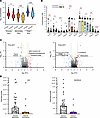
Most mitochondrial proteins are nuclear encoded, translated in the cytosol, and imported into the mitochondria. Through gene expression analysis and functional assays, we demonstrated that mitochondrial protein import is increased in acute myeloid leukemia (AML) cells compared to normal hematopoietic cells. Increased mitochondrial protein import was positively correlated with increased mitochondrial unfolded protein response (UPRmt), a stress activated pathway of mitochondrial proteases and chaperones that maintains protein solubility and prevents the formation of toxic aggregates. The UPRmt protease LONP1 (Lon Peptidase 1) was upregulated in AML and positively correlated with increased mitochondrial protein import and UPRmt. Genetically or chemically inhibiting the LONP1 ATPase domain induced mitochondrial protein aggregation and selectively killed AML cells with high LONP1 expression while sparing AML cells with low LONP1 expression and normal hematopoietic cells in vitro and in vivo. Thus, we uncovered a critical role of the UPRmt protease LONP1 in buffering stress from mitochondrial protein import in AML.
Authors
Matthew Tcheng, Veronique Voisin, Geethu Emily Thomas, Anastasija A. Piric, Marcela Gronda, Rose Hurren, Dakai Ling, Yongran Yan, Lan Xin Zhang, Yue Feng, Ali Chegini, Nathan Duong, Ross S. Mancini, Stefan Quinn W. Currie, Zaynab Mamai, Brady Stock, Shahbaz Khan, Yulia Jitkova, Chaitra Sarathy, Edward Ayoub, Po Yee Mak, Andrea Arruda, Thomas Kislinger, Mark Reed, Bing Z. Carter, Michael Andreeff, Steven M. Kornblau, Mark D. Minden, Siavash Vahidi, Aaron D. Schimmer
Abstract
Androgen deprivation therapy (ADT), a cornerstone of advanced prostate cancer treatment, effectively suppresses androgen signaling but frequently induces systemic metabolic dysregulation. Here, we delineate an unrecognized intestinal steroid/bile acid regulatory axis that mechanistically links androgen suppression to extratumoral metabolic aberrations. HSD3B1 is the most common inherited link to prostate cancer mortality and mediates its effects by regulating steroid metabolism. Integrated metabolomic profiling of patients undergoing ADT revealed a rapid genotype-associated reduction in circulating bile acids, most pronounced in carriers of the adrenal-permissive HSD3B1 (1245C) allele. Surprisingly, analyses in human intestinal tissue and mechanistic investigations in in vitro models identified the terminal ileum as a unique site of HSD3B1 and SLC10A2 (ASBT) coexpression, where catalytically active 3βHSD1 is transcriptionally governed by liver receptor homolog-1 (LRH-1). Pharmacologic or genetic LRH-1 inhibition coordinately suppressed HSD3B1 and SLC10A2 expression and function, while inducing adaptive HSD11B2 upregulation and enhanced glucocorticoid inactivation. This LRH-1–dependent regulatory program persisted independently of androgen and glucocorticoid receptor signaling under in vitro conditions modeling androgen deprivation. These findings establish LRH-1 as a central integrator of intestinal steroidogenesis and bile acid transport and implicate the LRH-1/HSD3B1/SLC10A2 network as a mechanistic driver of ADT-associated metabolic disturbances and a potential target for therapeutic intervention.
Authors
Nikou Fotouhi, Robert Diaz, Mohammad Alyamani, Yoon-Mi Chung, Gail West, Pranab K. Mukherjee, Alireza Abdshah, Robert A. Burgess, Samreen Jatana, Rana R. McKay, Florian Rieder, Mary-Ellen Taplin, Nima Sharifi
Abstract
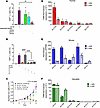
Interrupting glucagon signaling decreases gluconeogenesis and the fractional extraction of amino acids by liver from blood, resulting in lower glycemia. The resulting hyperaminoacidemia stimulates α cell proliferation and glucagon secretion via a liver/α cell axis. We hypothesized that α cells detect and respond to circulating amino acids’ levels via a unique amino acid transporter repertoire. We found that Slc7a2/SLC7A2 is the most highly expressed cationic amino acid transporter in α cells, with its expression being 3-fold greater in α than β cells in both mouse and human. Employing cell culture, zebrafish, and knockout mouse models, we found that the cationic amino acid arginine and SLC7A2 are required for α cell proliferation in response to interrupted glucagon signaling. Ex vivo and in vivo assessment of islet function in Slc7a2–/– mice showed decreased arginine-stimulated glucagon and insulin secretion. We found that arginine activation of mTOR signaling and induction of the glutamine transporter SLC38A5 was dependent on SLC7A2, showing that the role of both in α cell proliferation is dependent on arginine transport and SLC7A2. Finally, we identified single nucleotide polymorphisms in SLC7A2 associated with HbA1c. Together, these data indicate a central role for SLC7A2 in amino acid–stimulated α cell proliferation and islet hormone secretion.
Authors
Erick Spears, Jade E. Stanley, Matthew Shou, Linlin Yin, Xuan Li, Chunhua Dai, Amber Bradley, Katelyn Sellick, Greg Poffenberger, Katie C. Coate, Shristi Shrestha, Anna Marie R. Schornack, Taverlyn Shepard, Madushika Wimalarathne, Regina Jenkins, Kyle W. Sloop, Keith T. Wilson, Alan D. Attie, Mark P. Keller, Wenbiao Chen, Alvin C. Powers, E. Danielle Dean
Abstract
Obesity is associated with impaired wound healing, but the mechanisms linking excess adiposity to aberrant tissue repair remain unresolved. Heterotopic ossification (HO) is a severe example of pathologic tissue repair in which mesenchymal progenitor cells (MPCs) undergo aberrant osteochondral differentiation within soft tissue, leading to joint contractures and pain. Here, we show that accumulation of dietary omega-6 (ω-6) lipids in the injury site is a key mechanism linking obesity to HO. Specifically, in mice fed a high-fat diet (HFD), injured tissues were enriched in linoleic and arachidonic acids, providing substrate for myeloid cyclooxygenase-2 (COX-2)-dependent prostaglandin E2 (PGE2) production. PGE2 then drove a transcriptional program in mesenchymal progenitor cells that promoted osteochondral differentiation. An isocaloric, low linoleic acid HFD reduced HO despite comparable obesity, demonstrating that dietary lipid composition, rather than adiposity alone, drove pathological repair. Clinical data mirrored these findings, showing that obesity conferred increased HO risk, and COX-2 inhibition reduced HO exclusively in obese patients. Together, these findings identify injury site ω-6 lipid enrichment as the key signal linking the diet to MPC reprogramming, pointing to dietary lipid modulation as an actionable strategy to limit HO in obesity.
Authors
Stefanie L. Moye, Monisha Mittal, Tarun Srinivasan, Sneha Korlakunta, Chase A. Pagani, Ayelet Dar, Oromo Geshow, Dylan Feist, Lauren G. Zacharias, Zhao Li, Aaron W. James, Gerta Hoxhaj, Andrew M. Smith, Katherine A. Gallagher, Thomas P. Mathews, Robert J. Tower, Benjamin Levi
Abstract
Men with advanced prostate cancer are typically treated with androgen deprivation therapy, but most ultimately develop resistance and incurable disease (e.g. castration-resistant prostate cancer (CRPC)). The majority of CRPCs overexpress the epigenetic enzyme EZH2 and harbor alterations in the PI3K pathway, providing two targetable pathways outside of AR. Here we show that EZH2 inhibitors synergize with PI3K, AKT, or mTORC1 inhibitors to kill CRPC in vitro and promote tumor regression in vivo. Strikingly, these agents trigger a catastrophic energy crisis by cooperatively suppressing glycolysis, the TCA cycle, and oxidative phosphorylation prior to cell death. EZH2 and PI3K pathway inhibitors achieve this by respectively inhibiting two key regulators of metabolism, MYC and HIF-1A, while concomitantly derepressing a pro-apoptotic stress sensor. Together, these studies reveal a promising therapeutic strategy for CRPC and demonstrate how metabolic plasticity can be fatally impaired by co-targeting upstream oncogenic nodes that converge on this important process.
Authors
Rhea Sahu, Miriam Enos, Swastika Sharma, Amy E. Schade, Alycia Gardner, Akiko Yoshinaga, Alexandra Indeglia, Eleanor Minogue, Songhua Hu, Kiran Kurmi, Shakchhi Joshi, Daniel R. Schmidt, Samkyu Yaffe, Van T.M. Nguyen, Fang Xie, Steven P. Balk, Matthew G. Vander Heiden, Kristian Helin, Marcia C. Haigis, Karen Cichowski

Abstract
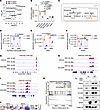
Metabolic signals critically shape innate immune responses. Through pharmacological screening of metabolic pathways, we identified aspartate metabolism as a key regulator of cyclic GMP-AMP synthase (cGAS)–stimulator of interferon genes (STING) signaling. Genetically or aminooxyacetic acid–mediated (AOA-mediated) pharmacologically reducing aspartate levels markedly potentiated the cGAS-STING pathway, leading to stronger upregulation of type I interferons and interferon-stimulated genes. Mechanistically, disruption of de novo pyrimidine synthesis, a major downstream pathway of aspartate, induced mtDNA replication stress and increased mtDNA double-strand breaks, promoting mtDNA release into the cytosol. Cytosolic mtDNA synergized with cGAS-STING agonists to upregulate Z-DNA binding protein 1 (ZBP1), which recruits RIPK1/3 to sustain IRF3 phosphorylation, forming a positive feedback loop that amplifies innate immune signaling. In immunocompetent mouse models, AOA enhanced the antitumor efficacy of STING agonists, chemotherapy, or radiotherapy, whereas aspartate supplementation abrogated these effects. Consistently, aspartate levels negatively correlated with antitumor immunity in colorectal cancer patient samples. Together, our study identifies aspartate–pyrimidine metabolism as a critical metabolic checkpoint that licenses STING signaling by enabling mtDNA stress to cooperate with agonist stimulation, driving type I interferon–dependent ZBP1 induction and feed-forward amplification of STING signaling, thus offering a promising strategy to enhance antitumor immunity.
Authors
Yuheng Liao, Hanze Wang, Hengxin Liu, Xi Chen, Renqiang Sun, Xie Li, Zhen Yang, Chenying Liu, Wei Wu, Ziqian He, Yuzheng Zhao, Ying Mao, Dan Ye, Hui Yang
Abstract
Cancers reprogram their metabolism to provide anabolic needs without driving excessive oxidative stress. Attention has focused on glucose metabolism, yet amino acid synthesis and degradation also promote tumor cell states and growth. Here, we assessed amino acids that maintain cancer stem cells in glioblastoma and found increased proline levels relative to differentiated tumor progeny through increased proline synthesis. Cancer stem cells preferentially expressed the signaling molecule FAM3C induced by the stem cell transcription factor SOX2 to drive expression of proline synthesis enzymes. FAM3C classically mediated cellular responses as a secreted protein but gained intracellular functions in cancer stem cells through binding the histone reader spindlin 1 (SPIN1), thereby preventing its lysosomal degradation, assisting its nuclear localization, and promoting epigenetic regulation of proline synthesis. Proline synthesis depleted ROS, and genetic targeting of FAM3C attenuated ROS scavenging, whereas SPIN1 OE restored ROS levels. Molecular docking identified tucatinib as a brain-penetrant pharmacologic disruptor of FAM3C-SPIN1 interactions, promoting SPIN1 degradation and reducing intracellular proline levels. Thus, cancer stem cells induced a favorable metabolic state through proline synthesis and ROS depletion, revealing potential therapeutic dependencies.
Authors
Weichi Wu, Po Zhang, Donghai Wang, Xujia Wu, Qiulian Wu, Daqi Li, Tengfei Huang, Rui Wang, Huan Li, Hailong Mi, Suchet Taori, Fanen Yuan, Tingting Duan, Zhiye Chen, Huairui Yuan, Jeremy N. Rich

Abstract
The cyclic dinucleotide 2′3′–cyclic guanosine monophosphate–adenosine monophosphate (2′3′-cGAMP) serves as a central immunotransmitter that propagates stimulator of interferon gene–dependent (STING-dependent) innate immunity across tissues; however, how microenvironmental metabolites regulate its spatiotemporal dynamics remains unknown. Here, we identified polyamines (spermine and spermidine) as critical rheostats controlling 2′3′-cGAMP functionality. Mechanistically, polyamines sequestered 2′3′-cGAMP into polymer-like aggregates, blocking intercellular propagation and suppressing intracellular STING activation by reducing ligand-receptor binding affinity. Deficiency of spermidine and spermine N1-acetyltransferase 1 (SAT1), the rate-limiting enzyme in polyamine catabolism, elevated polyamine levels to entrap extracellular 2′3′-cGAMP and inhibit STING activation. Synergistic administration of endogenous 2′3′-cGAMP with SAT1 stabilizer N1,N11-diethylnorspermine restored 2′3′-cGAMP bioavailability and STING signaling, facilitated type I interferon responses to reprogram immunologically suppressive tumors into immunologically active states and enhanced tumor clearance. Our study established polyamine–cGAMP interactions as a critical spatiotemporal regulatory mechanism for tissue-level immunity, providing a unified model for metabolite-mediated cyclic GMP-AMP synthase–STING (cGAS-STING) regulation across diseases.
Authors
Yunjin Ma, Chunyuan Zhao, Jiacheng Guo, Yue Fu, Wei Wang, Jiangong Zhang, Kun Zhao, Xiangbo Meng, Zhongshang Yuan, Chengjiang Gao, Mutian Jia, Ying Qin, Hui Song, Wei Zhao
Abstract
BACKGROUND. Right ventricular failure (RVF) is a major determinant of mortality in pulmonary arterial hypertension (PAH), and hepatic dysfunction predicts adverse outcomes. However, the cell-specific effects of PAH/RVF on the human liver remain poorly defined. METHODS. We performed single-nucleus RNA sequencing of autopsy-derived liver tissue from 5 PAH patients and 4 non-PAH controls and compared these findings with publicly available single-nucleus RNA sequencing datasets from non-alcoholic steatohepatitis (NASH) and Fontan-associated liver disease (FALD). Transcriptomic analyses were integrated with histologic assessment, mitochondrial-enriched proteomics, and correlated with clinical markers of PAH/RVF severity. RESULTS. PAH livers showed cell-specific metabolic, inflammatory, and fibrotic remodeling distinct from NASH and FALD. PAH hepatocytes exhibited a hypoxia-adapted, Warburg-like metabolic phenotype with reduced fatty acid metabolism, gluconeogenesis, cytochrome P450 activity, and ketone metabolism. PAH endothelial cells demonstrated increased glycolytic pathway activity and disrupted adhesion/barrier signaling. PAH hepatic stellate cells displayed HIF-1 and PI3K-Akt pathway activation, and increased IL6 expression, which resulted in central vein fibrotic remodeling. PAH macrophages showed complement activation with reduced JAK-STAT signaling. Finally, HSC HIF-1 activity correlated with clinical markers of PAH/RVF severity. CONCLUSION. PAH induces a distinct metabolic and inflammatory hepatopathy characterized by hepatocyte metabolic reprogramming, HSC activation, and macrophage complement signaling. These findings support PAH-associated hepatopathy as a disease-specific end-organ phenotype linked to RVF severity.
Authors
Madelyn J. Blake, Sally E. Prins, Jeffrey C. Blake, Lynn M. Hartweck, Jenna B. Mendelson, Steeve Provencher, Sandra Breuils-Bonnet, Sebastien Bonnet, Kurt W. Prins
Abstract
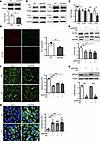
Diabetic retinopathy involves early retinal vascular barrier breakdown and pericyte loss, yet the initiating molecular events remain poorly defined. Vascular endothelial cadherin (VE-cadherin), a key regulator of endothelial integrity, is notably reduced in diabetic and prediabetic nucleoside diphosphate kinase B–deficient (NDPKB-deficient) mouse retinas, particularly in the retinal deep capillary layer, and this decline precedes pericyte loss. In vitro, high glucose (HG) and NDPKB deficiency induced VE-cadherin Y685 phosphorylation, promoting its junctional internalization, activating the hexosamine biosynthesis pathway, and increasing angiopoietin 2 (Ang2), resulting in impaired endothelial barrier function and disrupting pericyte attachment. Preventing Y685 phosphorylation through VE-cadherin Y685F mutation blocked these HG- and NDPKB-driven pathological effects. Pharmacological intervention experiments identified protein O-linked β-N-acetyl glucosamine (O-GlcNAc) modification as a mediator of Y685-dependent Ang2 upregulation. In vivo, VE-cadherin Y685F-knockin mice were protected from diabetes- and prediabetes-induced vascular hyperpermeability, exhibited reduced protein O-GlcNAcylation and Ang2 induction, and maintained neuronal function. O-GlcNAc–enriched retinal proteomics further showed that the Y685F mutation restored balanced neurovascular and mitochondrial pathways. These findings highlight the potential of targeting VE-cadherin Y685 phosphorylation as a promising therapeutic approach to maintain retinal vascular integrity and attenuate the pathological progression of diabetic and prediabetic retinopathy.
Authors
Yixin Wang, Hongpeng Huang, Feng Shao, Rachana Eshwaran, Miao Qin, Noor Karim, Yonggang Ren, Gergana Dobreva, Hans-Peter Hammes, Thomas Wieland, Yuxi Feng


Copyright © 2026 American Society for Clinical Investigation
ISSN: 0021-9738 (print), 1558-8238 (online)