
Advertisement
Research ArticleCell biologyEndocrinologyMetabolism
Open Access |  10.1172/JCI173913
Pancreatic islet α cell function and proliferation require the arginine transporter SLC7A2
Erick Spears,1,2 Jade E. Stanley,1,3 Matthew Shou,1 Linlin Yin,3 Xuan Li,3 Chunhua Dai,1 Amber Bradley,1 Katelyn Sellick,1 Greg Poffenberger,1 Katie C. Coate,1,3 Shristi Shrestha,1 Anna Marie R. Schornack,1 Taverlyn Shepard,1,3 Madushika Wimalarathne,1 Regina Jenkins,1 Kyle W. Sloop,5 Keith T. Wilson,6,7,8,9,10 Alan D. Attie,4 Mark P. Keller,4 Wenbiao Chen,3 Alvin C. Powers,1,3,10 and E. Danielle Dean1,3
1Division of Diabetes, Endocrinology, and Metabolism, Department of Medicine, Vanderbilt University Medical Center, Nashville, Tennessee, USA.
2Department of Biology, Belmont University, Nashville, Tennessee, USA.
3Department of Molecular Physiology & Biophysics, Vanderbilt University, Nashville, Tennessee, USA.
4Department of Biochemistry, University of Wisconsin–Madison, Madison, Wisconsin, USA.
5Diabetes and Complications, Lilly Research Laboratories, Eli Lilly and Company, Indianapolis, Indiana, USA.
6Division of Gastroenterology, Hepatology & Nutrition, Department of Medicine;
7Department of Pathology, Microbiology & Immunology;
8Center for Mucosal Inflammation & Cancer; and
9Program in Cancer Biology, Vanderbilt University School of Medicine, Nashville, Tennessee, USA.
10Veterans Affairs Tennessee Valley Healthcare System, Nashville, Tennessee, USA.
Address correspondence to: E. Danielle Dean, 2215 Garland Ave., Medical Research Bldg IV Rm 7435G, Nashville, Tennessee 37232, USA. Phone: 615.875.8993; Email: danielle.dean@vumc.org.
Authorship note: ES and JES contributed equally to this work.
Find articles by Spears, E. in: PubMed | Google Scholar
1Division of Diabetes, Endocrinology, and Metabolism, Department of Medicine, Vanderbilt University Medical Center, Nashville, Tennessee, USA.
2Department of Biology, Belmont University, Nashville, Tennessee, USA.
3Department of Molecular Physiology & Biophysics, Vanderbilt University, Nashville, Tennessee, USA.
4Department of Biochemistry, University of Wisconsin–Madison, Madison, Wisconsin, USA.
5Diabetes and Complications, Lilly Research Laboratories, Eli Lilly and Company, Indianapolis, Indiana, USA.
6Division of Gastroenterology, Hepatology & Nutrition, Department of Medicine;
7Department of Pathology, Microbiology & Immunology;
8Center for Mucosal Inflammation & Cancer; and
9Program in Cancer Biology, Vanderbilt University School of Medicine, Nashville, Tennessee, USA.
10Veterans Affairs Tennessee Valley Healthcare System, Nashville, Tennessee, USA.
Address correspondence to: E. Danielle Dean, 2215 Garland Ave., Medical Research Bldg IV Rm 7435G, Nashville, Tennessee 37232, USA. Phone: 615.875.8993; Email: danielle.dean@vumc.org.
Authorship note: ES and JES contributed equally to this work.
Find articles by Stanley, J. in: PubMed | Google Scholar
1Division of Diabetes, Endocrinology, and Metabolism, Department of Medicine, Vanderbilt University Medical Center, Nashville, Tennessee, USA.
2Department of Biology, Belmont University, Nashville, Tennessee, USA.
3Department of Molecular Physiology & Biophysics, Vanderbilt University, Nashville, Tennessee, USA.
4Department of Biochemistry, University of Wisconsin–Madison, Madison, Wisconsin, USA.
5Diabetes and Complications, Lilly Research Laboratories, Eli Lilly and Company, Indianapolis, Indiana, USA.
6Division of Gastroenterology, Hepatology & Nutrition, Department of Medicine;
7Department of Pathology, Microbiology & Immunology;
8Center for Mucosal Inflammation & Cancer; and
9Program in Cancer Biology, Vanderbilt University School of Medicine, Nashville, Tennessee, USA.
10Veterans Affairs Tennessee Valley Healthcare System, Nashville, Tennessee, USA.
Address correspondence to: E. Danielle Dean, 2215 Garland Ave., Medical Research Bldg IV Rm 7435G, Nashville, Tennessee 37232, USA. Phone: 615.875.8993; Email: danielle.dean@vumc.org.
Authorship note: ES and JES contributed equally to this work.
Find articles by Shou, M. in: PubMed | Google Scholar
1Division of Diabetes, Endocrinology, and Metabolism, Department of Medicine, Vanderbilt University Medical Center, Nashville, Tennessee, USA.
2Department of Biology, Belmont University, Nashville, Tennessee, USA.
3Department of Molecular Physiology & Biophysics, Vanderbilt University, Nashville, Tennessee, USA.
4Department of Biochemistry, University of Wisconsin–Madison, Madison, Wisconsin, USA.
5Diabetes and Complications, Lilly Research Laboratories, Eli Lilly and Company, Indianapolis, Indiana, USA.
6Division of Gastroenterology, Hepatology & Nutrition, Department of Medicine;
7Department of Pathology, Microbiology & Immunology;
8Center for Mucosal Inflammation & Cancer; and
9Program in Cancer Biology, Vanderbilt University School of Medicine, Nashville, Tennessee, USA.
10Veterans Affairs Tennessee Valley Healthcare System, Nashville, Tennessee, USA.
Address correspondence to: E. Danielle Dean, 2215 Garland Ave., Medical Research Bldg IV Rm 7435G, Nashville, Tennessee 37232, USA. Phone: 615.875.8993; Email: danielle.dean@vumc.org.
Authorship note: ES and JES contributed equally to this work.
Find articles by Yin, L. in: PubMed | Google Scholar
1Division of Diabetes, Endocrinology, and Metabolism, Department of Medicine, Vanderbilt University Medical Center, Nashville, Tennessee, USA.
2Department of Biology, Belmont University, Nashville, Tennessee, USA.
3Department of Molecular Physiology & Biophysics, Vanderbilt University, Nashville, Tennessee, USA.
4Department of Biochemistry, University of Wisconsin–Madison, Madison, Wisconsin, USA.
5Diabetes and Complications, Lilly Research Laboratories, Eli Lilly and Company, Indianapolis, Indiana, USA.
6Division of Gastroenterology, Hepatology & Nutrition, Department of Medicine;
7Department of Pathology, Microbiology & Immunology;
8Center for Mucosal Inflammation & Cancer; and
9Program in Cancer Biology, Vanderbilt University School of Medicine, Nashville, Tennessee, USA.
10Veterans Affairs Tennessee Valley Healthcare System, Nashville, Tennessee, USA.
Address correspondence to: E. Danielle Dean, 2215 Garland Ave., Medical Research Bldg IV Rm 7435G, Nashville, Tennessee 37232, USA. Phone: 615.875.8993; Email: danielle.dean@vumc.org.
Authorship note: ES and JES contributed equally to this work.
Find articles by Li, X. in: PubMed | Google Scholar
1Division of Diabetes, Endocrinology, and Metabolism, Department of Medicine, Vanderbilt University Medical Center, Nashville, Tennessee, USA.
2Department of Biology, Belmont University, Nashville, Tennessee, USA.
3Department of Molecular Physiology & Biophysics, Vanderbilt University, Nashville, Tennessee, USA.
4Department of Biochemistry, University of Wisconsin–Madison, Madison, Wisconsin, USA.
5Diabetes and Complications, Lilly Research Laboratories, Eli Lilly and Company, Indianapolis, Indiana, USA.
6Division of Gastroenterology, Hepatology & Nutrition, Department of Medicine;
7Department of Pathology, Microbiology & Immunology;
8Center for Mucosal Inflammation & Cancer; and
9Program in Cancer Biology, Vanderbilt University School of Medicine, Nashville, Tennessee, USA.
10Veterans Affairs Tennessee Valley Healthcare System, Nashville, Tennessee, USA.
Address correspondence to: E. Danielle Dean, 2215 Garland Ave., Medical Research Bldg IV Rm 7435G, Nashville, Tennessee 37232, USA. Phone: 615.875.8993; Email: danielle.dean@vumc.org.
Authorship note: ES and JES contributed equally to this work.
Find articles by Dai, C. in: PubMed | Google Scholar
1Division of Diabetes, Endocrinology, and Metabolism, Department of Medicine, Vanderbilt University Medical Center, Nashville, Tennessee, USA.
2Department of Biology, Belmont University, Nashville, Tennessee, USA.
3Department of Molecular Physiology & Biophysics, Vanderbilt University, Nashville, Tennessee, USA.
4Department of Biochemistry, University of Wisconsin–Madison, Madison, Wisconsin, USA.
5Diabetes and Complications, Lilly Research Laboratories, Eli Lilly and Company, Indianapolis, Indiana, USA.
6Division of Gastroenterology, Hepatology & Nutrition, Department of Medicine;
7Department of Pathology, Microbiology & Immunology;
8Center for Mucosal Inflammation & Cancer; and
9Program in Cancer Biology, Vanderbilt University School of Medicine, Nashville, Tennessee, USA.
10Veterans Affairs Tennessee Valley Healthcare System, Nashville, Tennessee, USA.
Address correspondence to: E. Danielle Dean, 2215 Garland Ave., Medical Research Bldg IV Rm 7435G, Nashville, Tennessee 37232, USA. Phone: 615.875.8993; Email: danielle.dean@vumc.org.
Authorship note: ES and JES contributed equally to this work.
Find articles by Bradley, A. in: PubMed | Google Scholar
1Division of Diabetes, Endocrinology, and Metabolism, Department of Medicine, Vanderbilt University Medical Center, Nashville, Tennessee, USA.
2Department of Biology, Belmont University, Nashville, Tennessee, USA.
3Department of Molecular Physiology & Biophysics, Vanderbilt University, Nashville, Tennessee, USA.
4Department of Biochemistry, University of Wisconsin–Madison, Madison, Wisconsin, USA.
5Diabetes and Complications, Lilly Research Laboratories, Eli Lilly and Company, Indianapolis, Indiana, USA.
6Division of Gastroenterology, Hepatology & Nutrition, Department of Medicine;
7Department of Pathology, Microbiology & Immunology;
8Center for Mucosal Inflammation & Cancer; and
9Program in Cancer Biology, Vanderbilt University School of Medicine, Nashville, Tennessee, USA.
10Veterans Affairs Tennessee Valley Healthcare System, Nashville, Tennessee, USA.
Address correspondence to: E. Danielle Dean, 2215 Garland Ave., Medical Research Bldg IV Rm 7435G, Nashville, Tennessee 37232, USA. Phone: 615.875.8993; Email: danielle.dean@vumc.org.
Authorship note: ES and JES contributed equally to this work.
Find articles by Sellick, K. in: PubMed | Google Scholar
1Division of Diabetes, Endocrinology, and Metabolism, Department of Medicine, Vanderbilt University Medical Center, Nashville, Tennessee, USA.
2Department of Biology, Belmont University, Nashville, Tennessee, USA.
3Department of Molecular Physiology & Biophysics, Vanderbilt University, Nashville, Tennessee, USA.
4Department of Biochemistry, University of Wisconsin–Madison, Madison, Wisconsin, USA.
5Diabetes and Complications, Lilly Research Laboratories, Eli Lilly and Company, Indianapolis, Indiana, USA.
6Division of Gastroenterology, Hepatology & Nutrition, Department of Medicine;
7Department of Pathology, Microbiology & Immunology;
8Center for Mucosal Inflammation & Cancer; and
9Program in Cancer Biology, Vanderbilt University School of Medicine, Nashville, Tennessee, USA.
10Veterans Affairs Tennessee Valley Healthcare System, Nashville, Tennessee, USA.
Address correspondence to: E. Danielle Dean, 2215 Garland Ave., Medical Research Bldg IV Rm 7435G, Nashville, Tennessee 37232, USA. Phone: 615.875.8993; Email: danielle.dean@vumc.org.
Authorship note: ES and JES contributed equally to this work.
Find articles by Poffenberger, G. in: PubMed | Google Scholar
1Division of Diabetes, Endocrinology, and Metabolism, Department of Medicine, Vanderbilt University Medical Center, Nashville, Tennessee, USA.
2Department of Biology, Belmont University, Nashville, Tennessee, USA.
3Department of Molecular Physiology & Biophysics, Vanderbilt University, Nashville, Tennessee, USA.
4Department of Biochemistry, University of Wisconsin–Madison, Madison, Wisconsin, USA.
5Diabetes and Complications, Lilly Research Laboratories, Eli Lilly and Company, Indianapolis, Indiana, USA.
6Division of Gastroenterology, Hepatology & Nutrition, Department of Medicine;
7Department of Pathology, Microbiology & Immunology;
8Center for Mucosal Inflammation & Cancer; and
9Program in Cancer Biology, Vanderbilt University School of Medicine, Nashville, Tennessee, USA.
10Veterans Affairs Tennessee Valley Healthcare System, Nashville, Tennessee, USA.
Address correspondence to: E. Danielle Dean, 2215 Garland Ave., Medical Research Bldg IV Rm 7435G, Nashville, Tennessee 37232, USA. Phone: 615.875.8993; Email: danielle.dean@vumc.org.
Authorship note: ES and JES contributed equally to this work.
Find articles by
Coate, K.
in:
PubMed
|
Google Scholar
|

1Division of Diabetes, Endocrinology, and Metabolism, Department of Medicine, Vanderbilt University Medical Center, Nashville, Tennessee, USA.
2Department of Biology, Belmont University, Nashville, Tennessee, USA.
3Department of Molecular Physiology & Biophysics, Vanderbilt University, Nashville, Tennessee, USA.
4Department of Biochemistry, University of Wisconsin–Madison, Madison, Wisconsin, USA.
5Diabetes and Complications, Lilly Research Laboratories, Eli Lilly and Company, Indianapolis, Indiana, USA.
6Division of Gastroenterology, Hepatology & Nutrition, Department of Medicine;
7Department of Pathology, Microbiology & Immunology;
8Center for Mucosal Inflammation & Cancer; and
9Program in Cancer Biology, Vanderbilt University School of Medicine, Nashville, Tennessee, USA.
10Veterans Affairs Tennessee Valley Healthcare System, Nashville, Tennessee, USA.
Address correspondence to: E. Danielle Dean, 2215 Garland Ave., Medical Research Bldg IV Rm 7435G, Nashville, Tennessee 37232, USA. Phone: 615.875.8993; Email: danielle.dean@vumc.org.
Authorship note: ES and JES contributed equally to this work.
Find articles by
Shrestha, S.
in:
PubMed
|
Google Scholar
|
1Division of Diabetes, Endocrinology, and Metabolism, Department of Medicine, Vanderbilt University Medical Center, Nashville, Tennessee, USA.
2Department of Biology, Belmont University, Nashville, Tennessee, USA.
3Department of Molecular Physiology & Biophysics, Vanderbilt University, Nashville, Tennessee, USA.
4Department of Biochemistry, University of Wisconsin–Madison, Madison, Wisconsin, USA.
5Diabetes and Complications, Lilly Research Laboratories, Eli Lilly and Company, Indianapolis, Indiana, USA.
6Division of Gastroenterology, Hepatology & Nutrition, Department of Medicine;
7Department of Pathology, Microbiology & Immunology;
8Center for Mucosal Inflammation & Cancer; and
9Program in Cancer Biology, Vanderbilt University School of Medicine, Nashville, Tennessee, USA.
10Veterans Affairs Tennessee Valley Healthcare System, Nashville, Tennessee, USA.
Address correspondence to: E. Danielle Dean, 2215 Garland Ave., Medical Research Bldg IV Rm 7435G, Nashville, Tennessee 37232, USA. Phone: 615.875.8993; Email: danielle.dean@vumc.org.
Authorship note: ES and JES contributed equally to this work.
Find articles by Schornack, A. in: PubMed | Google Scholar
1Division of Diabetes, Endocrinology, and Metabolism, Department of Medicine, Vanderbilt University Medical Center, Nashville, Tennessee, USA.
2Department of Biology, Belmont University, Nashville, Tennessee, USA.
3Department of Molecular Physiology & Biophysics, Vanderbilt University, Nashville, Tennessee, USA.
4Department of Biochemistry, University of Wisconsin–Madison, Madison, Wisconsin, USA.
5Diabetes and Complications, Lilly Research Laboratories, Eli Lilly and Company, Indianapolis, Indiana, USA.
6Division of Gastroenterology, Hepatology & Nutrition, Department of Medicine;
7Department of Pathology, Microbiology & Immunology;
8Center for Mucosal Inflammation & Cancer; and
9Program in Cancer Biology, Vanderbilt University School of Medicine, Nashville, Tennessee, USA.
10Veterans Affairs Tennessee Valley Healthcare System, Nashville, Tennessee, USA.
Address correspondence to: E. Danielle Dean, 2215 Garland Ave., Medical Research Bldg IV Rm 7435G, Nashville, Tennessee 37232, USA. Phone: 615.875.8993; Email: danielle.dean@vumc.org.
Authorship note: ES and JES contributed equally to this work.
Find articles by Shepard, T. in: PubMed | Google Scholar
1Division of Diabetes, Endocrinology, and Metabolism, Department of Medicine, Vanderbilt University Medical Center, Nashville, Tennessee, USA.
2Department of Biology, Belmont University, Nashville, Tennessee, USA.
3Department of Molecular Physiology & Biophysics, Vanderbilt University, Nashville, Tennessee, USA.
4Department of Biochemistry, University of Wisconsin–Madison, Madison, Wisconsin, USA.
5Diabetes and Complications, Lilly Research Laboratories, Eli Lilly and Company, Indianapolis, Indiana, USA.
6Division of Gastroenterology, Hepatology & Nutrition, Department of Medicine;
7Department of Pathology, Microbiology & Immunology;
8Center for Mucosal Inflammation & Cancer; and
9Program in Cancer Biology, Vanderbilt University School of Medicine, Nashville, Tennessee, USA.
10Veterans Affairs Tennessee Valley Healthcare System, Nashville, Tennessee, USA.
Address correspondence to: E. Danielle Dean, 2215 Garland Ave., Medical Research Bldg IV Rm 7435G, Nashville, Tennessee 37232, USA. Phone: 615.875.8993; Email: danielle.dean@vumc.org.
Authorship note: ES and JES contributed equally to this work.
Find articles by Wimalarathne, M. in: PubMed | Google Scholar
1Division of Diabetes, Endocrinology, and Metabolism, Department of Medicine, Vanderbilt University Medical Center, Nashville, Tennessee, USA.
2Department of Biology, Belmont University, Nashville, Tennessee, USA.
3Department of Molecular Physiology & Biophysics, Vanderbilt University, Nashville, Tennessee, USA.
4Department of Biochemistry, University of Wisconsin–Madison, Madison, Wisconsin, USA.
5Diabetes and Complications, Lilly Research Laboratories, Eli Lilly and Company, Indianapolis, Indiana, USA.
6Division of Gastroenterology, Hepatology & Nutrition, Department of Medicine;
7Department of Pathology, Microbiology & Immunology;
8Center for Mucosal Inflammation & Cancer; and
9Program in Cancer Biology, Vanderbilt University School of Medicine, Nashville, Tennessee, USA.
10Veterans Affairs Tennessee Valley Healthcare System, Nashville, Tennessee, USA.
Address correspondence to: E. Danielle Dean, 2215 Garland Ave., Medical Research Bldg IV Rm 7435G, Nashville, Tennessee 37232, USA. Phone: 615.875.8993; Email: danielle.dean@vumc.org.
Authorship note: ES and JES contributed equally to this work.
Find articles by Jenkins, R. in: PubMed | Google Scholar
1Division of Diabetes, Endocrinology, and Metabolism, Department of Medicine, Vanderbilt University Medical Center, Nashville, Tennessee, USA.
2Department of Biology, Belmont University, Nashville, Tennessee, USA.
3Department of Molecular Physiology & Biophysics, Vanderbilt University, Nashville, Tennessee, USA.
4Department of Biochemistry, University of Wisconsin–Madison, Madison, Wisconsin, USA.
5Diabetes and Complications, Lilly Research Laboratories, Eli Lilly and Company, Indianapolis, Indiana, USA.
6Division of Gastroenterology, Hepatology & Nutrition, Department of Medicine;
7Department of Pathology, Microbiology & Immunology;
8Center for Mucosal Inflammation & Cancer; and
9Program in Cancer Biology, Vanderbilt University School of Medicine, Nashville, Tennessee, USA.
10Veterans Affairs Tennessee Valley Healthcare System, Nashville, Tennessee, USA.
Address correspondence to: E. Danielle Dean, 2215 Garland Ave., Medical Research Bldg IV Rm 7435G, Nashville, Tennessee 37232, USA. Phone: 615.875.8993; Email: danielle.dean@vumc.org.
Authorship note: ES and JES contributed equally to this work.
Find articles by
Sloop, K.
in:
PubMed
|
Google Scholar
|
1Division of Diabetes, Endocrinology, and Metabolism, Department of Medicine, Vanderbilt University Medical Center, Nashville, Tennessee, USA.
2Department of Biology, Belmont University, Nashville, Tennessee, USA.
3Department of Molecular Physiology & Biophysics, Vanderbilt University, Nashville, Tennessee, USA.
4Department of Biochemistry, University of Wisconsin–Madison, Madison, Wisconsin, USA.
5Diabetes and Complications, Lilly Research Laboratories, Eli Lilly and Company, Indianapolis, Indiana, USA.
6Division of Gastroenterology, Hepatology & Nutrition, Department of Medicine;
7Department of Pathology, Microbiology & Immunology;
8Center for Mucosal Inflammation & Cancer; and
9Program in Cancer Biology, Vanderbilt University School of Medicine, Nashville, Tennessee, USA.
10Veterans Affairs Tennessee Valley Healthcare System, Nashville, Tennessee, USA.
Address correspondence to: E. Danielle Dean, 2215 Garland Ave., Medical Research Bldg IV Rm 7435G, Nashville, Tennessee 37232, USA. Phone: 615.875.8993; Email: danielle.dean@vumc.org.
Authorship note: ES and JES contributed equally to this work.
Find articles by
Wilson, K.
in:
PubMed
|
Google Scholar
|
1Division of Diabetes, Endocrinology, and Metabolism, Department of Medicine, Vanderbilt University Medical Center, Nashville, Tennessee, USA.
2Department of Biology, Belmont University, Nashville, Tennessee, USA.
3Department of Molecular Physiology & Biophysics, Vanderbilt University, Nashville, Tennessee, USA.
4Department of Biochemistry, University of Wisconsin–Madison, Madison, Wisconsin, USA.
5Diabetes and Complications, Lilly Research Laboratories, Eli Lilly and Company, Indianapolis, Indiana, USA.
6Division of Gastroenterology, Hepatology & Nutrition, Department of Medicine;
7Department of Pathology, Microbiology & Immunology;
8Center for Mucosal Inflammation & Cancer; and
9Program in Cancer Biology, Vanderbilt University School of Medicine, Nashville, Tennessee, USA.
10Veterans Affairs Tennessee Valley Healthcare System, Nashville, Tennessee, USA.
Address correspondence to: E. Danielle Dean, 2215 Garland Ave., Medical Research Bldg IV Rm 7435G, Nashville, Tennessee 37232, USA. Phone: 615.875.8993; Email: danielle.dean@vumc.org.
Authorship note: ES and JES contributed equally to this work.
Find articles by
Attie, A.
in:
PubMed
|
Google Scholar
|
1Division of Diabetes, Endocrinology, and Metabolism, Department of Medicine, Vanderbilt University Medical Center, Nashville, Tennessee, USA.
2Department of Biology, Belmont University, Nashville, Tennessee, USA.
3Department of Molecular Physiology & Biophysics, Vanderbilt University, Nashville, Tennessee, USA.
4Department of Biochemistry, University of Wisconsin–Madison, Madison, Wisconsin, USA.
5Diabetes and Complications, Lilly Research Laboratories, Eli Lilly and Company, Indianapolis, Indiana, USA.
6Division of Gastroenterology, Hepatology & Nutrition, Department of Medicine;
7Department of Pathology, Microbiology & Immunology;
8Center for Mucosal Inflammation & Cancer; and
9Program in Cancer Biology, Vanderbilt University School of Medicine, Nashville, Tennessee, USA.
10Veterans Affairs Tennessee Valley Healthcare System, Nashville, Tennessee, USA.
Address correspondence to: E. Danielle Dean, 2215 Garland Ave., Medical Research Bldg IV Rm 7435G, Nashville, Tennessee 37232, USA. Phone: 615.875.8993; Email: danielle.dean@vumc.org.
Authorship note: ES and JES contributed equally to this work.
Find articles by
Keller, M.
in:
PubMed
|
Google Scholar
|
1Division of Diabetes, Endocrinology, and Metabolism, Department of Medicine, Vanderbilt University Medical Center, Nashville, Tennessee, USA.
2Department of Biology, Belmont University, Nashville, Tennessee, USA.
3Department of Molecular Physiology & Biophysics, Vanderbilt University, Nashville, Tennessee, USA.
4Department of Biochemistry, University of Wisconsin–Madison, Madison, Wisconsin, USA.
5Diabetes and Complications, Lilly Research Laboratories, Eli Lilly and Company, Indianapolis, Indiana, USA.
6Division of Gastroenterology, Hepatology & Nutrition, Department of Medicine;
7Department of Pathology, Microbiology & Immunology;
8Center for Mucosal Inflammation & Cancer; and
9Program in Cancer Biology, Vanderbilt University School of Medicine, Nashville, Tennessee, USA.
10Veterans Affairs Tennessee Valley Healthcare System, Nashville, Tennessee, USA.
Address correspondence to: E. Danielle Dean, 2215 Garland Ave., Medical Research Bldg IV Rm 7435G, Nashville, Tennessee 37232, USA. Phone: 615.875.8993; Email: danielle.dean@vumc.org.
Authorship note: ES and JES contributed equally to this work.
Find articles by Chen, W. in: PubMed | Google Scholar
1Division of Diabetes, Endocrinology, and Metabolism, Department of Medicine, Vanderbilt University Medical Center, Nashville, Tennessee, USA.
2Department of Biology, Belmont University, Nashville, Tennessee, USA.
3Department of Molecular Physiology & Biophysics, Vanderbilt University, Nashville, Tennessee, USA.
4Department of Biochemistry, University of Wisconsin–Madison, Madison, Wisconsin, USA.
5Diabetes and Complications, Lilly Research Laboratories, Eli Lilly and Company, Indianapolis, Indiana, USA.
6Division of Gastroenterology, Hepatology & Nutrition, Department of Medicine;
7Department of Pathology, Microbiology & Immunology;
8Center for Mucosal Inflammation & Cancer; and
9Program in Cancer Biology, Vanderbilt University School of Medicine, Nashville, Tennessee, USA.
10Veterans Affairs Tennessee Valley Healthcare System, Nashville, Tennessee, USA.
Address correspondence to: E. Danielle Dean, 2215 Garland Ave., Medical Research Bldg IV Rm 7435G, Nashville, Tennessee 37232, USA. Phone: 615.875.8993; Email: danielle.dean@vumc.org.
Authorship note: ES and JES contributed equally to this work.
Find articles by
Powers, A.
in:
PubMed
|
Google Scholar
|
1Division of Diabetes, Endocrinology, and Metabolism, Department of Medicine, Vanderbilt University Medical Center, Nashville, Tennessee, USA.
2Department of Biology, Belmont University, Nashville, Tennessee, USA.
3Department of Molecular Physiology & Biophysics, Vanderbilt University, Nashville, Tennessee, USA.
4Department of Biochemistry, University of Wisconsin–Madison, Madison, Wisconsin, USA.
5Diabetes and Complications, Lilly Research Laboratories, Eli Lilly and Company, Indianapolis, Indiana, USA.
6Division of Gastroenterology, Hepatology & Nutrition, Department of Medicine;
7Department of Pathology, Microbiology & Immunology;
8Center for Mucosal Inflammation & Cancer; and
9Program in Cancer Biology, Vanderbilt University School of Medicine, Nashville, Tennessee, USA.
10Veterans Affairs Tennessee Valley Healthcare System, Nashville, Tennessee, USA.
Address correspondence to: E. Danielle Dean, 2215 Garland Ave., Medical Research Bldg IV Rm 7435G, Nashville, Tennessee 37232, USA. Phone: 615.875.8993; Email: danielle.dean@vumc.org.
Authorship note: ES and JES contributed equally to this work.
Find articles by
Dean, E.
in:
PubMed
|
Google Scholar
|
Published June 15, 2026 - More info
J Clin Invest. 2026;136(12):e173913. https://doi.org/10.1172/JCI173913.
© 2026 Spears et al. This work is licensed under the Creative Commons Attribution 4.0 International License. To view a copy of this license, visit http://creativecommons.org/licenses/by/4.0/.
Received: August 3, 2023; Accepted: April 23, 2026

-
Results
Arginine is necessary for amino acid–stimulated α cell proliferation in vitro. Previous studies demonstrated the importance of hyperaminoacidemia for α cell proliferation and specifically a role for glutamine and its major transporter, SLC38A5, in mice and zebrafish (9, 10). Since Slc38a5 expression differs between mouse and human α cells and its ablation only partially suppressed α cell proliferation (9, 10), we evaluated whether other amino acids are individually required for amino acid–stimulated α cell proliferation, as is glutamine. As described previously, culturing isolated mouse islets in high amino acid medium increased α cell proliferation (Figure 1A) (10). This high amino acid medium (All AA +) mimicked levels in mice with interrupted glucagon signaling while low amino acid medium (All AA –) was similar to levels in wild-type mouse serum (Supplemental Table 1; supplemental material available online with this article; https://doi.org/10.1172/JCI173913DS1). To identify other critical amino acids, we adopted a 2-step approach to minimize the number of islets in the screen. As a first step, we reduced the levels of groups of 4 amino acids in the high amino acid medium (Supplemental Table 1). Only islets cultured in medium with low arginine, histidine, glycine, and asparagine (RHGNlo) had decreased α cell proliferation (Figure 1A). To determine if a low level of a single amino acid in the RHGNlo medium was responsible, we then individually replaced each of these 4 amino acids in the RHGNlo medium at the high concentration and found that only arginine (R) stimulated amino acid–stimulated α cell proliferation (Figure 1B). We also assessed the importance of arginine for proliferation of a cultured α cell line, αTC1-6 cells. Culturing these cells in their normal DMEM-based medium lacking arginine inhibited proliferation (Figure 1C and Supplemental Table 2). These results indicate that arginine, in addition to glutamine, is required for α cell proliferation (10).
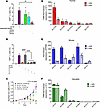 Figure 1
Arginine stimulates α cell proliferation in cultured mouse islets and cationic amino acid transporter, Slc7a2, expression is conserved in human, mouse, and zebrafish α cells. (A) Ex vivo α cell proliferation analysis in low (All AA-) and high (All AA+) amino acid–containing medium; medium with low concentrations of amino acids (AIKMVOPSTYRHGN-); high AA medium with alanine (A), isoleucine (I), lysine (K), methionine (M), and valine (V) at low concentrations (AIKMV-); high AA medium with ornithine (O), proline (P), serine (S), threonine (T), and tryptophan (Y) at low concentrations (OPSTY-); AA medium with arginine (R), histidine (H), glycine (G), and asparagine (N) at low concentrations (RHGN–). (B) Ex vivo α cell proliferation analysis in low (–) and high (+) amino acid–containing medium, in otherwise high AA medium with low RHGN concentrations (orange bar, RHGN-), and with each of the low-concentration AAs in low RHGN medium restored to high levels (gray bars, R+, H+, G+, and N+). We determined α cell proliferation by percent Ki67+/Gcg+ cells per total Gcg+ cells in isolated islets cultured in medium containing different variations of amino acid concentrations (n = 3 per group). AA = all amino acids, R = arginine, H = histidine, G = glycine, N = asparagine, + = high AA concentrations (equivalent to that in serum of Gcgr–/– mice), – = low AA concentration (equivalent to that in serum of Gcgr+/+). (C) Cell growth over time of αTC1-6 cultured cells in control DMEM or in DMEM lacking glutamine (Gln), arginine (Arg), or both. (D–F) Comparison of cationic amino acid transporter expression in α and β cells from published (D) human (n = 5) (25, 26), (E) mouse (n = 3–4) (27), and (F) zebrafish (n = 3) (28) RNA-seq datasets. Expression of other cationic amino acid transporter not shown was below the limits of detection in islet cells. Significance was designated: **P < 0.005, and ****P < 0.0001.
Slc7a2 is highly expressed in pancreatic α and β cells. Because interruption of glucagon signaling leads to increased serum amino acids and increased α cell proliferation (9, 10), we evaluated the expression of cationic amino acid transporters in pancreatic α and β cells by mining published transcriptomics datasets. In human RNA-seq datasets (25, 26), SLC7A2 is the most highly expressed of all SLC (SoLute Carrier) superfamily genes in α cells, and its expression is 3-fold higher in α cells than in β cells (Figure 1D and Supplemental Table 3). From mouse RNA-seq data (27), Slc7a2 is one of the most highly expressed amino acid transporters, with a 6-fold greater expression in α cells when compared with β cells (Figure 1E and Supplemental Table 3). In zebrafish (28), slc7a2 is the third most highly expressed amino acid transporter (Supplemental Table 3) but is the most highly expressed cationic amino acid transporter (Figure 1F). The greater level of Slc7a2 expression in islet cells of humans, mice, and zebrafish points toward its evolutionarily conserved importance in the endocrine pancreas and α cells.
SLC7A2 is associated with hemoglobin A1c levels in humans. To ask if SLC7A2 contributes to nutrient homeostasis in humans, we investigated if the SLC7A2 gene locus is associated with diabetes-related phenotypes in human GWAS. Two single nucleotide polymorphisms (SNPs) have been identified within the first intron of SLC7A2 that are associated with hemoglobin A1c (HbA1c) levels (Figure 2A). rs142010226 (chr 8, 17367112:A/G) and rs2517232 (chr 8, 17367421:A/G) are both strongly associated (P < 10–15) with HbA1c in the EXTEND human cohort, which consists of 1,395 diabetic and 5,764 non-diabetic individuals of European ancestry, which we identified via data mining the T2D Knowledge Portal (29). Further data mining of published ATAC-seq and ChIP-seq datasets from human islets (Figure 2B) showed that both SNPs occur within ~1 kb of binding sites for MAFB and FOXA2, 2 transcription factors (30, 31) that have previously been shown to be critical for α cell gene expression (32–35). In summary, these findings are consistent with a role for SLC7A2 in glucose homeostasis in humans and suggest that genetic variants associated with HbA1c may influence MAFB- and/or FOXA2-dependent regulation of SLC7A2 expression in islets.
 Figure 2
GWAS analysis of the SLC7A2 gene locus identifies SNPs associated with HbA1c in human. (A) SNPs significantly associated with the human SLC7A2 gene locus with HbA1c levels are represented by a violet diamond (rs142010226) and a yellow (rs2517232) circle. Gray circles represent SNPs not significantly associated with HbA1c or for which there are no associated data, respectively. Yellow shading indicates the region identified in B. LD, linkage disequilibrium. (B) ATAC-seq analyses, from Pasquali et al. (29), of the SLC7A2 locus in human islets with highly conserved regions (blue, Cons.), ATAC peaks in green, FOXA2 binding in red, and MAFB binding in purple.
Slc7a2–/– mice have decreased arginine-stimulated glucagon and insulin secretion. To understand the role of arginine transport in islet function and α cell proliferation, we examined the impact of loss of Slc7a2 on glucose homeostasis and islet function using a global Slc7a2-knockout (Slc7a2–/–)mouse line (21–23, 36). We found that Slc7a2–/– mice had normal glucose tolerance in response to intraperitoneal glucose injection (Supplemental Figure 1, A and B). To assess stimulated islet hormone secretion and glycemic regulation, we gave Slc7a2–/– mice an intraperitoneal glucose/arginine bolus, and blood glucose, serum glucagon, and serum insulin concentrations were measured (Figure 3, A–C). Stimulated blood glucose levels were higher in Slc7a2–/– than in Slc7a2+/+ mice (Figure 3A), supporting a role for SLC7A2 in glycemic regulation. Serum glucagon levels increased similarly in Slc7a2+/+ and Slc7a2+/– after stimulation with glucose and arginine. However, stimulated glucagon levels in Slc7a2–/– mice were 60% lower than their Slc7a2+/+ and Slc7a2+/– littermates and not different from fasted glucagon levels in the same Slc7a2–/– mice (Figure 3B). Similar to glucose/arginine bolus, intraperitoneal administration of arginine alone did not increase serum glucagon in Slc7a2–/– animals, as stimulated values were 95% lower than Slc7a2+/+ mice and not significantly different from fasted glucagon values in the same mice (Figure 3E), indicating a central role for SLC7A2 in arginine-stimulated glucagon secretion.
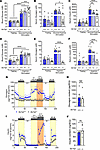 Figure 3
Slc7a2–/– mice have decreased glucagon and insulin secretion under highly stimulatory conditions. (A) Blood glucose, (B) serum glucagon, and (C) serum insulin for Slc7a2+/+ (n = 11), Slc7a2+/– (n = 8), and Slc7a2–/– (n = 12) mice fasted for 6 hours, injected with glucose/arginine bolus, and sampled 15 minutes after injection. (D) Blood glucose, (E) serum glucagon, and (F) serum insulin for Slc7a2+/+, Slc7a2+/–, and Slc7a2–/– mice fasted for 6 hours, injected with arginine bolus, and sampled 15 minutes after injection (n = 8 each genotype). (G) Glucagon secretion, (H) glucagon content, (I) insulin secretion, and (J) insulin content as assessed by perifusion of islets isolated from Slc7a2+/+ and Slc7a2–/– mice (n = 4 each genotype). G 1 = 1 mM glucose, G 11 = 11 mM glucose, Arg 20 = 20 mM arginine, KCl 20 = 20 mM KCl. *P < 0.05, **P < 0.005, ***P < 0.0005, and ****P < 0.0001.
Interestingly, glucose/arginine-stimulated serum insulin levels were similarly decreased in Slc7a2–/– animals, but there was also a decrease in glucose/arginine-stimulated serum insulin in Slc7a2+/– animals (Figure 3C). Intraperitoneal administration of arginine resulted in no change in blood glucose for Slc7a2–/– compared with Slc7a2+/+ and Slc7a2+/– mice (Figure 3D). Arginine did not increase serum insulin levels in Slc7a2–/– mice, and arginine-stimulated insulin levels were also lower in Slc7a2+/– mice (Figure 3F). These data indicate that arginine transport via SLC7A2 is necessary for arginine-stimulated glucagon and insulin secretion. Of note, the decrease in arginine-stimulated insulin secretion in Slc7a2+/– mice indicates that arginine transport may be the rate limiting step in stimulated glucagon and insulin secretion.
Slc7a2–/– mouse islets have an islet-intrinsic impaired response to arginine resulting in defective glucagon secretion. Because we used a global Slc7a2-knockout mouse, we assessed whether the observed defects in arginine-stimulated secretion in vivo were due to intrinsic islet SLC7A2 loss (islet autonomous) or mediated by extra-islet signals by perifusing isolated islets from Slc7a2–/– mice and Slc7a2+/+ littermates with glucose, arginine, or a combination of the two. Basal glucagon secretion from Slc7a2–/– islets was low, even at low glucose, and arginine did not stimulate glucagon secretion from these isolated islets (Figure 3G). This appears to be due to a secretory defect in Slc7a2–/– α cells, as glucagon content was similar in Slc7a2+/+ and Slc7a2–/– islets (Figure 3H), and membrane depolarization with KCl failed to stimulate glucagon secretion as it robustly did in Slc7a2+/+ islets (Figure 3G). Arginine-stimulated insulin secretion was impaired in the Slc7a2–/– islets (Figure 3I), again, with no difference in insulin content (Figure 3J). KCl-stimulated and second phase glucose-stimulated insulin secretion was also impaired in Slc7a2–/– islets but not absent.
Taken together, these data indicate an islet-autonomous secretory defect in Slc7a2–/– α and β cells. Additionally, interrupted glucagon signaling does not influence the pattern of secretory profile in response to stimuli; rather, the genotype predicts the secretory response, including no response to the glucose/arginine bolus, in Slc7a2–/– mice (Supplemental Figure 3). However, the overall amount of glucagon was increased 5-fold in all genotypes by monoclonal antibody targeting the glucagon receptor (GCGR mAb) treatment versus IgG Ab–treated littermates, suggesting that glucagon secretion in Slc7a2–/– mice is blunted but not completely lost in response to other amino acids that are not transported by SLC7A2.
Slc7a2–/– mice have normal islet morphology and endocrine cell mass and islet-specific gene expression. Slc7a2–/– mice have elevated SLC7A2-transported amino acids (e.g., arginine, lysine, and ornithine) (24). While these amino acids showed the greatest increases in Slc7a2–/– mice, we observed modest elevations in several other serum amino acids, including glutamine (Supplemental Figure 1J). To assess whether this slight elevation of amino acids, as compared with that of mice with interrupted glucagon signaling, is associated with increased α cell mass in the Slc7a2–/– mice, we performed immunofluorescence staining on pancreas sections from these mice. Islets from Slc7a2–/– mice had normal islet architecture and morphology (Figure 4, A and B) and no difference in α, β, or δ cell mass (Figure 4, C–F), similar to no difference being observed in the glucagon or insulin content of isolated islets (Figure 3, H and J).
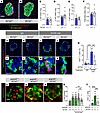 Figure 4
SLC7A2 is required for α cell proliferation in response to interrupted glucagon signaling. (A and B) Representative immunostaining for C-peptide, glucagon, and somatostatin from Slc7a2+/+ and Slc7a2–/– mouse pancreas (scale bar = 50 mm). (C–E) Mass analysis for α (C), β (D), and δ (E) cells and total islet mass (F) from Slc7a2+/+ (n = 7) and Slc7a2–/– (n = 9) mice. (G–J) Representative images of islets from Slc7a2+/+ and Slc7a2–/– mouse pancreas after 2 weeks of treatment with GCGR mAb or control IgG (scale bar = 50 μm; inset K–N scale bar = 10 μm). (O) Quantification of α cell proliferation as determined by percent Ki67+/Gcg+ cells per total Gcg+ cells in Slc7a2+/+ and Slc7a2–/– mouse islets after 2 weeks of treatment with GCGR mAb or control IgG (n = 5 each). (P–R) Representative images of 5 dpf islets from Tg(gcga:EGFP) zebrafish, α cell–specific EGFP, with CRISPR/Cas9-induced loss of glucagon receptors (gcgra/b) and/or slc7a2 stained for EdU to assess proliferation (scale bar = 20 μm). (S) Quantification of total α cell numbers (n = 14, 18, 29, 46, and 20, respectively, for each genotype) and (T) quantification of EdU-positive α cells from zebrafish islets (n = 12, 18, and 9, respectively, for each genotype). **P < 0.005, ***P < 0.0005, and ****P < 0.0001.
Interrupted glucagon signaling–stimulated α cell proliferation requires Slc7a2 expression. Treatment of mice with a GCGR mAb interrupted glucagon signaling and stimulated α cell proliferation as previously shown (4, 9, 10). To investigate the role of SLC7A2 in α cell proliferation, we treated Slc7a2+/+ and Slc7a2–/– with IgG Ab or GCGR mAb (Figure 4, G–O). In Slc7a2+/+ mice, 2 weeks of treatment with GCGR mAb resulted in a greater than 6.8-fold increase in the percentage of Ki67-positive α cells (Figure 4, I, M, and O). Slc7a2–/– mice, treated in the same way, showed a 66% reduction in α cell proliferation (Figure 4, J, N, and O).
In a second model, we used a complementary zebrafish model of interrupted glucagon signaling to assess the role of Slc7a2 expression in α cell proliferation. We previously described a gcgr-knockout zebrafish model with increased α cell proliferation and numbers (12). Deletion of slc7a2 by CRISPR targeting in gcgr-null zebrafish decreased the total number of α cells and 5-ethynyl-2′-deoxyuridine–positive (EdU-positive) α cells at day 5 postfertilization (5 dpf) to wild-type fish levels, indicating that Slc7a2 is necessary for α cell proliferation in response to interrupted glucagon signaling in the developing zebrafish islet (Figure 4, P–T).
Together, these studies in mouse and zebrafish models of interrupted glucagon signaling indicate that SLC7A2 is necessary for α cell proliferation.
SLC7A2 dependence of stimulated α cell proliferation is islet cell autonomous. To evaluate whether reduced α cell proliferation in Slc7a2–/– mice is an islet-autonomous or an extra-islet effect, we first evaluated SLC7A2-dependent proliferation in clonal αTC1-6 shRNA cell lines. Two separately selected monoclonal Slc7a2 shRNA lines showed decreased SLC7A2 protein as compared with a non-targeting (scrambled) shRNA–expressing line (Figure 5A). Evaluation of growth of these monoclonal lines over 8 days demonstrated that SLC7A2 loss reduced proliferation in these cells, with cell numbers approximately 65% lower in Slc7a2 shRNA lines (Figure 5A). These data, when combined with the findings presented in Figure 1C, indicate that arginine and SLC7A2 are necessary for growth of the αTC1-6 mouse α cell line.
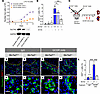 Figure 5
SLC7A2-dependent stimulated α cell proliferation is islet autonomous. (A) Cell growth over time of αTC1-6 cultured cells expressing Slc7a2 shRNA (2 clones) or non-targeting (scrambled) control shRNA (n = 4 each). Immunoblot (below) shows decreased SLC7A2 protein in the Slc7a2 shRNA lines. (B) Ex vivo α cell proliferation from isolated mouse islets cultured in low (–) and high (+) amino acid–containing medium as determined by percent Ki67+/Gcg+ cells per total Gcg+ cells in islets isolated from Slc7a2+/+, Slc7a2+/–, and Slc7a2–/– mice (n = 4 each). (C) Schematic of kidney capsule transplantation of Slc7a2–/– and Slc7a2+/+ islets into Slc7a2+/+ recipient mouse followed by glucagon receptor monoclonal antibody treatment. (D–G) Representative images of Slc7a2+/+ and Slc7a2–/– islet grafts from Slc7a2+/+ kidney capsules after 2 weeks of treatment with glucagon receptor monoclonal antibody (GCGR mAb) or control IgG (scale bar = 50 μm; inset H–K scale bar = 10 μm). Dashed yellow lines indicate kidney graft boundary. (L) Percent α cell proliferation from Slc7a2+/+ and Slc7a2–/– islets transplanted into Slc7a2+/+ kidney capsule and treated with GCGR mAb or control IgG (n = 8 transplant recipients, n = 4 per treatment group). *P < 0.05, ***P < 0.0005, and ****P < 0.0001.
Isolated islets from Slc7a2–/– mice had a 90% reduction in α cell proliferation when cultured in high amino acids (Figure 5B). Interestingly, proliferation of Slc7a2+/– α cells was approximately 60% lower than Slc7a2+/+, suggesting that the level of Slc7a2 expression may be rate limiting for proliferative response to arginine.
To test islet autonomy in vivo, we transplanted isolated islets from Slc7a2–/– mice into Slc7a2+/+ recipients, placing the knockout islets into the physiological environment of a wild-type mouse. Each recipient mouse also had Slc7a2+/+ islets transplanted into the contralateral kidney to serve as a control for stimulated α cell proliferation. After engraftment, recipient mice were treated weekly with either the GCGR mAb or the control IgG for an additional 2 weeks to investigate the consequence of interrupted glucagon signaling (Figure 5C). Immunostaining analysis of kidney grafts indicated that interrupted glucagon signaling increased α cell proliferation 4.5-fold in the Slc7a2+/+ islet grafts, but α cell proliferation in Slc7a2–/– grafts was not different from control, IgG treatment (Figure 5, D–L). Thus, these in vitro and in vivo data together indicate that SLC7A2 dependence of stimulated α cell proliferation is likely a result of SLC7A2 function in α cells.
mTORC1 activity is required for arginine- and SLC7A2-dependent α cell proliferation. Stimulated α cell proliferation has been mechanistically linked to mTOR complex 1 (mTORC1) signaling and increased phosphorylation of ribosomal protein S6 (phospho-S6), a target of mTORC1 (10). Glutamine has previously been shown to regulate α cell proliferation in an mTOR-dependent manner (10); however, absence of glutamine alone does not fully eradicate the proliferative effect of glucagon receptor–antagonized wild-type mice. Therefore, to assess whether arginine transport through SLC7A2 could affect mTORC1 activity in α cells, we quantified phospho-S6 expression by immunostaining pancreas sections from wild-type or Slc7a2–/– mice. We observed reduced phospho-S6 expression levels in α cells of GCGR mAb–treated Slc7a2–/– mice to similar levels as IgG-treated wild-type and Slc7a2–/– mice when compared with GCGR mAb–treated wild-type mice. This suggests that the inactivation of the SLC7A2 transporter can reduce mTOR activity in glucagon receptor–antagonized mice (Figure 6, A–I, and Supplemental Figure 4, A–D). To determine if arginine can similarly regulate mTORC1 activity, mouse islets were isolated and dispersed into single cells, cultured in high amino acid conditions or high amino acid conditions with low glutamine or arginine concentrations, followed by phospho-S6 immunofluorescence (Figure 6J). We observed a 2.2-fold reduction in phospho-S6235/236 expression in the high amino acid conditions with either low arginine or low glutamine, suggesting that removal of arginine or glutamine can reduce mTORC1 activation correspondingly. The data insinuate that arginine and SLC7A2 may regulate α cell proliferation in an mTORC1-dependent manner.
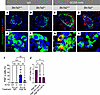 Figure 6
Arginine and SLC7A2 regulate mTORC1 activity. (A–D) Immunostaining of GCGR mAb– and IgG-treated Slc7a2+/+ and Slc7a2–/– mouse islets for glucagon and phospho-ribosomal protein S6 (P-S6235/236), indicating active mTOR signaling (scale bar = 50 μm; inset E–H scale bar = 10 μm). (I) Quantification of α cell mTOR activation as determined by percent PS6+/Gcg+ cells (P-S6235/236) per total Gcg+ cells in Slc7a2+/+ and Slc7a2–/– mouse islets after 2 weeks of treatment with GCGR mAb or control IgG (n = 4–12 each). (J) Quantification of α cell mTOR activation as determined by percent PS6+/Gcg+ cells per total Gcg+ cells in Slc7a2+/+ and Slc7a2–/– cytospun dispersed mouse islets after 4-day culture in high amino acids, high amino acids with low arginine (R), or high amino acids with low glutamine (Q) (n = 4). *P < 0.05, **P < 0.005, ***P < 0.0005.
Stimulated Slc38a5 expression during interrupted glucagon signaling is SLC7A2 dependent. Previous studies showed that interrupted glucagon signaling stimulates expression of Slc38a5, a neutral amino acid/glutamine transporter, in mouse and zebrafish α cells, and that this is partially required for mTOR-dependent α cell proliferation in an elevated amino acid environment associated with interrupted glucagon signaling in liver (9, 10). To test whether Slc38a5 expression was SLC7A2 dependent, we evaluated the presence of SLC38A5 in α cells of GCGR mAb–treated Slc7a2–/– mice and Slc7a2+/+ littermates by immunofluorescence (Figure 7, A–I). As expected, SLC38A5 was detected in greater than 60% of GCGR mAb–treated Slc7a2+/+ α cells versus 10% in IgG-treated littermates. Interestingly, less than 20% of Slc7a2–/– α cells showed detectable SLC38A5 similar to IgG-treated mice of either genotype (Figure 7, A–I). Isolated Slc7a2–/– islets transplanted into the kidney capsules of Slc7a2+/+ mice subsequently treated with GCGR mAb also lacked this stimulated SLC38A5 expression (Figure 7, K–R). Isolated islets from Slc7a2–/– mice treated with GCGR mAb also had impaired induction of Slc38a5 gene expression (Figure 7J). To further assess the connection between SLC7A2 and SLC38A5, mouse islets were isolated and dispersed into single cells, cultured in high amino acid conditions, or high amino acid conditions with low glutamine or arginine concentrations, followed by SLC38A5 immunofluorescence (Figure 7S). SLC38A5+ α cells were reduced in conditions with high amino acid concentrations coupled with either low glutamine or low arginine concentrations. No significant differences were found between low arginine and low glutamine exposure, indicating arginine and glutamine are equally important for the induction of the glutamine transporter SLC38A5. Overall, these data suggest that arginine transport through SLC7A2 is required for the induced gene expression of the glutamine transporter SLC38A5 observed during interrupted glucagon signaling (Figure 8).
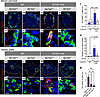 Figure 7
SLC7A2 is required for upregulation of Slc38a5 expression during interrupted glucagon signaling. (A–D) Representative images of islets from Slc7a2+/+ and Slc7a2–/– mouse pancreas stained for glucagon (green) and SLC38A5 (red) after 2 weeks of treatment with GCGR mAb or control IgG (scale bar = 50 μm; inset E–H scale bar = 10 μm). (I) Quantification of SLC38A5 expression in α cells by percent SLC38A5+/GCG+ cells per total Gcg+ cells (% SLC38A5+ α cells) in Slc7a2+/+ and Slc7a2–/– mouse islets after injection with GCGR mAb or control IgG (n = 4–5). (J) Quantification of Slc38a5 mRNA levels assessed by quantitative PCR in Slc7a2+/+ and Slc7a2–/– mice treated with IgG or GCGR mAb. (K–N) Representative images of Slc7a2+/+ and Slc7a2–/– islet grafts from Slc7a2+/+ kidney capsules after 2 weeks of treatment with GCGR mAb or control IgG and stained for glucagon and SLC38A5 (scale bar = 50 μm; inset O–R scale bar = 10 μm). Dashed yellow lines indicate kidney graft boundary. (S) Quantification of SLC38A5 in α cells as determined by percent SLC8A5+/Gcg+ cells per total Gcg+ cells in wild-type mouse islets after 4-day culture in high amino acid–containing medium (High AA) or in otherwise high AA medium with low arginine (Low R) or low glutamine (Low Q). *P < 0.05, **P < 0.005, ***P < 0.0005, ****P < 0.00005.
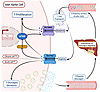 Figure 8
Model of α cell response to elevated amino acids during interrupted glucagon signaling. SLC7A2 is required for arginine-stimulated glucagon secretion and α cell proliferation. Arginine transported into the α cell through SLC7A2 initially stimulates glucagon secretion (Acute AAHigh). The buildup of intracellular arginine ultimately stimulates mTOR-dependent Slc38a5 expression through metabolism or other physiological mechanisms (Chronic AAHigh). Transport of glutamine through SLC38A5 stimulates α cell proliferation as described previously (9, 10). Created with BioRender.com.


Copyright © 2026 American Society for Clinical Investigation
ISSN: 0021-9738 (print), 1558-8238 (online)