
AIDS/HIV
Abstract
BACKGROUND. The penile urethra is a primary site of HIV acquisition in males, although little is known about the urethral determinants of HIV susceptibility. Inflammation at other genital sites enhances HIV risk, and studies suggest that some inflammatory urethral bacteria may be vaginally acquired. Here, we characterize the impact of sexual debut on the microbiome and immune milieu of the penile urethra in adolescent males from Rakai, Uganda. METHODS. A cohort of 185 self-reported sexually naïve adolescent males from Rakai, Uganda were followed longitudinally for 3 years, with questionnaires administered every 3 months and urethral swabs collected annually. Urethral soluble immune factors were quantified by chemiluminescent multiplex immunoassay and bacterial 16S rRNA sequencing was performed. Unsupervised clustering and mixed-effects models were used to assess associations between sexual debut and the urethral microbiome and immune milieu. RESULTS. Unsupervised clustering at 36 months identified two distinct urethral Community State Types (CSTs): CST-1 was dominated by Streptococcus mitis and CST-2 by bacteria associated with bacterial vaginosis (BV), particularly Sneathia amnii and Gardnerella vaginalis. CST-2 was greatly enriched at 36 months compared to baseline and was associated strongly with sexual debut. Individual bacterial taxa enriched in CST-2 were associated with both sexual debut and elevated urethral inflammatory cytokines, independent of serum testosterone and penile circumcision status. CONCLUSION. The penile urethra is colonized by BV-associated bacteria after penile-vaginal sex debut. Their presence in the urethra induces local inflammation and may serve as a reservoir for subsequent reintroduction into the vagina of female sexual partners.
Authors
Rameen Jamil, Sanja Huibner, Ping Yang, James Nnamutete, Jodie L. White, Lori Sokoll, James Pollock, Margaret Nakalanzi, Simon Peter Bukenya, Stephen D. Kiboneka, Mathias Agaba, Mary J. Nalubowa, Aggrey Anok, Godfrey Kigozi, Ronald M. Galiwango, Bryan Coburn, Cindy M. Liu, Jessica L. Prodger, Aaron A.R. Tobian, Rupert Kaul

Abstract
TRAIL is a TNF family ligand that trimerizes TRAIL-R1 (DR4) or TRAIL-R2 (DR5) to induce apoptosis, necroptosis, and/or NF-κB activation in receptor-bearing cells. We previously identified TRAILshort as a splice variant of TRAIL that lacks cysteine 230, cannot trimerize, and acts as a dominant-negative ligand that blocks TRAIL-mediated apoptosis. TRAILshort is expressed on cell surfaces and within extracellular vesicles, enabling it to confer TRAIL resistance to both producing and bystander cells. In this study, we showed that elevated TRAILshort levels were associated with chronic viral infections, cancer, and autoimmune diseases, suggesting a link to impaired immune regulation. Using unbiased phosphoproteomics and mechanistic studies, we demonstrated that TRAILshort binding to DR5 recruited and activated the phosphatase Src homology region 2 domain–containing phosphatase 1 (SHP-1), leading to zeta-chain-associated protein kinase 70 (ZAP-70) dephosphorylation, disruption of ZAP-70–CD3ζ interactions, and impaired T cell receptor signaling, thereby reducing T cell activation, proliferation, and cytokine production in response to antigen or CD3/CD28 ligation. Genetic or pharmacologic SHP-1 inhibition reverses these effects. In humanized mouse models, TRAILshort promoted the persistence of transformed mouse embryonic fibroblasts (MEFs) and L428 and antagonized CD19-directed CAR T cell activity, revealing TRAILshort as an immunomodulator of T cell function with therapeutic implications, including blocking TRAILshort to restore T cell immunity or delivering TRAILshort to enforce tolerance.
Authors
Shahrzad Jalali, Sekar Natesampillai, Zilin Nie, Ying Zhang, Ismail Can, Aswath P. Chandrasekar, Brianna M. Hameister, Cristina Correia, Tuantuan V. Zhao, Dong-Gi Mun, Enrique Garcia-Rivera, Robert Matson, Ashton Krogman, Mark A. Maynes, Robin Batchelor, Dileep D. Monie, Hu Li, Atta Behfar, Saad S. Kenderian, Akhilesh Pandey, Stephen M. Ansell, Timucin Taner, Cornelia Weyand, Daniel D. Billadeau, Andrew D. Badley
Abstract
A subset of people living with HIV (PLWH) can produce broadly neutralizing antibodies (bNAbs) against HIV, but the lymph node (LN) dynamics that promote the generation of these antibodies are poorly understood. Here, we explored LN-associated histological, immunological, and virological determinants of bNAb generation in a cohort of anti-retroviral therapy (ART)-naïve PLWH. We found that participants who produce bNAbs, termed neutralizers, have a better-preserved LN-associated B cell follicle architecture compared with PLWH who do not. The former was associated with a substantially higher in situ prevalence of Bcl-6hi follicular helper CD4 T cells (TFH), expressing a molecular program that favors their differentiation and stemness, and substantially reduced IL-10 follicular suppressor CD4 T cells. Furthermore, our data reveal possible molecular targets mediating TFH- B cell interactions in neutralizers. Together, we identify germinal center cellular and molecular signatures that could contribute to the development of bNAbs in PLWH.
Authors
Eirini Moysi, Ashish A. Sharma, Sijy O'Dell, Spiros Georgakis, Perla Mariana Del Rio Estrada, Ghneim Khader, Alonso Arana, Fernanda Torres-Ruiz, Mauricio González Navarro, Yara Andrea Luna Villalobos, Santiago Avila Rios, Gustavo Reyes-Teran, Margaret H. Beddall, Sung Hee Ko, Frida Belinky, Michail Orfanakis, Laurence de Leval, Ana B. Enriquez, Clarisa M. Buckner, Susan Moir, Helen Lindsay, Raphael Gottardo, Nicole Doria-Rose, Eli A. Boritz, John R. Mascola, Rafick-Pierre Sekaly, Richard A. Koup, Constantinos Petrovas
Abstract
BACKGROUND. Approaches to achieving antiretroviral therapy (ART)-free remission from HIV-1 must consider that people over 50 years now comprise the majority of people with HIV (PWH) on ART in various regions, including the U.S. METHODS. We report a double-blind, randomized trial in which PWH on ART, aged 21-60 years, received modified vaccinia Ankara (MVA)-vectored vaccines, MVA.tHIVconsv3 (M3) and MVA.tHIVconsv4 (M4), either alone or in combination (n=7/group) or saline placebo (n=3). M3 and M4 contain complementary HIVconsvX immunogens that each span the same regions in HIV-1 Gag and Pol but differ at approximately 8% at the amino acid level. RESULTS. M3, M4, and M3M4 regimens were well tolerated and all significantly increased both the frequency (peak median increase ~3-fold) and breadth of the HIVconsvX-specific T-cell response while redirecting T cells to target conserved regions in HIV-1 for up to 10 weeks post-vaccination. We also demonstrated that vaccination increased frequencies of T-cells targeting participant autologous HIV-1 sequences. Vaccination mostly expanded pre-existing HIV-1-specific T cells, did not impact CD4 T-cell activation, low-level viremia, or integrated HIV-1 provirus. Linear regression indicated that age was independently and negatively associated with the change in T-cell frequency at 1-, 2- and 10-weeks after vaccination (~1.41-fold decrease per 10 years older). After adjusting for age, years on ART was positively associated with HIVconsvX-specific T-cell frequencies at 1- and 2-weeks following vaccination. CONCLUSION. In PWH receiving ART, MVA.HIVconsvX vaccines significantly increased T cells targeting conserved regions of HIV-1. Novel strategies may be required to enhance anti-HIV-1 immunity in older adults. TRIAL REGISTRATION. NCT03844386.
Authors
Cynthia L. Gay, Yinyan Xu, Ann Marie K. Weideman, Fiona R. Shaw, JoAnn D. Kuruc, Shayla Z. Conrad, Sofia A. Mariano, Shahryar Samir, Sallay Kallon, Alexis T. Sponaugle, Joanna A. Warren, Genevieve T. Clutton, Maria Abad-Fernandez, Carolina Kapper, Alex B. Bradley, Caroline E. Baker, Susan M. Pedersen, Matthew Moeser, Lauren Burke, Edmund G.T. Wee, Alison Crook, Gregory M. Laird, Joshua C. Cyktor, John W. Mellors, Shuntai Zhou, Lawrence Fox, Joe J. Eron, David M. Margolis, Michael G. Hudgens, Tomáš Hanke, Nilu Goonetilleke
Abstract
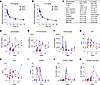
Early initiation of antiretroviral therapy (ART) in perinatally HIV-infected children significantly limits the establishment of the viral reservoir. However, the long-term impact of this intervention remains unclear. We measured the frequency of inducible, translation-competent, and replication-competent proviruses in samples from 62 children who initiated ART early (median 9.9 weeks) and remained virally suppressed for up to 9.9 years. Only a small fraction of HIV genomes produced HIV transcripts (1.8%), viral proteins (<0.9%) or infectious virions (<0.05%). Accordingly, replication-competent virus was detected in only 15% of the participants. Despite the predominance of naïve cells in pediatric blood, most proviruses were detected in memory CD4+ T cells, especially central memory cells (contribution 41%). Longitudinal analysis revealed a biphasic decay in HIV DNA: an initial decline followed by long-term stability, which was associated with extensive expansions of infected T-cell clones. In contrast, inducible proviruses declined continuously and became undetectable in most children after five years. Near full-length sequencing of 1,305 HIV genomes revealed a dramatic reduction in genetically intact proviruses, from 40% pre-ART to 0.3% after 7 years of ART. Together, these findings suggest that the intact viral reservoir rapidly decays in early-treated children, offering critical insights for pediatric HIV cure strategies.
Authors
Marta Massanella, Caroline Dufour, Amélie Pagliuzza, Audrée Lemieux, Corentin Richard, Jintanat Ananworanich, Louise Leyre, Thidarat Jupimai, Supranee Buranapraditkun, Rapisa Nantanee, Julie L. Mitchell, Panadda Sawangsinth, Mark de Souza, Piyarat Suntarattiwong, Suparat Kanjanavanit, Pope Kosalaraksa, Thitiporn Borkird, Witaya Petdachai, Kulkanya Chokephaibulkit, Lydie Trautmann, Rémi Fromentin, Thanyawee Puthanakit, Nicolas Chomont
Abstract
Despite the success of antiretroviral therapy in controlling HIV replication, latent viral reservoirs persist, presenting a major barrier to a cure. Current treatment approaches that aim to reactivate latent virus and eliminate infected cells, termed “shock and kill,” hold promise but have yet to demonstrate meaningful reservoir reduction in vivo. In this study, we explored combining ciapavir, a Smac mimetic latency-reversing agent, with adeno-associated virus–delivered (AAV-delivered) eCD4-Ig to treat antiretroviral therapy–suppressed, SHIV-infected rhesus macaques. We could demonstrate that a Smac mimetic can induce modest reactivation of the latent SHIV reservoir, as evidenced by transient increases in plasma viremia. However, while AAV-expressed eCD4-Ig conferred partial protection against intrarectal SHIV challenge in uninfected animals, neither eCD4-Ig nor ciapavir reduced the viral reservoir in SHIV-infected rhesus macaques, as determined by total SHIV DNA and a 5-target intact provirus detection assay. Animals treated with the combination showed no significant differences in viral rebound kinetics post–analytical treatment interruption compared with controls. Additionally, repeated ciapavir dosing resulted in adverse effects in some animals, suggesting potential toxicity with repeat administration. These findings highlight the challenges in reducing viral reservoirs using this shock-and-kill approach, particularly in SHIV-infected models, and suggest that further optimization of both latency-reversing agent and immune-mediated clearance strategies is required.
Authors
Lars Pache, John K. Bui, Lindsay M. Klouser, Christine M. Fennessey, Alexander C. Noyola, Teresa Einhaus, Haiying Zhu, Laurence Stensland, Isai Leguizamo, Abubakarr A. Koroma, Peter Teriete, W.L. William Chang, Ollivier Hyrien, Natasha N. Duggan, Dominik Heimann, Ailyn C. Pérez-Osorio, Katharine J. Bar, Nicholas D.P. Cosford, Brandon F. Keele, Dennis J. Hartigan-O’Connor, Michael Farzan, Matthew R. Gardner, Keith R. Jerome, Sumit K. Chanda, Hans-Peter Kiem, Christopher W. Peterson
Abstract
Integrin-targeted therapies are under investigation for HIV associated neuroinflammation, yet their impact on CNS anti-viral immunity remains undefined. We examined the role of α4 integrin in T cell mediated neuroimmune surveillance using SIV-infected macaques with α4 blockade and T cell-specific α4-deficient mice. In macaques, α4 blockade preserved CD4 Th1 cell access to the brain parenchyma but impaired CD8 effector recruitment, disrupting antiviral control. Despite stable cerebrospinal fluid viral loads, hippocampal SIV RNA increased under blockade. Single-cell analyses revealed α4 enrichment in CD8 effector memory (TEM) cells; blockade reduced inferred CD8 TEM-monocyte interactions and heightened innate immune activation in the hippocampus. Microscopy demonstrated persistent SIV-induced microglial simplification despite treatment. Th1 CD4 effectors correlated positively with gray matter viral RNA, whereas α4β7⁺ CD8 T cells correlated inversely, implicating impaired CD8 TEM recruitment in elevated parenchymal viral burden. In mice, α4 proved dispensable for CD4 trafficking to inflamed brain but essential for CD8 effector access across CNS compartments and for both subsets to reach skull marrow. These findings establish that α4 integrin governs CD8-mediated neuroimmune surveillance through coordinated cellular positioning, with blockade enabling viral seeding while disrupting spatially organized antiviral defense.
Authors
Pabitra B. Pal, Sonny R. Elizaldi, Giovanne B. Diniz, Ravi Prakash Rai, Yashavanth Shaan Lakshmanappa, Anil Verma, Daniel Rossmiller, Jesse Kaufman, Rahul Srivastava, Sean Ott, Carissa T. Erices, Kayla Schwartz, Danielle Beckman, Zhong-Min Ma, Alex Petkov, Daniel Newhouse, Dhivyaa Rajasundaram, John H. Morrison, Reben Raeman, Smita S. Iyer
Abstract
Authors
Jana Blazkova, Brooke D. Kennedy, Jesse S. Justement, Victoria Shi, Adeline Sewack, Maegan R. Manning, Sonali S. Dasari, Kathleen Gittens, Susan Moir, Mark Connors, Stephen A. Migueles, Tae-Wook Chun
Abstract
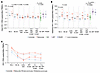
Broadly neutralizing antibodies (bnAbs) are evaluated as possible alternatives to standard antiretroviral treatment (ART) for maintaining control of HIV-1 replication and may enhance immune responses to reduce or control the viral reservoir. However, the immunological and virological effects of bnAbs in infants and children are unknown. We conducted a detailed analysis of proviral reservoir dynamics and antiviral immune responses in a unique group of young children from Botswana who started ART at birth and then stopped standard ART while receiving the bnAbs 10-1074 and VRC01-LS in a subsequent clinical trial. No quantitative changes in frequencies of proviral sequences were observed during bnAb treatment, but selection of genome-intact proviruses in transcriptionally repressive heterochromatin regions occurred in some study participants. Faster viral rebound following standard ART cessation was linked to elevated proportions of KIR2DL1-positive NK cells. In contrast, delayed viral rebound and more limited viral reservoir size were associated with elevated proportions of NKG2A-positive NK cells and with the HLA-B-21M signal peptide polymorphism. HIV-specific T cell responses were low in all study participants and unrelated to viral reservoir sizes or clinical outcomes following ART interruption. These results suggest that, in young children, specific NK cell subsets and KIR-HLA interactions might be linked to HIV-1 rebound kinetics after substitution of standard ART with bnAbs.
Authors
Aischa Niesar, Melanie Lancien, Seohyun Hong, Chloe Naasz, Gbolahan Ajibola, Kenneth Maswabi, Maureen Sakoi-Mosetlhi, Oganne Batlang, Sikhulile Moyo, Terence Mohammed, Comfort Maphorisa, Leah Carrere, Isabelle Roseto, Ciputra Adijaya Hartana, Toong Seng Tan, Ce Gao, Elizabeth Parsons, Renee Hua, Molly Pretorius Holme, Shahin Lockman, Kathleen M. Powis, Mary Carrington, Joseph Makhema, Xu G. Yu, Daniel R. Kuritzkes, Roger L. Shapiro, Mathias Lichterfeld
Abstract
BACKGROUND. Susceptibility to human immunodeficiency virus type 1 (HIV-1) infection varies between individuals, but the biological determinants of acquisition risk remain poorly defined. METHODS. We conducted a case-control study nested within a high-risk cohort in Kenya. We compared the plasma extracellular RNA collected before HIV-1 acquisition with matched uninfected controls to identify immunological processes linked to infection risk. RESULTS. Individuals who later acquired HIV-1 exhibited upregulation of immune processes that facilitate viral infection, including T cell suppression, type II interferon and Th2 immune responses. In contrast, processes associated with antiviral defence and tissue repair, such as neutrophil and natural killer cell responses, type I interferon responses, wound healing, and angiogenesis, were downregulated. CONCLUSION. These findings highlight dampened antiviral immunity prior to exposure as a correlate of increased risk for subsequent HIV-1 acquisition. TRIAL NUMBERS. Not applicable. FUNDING. This work was supported by a Wellcome Trust Award (209289/Z/17/Z) and the Sub-Saharan African Network for TB/HIV Research Excellence (SANTHE) through the DELTAS Africa programme [Del-22-007], supported by the Science for Africa Foundation, Wellcome Trust, the UK Foreign, Commonwealth & Development Office, and the European Union. Additional support was provided by the Bill & Melinda Gates Foundation, Gilead Sciences Inc., Aidsfonds, and the Ragon Institute of Mass General, MIT, and Harvard. The cohort study was supported by PEPFAR through USAID. The views expressed are those of the authors.
Authors
Mwikali Kioko, Shaban Mwangi, Lynn Fwambah, Amin S. Hassan, Jason T. Blackard, Philip Bejon, Eduard J. Sanders, Thumbi Ndung'u, Eunice W. Nduati, Abdirahman I. Abdi


Copyright © 2026 American Society for Clinical Investigation
ISSN: 0021-9738 (print), 1558-8238 (online)