
Go to JCI Insight
  • About
  • Editors
  • Consulting Editors
  • For authors
  • Journal stats
  • Publication ethics
  • Publication alerts by email
  • Advertising
  • Job board
  • Contact
  • Clinical Research and Public Health
  • Current issue
  • Past issues
  • By specialty
    • COVID-19
    • Cardiology
    • Gastroenterology
    • Immunology
    • Metabolism
    • Nephrology
    • Neuroscience
    • Oncology
    • Pulmonology
    • Vascular biology
    • All ...
  • Videos
    • ASCI Milestone Awards
    • Video Abstracts
    • Conversations with Giants in Medicine
  • Reviews
    • View all reviews ...
    • Emerging therapeutic strategies in breast cancer (Oct 2026)
    • The cGAS-STING pathway: DNA sensing in health and disease (Jun 2026)
    • Neurodegeneration (Mar 2026)
    • Clinical innovation and scientific progress in GLP-1 medicine (Nov 2025)
    • Pancreatic Cancer (Jul 2025)
    • Complement Biology and Therapeutics (May 2025)
    • Evolving insights into MASLD and MASH pathogenesis and treatment (Apr 2025)
    • View all review series ...
  • Viewpoint
  • Collections
    • In-Press Preview
    • Clinical Research and Public Health
    • Research Letters
    • Letters to the Editor
    • Editorials
    • Commentaries
    • Editor's notes
    • Reviews
    • Viewpoints
    • 100th anniversary
    • Top read articles
  • Search Articles

  • Current issue
  • Past issues
  • Specialties
  • Reviews
  • Review series
  • ASCI Milestone Awards
  • Video Abstracts
  • Conversations with Giants in Medicine
  • In-Press Preview
  • Clinical Research and Public Health
  • Research Letters
  • Letters to the Editor
  • Editorials
  • Commentaries
  • Editor's notes
  • Reviews
  • Viewpoints
  • 100th anniversary
  • Top read articles
  • About
  • Editors
  • Consulting Editors
  • For authors
  • Journal stats
  • Publication ethics
  • Publication alerts by email
  • Advertising
  • Job board
  • Contact

Submit a comment

METTL8 orchestrates TFH cell differentiation through m³C-mediated TCF1 regulation in infection and cancer models
Jiaxi Song, Dan Cui, Jiabao Wang, Xuewei Qi, Jiaxin Ma, Haoyu Yu, Qing Liu, Jing Yang, Tengfei Hu, Xu Han, Handong Ma, Rentao Yu, Ying Dai, Xiaona Zhang, Qunfa Cao, Xiaoyuan Song, Bofeng Li, Lilin Ye, Hua Wang, Qizhao Huang, Jia Li, Fengyin Li
View: Text | PDF
Research Article Cell biology Oncology

METTL8 orchestrates TFH cell differentiation through m³C-mediated TCF1 regulation in infection and cancer models

  • Text
  • PDF
Abstract

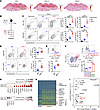
T follicular helper (TFH) cells are critical for humoral immunity against infections and correlate with immunotherapy efficacy, whereas immune checkpoint inhibitor therapy can drive their aberrant expansion, underscoring the need to understand the regulators controlling TFH cell fate. However, the epitranscriptomic regulation of their differentiation remains poorly understood. Here, we identify the 3-methylcytosine (m³C) methyltransferase METTL8 as a key regulator of TFH cell differentiation in both viral infection and cancer. METTL8 was preferentially expressed in CXCL13hi TFH cells, and its deficiency impaired TFH differentiation and germinal center responses in the lymphocytic choriomeningitis virus infection model and following anti–PD-1 immunotherapy in tumor models. Mechanistically, METTL8 exerted dual functions: it bound and stabilized Tcf7 mRNA through m³C modification, and it interacted with TCF1 protein to regulate chromatin accessibility and 3D genome organization at key TFH-associated loci, including Cxcr5 and Il6ra. Notably, ginkgolic acid treatment suppressed TFH responses without compromising the antitumor efficacy of anti–PD-1 therapy, an effect associated with METTL8. Collectively, our findings identify METTL8 as an epitranscriptomic regulator linked to RNA modification, TCF1-associated transcriptional control, and chromatin architecture during TFH differentiation and suggest that modulation of this pathway may provide a strategy to tune TFH-driven immune responses.

Authors

Jiaxi Song, Dan Cui, Jiabao Wang, Xuewei Qi, Jiaxin Ma, Haoyu Yu, Qing Liu, Jing Yang, Tengfei Hu, Xu Han, Handong Ma, Rentao Yu, Ying Dai, Xiaona Zhang, Qunfa Cao, Xiaoyuan Song, Bofeng Li, Lilin Ye, Hua Wang, Qizhao Huang, Jia Li, Fengyin Li

×

Guidelines

The Editorial Board will only consider comments that are deemed relevant and of interest to readers. The Journal will not post data that have not been subjected to peer review; or a comment that is essentially a reiteration of another comment.

  • Comments appear on the Journal’s website and are linked from the original article’s web page.
  • Authors are notified by email if their comments are posted.
  • The Journal reserves the right to edit comments for length and clarity.
  • No appeals will be considered.
  • Comments are not indexed in PubMed.

Specific requirements

  • Maximum length, 400 words
  • Entered as plain text or HTML
  • Author’s name and email address, to be posted with the comment
  • Declaration of all potential conflicts of interest (even if these are not ultimately posted); see the Journal’s conflict-of-interest policy
  • Comments may not include figures
This field is required

Copyright © 2026 American Society for Clinical Investigation
ISSN: 0021-9738 (print), 1558-8238 (online)

Sign up for email alerts