
Research Article

Abstract
Dominant-inactivating mutations in the colony stimulating factor-1 receptor (CSF1R) cause CSF-1R–related leukoencephalopathy (CRL), an adult-onset neurodegenerative disease that is modeled in the Csf1r+/– mouse. CRL is caused by microglial dysfunction. However, the primary microglial deficit is unknown. To address this question, we employed single-nucleus RNA sequencing of brains from young Csf1r+/– mice without pathological or behavioral alterations. Reduction of CSF-1R signaling caused metal ion accumulation in brain macrophages, with concomitant activation of cell death and stress response pathways in oligodendrocytes and neuronal subpopulations. Reduction of metallothionein 1 (Mt1) and 3 (Mt3) gene expression was a common feature in glial and neuronal cells of Csf1r+/– mice. Overexpression of Mt1 restored metal ion homeostasis, normalized ROS production in microglia, and prevented the development of behavioral deficits, while Mt3 deletion had disease-enhancing effects. These findings demonstrate CSF-1R regulation of metal ion homeostasis via metallothioneins in the brain.
Authors
Violeta Chițu, Julia Alvarenga, Wenna Chen, David Reynolds, Yang Liu, Daqian Sun, Anders Sandell, Virginjia Danylaité-Karrenbauer, Per Uvdal, Iran A.N da Silva, Christophe Sandt, Oxana Klementieva, Ulf Johansson, Kavitha Subramanian Vignesh, Zbigniew K. Wszolek, Dennis W. Dickson, Jennifer T. Aguilian, Simone Sidoli, Deyou Zheng, E. Richard Stanley

Abstract
Immune evasion is a major obstacle in pancreatic cancer therapy. Recent data implicate proinflammatory macrophages in the progression of pancreatic ductal adenocarcinoma (PDAC) and its therapeutic response. However, whether or which of the proinflammatory macrophage subtypes play a crucial role in the immune escape of PDAC remains unclear. Here, we identify a population of CD138+ tumor-associated macrophages (TAMs), characterized by their proinflammatory and neutrophil-chemotactic activity, which undergo significant expansion in both patients with PDAC and mouse models. These cells are elicited by a local synergy between IL-34/syndecan-1 and PGE2/EP2 signaling and are associated with immune evasion and poor clinical outcomes in patients, while also promoting immune escape and disease progression in mouse models. Mechanistically, CD138+ TAMs establish a feed-forward loop with immunosuppressive Siglec-F+ neutrophils, which exhibit elevated PGE2 expression, via the secretion of SAA3 and CXCL1. Targeting CD138+ TAMs by disrupting IL-34/syndecan-1 signaling with anti–IL-34 neutralizing antibodies significantly suppressed PDAC progression, especially when combined with anti–PD-1 antibodies. Together, our study elucidates a CD138+ TAM/Siglec-F+ neutrophil axis that drives immune escape in PDAC and proposes a therapeutic strategy that integrates IL-34/syndecan-1 signaling blockade with anti–PD-1 immunotherapy for the treatment of PDAC.
Authors
Chao Wang, Qi Zhang, Jinyan Huang, Fangyu Lin, Danyang Zhao, Youling Mu, Junshuo Tong, Jinping Li, Yingjiqiong Liang, Tao Zeng, Fukang Shi, Hang Shen, Tingting Lu, Tingbo Liang
Abstract
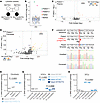
High levels of l- and d-2-hydroxyglutarate (2HG), the reduced forms of α-ketoglutarate (αKG), are implicated in neurodevelopmental disorders and cancer by modulating αKG-dependent dioxygenases involved in histone, DNA, and RNA demethylation. L-2HG dehydrogenase (L2HGDH) deficiency, a rare autosomal recessive inborn error of metabolism associated with systemic L-2HG elevation, causes progressive neurological disability and increased brain tumor risk of unclear mechanism. Using an isogenic, patient-derived induced pluripotent stem cell system, we examined the impact of L2HGDH deficiency on neural progenitor cell (NPC) function and neuronal differentiation. L2HGDH deficiency caused L-2HG accumulation, NPC hyperproliferation, increased clonogenicity, and defective neuronal differentiation in 2D cultures and cortical spheroids. Editing the L2HGDH locus to WT reversed these effects. Inhibiting glutaminase reduced L-2HG levels and induced neuronal differentiation. L-2HG–dependent inhibition of KDM5 histone demethylases led to widespread retention of H3K4me2/3, markers of active gene expression, with prominent enrichment at the MYC locus and elevated MYC expression across multiple neural cell types. Despite broadly altered histone methylation, genetically or pharmacologically normalizing MYC completely restored neuronal differentiation. These data indicated that a primary metabolic disturbance activated MYC to favor self-renewal and suppress neuronal lineage commitment.
Authors
Wen Gu, Xun Wang, Ashley Solmonson, Ling Cai, Yi Xiao, Alpaslan Tasdogan, Jordan Franklin, Yuannyu Zhang, Hua Zhang, Aundrea K. Westfall, Ashley Rowe, Hetali Trivedi, Brandon Faubert, Zheng Wu, Jessica Sudderth, Lauren G. Zacharias, Bushra Afroze, Ilya Bezprozvanny, Sunil Sudarshan, Feng Cai, Samuel K. McBrayer, Thomas P. Mathews, Ralph J. DeBerardinis

Abstract
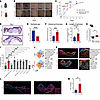
N6-methyladenosine (m6A) is a prevalent modification of mammalian mRNA. Increasing evidence has documented diverse roles of m6A in normal cell physiology and diseases. However, its functional role in erythropoiesis remains poorly understood. In this study, we found that deletion of Mettl3 using the EpoR-Cre mouse led to microcytic/hypochromic anemia due to defective erythropoiesis along with impaired hemoglobin biosynthesis. Mechanically, Mettl3 deficiency disrupted nucleotide biosynthesis, which induced DNA damage, leading to apoptosis of colony-forming unit–erythroid cells and cell-cycle arrest of erythroblasts. Integrated m6A-seq and RNA-seq analysis along with biochemical studies identified Mthfd1, a key enzyme involved in nucleotide biosynthesis, as a Mettl3 direct target gene. Furthermore, deletion of Mettl3 led to decreased expression of Mthfd1, accompanied by a shortage of nucleotides deoxythymidine monophosphate and inosine monophosphate, in erythroid cells. Additionally, inhibition of METTL3 in human erythroid cells led to similar phenotypic and molecular changes, indicating a conserved role of METTL3 in human and murine erythropoiesis. Our findings have identified an METTL3-m6A-MTHFD1 axis that plays a critical role in erythropoiesis by maintaining genome stability of erythroid cells via regulation of nucleotide biosynthesis. These findings provide important insights into the regulatory mechanisms of erythropoiesis and may have implications for underlying the mechanisms of anemias.
Authors
Linlin Zhang, Huizhi Zhao, Shihui Wang, Xueting Wu, Donghao Liu, Hengchao Zhang, Qianqian Yang, Ying Cheng, Xiuyun Wu, Jiangwei Zhao, Shijie Zhang, Huan Zhang, Haojian Zhang, Qiaozhen Kang, Lixiang Chen, Xiuli An, Xiaoli Qu
Abstract
The peritoneal cavity contains a large population of GATA6-expressing large peritoneal macrophages (LPMs), known to support healing of intraabdominal organs. In this study, we aimed to explore their full sphere of influence by examining their ability to perform wound healing at distant sites outside the cavity. In a mouse model combining a remote skin injury with peritoneal stimulation we observed a significant acceleration of skin wound healing in response to LPM activation. Tracking GATA6-expressing LPMs, we demonstrated that LPMs do not migrate to distant wound sites following peritoneal activation. Using parabiosis experiments and administration of activated peritoneal contents indicated an important role of molecules secreted by LPMs in remote skin wound healing. More specifically, proteomic and transcriptomic analyses identified fibronectin as a key factor produced by activated LPMs. In fact, depletion of LPMs or genetic knockout of fibronectin in myeloid cells eliminated the enhanced healing effect. These findings highlight the endocrine function of LPMs in systemic tissue repair, challenging the traditional perspective of plasma fibronectin being exclusively liver derived. Our results suggest that LPMs, strategically positioned in the peritoneal cavity, serve as a source of circulating fibronectin, promoting matrix formation and accelerating wound healing at distant sites.
Authors
Lilian Salm, Simone N. Zwicky, Daniel Spari, Tural Yarahmadov, Marie Siwicki, Fernanda Vargas e Silva Castanheira, Jonas Zbinden, Deborah Stroka, Joel Zindel, Antoine Dufour, Paul Kubes, Guido Beldi

Abstract
Despite substantial progress in understanding the molecular pathology of Parkinson’s disease (PD), the underlying drivers of PD in many cases remain unknown. Here, we investigate the role of RNA modification in PD, following observations of selective m6A hypomethylation in the substantia nigra (SN) of mouse PD models and dysregulated METTL3 and ALKBH5 expression in dopaminergic (DA) neurons from patients with PD. We found preferential m6A deposition on transcripts of PD risk genes and what we believe to be a previously unreported heterozygous METTL3 p.K480R mutation in patients with PD. Mettl3K480R/+ mice exhibited progressive METTL3 reduction and m6A hypomethylation in the SN, leading to progressive DA neuron loss, phospho-α-synuclein increase, and levodopa-responsive motor and nonmotor deficits, mimicking PD progression. Dopamine transporter–specific METTL3 knockout mice recapitulate m6A hypomethylation, neurodegeneration, and levodopa-responsive parkinsonism. Mechanistically, m6A deficiency disrupted mitochondrial biogenesis and function through regulating Tfam expression, while mitochondrial dysfunction reciprocally impaired m6A deposition, creating a pathogenic loop. Importantly, supplementation with S-adenosylmethionine (SAMe) enhanced m6A modification, disrupted the pathogenic loop, and alleviated parkinsonism in mouse models. Our findings revealed m6A dysregulation as an important contributor to PD pathogenesis, provide a valuable preclinical mouse model for PD progression, and highlight RNA methylation-targeted therapies as a promising strategy for PD intervention.
Authors
Sun Liu, Qihuan Ren, Guiling Mo, Zengguang Li, Huili Huang, Yuhao Zhou, Ziteng Miao, Xin Cao, Bilian Wu, Zhuoyu Xiao, Shihui Yu, Guangjin Wu, Linjian Xia, Jinru Cui, Junyuan Mo, Yuan Li, Laixin Xia, Juan Shen, Shan Xiao

Abstract
The mammalian brain relies primarily on glucose for its energy needs. Delivery of this nutrient to the brain is mediated by the glucose transporter-1 (GLUT1) protein. Low GLUT1 thwarts glucose entry into the brain, causing an energy crisis and triggering, in one instance, the debilitating neurodevelopmental condition known as GLUT1 deficiency syndrome (GLUT1DS). Current treatments for GLUT1DS are suboptimal, as none address the root cause — low GLUT1 — of the condition. Levels of this transporter must respond rapidly to the brain’s changing energy requirements. This necessitates fine tuning its expression. Here, we describe a long-noncoding RNA (lncRNA) antisense to GLUT1 (SLC2A1) and show that it is involved in such regulation. Raising levels of the lncRNA had a concordant effect on GLUT1 in cultured human cells and transgenic mice; reducing levels elicited the opposite effect. Delivering the lncRNA to GLUT1DS model mice via viral vectors induced GLUT1 expression, enhancing brain glucose levels to mitigate disease. Direct delivery of such a lncRNA to combat disease has not been reported previously and constitutes, to our knowledge, a unique therapeutic paradigm. Moreover, considering the importance of maintaining homeostatic GLUT1 levels, calibrating transporter expression via the lncRNA could become broadly relevant to myriad conditions, including Alzheimer’s disease, wherein GLUT1 is perturbed.
Authors
Maoxue Tang, Sasa Teng, Yueqing Peng, Ashley Y. Kim, Yoon-Ra Her, Peter Canoll, Jeffrey N. Bruce, Phyllis L. Faust, Kailash Adhikari, Darryl C. De Vivo, Umrao R. Monani

Abstract
Obesity-linked steatosis is a significant risk factor for hepatocellular carcinoma (HCC); however, the molecular mechanisms underlying the transition from metabolic dysfunction–associated steatotic liver disease (MASLD) to HCC remain unclear. Here, we explored the role of the ER-associated protein NgBR, an essential component of the cis-prenyltransferase (cis-PTase) enzyme, in chronic liver disease. Hepatocyte-specific NgBR deletion in mice (N-LKO) intensified triacylglycerol (TAG) accumulation, inflammatory responses, ER/oxidative stress, and fibrosis, ultimately resulting in HCC development with 100% penetrance after 4 months on a high-fat diet. Similarly, liver-specific knockout of DHDDS, NgBR’s cis-PTase partner, and a knockin model carrying a human NgBR mutation that impairs cis-PTase activity developed HCC under high-fat diet conditions, although with lower penetrance. A single-cell transcriptomic atlas from affected livers provides a detailed molecular analysis of the transition from liver pathophysiology to HCC development. Mechanistically, NgBR deficiency promoted excessive hepatic TAG accumulation by enhancing lipid uptake and impairing VLDL secretion. Importantly, pharmacological inhibition of diacylglycerol acyltransferase-2 (DGAT2), a key enzyme in TAG synthesis, abrogated diet-induced liver damage and HCC burden in N-LKO mice. Overall, our findings establish cis-PTase as a critical suppressor of MASLD-HCC conversion and suggest DGAT2 inhibition may serve as a promising therapeutic approach to delay HCC formation in advanced metabolic dysfunction–associated steatohepatitis.
Authors
Abhishek K. Singh, Balkrishna Chaube, Kathryn M. Citrin, Joseph W.M. Fowler, Sungwoon Lee, Jonatas Catarino, James Knight, Sarah C. Lowery, Sonal Shree, Keira E. Mahoney, Nabil E. Boutagy, Inmaculada Ruz-Maldonado, Kathy Harry, Marya Shanabrough, Trenton T. Ross, Stacy A. Malaker, Yajaira Suárez, Carlos Fernández-Hernando, Kariona A. Grabińska, William C. Sessa

Abstract
Sepsis is a systemic response to infection with life-threatening consequences such as hemolysis, a predictor of mortality risks for the disease. Here, by measuring organism-wide changes in gene expression, we discovered that the secreted phospholipase PLA2G5 is induced in colon cell types during sepsis. The genetic deletion of Pla2g5 and treatment with a PLA2G5 antibody were both associated with protection from lethal sepsis. Treatment with a PLA2G5 antibody during sepsis was associated with increased splenic red pulp macrophages and improved iron homeostasis, linking PLA2G5 to red blood cell homeostasis during sepsis. Mechanistically, bloodborne PLA2G5 led to intravascular hemolysis through its lipolytic activity on red blood cell membranes. In humans with sepsis due to bacterial, fungal, or viral infections, the serum level of PLA2G5 was elevated and predictive of disease severity and mortality. We conclude that sepsis corrupts PLA2G5 into becoming an intravascular hemolytic factor which is toxic for host red blood cells.
Authors
Michihiro Takahama, Krysta S. Wolfe, Gabriella Richey, Madison Plaster, Anna Czapar, Fabian Hernandez, Denis Cipurko, Tatsuki Ueda, Yoshimi Miki, Yuki Nagasaki, Yoshitaka Taketomi, Tatsuya Saitoh, Tadafumi Kawamoto, Steven M. Dudek, Makoto Murakami, Nicolas Chevrier

Abstract
Cardiomyocytes primarily rely on fatty acid oxidation (FAO), which provides more than 70% of their energy. However, excessive FAO can disrupt cardiac metabolism by increasing oxygen demand and suppressing glucose utilization through the Randle cycle. Although inhibition of FAO has been investigated in heart failure, its overall therapeutic impact remains uncertain. To determine the consequences of enhanced FAO, we generated cardiomyocyte-specific ACC1 and ACC2 double-knockout (ACC dHKO) mice, which exhibit constitutively elevated FAO. ACC dHKO mice developed dilated cardiomyopathy and heart failure. Lipidomic analysis revealed marked depletion of cardiolipin caused by reduced linoleic acid, a direct consequence of excessive FAO. This cardiolipin deficiency impaired mitochondrial electron transport chain (ETC) activity, leading to mitochondrial dysfunction. Pharmacologic inhibition of FAO with etomoxir or oxfenicine restored cardiolipin levels, normalized ETC activity, and prevented cardiac dysfunction in ACC dHKO mice. These findings demonstrate that unrestrained FAO disrupts both lipid and energy homeostasis, culminating in heart failure in this model. Collectively, these results indicate that although FAO is essential for cardiac energy production, therapeutic strategies aimed at stimulating cardiac FAO may be detrimental rather than beneficial in heart failure.
Authors
Chai-Wan Kim, Goncalo Vale, Xiaorong Fu, Jeffrey G. McDonald, Chongshan Dai, Chao Li, Zhao V. Wang, Gaurav Sharma, Chalermchai Khemtong, Craig R. Malloy, Stanislaw Deja, Shawn C. Burgess, Matthew A. Mitsche, Jay D. Horton
No posts were found with this tag.


Copyright © 2026 American Society for Clinical Investigation
ISSN: 0021-9738 (print), 1558-8238 (online)