
Research Article
Abstract
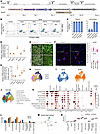
While clinical trials of human pluripotent stem cell–derived midbrain dopamine (mDA) neuron precursor grafts for Parkinson’s disease (PD) are ongoing, current protocols remain suboptimal. In particular, the yield of TH+ mDA neurons after in vivo grafting and the expression of certain mDA neuron and subtype-specific markers require improvement. Single-cell transcriptomic analyses of grafts have revealed low proportions of mDA neurons and substantial off-target contamination. Here, we present an optimized mDA neuron differentiation strategy that builds on our clinical-grade (“Boost”) protocol by adding FGF18 and IWP2 treatment (“Boost+”) at the neurogenesis stage. Boost+ mDA neurons show higher expression of EN1, PITX3, and ALDH1A1. Improvements in mDA neuron yield and transcriptional similarity to primary mDA neurons are observed in vitro and following transplantation. Single-nucleus RNA sequencing demonstrates enrichment of A9 mDA neurons within Boost+ grafts. Functional studies in vitro demonstrate increased dopamine production and release and improved electrophysiological properties. In vivo analyses show higher percentages of TH+ mDA neurons, resulting in efficient rescue of amphetamine-induced rotation behavior in the 6-OHDA rat model and rescue of deficits in some nondrug-induced assays, including the ladder rung assay, which are not improved by Boost mDA neurons. The Boost+ conditions present an optimized differentiation protocol with advantages for disease modeling and mDA neuron grafting paradigms.
Authors
Tae Wan Kim, Jinghua Piao, Vittoria D. Bocchi, So Yeon Koo, Se Joon Choi, Fayzan Chaudhry, Donghe Yang, Hyein S. Cho, Emiliano Hergenreder, Lucia Ruiz Perera, Subhashini Joshi, Zaki Abou Mrad, Nidia Claros, Shkurte Ademi Donohue, Yeong Eun Im, Hyo Jae Jeong, Anika K. Frank, Ryan M. Walsh, Eugene V. Mosharov, Doron Betel, Viviane Tabar, Lorenz Studer
Abstract
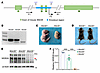
Skraban-Deardorff syndrome, a rare neurodevelopmental disorder caused by WD repeat domain 26 (WDR26) haploinsufficiency, is characterized by intellectual disability, seizures, autistic-like behaviors, and craniofacial anomalies. Despite its genetic association with variants disrupting the C-terminal to LisH (CTLH) E3 ubiquitin ligase complex, the molecular mechanisms linking WDR26 dysfunction to neurodevelopmental deficits remain unclear. Here, we demonstrate that Wdr26 heterozygous-KO mice (Wdr26+/–) recapitulated core clinical features of the syndrome, including learning and memory impairments, social dysfunction, heightened seizure susceptibility, and motor deficits, alongside rare craniofacial and dental abnormalities. Mechanistically, Wdr26 haploinsufficiency stabilized RUNX1 translocation partner 1 (RUNX1T1), a transcriptional coactivator critical for neuronal differentiation, by impairing its ubiquitination and proteasomal degradation, consequently disrupting the level of microtubule-associated protein 2 (MAP2), a key regulator of dendritic architecture and synaptic plasticity. Early intervention in neonatal Wdr26+/– mice (P0.5) using AAV-shRNA–mediated Runx1t1 knockdown reversed MAP2 overexpression and behavioral deficits. Notably, the antipsychotic risperidone ameliorated cognitive and social impairments in Wdr26+/– mice by upregulating WDR26 levels, suggesting a potential therapeutic avenue. Our findings not only establish the animal model as a robust preclinical tool but also define the WDR26/RUNX1T1/MAP2 regulatory axis as pivotal to the syndrome’s pathogenesis, while identifying actionable therapeutic targets.
Authors
Xingyun Xu, Yaohui Zhou, Shiyao Xu, Hongjie Zhou, Xuexia Lin, Yuhao Luo, Yu Xu, Zhigang Miao, Wei Ge, Hao Yang, Xingshun Xu

Abstract
While radiation is an effective oncologic therapy, killing cancer by inducing DNA double-strand breaks (DSBs), it lacks specificity for neoplastic cells. We have previously adapted the CRISPR/Cas9 gene-editing technology as a cancer-specific treatment modality targeting somatic mutations in pancreatic cancer (PC). However, its tumoricidal potential remains unclear, especially in comparison with therapeutic doses of radiation. Here, we demonstrate that CRISPR/Cas9-induced DSBs are more cytotoxic in PCs than a comparable number of radiation-induced DSBs. We observed more than 90% tumor growth inhibition by targeting 9 sites with cancer-specific sgRNAs. Through both bioinformatics and cytogenetics analyses, we found that CRISPR/Cas9-induced DSBs triggered ongoing chromosomal rearrangements, with 87% of structural variants not directly produced from the initial CRISPR/Cas9-induced DSBs, and chromosomal instability peaking before cell death. By comparing the cytotoxicity of CRISPR/Cas9- and radiation-induced DSBs, we demonstrated that the number of DSBs required to achieve equitoxic effects was approximately 3 times higher for radiation than CRISPR/Cas9. Finally, we showed that PC cells that had survived CRISPR/Cas9 targeting retained susceptibility to subsequent CRISPR/Cas9-induced DSBs at different genomic sites with more than 87% growth inhibition. Together, our data support the therapeutic potential of CRISPR/Cas9 as an anticancer strategy.
Authors
Selina Shiqing K. Teh, Akhil Kotwal, Alexis Bennett, Eitan Halper-Stromberg, Laura Morsberger, Saum Zamani, Yanan Shi, Alyza Skaist, Qingfeng Zhu, Kirsten Bowland, Hong Liang, Ralph H. Hruban, Chien-Fu Hung, Robert A. Anders, Nicholas J. Roberts, Robert B. Scharpf, Michael Goldstein, Ying S. Zou, James R. Eshleman
Abstract
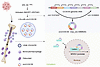
Bone metastasis remains a major cause of morbidity in estrogen receptor–positive breast cancer, with RANKL inhibitor resistance emerging as a critical clinical challenge. Nearly 40% of patients develop progressive skeletal lesions despite denosumab therapy, highlighting an urgent need to identify resistance mechanisms and alternative therapeutic strategies. We identified a RANKL-independent osteoclast activation pathway mediated by the CRKL/circCCDC50/NFATc1 axis. Mechanistically, CRKL promoted EIF4A3-dependent circCCDC50 biogenesis, which was packaged into large oncosomes and transferred to osteoclast precursors. Nuclear circCCDC50 recruited CARM1 to epigenetically activate NFATc1 transcription, establishing a self-reinforcing loop that sustained osteolysis despite RANKL blockade. Pharmacological inhibition of CARM1 (TP-064) effectively suppressed osteoclastogenesis and bone metastasis in denosumab-resistant models. These findings revealed a targetable resistance mechanism and provided a clinically actionable strategy to overcome microenvironment-driven metastasis through dual targeting of tumor and bone niches.
Authors
Qun Lin, Jinpeng Luo, Zhuxi Duan, Jieer Luo, Wei Zhang, Yuan Xia, Yinduo Zeng, Xiaolin Fang, Jiahui Liang, Jiayi Chen, Qianchong Lin, Yilin Quan, Ruiyu Hu, Hongcai Liu, Qiang Liu, Jun Li, Chang Gong

Abstract
Stem cells are critical for the homeostasis of adult tissues. Thyroid hormone (TH), whose intracellular concentration is increased by type 2 deiodinase (D2), is involved in many functions, but its role in quiescence is unknown. Here, we show that D2 marks quiescent stem cells in muscle and skin. Genetic D2 depletion in quiescent muscle stem cells triggered their transition from a G0 to a GAlert-like state. This increased the proliferative potential of the stem cells but impaired their self-renewal capacity, leading to depletion of the stem cell pool and regenerative failure over time. Mechanistically, TH sustained Notch signaling, and active Notch overexpression partially rescued D2 depletion. Transient pharmacological inhibition of D2 accelerated muscle regeneration and skin wound healing by promoting stem cell expansion. In conclusion, we show that D2 is a critical metabolic enzyme in maintaining stem cell quiescence and in regulating self-renewal.
Authors
Maria Angela De Stefano, Raffaele Ambrosio, Cristina Luongo, Tommaso Porcelli, Daniela Di Girolamo, Caterina Miro, Monica Dentice, Caterina Missero, Domenico Salvatore

Abstract
PRC2/EZH2 inhibitors (PRC2i/EZH2i) are promising for the treatment of advanced cancers including metastatic prostate cancer. Here, we show that PRC2i/EZH2i alone or in combination with androgen receptor (AR) inhibitors induced diverse cell state programs (CSPs) (e.g., response to stress or IFN, MYC targets, stem cells, EMT lineage plasticity, and multiple developmental programs), which led to increased tumor cell invasion, metastasis, and resistance to other drugs, in addition to modest suppression of tumor growth. In contrast to the current perception, our comprehensive, integrated genomics and epigenomics profiling of patient-derived xenografts (PDXs) and clinical tumors revealed that PRC2/EZH2 suppressed CSP genes by maintaining chromatin bivalency. Hyperactive Wnt/β-catenin signaling and inhibitors of polycomb-repressive complex 2/enhancer of zeste homolog 2 (PRC2/EZH2) and the AR alter chromatin bivalency through antagonism of PRC2 and stimulation of MLL2/KMT2B in a feed-forward manner. The circadian rhythm regulator REV-ERBα unexpectedly reprogrammed β-catenin in promoting bivalency resolution and CSP gene expression. Dual targeting of Wnt/β-catenin and EZH2 diminished diverse cell states by restoring bivalency and effectively blocked tumor growth. Our findings provide unexpected insights into chromatin bivalency and dysregulated circadian rhythms in the control of cell state diversity and identify alternative therapeutic strategies that target PRC2/EZH2 for advanced malignancies.
Authors
Yatian Yang, Xiong Zhang, Varadha Balaji Venkadakrishnan, Hongye Zou, Xingling Zheng, Shiyao Guo, Christopher Z. Chen, Alexander D. Borowsky, Eva Corey, Ronald M. Evans, Allen C. Gao, Marc A. Dall’Era, Amina Zoubeidi, Primo N. Lara, Hsing-Jien Kung, Xinbin Chen, Himisha Beltran, Hong-Wu Chen

Abstract
Interstitial lung disease (ILD) is a major cause of morbidity and mortality in systemic sclerosis (SSc); however, the immunopathologic mechanisms driving lung disease in SSc are unclear. T cells have been implicated as a likely driver of lung injury in SSc. Here, we evaluated T cells in the blood of patients with SSc-ILD and identified a specific population of cytotoxic CD8+ T cells that was expanded in patients with SSc-ILD. Cytotoxic effector memory CD8+ T cells marked by CD57 expression were preferentially expanded in patients with SSc-ILD compared with patients with SSc but no ILD and control individuals and showed prominent clonal expansion. These CD57+ T effector memory (Tem) cells differed from T effector memory cells reexpressing CD45RA (Temra) transcriptomically and functionally, with cytotoxic function that was enhanced by CD155 engagement of the costimulatory receptor CD226. We performed immunostaining of lung tissue samples obtained from independent patients with SSc-ILD (biopsy or explant) and confirmed the presence of CD57+ Tem cells. In parallel, we analyzed publicly available lung scRNA-seq datasets from multiple ILD cohorts and identified endothelial cells as a likely source of CD155 for the activation of CD57+ cytotoxic T cells. Together, the results implicate a CD57+ cytotoxic CD8+ T cell population as a potential mediator of lung injury in SSc-ILD.
Authors
Takanori Sasaki, Ye Cao, John M. Sowerby, Kazuhiko Higashioka, Kathryne E. Marks, Mehreen Elahee, Mari Kamiya, Paul F. Dellaripa, Richard I. Ainsworth, Kimberly E. Taylor, Nunzio Bottini, Paul Wolters, Edy Y. Kim, Francesco Boin, Deepak A. Rao
Abstract
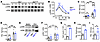
Osteofibrous dysplasia (OFD) is a skeletal RASopathy presenting with periosteal bone lesions that may progress to fracture and delayed healing (pseudarthrosis). MET gene mutations reducing ubiquitin-mediated protein degradation via loss of the juxtamembrane domain (METΔJMD) were previously identified in patients with OFD, resulting in ligand-dependent gain of function. The effect of METΔJMD expression on skeletal progenitor cell differentiation and the potential efficacy of targeted therapies remain unclear. We engineered MetΔJMD mice and showed that MetΔJMD expression inhibited osteogenic differentiation of skeletal progenitor cells in vitro and impaired cortical bone development and reduced bone stiffness in vivo. In contrast, conditional deletion of Met enhanced osteogenic differentiation of periosteal progenitor cells. Inhibition of MAPK signaling with MEK inhibitors restored osteogenic differentiation of mouse MetΔJMD skeletal progenitor cells and promoted the activation of transcriptional signatures associated with skeletal development and osteoblast differentiation in pseudarthrosis-derived primary cells from patients with OFD. With this preclinical support, we treated with the MEK inhibitor mirdametinib a pediatric patient with OFD who had a 3-year history of persistent pseudarthrosis, resulting in fracture union. Our findings demonstrate a bidirectional role for MET in regulating osteogenic differentiation of skeletal progenitor cells and a therapeutic avenue to improve clinical outcomes for this and potentially other skeletal RASopathies.
Authors
Aysha B. Khalid, Kristin Denton, Nandina Paria, Ila Oxendine, Meghan Wassell, Reuel Cornelia, Sasidhar Uppuganti, Jeffry S. Nyman, G. Jayashree Jagadeesh, Carlos R. Ferreira, Simon J. Conway, Robert E. Hammer, John Ritter, Mylinh Nguyen, David A. Podeszwa, Laura J. Klesse, Carol A. Wise, Jonathan J. Rios

Abstract
Huntington’s disease (HD) is a fatal neurodegenerative disorder characterized by progressive motor dysfunction, cognitive decline, and striatal neuron degeneration, primarily affecting medium spiny neurons (MSNs). Despite extensive research, the underlying metabolic vulnerabilities contributing to HD pathogenesis remain poorly understood. In this study, we employed RNA-seq and metabolomics analyses to identify marked dysregulation of 1-carbon metabolism in HD. We validated that SHMT2, a key mitochondrial enzyme in the mitochondrial 1-carbon pathway, was substantially downregulated in HD patient–derived iPSC-differentiated human striatal organoids (hSOs) and YAC128 mice. Functionally, pharmacologic inhibition or genetic deletion of SHMT2 exacerbated mutant huntingtin aggregation, induced MSN degeneration in hSOs, and impaired motor function in WT mice. Conversely, SHMT2 overexpression attenuated MSN degeneration in HD-hSOs and improved motor performance in YAC128 mice. Mechanistically, SHMT2 deficiency led to accumulation of homocysteine, which interacted with AARS1 and suppressed histone lactylation, thereby perturbing transcriptional regulation and associating with neurodegenerative phenotypes. Finally, we demonstrated that the HD clinical drug haloperidol modulated SHMT2 expression and restored histone lactylation, providing a pharmacologic tool to probe SHMT2-dependent metabolic and epigenetic regulation in HD models. These findings highlight a metabolic-epigenetic axis as a promising therapeutic target for HD.
Authors
Mingqin Lu, Kexin Li, Shanshan Wu, Zhilong Zheng, Xinyue Li, Shengda Wang, Hanwen Yu, Chunyue Liu, Yueqing Jiang, Xueqin Song, Yan Liu, Xing Guo
Abstract
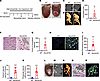
Pseudoxanthoma Elasticum (PXE) is a rare disease caused by loss of function of the ATP-binding cassette C (ABC) member 6 (Abcc6) gene and characterized by ectopic calcification of multiple tissues, but the physiological reasons underlying ectopic calcification in PXE remain unclear. In a murine model of Abcc6-deficient PXE in which animals developed robust cardiac calcification after heart injury, we show the critical importance of the liver in mediating ectopic cardiac calcification. Tissue-specific deletion of Abcc6 in the liver, but not in the heart, was sufficient to cause post-injury cardiac calcification. Metabolomics and gene expression analysis demonstrated deficiencies in nucleotide metabolism, cellular energetics, and defects in cellular respiration underlying ectopic calcification in PXE. Functional abnormalities in cellular respiration in the injured heart were similar in animals with global or liver-specific Abcc6 deficiency, showing that hepatic Abcc6 expression regulated cellular respiration in the injured heart. We show that ectopic calcification in PXE was primarily dystrophic and that treatment with clodronate or etidronate, which prevent the growth of calcium hydroxyapatite mineralization, was sufficient to rescue the phenotype of ectopic cardiac calcification in Abcc6-deficient states. Taken together, these observations highlight the role of the liver in regulating target tissue metabolic and mitochondrial function in causing ectopic calcification in Abcc6-deficient states.
Authors
Yijie Wang, Baiming Sun, Feiyang Ma, Bo Tao, Yiqian Gu, Zhiqiang Zhou, Jason Kim, Linlin Zhang, Zhihao Liu, Johanna ten Hoeve, Linsey Stiles, Lucia Fernandez del Rio, Calvin Pan, Orian Shirihai, Shili Xu, Thomas G. Graeber, Tamer Sallam, Matteo Pellegrini, Aldons J. Lusis, Arjun Deb
No posts were found with this tag.


Copyright © 2026 American Society for Clinical Investigation
ISSN: 0021-9738 (print), 1558-8238 (online)