
Clinical Research and Public Health
Abstract
BACKGROUND. The penile urethra is a primary site of HIV acquisition in males, although little is known about the urethral determinants of HIV susceptibility. Inflammation at other genital sites enhances HIV risk, and studies suggest that some inflammatory urethral bacteria may be vaginally acquired. Here, we characterize the impact of sexual debut on the microbiome and immune milieu of the penile urethra in adolescent males from Rakai, Uganda. METHODS. A cohort of 185 self-reported sexually naïve adolescent males from Rakai, Uganda were followed longitudinally for 3 years, with questionnaires administered every 3 months and urethral swabs collected annually. Urethral soluble immune factors were quantified by chemiluminescent multiplex immunoassay and bacterial 16S rRNA sequencing was performed. Unsupervised clustering and mixed-effects models were used to assess associations between sexual debut and the urethral microbiome and immune milieu. RESULTS. Unsupervised clustering at 36 months identified two distinct urethral Community State Types (CSTs): CST-1 was dominated by Streptococcus mitis and CST-2 by bacteria associated with bacterial vaginosis (BV), particularly Sneathia amnii and Gardnerella vaginalis. CST-2 was greatly enriched at 36 months compared to baseline and was associated strongly with sexual debut. Individual bacterial taxa enriched in CST-2 were associated with both sexual debut and elevated urethral inflammatory cytokines, independent of serum testosterone and penile circumcision status. CONCLUSION. The penile urethra is colonized by BV-associated bacteria after penile-vaginal sex debut. Their presence in the urethra induces local inflammation and may serve as a reservoir for subsequent reintroduction into the vagina of female sexual partners.
Authors
Rameen Jamil, Sanja Huibner, Ping Yang, James Nnamutete, Jodie L. White, Lori Sokoll, James Pollock, Margaret Nakalanzi, Simon Peter Bukenya, Stephen D. Kiboneka, Mathias Agaba, Mary J. Nalubowa, Aggrey Anok, Godfrey Kigozi, Ronald M. Galiwango, Bryan Coburn, Cindy M. Liu, Jessica L. Prodger, Aaron A.R. Tobian, Rupert Kaul
Plasma nucleosome profiling reports on tumor burden and molecular subtypes in small cell lung cancer
Abstract
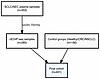
BACKGROUND Small-cell lung cancer (SCLC) is an aggressive malignancy with a poor prognosis and marked transcriptional heterogeneity that may drive distinct therapeutic vulnerabilities. Clinical translation of molecular subtyping has been limited by restricted access to tumor biopsies, particularly at relapse.METHODS We applied chromatin immunoprecipitation of cell-free nucleosomes carrying active histone modifications followed by sequencing (cfChIP-seq) to 441 plasma samples from individuals with advanced SCLC, other neuroendocrine carcinomas, or non-SCLC cancers, as well as from healthy controls. Plasma cfChIP-seq profiles were integrated with matched tumor transcriptomes from 73 samples, including 41 time-matched pairs.RESULTS cfChIP-seq captured the epigenetic and transcriptional landscape of tumor-derived cell-free DNA (cfDNA), including SCLC tissue- and cell-of-origin signatures. A quantitative cfChIP-seq–derived SCLC score tracked radiographic tumor burden and was associated with prognosis. Signals at promoters of lineage-defining transcription factor genes, including ASCL1, NEUROD1, POU2F3, and ATOH1, correlated strongly with matched tumor RNA expression and supported noninvasive inference of SCLC transcriptional subtypes directly from plasma.CONCLUSION Plasma cfChIP-seq provides a practical liquid biopsy platform for real-time assessment of tumor burden, tumor state, and molecular subtype in SCLC. These findings support further development of cfChIP-seq for precision monitoring and subtype-informed therapeutic stratification in SCLC.TRIAL REGISTRATION ClinicalTrials.gov NCT02484404, NCT02487095, NCT02769962, NCT03554473, NCT03896503, and NCT02146170.FUNDING Center for Cancer Research; Intramural Program of the NCI (ZIA BC 011793); European Research Council (ERC) (Adg no. 101019560 “cfChIP”).
Authors
Gavriel Fialkoff, Nobuyuki Takahashi, Israa Sharkia, Jenia Gutin, Nadav Hermoni, Michael Nirula, Rajesh Kumar, Lorinc Pongor, Samantha Nichols, Linda Sciuto, Kanak Parmar, Parth Desai, Priya Suresh, Melissa Abel, Rajaa El Meskini, Myriam Maoz, Yakir Rottenberg, Shoshan Nevo, Hovav Nechushtan, Tamar Peretz, Diana Roame, Ayala Hubert, Jonathan E. Cohen, Azzam Salah, Mark Temper, Albert Grinshpun, Zoe Weaver-Ohler, Arun Rajan, William Douglas Figg Sr., Aviad Zick, Ronen Sadeh, Nir Friedman, Anish Thomas
Abstract
Background. Myelodysplastic syndromes (MDS) are characterized by aberrant DNA methylation, and mutations in epigenetic modifiers are frequently found in these patients. Although DNA methyltransferase inhibitors (DNMTi) are used to treat MDS, response variability remains a challenge in the clinic, with limited predictive markers. Methods. We integrated genomic, epigenomic, and transcriptomic analyses of 98 MDS patients. Patients were classified into epigenetic subtypes via hierarchical clustering. Random forest classifiers were developed and validated using internal stratified testing and an independent external cohort to predict AZA response. Results. MDS is characterized by widespread DNA hypomethylation affecting distal regulatory elements. We identified seven epigenetic clusters correlated with distinct molecular drivers. Notably, Cluster VI exhibited low mutational burden but a high AZA response rate of 71% (P ≤ 0.01). While transcriptional profiles alone failed to distinguish responders, a DNAme-based classifier achieved an area under the curve (AUC) of 0.82. An integrative model combining DNAme, gene expression, mutations, and clinical parameters achieved an AUC of 0.93 in internal validation and 0.88 in the external cohort. Conclusion. Epigenetic signatures at distal genomic elements provide superior predictive power for AZA response compared to promoter-centric or transcriptional analyses. These findings establish a robust framework for personalized treatment strategies in MDS.
Authors
Qin Yang, Miguel Torres-Martin, Masataka Taguchi, Alice Brogi, Irene Casalin, Eleonora Ceneri, Stephanie Halene, Amy E. DeZern, Elizabeth A. Griffiths, Matilde Y. Follo, Carlo Finelli, Jerald P. Radich, Michael J. Rauh, Rafael Bejar, Mikkael A. Sekeres, Valeria Santini, Maria E. Figueroa
Abstract
Background. Improved understanding of the cellular mechanisms of organ transplant rejection is needed for developing targeted therapies to improve outcomes. We used digital cytometry to estimate the digital leukocyte entities (DLE) shared by rejection in biopsies of kidney, heart, lung, and liver organ transplants. Methods. We used CIBERSORTx with the LM22 leukocyte reference to estimate associations between 22 DLEs with rejection in 8422 transplant biopsies - 4898 kidney, 2361 heart, 652 lung, and 538 liver. Results. In all organs, rejection correlated with an increase in DLEs designated as classically activated macrophages and a decrease in DLEs designated regulatory T cells. T cell-mediated rejection (TCMR) was associated with a massive increase in otherwise rare T cell DLEs designated memory-activated CD4 and Tγδ, as well as follicular-helper CD4 and CD8. TCMR also had increased DLE designated plasma cells, compatible with a role for the B cell lineage in antigen presentation in TCMR. Antibody-mediated rejection (ABMR) in kidney and heart transplant biopsies correlated with increased DLEs representing activated mast cells, activated NK cells, and monocytes. Some findings were validated by single-cell/nucleus RNAseq data from kidney and liver biopsies. Conclusion. The shared correlations of DLEs with rejection in all organs - e.g. CD4ma with TCMR and activated mast cells with ABMR - suggest novel aspects of rejection. These findings can guide the search for the in vivo leukocytes that correspond with the digital entities, with potential clinical applications. Trial registration. ClinicalTrials.gov NCT01299168, NCT02670408, NCT02812290, NCT03193151. Funding. Genome Canada and a grant from Natera, Inc.
Authors
Patrick T. Gauthier, Louisa M.S. Gerhardt, Lorenz Jahn, Christian Hinze, Philip F. Halloran
Abstract
Background: Combined checkpoint blockade (CCB) of programmed-death-1 (PD-1) and cytotoxic-T-lymphocyte-associated protein-4 (CTLA-4) is highly active in melanoma but limited by significant morbidity from immune-related adverse events (irAEs). Effective strategies to prevent CCB-mediated irAEs are lacking. Methods: Patients with advanced melanoma were randomly assigned to receive standard of care ipilimumab and nivolumab alone (Arm-A: ipi/nivo, n=7) or with one cycle of rituximab (Arm-B; ipi/nivo+rituximab, n=7). Results: Patients receiving ipi/nivo+rituximab experienced lower rates of > grade-3(G3) irAEs (14% versus 57%) and superior G3-irAE-free survival compared to those in ipi/nivo arm (2-year G3-irAE-free survival 86% versus 29% (p=0.01), without adverse impact on tumor regression or survival. G3 hypersensitivity reactions to rituximab (43% in Arm-B) prompted trial closure. Rituximab depleted pre-therapy activated naïve B cells linked to autoimmunity and enhanced CCB-mediated induction of myeloid inflammation and CXCL13+ICOS+ CD4 T cells. Conclusion: B-cell depletion favorably modulates CCB-mediated immune activation and may reduce irAE risk. Trial Registration: ClinicalTrials.gov NCT03719131 Funding: NIH
Authors
Kavita M. Dhodapkar, Antonio Matera, Alyssa M. Duffy, Azmain Taz, Renee Julia Manalo, Melinda Yushak, Ragini Kuchadkar, David H. Lawson, Madhav V. Dhodapkar
Abstract
Background: Despite therapeutic advances in the early-stage triple negative breast cancer (TNBC) setting, residual disease (RD) following neoadjuvant therapy remains a key predictor of a worse prognosis and is a major obstacle to improving patient outcomes. Methods: To better characterize RD and identify survival associated features, we performed comprehensive transcriptomic profiling of 340 pre-treatment stage II/III TNBCs and 70 matched post-treatment RD samples from the randomized CALGB 40603 (Alliance) Phase 2 clinical trial. Preclinical treatment strategies mimicking RD patients were explored using Antibody Drug Conjugate (ADC) treatment in patient derived xenograft (PDX) mouse models. Results: Our study shows that prognostic genomic features measured prior to treatment may differ from prognostic features measured after treatment from RD specimens. Specifically, we identified that patients with a genomic PAM50 subtype of Basal-like in RD specimens have a poor survival outcome and their matching pre-treatment tumors are characterized by elevated chromosomal amplifications of oncogenic drivers (i.e., MYC, CDK6, and CCND1) as well as significantly reduced B- and T-cell expression features. Paired analyses of Basal-like RD and matched pre-treatment tumors reveal further lymphocyte depletion in the RD, along with lower expression of MHC class I and interferon signaling, indicating an immune-cold RD microenvironment. Treatment of a Basal-like and conventional chemotherapy-resistant PDX model, resembling Basal-like RD, with sacituzumab govitecan or trastuzumab deruxtecan produced a marked antitumor response. Conclusion: RD biology differs from pre-treatment tumors, with Basal-like subtype RD following neoadjuvant chemotherapy being immune cold and associated with poor survival. Pre-clinical modeling suggests that this high-risk group may benefit from adjuvant ADC therapy. Trial registration: ClinicalTrials.gov NCT00861705 Funding: National Cancer Institute (NCI) U10CA180821 (Alliance for Clinical Trials in Oncology) NCI U24CA176171 (Alliance for Clinical Trials in Oncology) NCI UG1CA233373 (Alliance for Clinical Trials in Oncology) NCI Breast SPORE program P50-CA058223 (CMP) Susan G. Komen SAC-160074 (CMP, PDR) Breast Cancer Research Foundation BCRF-23-127 (CMP) NCI R01-CA229409 (CMP) UNC LCCC Triple Negative Breast Cancer Center (CMP)
Authors
Patrick D. Rädler, Brooke M. Felsheim, Aranzazu Fernandez-Martinez, Adam D. Pfefferle, Michele C. Hayward, Baljit Singh, William Sikov, Lisa A. Carey, Charles M. Perou
Abstract
Background Autoimmune diseases (ADs) often co-occur within individuals and families, indicating shared genetic risk factors. However, the composition of genetic overlap across autoimmunity is largely unknown. Methods This nationwide study included 6,336,615 individuals born in Sweden between 1932 and 1983, comprising 3,839,400 full-sibling pairs. Based on national heath-registers, 22 ADs were identified from 1969-2013. Aggregation and co-aggregation of ADs among siblings was used to estimate pairwise genetic correlations of ADs under a liability-threshold model. Network analysis and principal component analysis was used to characterize the structure of shared genetic risk across ADs. Results A total of 707,995 individuals (11.2%) were diagnosed with at least one AD. The studied ADs formed a network of significant genetic correlations (mean rg = 0.24, range 0.08-0.84) with clusters of more closely related ADs (rg ≥ 0.3). We found no evidence of a significant universal factor predisposing to autoimmunity. Conclusions This study demonstrates that ADs share substantial cluster-specific genetic overlap that largely aligns with affected tissue types, leading to distinct groupings of connective tissue diseases, gastrointestinal disorders, and endocrinopathies, whereas diseases of the nervous system show limited genetic cohesion. This suggests that shared biological mechanisms may drive coaggregation within disease groups. Clinically, these insights highlight the importance of monitoring patients and their relatives for related autoimmune disorders. Funding The Swedish Society of Medicine, Region Värmland's County Research Council, The Swedish Research Council, the Knut and Alice Wallenberg Foundation, The Regional Agreement on medical training and Clinical research (ALF) between Stockholm County Council and Karolinska Institutet
Authors
Daniel Eriksson, Ralf Kuja-Halkola, Marie E. Holmqvist, Henrik Larsson, Agnieszka Butwicka, Soffia Gudbjörnsdottir, Olle Kämpe, Sophie Bensing, Jakob Skov
Abstract
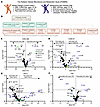
BACKGROUND Obesity and weight loss in adults have been associated with distinct metabolome and gut microbiome features, but the extent to which those associations apply to adolescent stages remain unclear.METHODS The Pediatric Obesity Microbiome and Metabolism Study (POMMS) enrolled 220 adolescents aged 10–18 with severe obesity (OB) and 67 individuals who were healthy weight controls (HWCs). Blood, stool, and clinical measures were collected at baseline and after a 6-month obesity intervention for the OB group. Metabolomic profiling in serum using targeted quantitative mass spectrometry and microbiome profiling in stool were performed, and those features were assessed for associations with BMI, insulin resistance, and inflammation. Fecal microbiome transplants (FMT) were performed on germ-free mice using samples from both groups to assess effects on weight gain and metabolic pathways.RESULTS Adolescents with OB exhibited higher serum branched-chain amino acid (BCAA) but lower branched-chain ketoacid (BCKA) levels compared with HWC. This pattern was sex- and age-dependent and differed from adults with obesity who show elevated levels of both BCAA and BCKA. Longitudinal analysis identified metabolic and microbial features correlated with changes in health measures during the intervention. The fecal microbiomes of adolescents with OB and HWC had similar diversity but differed in membership and functional potential. FMT from both OB and HWC donors had similar effects on mouse body weight, but specific taxa were linked to weight gain in recipients of FMT.CONCLUSION Adolescents with OB have unique metabolomic adaptations and microbiome signatures compared with their HWC counterparts and adults with OB.TRIAL REGISTRATION ClinicalTrials.gov Identifier: NCT03139877 (Observational Study) and NCT02959034 (Repository).FUNDING SUPPORT American Heart Association Grants: 17SFRN33670990, 20PRE35180195; National Institute of Diabetes and Digestive and Kidney Diseases Grant: R24-DK110492.
Authors
Jessica R. McCann, Chengxin Yang, Nathan A. Bihlmeyer, Runshi Tang, Tracy Truong, Wei Zhou, Jie An, Jayanth Jawahar, Olga Ilkayeva, Michael J. Muehlbauer, Zhengzheng Hu, Holly Kloos Dressman, Lisa Poppe, Joshua A. Granek, Jason W. Arnold, Lawrence A. David, Julia Oh, Pixu Shi, Pinar Gumus Balikcioglu, Svati H. Shah, Sarah C. Armstrong, Christopher B. Newgard, Patrick C. Seed, John F. Rawls
Abstract
BACKGROUND. In female murine models, one source of inflammation is a menopause-related increase in gut permeability. We examined whether the menopause transition (MT) in women is associated with an increase in markers of gut epithelial dysfunction and gut microbial product translocation, signals of compromised gut epithelial barrier integrity. METHODS. In 964 women, we measured markers of gut epithelial dysfunction (fatty acid binding protein 2, FABP2) and gut microbial antigen translocation (soluble CD14, sCD14) using sera collected before, during and after the MT. Multivariable mixed effects regressions fit piece-wise linear models to repeated FABP2 or sCD14 measures relative to time from final menstrual period (FMP). Covariates were age at FMP, race/ethnicity, and BMI. RESULTS. FABP2 and sCD14 did not change significantly until 2.5 years pre-FMP. At that point, FABP2 began rising; sCD14 began increasing 6 months later. FABP2 and sCD14 peaked 6 and 6.5 years post-FMP, respectively; subsequent levels remained stable. During the ~9-year interval of MT-related gain in gut barrier compromise markers, annual FABP2 and sCD14 increases were 2.6% (95% CI: 1.7 to 3.4%) and 0.8% (95% CI: 0.6 to 1.1%), respectively, among white women with sample-average BMI and age at FMP. FABP2 and sCD14 change rates did not differ significantly by race/ethnicity, BMI, or age at FMP. CONCLUSIONS. The MT is associated with a rise in markers of compromised gut barrier integrity, suggesting that this pathway of inflammation, previously described in animal models, occurs in humans. FUNDING. NIH U01NR004061, U01AG012505, U01AG012535, U01AG012531, U01AG012539, U01AG012546, U01AG012553, U01AG012554, U01AG012495, 5R01AR081794.
Authors
Albert Shieh, Marta Epeldegui, Arun S. Karlamangla, Rheinallt Jones, Roberto Pacifici, Gail A. Greendale
Abstract
Background. CIS43LS is a long-acting mAb that targets the Plasmodium falciparum circumsporozoite protein. A phase 2 trial showed that a single dose of CIS43LS conferred >85% sterile protection against infection in Malian adults over 6 months. Understanding the pharmacokinetics and pharmacodynamics (PK/PD) of CIS43LS is critical for the further development of CIS43LS and other anti-malaria mAbs. Methods. Using 3,777 serum samples collected from 348 trial participants over the 6-month study period, we performed a PK/PD analysis of CIS43LS that included assessments for anti-drug antibodies and target-mediated drug disposition. A two-compartment, non-linear mixed effects population PK model that evaluated demographic, anthropometric, hematologic, baseline parasitemia, and endogenous IgG and IgG1 as potential covariates was used to estimate PK parameters and serum concentrations required to achieve 80% efficacy. Results. The median CIS43LS t1/2 was 63.2 days (95%CI 59.4–67.2 days). Serum concentrations ≥64 μg/mL (95%CI 49–93 μg/mL) corresponded to ≥80% efficacy against infection over 6 months. A simulated dose of 30 mg/kg maintained serum concentrations >64 µg/mL in >97.5% of individuals for 4 months, the timeframe for the World Health Organization preferred product characteristics for anti-malaria mAbs. There was no evidence of anti-drug antibodies. Among infected individuals who received CIS43LS, no marked evidence of target-mediated drug disposition was observed. Conclusion. This study indicates that protective CIS43LS levels can be maintained over the course of a single malaria season and provides guidance for PK/PD analyses of anti-malaria mAbs in malaria-endemic populations. Trial registration. NCT04329104. Funding. National Institutes of Health and Gates Foundation.
Authors
Tuan M. Tran, Zonghui Hu, Kassoum Kayentao, Aissata Ongoiba, Sam Jones, Nada Abla, Sara A. Healy, Hamidou Cisse, Bickey H. Chang, Jeff Skinner, Leonid Serebryannyy, Sandeep R. Narpala, Robin Schlesinger, Kwang Huei Low, Rachel Kazmierski, Bob C. Lin, Joana Dias, Safiatou Doumbo, Didier Doumtabe, Anne C. Preston, Shanping Li, Mary E. Peterson, Amit Oberai, Adam D. Shandling, Joseph J. Campo, Sean C Murphy, Shinyi Telscher, Emily E. Coates, Edmund V. Capparelli, Amagana Dolo, Boubacar Traore, Robert A. Seder, Peter D. Crompton
No posts were found with this tag.


Copyright © 2026 American Society for Clinical Investigation
ISSN: 0021-9738 (print), 1558-8238 (online)