
Advertisement
Commentary
Open Access |  10.1172/JCI209199
From silos to synergy: the interdisciplinary discovery potential in redefining polyendocrine metabolic ovarian syndrome
Michaela M. Morhaus,1,2,3 Lauren W. Yowelunh McLester-Davis,1 and Judith A. Simcox1,2,4
1Department of Biochemistry and
2Cell Molecular Biology Program, University of Wisconsin–Madison, Madison, Wisconsin, USA.
3Medical Scientist Training Program, University of Wisconsin School of Medicine and Public Health, Madison, Wisconsin, USA.
4Howard Hughes Medical Institute, Department of Biochemistry, University of Wisconsin–Madison, Madison, Wisconsin, USA.
Address correspondence to: Judith Simcox, University of Wisconsin-Madison, Department of Biochemistry, 440 Henry Mall, Rm 363,Madison, WI 53706-1544. Phone: 608.262.8588; Email: jsimcox@wisc.edu.
Find articles by Morhaus, M. in: PubMed | Google Scholar
1Department of Biochemistry and
2Cell Molecular Biology Program, University of Wisconsin–Madison, Madison, Wisconsin, USA.
3Medical Scientist Training Program, University of Wisconsin School of Medicine and Public Health, Madison, Wisconsin, USA.
4Howard Hughes Medical Institute, Department of Biochemistry, University of Wisconsin–Madison, Madison, Wisconsin, USA.
Address correspondence to: Judith Simcox, University of Wisconsin-Madison, Department of Biochemistry, 440 Henry Mall, Rm 363,Madison, WI 53706-1544. Phone: 608.262.8588; Email: jsimcox@wisc.edu.
Find articles by McLester-Davis, L. in: PubMed | Google Scholar
1Department of Biochemistry and
2Cell Molecular Biology Program, University of Wisconsin–Madison, Madison, Wisconsin, USA.
3Medical Scientist Training Program, University of Wisconsin School of Medicine and Public Health, Madison, Wisconsin, USA.
4Howard Hughes Medical Institute, Department of Biochemistry, University of Wisconsin–Madison, Madison, Wisconsin, USA.
Address correspondence to: Judith Simcox, University of Wisconsin-Madison, Department of Biochemistry, 440 Henry Mall, Rm 363,Madison, WI 53706-1544. Phone: 608.262.8588; Email: jsimcox@wisc.edu.
Find articles by Simcox, J. in: PubMed | Google Scholar
Published September 15, 2026 - More info
J Clin Invest. 2026;136(18):e209199. https://doi.org/10.1172/JCI209199.
© 2026 Morhaus et al. This work is licensed under the Creative Commons Attribution 4.0 International License. To view a copy of this license, visit http://creativecommons.org/licenses/by/4.0/.

Related article:
Abstract
Polyendocrine metabolic ovarian syndrome (PMOS), formerly known as polycystic ovary syndrome (PCOS), is the most common endocrine disorder in women and is closely associated with complex diseases such as cardiovascular disease and type 2 diabetes. However, the mechanistic links between PMOS and its comorbidities remain poorly understood. Here, we present an integrative systems genetics platform that leverages genetic diversity in both mice and humans to dissect the drivers of PMOS and its associated complications. This framework uncovered conserved genetic and environmental factors underlying PMOS, identified susceptible cell types and organs, and elucidated mechanisms linking PMOS to subsequent pathologies. For instance, we showed that increased ovarian area contributes to both PMOS susceptibility and ovarian cancer progression, while specific ovary–heart signaling circuits modulate cardiac function with aging. We further identified ovarian SF3B1-mediated alternative splicing as a key mechanistic link between PMOS and metabolic traits. Pharmacologic inhibition of SF3B1 in mice reduced circulating testosterone, insulin, and glucose levels as well as fat mass expansion. Transcriptomics analysis of ovaries from mice and experiments using human cell lines localized these effects to exon skipping events in granulosa cells. Together, this study offers a mechanistic framework for modeling the diversity of PMOS pathologies and uncovers SF3B1-mediated splicing as a link between ovary function and systemic metabolism.
Authors
Christy M. Nguyen, Leandro M. Velez, Youngseo Cheon, Cimone L. Jackson, Casey D. Johnson, Ian Tamburini, Mingqi Zhou, Erik Alvstad, Isoo Yoon, Farheen Dustagheer, Marie Li, Tvisha Gujjarlapudi, Kaitlene Ofilan, Neha Mishra, Evan G. Williams, Danica Kwan, Carlos H. Viesi, Naveena Ujagar, David G. Ashbrook, Alistair Senior, Marin E. Nelson, Nicholas R. Pannunzio, Selma Masri, Evgeny Z. Kvon, Grant MacGregor, Cholsoon Jang, Vittorio Sebastiano, Minji Byun, Changrui Xiao, Alexander S. Kauffman, Robert W. Williams, David E. James, Ivan Marazzi, Dequina Nicholas, Marcus Seldin
-
SF3B1 and IGFBP2 emerge as drivers of PMOS
Two important mechanistic findings emerged from the study: that the metabolic underpinnings of PMOS are regulated by splicing factor 3b subunit 1 (SF3B1) and that ovarian-adipose crosstalk is regulated by insulin-like growth factor binding protein 2 (IGFBP2). Both SF3B1 and IGFBP2 are known regulators of metabolic disease that toggle the molecular switch driving cancer proliferation and insulin resistance, respectively.
SF3B1 is a part of the U2 small nuclear ribonucleoprotein complex of spliceosomes. Cancer-associated mutations in SF3B1 decrease mitochondrial respiration through missplicing of metabolic enzymes, including ubiquinol-cytochrome c reductase complex assembly factor 1 and methylmalonyl-CoA mutase (8). In SF3B1 mutation-driven cancers, treatment with SF3B1 inhibitors decreased proliferation (9). Employing these SF3B1 inhibitors in mouse models of PMOS decreased fat mass, hyperandrogenism, and insulin levels in a PMOS subtype-specific response (5) (Figure 1). These exciting results target primary drivers of PMOS. Further work is needed to understand the effect of SF3B1 inhibitors on secondary disease outcomes; this work will require innovative tools, such as the use of menstruating mouse models (10). Additionally, the mechanistic role of SF3B1 in PMOS remains unknown but may control specific missplicing events to regulate metabolism and ovarian morphology. The tissue- and cell-specific impact of SF3B1 inhibition also warrants further investigation to elucidate off-target effects, which will be needed for translational studies to uncover if these SF3B1 inhibitors can be employed to treat PMOS in humans.
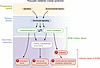 Figure 1
SF3B1 inhibitors improve primary drivers of PMOS. The study by Nguyen et al. (5) utilized mouse models to understand the contribution of PMOS predisposing factors (yellow box) as well as the phenotypic range of primary drivers (blue box) and secondary outcomes (purple box). One factor that emerged from the investigation was splicing factor 3b subunit 1 (SF3B1). Treatment of PMOS mouse models with SF3B1 inhibitor decreased primary drivers of PMOS, including hyperandrogenism and insulin resistance, as well as consequent outcomes, including those that affect the ovarian area (green text). More research is needed to understand the effect of SF3B1 inhibitors on other secondary outcomes of PMOS, including hirsutism, diabetes, menstruation, and cardiometabolic disease (red text).
The second mechanistic finding of the study identified IGFBP2 as a regulator of ovarian-adipose crosstalk, which aligns with observations that IGFBP2 controls adiposity and adipokine production. Human studies have shown that serum IGFBP2 decreases in type 2 diabetes, insulin resistance, and obesity. Overexpression of IGFBP2 in insulin-resistant mouse models improved insulin sensitivity and hepatic steatosis and decreased visceral adipose tissue depots (11). Further exploration of IGFBP2 as a domain-specific peptide therapy could be warranted in PMOS, given that IGFBP2 heparin-binding domain 1 and 2 peptide therapy decreases adiposity in mouse models of obesity by 48% (12).


Copyright © 2026 American Society for Clinical Investigation
ISSN: 0021-9738 (print), 1558-8238 (online)