
Abstract
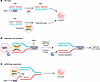
Homologous recombination repair deficiency (HRD) occurs in approximately 10% of breast tumors and represents a major targetable vulnerability across multiple cancer types. Impairment of the homologous recombination DNA repair pathway — arising through somatic and germline mutations in homologous recombination repair genes, epigenetic mechanisms, and transcriptomic changes — leads to genomic instability and a reliance on error-prone repair mechanisms. Poly (ADP-ribose) polymerase (PARP) inhibitors harness the synthetic lethality of HRD and PARP inhibition, with current approvals encompassing both early-stage and advanced breast cancer in patients with germline BRCA1/2 (gBRCA1/2) mutations. However, emerging evidence suggests efficacy of PARP inhibitors beyond gBRCA1/2-mutated breast cancer to tumors with other homologous recombination repair defects that confer a “BRCAness” phenotype. This Review examines opportunities to broaden the use of PARP inhibitors in breast cancer and underscores the importance of innovative biomarkers, combination strategies, and next-generation agents to maximize therapeutic impact.
Authors
Charlotte S. Walmsley, Adela Rodriguez, Panagiotis A. Konstantinopoulos, Geoffrey I. Shapiro, Sara M. Tolaney, Judy E. Garber, Filipa Lynce
This file is in Adobe Acrobat (PDF) format. If you have not installed and configured the Adobe Acrobat Reader on your system.
Having trouble reading a PDF?
PDFs are designed to be printed out and read, but if you prefer to read them online, you may find it easier if you increase the view size to 125%.
Having trouble saving a PDF?
Many versions of the free Acrobat Reader do not allow Save. You must instead save the PDF from the JCI Online page you downloaded it from. PC users: Right-click on the Download link and choose the option that says something like "Save Link As...". Mac users should hold the mouse button down on the link to get these same options.
Having trouble printing a PDF?
- Try printing one page at a time or to a newer printer.
- Try saving the file to disk before printing rather than opening it "on the fly." This requires that you configure your browser to "Save" rather than "Launch Application" for the file type "application/pdf", and can usually be done in the "Helper Applications" options.
- Make sure you are using the latest version of Adobe's Acrobat Reader.
Supplemental data - Download (248.45 KB)


Copyright © 2026 American Society for Clinical Investigation
ISSN: 0021-9738 (print), 1558-8238 (online)