
Abstract
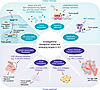
Despite growing recognition of invasive lobular carcinoma (ILC) as a biologically and clinically distinct subtype of breast cancer, ILC remains understudied. Most contemporary therapeutic trials continue to enroll patients predominantly with invasive ductal carcinoma/invasive carcinoma of no special type and rarely stratify by histology. As a result, ILC’s unique disease biology, characteristic loss of E-cadherin function, diffuse growth pattern, and distinct metastatic tropism remain underrepresented in evidence that guides systemic therapy recommendations. In this Review, we examine key molecular alterations and emerging therapeutic targets in ILC, emphasizing recent preclinical discoveries that identify subtype-specific therapeutic vulnerabilities and guide the development of histology-specific treatment approaches for this unique disease. In combination with endocrine therapies, effective targeting in ILC may require a multilayered strategy that extends beyond genomic alterations to leverage ILC’s specific estrogen receptor–associated proteins, metabolism, and tumor microenvironment. Future clinical trial frameworks incorporating prespecified ILC cohorts, tailored endpoints, and coclinical approaches enabling parallel testing in patients and patient-derived models could help accelerate the development and evaluation of ILC-targeted therapeutics.
Authors
Kristina A. Fanucci, Shaymaa Bahnassy, Arya Mariam Roy, Anna Sokolova, Daniel G. Stover, Peter T. Simpson, Rebecca B. Riggins, Rinath Jeselsohn
This file is in Adobe Acrobat (PDF) format. If you have not installed and configured the Adobe Acrobat Reader on your system.
Having trouble reading a PDF?
PDFs are designed to be printed out and read, but if you prefer to read them online, you may find it easier if you increase the view size to 125%.
Having trouble saving a PDF?
Many versions of the free Acrobat Reader do not allow Save. You must instead save the PDF from the JCI Online page you downloaded it from. PC users: Right-click on the Download link and choose the option that says something like "Save Link As...". Mac users should hold the mouse button down on the link to get these same options.
Having trouble printing a PDF?
- Try printing one page at a time or to a newer printer.
- Try saving the file to disk before printing rather than opening it "on the fly." This requires that you configure your browser to "Save" rather than "Launch Application" for the file type "application/pdf", and can usually be done in the "Helper Applications" options.
- Make sure you are using the latest version of Adobe's Acrobat Reader.
Supplemental data - Download (157.77 KB)


Copyright © 2026 American Society for Clinical Investigation
ISSN: 0021-9738 (print), 1558-8238 (online)