
Abstract
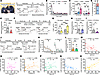
Distress sharing within an ingroup instinctively motivates caregiving-like prosocial behavior in social animals and humans, yet how aversive social stimuli paradoxically trigger such behavior remains unclear. Here, we show that stress-state matching in observer mice elicits caregiving-like behaviors (allogrooming and injury-targeted allolicking) toward cagemates in pain, resulting in synchronized social buffering. Importantly, we identify that the excitation of vasopressin receptor 1a–expressing (V1aR-expressing) neurons in the central medial amygdala (CeM) underlies both emotional-state matching and subsequent allogrooming/allolicking. This excitation is accomplished by arginine vasopressin (AVP) release from presynaptic terminals of the hypothalamic paraventricular nucleus (PVN) to act specifically on postsynaptic V1aR in the CeM. The CeMV1aR neurons then project to the ventral tegmental area (VTA) to drive caregiving-like actions through positive reinforcement, manifested as prosocial preference and recurrent allogrooming/allolicking, and to produce anxiolysis in the caregiver. Collectively, we unravel a dedicated trisynaptic PVNAVP-CeMV1aR-VTA circuit driving and gating caregiving-like behaviors and advance the mechanistic understanding of AVP-V1aR signaling in prosociality.
Authors
Kai-Wen Geng, Rui-Rui Wang, Yan Yang, Yan Wang, Ting He, Chun-Li Li, Chong-Shun Xu, Jun Chen
This file is in Adobe Acrobat (PDF) format. If you have not installed and configured the Adobe Acrobat Reader on your system.
Having trouble reading a PDF?
PDFs are designed to be printed out and read, but if you prefer to read them online, you may find it easier if you increase the view size to 125%.
Having trouble saving a PDF?
Many versions of the free Acrobat Reader do not allow Save. You must instead save the PDF from the JCI Online page you downloaded it from. PC users: Right-click on the Download link and choose the option that says something like "Save Link As...". Mac users should hold the mouse button down on the link to get these same options.
Having trouble printing a PDF?
- Try printing one page at a time or to a newer printer.
- Try saving the file to disk before printing rather than opening it "on the fly." This requires that you configure your browser to "Save" rather than "Launch Application" for the file type "application/pdf", and can usually be done in the "Helper Applications" options.
- Make sure you are using the latest version of Adobe's Acrobat Reader.
Supplemental data - Download (3.20 MB)


Copyright © 2026 American Society for Clinical Investigation
ISSN: 0021-9738 (print), 1558-8238 (online)