
Abstract
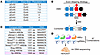
Duchenne muscular dystrophy (DMD) is caused by mutations in the DMD gene, most of which are large exon deletions that result in loss of dystrophin protein. Adenine base editing (ABE) enables permanent gene correction by modifying splice sites to cause exon skipping and restoration of the DMD open reading frame. We previously demonstrated that adeno-associated virus 9–mediated (AAV9-mediated) delivery of adenine base editors allows efficient gene editing in mouse models of DMD. However, conventional AAV-based gene delivery approaches are complicated by their limited packaging capacity and high-dose-related toxicity. Here, we describe a single AAV vector encoding a compact adenine base editor, SlugABE8e, and a single-guide RNA, which enable efficient editing in a humanized DMD mouse model at a lower dose using the muscle-tropic MyoAAV4 capsid. Systemic MyoAAV4A delivery in juvenile DMD mice efficiently restored dystrophin expression in the heart and skeletal muscles. This molecular rescue was accompanied by reduced serum creatine kinase activity and diminished muscle pathology. A liver-detargeted MyoAAV4E-off capsid eliminated viral entry and editing in the liver. We also explored a high-fidelity base editor, SlugHF-ABE8e(V106W), which showed similar on-target and off-target editing to SlugABE8e. Together, these findings establish an all-in-one AAV strategy that efficiently mitigates DMD disease progression.
Authors
Yu-Chung Pien, Hui Li, Gabrielle Bulliard, Huachun Liu, Mateusz Z. Durbacz, Zhisheng Xu, Andreas C. Chai, Francesco Chemello, Efrain Sanchez-Ortiz, Nerea Zabaleta, Luk H. Vandenberghe, Ning Liu, Eric N. Olson
This file is in Adobe Acrobat (PDF) format. If you have not installed and configured the Adobe Acrobat Reader on your system.
Having trouble reading a PDF?
PDFs are designed to be printed out and read, but if you prefer to read them online, you may find it easier if you increase the view size to 125%.
Having trouble saving a PDF?
Many versions of the free Acrobat Reader do not allow Save. You must instead save the PDF from the JCI Online page you downloaded it from. PC users: Right-click on the Download link and choose the option that says something like "Save Link As...". Mac users should hold the mouse button down on the link to get these same options.
Having trouble printing a PDF?
- Try printing one page at a time or to a newer printer.
- Try saving the file to disk before printing rather than opening it "on the fly." This requires that you configure your browser to "Save" rather than "Launch Application" for the file type "application/pdf", and can usually be done in the "Helper Applications" options.
- Make sure you are using the latest version of Adobe's Acrobat Reader.
Supplemental data - Download (1.34 MB)


Copyright © 2026 American Society for Clinical Investigation
ISSN: 0021-9738 (print), 1558-8238 (online)