
Research Article

Abstract
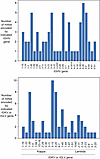
VPS13A is an intracellular lipid transfer protein comprising more than 3,000 amino acids. Mutations in human VPS13A cause VPS13A disease, a neurodegenerative disorder that affects movement and cognition. VPS13A forms a complex with the membrane protein XK to mediate ATP-induced phospholipid scrambling in the plasma membrane. Here, we established a mouse cell system expressing full-length mouse VPS13A and examined its interaction with XK. Mutational analysis revealed that VPS13A binds to XK through a C-terminal β-strand that interacts with a β-hairpin in the central region of XK, an interaction essential for scramblase activity. The XK paralog XKR2, which contains a similar β-hairpin structure, also associates with VPS13A and supports phospholipid scrambling. We analyzed 10 mouse VPS13A variants corresponding to human patient mutations and classified them into 4 groups: (a) L67P, I90K, and W2453R, which showed reduced expression; (b) A1091P and M3080R, which were normally expressed but lacked scramblase activity; (c) S1446P, Q2689H, Y2713C, and R3084H, which modestly impaired expression or activity; and (d) I2763R, which altered cell size and disrupted ER independently of XK. These findings define the VPS13A–XK interaction interface, clarify the functional impact of disease-causing mutations, and reveal an unexpected gain-of-function mutation of a VPS13A variant.
Authors
Xing Lin, Yuta Ryoden, Chigure Suzuki, Hiroyuki Ishikawa, Takaharu Sakuragi, Yasuo Uchiyama, Shigekazu Nagata
Abstract
Crimean-Congo hemorrhagic fever virus (CCHFV) is an emerging arboviral and zoonotic bunyavirus. CCHFV can infect livestock, wild animals, and humans. Here, we report the isolation of a panel of mAbs from the B cells of an immune individual following a natural nosocomial infection. We determined that the panel comprised antibodies that bound to 2 glycoproteins: (a) the carboxy-terminal glycoprotein (Gc) that serves as the fusion protein and (b) the glycoprotein 38 (GP38). By antibody variable gene analysis, we identified genetic diversity in the B cell response to CCHFV within a single donor for both Gc- and GP38-specific responses. Protection against most bunyavirus-associated diseases is mediated principally by neutralizing antibodies, but here, we found that neutralization activity was not associated with protection. Gc-specific antibodies to diverse antigenic sites neutralized only weakly and did not protect against heterologous virus challenge. GP38-specific antibodies bound to 2 dominant antigenic sites on the glycoprotein. Although GP38-specific antibodies did not neutralize the virus, one mediated protection against heterologous virus challenge in an experimental model of infection in mice primarily by complement-mediated activity. These studies support the development of protective CCHFV countermeasures against GP38.
Authors
Nathaniel S. Chapman, Viktoriya Borisevich, Nurgun Kose, Luke Myers, Stephen Priest, Éric Bergeron, Elena Trigo Esteban, María Paz Sánchez-Seco, José Melero, Thomas W. Geisbert, Robert W. Cross, James E. Crowe Jr.

Abstract
The dynamic assembly and regulation of the IκB kinase (IKK) complex in the NF-κB pathway are central to the pathogenesis and progression of inflammatory bowel disease (IBD). We recently reported that the transcription factor hematopoietically expressed homeobox (HHEX) promotes colitis-associated colorectal cancer, but the potential role of HHEX in intestinal inflammation remains uncharacterized. Here, we found that HHEX is upregulated in inflamed colons in a colitis mouse model and in clinical IBD samples. HHEX overexpression increased inflammatory cytokine expression, and HHEX loss largely abrogated the inflammatory response in vitro and intestinal inflammation in vivo. Mechanistically, IKKα phosphorylates HHEX at S213 to stabilize HHEX in response to TNF-α by inhibiting the interaction of HHEX with the E3 ubiquitin ligase MID2 and subsequent K48-linked ubiquitination and protein degradation. Importantly, HHEX interacted with and stabilized the IKKα/IKKβ complex via its N-terminal domain, thereby activating the NF-κB pathway and establishing a positive feedback loop that exacerbates intestinal inflammation. Our study reveals a transcription-independent function of HHEX in promoting IKK complex assembly and colitis, identifying HHEX as an IBD susceptibility gene and a potential target for IBD treatment.
Authors
Zhebin Hua, Weimin Xu, Wenjun Ding, Zhuoyue Fu, Yaosheng Wang, Yiqing Yang, Fangyuan Liu, Zhujiang Dai, Wenbo Tang, Weijun Ou, Wensong Ge, YingWei Chen, Zhongchuan Wang, Chen-Ying Liu, Peng Du

Abstract
This study investigated how chronic pelvic pain (CPP) develops using rhesus macaques with naturally occurring endometriosis and a multiple lesion induction mouse model (MIM), as repeated retrograde menstruation is considered an underlying mechanism of endometriosis pathogenesis. MIM increased lesion numbers and elevated hypersensitivity. Elevated persistent glial cell activation was observed across multiple brain regions or spinal cords in MIM and rhesus macaques. Elevated TRPV1, SP, and CGRP expressions in the dorsal root ganglia (DRG) were persistent in MIM. MIM induced the severe disappearance of TIM4hiMHCIIlo residential macrophages and an influx of increased pro-inflammatory TIM4loMHCIIhi macrophages in the peritoneal cavity. Cytokine levels were persistently elevated in MIM. Furthermore, dienogest (a synthetic progestin) and fingolimod (a selective immunosuppressor) reduced hyperalgesia and neuroinflammation. Our results indicate that recurrent retrograde menstruation can be a peripheral stimulus that induces nociceptive pain and creates a composite chronic inflammatory stimulus, leading to neuroinflammation and sensitization of the central nervous system. The circuits of neuroplasticity and stimulation of peripheral organs via a feedback loop of neuroinflammation may mediate widespread endometriosis-associated CPP. These findings in mice were further supported by results from the spontaneously developed advanced endometriosis in rhesus macaques via recurrent retrograde menstruation.
Authors
Madeleine E. Harvey, Mingxin Shi, Yeongseok Oh, Taylor M. Page, Debra A. Mitchell, Addie Luo, Ov D. Slayden, James A. MacLean, Anjali Sharma, Kanako Hayashi

Abstract
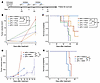
Gemcitabine-based chemotherapy is the standard treatment regimen for advanced intrahepatic cholangiocarcinoma (iCCA), but the frequent presence of chemoresistance limits its efficacy. Here, we identified isocitrate dehydrogenase 1 (IDH1) as the crucial target that confers chemoresistance of iCCA to gemcitabine using a druggable CRISPR/Cas9 library. The positive association between IDH1 expression and chemoresistance was revealed in a gemcitabine-treated iCCA cohort and with cell-based drug sensitivity assays. Utilizing patient-derived organoids, cell line–derived xenografts, and patient-derived xenografts, we demonstrated that IDH1 knockdown or IDH1 pharmacological inhibition facilitated gemcitabine efficacy in these preclinical iCCA models carrying wild-type IDH1 (wtIDH1). Mechanistically, wtIDH1 oxidizes isocitrate to generate α-ketoglutarate and NNADPH, thereby creating a mechanism to manage the oxidative stress induced by gemcitabine, maintaining cellular redox homeostasis, and, ultimately, leading to chemoresistance to gemcitabine. Significantly, ivosidenib, the FDA-approved allosteric IDH1 inhibitor, demonstrated synergistic antitumor efficacy with gemcitabine in wtIDH1 preclinical iCCA models through boosting intracellular oxidative stress under physiological conditions. The low level of Mg2+, an ion that competitively hinders binding of ivosidenib on wtIDH1, in the iCCA tumor microenvironment contributed to the expanded therapeutic window for use of ivosidenib in patients with iCCA. Our work revealed the potency of combining targeting IDH1 and chemotherapy against wtIDH1 iCCA and other tumors.
Authors
Xiuxian Li, Zhixiao Song, Shusheng Lin, Man Luo, Shaoru Liu, Yang Liu, Fapeng Zhang, Leibo Xu, Chao Liu, Honghua Zhang
Abstract
Single-agent anti-PD-1 antibodies are ineffective for pancreatic ductal adenocarcinoma (PDAC) due to the immunosuppressive tumor-microenvironment (TME). KRAS mutations contribute to the inflammatory TME and therapeutic resistance by upregulating IL-8 via MAPK pathways. Thus, this study attempted to overcome the resistance to anti-PD-1 antibodies by targeting downstream KRAS-effectors. The study found that the resistance to anti-PD-1 antibodies can be overcome through MEK1/2-inhibition. The combination of anti-PD-1 antibodies and MEK inhibitors displayed antitumor activity in Kras mutated (Krasmut) KPC mouse tumors, but not WT (KrasWT) Panc02 tumors. The combination of anti-PD-1 antibodies and MEK inhibitors induced recruitment of tumor-associated neutrophils (TANs) via CXCR2, an IL-8 receptor, and increased memory CD8+ T cells and IFN-γ production in treatment-sensitive tumors. However, larger tumors still resisted the combination of anti-PD-1 antibody and MEK inhibitor, likely due to hypoxia/necrosis-induced NETosis and associated paucity of CD8+ T cells. The subsequent addition of anti-CXCR2 antibody overcame this resistance by blocking TAN-infiltration to hypoxic/necrotic areas. Consistently, a risk-score based on the NETosis-MAPK signaling interaction is significantly associated with poorer survival in human PDAC. This study thus provides a new venue for overcoming resistance to strategies targeting KRAS signaling.
Authors
Brian Herbst, Alex Blair, Yiming Li, Elizabeth M. Jaffee, Lei Zheng

Abstract
Epigenetic dysregulation is associated with immune evasion and immune checkpoint blockade (ICB) resistance. Here, using in vivo CRISPR/Cas9 screens targeting epigenetics-related factors in mouse tumor models treated with ICB, we identified chromobox 4 (CBX4) as a key negative regulator of the immune tumor microenvironment (TME). Single-cell RNA-seq and spatial transcriptomics analyses of patients receiving neoadjuvant anti–programmed cell death protein 1 (anti–PD-1) therapy revealed high CBX4 expression in both tumor cells and immunosuppressive tumor-associated macrophage subpopulations, with preferential accumulation in nonresponders. Deficiency of CBX4 in macrophages or tumor cells induced robust antitumor immunity and increased infiltration and the cytotoxic activity of CD8+ T cells and NK cells, thereby heightening the sensitivity of ICB treatment. Mechanistically, CBX4 targeted H3K9me3- and H3K27me3-marked endogenous retroelements such as RLTR4-Mm-int. Loss of CBX4 derepressed retrotransposons, activating cytosolic RNA-sensing pathways and triggering the type I IFN response, ultimately leading to a robustly inflamed TME. Moreover, we uncovered a negative correlation between CBX4 expression, immune responses, and retrotransposon levels, and were able to determine the prognosis of patients with hepatocellular carcinoma (HCC) undergoing ICB therapy. Our study establishes CBX4 as an epigenetic immune checkpoint through the epigenetic silencing of retrotransposons, remodeling the immune TME and thus providing a promising therapeutic target to enhance tumor immunogenicity and overcome immunotherapy resistance.
Authors
Zhibo Ma, Wenlong Jia, Xi Zhou, Jing Liu, Qingwen Li, Ruizhi Chang, Gu Shiqi, Naonao Yuan, Zhishui Chen, Peixiang Lan

Abstract
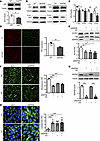
Understanding susceptibility factors of sepsis is crucial for early diagnosis and development of personalized treatment strategies. However, the genetic determinants for initiation and progression of sepsis remain unclear. Here, we showed that the expression levels of estrogen receptor β (ERβ) were significantly reduced in the peripheral blood of patients with sepsis and were negatively correlated with disease severity. The results from human samples and experimental animals demonstrated that ERβ deficiency enhanced the body’s susceptibility to sepsis by inducing macrophage pyroptosis, thereby impairing bacterial clearance. Mechanistically, ERβ deficiency enhanced fatty acid oxidation, increased acetyl-CoA levels, and promoted acetylation of stomatin-like protein 2 (Stoml2) at K221, leading to mitochondrial dysfunction and macrophage pyroptosis. Mutating the Stoml2 K221 site mitigated these effects and improved survival of septic mice. These findings suggest ERβ deficiency as a potential genetic factor in sepsis susceptibility.
Authors
Yanrong Zhu, Gang Li, Yilei Guo, Yue He, Wanyi Zhang, Lei Gao, Jing Zhang, Pengxiang Guo, Haochang Lin, Wenjie Zhang, Zhifeng Wei, Yufeng Xia, Yue Dai
Abstract
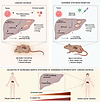
Diabetic retinopathy involves early retinal vascular barrier breakdown and pericyte loss, yet the initiating molecular events remain poorly defined. Vascular endothelial cadherin (VE-cadherin), a key regulator of endothelial integrity, is notably reduced in diabetic and prediabetic nucleoside diphosphate kinase B–deficient (NDPKB-deficient) mouse retinas, particularly in the retinal deep capillary layer, and this decline precedes pericyte loss. In vitro, high glucose (HG) and NDPKB deficiency induced VE-cadherin Y685 phosphorylation, promoting its junctional internalization, activating the hexosamine biosynthesis pathway, and increasing angiopoietin 2 (Ang2), resulting in impaired endothelial barrier function and disrupting pericyte attachment. Preventing Y685 phosphorylation through VE-cadherin Y685F mutation blocked these HG- and NDPKB-driven pathological effects. Pharmacological intervention experiments identified protein O-linked β-N-acetyl glucosamine (O-GlcNAc) modification as a mediator of Y685-dependent Ang2 upregulation. In vivo, VE-cadherin Y685F-knockin mice were protected from diabetes- and prediabetes-induced vascular hyperpermeability, exhibited reduced protein O-GlcNAcylation and Ang2 induction, and maintained neuronal function. O-GlcNAc–enriched retinal proteomics further showed that the Y685F mutation restored balanced neurovascular and mitochondrial pathways. These findings highlight the potential of targeting VE-cadherin Y685 phosphorylation as a promising therapeutic approach to maintain retinal vascular integrity and attenuate the pathological progression of diabetic and prediabetic retinopathy.
Authors
Yixin Wang, Hongpeng Huang, Feng Shao, Rachana Eshwaran, Miao Qin, Noor Karim, Yonggang Ren, Gergana Dobreva, Hans-Peter Hammes, Thomas Wieland, Yuxi Feng
Abstract
Cachexia is a metabolic wasting syndrome affecting many patients with cancer, with poor survival outcomes. Disturbed lipid metabolism is a hallmark of cachexia, and our previous work has identified increased levels of circulating ceramides, which are bioactive lipids with adverse effects in metabolic diseases, as biomarkers for cachexia in mouse models and patients. Here, we investigated the role of ceramides on cachexia development using the well-established C26 colon carcinoma model. We demonstrated that elevated ceramides in cachexia arose from increased liver synthesis. We showed that ceramides directly contributed to impaired mitochondrial function and energy homeostasis in cachexia target tissues. Targeting ceramide synthesis using miRNA interference, or myriocin, an approved compound targeting the key synthesis enzyme serine palmitoyltransferase (SPT), improved markers of muscle atrophy in cachectic male mice. Importantly, we demonstrated that key enzymes involved in ceramide production were also elevated in livers, but not in other organs, of patients with cancer cachexia, correlating with disease severity. Our data place ceramides as contributors to metabolic dysfunction in cachexia and highlight the suitability of the ceramide synthesis pathway for therapeutic targeting.
Authors
Pauline Morigny, Honglei Ji, Laura Cussonneau, Sabrina Zorzato, Yun Kwon, Fabien Riols, Doris Kaltenecker, Alisa Maier, Vignesh Karthikaisamy, Samantha Corrà, Tanja Krauss, Claudine Seeliger, Syed Qaaifah Gillani, Joël J. Tissink, Sandra Lacas-Gervais, Tuna Felix Samanci, Adriano Maida, Raul Terron-Exposito, Angela Trinca, Christine von Toerne, Leonardo Nogara, Melina Claussnitzer, Olga Prokopchuk, Jeannine Bachmann, Mauricio Berriel Diaz, Laure B. Bindels, Ondrej Kuda, Hans Hauner, Mark Haid, Stephan Herzig, Carlo Fiore Viscomi, Jerome Gilleron, Anja Zeigerer, Bert Blaauw, Maria Rohm
No posts were found with this tag.


Copyright © 2026 American Society for Clinical Investigation
ISSN: 0021-9738 (print), 1558-8238 (online)