
Submit a comment
Abstract
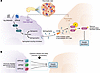
Pancreatic islet macrophages are important immunometabolic regulators of β cell function, particularly in obesity-associated type 2 diabetes. Previous studies have established that pancreatic islet macrophages communicate with β cells through either the release of cytokines and growth factors, or direct cell–cell contact. In this issue of the JCI, Singh et al. used chemogenetics to identify a Gq/AMPK pathway that remodels sphingolipid metabolism. This pathway links macrophages to β cells through a CD36-dependent mechanism that reduces insulin secretion. Surprisingly, the orphan GPCR GPR18 was identified as the receptor that engages this pathway. These findings expand our understanding in macrophage–β cell communication and identify GPR18 as a potential therapeutic target for type 2 diabetes.
Authors
Xianglin Huang, Bryan L. Roth
Guidelines
The Editorial Board will only consider comments that are deemed relevant and of interest to readers. The Journal will not post data that have not been subjected to peer review; or a comment that is essentially a reiteration of another comment.
- Comments appear on the Journal’s website and are linked from the original article’s web page.
- Authors are notified by email if their comments are posted.
- The Journal reserves the right to edit comments for length and clarity.
- No appeals will be considered.
- Comments are not indexed in PubMed.
Specific requirements
- Maximum length, 400 words
- Entered as plain text or HTML
- Author’s name and email address, to be posted with the comment
- Declaration of all potential conflicts of interest (even if these are not ultimately posted); see the Journal’s conflict-of-interest policy
- Comments may not include figures


Copyright © 2026 American Society for Clinical Investigation
ISSN: 0021-9738 (print), 1558-8238 (online)