
Submit a comment
Abstract
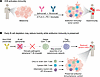
Combined CTLA-4 and PD-1 blockade is effective in treating melanoma and additional cancers but frequently causes immune-related adverse events (irAEs). irAEs cause treatment disruption and discontinuation and remain difficult to manage clinically. In this issue, Dhodapkar and colleagues assessed data from a small randomized clinical trial testing rituximab-mediated B cell depletion in combined CTLA-4/PD-1 blockade–treated patients with advanced melanoma. Despite premature discontinuation of the trial due to a high rate of rituximab hypersensitivity, they report that preemptive B cell depletion was associated with fewer severe toxicities without evident loss of antitumor activity. These findings raise broader questions about the organization of checkpoint-induced autoimmunity, the emerging concept of immune reset, and the compartment-specific roles of B cells in antitumor immunity.
Authors
Chuan-Yuan Li
Guidelines
The Editorial Board will only consider comments that are deemed relevant and of interest to readers. The Journal will not post data that have not been subjected to peer review; or a comment that is essentially a reiteration of another comment.
- Comments appear on the Journal’s website and are linked from the original article’s web page.
- Authors are notified by email if their comments are posted.
- The Journal reserves the right to edit comments for length and clarity.
- No appeals will be considered.
- Comments are not indexed in PubMed.
Specific requirements
- Maximum length, 400 words
- Entered as plain text or HTML
- Author’s name and email address, to be posted with the comment
- Declaration of all potential conflicts of interest (even if these are not ultimately posted); see the Journal’s conflict-of-interest policy
- Comments may not include figures


Copyright © 2026 American Society for Clinical Investigation
ISSN: 0021-9738 (print), 1558-8238 (online)