
Go to JCI Insight
  • About
  • Editors
  • Consulting Editors
  • For authors
  • Journal stats
  • Publication ethics
  • Publication alerts by email
  • Advertising
  • Job board
  • Contact
  • Clinical Research and Public Health
  • Current issue
  • Past issues
  • By specialty
    • COVID-19
    • Cardiology
    • Gastroenterology
    • Immunology
    • Metabolism
    • Nephrology
    • Neuroscience
    • Oncology
    • Pulmonology
    • Vascular biology
    • All ...
  • Videos
    • ASCI Milestone Awards
    • Video Abstracts
    • Conversations with Giants in Medicine
  • Reviews
    • View all reviews ...
    • Emerging therapeutic strategies in breast cancer (Oct 2026)
    • The cGAS-STING pathway: DNA sensing in health and disease (Jun 2026)
    • Neurodegeneration (Mar 2026)
    • Clinical innovation and scientific progress in GLP-1 medicine (Nov 2025)
    • Pancreatic Cancer (Jul 2025)
    • Complement Biology and Therapeutics (May 2025)
    • Evolving insights into MASLD and MASH pathogenesis and treatment (Apr 2025)
    • View all review series ...
  • Viewpoint
  • Collections
    • In-Press Preview
    • Clinical Research and Public Health
    • Research Letters
    • Letters to the Editor
    • Editorials
    • Commentaries
    • Editor's notes
    • Reviews
    • Viewpoints
    • 100th anniversary
    • Top read articles
  • Search Articles

  • Current issue
  • Past issues
  • Specialties
  • Reviews
  • Review series
  • ASCI Milestone Awards
  • Video Abstracts
  • Conversations with Giants in Medicine
  • In-Press Preview
  • Clinical Research and Public Health
  • Research Letters
  • Letters to the Editor
  • Editorials
  • Commentaries
  • Editor's notes
  • Reviews
  • Viewpoints
  • 100th anniversary
  • Top read articles
  • About
  • Editors
  • Consulting Editors
  • For authors
  • Journal stats
  • Publication ethics
  • Publication alerts by email
  • Advertising
  • Job board
  • Contact

Submit a comment

Serotonin biosynthesis emerges as a metabolic driver in prostate cancer therapy resistance
Kevin Holm, Neil A. Bhowmick
View: Text | PDF
Commentary

Serotonin biosynthesis emerges as a metabolic driver in prostate cancer therapy resistance

  • Text
  • PDF
Abstract

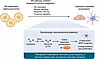
Advanced prostate cancer frequently escapes androgen receptor pathway inhibition through mechanisms including restored androgen signaling, lineage plasticity, and metabolic adaptation. Neuroendocrine prostate cancer (NEPC) can emerge as an androgen-insensitive lineage and has mostly been studied in the context of its transcriptional and epigenetic reprogramming. However, evidence increasingly supports the requirement for metabolic rewiring across a variety of pathways in the transition to NEPC. In this issue of the JCI, Wei et al. demonstrated that serotonin metabolism regulated by tryptophan hydroxylase 1 (TPH1) stabilizes the plastic state of NEPC by supporting serotonin-based posttranslational modification (serotonylation) of mTOR and FOXM1/E2F1 activation. These findings position TPH1 as both a neuroendocrine marker and a functional mediator of hormone therapy resistance. Because metabolic escape can involve many pathways, biomarker-guided patient selection will be required for translating these findings to an intervention. Accordingly, targeting TPH1 may delay or reverse therapy-induced NEPC in selected patients.

Authors

Kevin Holm, Neil A. Bhowmick

×

Guidelines

The Editorial Board will only consider comments that are deemed relevant and of interest to readers. The Journal will not post data that have not been subjected to peer review; or a comment that is essentially a reiteration of another comment.

  • Comments appear on the Journal’s website and are linked from the original article’s web page.
  • Authors are notified by email if their comments are posted.
  • The Journal reserves the right to edit comments for length and clarity.
  • No appeals will be considered.
  • Comments are not indexed in PubMed.

Specific requirements

  • Maximum length, 400 words
  • Entered as plain text or HTML
  • Author’s name and email address, to be posted with the comment
  • Declaration of all potential conflicts of interest (even if these are not ultimately posted); see the Journal’s conflict-of-interest policy
  • Comments may not include figures
This field is required

Copyright © 2026 American Society for Clinical Investigation
ISSN: 0021-9738 (print), 1558-8238 (online)

Sign up for email alerts