
Submit a comment
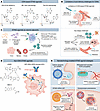
Abstract
The cyclic GMP-AMP synthase–stimulator of interferon genes (cGAS-STING) pathway is a central regulator of innate immunity that links cytosolic DNA sensing to type I IFN and inflammatory responses. While initially viewed as a uniformly beneficial antiviral and antitumor signaling axis, emerging evidence reveals that cGAS-STING functions as a context-dependent immune rheostat whose impact is dictated by signal magnitude, timing, cellular origin, subcellular localization of signaling components, and tissue context. These parameters explain why pathway activation can promote tumor rejection, vaccine efficacy, and host defense in some settings yet drive immune suppression, metastasis, neuroinflammation, or autoinflammatory disease in others. In this Review, we synthesize mechanistic and clinical insights across agonist and antagonist strategies targeting the cGAS-STING pathway in cancer, infectious disease, neurodegeneration, and interferonopathies. We highlight why first-generation STING agonists have underperformed clinically and how next-generation delivery systems and cGAS-directed approaches may overcome these limitations. We propose a disease-centric framework that integrates spatial delivery, dosing architecture, and pharmacodynamic biomarker discovery to enable rational modulation of cGAS-STING, repositioning the pathway as a tunable immunologic control node for precision therapy rather than a binary on/off switch.
Authors
Akanksha S. Mahajan, Connor M. Forsyth, Cao Dai Phung, Xinhe Shen, Rachel Jarvis, Alexander H. Stegh
Guidelines
The Editorial Board will only consider comments that are deemed relevant and of interest to readers. The Journal will not post data that have not been subjected to peer review; or a comment that is essentially a reiteration of another comment.
- Comments appear on the Journal’s website and are linked from the original article’s web page.
- Authors are notified by email if their comments are posted.
- The Journal reserves the right to edit comments for length and clarity.
- No appeals will be considered.
- Comments are not indexed in PubMed.
Specific requirements
- Maximum length, 400 words
- Entered as plain text or HTML
- Author’s name and email address, to be posted with the comment
- Declaration of all potential conflicts of interest (even if these are not ultimately posted); see the Journal’s conflict-of-interest policy
- Comments may not include figures


Copyright © 2026 American Society for Clinical Investigation
ISSN: 0021-9738 (print), 1558-8238 (online)