
Submit a comment
Abstract
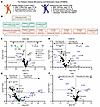
BACKGROUND Obesity and weight loss in adults have been associated with distinct metabolome and gut microbiome features, but the extent to which those associations apply to adolescent stages remain unclear.METHODS The Pediatric Obesity Microbiome and Metabolism Study (POMMS) enrolled 220 adolescents aged 10–18 with severe obesity (OB) and 67 individuals who were healthy weight controls (HWCs). Blood, stool, and clinical measures were collected at baseline and after a 6-month obesity intervention for the OB group. Metabolomic profiling in serum using targeted quantitative mass spectrometry and microbiome profiling in stool were performed, and those features were assessed for associations with BMI, insulin resistance, and inflammation. Fecal microbiome transplants (FMT) were performed on germ-free mice using samples from both groups to assess effects on weight gain and metabolic pathways.RESULTS Adolescents with OB exhibited higher serum branched-chain amino acid (BCAA) but lower branched-chain ketoacid (BCKA) levels compared with HWC. This pattern was sex- and age-dependent and differed from adults with obesity who show elevated levels of both BCAA and BCKA. Longitudinal analysis identified metabolic and microbial features correlated with changes in health measures during the intervention. The fecal microbiomes of adolescents with OB and HWC had similar diversity but differed in membership and functional potential. FMT from both OB and HWC donors had similar effects on mouse body weight, but specific taxa were linked to weight gain in recipients of FMT.CONCLUSION Adolescents with OB have unique metabolomic adaptations and microbiome signatures compared with their HWC counterparts and adults with OB.TRIAL REGISTRATION ClinicalTrials.gov Identifier: NCT03139877 (Observational Study) and NCT02959034 (Repository).FUNDING SUPPORT American Heart Association Grants: 17SFRN33670990, 20PRE35180195; National Institute of Diabetes and Digestive and Kidney Diseases Grant: R24-DK110492.
Authors
Jessica R. McCann, Chengxin Yang, Nathan A. Bihlmeyer, Runshi Tang, Tracy Truong, Wei Zhou, Jie An, Jayanth Jawahar, Olga Ilkayeva, Michael J. Muehlbauer, Zhengzheng Hu, Holly Kloos Dressman, Lisa Poppe, Joshua A. Granek, Jason W. Arnold, Lawrence A. David, Julia Oh, Pixu Shi, Pinar Gumus Balikcioglu, Svati H. Shah, Sarah C. Armstrong, Christopher B. Newgard, Patrick C. Seed, John F. Rawls
Guidelines
The Editorial Board will only consider comments that are deemed relevant and of interest to readers. The Journal will not post data that have not been subjected to peer review; or a comment that is essentially a reiteration of another comment.
- Comments appear on the Journal’s website and are linked from the original article’s web page.
- Authors are notified by email if their comments are posted.
- The Journal reserves the right to edit comments for length and clarity.
- No appeals will be considered.
- Comments are not indexed in PubMed.
Specific requirements
- Maximum length, 400 words
- Entered as plain text or HTML
- Author’s name and email address, to be posted with the comment
- Declaration of all potential conflicts of interest (even if these are not ultimately posted); see the Journal’s conflict-of-interest policy
- Comments may not include figures


Copyright © 2026 American Society for Clinical Investigation
ISSN: 0021-9738 (print), 1558-8238 (online)