
Abstract
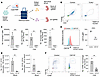
Loss-of-function mutation in the human gene dipeptidyl peptidase 9 (DPP9) causes Hatipoglu syndrome leading to severe inflammasomopathy. A key feature of the disease is pancytopenia, and patients require bone marrow transplantation, but the mechanism of cell loss is unclear, since Dpp9-mutant mice have normal hematopoiesis, suggesting that a distinct mechanism of disease occurs in humans. Here, we present a model of human DPP9 deficiency leveraging reverse genetics in the MISTRG6 humanized mice. We found that CRISPR editing of human CD34+ hematopoietic stem and progenitor cells (HSPCs) led to very efficient and persistent gene deletion in vivo. Human DPP9 deletion recapitulated cytopenia in peripheral blood and in the bone marrow, and cell loss was cell intrinsic. However, DPP9 deletion led to few transcriptional changes suggesting posttranscriptional regulation in human HSPCs. Mechanistically, DPP9 deficiency led to activation of the CARD8 inflammasome, resulting in HSPC pyroptosis, whereas NLRP1 was dispensable for cell death. Thus, our results reveal a unique human mechanism of disease and offer therapeutic insight for this inflammasomopathy.
Authors
Tianli Xiao, J. Richard Brewer, Maximillian Carlino, Ailin Han, Yamato J. Takabe, Chia-Yi Lee, Fengrui Zhang, Mi Chen, Holly Nicole Blackburn, Amin H. Nassar, Qiankun Wang, Kristen Brennand, Liang Shan, Esen Sefik, Diane S. Krause, Richard A. Flavell
This file is in Adobe Acrobat (PDF) format. If you have not installed and configured the Adobe Acrobat Reader on your system.
Having trouble reading a PDF?
PDFs are designed to be printed out and read, but if you prefer to read them online, you may find it easier if you increase the view size to 125%.
Having trouble saving a PDF?
Many versions of the free Acrobat Reader do not allow Save. You must instead save the PDF from the JCI Online page you downloaded it from. PC users: Right-click on the Download link and choose the option that says something like "Save Link As...". Mac users should hold the mouse button down on the link to get these same options.
Having trouble printing a PDF?
- Try printing one page at a time or to a newer printer.
- Try saving the file to disk before printing rather than opening it "on the fly." This requires that you configure your browser to "Save" rather than "Launch Application" for the file type "application/pdf", and can usually be done in the "Helper Applications" options.
- Make sure you are using the latest version of Adobe's Acrobat Reader.
Supplemental data - Download (2.62 MB)


Copyright © 2026 American Society for Clinical Investigation
ISSN: 0021-9738 (print), 1558-8238 (online)