
Advertisement
Research ArticleCell biologyMuscle biology
Open Access |  10.1172/JCI202212
MESH1-mediated coenzyme A degradation drives ferroptosis sensitivity and muscle pathology
Chao-Chieh Lin,1,2 Joshua Rose,3 Alexander A. Mestre,1,2,3 Chien-Kung Cornelia Ding,1,2 Ssu-Yu Chen,1,2 Sze Mun Choy,4 Kah Yong Goh,4 Weiyi Jiang,4 Wen Xing Lee,4 Qizhou Jiang,4 Yanting Chen,5 Tianai Sun,1,2 Jianli Wu,1,2 Yueqi Chen,6 Yunju Oh,6 Pyeonghwa Jeong,6 Jiyong Hong,6,7 Kenon Chua,8 Michael C. Fitzgerald,6 Guo-Fang Zhang,9,10 Hong-Wen Tang,4 Pei Zhou,3 and Jen-Tsan Chi1,2
1Department of Molecular Genetics and Microbiology,
2Duke Center for Genomic and Computational Biology, and
3Department of Biochemistry, Duke University School of Medicine, Durham, North Carolina, USA.
4Program in Cancer and Stem Cell Biology, Duke-NUS Medical School, Singapore.
5Department of Anesthesiology, Duke University School of Medicine, Durham, North Carolina, USA.
6Department of Chemistry, Duke University, Durham, North Carolina, USA.
7Department of Pharmacology and Cancer Biology, Duke University School of Medicine, Durham, North Carolina, USA.
8Department of Orthopaedic Surgery, Singapore General Hospital, Singapore.
9Duke Molecular Physiology Institute and Sarah W. Stedman Nutrition and Metabolism Center, Duke University, Durham, North Carolina, USA.
10Department of Medicine, Division of Endocrinology, Metabolism, and Nutrition, Duke University School of Medicine, Durham, North Carolina, USA.
Address correspondence to: Jen-Tsan Chi, Department of Molecular Genetics and Microbiology, Duke University School of Medicine, Duke Box 3382, Durham, North Carolina 27710, USA. Phone: 919.668.4759; Email: jentsan.chi@duke.edu. Or to: Pei Zhou, Department of Biochemistry, Duke University School of Medicine, Duke Box 3711, Durham, North Carolina 27710, USA. Phone: 919.668.6409; Email: peizhou@biochem.duke.edu. Or to: Hong-Wen Tang, Program in Cancer and Stem Cell Biology, Duke-NUS Medical School, 8 College Road, Singapore 169857. Phone: 65.6601.6482; Email: hongwen.tang@duke-nus.edu.sg.
Authorship note: CCL, JR, and AAM contributed equally to this work.
Find articles by
Lin, C.
in:
PubMed
|
Google Scholar
|

1Department of Molecular Genetics and Microbiology,
2Duke Center for Genomic and Computational Biology, and
3Department of Biochemistry, Duke University School of Medicine, Durham, North Carolina, USA.
4Program in Cancer and Stem Cell Biology, Duke-NUS Medical School, Singapore.
5Department of Anesthesiology, Duke University School of Medicine, Durham, North Carolina, USA.
6Department of Chemistry, Duke University, Durham, North Carolina, USA.
7Department of Pharmacology and Cancer Biology, Duke University School of Medicine, Durham, North Carolina, USA.
8Department of Orthopaedic Surgery, Singapore General Hospital, Singapore.
9Duke Molecular Physiology Institute and Sarah W. Stedman Nutrition and Metabolism Center, Duke University, Durham, North Carolina, USA.
10Department of Medicine, Division of Endocrinology, Metabolism, and Nutrition, Duke University School of Medicine, Durham, North Carolina, USA.
Address correspondence to: Jen-Tsan Chi, Department of Molecular Genetics and Microbiology, Duke University School of Medicine, Duke Box 3382, Durham, North Carolina 27710, USA. Phone: 919.668.4759; Email: jentsan.chi@duke.edu. Or to: Pei Zhou, Department of Biochemistry, Duke University School of Medicine, Duke Box 3711, Durham, North Carolina 27710, USA. Phone: 919.668.6409; Email: peizhou@biochem.duke.edu. Or to: Hong-Wen Tang, Program in Cancer and Stem Cell Biology, Duke-NUS Medical School, 8 College Road, Singapore 169857. Phone: 65.6601.6482; Email: hongwen.tang@duke-nus.edu.sg.
Authorship note: CCL, JR, and AAM contributed equally to this work.
Find articles by Rose, J. in: PubMed | Google Scholar
1Department of Molecular Genetics and Microbiology,
2Duke Center for Genomic and Computational Biology, and
3Department of Biochemistry, Duke University School of Medicine, Durham, North Carolina, USA.
4Program in Cancer and Stem Cell Biology, Duke-NUS Medical School, Singapore.
5Department of Anesthesiology, Duke University School of Medicine, Durham, North Carolina, USA.
6Department of Chemistry, Duke University, Durham, North Carolina, USA.
7Department of Pharmacology and Cancer Biology, Duke University School of Medicine, Durham, North Carolina, USA.
8Department of Orthopaedic Surgery, Singapore General Hospital, Singapore.
9Duke Molecular Physiology Institute and Sarah W. Stedman Nutrition and Metabolism Center, Duke University, Durham, North Carolina, USA.
10Department of Medicine, Division of Endocrinology, Metabolism, and Nutrition, Duke University School of Medicine, Durham, North Carolina, USA.
Address correspondence to: Jen-Tsan Chi, Department of Molecular Genetics and Microbiology, Duke University School of Medicine, Duke Box 3382, Durham, North Carolina 27710, USA. Phone: 919.668.4759; Email: jentsan.chi@duke.edu. Or to: Pei Zhou, Department of Biochemistry, Duke University School of Medicine, Duke Box 3711, Durham, North Carolina 27710, USA. Phone: 919.668.6409; Email: peizhou@biochem.duke.edu. Or to: Hong-Wen Tang, Program in Cancer and Stem Cell Biology, Duke-NUS Medical School, 8 College Road, Singapore 169857. Phone: 65.6601.6482; Email: hongwen.tang@duke-nus.edu.sg.
Authorship note: CCL, JR, and AAM contributed equally to this work.
Find articles by Mestre, A. in: PubMed | Google Scholar
1Department of Molecular Genetics and Microbiology,
2Duke Center for Genomic and Computational Biology, and
3Department of Biochemistry, Duke University School of Medicine, Durham, North Carolina, USA.
4Program in Cancer and Stem Cell Biology, Duke-NUS Medical School, Singapore.
5Department of Anesthesiology, Duke University School of Medicine, Durham, North Carolina, USA.
6Department of Chemistry, Duke University, Durham, North Carolina, USA.
7Department of Pharmacology and Cancer Biology, Duke University School of Medicine, Durham, North Carolina, USA.
8Department of Orthopaedic Surgery, Singapore General Hospital, Singapore.
9Duke Molecular Physiology Institute and Sarah W. Stedman Nutrition and Metabolism Center, Duke University, Durham, North Carolina, USA.
10Department of Medicine, Division of Endocrinology, Metabolism, and Nutrition, Duke University School of Medicine, Durham, North Carolina, USA.
Address correspondence to: Jen-Tsan Chi, Department of Molecular Genetics and Microbiology, Duke University School of Medicine, Duke Box 3382, Durham, North Carolina 27710, USA. Phone: 919.668.4759; Email: jentsan.chi@duke.edu. Or to: Pei Zhou, Department of Biochemistry, Duke University School of Medicine, Duke Box 3711, Durham, North Carolina 27710, USA. Phone: 919.668.6409; Email: peizhou@biochem.duke.edu. Or to: Hong-Wen Tang, Program in Cancer and Stem Cell Biology, Duke-NUS Medical School, 8 College Road, Singapore 169857. Phone: 65.6601.6482; Email: hongwen.tang@duke-nus.edu.sg.
Authorship note: CCL, JR, and AAM contributed equally to this work.
Find articles by Ding, C. in: PubMed | Google Scholar
1Department of Molecular Genetics and Microbiology,
2Duke Center for Genomic and Computational Biology, and
3Department of Biochemistry, Duke University School of Medicine, Durham, North Carolina, USA.
4Program in Cancer and Stem Cell Biology, Duke-NUS Medical School, Singapore.
5Department of Anesthesiology, Duke University School of Medicine, Durham, North Carolina, USA.
6Department of Chemistry, Duke University, Durham, North Carolina, USA.
7Department of Pharmacology and Cancer Biology, Duke University School of Medicine, Durham, North Carolina, USA.
8Department of Orthopaedic Surgery, Singapore General Hospital, Singapore.
9Duke Molecular Physiology Institute and Sarah W. Stedman Nutrition and Metabolism Center, Duke University, Durham, North Carolina, USA.
10Department of Medicine, Division of Endocrinology, Metabolism, and Nutrition, Duke University School of Medicine, Durham, North Carolina, USA.
Address correspondence to: Jen-Tsan Chi, Department of Molecular Genetics and Microbiology, Duke University School of Medicine, Duke Box 3382, Durham, North Carolina 27710, USA. Phone: 919.668.4759; Email: jentsan.chi@duke.edu. Or to: Pei Zhou, Department of Biochemistry, Duke University School of Medicine, Duke Box 3711, Durham, North Carolina 27710, USA. Phone: 919.668.6409; Email: peizhou@biochem.duke.edu. Or to: Hong-Wen Tang, Program in Cancer and Stem Cell Biology, Duke-NUS Medical School, 8 College Road, Singapore 169857. Phone: 65.6601.6482; Email: hongwen.tang@duke-nus.edu.sg.
Authorship note: CCL, JR, and AAM contributed equally to this work.
Find articles by Chen, S. in: PubMed | Google Scholar
1Department of Molecular Genetics and Microbiology,
2Duke Center for Genomic and Computational Biology, and
3Department of Biochemistry, Duke University School of Medicine, Durham, North Carolina, USA.
4Program in Cancer and Stem Cell Biology, Duke-NUS Medical School, Singapore.
5Department of Anesthesiology, Duke University School of Medicine, Durham, North Carolina, USA.
6Department of Chemistry, Duke University, Durham, North Carolina, USA.
7Department of Pharmacology and Cancer Biology, Duke University School of Medicine, Durham, North Carolina, USA.
8Department of Orthopaedic Surgery, Singapore General Hospital, Singapore.
9Duke Molecular Physiology Institute and Sarah W. Stedman Nutrition and Metabolism Center, Duke University, Durham, North Carolina, USA.
10Department of Medicine, Division of Endocrinology, Metabolism, and Nutrition, Duke University School of Medicine, Durham, North Carolina, USA.
Address correspondence to: Jen-Tsan Chi, Department of Molecular Genetics and Microbiology, Duke University School of Medicine, Duke Box 3382, Durham, North Carolina 27710, USA. Phone: 919.668.4759; Email: jentsan.chi@duke.edu. Or to: Pei Zhou, Department of Biochemistry, Duke University School of Medicine, Duke Box 3711, Durham, North Carolina 27710, USA. Phone: 919.668.6409; Email: peizhou@biochem.duke.edu. Or to: Hong-Wen Tang, Program in Cancer and Stem Cell Biology, Duke-NUS Medical School, 8 College Road, Singapore 169857. Phone: 65.6601.6482; Email: hongwen.tang@duke-nus.edu.sg.
Authorship note: CCL, JR, and AAM contributed equally to this work.
Find articles by Choy, S. in: PubMed | Google Scholar
1Department of Molecular Genetics and Microbiology,
2Duke Center for Genomic and Computational Biology, and
3Department of Biochemistry, Duke University School of Medicine, Durham, North Carolina, USA.
4Program in Cancer and Stem Cell Biology, Duke-NUS Medical School, Singapore.
5Department of Anesthesiology, Duke University School of Medicine, Durham, North Carolina, USA.
6Department of Chemistry, Duke University, Durham, North Carolina, USA.
7Department of Pharmacology and Cancer Biology, Duke University School of Medicine, Durham, North Carolina, USA.
8Department of Orthopaedic Surgery, Singapore General Hospital, Singapore.
9Duke Molecular Physiology Institute and Sarah W. Stedman Nutrition and Metabolism Center, Duke University, Durham, North Carolina, USA.
10Department of Medicine, Division of Endocrinology, Metabolism, and Nutrition, Duke University School of Medicine, Durham, North Carolina, USA.
Address correspondence to: Jen-Tsan Chi, Department of Molecular Genetics and Microbiology, Duke University School of Medicine, Duke Box 3382, Durham, North Carolina 27710, USA. Phone: 919.668.4759; Email: jentsan.chi@duke.edu. Or to: Pei Zhou, Department of Biochemistry, Duke University School of Medicine, Duke Box 3711, Durham, North Carolina 27710, USA. Phone: 919.668.6409; Email: peizhou@biochem.duke.edu. Or to: Hong-Wen Tang, Program in Cancer and Stem Cell Biology, Duke-NUS Medical School, 8 College Road, Singapore 169857. Phone: 65.6601.6482; Email: hongwen.tang@duke-nus.edu.sg.
Authorship note: CCL, JR, and AAM contributed equally to this work.
Find articles by Goh, K. in: PubMed | Google Scholar
1Department of Molecular Genetics and Microbiology,
2Duke Center for Genomic and Computational Biology, and
3Department of Biochemistry, Duke University School of Medicine, Durham, North Carolina, USA.
4Program in Cancer and Stem Cell Biology, Duke-NUS Medical School, Singapore.
5Department of Anesthesiology, Duke University School of Medicine, Durham, North Carolina, USA.
6Department of Chemistry, Duke University, Durham, North Carolina, USA.
7Department of Pharmacology and Cancer Biology, Duke University School of Medicine, Durham, North Carolina, USA.
8Department of Orthopaedic Surgery, Singapore General Hospital, Singapore.
9Duke Molecular Physiology Institute and Sarah W. Stedman Nutrition and Metabolism Center, Duke University, Durham, North Carolina, USA.
10Department of Medicine, Division of Endocrinology, Metabolism, and Nutrition, Duke University School of Medicine, Durham, North Carolina, USA.
Address correspondence to: Jen-Tsan Chi, Department of Molecular Genetics and Microbiology, Duke University School of Medicine, Duke Box 3382, Durham, North Carolina 27710, USA. Phone: 919.668.4759; Email: jentsan.chi@duke.edu. Or to: Pei Zhou, Department of Biochemistry, Duke University School of Medicine, Duke Box 3711, Durham, North Carolina 27710, USA. Phone: 919.668.6409; Email: peizhou@biochem.duke.edu. Or to: Hong-Wen Tang, Program in Cancer and Stem Cell Biology, Duke-NUS Medical School, 8 College Road, Singapore 169857. Phone: 65.6601.6482; Email: hongwen.tang@duke-nus.edu.sg.
Authorship note: CCL, JR, and AAM contributed equally to this work.
Find articles by Jiang, W. in: PubMed | Google Scholar
1Department of Molecular Genetics and Microbiology,
2Duke Center for Genomic and Computational Biology, and
3Department of Biochemistry, Duke University School of Medicine, Durham, North Carolina, USA.
4Program in Cancer and Stem Cell Biology, Duke-NUS Medical School, Singapore.
5Department of Anesthesiology, Duke University School of Medicine, Durham, North Carolina, USA.
6Department of Chemistry, Duke University, Durham, North Carolina, USA.
7Department of Pharmacology and Cancer Biology, Duke University School of Medicine, Durham, North Carolina, USA.
8Department of Orthopaedic Surgery, Singapore General Hospital, Singapore.
9Duke Molecular Physiology Institute and Sarah W. Stedman Nutrition and Metabolism Center, Duke University, Durham, North Carolina, USA.
10Department of Medicine, Division of Endocrinology, Metabolism, and Nutrition, Duke University School of Medicine, Durham, North Carolina, USA.
Address correspondence to: Jen-Tsan Chi, Department of Molecular Genetics and Microbiology, Duke University School of Medicine, Duke Box 3382, Durham, North Carolina 27710, USA. Phone: 919.668.4759; Email: jentsan.chi@duke.edu. Or to: Pei Zhou, Department of Biochemistry, Duke University School of Medicine, Duke Box 3711, Durham, North Carolina 27710, USA. Phone: 919.668.6409; Email: peizhou@biochem.duke.edu. Or to: Hong-Wen Tang, Program in Cancer and Stem Cell Biology, Duke-NUS Medical School, 8 College Road, Singapore 169857. Phone: 65.6601.6482; Email: hongwen.tang@duke-nus.edu.sg.
Authorship note: CCL, JR, and AAM contributed equally to this work.
Find articles by Lee, W. in: PubMed | Google Scholar
1Department of Molecular Genetics and Microbiology,
2Duke Center for Genomic and Computational Biology, and
3Department of Biochemistry, Duke University School of Medicine, Durham, North Carolina, USA.
4Program in Cancer and Stem Cell Biology, Duke-NUS Medical School, Singapore.
5Department of Anesthesiology, Duke University School of Medicine, Durham, North Carolina, USA.
6Department of Chemistry, Duke University, Durham, North Carolina, USA.
7Department of Pharmacology and Cancer Biology, Duke University School of Medicine, Durham, North Carolina, USA.
8Department of Orthopaedic Surgery, Singapore General Hospital, Singapore.
9Duke Molecular Physiology Institute and Sarah W. Stedman Nutrition and Metabolism Center, Duke University, Durham, North Carolina, USA.
10Department of Medicine, Division of Endocrinology, Metabolism, and Nutrition, Duke University School of Medicine, Durham, North Carolina, USA.
Address correspondence to: Jen-Tsan Chi, Department of Molecular Genetics and Microbiology, Duke University School of Medicine, Duke Box 3382, Durham, North Carolina 27710, USA. Phone: 919.668.4759; Email: jentsan.chi@duke.edu. Or to: Pei Zhou, Department of Biochemistry, Duke University School of Medicine, Duke Box 3711, Durham, North Carolina 27710, USA. Phone: 919.668.6409; Email: peizhou@biochem.duke.edu. Or to: Hong-Wen Tang, Program in Cancer and Stem Cell Biology, Duke-NUS Medical School, 8 College Road, Singapore 169857. Phone: 65.6601.6482; Email: hongwen.tang@duke-nus.edu.sg.
Authorship note: CCL, JR, and AAM contributed equally to this work.
Find articles by Jiang, Q. in: PubMed | Google Scholar
1Department of Molecular Genetics and Microbiology,
2Duke Center for Genomic and Computational Biology, and
3Department of Biochemistry, Duke University School of Medicine, Durham, North Carolina, USA.
4Program in Cancer and Stem Cell Biology, Duke-NUS Medical School, Singapore.
5Department of Anesthesiology, Duke University School of Medicine, Durham, North Carolina, USA.
6Department of Chemistry, Duke University, Durham, North Carolina, USA.
7Department of Pharmacology and Cancer Biology, Duke University School of Medicine, Durham, North Carolina, USA.
8Department of Orthopaedic Surgery, Singapore General Hospital, Singapore.
9Duke Molecular Physiology Institute and Sarah W. Stedman Nutrition and Metabolism Center, Duke University, Durham, North Carolina, USA.
10Department of Medicine, Division of Endocrinology, Metabolism, and Nutrition, Duke University School of Medicine, Durham, North Carolina, USA.
Address correspondence to: Jen-Tsan Chi, Department of Molecular Genetics and Microbiology, Duke University School of Medicine, Duke Box 3382, Durham, North Carolina 27710, USA. Phone: 919.668.4759; Email: jentsan.chi@duke.edu. Or to: Pei Zhou, Department of Biochemistry, Duke University School of Medicine, Duke Box 3711, Durham, North Carolina 27710, USA. Phone: 919.668.6409; Email: peizhou@biochem.duke.edu. Or to: Hong-Wen Tang, Program in Cancer and Stem Cell Biology, Duke-NUS Medical School, 8 College Road, Singapore 169857. Phone: 65.6601.6482; Email: hongwen.tang@duke-nus.edu.sg.
Authorship note: CCL, JR, and AAM contributed equally to this work.
Find articles by Chen, Y. in: PubMed | Google Scholar
1Department of Molecular Genetics and Microbiology,
2Duke Center for Genomic and Computational Biology, and
3Department of Biochemistry, Duke University School of Medicine, Durham, North Carolina, USA.
4Program in Cancer and Stem Cell Biology, Duke-NUS Medical School, Singapore.
5Department of Anesthesiology, Duke University School of Medicine, Durham, North Carolina, USA.
6Department of Chemistry, Duke University, Durham, North Carolina, USA.
7Department of Pharmacology and Cancer Biology, Duke University School of Medicine, Durham, North Carolina, USA.
8Department of Orthopaedic Surgery, Singapore General Hospital, Singapore.
9Duke Molecular Physiology Institute and Sarah W. Stedman Nutrition and Metabolism Center, Duke University, Durham, North Carolina, USA.
10Department of Medicine, Division of Endocrinology, Metabolism, and Nutrition, Duke University School of Medicine, Durham, North Carolina, USA.
Address correspondence to: Jen-Tsan Chi, Department of Molecular Genetics and Microbiology, Duke University School of Medicine, Duke Box 3382, Durham, North Carolina 27710, USA. Phone: 919.668.4759; Email: jentsan.chi@duke.edu. Or to: Pei Zhou, Department of Biochemistry, Duke University School of Medicine, Duke Box 3711, Durham, North Carolina 27710, USA. Phone: 919.668.6409; Email: peizhou@biochem.duke.edu. Or to: Hong-Wen Tang, Program in Cancer and Stem Cell Biology, Duke-NUS Medical School, 8 College Road, Singapore 169857. Phone: 65.6601.6482; Email: hongwen.tang@duke-nus.edu.sg.
Authorship note: CCL, JR, and AAM contributed equally to this work.
Find articles by Sun, T. in: PubMed | Google Scholar
1Department of Molecular Genetics and Microbiology,
2Duke Center for Genomic and Computational Biology, and
3Department of Biochemistry, Duke University School of Medicine, Durham, North Carolina, USA.
4Program in Cancer and Stem Cell Biology, Duke-NUS Medical School, Singapore.
5Department of Anesthesiology, Duke University School of Medicine, Durham, North Carolina, USA.
6Department of Chemistry, Duke University, Durham, North Carolina, USA.
7Department of Pharmacology and Cancer Biology, Duke University School of Medicine, Durham, North Carolina, USA.
8Department of Orthopaedic Surgery, Singapore General Hospital, Singapore.
9Duke Molecular Physiology Institute and Sarah W. Stedman Nutrition and Metabolism Center, Duke University, Durham, North Carolina, USA.
10Department of Medicine, Division of Endocrinology, Metabolism, and Nutrition, Duke University School of Medicine, Durham, North Carolina, USA.
Address correspondence to: Jen-Tsan Chi, Department of Molecular Genetics and Microbiology, Duke University School of Medicine, Duke Box 3382, Durham, North Carolina 27710, USA. Phone: 919.668.4759; Email: jentsan.chi@duke.edu. Or to: Pei Zhou, Department of Biochemistry, Duke University School of Medicine, Duke Box 3711, Durham, North Carolina 27710, USA. Phone: 919.668.6409; Email: peizhou@biochem.duke.edu. Or to: Hong-Wen Tang, Program in Cancer and Stem Cell Biology, Duke-NUS Medical School, 8 College Road, Singapore 169857. Phone: 65.6601.6482; Email: hongwen.tang@duke-nus.edu.sg.
Authorship note: CCL, JR, and AAM contributed equally to this work.
Find articles by Wu, J. in: PubMed | Google Scholar
1Department of Molecular Genetics and Microbiology,
2Duke Center for Genomic and Computational Biology, and
3Department of Biochemistry, Duke University School of Medicine, Durham, North Carolina, USA.
4Program in Cancer and Stem Cell Biology, Duke-NUS Medical School, Singapore.
5Department of Anesthesiology, Duke University School of Medicine, Durham, North Carolina, USA.
6Department of Chemistry, Duke University, Durham, North Carolina, USA.
7Department of Pharmacology and Cancer Biology, Duke University School of Medicine, Durham, North Carolina, USA.
8Department of Orthopaedic Surgery, Singapore General Hospital, Singapore.
9Duke Molecular Physiology Institute and Sarah W. Stedman Nutrition and Metabolism Center, Duke University, Durham, North Carolina, USA.
10Department of Medicine, Division of Endocrinology, Metabolism, and Nutrition, Duke University School of Medicine, Durham, North Carolina, USA.
Address correspondence to: Jen-Tsan Chi, Department of Molecular Genetics and Microbiology, Duke University School of Medicine, Duke Box 3382, Durham, North Carolina 27710, USA. Phone: 919.668.4759; Email: jentsan.chi@duke.edu. Or to: Pei Zhou, Department of Biochemistry, Duke University School of Medicine, Duke Box 3711, Durham, North Carolina 27710, USA. Phone: 919.668.6409; Email: peizhou@biochem.duke.edu. Or to: Hong-Wen Tang, Program in Cancer and Stem Cell Biology, Duke-NUS Medical School, 8 College Road, Singapore 169857. Phone: 65.6601.6482; Email: hongwen.tang@duke-nus.edu.sg.
Authorship note: CCL, JR, and AAM contributed equally to this work.
Find articles by Chen, Y. in: PubMed | Google Scholar
1Department of Molecular Genetics and Microbiology,
2Duke Center for Genomic and Computational Biology, and
3Department of Biochemistry, Duke University School of Medicine, Durham, North Carolina, USA.
4Program in Cancer and Stem Cell Biology, Duke-NUS Medical School, Singapore.
5Department of Anesthesiology, Duke University School of Medicine, Durham, North Carolina, USA.
6Department of Chemistry, Duke University, Durham, North Carolina, USA.
7Department of Pharmacology and Cancer Biology, Duke University School of Medicine, Durham, North Carolina, USA.
8Department of Orthopaedic Surgery, Singapore General Hospital, Singapore.
9Duke Molecular Physiology Institute and Sarah W. Stedman Nutrition and Metabolism Center, Duke University, Durham, North Carolina, USA.
10Department of Medicine, Division of Endocrinology, Metabolism, and Nutrition, Duke University School of Medicine, Durham, North Carolina, USA.
Address correspondence to: Jen-Tsan Chi, Department of Molecular Genetics and Microbiology, Duke University School of Medicine, Duke Box 3382, Durham, North Carolina 27710, USA. Phone: 919.668.4759; Email: jentsan.chi@duke.edu. Or to: Pei Zhou, Department of Biochemistry, Duke University School of Medicine, Duke Box 3711, Durham, North Carolina 27710, USA. Phone: 919.668.6409; Email: peizhou@biochem.duke.edu. Or to: Hong-Wen Tang, Program in Cancer and Stem Cell Biology, Duke-NUS Medical School, 8 College Road, Singapore 169857. Phone: 65.6601.6482; Email: hongwen.tang@duke-nus.edu.sg.
Authorship note: CCL, JR, and AAM contributed equally to this work.
Find articles by Oh, Y. in: PubMed | Google Scholar
1Department of Molecular Genetics and Microbiology,
2Duke Center for Genomic and Computational Biology, and
3Department of Biochemistry, Duke University School of Medicine, Durham, North Carolina, USA.
4Program in Cancer and Stem Cell Biology, Duke-NUS Medical School, Singapore.
5Department of Anesthesiology, Duke University School of Medicine, Durham, North Carolina, USA.
6Department of Chemistry, Duke University, Durham, North Carolina, USA.
7Department of Pharmacology and Cancer Biology, Duke University School of Medicine, Durham, North Carolina, USA.
8Department of Orthopaedic Surgery, Singapore General Hospital, Singapore.
9Duke Molecular Physiology Institute and Sarah W. Stedman Nutrition and Metabolism Center, Duke University, Durham, North Carolina, USA.
10Department of Medicine, Division of Endocrinology, Metabolism, and Nutrition, Duke University School of Medicine, Durham, North Carolina, USA.
Address correspondence to: Jen-Tsan Chi, Department of Molecular Genetics and Microbiology, Duke University School of Medicine, Duke Box 3382, Durham, North Carolina 27710, USA. Phone: 919.668.4759; Email: jentsan.chi@duke.edu. Or to: Pei Zhou, Department of Biochemistry, Duke University School of Medicine, Duke Box 3711, Durham, North Carolina 27710, USA. Phone: 919.668.6409; Email: peizhou@biochem.duke.edu. Or to: Hong-Wen Tang, Program in Cancer and Stem Cell Biology, Duke-NUS Medical School, 8 College Road, Singapore 169857. Phone: 65.6601.6482; Email: hongwen.tang@duke-nus.edu.sg.
Authorship note: CCL, JR, and AAM contributed equally to this work.
Find articles by Jeong, P. in: PubMed | Google Scholar
1Department of Molecular Genetics and Microbiology,
2Duke Center for Genomic and Computational Biology, and
3Department of Biochemistry, Duke University School of Medicine, Durham, North Carolina, USA.
4Program in Cancer and Stem Cell Biology, Duke-NUS Medical School, Singapore.
5Department of Anesthesiology, Duke University School of Medicine, Durham, North Carolina, USA.
6Department of Chemistry, Duke University, Durham, North Carolina, USA.
7Department of Pharmacology and Cancer Biology, Duke University School of Medicine, Durham, North Carolina, USA.
8Department of Orthopaedic Surgery, Singapore General Hospital, Singapore.
9Duke Molecular Physiology Institute and Sarah W. Stedman Nutrition and Metabolism Center, Duke University, Durham, North Carolina, USA.
10Department of Medicine, Division of Endocrinology, Metabolism, and Nutrition, Duke University School of Medicine, Durham, North Carolina, USA.
Address correspondence to: Jen-Tsan Chi, Department of Molecular Genetics and Microbiology, Duke University School of Medicine, Duke Box 3382, Durham, North Carolina 27710, USA. Phone: 919.668.4759; Email: jentsan.chi@duke.edu. Or to: Pei Zhou, Department of Biochemistry, Duke University School of Medicine, Duke Box 3711, Durham, North Carolina 27710, USA. Phone: 919.668.6409; Email: peizhou@biochem.duke.edu. Or to: Hong-Wen Tang, Program in Cancer and Stem Cell Biology, Duke-NUS Medical School, 8 College Road, Singapore 169857. Phone: 65.6601.6482; Email: hongwen.tang@duke-nus.edu.sg.
Authorship note: CCL, JR, and AAM contributed equally to this work.
Find articles by Hong, J. in: PubMed | Google Scholar
1Department of Molecular Genetics and Microbiology,
2Duke Center for Genomic and Computational Biology, and
3Department of Biochemistry, Duke University School of Medicine, Durham, North Carolina, USA.
4Program in Cancer and Stem Cell Biology, Duke-NUS Medical School, Singapore.
5Department of Anesthesiology, Duke University School of Medicine, Durham, North Carolina, USA.
6Department of Chemistry, Duke University, Durham, North Carolina, USA.
7Department of Pharmacology and Cancer Biology, Duke University School of Medicine, Durham, North Carolina, USA.
8Department of Orthopaedic Surgery, Singapore General Hospital, Singapore.
9Duke Molecular Physiology Institute and Sarah W. Stedman Nutrition and Metabolism Center, Duke University, Durham, North Carolina, USA.
10Department of Medicine, Division of Endocrinology, Metabolism, and Nutrition, Duke University School of Medicine, Durham, North Carolina, USA.
Address correspondence to: Jen-Tsan Chi, Department of Molecular Genetics and Microbiology, Duke University School of Medicine, Duke Box 3382, Durham, North Carolina 27710, USA. Phone: 919.668.4759; Email: jentsan.chi@duke.edu. Or to: Pei Zhou, Department of Biochemistry, Duke University School of Medicine, Duke Box 3711, Durham, North Carolina 27710, USA. Phone: 919.668.6409; Email: peizhou@biochem.duke.edu. Or to: Hong-Wen Tang, Program in Cancer and Stem Cell Biology, Duke-NUS Medical School, 8 College Road, Singapore 169857. Phone: 65.6601.6482; Email: hongwen.tang@duke-nus.edu.sg.
Authorship note: CCL, JR, and AAM contributed equally to this work.
Find articles by Chua, K. in: PubMed | Google Scholar
1Department of Molecular Genetics and Microbiology,
2Duke Center for Genomic and Computational Biology, and
3Department of Biochemistry, Duke University School of Medicine, Durham, North Carolina, USA.
4Program in Cancer and Stem Cell Biology, Duke-NUS Medical School, Singapore.
5Department of Anesthesiology, Duke University School of Medicine, Durham, North Carolina, USA.
6Department of Chemistry, Duke University, Durham, North Carolina, USA.
7Department of Pharmacology and Cancer Biology, Duke University School of Medicine, Durham, North Carolina, USA.
8Department of Orthopaedic Surgery, Singapore General Hospital, Singapore.
9Duke Molecular Physiology Institute and Sarah W. Stedman Nutrition and Metabolism Center, Duke University, Durham, North Carolina, USA.
10Department of Medicine, Division of Endocrinology, Metabolism, and Nutrition, Duke University School of Medicine, Durham, North Carolina, USA.
Address correspondence to: Jen-Tsan Chi, Department of Molecular Genetics and Microbiology, Duke University School of Medicine, Duke Box 3382, Durham, North Carolina 27710, USA. Phone: 919.668.4759; Email: jentsan.chi@duke.edu. Or to: Pei Zhou, Department of Biochemistry, Duke University School of Medicine, Duke Box 3711, Durham, North Carolina 27710, USA. Phone: 919.668.6409; Email: peizhou@biochem.duke.edu. Or to: Hong-Wen Tang, Program in Cancer and Stem Cell Biology, Duke-NUS Medical School, 8 College Road, Singapore 169857. Phone: 65.6601.6482; Email: hongwen.tang@duke-nus.edu.sg.
Authorship note: CCL, JR, and AAM contributed equally to this work.
Find articles by Fitzgerald, M. in: PubMed | Google Scholar
1Department of Molecular Genetics and Microbiology,
2Duke Center for Genomic and Computational Biology, and
3Department of Biochemistry, Duke University School of Medicine, Durham, North Carolina, USA.
4Program in Cancer and Stem Cell Biology, Duke-NUS Medical School, Singapore.
5Department of Anesthesiology, Duke University School of Medicine, Durham, North Carolina, USA.
6Department of Chemistry, Duke University, Durham, North Carolina, USA.
7Department of Pharmacology and Cancer Biology, Duke University School of Medicine, Durham, North Carolina, USA.
8Department of Orthopaedic Surgery, Singapore General Hospital, Singapore.
9Duke Molecular Physiology Institute and Sarah W. Stedman Nutrition and Metabolism Center, Duke University, Durham, North Carolina, USA.
10Department of Medicine, Division of Endocrinology, Metabolism, and Nutrition, Duke University School of Medicine, Durham, North Carolina, USA.
Address correspondence to: Jen-Tsan Chi, Department of Molecular Genetics and Microbiology, Duke University School of Medicine, Duke Box 3382, Durham, North Carolina 27710, USA. Phone: 919.668.4759; Email: jentsan.chi@duke.edu. Or to: Pei Zhou, Department of Biochemistry, Duke University School of Medicine, Duke Box 3711, Durham, North Carolina 27710, USA. Phone: 919.668.6409; Email: peizhou@biochem.duke.edu. Or to: Hong-Wen Tang, Program in Cancer and Stem Cell Biology, Duke-NUS Medical School, 8 College Road, Singapore 169857. Phone: 65.6601.6482; Email: hongwen.tang@duke-nus.edu.sg.
Authorship note: CCL, JR, and AAM contributed equally to this work.
Find articles by
Zhang, G.
in:
PubMed
|
Google Scholar
|
1Department of Molecular Genetics and Microbiology,
2Duke Center for Genomic and Computational Biology, and
3Department of Biochemistry, Duke University School of Medicine, Durham, North Carolina, USA.
4Program in Cancer and Stem Cell Biology, Duke-NUS Medical School, Singapore.
5Department of Anesthesiology, Duke University School of Medicine, Durham, North Carolina, USA.
6Department of Chemistry, Duke University, Durham, North Carolina, USA.
7Department of Pharmacology and Cancer Biology, Duke University School of Medicine, Durham, North Carolina, USA.
8Department of Orthopaedic Surgery, Singapore General Hospital, Singapore.
9Duke Molecular Physiology Institute and Sarah W. Stedman Nutrition and Metabolism Center, Duke University, Durham, North Carolina, USA.
10Department of Medicine, Division of Endocrinology, Metabolism, and Nutrition, Duke University School of Medicine, Durham, North Carolina, USA.
Address correspondence to: Jen-Tsan Chi, Department of Molecular Genetics and Microbiology, Duke University School of Medicine, Duke Box 3382, Durham, North Carolina 27710, USA. Phone: 919.668.4759; Email: jentsan.chi@duke.edu. Or to: Pei Zhou, Department of Biochemistry, Duke University School of Medicine, Duke Box 3711, Durham, North Carolina 27710, USA. Phone: 919.668.6409; Email: peizhou@biochem.duke.edu. Or to: Hong-Wen Tang, Program in Cancer and Stem Cell Biology, Duke-NUS Medical School, 8 College Road, Singapore 169857. Phone: 65.6601.6482; Email: hongwen.tang@duke-nus.edu.sg.
Authorship note: CCL, JR, and AAM contributed equally to this work.
Find articles by Tang, H. in: PubMed | Google Scholar
1Department of Molecular Genetics and Microbiology,
2Duke Center for Genomic and Computational Biology, and
3Department of Biochemistry, Duke University School of Medicine, Durham, North Carolina, USA.
4Program in Cancer and Stem Cell Biology, Duke-NUS Medical School, Singapore.
5Department of Anesthesiology, Duke University School of Medicine, Durham, North Carolina, USA.
6Department of Chemistry, Duke University, Durham, North Carolina, USA.
7Department of Pharmacology and Cancer Biology, Duke University School of Medicine, Durham, North Carolina, USA.
8Department of Orthopaedic Surgery, Singapore General Hospital, Singapore.
9Duke Molecular Physiology Institute and Sarah W. Stedman Nutrition and Metabolism Center, Duke University, Durham, North Carolina, USA.
10Department of Medicine, Division of Endocrinology, Metabolism, and Nutrition, Duke University School of Medicine, Durham, North Carolina, USA.
Address correspondence to: Jen-Tsan Chi, Department of Molecular Genetics and Microbiology, Duke University School of Medicine, Duke Box 3382, Durham, North Carolina 27710, USA. Phone: 919.668.4759; Email: jentsan.chi@duke.edu. Or to: Pei Zhou, Department of Biochemistry, Duke University School of Medicine, Duke Box 3711, Durham, North Carolina 27710, USA. Phone: 919.668.6409; Email: peizhou@biochem.duke.edu. Or to: Hong-Wen Tang, Program in Cancer and Stem Cell Biology, Duke-NUS Medical School, 8 College Road, Singapore 169857. Phone: 65.6601.6482; Email: hongwen.tang@duke-nus.edu.sg.
Authorship note: CCL, JR, and AAM contributed equally to this work.
Find articles by Zhou, P. in: PubMed | Google Scholar
1Department of Molecular Genetics and Microbiology,
2Duke Center for Genomic and Computational Biology, and
3Department of Biochemistry, Duke University School of Medicine, Durham, North Carolina, USA.
4Program in Cancer and Stem Cell Biology, Duke-NUS Medical School, Singapore.
5Department of Anesthesiology, Duke University School of Medicine, Durham, North Carolina, USA.
6Department of Chemistry, Duke University, Durham, North Carolina, USA.
7Department of Pharmacology and Cancer Biology, Duke University School of Medicine, Durham, North Carolina, USA.
8Department of Orthopaedic Surgery, Singapore General Hospital, Singapore.
9Duke Molecular Physiology Institute and Sarah W. Stedman Nutrition and Metabolism Center, Duke University, Durham, North Carolina, USA.
10Department of Medicine, Division of Endocrinology, Metabolism, and Nutrition, Duke University School of Medicine, Durham, North Carolina, USA.
Address correspondence to: Jen-Tsan Chi, Department of Molecular Genetics and Microbiology, Duke University School of Medicine, Duke Box 3382, Durham, North Carolina 27710, USA. Phone: 919.668.4759; Email: jentsan.chi@duke.edu. Or to: Pei Zhou, Department of Biochemistry, Duke University School of Medicine, Duke Box 3711, Durham, North Carolina 27710, USA. Phone: 919.668.6409; Email: peizhou@biochem.duke.edu. Or to: Hong-Wen Tang, Program in Cancer and Stem Cell Biology, Duke-NUS Medical School, 8 College Road, Singapore 169857. Phone: 65.6601.6482; Email: hongwen.tang@duke-nus.edu.sg.
Authorship note: CCL, JR, and AAM contributed equally to this work.
Find articles by
Chi, J.
in:
PubMed
|
Google Scholar
|
Published April 25, 2026 - More info
J Clin Invest. 2026;136(11):e202212. https://doi.org/10.1172/JCI202212.
© 2026 Lin et al. This work is licensed under the Creative Commons Attribution 4.0 International License. To view a copy of this license, visit http://creativecommons.org/licenses/by/4.0/.
Received: November 7, 2025; Accepted: March 31, 2026


-
Results
MESH1 is an efficient CoA phosphatase. The alarmone (p)ppGpp is regulated by SpoT/RSH enzymes in bacteria (10). Although (p)ppGpp appears absent or occurs at very low levels in metazoans (19, 20), the evolutionary conservation between bacterial SpoT and human MESH1 enables MESH1 to hydrolyze (p)ppGpp (11). Our previous research revealed that the enzymatic activity of MESH1 in humans can dephosphorylate NADPH to NADH (12), a result that has been independently validated in C. elegans (18) and bacteria (17). Given MESH1’s ability to hydrolyze NADPH — a metabolite structurally distinct from its bacterial ancestor’s substrate, (p)ppGpp — we hypothesized that MESH1 may exhibit broader substrate selectivity. Specifically, we explored whether MESH1 could act on other metabolites sharing similar nucleotide-based architectures. CoA emerged as a candidate due to its structural resemblance to (p)ppGpp (featuring a 3′ pyrophosphate) and NADPH (containing an adenosine nucleotide) (Supplemental Figure 1A; supplemental material available online with this article; https://doi.org/10.1172/JCI202212DS17).
Therefore, we speculated that MESH1 could also hydrolyze CoA to form dp-CoA and inorganic phosphate (Figure 1A). To test this possibility, we incubated CoA with purified MESH1 protein and were able to detect a rapid release of inorganic phosphate using the colorimetric malachite green assay (Figure 1B). The MESH1 CoA reaction showed linear product accumulation over time (Figure 1C), and the steady state kinetics revealed that MESH1 hydrolyzes CoA with a catalytic efficiency (kcat/Km) of 3.3 ± 0.8 s–1·mM–1 (Figure 1, D and E). Although MESH1’s catalytic efficiency toward CoA is lower than MESH1’s activity toward NADPH (kcat/Km: 14.4 ± 1.1 s–1·mM–1) and ppGpp (kcat/Km: 9.46 s–1·mM–1), it still demonstrates substantial CoA phosphatase activity (Supplemental Figure 1B). The Km value of MESH1 for free CoA was calculated to be 170 ± 40 μM, comparable to the Km values of intracellular NUDIX enzymes, NUDT7 (240 μM), NUDT8 (150 ± 13 μM), and NUDT19 (300 ± 40 μM), which hydrolyze CoA to form 3′,5′-ADP and phosphopantetheine (21–23). Using liquid chromatography–tandem mass spectrometry (LC-MS/MS), we confirmed that incubation of CoA with MESH1, but not buffer alone, led to the complete conversion of CoA to dephosphorylated CoA (Figure 1F). These experiments support the notion that MESH1 functions as a CoA phosphatase.
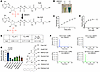 Figure 1
MESH1 is an efficient CoA phosphatase. (A) Proposed chemical reaction of MESH1 dephosphorylating the 3′ phosphate of CoA. (B) Detection of MESH1-dependent release of free phosphate from CoA using malachite green assay (phosphate accumulation causes yellow-to-green color transition). (C) Linear accumulation of phosphate product generated during MESH1 CoA reaction (n = 4 independent experiments; data are shown as mean ± SEM). (D) Fitting of steady-state Michaelis-Menten kinetics equation toward MESH1 CoA enzymatic reaction (n = 4 independent experiments, data are shown as mean ± SEM). (E) Kinetic properties of reaction (n = 4 independent experiments; data are shown as mean ± SD). (F) LC-MS/MS analysis of CoA/dp-CoA in the presence or absence of MESH1. (G) Measurement of specific activity of different CoA species, with the chemical structures of the thioester groups shown (n = 3 independent experiments; data are shown as mean ± SD). One-way ANOVA; nonparametric analysis (Kruskal-Wallis).
Next, we assessed the ability of MESH1 to dephosphorylate a panel of CoA derivatives, including free CoA, acetyl-CoA, malonyl-CoA, succinyl-CoA, HMG-CoA, octanoyl-CoA, and palmitoyl-CoA (Figure 1G). We found that MESH1 can dephosphorylate all CoA species with the highest activity toward free CoA (1.8 ± 0.2 μmol/min/mg) and the least activity toward malonyl-CoA (0.38 ± 0.13 μmol/min/mg). The total cytosolic concentration of CoA species in liver cells has been estimated to range from 106 to 140 μM, with the free CoA making up 50–90 μM, acetyl-CoA 10–40 μM, and long-chain acyl-CoAs 30 μM (24). Given both the relatively high catalytic efficiency of MESH1 for free CoA and its intracellular abundance, free CoA is likely the physiologically most relevant CoA species impacted by MESH1 hydrolysis. These findings support CoA as an additional MESH1 substrate, expanding its role beyond NADPH regulation to CoA metabolism and cellular redox homeostasis.
MESH1 knockdown preserves CoA levels to protect against ferroptosis. To examine MESH1 enzymatic activity in regulating the dp-CoA/CoA ratio, we stably overexpressed an empty vector, WT-MESH1, and the catalytically inactive mutant MESH1-E65A (12) in HEK-293T cells (Supplemental Figure 2A). We found that WT- MESH1, but not the catalytically inactive mutant (MESH1-E65A), significantly increased the dp-CoA/CoA ratio, as determined by mass spectrometry, suggesting that MESH1 enzymatic activity catalyzes CoA dephosphorylation and degradation in HEK293T cells (Figure 2A).
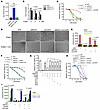 Figure 2
The CoA level preserved by MESH1 knockdown protects against ferroptosis. (A) The dp-CoA/CoA ratio in HEK293T cells overexpressing empty vector, WT-MESH1, and the catalytically null mutant (MESH1-E65A) as determined by mass spectrometry. (B) MESH1 knockdown preserved CoA levels degraded upon erastin treatment, as quantified by CoA assay. HT-1080 cells were transfected with control or 2 independent MESH1 siRNAs for 2 days and treated with erastin for 18 hours to quantify CoA level. (C) CoA biosynthesis is required for the protective effect of MESH1 knockdown upon erastin treatment. HT-1080 cells were transfected individually or in combination with MESH1 and COASY siRNAs for 2 days, subjected to 24 hours of erastin treatment, and quantified by Cell-Titer Glo assay. (D and E) COASY knockdown abolished the protective effect of MESH1 knockdown on erastin-induced (2.5 μM, 20 hours) membrane rupture in HT-1080 cells, while CoA supplement (100 μM) rescued membrane rupture in all conditions. The results were observed by CellTox Green under a fluorescence microscope (D) and quantified by a plate reader (E). Scale bars: 200 μm. (F) PANKi (5 μM, chemical inhibitor of PANK) abolished the protective effects of MESH1 knockdown upon erastin treatment in HT-1080 cells. (G) PANKi (5 μM) abolished the protective effects of MESH1 knockdown in HT-1080 cells by ferroptosis, and this resensitization was rescued by ferroptosis inhibitors. CoA (100 μM); ferrostatin-1 (fer-1, 10 μM); liproxstatin-1 (lip-1, 2 μM); deferoxamine (DFO, 80 μM); NAC (500 μM). (H and I) Double knockdown of NADK (NADPH synthesis) and COASY (CoA synthesis) fully abolished the protective effects of MESH1 knockdown, as quantified by Cell-Titer Glo assay (H) and CellTox Green (I). (A and G) One-way ANOVA, Tukey’s multiple comparisons, n = 3 independent biological replicates. (B, C, E, F, H, and I) Two-way ANOVA, Šidák’s multiple comparisons, n = 3 independent biological replicates; data are shown as mean ± SEM.
Ferroptosis has been shown to reduce intracellular CoA levels by impairing cystine uptake and limiting CoA biosynthesis (3–5). To assess whether MESH1 contributes to CoA degradation during ferroptosis, we knocked down MESH1 expression using 2 independent siRNAs (Supplemental Figure 2B). While MESH1 knockdown alone did not consistently increase CoA levels (Figure 2B), it significantly preserved CoA levels following erastin treatment (Figure 2B). Therefore, MESH1 may regulate CoA levels during ferroptosis.
Although MESH1 knockdown did not expand the total CoA pool under basal conditions, we found that MESH1 knockdown altered the metabolic function of xCT antiporter (encoded by SLC7A11), as evidenced by increased cystine and glutamate exchange activity reflected by enhanced glutamate export (Supplemental Figure 2C). Together, these data suggest that reduced MESH1-mediated CoA degradation becomes functionally important when CoA biosynthesis is limited during ferroptosis, rather than under basal conditions.
Ferroptosis can be induced by 4 classes of ferroptosis inducers (FINs) with class I targeting xCT transporter, class II targeting GPX4, class III depleting GPX4 and CoQ10, and class IV inducing lipid peroxidation (25). Given that cysteine is also required for CoA biosynthesis, consistent with our previous results (5), we found that MESH1 knockdown or CoA supplementation exclusively protects against ferroptosis induced by class I inducers (Supplemental Figure 2D). To extend these observations to additional cellular contexts, we tested the protective effects of MESH1 knockdown or CoA supplementation in GPX4-knockout HT-1080 cells (26) (Supplemental Figure 2E). Given that GPX4 knockout triggers ferroptosis resembling class II FINs, we found that MESH1 knockdown and CoA supplementation were unable to rescue GPX4 knockout–induced ferroptosis (Supplemental Figure 2E). Consistently, we confirmed that ferrostatin-1 and liproxstatin-1, 2 radical-trapping antioxidants, effectively rescued GPX4 knockout–induced ferroptosis, but not N-acetylcysteine (NAC), which replenishes the intracellular cysteine pool (Supplemental Figure 2E). Class II, III, and IV FINs generally act downstream of and independently from cystine import (27); therefore, these results suggest that intracellular cysteine levels and CoA biosynthesis may contribute substantially to the protective role of MESH1 knockdown in class I FIN-induced ferroptosis.
To test whether CoA preservation contributed to the ferroptosis protection conferred by MESH1 knockdown, we next performed concurrent knockdown of COASY, the final 2 steps in CoA biosynthesis (Supplemental Figure 2, F–H). As expected, MESH1 knockdown protected HT-1080, RCC4, and MDA-MB-231 cells from erastin-induced ferroptosis, as measured by cell viability (Figure 2C and Supplemental Figure 2, I and J). Importantly, the protective effect of MESH1 knockdown was abolished by concurrent COASY knockdown (Figure 2C and Supplemental Figure 2, I and J), indicating that CoA synthesis is required for the ferroptosis resistance conferred by MESH1 depletion. To determine whether restoring CoA could reverse this effect, we supplemented the culture media with CoA, which is hydrolyzed extracellularly to 4′-phosphopantetheine to cross the membrane and increase intracellular CoA levels (3–5, 28). Indeed, CoA supplementation rescued the ferroptosis-sensitizing effect caused by COASY knockdown, as visualized by fluorescence microscopy with CellTox Green (Figure 2D) and quantified by cytotoxicity assay (Figure 2E).
To further confirm the requirement of CoA biosynthesis in MESH1-mediated ferroptosis protection, we treated cells with PANK inhibitor (PANKi), which blocks the first step of CoA biosynthesis from vitamin B5 (29). Similar to the COASY knockdown, PANKi treatment abolished the protective effect of MESH1 knockdown against ferroptosis in both HT-1080 and RCC4 cells (Figure 2F and Supplemental Figure 2K), and this effect was also reversed by CoA supplementation (Figure 2F and Supplemental Figure 2K). To confirm that the resensitization by PANKi occurred through ferroptosis, we treated cells with several canonical ferroptosis inhibitors, including ferrostatin-1, liproxstatin-1, deferoxamine, and NAC (Figure 2G and Supplemental Figure 2L). All of these ferroptosis inhibitors fully rescued PANKi-sensitized cell death in both HT-1080 (Figure 2G) and RCC4 cells (Supplemental Figure 2L). Together, these results indicate that MESH1 knockdown preserves intracellular CoA levels from de novo biosynthesis, thereby protecting cells against ferroptosis.
Our previous finding showed that MESH1 is an NADPH phosphatase (12), and MESH1 knockdown protected against ferroptosis by preserving NADPH (12). Furthermore, the ferroptosis protection of MESH1 knockdown is attenuated by the simultaneous knockdown of cytosolic NAD kinase (NADK), the enzyme responsible for the NADP+ synthesis from NAD+ (12). Thus, we validated this observation in MDA-MB-231 and A549 cells using both cell viability and cytotoxicity assays (Supplemental Figure 2, M–P). To complement this genetic approach, we supplemented the culture medium with nicotinamide (NAM), a cell-permeable NAD+ precursor known to enhance intracellular NADPH levels (28). NAM treatment further potentiated the protective effect of MESH1 knockdown in 786-O and HK-2 cells (Supplemental Figure 2, Q and R). Conversely, NAM supplementation attenuated the ferroptosis-promoting effect of MESH1 overexpression (Supplemental Figure 2S). Together, these results demonstrate that NADPH availability is a critical determinant of MESH1-mediated ferroptosis regulation and support a functional role for the NADPH axis in the protective effect conferred by MESH1 knockdown.
Building on our new findings that CoA is also a direct substrate of MESH1, we hypothesize that MESH1 could simultaneously regulate the metabolism of both CoA and NADPH, 2 key metabolites implicated in ferroptosis protection. To test this hypothesis, we performed combinatorial knockdown experiments using siRNAs targeting NADK, which is responsible for NADP+ synthesis, and COASY, which is responsible for CoA biosynthesis. Each knockdown condition was validated for efficacy (Supplemental Figure 2, T and U). We found that individual knockdown of either NADK or COASY partially reversed the ferroptosis resistance conferred by MESH1 knockdown, as assessed by cell viability in HT-1080 and RCC4 cells (Figure 2H and Supplemental Figure 2V), cytotoxicity assays (Figure 2I), and lipid peroxidation measurement in MDA-MB-231 and HEK293 cells (Supplemental Figure 2, W–Y). Notably, simultaneous knockdown of both NADK and COASY completely abolished this protective effect (Figure 2, H and I, and Supplemental Figure 2, V–Y). These results support the conclusion that MESH1 regulates ferroptosis by coordinating the metabolism of CoA and NADPH.
MESH1 knockdown preserves the mitochondrial thioredoxin system to protect against ferroptosis. Previous studies have shown that CoA added to culture media is hydrolyzed extracellularly to 4′-phosphopantetheine, which crosses the membrane and increases intracellular CoA levels (3–5, 28), thereby conferring protection against ferroptosis (3, 5). We recently established that intracellular CoA directly regulates the mitochondrial thioredoxin system by covalently binding to Cys-483 of TXNRD2, thereby enhancing its enzymatic activity (Figure 3A) (5). Upon the depletion of CoA, the impaired TXNRD2 activity compromises the mitochondrial thioredoxin system, leading to the oxidation of its downstream effector peroxiredoxin 3 (PRDX3), as evidenced by a shift from its reduced monomeric form to the oxidized dimer forms (5) (Figure 3A).
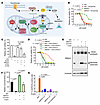 Figure 3
MESH1 knockdown maintains functional mitochondrial thioredoxin system upon erastin treatment. (A) Graphical abstract of CoA import in maintaining the mitochondrial thioredoxin system. (B) Ferroptocide (2 μM, a chemical inhibitor of thioredoxin) abolished the protective effects of MESH1 knockdown upon erastin treatment. HT-1080 cells were transfected with control or MESH1 siRNA for 2 days, treated with erastin for 18 hours, and quantified by Cell-Titer Glo assay. (C) Mitochondrial thioredoxin is required for the protective effect of MESH1 knockdown upon erastin treatment. HT-1080 cells were transfected with MESH1 siRNA or in combination with cytosolic thioredoxin (TXN1) or mitochondrial thioredoxin (TXN2) for 2 days, subjected to 24 hours of erastin treatment, and quantified by Cell-Titer Glo assay. (D) Mitochondrial CoA transporter (SLC25A42) is required for the protective effect of MESH1 knockdown. HT-1080 cells transduced with control or 2 independent SLC25A42 shRNAs were knocked down with MESH1 siRNA and erastin treatment for Cell-Titer Glo assay. (E) The lowering monomer/dimer ratio of PRDX3 upon erastin treatment was rescued by MESH1 knockdown. Further knocking down of COASY abolished the protective effect of MESH1 knockdown, as determined by Western blots. (F) Quantification of the monomer/dimer ratio of PRDX3 upon erastin treatment with or without MESH1 siRNA or in combination with COASY siRNA. (G) MESH1 knockdown lowered erastin-induced mitochondrial lipid peroxidation. HT-1080 cells knocked down by control or 2 independent MESH1 siRNAs were treated with erastin (2 μM, 20 hours) or supplemented with CoA and quantified by the mitochondrial lipid peroxidation (mitoPerOx) sensor. (C, F, and G) One-way ANOVA, Tukey’s multiple comparisons, n = 3 independent biological replicates. (B and D) Two-way ANOVA, Šidák’s multiple comparisons, n = 3 independent biological replicates; data are shown as mean ± SEM.
Building on these findings, we next investigated whether the CoA-regulated mitochondrial thioredoxin system contributes to the ferroptosis protection by MESH1 knockdown. To test this, we treated MESH1-knockdown HT-1080, RCC4, MDA-MB-231, and A549 cells with ferroptocide (thioredoxin inhibitor) (30) (Figure 3B and Supplemental Figure 3, A and B). Although MESH1 knockdown protected cells against ferroptosis, this protective effect was abolished by ferroptocide treatment, as quantified by cell viability (Figure 3B and Supplemental Figure 3, A–C), cytotoxicity (Supplemental Figure 3, D and E), or lipid peroxidation measurements (Supplemental Figure 3, F and G). Consistently, treatment with auranofin, an inhibitor of thioredoxin reductase (30), similarly eliminated the protective effect of MESH1 knockdown (Supplemental Figure 3H). Because both ferroptocide and auranofin target the cytosolic and mitochondrial thioredoxin systems (30) but may exert off-target activities, we next applied a genetic strategy to confirm their target specificity. Specifically, we combined MESH1 knockdown with siRNA-mediated depletion of either cytosolic thioredoxin (TXN1) or mitochondrial thioredoxin (TXN2) (Supplemental Figure 3, I and J). Notably, the knockdown of TXN2, but not TXN1, restored ferroptosis sensitivity in MESH1-knockdown HT-1080 cells by cell viability assay (Figure 3C) or lipid peroxidation measurements in MDA-MB-231 cells (Supplemental Figure 3K), demonstrating that the mitochondrial thioredoxin system is required for the ferroptosis protective effect of MESH1 knockdown.
Because MESH1 is a cytosolic protein (12), our findings imply that CoA must be transported into mitochondria to mediate ferroptosis protection. Since SLC25A42 encodes the primary mitochondrial CoA transporter (31–33), we examined its role by knocking down SLC25A42 using 2 independent shRNAs (Supplemental Figure 3L). Notably, the protective effect observed upon MESH1 knockdown with erastin treatment was abolished by concurrent SLC25A42 knockdown (Figure 3D). This result confirms the critical role of mitochondrial CoA transport in ferroptosis protection mediated by MESH1 knockdown (Figure 3D), highlighting the essential role of mitochondrial CoA transport in this process.
We previously demonstrated that imported CoA maintains an active mitochondrial thioredoxin system (5). To investigate whether MESH1 knockdown influences mitochondrial redox status, we monitored the oxidation state of PRDX3 using its monomer/dimer ratio as a redox indicator (34). Consistent with our previous findings (5), erastin treatment decreased the PRDX3 monomer/dimer ratio in both HT-1080 and RCC4 cells (Figure 3, E and F, and Supplemental Figure 3, M–O), consistent with impaired mitochondrial thioredoxin system due to CoA depletion (5). In contrast, MESH1 knockdown preserved the PRDX3 monomer/dimer ratio upon erastin treatment, consistent with its role in maintaining intracellular CoA levels and mitigating the mitochondrial thioredoxin system upon CoA depletion by erastin (Figure 3, E and F, and Supplemental Figure 3, M–O).
To further confirm that the protective effects of MESH1 knockdown on ferroptosis and the PRDX3 oxidative state depend on CoA biosynthesis, we knocked down COASY, a key enzyme in CoA biosynthesis, along with MESH1 in HT-1080 cells (Supplemental Figure 3M). The increased monomer/dimer ratio induced by MESH1 knockdown was significantly reduced when COASY was concurrently knocked down in both HT-1080 and RCC4 cells, indicating that MESH1-regulated PRDX3 activities required CoA biosynthesis (Figure 3, E and F, and Supplemental Figure 3, M–O). Furthermore, we previously found that CoA regulated mitochondrial lipid peroxidation during ferroptosis (5). Using a fluorescent probe specific for mitochondrial lipid peroxidation (35), we observed that erastin dramatically increased mitochondrial lipid peroxidation, which was abolished upon MESH1 knockdown, mirroring the protective effects of CoA supplementation during erastin treatment (Figure 3G). Taken together, these results indicate that MESH1 knockdown protects against ferroptosis by preserving intracellular CoA, thereby maintaining the mitochondrial thioredoxin system function and preventing mitochondrial lipid peroxidation.
MESH1 triggers muscle atrophy by depleting CoA levels in Drosophila. Ferroptosis has been implicated in several skeletal muscle diseases, including cancer cachexia, cancer-induced muscle wasting, and rhabdomyolysis (36–38). A recent study also showed that Mesh1 is upregulated in response to mitochondrial DNA damage, contributing to ferroptosis and cardiomyopathy (39). Similarly, MESH1 expression increases during ferroptosis induced by erastin or cystine deprivation (12). Consistent with the protective effect observed in MESH1-knockdown cells, we next examined whether elevated MESH1 expression would have the opposite effect. Similarly, in HT-1080 cells, MESH1 overexpression sensitized cells to erastin-induced ferroptosis, an effect reversed by the ferroptosis inhibitor liproxstatin-1 (Supplemental Figure 4A). This finding complements the loss-of-function data, demonstrating that MESH1 levels bidirectionally regulate ferroptosis sensitivity by modulating intracellular CoA metabolism. Given the evolutionary conservation of MESH1 across different species (15), we investigated its physiological role in vivo by selectively modulating Drosophila Mesh1 (dMesh1) in skeletal muscle. Muscle-specific dMesh1 knockdown produced no overt phenotype under basal conditions (Supplemental Figure 4B). In contrast, muscle-specific overexpression of dMesh1 led to abnormal wing posture and impaired climbing ability, indicative of compromised muscle function and reduced strength (Figure 4, A and B). Consistent with enhanced CoA degradation, total CoA levels were significantly reduced in adult fly muscle expressing dMesh1 (Supplemental Figure 4C).
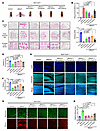 Figure 4
Muscle defects induced by MESH1 overexpression in Drosophila were rescued by liproxstatin-1 treatment or by enhancing CoA or NADPH synthesis. Overexpression of Mesh1 in skeletal muscles resulted in an open wing phenotype (A), climbing defects (B), muscle shrinkage (C and D), reduced and clustered nuclei with altered nuclear localization (E and F), and increased mitochondrial ROS levels (G and H). These defects were rescued by liproxstatin-1 or pantethine treatment or by overexpression of DPCK or Nadk1b. Scale bars: 20 μm (E and G); original magnification, ×4 (C). (B, D, F, and H) One-way ANOVA, Tukey’s multiple comparisons, n = 6 independent biological replicates.
To exclude the possibility that constitutive dMesh1 overexpression disrupted muscle development, we employed the Gal80ts system to temporally control transgene expression (40, 41). By suppressing GAL4 activity during development and inducing dMesh1 expression exclusively in adult flies, we observed comparable wing positioning and climbing defects. These findings demonstrate that the observed phenotypes are not attributable to developmental abnormalities but instead reflect a postdevelopmental, degenerative effect of dMesh1 overexpression in mature muscle (Supplemental Figure 4D).
Morphological analyses revealed hallmark features of muscle atrophy, including muscle fiber shrinkage (Figure 4, C and D), decreased nuclear numbers, nuclear clustering, and altered nuclear localization (42) (Figure 4, E and F). Moreover, mitochondrial ROS levels were markedly elevated in dMesh1-expressing muscles (Figure 4, G and H), consistent with the established role of CoA in restraining mitochondrial lipid peroxidation. In agreement with this oxidative phenotype, TMRM staining demonstrated a significant reduction in mitochondrial membrane potential, indicating mitochondrial dysfunction in dMesh1-overexpressing muscle (Supplemental Figure 4E).
Importantly, lifelong treatment with liproxstatin-1, a ferroptosis inhibitor, markedly rescued the muscle atrophy–associated phenotypes induced by dMesh1 overexpression (Figure 4, A–E, and Supplemental Figure 4E). In contrast, initiating liproxstatin-1 treatment after the onset of dMesh1-driven wing posture and climbing defects failed to reverse these abnormalities, suggesting that ferroptotic damage becomes irreversible once established (Supplemental Figure 4F). This indicates that dMesh1 promotes ferroptosis in skeletal muscles, thereby contributing to muscle atrophy. Collectively, these data support that elevated MESH1 expression enhances ferroptosis in both experimental models.
CoA biosynthesis is an evolutionarily conserved and fundamental biological pathway (43). In Drosophila, hypomorphic mutations in genes essential for CoA biosynthesis (dPANK/fbl1, dPPCS1, and dPPAT-DPCK43) lead to abnormal wing positions, locomotor dysfunction, disrupted lipid homeostasis, increased cell death, and reduced lifespan (43, 44). Consistent with these findings, we observed that muscle-specific knockdown of dephospho-CoA kinase (DPCK), a terminal enzyme in CoA biosynthesis, phenocopied the muscle atrophy caused by dMesh1 expression (Supplemental Figure 4, G–J). Collectively, these observations highlight the critical role of CoA in muscle maintenance and suggest that CoA depletion is a key contributor to dMesh1-mediated muscle pathology.
To test whether dMesh1 expression triggers muscle defects through CoA depletion, we employed both pharmacological and genetic approaches. First, we supplemented dMesh1-expressing flies with pantethine, a CoA biosynthesis precursor (45), and found that it rescued the muscle defects caused by dMesh1 expression (Figure 4, A–H). Similarly, pantethine supplementation protected HT-1080 cells overexpressing MESH1 from erastin-induced ferroptosis (Supplemental Figure 4A). Next, we coexpressed DPCK in muscle to genetically enhance CoA synthesis, which also strongly mitigated dMesh1-induced muscle defects (Figure 4, A–H). Together, these results indicate that increasing CoA levels can reverse dMesh1-induced muscle atrophy.
Given that MESH1 is a NADPH phosphatase (12) and the knockdown of Mesh1 protected against ferroptosis by accumulating NADPH, which can be abolished by simultaneous knockdown of NADK, a kinase for the synthesis of NADPH from NADH (12), we tested the effects of NADPH on these phenotypes. We found that knockdown of muscular Nadk1a expression had no observable effects, whereas Nadk1b RNAi expression in muscles induced moderate muscle defects (Supplemental Figure 4, G–J). Importantly, coexpression of Nadk1b partially rescued these effects (Figure 4, A–H). These results suggest that dMesh1-induced muscle defects are predominantly mediated through CoA depletion and partially through NADPH reduction. In summary, these findings demonstrate that MESH1 overexpression induces ferroptosis in muscle by depleting CoA and, to a lesser extent, NADPH. Restoration of CoA levels — either genetically or pharmacologically — can reverse MESH1-induced muscle atrophy, highlighting CoA as a key metabolic regulator of ferroptosis and muscle integrity.
MESH1 upregulated in cancer cachexia regulates ferroptosis in mammalian muscle cells. To assess whether the MESH1-regulated pathway is conserved in mammalian muscle cells, we examined the role of MESH1 in differentiated C2C12 myotubes under ferroptotic stress. Differentiated C2C12 cells were sensitive to erastin-induced ferroptosis, and MESH1 knockdown significantly protected these cells from erastin-induced cell death, as measured by both cell viability and cytotoxicity assays (Figure 5, A and B). Consistent with a conserved role for CoA and redox metabolism in ferroptosis, supplementation with either CoA or NAM, a NAD+ precursor that enhances intracellular NADPH levels, similarly protected differentiated C2C12 cells from erastin-induced ferroptosis (Figure 5, A and B). These results indicate that the MESH1/CoA/NADPH axis regulating ferroptosis is conserved in mammalian muscle cells.
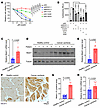 Figure 5
MESH1 is upregulated in cancer cachexia and regulates ferroptosis in mammalian muscle cells. (A and B) MESH1 knockdown significantly protected differentiated C2C12 myotubes from erastin-induced ferroptosis, as measured by cell viability (A) and cytotoxicity assays (B). Supplementation with CoA or NAM, a NAD+ precursor that enhances intracellular NADPH levels, similarly protected C2C12 myotubes from ferroptosis, indicating conservation of the MESH1/CoA/NADPH axis in mammalian muscle cells. (C) MESH1 mRNA levels were increased in skeletal muscle samples from patients with cancer cachexia compared with healthy controls. (D and E) Immunoblot analysis (D) and quantification (E) showing increased MESH1 protein levels in skeletal muscle from patients with cancer cachexia. (F and G) Immunohistochemical staining (F) and quantification (G) demonstrating enrichment of MESH1 protein in skeletal muscle sections from patients with cancer cachexia compared with healthy controls. Scale bar: 100 μm. (H) Expression of ACSL4, a ferroptosis-associated enzyme, in skeletal muscle from healthy controls and patients with cancer cachexia. (A) Two-way ANOVA, Šidák’s multiple comparisons, n = 6 independent biological replicates; data are shown as mean ± SEM. (B) One-way ANOVA, Tukey’s multiple comparisons, n = 6 independent biological replicates. (C, E, G, and H) Student’s t test, n = 10 independent biological replicates; data are shown as mean ± SEM.
To assess clinical relevance, we examined MESH1 expression in skeletal muscle samples from healthy controls and patients with rigorously defined cancer cachexia (Supplemental Table 1). Cachexia was confirmed using established clinical and biochemical markers, including elevated C-reactive protein and IL-6 levels and reduced hemoglobin (Supplemental Table 1). Muscle strength and mass were evaluated by handgrip strength (Supplemental Table 1). MESH1 expression was markedly increased in cachectic muscle at both the mRNA and protein levels (Figure 5, C–E). Immunohistochemical analysis further demonstrated significant enrichment of MESH1 protein in muscle sections from patients with cancer cachexia (Figure 5, F and G). Consistent with activation of ferroptotic pathways, we also observed increased expression of ACSL4, a key ferroptosis-associated enzyme, in cachectic muscle (Figure 5H). Together, these findings demonstrate that the MESH1/CoA/NADPH axis is activated in human cancer cachexia and support a conserved role for MESH1-mediated metabolic dysregulation in promoting ferroptotic muscle degeneration.


Copyright © 2026 American Society for Clinical Investigation
ISSN: 0021-9738 (print), 1558-8238 (online)