
Advertisement
Clinical Research and Public HealthGeneticsHepatology
Open Access |  10.1172/JCI201762
Carriage of rare APOB variants predisposes to severe steatotic liver disease and hepatocellular carcinoma
Matteo Mureddu,1 Serena Pelusi,2 Oveis Jamialahmadi,3 Marijana Vujkovic,4,5 Lorenzo Miano,1,2 Hadi Eidgah Torghabehei,6 Luisa Ronzoni,2 Francesco Malvestiti,1 Marco Saracino,7 Giulia Periti,2 Vittoria Moretti,2 Craig C. Teerlink,8,9 Julie A. Lynch,8,9 Philip S. Tsao,10 Josephine P. Johnson,4,5 Vincenzo La Mura,1,11 Robertino Dilena,12 Saleh A. Alqahtani,13 Alessandro Cherubini,2 EPIDEMIC Study Investigators,14 Million Veteran Program,15 Francesco Paolo Russo,16 Roberta D’Ambrosio,17 Mirella Fraquelli,18 Salvatore Petta,19 Luca Miele,20 Umberto Vespasiani-Gentilucci,21 Elisabetta Bugianesi,22 Rosellina M. Mancina,3,23,24 Paolo Parini,25 Daniele Prati,2 Kyong-Mi Chang,4,5 Carolin V. Schneider,26 Stefano Romeo,3,25,27,28,29 and Luca VC Valenti1,2
1Università degli Studi di Milano, Department of Pathophysiology and Transplantation, Milan, Italy.
2Precision Medicine and Biological Resource Center, Fondazione IRCCS Ca’ Granda Ospedale Maggiore Policlinico Milano, Milan, Italy.
3Department of Molecular and Clinical Medicine, Institute of Medicine, Sahlgrenska Academy, Wallenberg Laboratory, University of Gothenburg, Gothenburg, Sweden.
4Corporal Michael J. Crescenz VA Medical Center, Philadelphia, Pennsylvania, USA.
5University of Pennsylvania Perelman School of Medicine, Philadelphia, Pennsylvania, USA.
6Scientific Direction, Fondazione IRCCS Ca’ Granda Ospedale Maggiore Policlinico Milano, Milan, Italy.
7Department of Internal Medicine and Therapeutics, University of Pavia, Pavia, Italy.
8VA Salt Lake City and
9University of Utah School of Medicine, Salt Lake City, Utah, USA.
10VA Palo Alto Health Care System and Cardiovascular Medicine, Stanford University School of Medicine, Palo Alto, California, USA.
11Fondazione IRCCS Ca’ Granda Ospedale Maggiore Policlinico, Angelo Bianchi Bonomi Hemophilia and Thrombosis Center, Milan, Italy.
12Neurology, Fondazione IRCCS Ca’ Granda Ospedale Maggiore Policlinico Milano, Milan, Italy.
13King Faisal Specialist Hospital and Research Centre, Riad, Saudi Arabia.
14The EPIDEMIC Study Investigators is detailed in Supplemental Acknowledgments.
15The Million Veteran Program is detailed in Supplemental Acknowledgments.
16Hepatology, University of Padua, Padua, Italy.
17Gastroenterology and Hepatology, and
18Gastroenterology and Endoscopy, Fondazione IRCCS Ca’ Granda Ospedale Maggiore Policlinico Milano, Milan, Italy.
19Gastroenterology and Hepatology, PROMISE, Università di Palermo, Palermo, Italy.
20Department of Internal Medicine, Fondazione Policlinico A. Gemelli, Università Cattolica di Roma, Rome, Italy.
21Clinical Medicine and Hepatology Unit, Department of Internal Medicine and Geriatrics, Campus Bio-Medico University, Rome, Italy.
22Department of Medical Sciences, Division of Gastro-Hepatology, A.O. Città della Salute e della Scienza di Torino, Università di Torino, Turin, Italy.
23Department of Life Science, Health, and Health Professions, Link Campus University, Rome, Italy.
24Research Unit of Clinical Medicine and Hepatology, Department of Medicine and Surgery, Università Campus Bio-Medico di Roma, Rome, Italy.
25Medical Unit Endocrinology, Theme Inflammation and ageing, Karolinska University Hospital, Huddinge, Sweden.
26Gastroenterology, Metabolic Diseases, and Intensive Care, Department of Medicine III, University Hospital RWTH Aachen, Aachen, Germany.
27Department of Medicine (H7), CeRM, Karolinska Institute, Huddinge, Sweden.
28Department of Cardiology, Sahlgrenska University Hospital, Gothenburg, Sweden.
29Clinical Nutrition Unit, Department of Medical and Surgical Science, University Magna Graecia, Catanzaro, Italy.
Address correspondence to: Luca VC Valenti, Department of Pathophysiology and Transplantation, Università degli Studi di Milano, Precision Medicine and Biological Resource Center, Fondazione IRCCS Ca’ Granda Ospedale Maggiore Policlinico Milano, Marangoni Pavilion, Via F Sforza 35, 20122, Milan, Italy. Phone: 39.0250320278; Email: luca.valenti@unimi.it.
Authorship note: MM, S Pelusi, and OJ have been designated as co–first authors. CVS, SR, and LVCV have been designated as co–senior authors.
Find articles by Mureddu, M. in: PubMed | Google Scholar
1Università degli Studi di Milano, Department of Pathophysiology and Transplantation, Milan, Italy.
2Precision Medicine and Biological Resource Center, Fondazione IRCCS Ca’ Granda Ospedale Maggiore Policlinico Milano, Milan, Italy.
3Department of Molecular and Clinical Medicine, Institute of Medicine, Sahlgrenska Academy, Wallenberg Laboratory, University of Gothenburg, Gothenburg, Sweden.
4Corporal Michael J. Crescenz VA Medical Center, Philadelphia, Pennsylvania, USA.
5University of Pennsylvania Perelman School of Medicine, Philadelphia, Pennsylvania, USA.
6Scientific Direction, Fondazione IRCCS Ca’ Granda Ospedale Maggiore Policlinico Milano, Milan, Italy.
7Department of Internal Medicine and Therapeutics, University of Pavia, Pavia, Italy.
8VA Salt Lake City and
9University of Utah School of Medicine, Salt Lake City, Utah, USA.
10VA Palo Alto Health Care System and Cardiovascular Medicine, Stanford University School of Medicine, Palo Alto, California, USA.
11Fondazione IRCCS Ca’ Granda Ospedale Maggiore Policlinico, Angelo Bianchi Bonomi Hemophilia and Thrombosis Center, Milan, Italy.
12Neurology, Fondazione IRCCS Ca’ Granda Ospedale Maggiore Policlinico Milano, Milan, Italy.
13King Faisal Specialist Hospital and Research Centre, Riad, Saudi Arabia.
14The EPIDEMIC Study Investigators is detailed in Supplemental Acknowledgments.
15The Million Veteran Program is detailed in Supplemental Acknowledgments.
16Hepatology, University of Padua, Padua, Italy.
17Gastroenterology and Hepatology, and
18Gastroenterology and Endoscopy, Fondazione IRCCS Ca’ Granda Ospedale Maggiore Policlinico Milano, Milan, Italy.
19Gastroenterology and Hepatology, PROMISE, Università di Palermo, Palermo, Italy.
20Department of Internal Medicine, Fondazione Policlinico A. Gemelli, Università Cattolica di Roma, Rome, Italy.
21Clinical Medicine and Hepatology Unit, Department of Internal Medicine and Geriatrics, Campus Bio-Medico University, Rome, Italy.
22Department of Medical Sciences, Division of Gastro-Hepatology, A.O. Città della Salute e della Scienza di Torino, Università di Torino, Turin, Italy.
23Department of Life Science, Health, and Health Professions, Link Campus University, Rome, Italy.
24Research Unit of Clinical Medicine and Hepatology, Department of Medicine and Surgery, Università Campus Bio-Medico di Roma, Rome, Italy.
25Medical Unit Endocrinology, Theme Inflammation and ageing, Karolinska University Hospital, Huddinge, Sweden.
26Gastroenterology, Metabolic Diseases, and Intensive Care, Department of Medicine III, University Hospital RWTH Aachen, Aachen, Germany.
27Department of Medicine (H7), CeRM, Karolinska Institute, Huddinge, Sweden.
28Department of Cardiology, Sahlgrenska University Hospital, Gothenburg, Sweden.
29Clinical Nutrition Unit, Department of Medical and Surgical Science, University Magna Graecia, Catanzaro, Italy.
Address correspondence to: Luca VC Valenti, Department of Pathophysiology and Transplantation, Università degli Studi di Milano, Precision Medicine and Biological Resource Center, Fondazione IRCCS Ca’ Granda Ospedale Maggiore Policlinico Milano, Marangoni Pavilion, Via F Sforza 35, 20122, Milan, Italy. Phone: 39.0250320278; Email: luca.valenti@unimi.it.
Authorship note: MM, S Pelusi, and OJ have been designated as co–first authors. CVS, SR, and LVCV have been designated as co–senior authors.
Find articles by Pelusi, S. in: PubMed | Google Scholar
1Università degli Studi di Milano, Department of Pathophysiology and Transplantation, Milan, Italy.
2Precision Medicine and Biological Resource Center, Fondazione IRCCS Ca’ Granda Ospedale Maggiore Policlinico Milano, Milan, Italy.
3Department of Molecular and Clinical Medicine, Institute of Medicine, Sahlgrenska Academy, Wallenberg Laboratory, University of Gothenburg, Gothenburg, Sweden.
4Corporal Michael J. Crescenz VA Medical Center, Philadelphia, Pennsylvania, USA.
5University of Pennsylvania Perelman School of Medicine, Philadelphia, Pennsylvania, USA.
6Scientific Direction, Fondazione IRCCS Ca’ Granda Ospedale Maggiore Policlinico Milano, Milan, Italy.
7Department of Internal Medicine and Therapeutics, University of Pavia, Pavia, Italy.
8VA Salt Lake City and
9University of Utah School of Medicine, Salt Lake City, Utah, USA.
10VA Palo Alto Health Care System and Cardiovascular Medicine, Stanford University School of Medicine, Palo Alto, California, USA.
11Fondazione IRCCS Ca’ Granda Ospedale Maggiore Policlinico, Angelo Bianchi Bonomi Hemophilia and Thrombosis Center, Milan, Italy.
12Neurology, Fondazione IRCCS Ca’ Granda Ospedale Maggiore Policlinico Milano, Milan, Italy.
13King Faisal Specialist Hospital and Research Centre, Riad, Saudi Arabia.
14The EPIDEMIC Study Investigators is detailed in Supplemental Acknowledgments.
15The Million Veteran Program is detailed in Supplemental Acknowledgments.
16Hepatology, University of Padua, Padua, Italy.
17Gastroenterology and Hepatology, and
18Gastroenterology and Endoscopy, Fondazione IRCCS Ca’ Granda Ospedale Maggiore Policlinico Milano, Milan, Italy.
19Gastroenterology and Hepatology, PROMISE, Università di Palermo, Palermo, Italy.
20Department of Internal Medicine, Fondazione Policlinico A. Gemelli, Università Cattolica di Roma, Rome, Italy.
21Clinical Medicine and Hepatology Unit, Department of Internal Medicine and Geriatrics, Campus Bio-Medico University, Rome, Italy.
22Department of Medical Sciences, Division of Gastro-Hepatology, A.O. Città della Salute e della Scienza di Torino, Università di Torino, Turin, Italy.
23Department of Life Science, Health, and Health Professions, Link Campus University, Rome, Italy.
24Research Unit of Clinical Medicine and Hepatology, Department of Medicine and Surgery, Università Campus Bio-Medico di Roma, Rome, Italy.
25Medical Unit Endocrinology, Theme Inflammation and ageing, Karolinska University Hospital, Huddinge, Sweden.
26Gastroenterology, Metabolic Diseases, and Intensive Care, Department of Medicine III, University Hospital RWTH Aachen, Aachen, Germany.
27Department of Medicine (H7), CeRM, Karolinska Institute, Huddinge, Sweden.
28Department of Cardiology, Sahlgrenska University Hospital, Gothenburg, Sweden.
29Clinical Nutrition Unit, Department of Medical and Surgical Science, University Magna Graecia, Catanzaro, Italy.
Address correspondence to: Luca VC Valenti, Department of Pathophysiology and Transplantation, Università degli Studi di Milano, Precision Medicine and Biological Resource Center, Fondazione IRCCS Ca’ Granda Ospedale Maggiore Policlinico Milano, Marangoni Pavilion, Via F Sforza 35, 20122, Milan, Italy. Phone: 39.0250320278; Email: luca.valenti@unimi.it.
Authorship note: MM, S Pelusi, and OJ have been designated as co–first authors. CVS, SR, and LVCV have been designated as co–senior authors.
Find articles by Jamialahmadi, O. in: PubMed | Google Scholar
1Università degli Studi di Milano, Department of Pathophysiology and Transplantation, Milan, Italy.
2Precision Medicine and Biological Resource Center, Fondazione IRCCS Ca’ Granda Ospedale Maggiore Policlinico Milano, Milan, Italy.
3Department of Molecular and Clinical Medicine, Institute of Medicine, Sahlgrenska Academy, Wallenberg Laboratory, University of Gothenburg, Gothenburg, Sweden.
4Corporal Michael J. Crescenz VA Medical Center, Philadelphia, Pennsylvania, USA.
5University of Pennsylvania Perelman School of Medicine, Philadelphia, Pennsylvania, USA.
6Scientific Direction, Fondazione IRCCS Ca’ Granda Ospedale Maggiore Policlinico Milano, Milan, Italy.
7Department of Internal Medicine and Therapeutics, University of Pavia, Pavia, Italy.
8VA Salt Lake City and
9University of Utah School of Medicine, Salt Lake City, Utah, USA.
10VA Palo Alto Health Care System and Cardiovascular Medicine, Stanford University School of Medicine, Palo Alto, California, USA.
11Fondazione IRCCS Ca’ Granda Ospedale Maggiore Policlinico, Angelo Bianchi Bonomi Hemophilia and Thrombosis Center, Milan, Italy.
12Neurology, Fondazione IRCCS Ca’ Granda Ospedale Maggiore Policlinico Milano, Milan, Italy.
13King Faisal Specialist Hospital and Research Centre, Riad, Saudi Arabia.
14The EPIDEMIC Study Investigators is detailed in Supplemental Acknowledgments.
15The Million Veteran Program is detailed in Supplemental Acknowledgments.
16Hepatology, University of Padua, Padua, Italy.
17Gastroenterology and Hepatology, and
18Gastroenterology and Endoscopy, Fondazione IRCCS Ca’ Granda Ospedale Maggiore Policlinico Milano, Milan, Italy.
19Gastroenterology and Hepatology, PROMISE, Università di Palermo, Palermo, Italy.
20Department of Internal Medicine, Fondazione Policlinico A. Gemelli, Università Cattolica di Roma, Rome, Italy.
21Clinical Medicine and Hepatology Unit, Department of Internal Medicine and Geriatrics, Campus Bio-Medico University, Rome, Italy.
22Department of Medical Sciences, Division of Gastro-Hepatology, A.O. Città della Salute e della Scienza di Torino, Università di Torino, Turin, Italy.
23Department of Life Science, Health, and Health Professions, Link Campus University, Rome, Italy.
24Research Unit of Clinical Medicine and Hepatology, Department of Medicine and Surgery, Università Campus Bio-Medico di Roma, Rome, Italy.
25Medical Unit Endocrinology, Theme Inflammation and ageing, Karolinska University Hospital, Huddinge, Sweden.
26Gastroenterology, Metabolic Diseases, and Intensive Care, Department of Medicine III, University Hospital RWTH Aachen, Aachen, Germany.
27Department of Medicine (H7), CeRM, Karolinska Institute, Huddinge, Sweden.
28Department of Cardiology, Sahlgrenska University Hospital, Gothenburg, Sweden.
29Clinical Nutrition Unit, Department of Medical and Surgical Science, University Magna Graecia, Catanzaro, Italy.
Address correspondence to: Luca VC Valenti, Department of Pathophysiology and Transplantation, Università degli Studi di Milano, Precision Medicine and Biological Resource Center, Fondazione IRCCS Ca’ Granda Ospedale Maggiore Policlinico Milano, Marangoni Pavilion, Via F Sforza 35, 20122, Milan, Italy. Phone: 39.0250320278; Email: luca.valenti@unimi.it.
Authorship note: MM, S Pelusi, and OJ have been designated as co–first authors. CVS, SR, and LVCV have been designated as co–senior authors.
Find articles by Vujkovic, M. in: PubMed | Google Scholar
1Università degli Studi di Milano, Department of Pathophysiology and Transplantation, Milan, Italy.
2Precision Medicine and Biological Resource Center, Fondazione IRCCS Ca’ Granda Ospedale Maggiore Policlinico Milano, Milan, Italy.
3Department of Molecular and Clinical Medicine, Institute of Medicine, Sahlgrenska Academy, Wallenberg Laboratory, University of Gothenburg, Gothenburg, Sweden.
4Corporal Michael J. Crescenz VA Medical Center, Philadelphia, Pennsylvania, USA.
5University of Pennsylvania Perelman School of Medicine, Philadelphia, Pennsylvania, USA.
6Scientific Direction, Fondazione IRCCS Ca’ Granda Ospedale Maggiore Policlinico Milano, Milan, Italy.
7Department of Internal Medicine and Therapeutics, University of Pavia, Pavia, Italy.
8VA Salt Lake City and
9University of Utah School of Medicine, Salt Lake City, Utah, USA.
10VA Palo Alto Health Care System and Cardiovascular Medicine, Stanford University School of Medicine, Palo Alto, California, USA.
11Fondazione IRCCS Ca’ Granda Ospedale Maggiore Policlinico, Angelo Bianchi Bonomi Hemophilia and Thrombosis Center, Milan, Italy.
12Neurology, Fondazione IRCCS Ca’ Granda Ospedale Maggiore Policlinico Milano, Milan, Italy.
13King Faisal Specialist Hospital and Research Centre, Riad, Saudi Arabia.
14The EPIDEMIC Study Investigators is detailed in Supplemental Acknowledgments.
15The Million Veteran Program is detailed in Supplemental Acknowledgments.
16Hepatology, University of Padua, Padua, Italy.
17Gastroenterology and Hepatology, and
18Gastroenterology and Endoscopy, Fondazione IRCCS Ca’ Granda Ospedale Maggiore Policlinico Milano, Milan, Italy.
19Gastroenterology and Hepatology, PROMISE, Università di Palermo, Palermo, Italy.
20Department of Internal Medicine, Fondazione Policlinico A. Gemelli, Università Cattolica di Roma, Rome, Italy.
21Clinical Medicine and Hepatology Unit, Department of Internal Medicine and Geriatrics, Campus Bio-Medico University, Rome, Italy.
22Department of Medical Sciences, Division of Gastro-Hepatology, A.O. Città della Salute e della Scienza di Torino, Università di Torino, Turin, Italy.
23Department of Life Science, Health, and Health Professions, Link Campus University, Rome, Italy.
24Research Unit of Clinical Medicine and Hepatology, Department of Medicine and Surgery, Università Campus Bio-Medico di Roma, Rome, Italy.
25Medical Unit Endocrinology, Theme Inflammation and ageing, Karolinska University Hospital, Huddinge, Sweden.
26Gastroenterology, Metabolic Diseases, and Intensive Care, Department of Medicine III, University Hospital RWTH Aachen, Aachen, Germany.
27Department of Medicine (H7), CeRM, Karolinska Institute, Huddinge, Sweden.
28Department of Cardiology, Sahlgrenska University Hospital, Gothenburg, Sweden.
29Clinical Nutrition Unit, Department of Medical and Surgical Science, University Magna Graecia, Catanzaro, Italy.
Address correspondence to: Luca VC Valenti, Department of Pathophysiology and Transplantation, Università degli Studi di Milano, Precision Medicine and Biological Resource Center, Fondazione IRCCS Ca’ Granda Ospedale Maggiore Policlinico Milano, Marangoni Pavilion, Via F Sforza 35, 20122, Milan, Italy. Phone: 39.0250320278; Email: luca.valenti@unimi.it.
Authorship note: MM, S Pelusi, and OJ have been designated as co–first authors. CVS, SR, and LVCV have been designated as co–senior authors.
Find articles by Miano, L. in: PubMed | Google Scholar
1Università degli Studi di Milano, Department of Pathophysiology and Transplantation, Milan, Italy.
2Precision Medicine and Biological Resource Center, Fondazione IRCCS Ca’ Granda Ospedale Maggiore Policlinico Milano, Milan, Italy.
3Department of Molecular and Clinical Medicine, Institute of Medicine, Sahlgrenska Academy, Wallenberg Laboratory, University of Gothenburg, Gothenburg, Sweden.
4Corporal Michael J. Crescenz VA Medical Center, Philadelphia, Pennsylvania, USA.
5University of Pennsylvania Perelman School of Medicine, Philadelphia, Pennsylvania, USA.
6Scientific Direction, Fondazione IRCCS Ca’ Granda Ospedale Maggiore Policlinico Milano, Milan, Italy.
7Department of Internal Medicine and Therapeutics, University of Pavia, Pavia, Italy.
8VA Salt Lake City and
9University of Utah School of Medicine, Salt Lake City, Utah, USA.
10VA Palo Alto Health Care System and Cardiovascular Medicine, Stanford University School of Medicine, Palo Alto, California, USA.
11Fondazione IRCCS Ca’ Granda Ospedale Maggiore Policlinico, Angelo Bianchi Bonomi Hemophilia and Thrombosis Center, Milan, Italy.
12Neurology, Fondazione IRCCS Ca’ Granda Ospedale Maggiore Policlinico Milano, Milan, Italy.
13King Faisal Specialist Hospital and Research Centre, Riad, Saudi Arabia.
14The EPIDEMIC Study Investigators is detailed in Supplemental Acknowledgments.
15The Million Veteran Program is detailed in Supplemental Acknowledgments.
16Hepatology, University of Padua, Padua, Italy.
17Gastroenterology and Hepatology, and
18Gastroenterology and Endoscopy, Fondazione IRCCS Ca’ Granda Ospedale Maggiore Policlinico Milano, Milan, Italy.
19Gastroenterology and Hepatology, PROMISE, Università di Palermo, Palermo, Italy.
20Department of Internal Medicine, Fondazione Policlinico A. Gemelli, Università Cattolica di Roma, Rome, Italy.
21Clinical Medicine and Hepatology Unit, Department of Internal Medicine and Geriatrics, Campus Bio-Medico University, Rome, Italy.
22Department of Medical Sciences, Division of Gastro-Hepatology, A.O. Città della Salute e della Scienza di Torino, Università di Torino, Turin, Italy.
23Department of Life Science, Health, and Health Professions, Link Campus University, Rome, Italy.
24Research Unit of Clinical Medicine and Hepatology, Department of Medicine and Surgery, Università Campus Bio-Medico di Roma, Rome, Italy.
25Medical Unit Endocrinology, Theme Inflammation and ageing, Karolinska University Hospital, Huddinge, Sweden.
26Gastroenterology, Metabolic Diseases, and Intensive Care, Department of Medicine III, University Hospital RWTH Aachen, Aachen, Germany.
27Department of Medicine (H7), CeRM, Karolinska Institute, Huddinge, Sweden.
28Department of Cardiology, Sahlgrenska University Hospital, Gothenburg, Sweden.
29Clinical Nutrition Unit, Department of Medical and Surgical Science, University Magna Graecia, Catanzaro, Italy.
Address correspondence to: Luca VC Valenti, Department of Pathophysiology and Transplantation, Università degli Studi di Milano, Precision Medicine and Biological Resource Center, Fondazione IRCCS Ca’ Granda Ospedale Maggiore Policlinico Milano, Marangoni Pavilion, Via F Sforza 35, 20122, Milan, Italy. Phone: 39.0250320278; Email: luca.valenti@unimi.it.
Authorship note: MM, S Pelusi, and OJ have been designated as co–first authors. CVS, SR, and LVCV have been designated as co–senior authors.
Find articles by Eidgah Torghabehei, H. in: PubMed | Google Scholar
1Università degli Studi di Milano, Department of Pathophysiology and Transplantation, Milan, Italy.
2Precision Medicine and Biological Resource Center, Fondazione IRCCS Ca’ Granda Ospedale Maggiore Policlinico Milano, Milan, Italy.
3Department of Molecular and Clinical Medicine, Institute of Medicine, Sahlgrenska Academy, Wallenberg Laboratory, University of Gothenburg, Gothenburg, Sweden.
4Corporal Michael J. Crescenz VA Medical Center, Philadelphia, Pennsylvania, USA.
5University of Pennsylvania Perelman School of Medicine, Philadelphia, Pennsylvania, USA.
6Scientific Direction, Fondazione IRCCS Ca’ Granda Ospedale Maggiore Policlinico Milano, Milan, Italy.
7Department of Internal Medicine and Therapeutics, University of Pavia, Pavia, Italy.
8VA Salt Lake City and
9University of Utah School of Medicine, Salt Lake City, Utah, USA.
10VA Palo Alto Health Care System and Cardiovascular Medicine, Stanford University School of Medicine, Palo Alto, California, USA.
11Fondazione IRCCS Ca’ Granda Ospedale Maggiore Policlinico, Angelo Bianchi Bonomi Hemophilia and Thrombosis Center, Milan, Italy.
12Neurology, Fondazione IRCCS Ca’ Granda Ospedale Maggiore Policlinico Milano, Milan, Italy.
13King Faisal Specialist Hospital and Research Centre, Riad, Saudi Arabia.
14The EPIDEMIC Study Investigators is detailed in Supplemental Acknowledgments.
15The Million Veteran Program is detailed in Supplemental Acknowledgments.
16Hepatology, University of Padua, Padua, Italy.
17Gastroenterology and Hepatology, and
18Gastroenterology and Endoscopy, Fondazione IRCCS Ca’ Granda Ospedale Maggiore Policlinico Milano, Milan, Italy.
19Gastroenterology and Hepatology, PROMISE, Università di Palermo, Palermo, Italy.
20Department of Internal Medicine, Fondazione Policlinico A. Gemelli, Università Cattolica di Roma, Rome, Italy.
21Clinical Medicine and Hepatology Unit, Department of Internal Medicine and Geriatrics, Campus Bio-Medico University, Rome, Italy.
22Department of Medical Sciences, Division of Gastro-Hepatology, A.O. Città della Salute e della Scienza di Torino, Università di Torino, Turin, Italy.
23Department of Life Science, Health, and Health Professions, Link Campus University, Rome, Italy.
24Research Unit of Clinical Medicine and Hepatology, Department of Medicine and Surgery, Università Campus Bio-Medico di Roma, Rome, Italy.
25Medical Unit Endocrinology, Theme Inflammation and ageing, Karolinska University Hospital, Huddinge, Sweden.
26Gastroenterology, Metabolic Diseases, and Intensive Care, Department of Medicine III, University Hospital RWTH Aachen, Aachen, Germany.
27Department of Medicine (H7), CeRM, Karolinska Institute, Huddinge, Sweden.
28Department of Cardiology, Sahlgrenska University Hospital, Gothenburg, Sweden.
29Clinical Nutrition Unit, Department of Medical and Surgical Science, University Magna Graecia, Catanzaro, Italy.
Address correspondence to: Luca VC Valenti, Department of Pathophysiology and Transplantation, Università degli Studi di Milano, Precision Medicine and Biological Resource Center, Fondazione IRCCS Ca’ Granda Ospedale Maggiore Policlinico Milano, Marangoni Pavilion, Via F Sforza 35, 20122, Milan, Italy. Phone: 39.0250320278; Email: luca.valenti@unimi.it.
Authorship note: MM, S Pelusi, and OJ have been designated as co–first authors. CVS, SR, and LVCV have been designated as co–senior authors.
Find articles by Ronzoni, L. in: PubMed | Google Scholar
1Università degli Studi di Milano, Department of Pathophysiology and Transplantation, Milan, Italy.
2Precision Medicine and Biological Resource Center, Fondazione IRCCS Ca’ Granda Ospedale Maggiore Policlinico Milano, Milan, Italy.
3Department of Molecular and Clinical Medicine, Institute of Medicine, Sahlgrenska Academy, Wallenberg Laboratory, University of Gothenburg, Gothenburg, Sweden.
4Corporal Michael J. Crescenz VA Medical Center, Philadelphia, Pennsylvania, USA.
5University of Pennsylvania Perelman School of Medicine, Philadelphia, Pennsylvania, USA.
6Scientific Direction, Fondazione IRCCS Ca’ Granda Ospedale Maggiore Policlinico Milano, Milan, Italy.
7Department of Internal Medicine and Therapeutics, University of Pavia, Pavia, Italy.
8VA Salt Lake City and
9University of Utah School of Medicine, Salt Lake City, Utah, USA.
10VA Palo Alto Health Care System and Cardiovascular Medicine, Stanford University School of Medicine, Palo Alto, California, USA.
11Fondazione IRCCS Ca’ Granda Ospedale Maggiore Policlinico, Angelo Bianchi Bonomi Hemophilia and Thrombosis Center, Milan, Italy.
12Neurology, Fondazione IRCCS Ca’ Granda Ospedale Maggiore Policlinico Milano, Milan, Italy.
13King Faisal Specialist Hospital and Research Centre, Riad, Saudi Arabia.
14The EPIDEMIC Study Investigators is detailed in Supplemental Acknowledgments.
15The Million Veteran Program is detailed in Supplemental Acknowledgments.
16Hepatology, University of Padua, Padua, Italy.
17Gastroenterology and Hepatology, and
18Gastroenterology and Endoscopy, Fondazione IRCCS Ca’ Granda Ospedale Maggiore Policlinico Milano, Milan, Italy.
19Gastroenterology and Hepatology, PROMISE, Università di Palermo, Palermo, Italy.
20Department of Internal Medicine, Fondazione Policlinico A. Gemelli, Università Cattolica di Roma, Rome, Italy.
21Clinical Medicine and Hepatology Unit, Department of Internal Medicine and Geriatrics, Campus Bio-Medico University, Rome, Italy.
22Department of Medical Sciences, Division of Gastro-Hepatology, A.O. Città della Salute e della Scienza di Torino, Università di Torino, Turin, Italy.
23Department of Life Science, Health, and Health Professions, Link Campus University, Rome, Italy.
24Research Unit of Clinical Medicine and Hepatology, Department of Medicine and Surgery, Università Campus Bio-Medico di Roma, Rome, Italy.
25Medical Unit Endocrinology, Theme Inflammation and ageing, Karolinska University Hospital, Huddinge, Sweden.
26Gastroenterology, Metabolic Diseases, and Intensive Care, Department of Medicine III, University Hospital RWTH Aachen, Aachen, Germany.
27Department of Medicine (H7), CeRM, Karolinska Institute, Huddinge, Sweden.
28Department of Cardiology, Sahlgrenska University Hospital, Gothenburg, Sweden.
29Clinical Nutrition Unit, Department of Medical and Surgical Science, University Magna Graecia, Catanzaro, Italy.
Address correspondence to: Luca VC Valenti, Department of Pathophysiology and Transplantation, Università degli Studi di Milano, Precision Medicine and Biological Resource Center, Fondazione IRCCS Ca’ Granda Ospedale Maggiore Policlinico Milano, Marangoni Pavilion, Via F Sforza 35, 20122, Milan, Italy. Phone: 39.0250320278; Email: luca.valenti@unimi.it.
Authorship note: MM, S Pelusi, and OJ have been designated as co–first authors. CVS, SR, and LVCV have been designated as co–senior authors.
Find articles by Malvestiti, F. in: PubMed | Google Scholar
1Università degli Studi di Milano, Department of Pathophysiology and Transplantation, Milan, Italy.
2Precision Medicine and Biological Resource Center, Fondazione IRCCS Ca’ Granda Ospedale Maggiore Policlinico Milano, Milan, Italy.
3Department of Molecular and Clinical Medicine, Institute of Medicine, Sahlgrenska Academy, Wallenberg Laboratory, University of Gothenburg, Gothenburg, Sweden.
4Corporal Michael J. Crescenz VA Medical Center, Philadelphia, Pennsylvania, USA.
5University of Pennsylvania Perelman School of Medicine, Philadelphia, Pennsylvania, USA.
6Scientific Direction, Fondazione IRCCS Ca’ Granda Ospedale Maggiore Policlinico Milano, Milan, Italy.
7Department of Internal Medicine and Therapeutics, University of Pavia, Pavia, Italy.
8VA Salt Lake City and
9University of Utah School of Medicine, Salt Lake City, Utah, USA.
10VA Palo Alto Health Care System and Cardiovascular Medicine, Stanford University School of Medicine, Palo Alto, California, USA.
11Fondazione IRCCS Ca’ Granda Ospedale Maggiore Policlinico, Angelo Bianchi Bonomi Hemophilia and Thrombosis Center, Milan, Italy.
12Neurology, Fondazione IRCCS Ca’ Granda Ospedale Maggiore Policlinico Milano, Milan, Italy.
13King Faisal Specialist Hospital and Research Centre, Riad, Saudi Arabia.
14The EPIDEMIC Study Investigators is detailed in Supplemental Acknowledgments.
15The Million Veteran Program is detailed in Supplemental Acknowledgments.
16Hepatology, University of Padua, Padua, Italy.
17Gastroenterology and Hepatology, and
18Gastroenterology and Endoscopy, Fondazione IRCCS Ca’ Granda Ospedale Maggiore Policlinico Milano, Milan, Italy.
19Gastroenterology and Hepatology, PROMISE, Università di Palermo, Palermo, Italy.
20Department of Internal Medicine, Fondazione Policlinico A. Gemelli, Università Cattolica di Roma, Rome, Italy.
21Clinical Medicine and Hepatology Unit, Department of Internal Medicine and Geriatrics, Campus Bio-Medico University, Rome, Italy.
22Department of Medical Sciences, Division of Gastro-Hepatology, A.O. Città della Salute e della Scienza di Torino, Università di Torino, Turin, Italy.
23Department of Life Science, Health, and Health Professions, Link Campus University, Rome, Italy.
24Research Unit of Clinical Medicine and Hepatology, Department of Medicine and Surgery, Università Campus Bio-Medico di Roma, Rome, Italy.
25Medical Unit Endocrinology, Theme Inflammation and ageing, Karolinska University Hospital, Huddinge, Sweden.
26Gastroenterology, Metabolic Diseases, and Intensive Care, Department of Medicine III, University Hospital RWTH Aachen, Aachen, Germany.
27Department of Medicine (H7), CeRM, Karolinska Institute, Huddinge, Sweden.
28Department of Cardiology, Sahlgrenska University Hospital, Gothenburg, Sweden.
29Clinical Nutrition Unit, Department of Medical and Surgical Science, University Magna Graecia, Catanzaro, Italy.
Address correspondence to: Luca VC Valenti, Department of Pathophysiology and Transplantation, Università degli Studi di Milano, Precision Medicine and Biological Resource Center, Fondazione IRCCS Ca’ Granda Ospedale Maggiore Policlinico Milano, Marangoni Pavilion, Via F Sforza 35, 20122, Milan, Italy. Phone: 39.0250320278; Email: luca.valenti@unimi.it.
Authorship note: MM, S Pelusi, and OJ have been designated as co–first authors. CVS, SR, and LVCV have been designated as co–senior authors.
Find articles by Saracino, M. in: PubMed | Google Scholar
1Università degli Studi di Milano, Department of Pathophysiology and Transplantation, Milan, Italy.
2Precision Medicine and Biological Resource Center, Fondazione IRCCS Ca’ Granda Ospedale Maggiore Policlinico Milano, Milan, Italy.
3Department of Molecular and Clinical Medicine, Institute of Medicine, Sahlgrenska Academy, Wallenberg Laboratory, University of Gothenburg, Gothenburg, Sweden.
4Corporal Michael J. Crescenz VA Medical Center, Philadelphia, Pennsylvania, USA.
5University of Pennsylvania Perelman School of Medicine, Philadelphia, Pennsylvania, USA.
6Scientific Direction, Fondazione IRCCS Ca’ Granda Ospedale Maggiore Policlinico Milano, Milan, Italy.
7Department of Internal Medicine and Therapeutics, University of Pavia, Pavia, Italy.
8VA Salt Lake City and
9University of Utah School of Medicine, Salt Lake City, Utah, USA.
10VA Palo Alto Health Care System and Cardiovascular Medicine, Stanford University School of Medicine, Palo Alto, California, USA.
11Fondazione IRCCS Ca’ Granda Ospedale Maggiore Policlinico, Angelo Bianchi Bonomi Hemophilia and Thrombosis Center, Milan, Italy.
12Neurology, Fondazione IRCCS Ca’ Granda Ospedale Maggiore Policlinico Milano, Milan, Italy.
13King Faisal Specialist Hospital and Research Centre, Riad, Saudi Arabia.
14The EPIDEMIC Study Investigators is detailed in Supplemental Acknowledgments.
15The Million Veteran Program is detailed in Supplemental Acknowledgments.
16Hepatology, University of Padua, Padua, Italy.
17Gastroenterology and Hepatology, and
18Gastroenterology and Endoscopy, Fondazione IRCCS Ca’ Granda Ospedale Maggiore Policlinico Milano, Milan, Italy.
19Gastroenterology and Hepatology, PROMISE, Università di Palermo, Palermo, Italy.
20Department of Internal Medicine, Fondazione Policlinico A. Gemelli, Università Cattolica di Roma, Rome, Italy.
21Clinical Medicine and Hepatology Unit, Department of Internal Medicine and Geriatrics, Campus Bio-Medico University, Rome, Italy.
22Department of Medical Sciences, Division of Gastro-Hepatology, A.O. Città della Salute e della Scienza di Torino, Università di Torino, Turin, Italy.
23Department of Life Science, Health, and Health Professions, Link Campus University, Rome, Italy.
24Research Unit of Clinical Medicine and Hepatology, Department of Medicine and Surgery, Università Campus Bio-Medico di Roma, Rome, Italy.
25Medical Unit Endocrinology, Theme Inflammation and ageing, Karolinska University Hospital, Huddinge, Sweden.
26Gastroenterology, Metabolic Diseases, and Intensive Care, Department of Medicine III, University Hospital RWTH Aachen, Aachen, Germany.
27Department of Medicine (H7), CeRM, Karolinska Institute, Huddinge, Sweden.
28Department of Cardiology, Sahlgrenska University Hospital, Gothenburg, Sweden.
29Clinical Nutrition Unit, Department of Medical and Surgical Science, University Magna Graecia, Catanzaro, Italy.
Address correspondence to: Luca VC Valenti, Department of Pathophysiology and Transplantation, Università degli Studi di Milano, Precision Medicine and Biological Resource Center, Fondazione IRCCS Ca’ Granda Ospedale Maggiore Policlinico Milano, Marangoni Pavilion, Via F Sforza 35, 20122, Milan, Italy. Phone: 39.0250320278; Email: luca.valenti@unimi.it.
Authorship note: MM, S Pelusi, and OJ have been designated as co–first authors. CVS, SR, and LVCV have been designated as co–senior authors.
Find articles by Periti, G. in: PubMed | Google Scholar
1Università degli Studi di Milano, Department of Pathophysiology and Transplantation, Milan, Italy.
2Precision Medicine and Biological Resource Center, Fondazione IRCCS Ca’ Granda Ospedale Maggiore Policlinico Milano, Milan, Italy.
3Department of Molecular and Clinical Medicine, Institute of Medicine, Sahlgrenska Academy, Wallenberg Laboratory, University of Gothenburg, Gothenburg, Sweden.
4Corporal Michael J. Crescenz VA Medical Center, Philadelphia, Pennsylvania, USA.
5University of Pennsylvania Perelman School of Medicine, Philadelphia, Pennsylvania, USA.
6Scientific Direction, Fondazione IRCCS Ca’ Granda Ospedale Maggiore Policlinico Milano, Milan, Italy.
7Department of Internal Medicine and Therapeutics, University of Pavia, Pavia, Italy.
8VA Salt Lake City and
9University of Utah School of Medicine, Salt Lake City, Utah, USA.
10VA Palo Alto Health Care System and Cardiovascular Medicine, Stanford University School of Medicine, Palo Alto, California, USA.
11Fondazione IRCCS Ca’ Granda Ospedale Maggiore Policlinico, Angelo Bianchi Bonomi Hemophilia and Thrombosis Center, Milan, Italy.
12Neurology, Fondazione IRCCS Ca’ Granda Ospedale Maggiore Policlinico Milano, Milan, Italy.
13King Faisal Specialist Hospital and Research Centre, Riad, Saudi Arabia.
14The EPIDEMIC Study Investigators is detailed in Supplemental Acknowledgments.
15The Million Veteran Program is detailed in Supplemental Acknowledgments.
16Hepatology, University of Padua, Padua, Italy.
17Gastroenterology and Hepatology, and
18Gastroenterology and Endoscopy, Fondazione IRCCS Ca’ Granda Ospedale Maggiore Policlinico Milano, Milan, Italy.
19Gastroenterology and Hepatology, PROMISE, Università di Palermo, Palermo, Italy.
20Department of Internal Medicine, Fondazione Policlinico A. Gemelli, Università Cattolica di Roma, Rome, Italy.
21Clinical Medicine and Hepatology Unit, Department of Internal Medicine and Geriatrics, Campus Bio-Medico University, Rome, Italy.
22Department of Medical Sciences, Division of Gastro-Hepatology, A.O. Città della Salute e della Scienza di Torino, Università di Torino, Turin, Italy.
23Department of Life Science, Health, and Health Professions, Link Campus University, Rome, Italy.
24Research Unit of Clinical Medicine and Hepatology, Department of Medicine and Surgery, Università Campus Bio-Medico di Roma, Rome, Italy.
25Medical Unit Endocrinology, Theme Inflammation and ageing, Karolinska University Hospital, Huddinge, Sweden.
26Gastroenterology, Metabolic Diseases, and Intensive Care, Department of Medicine III, University Hospital RWTH Aachen, Aachen, Germany.
27Department of Medicine (H7), CeRM, Karolinska Institute, Huddinge, Sweden.
28Department of Cardiology, Sahlgrenska University Hospital, Gothenburg, Sweden.
29Clinical Nutrition Unit, Department of Medical and Surgical Science, University Magna Graecia, Catanzaro, Italy.
Address correspondence to: Luca VC Valenti, Department of Pathophysiology and Transplantation, Università degli Studi di Milano, Precision Medicine and Biological Resource Center, Fondazione IRCCS Ca’ Granda Ospedale Maggiore Policlinico Milano, Marangoni Pavilion, Via F Sforza 35, 20122, Milan, Italy. Phone: 39.0250320278; Email: luca.valenti@unimi.it.
Authorship note: MM, S Pelusi, and OJ have been designated as co–first authors. CVS, SR, and LVCV have been designated as co–senior authors.
Find articles by Moretti, V. in: PubMed | Google Scholar
1Università degli Studi di Milano, Department of Pathophysiology and Transplantation, Milan, Italy.
2Precision Medicine and Biological Resource Center, Fondazione IRCCS Ca’ Granda Ospedale Maggiore Policlinico Milano, Milan, Italy.
3Department of Molecular and Clinical Medicine, Institute of Medicine, Sahlgrenska Academy, Wallenberg Laboratory, University of Gothenburg, Gothenburg, Sweden.
4Corporal Michael J. Crescenz VA Medical Center, Philadelphia, Pennsylvania, USA.
5University of Pennsylvania Perelman School of Medicine, Philadelphia, Pennsylvania, USA.
6Scientific Direction, Fondazione IRCCS Ca’ Granda Ospedale Maggiore Policlinico Milano, Milan, Italy.
7Department of Internal Medicine and Therapeutics, University of Pavia, Pavia, Italy.
8VA Salt Lake City and
9University of Utah School of Medicine, Salt Lake City, Utah, USA.
10VA Palo Alto Health Care System and Cardiovascular Medicine, Stanford University School of Medicine, Palo Alto, California, USA.
11Fondazione IRCCS Ca’ Granda Ospedale Maggiore Policlinico, Angelo Bianchi Bonomi Hemophilia and Thrombosis Center, Milan, Italy.
12Neurology, Fondazione IRCCS Ca’ Granda Ospedale Maggiore Policlinico Milano, Milan, Italy.
13King Faisal Specialist Hospital and Research Centre, Riad, Saudi Arabia.
14The EPIDEMIC Study Investigators is detailed in Supplemental Acknowledgments.
15The Million Veteran Program is detailed in Supplemental Acknowledgments.
16Hepatology, University of Padua, Padua, Italy.
17Gastroenterology and Hepatology, and
18Gastroenterology and Endoscopy, Fondazione IRCCS Ca’ Granda Ospedale Maggiore Policlinico Milano, Milan, Italy.
19Gastroenterology and Hepatology, PROMISE, Università di Palermo, Palermo, Italy.
20Department of Internal Medicine, Fondazione Policlinico A. Gemelli, Università Cattolica di Roma, Rome, Italy.
21Clinical Medicine and Hepatology Unit, Department of Internal Medicine and Geriatrics, Campus Bio-Medico University, Rome, Italy.
22Department of Medical Sciences, Division of Gastro-Hepatology, A.O. Città della Salute e della Scienza di Torino, Università di Torino, Turin, Italy.
23Department of Life Science, Health, and Health Professions, Link Campus University, Rome, Italy.
24Research Unit of Clinical Medicine and Hepatology, Department of Medicine and Surgery, Università Campus Bio-Medico di Roma, Rome, Italy.
25Medical Unit Endocrinology, Theme Inflammation and ageing, Karolinska University Hospital, Huddinge, Sweden.
26Gastroenterology, Metabolic Diseases, and Intensive Care, Department of Medicine III, University Hospital RWTH Aachen, Aachen, Germany.
27Department of Medicine (H7), CeRM, Karolinska Institute, Huddinge, Sweden.
28Department of Cardiology, Sahlgrenska University Hospital, Gothenburg, Sweden.
29Clinical Nutrition Unit, Department of Medical and Surgical Science, University Magna Graecia, Catanzaro, Italy.
Address correspondence to: Luca VC Valenti, Department of Pathophysiology and Transplantation, Università degli Studi di Milano, Precision Medicine and Biological Resource Center, Fondazione IRCCS Ca’ Granda Ospedale Maggiore Policlinico Milano, Marangoni Pavilion, Via F Sforza 35, 20122, Milan, Italy. Phone: 39.0250320278; Email: luca.valenti@unimi.it.
Authorship note: MM, S Pelusi, and OJ have been designated as co–first authors. CVS, SR, and LVCV have been designated as co–senior authors.
Find articles by Teerlink, C. in: PubMed | Google Scholar
1Università degli Studi di Milano, Department of Pathophysiology and Transplantation, Milan, Italy.
2Precision Medicine and Biological Resource Center, Fondazione IRCCS Ca’ Granda Ospedale Maggiore Policlinico Milano, Milan, Italy.
3Department of Molecular and Clinical Medicine, Institute of Medicine, Sahlgrenska Academy, Wallenberg Laboratory, University of Gothenburg, Gothenburg, Sweden.
4Corporal Michael J. Crescenz VA Medical Center, Philadelphia, Pennsylvania, USA.
5University of Pennsylvania Perelman School of Medicine, Philadelphia, Pennsylvania, USA.
6Scientific Direction, Fondazione IRCCS Ca’ Granda Ospedale Maggiore Policlinico Milano, Milan, Italy.
7Department of Internal Medicine and Therapeutics, University of Pavia, Pavia, Italy.
8VA Salt Lake City and
9University of Utah School of Medicine, Salt Lake City, Utah, USA.
10VA Palo Alto Health Care System and Cardiovascular Medicine, Stanford University School of Medicine, Palo Alto, California, USA.
11Fondazione IRCCS Ca’ Granda Ospedale Maggiore Policlinico, Angelo Bianchi Bonomi Hemophilia and Thrombosis Center, Milan, Italy.
12Neurology, Fondazione IRCCS Ca’ Granda Ospedale Maggiore Policlinico Milano, Milan, Italy.
13King Faisal Specialist Hospital and Research Centre, Riad, Saudi Arabia.
14The EPIDEMIC Study Investigators is detailed in Supplemental Acknowledgments.
15The Million Veteran Program is detailed in Supplemental Acknowledgments.
16Hepatology, University of Padua, Padua, Italy.
17Gastroenterology and Hepatology, and
18Gastroenterology and Endoscopy, Fondazione IRCCS Ca’ Granda Ospedale Maggiore Policlinico Milano, Milan, Italy.
19Gastroenterology and Hepatology, PROMISE, Università di Palermo, Palermo, Italy.
20Department of Internal Medicine, Fondazione Policlinico A. Gemelli, Università Cattolica di Roma, Rome, Italy.
21Clinical Medicine and Hepatology Unit, Department of Internal Medicine and Geriatrics, Campus Bio-Medico University, Rome, Italy.
22Department of Medical Sciences, Division of Gastro-Hepatology, A.O. Città della Salute e della Scienza di Torino, Università di Torino, Turin, Italy.
23Department of Life Science, Health, and Health Professions, Link Campus University, Rome, Italy.
24Research Unit of Clinical Medicine and Hepatology, Department of Medicine and Surgery, Università Campus Bio-Medico di Roma, Rome, Italy.
25Medical Unit Endocrinology, Theme Inflammation and ageing, Karolinska University Hospital, Huddinge, Sweden.
26Gastroenterology, Metabolic Diseases, and Intensive Care, Department of Medicine III, University Hospital RWTH Aachen, Aachen, Germany.
27Department of Medicine (H7), CeRM, Karolinska Institute, Huddinge, Sweden.
28Department of Cardiology, Sahlgrenska University Hospital, Gothenburg, Sweden.
29Clinical Nutrition Unit, Department of Medical and Surgical Science, University Magna Graecia, Catanzaro, Italy.
Address correspondence to: Luca VC Valenti, Department of Pathophysiology and Transplantation, Università degli Studi di Milano, Precision Medicine and Biological Resource Center, Fondazione IRCCS Ca’ Granda Ospedale Maggiore Policlinico Milano, Marangoni Pavilion, Via F Sforza 35, 20122, Milan, Italy. Phone: 39.0250320278; Email: luca.valenti@unimi.it.
Authorship note: MM, S Pelusi, and OJ have been designated as co–first authors. CVS, SR, and LVCV have been designated as co–senior authors.
Find articles by Lynch, J. in: PubMed | Google Scholar
1Università degli Studi di Milano, Department of Pathophysiology and Transplantation, Milan, Italy.
2Precision Medicine and Biological Resource Center, Fondazione IRCCS Ca’ Granda Ospedale Maggiore Policlinico Milano, Milan, Italy.
3Department of Molecular and Clinical Medicine, Institute of Medicine, Sahlgrenska Academy, Wallenberg Laboratory, University of Gothenburg, Gothenburg, Sweden.
4Corporal Michael J. Crescenz VA Medical Center, Philadelphia, Pennsylvania, USA.
5University of Pennsylvania Perelman School of Medicine, Philadelphia, Pennsylvania, USA.
6Scientific Direction, Fondazione IRCCS Ca’ Granda Ospedale Maggiore Policlinico Milano, Milan, Italy.
7Department of Internal Medicine and Therapeutics, University of Pavia, Pavia, Italy.
8VA Salt Lake City and
9University of Utah School of Medicine, Salt Lake City, Utah, USA.
10VA Palo Alto Health Care System and Cardiovascular Medicine, Stanford University School of Medicine, Palo Alto, California, USA.
11Fondazione IRCCS Ca’ Granda Ospedale Maggiore Policlinico, Angelo Bianchi Bonomi Hemophilia and Thrombosis Center, Milan, Italy.
12Neurology, Fondazione IRCCS Ca’ Granda Ospedale Maggiore Policlinico Milano, Milan, Italy.
13King Faisal Specialist Hospital and Research Centre, Riad, Saudi Arabia.
14The EPIDEMIC Study Investigators is detailed in Supplemental Acknowledgments.
15The Million Veteran Program is detailed in Supplemental Acknowledgments.
16Hepatology, University of Padua, Padua, Italy.
17Gastroenterology and Hepatology, and
18Gastroenterology and Endoscopy, Fondazione IRCCS Ca’ Granda Ospedale Maggiore Policlinico Milano, Milan, Italy.
19Gastroenterology and Hepatology, PROMISE, Università di Palermo, Palermo, Italy.
20Department of Internal Medicine, Fondazione Policlinico A. Gemelli, Università Cattolica di Roma, Rome, Italy.
21Clinical Medicine and Hepatology Unit, Department of Internal Medicine and Geriatrics, Campus Bio-Medico University, Rome, Italy.
22Department of Medical Sciences, Division of Gastro-Hepatology, A.O. Città della Salute e della Scienza di Torino, Università di Torino, Turin, Italy.
23Department of Life Science, Health, and Health Professions, Link Campus University, Rome, Italy.
24Research Unit of Clinical Medicine and Hepatology, Department of Medicine and Surgery, Università Campus Bio-Medico di Roma, Rome, Italy.
25Medical Unit Endocrinology, Theme Inflammation and ageing, Karolinska University Hospital, Huddinge, Sweden.
26Gastroenterology, Metabolic Diseases, and Intensive Care, Department of Medicine III, University Hospital RWTH Aachen, Aachen, Germany.
27Department of Medicine (H7), CeRM, Karolinska Institute, Huddinge, Sweden.
28Department of Cardiology, Sahlgrenska University Hospital, Gothenburg, Sweden.
29Clinical Nutrition Unit, Department of Medical and Surgical Science, University Magna Graecia, Catanzaro, Italy.
Address correspondence to: Luca VC Valenti, Department of Pathophysiology and Transplantation, Università degli Studi di Milano, Precision Medicine and Biological Resource Center, Fondazione IRCCS Ca’ Granda Ospedale Maggiore Policlinico Milano, Marangoni Pavilion, Via F Sforza 35, 20122, Milan, Italy. Phone: 39.0250320278; Email: luca.valenti@unimi.it.
Authorship note: MM, S Pelusi, and OJ have been designated as co–first authors. CVS, SR, and LVCV have been designated as co–senior authors.
Find articles by Tsao, P. in: PubMed | Google Scholar
1Università degli Studi di Milano, Department of Pathophysiology and Transplantation, Milan, Italy.
2Precision Medicine and Biological Resource Center, Fondazione IRCCS Ca’ Granda Ospedale Maggiore Policlinico Milano, Milan, Italy.
3Department of Molecular and Clinical Medicine, Institute of Medicine, Sahlgrenska Academy, Wallenberg Laboratory, University of Gothenburg, Gothenburg, Sweden.
4Corporal Michael J. Crescenz VA Medical Center, Philadelphia, Pennsylvania, USA.
5University of Pennsylvania Perelman School of Medicine, Philadelphia, Pennsylvania, USA.
6Scientific Direction, Fondazione IRCCS Ca’ Granda Ospedale Maggiore Policlinico Milano, Milan, Italy.
7Department of Internal Medicine and Therapeutics, University of Pavia, Pavia, Italy.
8VA Salt Lake City and
9University of Utah School of Medicine, Salt Lake City, Utah, USA.
10VA Palo Alto Health Care System and Cardiovascular Medicine, Stanford University School of Medicine, Palo Alto, California, USA.
11Fondazione IRCCS Ca’ Granda Ospedale Maggiore Policlinico, Angelo Bianchi Bonomi Hemophilia and Thrombosis Center, Milan, Italy.
12Neurology, Fondazione IRCCS Ca’ Granda Ospedale Maggiore Policlinico Milano, Milan, Italy.
13King Faisal Specialist Hospital and Research Centre, Riad, Saudi Arabia.
14The EPIDEMIC Study Investigators is detailed in Supplemental Acknowledgments.
15The Million Veteran Program is detailed in Supplemental Acknowledgments.
16Hepatology, University of Padua, Padua, Italy.
17Gastroenterology and Hepatology, and
18Gastroenterology and Endoscopy, Fondazione IRCCS Ca’ Granda Ospedale Maggiore Policlinico Milano, Milan, Italy.
19Gastroenterology and Hepatology, PROMISE, Università di Palermo, Palermo, Italy.
20Department of Internal Medicine, Fondazione Policlinico A. Gemelli, Università Cattolica di Roma, Rome, Italy.
21Clinical Medicine and Hepatology Unit, Department of Internal Medicine and Geriatrics, Campus Bio-Medico University, Rome, Italy.
22Department of Medical Sciences, Division of Gastro-Hepatology, A.O. Città della Salute e della Scienza di Torino, Università di Torino, Turin, Italy.
23Department of Life Science, Health, and Health Professions, Link Campus University, Rome, Italy.
24Research Unit of Clinical Medicine and Hepatology, Department of Medicine and Surgery, Università Campus Bio-Medico di Roma, Rome, Italy.
25Medical Unit Endocrinology, Theme Inflammation and ageing, Karolinska University Hospital, Huddinge, Sweden.
26Gastroenterology, Metabolic Diseases, and Intensive Care, Department of Medicine III, University Hospital RWTH Aachen, Aachen, Germany.
27Department of Medicine (H7), CeRM, Karolinska Institute, Huddinge, Sweden.
28Department of Cardiology, Sahlgrenska University Hospital, Gothenburg, Sweden.
29Clinical Nutrition Unit, Department of Medical and Surgical Science, University Magna Graecia, Catanzaro, Italy.
Address correspondence to: Luca VC Valenti, Department of Pathophysiology and Transplantation, Università degli Studi di Milano, Precision Medicine and Biological Resource Center, Fondazione IRCCS Ca’ Granda Ospedale Maggiore Policlinico Milano, Marangoni Pavilion, Via F Sforza 35, 20122, Milan, Italy. Phone: 39.0250320278; Email: luca.valenti@unimi.it.
Authorship note: MM, S Pelusi, and OJ have been designated as co–first authors. CVS, SR, and LVCV have been designated as co–senior authors.
Find articles by Johnson, J. in: PubMed | Google Scholar
1Università degli Studi di Milano, Department of Pathophysiology and Transplantation, Milan, Italy.
2Precision Medicine and Biological Resource Center, Fondazione IRCCS Ca’ Granda Ospedale Maggiore Policlinico Milano, Milan, Italy.
3Department of Molecular and Clinical Medicine, Institute of Medicine, Sahlgrenska Academy, Wallenberg Laboratory, University of Gothenburg, Gothenburg, Sweden.
4Corporal Michael J. Crescenz VA Medical Center, Philadelphia, Pennsylvania, USA.
5University of Pennsylvania Perelman School of Medicine, Philadelphia, Pennsylvania, USA.
6Scientific Direction, Fondazione IRCCS Ca’ Granda Ospedale Maggiore Policlinico Milano, Milan, Italy.
7Department of Internal Medicine and Therapeutics, University of Pavia, Pavia, Italy.
8VA Salt Lake City and
9University of Utah School of Medicine, Salt Lake City, Utah, USA.
10VA Palo Alto Health Care System and Cardiovascular Medicine, Stanford University School of Medicine, Palo Alto, California, USA.
11Fondazione IRCCS Ca’ Granda Ospedale Maggiore Policlinico, Angelo Bianchi Bonomi Hemophilia and Thrombosis Center, Milan, Italy.
12Neurology, Fondazione IRCCS Ca’ Granda Ospedale Maggiore Policlinico Milano, Milan, Italy.
13King Faisal Specialist Hospital and Research Centre, Riad, Saudi Arabia.
14The EPIDEMIC Study Investigators is detailed in Supplemental Acknowledgments.
15The Million Veteran Program is detailed in Supplemental Acknowledgments.
16Hepatology, University of Padua, Padua, Italy.
17Gastroenterology and Hepatology, and
18Gastroenterology and Endoscopy, Fondazione IRCCS Ca’ Granda Ospedale Maggiore Policlinico Milano, Milan, Italy.
19Gastroenterology and Hepatology, PROMISE, Università di Palermo, Palermo, Italy.
20Department of Internal Medicine, Fondazione Policlinico A. Gemelli, Università Cattolica di Roma, Rome, Italy.
21Clinical Medicine and Hepatology Unit, Department of Internal Medicine and Geriatrics, Campus Bio-Medico University, Rome, Italy.
22Department of Medical Sciences, Division of Gastro-Hepatology, A.O. Città della Salute e della Scienza di Torino, Università di Torino, Turin, Italy.
23Department of Life Science, Health, and Health Professions, Link Campus University, Rome, Italy.
24Research Unit of Clinical Medicine and Hepatology, Department of Medicine and Surgery, Università Campus Bio-Medico di Roma, Rome, Italy.
25Medical Unit Endocrinology, Theme Inflammation and ageing, Karolinska University Hospital, Huddinge, Sweden.
26Gastroenterology, Metabolic Diseases, and Intensive Care, Department of Medicine III, University Hospital RWTH Aachen, Aachen, Germany.
27Department of Medicine (H7), CeRM, Karolinska Institute, Huddinge, Sweden.
28Department of Cardiology, Sahlgrenska University Hospital, Gothenburg, Sweden.
29Clinical Nutrition Unit, Department of Medical and Surgical Science, University Magna Graecia, Catanzaro, Italy.
Address correspondence to: Luca VC Valenti, Department of Pathophysiology and Transplantation, Università degli Studi di Milano, Precision Medicine and Biological Resource Center, Fondazione IRCCS Ca’ Granda Ospedale Maggiore Policlinico Milano, Marangoni Pavilion, Via F Sforza 35, 20122, Milan, Italy. Phone: 39.0250320278; Email: luca.valenti@unimi.it.
Authorship note: MM, S Pelusi, and OJ have been designated as co–first authors. CVS, SR, and LVCV have been designated as co–senior authors.
Find articles by La Mura, V. in: PubMed | Google Scholar
1Università degli Studi di Milano, Department of Pathophysiology and Transplantation, Milan, Italy.
2Precision Medicine and Biological Resource Center, Fondazione IRCCS Ca’ Granda Ospedale Maggiore Policlinico Milano, Milan, Italy.
3Department of Molecular and Clinical Medicine, Institute of Medicine, Sahlgrenska Academy, Wallenberg Laboratory, University of Gothenburg, Gothenburg, Sweden.
4Corporal Michael J. Crescenz VA Medical Center, Philadelphia, Pennsylvania, USA.
5University of Pennsylvania Perelman School of Medicine, Philadelphia, Pennsylvania, USA.
6Scientific Direction, Fondazione IRCCS Ca’ Granda Ospedale Maggiore Policlinico Milano, Milan, Italy.
7Department of Internal Medicine and Therapeutics, University of Pavia, Pavia, Italy.
8VA Salt Lake City and
9University of Utah School of Medicine, Salt Lake City, Utah, USA.
10VA Palo Alto Health Care System and Cardiovascular Medicine, Stanford University School of Medicine, Palo Alto, California, USA.
11Fondazione IRCCS Ca’ Granda Ospedale Maggiore Policlinico, Angelo Bianchi Bonomi Hemophilia and Thrombosis Center, Milan, Italy.
12Neurology, Fondazione IRCCS Ca’ Granda Ospedale Maggiore Policlinico Milano, Milan, Italy.
13King Faisal Specialist Hospital and Research Centre, Riad, Saudi Arabia.
14The EPIDEMIC Study Investigators is detailed in Supplemental Acknowledgments.
15The Million Veteran Program is detailed in Supplemental Acknowledgments.
16Hepatology, University of Padua, Padua, Italy.
17Gastroenterology and Hepatology, and
18Gastroenterology and Endoscopy, Fondazione IRCCS Ca’ Granda Ospedale Maggiore Policlinico Milano, Milan, Italy.
19Gastroenterology and Hepatology, PROMISE, Università di Palermo, Palermo, Italy.
20Department of Internal Medicine, Fondazione Policlinico A. Gemelli, Università Cattolica di Roma, Rome, Italy.
21Clinical Medicine and Hepatology Unit, Department of Internal Medicine and Geriatrics, Campus Bio-Medico University, Rome, Italy.
22Department of Medical Sciences, Division of Gastro-Hepatology, A.O. Città della Salute e della Scienza di Torino, Università di Torino, Turin, Italy.
23Department of Life Science, Health, and Health Professions, Link Campus University, Rome, Italy.
24Research Unit of Clinical Medicine and Hepatology, Department of Medicine and Surgery, Università Campus Bio-Medico di Roma, Rome, Italy.
25Medical Unit Endocrinology, Theme Inflammation and ageing, Karolinska University Hospital, Huddinge, Sweden.
26Gastroenterology, Metabolic Diseases, and Intensive Care, Department of Medicine III, University Hospital RWTH Aachen, Aachen, Germany.
27Department of Medicine (H7), CeRM, Karolinska Institute, Huddinge, Sweden.
28Department of Cardiology, Sahlgrenska University Hospital, Gothenburg, Sweden.
29Clinical Nutrition Unit, Department of Medical and Surgical Science, University Magna Graecia, Catanzaro, Italy.
Address correspondence to: Luca VC Valenti, Department of Pathophysiology and Transplantation, Università degli Studi di Milano, Precision Medicine and Biological Resource Center, Fondazione IRCCS Ca’ Granda Ospedale Maggiore Policlinico Milano, Marangoni Pavilion, Via F Sforza 35, 20122, Milan, Italy. Phone: 39.0250320278; Email: luca.valenti@unimi.it.
Authorship note: MM, S Pelusi, and OJ have been designated as co–first authors. CVS, SR, and LVCV have been designated as co–senior authors.
Find articles by Dilena, R. in: PubMed | Google Scholar
1Università degli Studi di Milano, Department of Pathophysiology and Transplantation, Milan, Italy.
2Precision Medicine and Biological Resource Center, Fondazione IRCCS Ca’ Granda Ospedale Maggiore Policlinico Milano, Milan, Italy.
3Department of Molecular and Clinical Medicine, Institute of Medicine, Sahlgrenska Academy, Wallenberg Laboratory, University of Gothenburg, Gothenburg, Sweden.
4Corporal Michael J. Crescenz VA Medical Center, Philadelphia, Pennsylvania, USA.
5University of Pennsylvania Perelman School of Medicine, Philadelphia, Pennsylvania, USA.
6Scientific Direction, Fondazione IRCCS Ca’ Granda Ospedale Maggiore Policlinico Milano, Milan, Italy.
7Department of Internal Medicine and Therapeutics, University of Pavia, Pavia, Italy.
8VA Salt Lake City and
9University of Utah School of Medicine, Salt Lake City, Utah, USA.
10VA Palo Alto Health Care System and Cardiovascular Medicine, Stanford University School of Medicine, Palo Alto, California, USA.
11Fondazione IRCCS Ca’ Granda Ospedale Maggiore Policlinico, Angelo Bianchi Bonomi Hemophilia and Thrombosis Center, Milan, Italy.
12Neurology, Fondazione IRCCS Ca’ Granda Ospedale Maggiore Policlinico Milano, Milan, Italy.
13King Faisal Specialist Hospital and Research Centre, Riad, Saudi Arabia.
14The EPIDEMIC Study Investigators is detailed in Supplemental Acknowledgments.
15The Million Veteran Program is detailed in Supplemental Acknowledgments.
16Hepatology, University of Padua, Padua, Italy.
17Gastroenterology and Hepatology, and
18Gastroenterology and Endoscopy, Fondazione IRCCS Ca’ Granda Ospedale Maggiore Policlinico Milano, Milan, Italy.
19Gastroenterology and Hepatology, PROMISE, Università di Palermo, Palermo, Italy.
20Department of Internal Medicine, Fondazione Policlinico A. Gemelli, Università Cattolica di Roma, Rome, Italy.
21Clinical Medicine and Hepatology Unit, Department of Internal Medicine and Geriatrics, Campus Bio-Medico University, Rome, Italy.
22Department of Medical Sciences, Division of Gastro-Hepatology, A.O. Città della Salute e della Scienza di Torino, Università di Torino, Turin, Italy.
23Department of Life Science, Health, and Health Professions, Link Campus University, Rome, Italy.
24Research Unit of Clinical Medicine and Hepatology, Department of Medicine and Surgery, Università Campus Bio-Medico di Roma, Rome, Italy.
25Medical Unit Endocrinology, Theme Inflammation and ageing, Karolinska University Hospital, Huddinge, Sweden.
26Gastroenterology, Metabolic Diseases, and Intensive Care, Department of Medicine III, University Hospital RWTH Aachen, Aachen, Germany.
27Department of Medicine (H7), CeRM, Karolinska Institute, Huddinge, Sweden.
28Department of Cardiology, Sahlgrenska University Hospital, Gothenburg, Sweden.
29Clinical Nutrition Unit, Department of Medical and Surgical Science, University Magna Graecia, Catanzaro, Italy.
Address correspondence to: Luca VC Valenti, Department of Pathophysiology and Transplantation, Università degli Studi di Milano, Precision Medicine and Biological Resource Center, Fondazione IRCCS Ca’ Granda Ospedale Maggiore Policlinico Milano, Marangoni Pavilion, Via F Sforza 35, 20122, Milan, Italy. Phone: 39.0250320278; Email: luca.valenti@unimi.it.
Authorship note: MM, S Pelusi, and OJ have been designated as co–first authors. CVS, SR, and LVCV have been designated as co–senior authors.
Find articles by
Alqahtani, S.
in:
PubMed
|
Google Scholar
|

1Università degli Studi di Milano, Department of Pathophysiology and Transplantation, Milan, Italy.
2Precision Medicine and Biological Resource Center, Fondazione IRCCS Ca’ Granda Ospedale Maggiore Policlinico Milano, Milan, Italy.
3Department of Molecular and Clinical Medicine, Institute of Medicine, Sahlgrenska Academy, Wallenberg Laboratory, University of Gothenburg, Gothenburg, Sweden.
4Corporal Michael J. Crescenz VA Medical Center, Philadelphia, Pennsylvania, USA.
5University of Pennsylvania Perelman School of Medicine, Philadelphia, Pennsylvania, USA.
6Scientific Direction, Fondazione IRCCS Ca’ Granda Ospedale Maggiore Policlinico Milano, Milan, Italy.
7Department of Internal Medicine and Therapeutics, University of Pavia, Pavia, Italy.
8VA Salt Lake City and
9University of Utah School of Medicine, Salt Lake City, Utah, USA.
10VA Palo Alto Health Care System and Cardiovascular Medicine, Stanford University School of Medicine, Palo Alto, California, USA.
11Fondazione IRCCS Ca’ Granda Ospedale Maggiore Policlinico, Angelo Bianchi Bonomi Hemophilia and Thrombosis Center, Milan, Italy.
12Neurology, Fondazione IRCCS Ca’ Granda Ospedale Maggiore Policlinico Milano, Milan, Italy.
13King Faisal Specialist Hospital and Research Centre, Riad, Saudi Arabia.
14The EPIDEMIC Study Investigators is detailed in Supplemental Acknowledgments.
15The Million Veteran Program is detailed in Supplemental Acknowledgments.
16Hepatology, University of Padua, Padua, Italy.
17Gastroenterology and Hepatology, and
18Gastroenterology and Endoscopy, Fondazione IRCCS Ca’ Granda Ospedale Maggiore Policlinico Milano, Milan, Italy.
19Gastroenterology and Hepatology, PROMISE, Università di Palermo, Palermo, Italy.
20Department of Internal Medicine, Fondazione Policlinico A. Gemelli, Università Cattolica di Roma, Rome, Italy.
21Clinical Medicine and Hepatology Unit, Department of Internal Medicine and Geriatrics, Campus Bio-Medico University, Rome, Italy.
22Department of Medical Sciences, Division of Gastro-Hepatology, A.O. Città della Salute e della Scienza di Torino, Università di Torino, Turin, Italy.
23Department of Life Science, Health, and Health Professions, Link Campus University, Rome, Italy.
24Research Unit of Clinical Medicine and Hepatology, Department of Medicine and Surgery, Università Campus Bio-Medico di Roma, Rome, Italy.
25Medical Unit Endocrinology, Theme Inflammation and ageing, Karolinska University Hospital, Huddinge, Sweden.
26Gastroenterology, Metabolic Diseases, and Intensive Care, Department of Medicine III, University Hospital RWTH Aachen, Aachen, Germany.
27Department of Medicine (H7), CeRM, Karolinska Institute, Huddinge, Sweden.
28Department of Cardiology, Sahlgrenska University Hospital, Gothenburg, Sweden.
29Clinical Nutrition Unit, Department of Medical and Surgical Science, University Magna Graecia, Catanzaro, Italy.
Address correspondence to: Luca VC Valenti, Department of Pathophysiology and Transplantation, Università degli Studi di Milano, Precision Medicine and Biological Resource Center, Fondazione IRCCS Ca’ Granda Ospedale Maggiore Policlinico Milano, Marangoni Pavilion, Via F Sforza 35, 20122, Milan, Italy. Phone: 39.0250320278; Email: luca.valenti@unimi.it.
Authorship note: MM, S Pelusi, and OJ have been designated as co–first authors. CVS, SR, and LVCV have been designated as co–senior authors.
Find articles by Cherubini, A. in: PubMed | Google Scholar
1Università degli Studi di Milano, Department of Pathophysiology and Transplantation, Milan, Italy.
2Precision Medicine and Biological Resource Center, Fondazione IRCCS Ca’ Granda Ospedale Maggiore Policlinico Milano, Milan, Italy.
3Department of Molecular and Clinical Medicine, Institute of Medicine, Sahlgrenska Academy, Wallenberg Laboratory, University of Gothenburg, Gothenburg, Sweden.
4Corporal Michael J. Crescenz VA Medical Center, Philadelphia, Pennsylvania, USA.
5University of Pennsylvania Perelman School of Medicine, Philadelphia, Pennsylvania, USA.
6Scientific Direction, Fondazione IRCCS Ca’ Granda Ospedale Maggiore Policlinico Milano, Milan, Italy.
7Department of Internal Medicine and Therapeutics, University of Pavia, Pavia, Italy.
8VA Salt Lake City and
9University of Utah School of Medicine, Salt Lake City, Utah, USA.
10VA Palo Alto Health Care System and Cardiovascular Medicine, Stanford University School of Medicine, Palo Alto, California, USA.
11Fondazione IRCCS Ca’ Granda Ospedale Maggiore Policlinico, Angelo Bianchi Bonomi Hemophilia and Thrombosis Center, Milan, Italy.
12Neurology, Fondazione IRCCS Ca’ Granda Ospedale Maggiore Policlinico Milano, Milan, Italy.
13King Faisal Specialist Hospital and Research Centre, Riad, Saudi Arabia.
14The EPIDEMIC Study Investigators is detailed in Supplemental Acknowledgments.
15The Million Veteran Program is detailed in Supplemental Acknowledgments.
16Hepatology, University of Padua, Padua, Italy.
17Gastroenterology and Hepatology, and
18Gastroenterology and Endoscopy, Fondazione IRCCS Ca’ Granda Ospedale Maggiore Policlinico Milano, Milan, Italy.
19Gastroenterology and Hepatology, PROMISE, Università di Palermo, Palermo, Italy.
20Department of Internal Medicine, Fondazione Policlinico A. Gemelli, Università Cattolica di Roma, Rome, Italy.
21Clinical Medicine and Hepatology Unit, Department of Internal Medicine and Geriatrics, Campus Bio-Medico University, Rome, Italy.
22Department of Medical Sciences, Division of Gastro-Hepatology, A.O. Città della Salute e della Scienza di Torino, Università di Torino, Turin, Italy.
23Department of Life Science, Health, and Health Professions, Link Campus University, Rome, Italy.
24Research Unit of Clinical Medicine and Hepatology, Department of Medicine and Surgery, Università Campus Bio-Medico di Roma, Rome, Italy.
25Medical Unit Endocrinology, Theme Inflammation and ageing, Karolinska University Hospital, Huddinge, Sweden.
26Gastroenterology, Metabolic Diseases, and Intensive Care, Department of Medicine III, University Hospital RWTH Aachen, Aachen, Germany.
27Department of Medicine (H7), CeRM, Karolinska Institute, Huddinge, Sweden.
28Department of Cardiology, Sahlgrenska University Hospital, Gothenburg, Sweden.
29Clinical Nutrition Unit, Department of Medical and Surgical Science, University Magna Graecia, Catanzaro, Italy.
Address correspondence to: Luca VC Valenti, Department of Pathophysiology and Transplantation, Università degli Studi di Milano, Precision Medicine and Biological Resource Center, Fondazione IRCCS Ca’ Granda Ospedale Maggiore Policlinico Milano, Marangoni Pavilion, Via F Sforza 35, 20122, Milan, Italy. Phone: 39.0250320278; Email: luca.valenti@unimi.it.
Authorship note: MM, S Pelusi, and OJ have been designated as co–first authors. CVS, SR, and LVCV have been designated as co–senior authors.
1Università degli Studi di Milano, Department of Pathophysiology and Transplantation, Milan, Italy.
2Precision Medicine and Biological Resource Center, Fondazione IRCCS Ca’ Granda Ospedale Maggiore Policlinico Milano, Milan, Italy.
3Department of Molecular and Clinical Medicine, Institute of Medicine, Sahlgrenska Academy, Wallenberg Laboratory, University of Gothenburg, Gothenburg, Sweden.
4Corporal Michael J. Crescenz VA Medical Center, Philadelphia, Pennsylvania, USA.
5University of Pennsylvania Perelman School of Medicine, Philadelphia, Pennsylvania, USA.
6Scientific Direction, Fondazione IRCCS Ca’ Granda Ospedale Maggiore Policlinico Milano, Milan, Italy.
7Department of Internal Medicine and Therapeutics, University of Pavia, Pavia, Italy.
8VA Salt Lake City and
9University of Utah School of Medicine, Salt Lake City, Utah, USA.
10VA Palo Alto Health Care System and Cardiovascular Medicine, Stanford University School of Medicine, Palo Alto, California, USA.
11Fondazione IRCCS Ca’ Granda Ospedale Maggiore Policlinico, Angelo Bianchi Bonomi Hemophilia and Thrombosis Center, Milan, Italy.
12Neurology, Fondazione IRCCS Ca’ Granda Ospedale Maggiore Policlinico Milano, Milan, Italy.
13King Faisal Specialist Hospital and Research Centre, Riad, Saudi Arabia.
14The EPIDEMIC Study Investigators is detailed in Supplemental Acknowledgments.
15The Million Veteran Program is detailed in Supplemental Acknowledgments.
16Hepatology, University of Padua, Padua, Italy.
17Gastroenterology and Hepatology, and
18Gastroenterology and Endoscopy, Fondazione IRCCS Ca’ Granda Ospedale Maggiore Policlinico Milano, Milan, Italy.
19Gastroenterology and Hepatology, PROMISE, Università di Palermo, Palermo, Italy.
20Department of Internal Medicine, Fondazione Policlinico A. Gemelli, Università Cattolica di Roma, Rome, Italy.
21Clinical Medicine and Hepatology Unit, Department of Internal Medicine and Geriatrics, Campus Bio-Medico University, Rome, Italy.
22Department of Medical Sciences, Division of Gastro-Hepatology, A.O. Città della Salute e della Scienza di Torino, Università di Torino, Turin, Italy.
23Department of Life Science, Health, and Health Professions, Link Campus University, Rome, Italy.
24Research Unit of Clinical Medicine and Hepatology, Department of Medicine and Surgery, Università Campus Bio-Medico di Roma, Rome, Italy.
25Medical Unit Endocrinology, Theme Inflammation and ageing, Karolinska University Hospital, Huddinge, Sweden.
26Gastroenterology, Metabolic Diseases, and Intensive Care, Department of Medicine III, University Hospital RWTH Aachen, Aachen, Germany.
27Department of Medicine (H7), CeRM, Karolinska Institute, Huddinge, Sweden.
28Department of Cardiology, Sahlgrenska University Hospital, Gothenburg, Sweden.
29Clinical Nutrition Unit, Department of Medical and Surgical Science, University Magna Graecia, Catanzaro, Italy.
Address correspondence to: Luca VC Valenti, Department of Pathophysiology and Transplantation, Università degli Studi di Milano, Precision Medicine and Biological Resource Center, Fondazione IRCCS Ca’ Granda Ospedale Maggiore Policlinico Milano, Marangoni Pavilion, Via F Sforza 35, 20122, Milan, Italy. Phone: 39.0250320278; Email: luca.valenti@unimi.it.
Authorship note: MM, S Pelusi, and OJ have been designated as co–first authors. CVS, SR, and LVCV have been designated as co–senior authors.
1Università degli Studi di Milano, Department of Pathophysiology and Transplantation, Milan, Italy.
2Precision Medicine and Biological Resource Center, Fondazione IRCCS Ca’ Granda Ospedale Maggiore Policlinico Milano, Milan, Italy.
3Department of Molecular and Clinical Medicine, Institute of Medicine, Sahlgrenska Academy, Wallenberg Laboratory, University of Gothenburg, Gothenburg, Sweden.
4Corporal Michael J. Crescenz VA Medical Center, Philadelphia, Pennsylvania, USA.
5University of Pennsylvania Perelman School of Medicine, Philadelphia, Pennsylvania, USA.
6Scientific Direction, Fondazione IRCCS Ca’ Granda Ospedale Maggiore Policlinico Milano, Milan, Italy.
7Department of Internal Medicine and Therapeutics, University of Pavia, Pavia, Italy.
8VA Salt Lake City and
9University of Utah School of Medicine, Salt Lake City, Utah, USA.
10VA Palo Alto Health Care System and Cardiovascular Medicine, Stanford University School of Medicine, Palo Alto, California, USA.
11Fondazione IRCCS Ca’ Granda Ospedale Maggiore Policlinico, Angelo Bianchi Bonomi Hemophilia and Thrombosis Center, Milan, Italy.
12Neurology, Fondazione IRCCS Ca’ Granda Ospedale Maggiore Policlinico Milano, Milan, Italy.
13King Faisal Specialist Hospital and Research Centre, Riad, Saudi Arabia.
14The EPIDEMIC Study Investigators is detailed in Supplemental Acknowledgments.
15The Million Veteran Program is detailed in Supplemental Acknowledgments.
16Hepatology, University of Padua, Padua, Italy.
17Gastroenterology and Hepatology, and
18Gastroenterology and Endoscopy, Fondazione IRCCS Ca’ Granda Ospedale Maggiore Policlinico Milano, Milan, Italy.
19Gastroenterology and Hepatology, PROMISE, Università di Palermo, Palermo, Italy.
20Department of Internal Medicine, Fondazione Policlinico A. Gemelli, Università Cattolica di Roma, Rome, Italy.
21Clinical Medicine and Hepatology Unit, Department of Internal Medicine and Geriatrics, Campus Bio-Medico University, Rome, Italy.
22Department of Medical Sciences, Division of Gastro-Hepatology, A.O. Città della Salute e della Scienza di Torino, Università di Torino, Turin, Italy.
23Department of Life Science, Health, and Health Professions, Link Campus University, Rome, Italy.
24Research Unit of Clinical Medicine and Hepatology, Department of Medicine and Surgery, Università Campus Bio-Medico di Roma, Rome, Italy.
25Medical Unit Endocrinology, Theme Inflammation and ageing, Karolinska University Hospital, Huddinge, Sweden.
26Gastroenterology, Metabolic Diseases, and Intensive Care, Department of Medicine III, University Hospital RWTH Aachen, Aachen, Germany.
27Department of Medicine (H7), CeRM, Karolinska Institute, Huddinge, Sweden.
28Department of Cardiology, Sahlgrenska University Hospital, Gothenburg, Sweden.
29Clinical Nutrition Unit, Department of Medical and Surgical Science, University Magna Graecia, Catanzaro, Italy.
Address correspondence to: Luca VC Valenti, Department of Pathophysiology and Transplantation, Università degli Studi di Milano, Precision Medicine and Biological Resource Center, Fondazione IRCCS Ca’ Granda Ospedale Maggiore Policlinico Milano, Marangoni Pavilion, Via F Sforza 35, 20122, Milan, Italy. Phone: 39.0250320278; Email: luca.valenti@unimi.it.
Authorship note: MM, S Pelusi, and OJ have been designated as co–first authors. CVS, SR, and LVCV have been designated as co–senior authors.
Find articles by
Russo, F.
in:
PubMed
|
Google Scholar
|
1Università degli Studi di Milano, Department of Pathophysiology and Transplantation, Milan, Italy.
2Precision Medicine and Biological Resource Center, Fondazione IRCCS Ca’ Granda Ospedale Maggiore Policlinico Milano, Milan, Italy.
3Department of Molecular and Clinical Medicine, Institute of Medicine, Sahlgrenska Academy, Wallenberg Laboratory, University of Gothenburg, Gothenburg, Sweden.
4Corporal Michael J. Crescenz VA Medical Center, Philadelphia, Pennsylvania, USA.
5University of Pennsylvania Perelman School of Medicine, Philadelphia, Pennsylvania, USA.
6Scientific Direction, Fondazione IRCCS Ca’ Granda Ospedale Maggiore Policlinico Milano, Milan, Italy.
7Department of Internal Medicine and Therapeutics, University of Pavia, Pavia, Italy.
8VA Salt Lake City and
9University of Utah School of Medicine, Salt Lake City, Utah, USA.
10VA Palo Alto Health Care System and Cardiovascular Medicine, Stanford University School of Medicine, Palo Alto, California, USA.
11Fondazione IRCCS Ca’ Granda Ospedale Maggiore Policlinico, Angelo Bianchi Bonomi Hemophilia and Thrombosis Center, Milan, Italy.
12Neurology, Fondazione IRCCS Ca’ Granda Ospedale Maggiore Policlinico Milano, Milan, Italy.
13King Faisal Specialist Hospital and Research Centre, Riad, Saudi Arabia.
14The EPIDEMIC Study Investigators is detailed in Supplemental Acknowledgments.
15The Million Veteran Program is detailed in Supplemental Acknowledgments.
16Hepatology, University of Padua, Padua, Italy.
17Gastroenterology and Hepatology, and
18Gastroenterology and Endoscopy, Fondazione IRCCS Ca’ Granda Ospedale Maggiore Policlinico Milano, Milan, Italy.
19Gastroenterology and Hepatology, PROMISE, Università di Palermo, Palermo, Italy.
20Department of Internal Medicine, Fondazione Policlinico A. Gemelli, Università Cattolica di Roma, Rome, Italy.
21Clinical Medicine and Hepatology Unit, Department of Internal Medicine and Geriatrics, Campus Bio-Medico University, Rome, Italy.
22Department of Medical Sciences, Division of Gastro-Hepatology, A.O. Città della Salute e della Scienza di Torino, Università di Torino, Turin, Italy.
23Department of Life Science, Health, and Health Professions, Link Campus University, Rome, Italy.
24Research Unit of Clinical Medicine and Hepatology, Department of Medicine and Surgery, Università Campus Bio-Medico di Roma, Rome, Italy.
25Medical Unit Endocrinology, Theme Inflammation and ageing, Karolinska University Hospital, Huddinge, Sweden.
26Gastroenterology, Metabolic Diseases, and Intensive Care, Department of Medicine III, University Hospital RWTH Aachen, Aachen, Germany.
27Department of Medicine (H7), CeRM, Karolinska Institute, Huddinge, Sweden.
28Department of Cardiology, Sahlgrenska University Hospital, Gothenburg, Sweden.
29Clinical Nutrition Unit, Department of Medical and Surgical Science, University Magna Graecia, Catanzaro, Italy.
Address correspondence to: Luca VC Valenti, Department of Pathophysiology and Transplantation, Università degli Studi di Milano, Precision Medicine and Biological Resource Center, Fondazione IRCCS Ca’ Granda Ospedale Maggiore Policlinico Milano, Marangoni Pavilion, Via F Sforza 35, 20122, Milan, Italy. Phone: 39.0250320278; Email: luca.valenti@unimi.it.
Authorship note: MM, S Pelusi, and OJ have been designated as co–first authors. CVS, SR, and LVCV have been designated as co–senior authors.
Find articles by D’Ambrosio, R. in: PubMed | Google Scholar
1Università degli Studi di Milano, Department of Pathophysiology and Transplantation, Milan, Italy.
2Precision Medicine and Biological Resource Center, Fondazione IRCCS Ca’ Granda Ospedale Maggiore Policlinico Milano, Milan, Italy.
3Department of Molecular and Clinical Medicine, Institute of Medicine, Sahlgrenska Academy, Wallenberg Laboratory, University of Gothenburg, Gothenburg, Sweden.
4Corporal Michael J. Crescenz VA Medical Center, Philadelphia, Pennsylvania, USA.
5University of Pennsylvania Perelman School of Medicine, Philadelphia, Pennsylvania, USA.
6Scientific Direction, Fondazione IRCCS Ca’ Granda Ospedale Maggiore Policlinico Milano, Milan, Italy.
7Department of Internal Medicine and Therapeutics, University of Pavia, Pavia, Italy.
8VA Salt Lake City and
9University of Utah School of Medicine, Salt Lake City, Utah, USA.
10VA Palo Alto Health Care System and Cardiovascular Medicine, Stanford University School of Medicine, Palo Alto, California, USA.
11Fondazione IRCCS Ca’ Granda Ospedale Maggiore Policlinico, Angelo Bianchi Bonomi Hemophilia and Thrombosis Center, Milan, Italy.
12Neurology, Fondazione IRCCS Ca’ Granda Ospedale Maggiore Policlinico Milano, Milan, Italy.
13King Faisal Specialist Hospital and Research Centre, Riad, Saudi Arabia.
14The EPIDEMIC Study Investigators is detailed in Supplemental Acknowledgments.
15The Million Veteran Program is detailed in Supplemental Acknowledgments.
16Hepatology, University of Padua, Padua, Italy.
17Gastroenterology and Hepatology, and
18Gastroenterology and Endoscopy, Fondazione IRCCS Ca’ Granda Ospedale Maggiore Policlinico Milano, Milan, Italy.
19Gastroenterology and Hepatology, PROMISE, Università di Palermo, Palermo, Italy.
20Department of Internal Medicine, Fondazione Policlinico A. Gemelli, Università Cattolica di Roma, Rome, Italy.
21Clinical Medicine and Hepatology Unit, Department of Internal Medicine and Geriatrics, Campus Bio-Medico University, Rome, Italy.
22Department of Medical Sciences, Division of Gastro-Hepatology, A.O. Città della Salute e della Scienza di Torino, Università di Torino, Turin, Italy.
23Department of Life Science, Health, and Health Professions, Link Campus University, Rome, Italy.
24Research Unit of Clinical Medicine and Hepatology, Department of Medicine and Surgery, Università Campus Bio-Medico di Roma, Rome, Italy.
25Medical Unit Endocrinology, Theme Inflammation and ageing, Karolinska University Hospital, Huddinge, Sweden.
26Gastroenterology, Metabolic Diseases, and Intensive Care, Department of Medicine III, University Hospital RWTH Aachen, Aachen, Germany.
27Department of Medicine (H7), CeRM, Karolinska Institute, Huddinge, Sweden.
28Department of Cardiology, Sahlgrenska University Hospital, Gothenburg, Sweden.
29Clinical Nutrition Unit, Department of Medical and Surgical Science, University Magna Graecia, Catanzaro, Italy.
Address correspondence to: Luca VC Valenti, Department of Pathophysiology and Transplantation, Università degli Studi di Milano, Precision Medicine and Biological Resource Center, Fondazione IRCCS Ca’ Granda Ospedale Maggiore Policlinico Milano, Marangoni Pavilion, Via F Sforza 35, 20122, Milan, Italy. Phone: 39.0250320278; Email: luca.valenti@unimi.it.
Authorship note: MM, S Pelusi, and OJ have been designated as co–first authors. CVS, SR, and LVCV have been designated as co–senior authors.
Find articles by Fraquelli, M. in: PubMed | Google Scholar
1Università degli Studi di Milano, Department of Pathophysiology and Transplantation, Milan, Italy.
2Precision Medicine and Biological Resource Center, Fondazione IRCCS Ca’ Granda Ospedale Maggiore Policlinico Milano, Milan, Italy.
3Department of Molecular and Clinical Medicine, Institute of Medicine, Sahlgrenska Academy, Wallenberg Laboratory, University of Gothenburg, Gothenburg, Sweden.
4Corporal Michael J. Crescenz VA Medical Center, Philadelphia, Pennsylvania, USA.
5University of Pennsylvania Perelman School of Medicine, Philadelphia, Pennsylvania, USA.
6Scientific Direction, Fondazione IRCCS Ca’ Granda Ospedale Maggiore Policlinico Milano, Milan, Italy.
7Department of Internal Medicine and Therapeutics, University of Pavia, Pavia, Italy.
8VA Salt Lake City and
9University of Utah School of Medicine, Salt Lake City, Utah, USA.
10VA Palo Alto Health Care System and Cardiovascular Medicine, Stanford University School of Medicine, Palo Alto, California, USA.
11Fondazione IRCCS Ca’ Granda Ospedale Maggiore Policlinico, Angelo Bianchi Bonomi Hemophilia and Thrombosis Center, Milan, Italy.
12Neurology, Fondazione IRCCS Ca’ Granda Ospedale Maggiore Policlinico Milano, Milan, Italy.
13King Faisal Specialist Hospital and Research Centre, Riad, Saudi Arabia.
14The EPIDEMIC Study Investigators is detailed in Supplemental Acknowledgments.
15The Million Veteran Program is detailed in Supplemental Acknowledgments.
16Hepatology, University of Padua, Padua, Italy.
17Gastroenterology and Hepatology, and
18Gastroenterology and Endoscopy, Fondazione IRCCS Ca’ Granda Ospedale Maggiore Policlinico Milano, Milan, Italy.
19Gastroenterology and Hepatology, PROMISE, Università di Palermo, Palermo, Italy.
20Department of Internal Medicine, Fondazione Policlinico A. Gemelli, Università Cattolica di Roma, Rome, Italy.
21Clinical Medicine and Hepatology Unit, Department of Internal Medicine and Geriatrics, Campus Bio-Medico University, Rome, Italy.
22Department of Medical Sciences, Division of Gastro-Hepatology, A.O. Città della Salute e della Scienza di Torino, Università di Torino, Turin, Italy.
23Department of Life Science, Health, and Health Professions, Link Campus University, Rome, Italy.
24Research Unit of Clinical Medicine and Hepatology, Department of Medicine and Surgery, Università Campus Bio-Medico di Roma, Rome, Italy.
25Medical Unit Endocrinology, Theme Inflammation and ageing, Karolinska University Hospital, Huddinge, Sweden.
26Gastroenterology, Metabolic Diseases, and Intensive Care, Department of Medicine III, University Hospital RWTH Aachen, Aachen, Germany.
27Department of Medicine (H7), CeRM, Karolinska Institute, Huddinge, Sweden.
28Department of Cardiology, Sahlgrenska University Hospital, Gothenburg, Sweden.
29Clinical Nutrition Unit, Department of Medical and Surgical Science, University Magna Graecia, Catanzaro, Italy.
Address correspondence to: Luca VC Valenti, Department of Pathophysiology and Transplantation, Università degli Studi di Milano, Precision Medicine and Biological Resource Center, Fondazione IRCCS Ca’ Granda Ospedale Maggiore Policlinico Milano, Marangoni Pavilion, Via F Sforza 35, 20122, Milan, Italy. Phone: 39.0250320278; Email: luca.valenti@unimi.it.
Authorship note: MM, S Pelusi, and OJ have been designated as co–first authors. CVS, SR, and LVCV have been designated as co–senior authors.
Find articles by Petta, S. in: PubMed | Google Scholar
1Università degli Studi di Milano, Department of Pathophysiology and Transplantation, Milan, Italy.
2Precision Medicine and Biological Resource Center, Fondazione IRCCS Ca’ Granda Ospedale Maggiore Policlinico Milano, Milan, Italy.
3Department of Molecular and Clinical Medicine, Institute of Medicine, Sahlgrenska Academy, Wallenberg Laboratory, University of Gothenburg, Gothenburg, Sweden.
4Corporal Michael J. Crescenz VA Medical Center, Philadelphia, Pennsylvania, USA.
5University of Pennsylvania Perelman School of Medicine, Philadelphia, Pennsylvania, USA.
6Scientific Direction, Fondazione IRCCS Ca’ Granda Ospedale Maggiore Policlinico Milano, Milan, Italy.
7Department of Internal Medicine and Therapeutics, University of Pavia, Pavia, Italy.
8VA Salt Lake City and
9University of Utah School of Medicine, Salt Lake City, Utah, USA.
10VA Palo Alto Health Care System and Cardiovascular Medicine, Stanford University School of Medicine, Palo Alto, California, USA.
11Fondazione IRCCS Ca’ Granda Ospedale Maggiore Policlinico, Angelo Bianchi Bonomi Hemophilia and Thrombosis Center, Milan, Italy.
12Neurology, Fondazione IRCCS Ca’ Granda Ospedale Maggiore Policlinico Milano, Milan, Italy.
13King Faisal Specialist Hospital and Research Centre, Riad, Saudi Arabia.
14The EPIDEMIC Study Investigators is detailed in Supplemental Acknowledgments.
15The Million Veteran Program is detailed in Supplemental Acknowledgments.
16Hepatology, University of Padua, Padua, Italy.
17Gastroenterology and Hepatology, and
18Gastroenterology and Endoscopy, Fondazione IRCCS Ca’ Granda Ospedale Maggiore Policlinico Milano, Milan, Italy.
19Gastroenterology and Hepatology, PROMISE, Università di Palermo, Palermo, Italy.
20Department of Internal Medicine, Fondazione Policlinico A. Gemelli, Università Cattolica di Roma, Rome, Italy.
21Clinical Medicine and Hepatology Unit, Department of Internal Medicine and Geriatrics, Campus Bio-Medico University, Rome, Italy.
22Department of Medical Sciences, Division of Gastro-Hepatology, A.O. Città della Salute e della Scienza di Torino, Università di Torino, Turin, Italy.
23Department of Life Science, Health, and Health Professions, Link Campus University, Rome, Italy.
24Research Unit of Clinical Medicine and Hepatology, Department of Medicine and Surgery, Università Campus Bio-Medico di Roma, Rome, Italy.
25Medical Unit Endocrinology, Theme Inflammation and ageing, Karolinska University Hospital, Huddinge, Sweden.
26Gastroenterology, Metabolic Diseases, and Intensive Care, Department of Medicine III, University Hospital RWTH Aachen, Aachen, Germany.
27Department of Medicine (H7), CeRM, Karolinska Institute, Huddinge, Sweden.
28Department of Cardiology, Sahlgrenska University Hospital, Gothenburg, Sweden.
29Clinical Nutrition Unit, Department of Medical and Surgical Science, University Magna Graecia, Catanzaro, Italy.
Address correspondence to: Luca VC Valenti, Department of Pathophysiology and Transplantation, Università degli Studi di Milano, Precision Medicine and Biological Resource Center, Fondazione IRCCS Ca’ Granda Ospedale Maggiore Policlinico Milano, Marangoni Pavilion, Via F Sforza 35, 20122, Milan, Italy. Phone: 39.0250320278; Email: luca.valenti@unimi.it.
Authorship note: MM, S Pelusi, and OJ have been designated as co–first authors. CVS, SR, and LVCV have been designated as co–senior authors.
Find articles by Miele, L. in: PubMed | Google Scholar
1Università degli Studi di Milano, Department of Pathophysiology and Transplantation, Milan, Italy.
2Precision Medicine and Biological Resource Center, Fondazione IRCCS Ca’ Granda Ospedale Maggiore Policlinico Milano, Milan, Italy.
3Department of Molecular and Clinical Medicine, Institute of Medicine, Sahlgrenska Academy, Wallenberg Laboratory, University of Gothenburg, Gothenburg, Sweden.
4Corporal Michael J. Crescenz VA Medical Center, Philadelphia, Pennsylvania, USA.
5University of Pennsylvania Perelman School of Medicine, Philadelphia, Pennsylvania, USA.
6Scientific Direction, Fondazione IRCCS Ca’ Granda Ospedale Maggiore Policlinico Milano, Milan, Italy.
7Department of Internal Medicine and Therapeutics, University of Pavia, Pavia, Italy.
8VA Salt Lake City and
9University of Utah School of Medicine, Salt Lake City, Utah, USA.
10VA Palo Alto Health Care System and Cardiovascular Medicine, Stanford University School of Medicine, Palo Alto, California, USA.
11Fondazione IRCCS Ca’ Granda Ospedale Maggiore Policlinico, Angelo Bianchi Bonomi Hemophilia and Thrombosis Center, Milan, Italy.
12Neurology, Fondazione IRCCS Ca’ Granda Ospedale Maggiore Policlinico Milano, Milan, Italy.
13King Faisal Specialist Hospital and Research Centre, Riad, Saudi Arabia.
14The EPIDEMIC Study Investigators is detailed in Supplemental Acknowledgments.
15The Million Veteran Program is detailed in Supplemental Acknowledgments.
16Hepatology, University of Padua, Padua, Italy.
17Gastroenterology and Hepatology, and
18Gastroenterology and Endoscopy, Fondazione IRCCS Ca’ Granda Ospedale Maggiore Policlinico Milano, Milan, Italy.
19Gastroenterology and Hepatology, PROMISE, Università di Palermo, Palermo, Italy.
20Department of Internal Medicine, Fondazione Policlinico A. Gemelli, Università Cattolica di Roma, Rome, Italy.
21Clinical Medicine and Hepatology Unit, Department of Internal Medicine and Geriatrics, Campus Bio-Medico University, Rome, Italy.
22Department of Medical Sciences, Division of Gastro-Hepatology, A.O. Città della Salute e della Scienza di Torino, Università di Torino, Turin, Italy.
23Department of Life Science, Health, and Health Professions, Link Campus University, Rome, Italy.
24Research Unit of Clinical Medicine and Hepatology, Department of Medicine and Surgery, Università Campus Bio-Medico di Roma, Rome, Italy.
25Medical Unit Endocrinology, Theme Inflammation and ageing, Karolinska University Hospital, Huddinge, Sweden.
26Gastroenterology, Metabolic Diseases, and Intensive Care, Department of Medicine III, University Hospital RWTH Aachen, Aachen, Germany.
27Department of Medicine (H7), CeRM, Karolinska Institute, Huddinge, Sweden.
28Department of Cardiology, Sahlgrenska University Hospital, Gothenburg, Sweden.
29Clinical Nutrition Unit, Department of Medical and Surgical Science, University Magna Graecia, Catanzaro, Italy.
Address correspondence to: Luca VC Valenti, Department of Pathophysiology and Transplantation, Università degli Studi di Milano, Precision Medicine and Biological Resource Center, Fondazione IRCCS Ca’ Granda Ospedale Maggiore Policlinico Milano, Marangoni Pavilion, Via F Sforza 35, 20122, Milan, Italy. Phone: 39.0250320278; Email: luca.valenti@unimi.it.
Authorship note: MM, S Pelusi, and OJ have been designated as co–first authors. CVS, SR, and LVCV have been designated as co–senior authors.
Find articles by Vespasiani-Gentilucci, U. in: PubMed | Google Scholar
1Università degli Studi di Milano, Department of Pathophysiology and Transplantation, Milan, Italy.
2Precision Medicine and Biological Resource Center, Fondazione IRCCS Ca’ Granda Ospedale Maggiore Policlinico Milano, Milan, Italy.
3Department of Molecular and Clinical Medicine, Institute of Medicine, Sahlgrenska Academy, Wallenberg Laboratory, University of Gothenburg, Gothenburg, Sweden.
4Corporal Michael J. Crescenz VA Medical Center, Philadelphia, Pennsylvania, USA.
5University of Pennsylvania Perelman School of Medicine, Philadelphia, Pennsylvania, USA.
6Scientific Direction, Fondazione IRCCS Ca’ Granda Ospedale Maggiore Policlinico Milano, Milan, Italy.
7Department of Internal Medicine and Therapeutics, University of Pavia, Pavia, Italy.
8VA Salt Lake City and
9University of Utah School of Medicine, Salt Lake City, Utah, USA.
10VA Palo Alto Health Care System and Cardiovascular Medicine, Stanford University School of Medicine, Palo Alto, California, USA.
11Fondazione IRCCS Ca’ Granda Ospedale Maggiore Policlinico, Angelo Bianchi Bonomi Hemophilia and Thrombosis Center, Milan, Italy.
12Neurology, Fondazione IRCCS Ca’ Granda Ospedale Maggiore Policlinico Milano, Milan, Italy.
13King Faisal Specialist Hospital and Research Centre, Riad, Saudi Arabia.
14The EPIDEMIC Study Investigators is detailed in Supplemental Acknowledgments.
15The Million Veteran Program is detailed in Supplemental Acknowledgments.
16Hepatology, University of Padua, Padua, Italy.
17Gastroenterology and Hepatology, and
18Gastroenterology and Endoscopy, Fondazione IRCCS Ca’ Granda Ospedale Maggiore Policlinico Milano, Milan, Italy.
19Gastroenterology and Hepatology, PROMISE, Università di Palermo, Palermo, Italy.
20Department of Internal Medicine, Fondazione Policlinico A. Gemelli, Università Cattolica di Roma, Rome, Italy.
21Clinical Medicine and Hepatology Unit, Department of Internal Medicine and Geriatrics, Campus Bio-Medico University, Rome, Italy.
22Department of Medical Sciences, Division of Gastro-Hepatology, A.O. Città della Salute e della Scienza di Torino, Università di Torino, Turin, Italy.
23Department of Life Science, Health, and Health Professions, Link Campus University, Rome, Italy.
24Research Unit of Clinical Medicine and Hepatology, Department of Medicine and Surgery, Università Campus Bio-Medico di Roma, Rome, Italy.
25Medical Unit Endocrinology, Theme Inflammation and ageing, Karolinska University Hospital, Huddinge, Sweden.
26Gastroenterology, Metabolic Diseases, and Intensive Care, Department of Medicine III, University Hospital RWTH Aachen, Aachen, Germany.
27Department of Medicine (H7), CeRM, Karolinska Institute, Huddinge, Sweden.
28Department of Cardiology, Sahlgrenska University Hospital, Gothenburg, Sweden.
29Clinical Nutrition Unit, Department of Medical and Surgical Science, University Magna Graecia, Catanzaro, Italy.
Address correspondence to: Luca VC Valenti, Department of Pathophysiology and Transplantation, Università degli Studi di Milano, Precision Medicine and Biological Resource Center, Fondazione IRCCS Ca’ Granda Ospedale Maggiore Policlinico Milano, Marangoni Pavilion, Via F Sforza 35, 20122, Milan, Italy. Phone: 39.0250320278; Email: luca.valenti@unimi.it.
Authorship note: MM, S Pelusi, and OJ have been designated as co–first authors. CVS, SR, and LVCV have been designated as co–senior authors.
Find articles by Bugianesi, E. in: PubMed | Google Scholar
1Università degli Studi di Milano, Department of Pathophysiology and Transplantation, Milan, Italy.
2Precision Medicine and Biological Resource Center, Fondazione IRCCS Ca’ Granda Ospedale Maggiore Policlinico Milano, Milan, Italy.
3Department of Molecular and Clinical Medicine, Institute of Medicine, Sahlgrenska Academy, Wallenberg Laboratory, University of Gothenburg, Gothenburg, Sweden.
4Corporal Michael J. Crescenz VA Medical Center, Philadelphia, Pennsylvania, USA.
5University of Pennsylvania Perelman School of Medicine, Philadelphia, Pennsylvania, USA.
6Scientific Direction, Fondazione IRCCS Ca’ Granda Ospedale Maggiore Policlinico Milano, Milan, Italy.
7Department of Internal Medicine and Therapeutics, University of Pavia, Pavia, Italy.
8VA Salt Lake City and
9University of Utah School of Medicine, Salt Lake City, Utah, USA.
10VA Palo Alto Health Care System and Cardiovascular Medicine, Stanford University School of Medicine, Palo Alto, California, USA.
11Fondazione IRCCS Ca’ Granda Ospedale Maggiore Policlinico, Angelo Bianchi Bonomi Hemophilia and Thrombosis Center, Milan, Italy.
12Neurology, Fondazione IRCCS Ca’ Granda Ospedale Maggiore Policlinico Milano, Milan, Italy.
13King Faisal Specialist Hospital and Research Centre, Riad, Saudi Arabia.
14The EPIDEMIC Study Investigators is detailed in Supplemental Acknowledgments.
15The Million Veteran Program is detailed in Supplemental Acknowledgments.
16Hepatology, University of Padua, Padua, Italy.
17Gastroenterology and Hepatology, and
18Gastroenterology and Endoscopy, Fondazione IRCCS Ca’ Granda Ospedale Maggiore Policlinico Milano, Milan, Italy.
19Gastroenterology and Hepatology, PROMISE, Università di Palermo, Palermo, Italy.
20Department of Internal Medicine, Fondazione Policlinico A. Gemelli, Università Cattolica di Roma, Rome, Italy.
21Clinical Medicine and Hepatology Unit, Department of Internal Medicine and Geriatrics, Campus Bio-Medico University, Rome, Italy.
22Department of Medical Sciences, Division of Gastro-Hepatology, A.O. Città della Salute e della Scienza di Torino, Università di Torino, Turin, Italy.
23Department of Life Science, Health, and Health Professions, Link Campus University, Rome, Italy.
24Research Unit of Clinical Medicine and Hepatology, Department of Medicine and Surgery, Università Campus Bio-Medico di Roma, Rome, Italy.
25Medical Unit Endocrinology, Theme Inflammation and ageing, Karolinska University Hospital, Huddinge, Sweden.
26Gastroenterology, Metabolic Diseases, and Intensive Care, Department of Medicine III, University Hospital RWTH Aachen, Aachen, Germany.
27Department of Medicine (H7), CeRM, Karolinska Institute, Huddinge, Sweden.
28Department of Cardiology, Sahlgrenska University Hospital, Gothenburg, Sweden.
29Clinical Nutrition Unit, Department of Medical and Surgical Science, University Magna Graecia, Catanzaro, Italy.
Address correspondence to: Luca VC Valenti, Department of Pathophysiology and Transplantation, Università degli Studi di Milano, Precision Medicine and Biological Resource Center, Fondazione IRCCS Ca’ Granda Ospedale Maggiore Policlinico Milano, Marangoni Pavilion, Via F Sforza 35, 20122, Milan, Italy. Phone: 39.0250320278; Email: luca.valenti@unimi.it.
Authorship note: MM, S Pelusi, and OJ have been designated as co–first authors. CVS, SR, and LVCV have been designated as co–senior authors.
Find articles by
Mancina, R.
in:
PubMed
|
Google Scholar
|
1Università degli Studi di Milano, Department of Pathophysiology and Transplantation, Milan, Italy.
2Precision Medicine and Biological Resource Center, Fondazione IRCCS Ca’ Granda Ospedale Maggiore Policlinico Milano, Milan, Italy.
3Department of Molecular and Clinical Medicine, Institute of Medicine, Sahlgrenska Academy, Wallenberg Laboratory, University of Gothenburg, Gothenburg, Sweden.
4Corporal Michael J. Crescenz VA Medical Center, Philadelphia, Pennsylvania, USA.
5University of Pennsylvania Perelman School of Medicine, Philadelphia, Pennsylvania, USA.
6Scientific Direction, Fondazione IRCCS Ca’ Granda Ospedale Maggiore Policlinico Milano, Milan, Italy.
7Department of Internal Medicine and Therapeutics, University of Pavia, Pavia, Italy.
8VA Salt Lake City and
9University of Utah School of Medicine, Salt Lake City, Utah, USA.
10VA Palo Alto Health Care System and Cardiovascular Medicine, Stanford University School of Medicine, Palo Alto, California, USA.
11Fondazione IRCCS Ca’ Granda Ospedale Maggiore Policlinico, Angelo Bianchi Bonomi Hemophilia and Thrombosis Center, Milan, Italy.
12Neurology, Fondazione IRCCS Ca’ Granda Ospedale Maggiore Policlinico Milano, Milan, Italy.
13King Faisal Specialist Hospital and Research Centre, Riad, Saudi Arabia.
14The EPIDEMIC Study Investigators is detailed in Supplemental Acknowledgments.
15The Million Veteran Program is detailed in Supplemental Acknowledgments.
16Hepatology, University of Padua, Padua, Italy.
17Gastroenterology and Hepatology, and
18Gastroenterology and Endoscopy, Fondazione IRCCS Ca’ Granda Ospedale Maggiore Policlinico Milano, Milan, Italy.
19Gastroenterology and Hepatology, PROMISE, Università di Palermo, Palermo, Italy.
20Department of Internal Medicine, Fondazione Policlinico A. Gemelli, Università Cattolica di Roma, Rome, Italy.
21Clinical Medicine and Hepatology Unit, Department of Internal Medicine and Geriatrics, Campus Bio-Medico University, Rome, Italy.
22Department of Medical Sciences, Division of Gastro-Hepatology, A.O. Città della Salute e della Scienza di Torino, Università di Torino, Turin, Italy.
23Department of Life Science, Health, and Health Professions, Link Campus University, Rome, Italy.
24Research Unit of Clinical Medicine and Hepatology, Department of Medicine and Surgery, Università Campus Bio-Medico di Roma, Rome, Italy.
25Medical Unit Endocrinology, Theme Inflammation and ageing, Karolinska University Hospital, Huddinge, Sweden.
26Gastroenterology, Metabolic Diseases, and Intensive Care, Department of Medicine III, University Hospital RWTH Aachen, Aachen, Germany.
27Department of Medicine (H7), CeRM, Karolinska Institute, Huddinge, Sweden.
28Department of Cardiology, Sahlgrenska University Hospital, Gothenburg, Sweden.
29Clinical Nutrition Unit, Department of Medical and Surgical Science, University Magna Graecia, Catanzaro, Italy.
Address correspondence to: Luca VC Valenti, Department of Pathophysiology and Transplantation, Università degli Studi di Milano, Precision Medicine and Biological Resource Center, Fondazione IRCCS Ca’ Granda Ospedale Maggiore Policlinico Milano, Marangoni Pavilion, Via F Sforza 35, 20122, Milan, Italy. Phone: 39.0250320278; Email: luca.valenti@unimi.it.
Authorship note: MM, S Pelusi, and OJ have been designated as co–first authors. CVS, SR, and LVCV have been designated as co–senior authors.
Find articles by Parini, P. in: PubMed | Google Scholar
1Università degli Studi di Milano, Department of Pathophysiology and Transplantation, Milan, Italy.
2Precision Medicine and Biological Resource Center, Fondazione IRCCS Ca’ Granda Ospedale Maggiore Policlinico Milano, Milan, Italy.
3Department of Molecular and Clinical Medicine, Institute of Medicine, Sahlgrenska Academy, Wallenberg Laboratory, University of Gothenburg, Gothenburg, Sweden.
4Corporal Michael J. Crescenz VA Medical Center, Philadelphia, Pennsylvania, USA.
5University of Pennsylvania Perelman School of Medicine, Philadelphia, Pennsylvania, USA.
6Scientific Direction, Fondazione IRCCS Ca’ Granda Ospedale Maggiore Policlinico Milano, Milan, Italy.
7Department of Internal Medicine and Therapeutics, University of Pavia, Pavia, Italy.
8VA Salt Lake City and
9University of Utah School of Medicine, Salt Lake City, Utah, USA.
10VA Palo Alto Health Care System and Cardiovascular Medicine, Stanford University School of Medicine, Palo Alto, California, USA.
11Fondazione IRCCS Ca’ Granda Ospedale Maggiore Policlinico, Angelo Bianchi Bonomi Hemophilia and Thrombosis Center, Milan, Italy.
12Neurology, Fondazione IRCCS Ca’ Granda Ospedale Maggiore Policlinico Milano, Milan, Italy.
13King Faisal Specialist Hospital and Research Centre, Riad, Saudi Arabia.
14The EPIDEMIC Study Investigators is detailed in Supplemental Acknowledgments.
15The Million Veteran Program is detailed in Supplemental Acknowledgments.
16Hepatology, University of Padua, Padua, Italy.
17Gastroenterology and Hepatology, and
18Gastroenterology and Endoscopy, Fondazione IRCCS Ca’ Granda Ospedale Maggiore Policlinico Milano, Milan, Italy.
19Gastroenterology and Hepatology, PROMISE, Università di Palermo, Palermo, Italy.
20Department of Internal Medicine, Fondazione Policlinico A. Gemelli, Università Cattolica di Roma, Rome, Italy.
21Clinical Medicine and Hepatology Unit, Department of Internal Medicine and Geriatrics, Campus Bio-Medico University, Rome, Italy.
22Department of Medical Sciences, Division of Gastro-Hepatology, A.O. Città della Salute e della Scienza di Torino, Università di Torino, Turin, Italy.
23Department of Life Science, Health, and Health Professions, Link Campus University, Rome, Italy.
24Research Unit of Clinical Medicine and Hepatology, Department of Medicine and Surgery, Università Campus Bio-Medico di Roma, Rome, Italy.
25Medical Unit Endocrinology, Theme Inflammation and ageing, Karolinska University Hospital, Huddinge, Sweden.
26Gastroenterology, Metabolic Diseases, and Intensive Care, Department of Medicine III, University Hospital RWTH Aachen, Aachen, Germany.
27Department of Medicine (H7), CeRM, Karolinska Institute, Huddinge, Sweden.
28Department of Cardiology, Sahlgrenska University Hospital, Gothenburg, Sweden.
29Clinical Nutrition Unit, Department of Medical and Surgical Science, University Magna Graecia, Catanzaro, Italy.
Address correspondence to: Luca VC Valenti, Department of Pathophysiology and Transplantation, Università degli Studi di Milano, Precision Medicine and Biological Resource Center, Fondazione IRCCS Ca’ Granda Ospedale Maggiore Policlinico Milano, Marangoni Pavilion, Via F Sforza 35, 20122, Milan, Italy. Phone: 39.0250320278; Email: luca.valenti@unimi.it.
Authorship note: MM, S Pelusi, and OJ have been designated as co–first authors. CVS, SR, and LVCV have been designated as co–senior authors.
Find articles by
Prati, D.
in:
PubMed
|
Google Scholar
|
1Università degli Studi di Milano, Department of Pathophysiology and Transplantation, Milan, Italy.
2Precision Medicine and Biological Resource Center, Fondazione IRCCS Ca’ Granda Ospedale Maggiore Policlinico Milano, Milan, Italy.
3Department of Molecular and Clinical Medicine, Institute of Medicine, Sahlgrenska Academy, Wallenberg Laboratory, University of Gothenburg, Gothenburg, Sweden.
4Corporal Michael J. Crescenz VA Medical Center, Philadelphia, Pennsylvania, USA.
5University of Pennsylvania Perelman School of Medicine, Philadelphia, Pennsylvania, USA.
6Scientific Direction, Fondazione IRCCS Ca’ Granda Ospedale Maggiore Policlinico Milano, Milan, Italy.
7Department of Internal Medicine and Therapeutics, University of Pavia, Pavia, Italy.
8VA Salt Lake City and
9University of Utah School of Medicine, Salt Lake City, Utah, USA.
10VA Palo Alto Health Care System and Cardiovascular Medicine, Stanford University School of Medicine, Palo Alto, California, USA.
11Fondazione IRCCS Ca’ Granda Ospedale Maggiore Policlinico, Angelo Bianchi Bonomi Hemophilia and Thrombosis Center, Milan, Italy.
12Neurology, Fondazione IRCCS Ca’ Granda Ospedale Maggiore Policlinico Milano, Milan, Italy.
13King Faisal Specialist Hospital and Research Centre, Riad, Saudi Arabia.
14The EPIDEMIC Study Investigators is detailed in Supplemental Acknowledgments.
15The Million Veteran Program is detailed in Supplemental Acknowledgments.
16Hepatology, University of Padua, Padua, Italy.
17Gastroenterology and Hepatology, and
18Gastroenterology and Endoscopy, Fondazione IRCCS Ca’ Granda Ospedale Maggiore Policlinico Milano, Milan, Italy.
19Gastroenterology and Hepatology, PROMISE, Università di Palermo, Palermo, Italy.
20Department of Internal Medicine, Fondazione Policlinico A. Gemelli, Università Cattolica di Roma, Rome, Italy.
21Clinical Medicine and Hepatology Unit, Department of Internal Medicine and Geriatrics, Campus Bio-Medico University, Rome, Italy.
22Department of Medical Sciences, Division of Gastro-Hepatology, A.O. Città della Salute e della Scienza di Torino, Università di Torino, Turin, Italy.
23Department of Life Science, Health, and Health Professions, Link Campus University, Rome, Italy.
24Research Unit of Clinical Medicine and Hepatology, Department of Medicine and Surgery, Università Campus Bio-Medico di Roma, Rome, Italy.
25Medical Unit Endocrinology, Theme Inflammation and ageing, Karolinska University Hospital, Huddinge, Sweden.
26Gastroenterology, Metabolic Diseases, and Intensive Care, Department of Medicine III, University Hospital RWTH Aachen, Aachen, Germany.
27Department of Medicine (H7), CeRM, Karolinska Institute, Huddinge, Sweden.
28Department of Cardiology, Sahlgrenska University Hospital, Gothenburg, Sweden.
29Clinical Nutrition Unit, Department of Medical and Surgical Science, University Magna Graecia, Catanzaro, Italy.
Address correspondence to: Luca VC Valenti, Department of Pathophysiology and Transplantation, Università degli Studi di Milano, Precision Medicine and Biological Resource Center, Fondazione IRCCS Ca’ Granda Ospedale Maggiore Policlinico Milano, Marangoni Pavilion, Via F Sforza 35, 20122, Milan, Italy. Phone: 39.0250320278; Email: luca.valenti@unimi.it.
Authorship note: MM, S Pelusi, and OJ have been designated as co–first authors. CVS, SR, and LVCV have been designated as co–senior authors.
Find articles by
Chang, K.
in:
PubMed
|
Google Scholar
|
1Università degli Studi di Milano, Department of Pathophysiology and Transplantation, Milan, Italy.
2Precision Medicine and Biological Resource Center, Fondazione IRCCS Ca’ Granda Ospedale Maggiore Policlinico Milano, Milan, Italy.
3Department of Molecular and Clinical Medicine, Institute of Medicine, Sahlgrenska Academy, Wallenberg Laboratory, University of Gothenburg, Gothenburg, Sweden.
4Corporal Michael J. Crescenz VA Medical Center, Philadelphia, Pennsylvania, USA.
5University of Pennsylvania Perelman School of Medicine, Philadelphia, Pennsylvania, USA.
6Scientific Direction, Fondazione IRCCS Ca’ Granda Ospedale Maggiore Policlinico Milano, Milan, Italy.
7Department of Internal Medicine and Therapeutics, University of Pavia, Pavia, Italy.
8VA Salt Lake City and
9University of Utah School of Medicine, Salt Lake City, Utah, USA.
10VA Palo Alto Health Care System and Cardiovascular Medicine, Stanford University School of Medicine, Palo Alto, California, USA.
11Fondazione IRCCS Ca’ Granda Ospedale Maggiore Policlinico, Angelo Bianchi Bonomi Hemophilia and Thrombosis Center, Milan, Italy.
12Neurology, Fondazione IRCCS Ca’ Granda Ospedale Maggiore Policlinico Milano, Milan, Italy.
13King Faisal Specialist Hospital and Research Centre, Riad, Saudi Arabia.
14The EPIDEMIC Study Investigators is detailed in Supplemental Acknowledgments.
15The Million Veteran Program is detailed in Supplemental Acknowledgments.
16Hepatology, University of Padua, Padua, Italy.
17Gastroenterology and Hepatology, and
18Gastroenterology and Endoscopy, Fondazione IRCCS Ca’ Granda Ospedale Maggiore Policlinico Milano, Milan, Italy.
19Gastroenterology and Hepatology, PROMISE, Università di Palermo, Palermo, Italy.
20Department of Internal Medicine, Fondazione Policlinico A. Gemelli, Università Cattolica di Roma, Rome, Italy.
21Clinical Medicine and Hepatology Unit, Department of Internal Medicine and Geriatrics, Campus Bio-Medico University, Rome, Italy.
22Department of Medical Sciences, Division of Gastro-Hepatology, A.O. Città della Salute e della Scienza di Torino, Università di Torino, Turin, Italy.
23Department of Life Science, Health, and Health Professions, Link Campus University, Rome, Italy.
24Research Unit of Clinical Medicine and Hepatology, Department of Medicine and Surgery, Università Campus Bio-Medico di Roma, Rome, Italy.
25Medical Unit Endocrinology, Theme Inflammation and ageing, Karolinska University Hospital, Huddinge, Sweden.
26Gastroenterology, Metabolic Diseases, and Intensive Care, Department of Medicine III, University Hospital RWTH Aachen, Aachen, Germany.
27Department of Medicine (H7), CeRM, Karolinska Institute, Huddinge, Sweden.
28Department of Cardiology, Sahlgrenska University Hospital, Gothenburg, Sweden.
29Clinical Nutrition Unit, Department of Medical and Surgical Science, University Magna Graecia, Catanzaro, Italy.
Address correspondence to: Luca VC Valenti, Department of Pathophysiology and Transplantation, Università degli Studi di Milano, Precision Medicine and Biological Resource Center, Fondazione IRCCS Ca’ Granda Ospedale Maggiore Policlinico Milano, Marangoni Pavilion, Via F Sforza 35, 20122, Milan, Italy. Phone: 39.0250320278; Email: luca.valenti@unimi.it.
Authorship note: MM, S Pelusi, and OJ have been designated as co–first authors. CVS, SR, and LVCV have been designated as co–senior authors.
Find articles by Schneider, C. in: PubMed | Google Scholar
1Università degli Studi di Milano, Department of Pathophysiology and Transplantation, Milan, Italy.
2Precision Medicine and Biological Resource Center, Fondazione IRCCS Ca’ Granda Ospedale Maggiore Policlinico Milano, Milan, Italy.
3Department of Molecular and Clinical Medicine, Institute of Medicine, Sahlgrenska Academy, Wallenberg Laboratory, University of Gothenburg, Gothenburg, Sweden.
4Corporal Michael J. Crescenz VA Medical Center, Philadelphia, Pennsylvania, USA.
5University of Pennsylvania Perelman School of Medicine, Philadelphia, Pennsylvania, USA.
6Scientific Direction, Fondazione IRCCS Ca’ Granda Ospedale Maggiore Policlinico Milano, Milan, Italy.
7Department of Internal Medicine and Therapeutics, University of Pavia, Pavia, Italy.
8VA Salt Lake City and
9University of Utah School of Medicine, Salt Lake City, Utah, USA.
10VA Palo Alto Health Care System and Cardiovascular Medicine, Stanford University School of Medicine, Palo Alto, California, USA.
11Fondazione IRCCS Ca’ Granda Ospedale Maggiore Policlinico, Angelo Bianchi Bonomi Hemophilia and Thrombosis Center, Milan, Italy.
12Neurology, Fondazione IRCCS Ca’ Granda Ospedale Maggiore Policlinico Milano, Milan, Italy.
13King Faisal Specialist Hospital and Research Centre, Riad, Saudi Arabia.
14The EPIDEMIC Study Investigators is detailed in Supplemental Acknowledgments.
15The Million Veteran Program is detailed in Supplemental Acknowledgments.
16Hepatology, University of Padua, Padua, Italy.
17Gastroenterology and Hepatology, and
18Gastroenterology and Endoscopy, Fondazione IRCCS Ca’ Granda Ospedale Maggiore Policlinico Milano, Milan, Italy.
19Gastroenterology and Hepatology, PROMISE, Università di Palermo, Palermo, Italy.
20Department of Internal Medicine, Fondazione Policlinico A. Gemelli, Università Cattolica di Roma, Rome, Italy.
21Clinical Medicine and Hepatology Unit, Department of Internal Medicine and Geriatrics, Campus Bio-Medico University, Rome, Italy.
22Department of Medical Sciences, Division of Gastro-Hepatology, A.O. Città della Salute e della Scienza di Torino, Università di Torino, Turin, Italy.
23Department of Life Science, Health, and Health Professions, Link Campus University, Rome, Italy.
24Research Unit of Clinical Medicine and Hepatology, Department of Medicine and Surgery, Università Campus Bio-Medico di Roma, Rome, Italy.
25Medical Unit Endocrinology, Theme Inflammation and ageing, Karolinska University Hospital, Huddinge, Sweden.
26Gastroenterology, Metabolic Diseases, and Intensive Care, Department of Medicine III, University Hospital RWTH Aachen, Aachen, Germany.
27Department of Medicine (H7), CeRM, Karolinska Institute, Huddinge, Sweden.
28Department of Cardiology, Sahlgrenska University Hospital, Gothenburg, Sweden.
29Clinical Nutrition Unit, Department of Medical and Surgical Science, University Magna Graecia, Catanzaro, Italy.
Address correspondence to: Luca VC Valenti, Department of Pathophysiology and Transplantation, Università degli Studi di Milano, Precision Medicine and Biological Resource Center, Fondazione IRCCS Ca’ Granda Ospedale Maggiore Policlinico Milano, Marangoni Pavilion, Via F Sforza 35, 20122, Milan, Italy. Phone: 39.0250320278; Email: luca.valenti@unimi.it.
Authorship note: MM, S Pelusi, and OJ have been designated as co–first authors. CVS, SR, and LVCV have been designated as co–senior authors.
Find articles by Romeo, S. in: PubMed | Google Scholar
1Università degli Studi di Milano, Department of Pathophysiology and Transplantation, Milan, Italy.
2Precision Medicine and Biological Resource Center, Fondazione IRCCS Ca’ Granda Ospedale Maggiore Policlinico Milano, Milan, Italy.
3Department of Molecular and Clinical Medicine, Institute of Medicine, Sahlgrenska Academy, Wallenberg Laboratory, University of Gothenburg, Gothenburg, Sweden.
4Corporal Michael J. Crescenz VA Medical Center, Philadelphia, Pennsylvania, USA.
5University of Pennsylvania Perelman School of Medicine, Philadelphia, Pennsylvania, USA.
6Scientific Direction, Fondazione IRCCS Ca’ Granda Ospedale Maggiore Policlinico Milano, Milan, Italy.
7Department of Internal Medicine and Therapeutics, University of Pavia, Pavia, Italy.
8VA Salt Lake City and
9University of Utah School of Medicine, Salt Lake City, Utah, USA.
10VA Palo Alto Health Care System and Cardiovascular Medicine, Stanford University School of Medicine, Palo Alto, California, USA.
11Fondazione IRCCS Ca’ Granda Ospedale Maggiore Policlinico, Angelo Bianchi Bonomi Hemophilia and Thrombosis Center, Milan, Italy.
12Neurology, Fondazione IRCCS Ca’ Granda Ospedale Maggiore Policlinico Milano, Milan, Italy.
13King Faisal Specialist Hospital and Research Centre, Riad, Saudi Arabia.
14The EPIDEMIC Study Investigators is detailed in Supplemental Acknowledgments.
15The Million Veteran Program is detailed in Supplemental Acknowledgments.
16Hepatology, University of Padua, Padua, Italy.
17Gastroenterology and Hepatology, and
18Gastroenterology and Endoscopy, Fondazione IRCCS Ca’ Granda Ospedale Maggiore Policlinico Milano, Milan, Italy.
19Gastroenterology and Hepatology, PROMISE, Università di Palermo, Palermo, Italy.
20Department of Internal Medicine, Fondazione Policlinico A. Gemelli, Università Cattolica di Roma, Rome, Italy.
21Clinical Medicine and Hepatology Unit, Department of Internal Medicine and Geriatrics, Campus Bio-Medico University, Rome, Italy.
22Department of Medical Sciences, Division of Gastro-Hepatology, A.O. Città della Salute e della Scienza di Torino, Università di Torino, Turin, Italy.
23Department of Life Science, Health, and Health Professions, Link Campus University, Rome, Italy.
24Research Unit of Clinical Medicine and Hepatology, Department of Medicine and Surgery, Università Campus Bio-Medico di Roma, Rome, Italy.
25Medical Unit Endocrinology, Theme Inflammation and ageing, Karolinska University Hospital, Huddinge, Sweden.
26Gastroenterology, Metabolic Diseases, and Intensive Care, Department of Medicine III, University Hospital RWTH Aachen, Aachen, Germany.
27Department of Medicine (H7), CeRM, Karolinska Institute, Huddinge, Sweden.
28Department of Cardiology, Sahlgrenska University Hospital, Gothenburg, Sweden.
29Clinical Nutrition Unit, Department of Medical and Surgical Science, University Magna Graecia, Catanzaro, Italy.
Address correspondence to: Luca VC Valenti, Department of Pathophysiology and Transplantation, Università degli Studi di Milano, Precision Medicine and Biological Resource Center, Fondazione IRCCS Ca’ Granda Ospedale Maggiore Policlinico Milano, Marangoni Pavilion, Via F Sforza 35, 20122, Milan, Italy. Phone: 39.0250320278; Email: luca.valenti@unimi.it.
Authorship note: MM, S Pelusi, and OJ have been designated as co–first authors. CVS, SR, and LVCV have been designated as co–senior authors.
Find articles by
Valenti, L.
in:
PubMed
|
Google Scholar
|
Published February 10, 2026 - More info
J Clin Invest. 2026;136(8):e201762. https://doi.org/10.1172/JCI201762.
© 2026 Mureddu et al. This work is licensed under the Creative Commons Attribution 4.0 International License. To view a copy of this license, visit http://creativecommons.org/licenses/by/4.0/.
Received: October 28, 2025; Accepted: February 3, 2026


-
Results
APOB variants are enriched in people with severe MASLD.
We started by examining a case-control study of people with severe MASLD (n = 510 people with MASLD; n = 261 controls; Supplemental Table 3; supplemental material available online with this article; https://doi.org/10.1172/JCI201762DS1). Rare variants in APOB (definition A) (Supplemental Methods) were enriched more than 6-fold in individuals with MASLD compared with controls (4.5% vs 0.7%, Figure 1A). After adjusting for age and sex, APOB variant carriers had an almost 14-fold higher risk for severe MASLD (Figure 1, A and B, and Supplemental Table 4 reporting burden test results; adjusted OR 13.8, 95% CI: 2.7–70.7, P = 0.002). In a sensitivity analysis, using the more stringent definition B (Supplemental Methods), this risk increase was even larger (adjusted OR for definition B: 21.5, 95% CI: 1.9–236, P = 0.012; Figure 1 and Supplemental Table 4). Similar results were obtained for pure LoF variants (Supplemental Table 5).
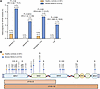 Figure 1
Risk associated with carriage of rare APOB variants in a severe MASLD case-control cohort according to definition A, definition B, damaging plus LoF variants, and LoF APOB variants. OR, 95% CI, and P values were calculated by logistic regression analysis adjusted for age and sex. (A) Prevalence of variants in cases versus controls. (B) Lollipop graph showing the aminoacidic residues affected by the mutations.
Among people at the clinic, APOB variant carriers exhibited markedly reduced LDL cholesterol and triglyceride levels alongside modestly elevated HDL cholesterol in plasma (P < 0.05; Supplemental Table 3), although they were less frequently on statins (P = 0.059), supporting a LoF effect of the variants identified. In people who were not on statins, lower LDL cholesterol levels (71.7 vs. 104.1 mg/dL, P = 0.002 for definition A; 48.6 ± 30.0 vs. 103.9 ± 41.6, P < 0.0001 for definition B in carriers vs. noncarriers) allowed prediction of the presence of APOB variants (area under the receiver operating characteristic [AUROC] 0.73, best threshold 55.4 mg/dL, 50% sensitivity and 42% specificity for definition A; AUROC 0.89, best threshold 70.6 mg/dL, 90% sensitivity and 72% specificity for definition B). APOB variant carriers had lower platelet numbers (P = 0.006, Supplemental Figure 1A) and a higher Fibrosis-4 index (FIB-4) score (P = 0.04, Supplemental Figure 1B), as well as a higher prevalence of advanced liver fibrosis (11 of 11, 100%, vs. 309/499, 61.9%, P = 0.03). Among people with available liver biopsies (n = 156), APOB variant carriers had higher grades of ballooning (P = 0.014, Supplemental Table 3).
Inheritance of APOB variants is associated with the MASLD spectrum within families.
Next, we characterized 11 families (Milan family study, Supplemental Figure 2 and Supplemental Table 2), whose probands had severe MASLD. Overall, we examined 32 first-degree relatives, 12 (37.5%) with steatosis, and 7 (21.8%) with liver fibrosis. Within these pedigrees, APOB variants cosegregated with liver steatosis (P = 0.0045), severe steatosis (P = 0.004), and fibrosis (P = 0.034, Table 1). These associations were strengthened by including additional family pedigrees from previous studies in the analyses (Table 1).
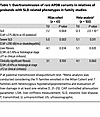 Table 1
Overtransmission of rare APOB variants in relatives of probands with SLD-related phenotypes in family studies
Carriage of APOB variants is associated with cirrhosis and HCC in large population cohorts.
Next, we sought to replicate our findings in 2 large independent cohorts, namely the Million Veteran Program (MVP) biobank and the UKBB. Considering the large study size and the study design, in these cohorts we focused the analyses on LoF and LoF/deleterious missense variants. Among MVP participants (Supplemental Table 6), carriage of LoF APOB variants was associated with an increased risk of cirrhosis in individuals with European ancestry and of HCC in both African and European ancestries (P < 0.05 for all). In the whole cohort, APOB variants conferred an increased risk of cirrhosis (OR 3.28, P = 0.009) and HCC (OR 11.68, P = 6.35 × 10⁻⁵). In the UKBB, rare variants were associated with a higher risk of cirrhosis and HCC (Supplemental Table 7). The effect of rare APOB variants on liver and cardiometabolic-related phenotypes in the UKBB is presented in Figure 2 and Supplemental Table 8. As expected, APOB carriers had lower LDL cholesterol levels, lower circulating triglyceride levels, and higher HDL cholesterol levels and were protected against coronary artery disease (CAD). Conversely, they had higher hepatic triglyceride content, liver enzymes, and prevalence of chronic liver disease (P < 0.05 for all). Interestingly, APOB variant carriers had higher C-reactive protein (CRP), glucose, glycated hemoglobin (HbA1c), and prevalence of diabetes (all P < 0.05). Finally, we performed a cross-ancestry meta-analysis of liver outcomes using harmonized definition of LoF and LoF/missense in the 3 studies, which revealed that APOB carriers had a higher risk of cirrhosis (PCauchy = 1.79 × 10⁻⁶; Figure 3A) and HCC (PCauchy = 7.59 × 10⁻¹², Figure 3B). The pooled OR for cirrhosis was 1.82 (95% CI: 1.33–2.49) for LoF/missense variants and 2.74 (95% CI: 1.83–4.09) for LoF variants. The pooled OR for HCC was 3.53 (95% CI: 2.09–5.98) for LoF/missense variants and 7.79 (95% CI: 4.37–13.92) for LoF variants.
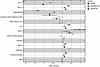 Figure 2
Risk of cardiometabolic and liver outcomes associated with rare pathogenic APOB LoF variants in individuals from UKBB (n = 417,657). The x-axis shows either β (continuous traits) or log Firth’s OR (binary traits) from a burden test, while adjusting for age, sex, age × sex, age2 × sex, age2, smoking, alcohol consumption, and BMI, with additional adjustments for diabetes and hypertension for CAD. Blue, orange, and green dots denote LoF variants affecting the full APOB gene, both ApoB48/100 and ApoB100, and exclusively ApoB100 protein isoforms, respectively. Transparent dots indicate nonsignificant associations.
 Figure 3
Cross-ancestry meta-analysis of rare APOB variants effects on liver outcomes in 3 study cohorts. (A) Cirrhosis and (B) HCC Firth’s corrected OR for each study is displayed for all variants affecting the APOB gene (ApoB), specifically affecting ApoB48/100, and exclusively affecting ApoB100 protein isoforms. Diamond marker shows the fixed-effect meta-analysis of each mask-isoform pair. P values for each mask were combined using Cauchy distribution as shown on the right. Transparent dots indicate nonsignificant associations. Milan, Milan Biobank case-control cohort; MVP-EUR, MVP Cohort Biobank, European Americans; MVP-AFR, MVP Cohort Biobank, African Americans.
Differential effect of LoF variants on ApoB isoforms.
Next, we examined the effect of APOB variants on liver outcomes based on the amino acidic sequence location where the variants occur and therefore their effect on the 2 ApoB isoforms. Specifically, if the mutation occurred downstream of amino acid 2154, the LoF affected only ApoB100. Conversely, if the mutation occurred upstream of this position, both isoforms were affected, namely, ApoB48/100 (Figure 1B and Figure 3). The results are reported in detail in Supplemental Tables 6–8 and in Figure 3. While both the LoF and LoF/missense mutations in ApoB48/100 and ApoB100 isoforms showed a similar level of significance in the association with cirrhosis (PCauchy = 4.70 × 10⁻⁴ for ApoB48/100 and PCauchy = 2.59 × 10⁻⁴ for ApoB100), mutations in ApoB48/100 were more strongly associated with HCC (PCauchy = 6.07 × 10⁻¹¹) than mutations in ApoB100 alone (PCauchy = 1.60 × 10⁻³). Concerning ApoB48/100 variants, the pooled OR for cirrhosis was 1.98 (95% CI: 1.24–2.14) for LoF/missense variants, and 2.90 (95% CI: 1.64–5.14) for LoF variants. The pooled OR for HCC was 4.04 (95% CI: 2.28–7.14) for LoF/missense variants and 10.26 (95% CI: 5.16–20.38) for LoF variants.
For ApoB100 variants, the pooled OR for cirrhosis was 1.98 (95% CI: 1.09–3.60) for LoF/missense variants and 3.96 (95% CI: 1.96–8.02) for LoF variants. The pooled OR for HCC was 2.30 (95% CI: 0.59–8.91) for LoF/missense variants and 10.19 (95% CI: 2.62–39.58) for LoF variants.
To gain insight as to whether the differential effect of different types of mutations on liver outcomes correlated with the modulation of lipid metabolism, we next examined the effect of APOB LoF isoforms on circulating lipoproteins and CAD risk. Carriers of ApoB100 disrupting variants had lower LDL cholesterol, triglycerides, and ALT levels and higher liver triglyceride content and HDL cholesterol mirrored by protection against CAD (Figure 2). Interestingly, these differences were reduced in carriers of ApoB100/48 variants. Consistently, when we examined NMR metabolomics, carriers of ApoB variants had lower circulating lipid levels, accompanied by differences in other metabolic species (Figure 4A). Carriers of ApoB100 disrupting variants had an approximately 3-fold larger decrease in VLDL size, triglyceride levels within the VLDL subclasses, and biomarkers of lipoprotein metabolism, all suggesting a more severe impairment of VLDL secretion (Figure 4, B and C). These data support the idea of a larger effect of variants specifically affecting ApoB100 on circulating lipoprotein levels. While carriage of APOB variants was negatively associated with statin use (OR 0.61 and 0.67, for LoF and LoF/damaging variants, respectively), this inverse relationship was larger for variants disrupting ApoB100 than for those affecting ApoB48/100 (OR 0.18 and 0.52 vs. OR 0.79 and 0.78 for LoF and LoF/damaging variants, respectively, Supplemental Table 9).
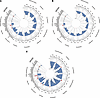 Figure 4
Circle plots for circulating lipoproteins, lipidomics, and metabolomics analysis of APOB LoF variants carriers in the UKBB. Associations of metabolic biomarkers in carriers with European ancestry from the UKBB. (A) Overall variants, (B) variants affecting both ApoB48/100s, and (C) variants affecting specifically ApoB100. P values were calculated using a whole-genome regression model as implemented in REGENIE; β coefficients (with 95% CIs) are presented per 1 SD change in metabolic biomarker, adjusted for age, sex, age2, age × sex, age2 × sex, BMI, first 10 PCs of ancestry and genotyping array. *Adjusted P < 0.05 (FDR controlled). Positive associations are displayed in red, whereas negative associations are blue. DHA, docosahexaenoic acid; FAw3, omega-3 fatty acid; FAw6, omega-6 fatty acid; HDL-D, high-density lipoprotein particle diameter; LA, linoleic acid; LDL-D, low-density lipoprotein particle diameter; LP, lipoprotein; MUFA, monounsaturated fatty acids; PUFA, polyunsaturated fatty acids; SFA, saturated fatty acids; VLDL-D, very low-density lipoprotein particle diameter.
The effect of APOB variants on circulating proteomics is reported in the supplemental material (Supplemental Figure 3 and Supplemental Table 11). Altogether, these data suggest that the larger effect of mutations affecting both ApoB48/100 and ApoB100 on HCC risk is mediated through mechanisms independent of lipid retention in hepatocytes that may involve impaired secretion of chylomicrons from enterocytes.


Copyright © 2026 American Society for Clinical Investigation
ISSN: 0021-9738 (print), 1558-8238 (online)