
Abstract
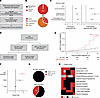
Secondary malignancies are the most feared adverse effects of cancer therapies. In this study, we explored the cutaneous oncogenic effects of the JAK inhibitor ruxolitinib. First, we demonstrated an epidemiological association between ruxolitinib exposure and development of aggressive cutaneous squamous cell carcinoma (cSCC) by analyzing international pharmacovigilance data and conducting a large cohort study. We next demonstrated the causal link between ruxolitinib treatment and cSCC development using in vitro and in vivo models. Mechanistically, we revealed that ruxolitinib induces transformation of premalignant keratinocytes by activating the MAPK pathway. This effect is mostly driven by JAK2 inhibition, suggesting a pharmacological class effect. To unravel the mechanistic underpinnings of ruxolitinib-induced MAPK activation, we then applied a phosphoproteomic approach. Alternative MAPK signaling downstream of the kinase COT was pinpointed as the main activator of the pathway in this context. The central role of COT was functionally validated using chemical inhibition, genetic impairment, and inactivated COT mutant expression. Indeed, impairment of COT rescued the pro-oncogenic effect of ruxolitinib. Finally, we determined using a combination of epidemiological, in vitro, and in vivo studies that ruxolitinib-mediated oncogenic effects also result in an increased risk of melanoma, suggesting that the uncovered cellular signaling mechanism might be extrapolated to other cancers with a high dependency on the MAPK pathway.
Authors
Hélène Pasquer, Antoine Forget, Maxime Battistella, Raphael Marie, Léa Provent, Barouyr Baroudjian, Emmanuelle Latour, Cécile Culeux, Blandine Roux, Khansa Saadallah, Amandine Gouverneur, Maxime Demourgues, Fanélie Jouenne, Jérôme Lambert, Bérangère Lombard, Damarys Loew, Sophie Tartare-Deckert, Lionel Adès, Emmanuel Raffoux, Bruno Cassinat, Juliette Soret-Dulphy, Pernelle Noize, Samia Mourah, Camille Lobry, Jean-Jacques Kiladjian, Alexandre Puissant, Céleste Lebbé, Lina Benajiba
This file is in Adobe Acrobat (PDF) format. If you have not installed and configured the Adobe Acrobat Reader on your system.
Having trouble reading a PDF?
PDFs are designed to be printed out and read, but if you prefer to read them online, you may find it easier if you increase the view size to 125%.
Having trouble saving a PDF?
Many versions of the free Acrobat Reader do not allow Save. You must instead save the PDF from the JCI Online page you downloaded it from. PC users: Right-click on the Download link and choose the option that says something like "Save Link As...". Mac users should hold the mouse button down on the link to get these same options.
Having trouble printing a PDF?
- Try printing one page at a time or to a newer printer.
- Try saving the file to disk before printing rather than opening it "on the fly." This requires that you configure your browser to "Save" rather than "Launch Application" for the file type "application/pdf", and can usually be done in the "Helper Applications" options.
- Make sure you are using the latest version of Adobe's Acrobat Reader.
Supplemental data - Download (4.91 MB)


Copyright © 2026 American Society for Clinical Investigation
ISSN: 0021-9738 (print), 1558-8238 (online)