
Advertisement
Commentary
Open Access |  10.1172/JCI197708
CARMN orchestrates angiogenesis from behind the opera scenes: signing love letters to the endothelium
Shivangi Pande,1 George Ishak,1 Fahimeh Varzideh,2 and Gaetano Santulli1,2
1Department of Medicine, Wilf Family Cardiovascular Research Institute, Einstein-Mount Sinai Diabetes Research Center (ES-DRC), Fleischer Institute for Diabetes and Metabolism (FIDAM), Albert Einstein College of Medicine, New York, New York, USA.
2Department of Molecular Pharmacology, Institute for Aging Research, Institute for Neuroimmunology and Inflammation (INI), Albert Einstein College of Medicine, New York, New York, USA.
Address correspondence to: Gaetano Santulli, 1300 Morris Park Avenue, Suite G35, New York, New York 10461, USA. Phone: 718.430.3370; Email: gsantulli001@gmail.com.
Find articles by Pande, S. in: PubMed | Google Scholar
1Department of Medicine, Wilf Family Cardiovascular Research Institute, Einstein-Mount Sinai Diabetes Research Center (ES-DRC), Fleischer Institute for Diabetes and Metabolism (FIDAM), Albert Einstein College of Medicine, New York, New York, USA.
2Department of Molecular Pharmacology, Institute for Aging Research, Institute for Neuroimmunology and Inflammation (INI), Albert Einstein College of Medicine, New York, New York, USA.
Address correspondence to: Gaetano Santulli, 1300 Morris Park Avenue, Suite G35, New York, New York 10461, USA. Phone: 718.430.3370; Email: gsantulli001@gmail.com.
Find articles by Ishak, G. in: PubMed | Google Scholar
1Department of Medicine, Wilf Family Cardiovascular Research Institute, Einstein-Mount Sinai Diabetes Research Center (ES-DRC), Fleischer Institute for Diabetes and Metabolism (FIDAM), Albert Einstein College of Medicine, New York, New York, USA.
2Department of Molecular Pharmacology, Institute for Aging Research, Institute for Neuroimmunology and Inflammation (INI), Albert Einstein College of Medicine, New York, New York, USA.
Address correspondence to: Gaetano Santulli, 1300 Morris Park Avenue, Suite G35, New York, New York 10461, USA. Phone: 718.430.3370; Email: gsantulli001@gmail.com.
Find articles by
Varzideh, F.
in:
PubMed
|
Google Scholar
|

1Department of Medicine, Wilf Family Cardiovascular Research Institute, Einstein-Mount Sinai Diabetes Research Center (ES-DRC), Fleischer Institute for Diabetes and Metabolism (FIDAM), Albert Einstein College of Medicine, New York, New York, USA.
2Department of Molecular Pharmacology, Institute for Aging Research, Institute for Neuroimmunology and Inflammation (INI), Albert Einstein College of Medicine, New York, New York, USA.
Address correspondence to: Gaetano Santulli, 1300 Morris Park Avenue, Suite G35, New York, New York 10461, USA. Phone: 718.430.3370; Email: gsantulli001@gmail.com.
Find articles by
Santulli, G.
in:
PubMed
|
Google Scholar
|
Published October 15, 2025 - More info
J Clin Invest. 2025;135(20):e197708. https://doi.org/10.1172/JCI197708.
© 2025 Pande et al. This work is licensed under the Creative Commons Attribution 4.0 International License. To view a copy of this license, visit http://creativecommons.org/licenses/by/4.0/.

Related article:
Abstract
Peripheral artery disease (PAD) often advances to chronic limb-threatening ischemia (CLTI), resulting in severe complications such as limb amputation. Despite the potential of therapeutic angiogenesis, the mechanisms of cell-cell communication and transcriptional changes driving PAD are not fully understood. Profiling long noncoding RNAs (lncRNAs) from gastrocnemius muscles of participants with or without CLTI revealed that a vascular smooth muscle cell–enriched (SMC-enriched) lncRNA, CARMN, was reduced with CLTI. This study explored how a SMC lncRNA-miRNA signaling axis regulates angiogenesis in limb ischemia. CARMN-KO mice exhibited reduced capillary density and impaired blood flow recovery and tissue necrosis following limb ischemia. We found that CARMN-KO SMC supernatants inhibited endothelial cell (EC) proliferation, spheroid sprouting, and network formation. RNA-seq identified downregulation of the Hedgehog signaling pathway in CARMN-KO models and revealed that CARMN regulates this pathway through its downstream miRNA, miR-143-3p, which targets Hedgehog-interacting protein (HHIP), an antagonist of Hedgehog signaling. Delivery of HHIP-specific siRNA or miR-143-3p mimics rescued EC angiogenic defects and improved blood flow recovery in both CARMN-KO and WT mice. These findings underscore the critical role of CARMN in modulating angiogenesis through the miR-143-3p-HHIP-Hedgehog signaling axis, providing insights into SMC-EC interactions and potential therapeutic strategies for CLTI.
Authors
Ming Zhai, Anurag Jamaiyar, Jun Qian, Winona W. Wu, Emre Bektik, Vinay Randhawa, Camila Vaz, Arvind K. Pandey, Akm Khyrul Wara, Madhur Sachan, Yi Hu, Jéssica L. Garcia, Claire E. Alford, Terence E. Ryan, Wenhui Peng, Mark W. Feinberg
In the landscape of peripheral artery disease (PAD), particularly its advanced stage known as chronic limb-threatening ischemia (CLTI), therapeutic innovation has long been hampered by a limited understanding of the cellular crosstalk that governs vascular repair (1). CLTI remains a major cause of morbidity, often culminating in limb loss (2). Despite efforts to develop therapies based on angiogenic growth factors, clinical translation has fallen short (3). A persistent limitation has been the underappreciation of intercellular communication pathways, particularly the interactions between vascular smooth muscle cells (VSMCs) and endothelial cells (ECs) that regulate capillary growth and vascular regeneration in ischemic tissue (4, 5). In the current issue of The Journal of Clinical Investigation, Zhai, Jamaiyar, and collaborators (6) addressed this gap with both elegance and rigor. Their study advances this field by identifying a paracrine signaling mechanism wherein a smooth muscle cell–enriched long noncoding RNA (lncRNA), CARMN (cardiac mesoderm enhancer-associated noncoding RNA) (7, 8), regulates endothelial angiogenic activity through a miRNA-mediated Hedgehog signaling axis.
-
Paracrine regulation links VSMCs to ECs
CARMN was previously known for its role in the VSMC phenotypic modulation that is observed in in atherosclerosis (9). In the present work, Zhai, Jamaiyar, and colleagues demonstrated that it was markedly downregulated in the gastrocnemius muscle of patients with CLTI as well as in mice following hindlimb ischemia. Strikingly, CARMN-knockout (CARMN-KO) mice displayed impaired blood flow recovery and reduced capillary density, correlating with elevated tissue necrosis (6). These findings underscore CARMN as a critical determinant of vascular regeneration. A key strength of the study lies in its exploration of the VSMC-to-EC signaling axis. Although CARMN is not expressed in ECs, the authors discovered that supernatants from CARMN-deficient VSMCs suppressed EC proliferation, sprouting, and network formation.
This paracrine effect reveals a functional coupling between VSMC gene regulation and EC angiogenic potential. Through RNA sequencing and pathway enrichment analyses, the authors identified downregulation of Hedgehog signaling in CARMN-deficient models. Specifically, they highlighted an increase in the expression of Hedgehog-interacting protein (HHIP), a known antagonist of Hedgehog signaling (10, 11). Mechanistically, CARMN regulated the abundance of HHIP by modulating levels of miR-143-3p, a microRNA that directly targets HHIP (Figure 1). They also performed a particularly compelling set of rescue experiments: reconstitution of miR-143-3p or silencing of HHIP in CARMN-KO mice restored endothelial angiogenic capacity and improved blood flow in ischemic limbs (6). These data not only validated the identification of a miR-143-3p/HHIP/Hedgehog signaling axis in vascular repair but also provide translational relevance by suggesting miR-143-3p as a potential therapeutic candidate.
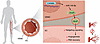 Figure 1
Intercellular paracrine cross talk between smooth muscle and endothelium. Through a mechanism that involves the suppression of miR-143-3p levels, CARMN deficiency in vascular smooth muscle cells (VSMCs) triggers the upregulation of Hedgehog-interacting protein (HHIP), an antagonist of Hedgehog signaling. HHIP then impairs proliferation and network formation of endothelial cell (EC), revealing a functional coupling between VSMC gene regulation and EC angiogenic potential.


Copyright © 2026 American Society for Clinical Investigation
ISSN: 0021-9738 (print), 1558-8238 (online)