
Abstract
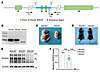
Skraban-Deardorff syndrome, a rare neurodevelopmental disorder caused by WD repeat domain 26 (WDR26) haploinsufficiency, is characterized by intellectual disability, seizures, autistic-like behaviors, and craniofacial anomalies. Despite its genetic association with variants disrupting the C-terminal to LisH (CTLH) E3 ubiquitin ligase complex, the molecular mechanisms linking WDR26 dysfunction to neurodevelopmental deficits remain unclear. Here, we demonstrate that Wdr26 heterozygous-KO mice (Wdr26+/–) recapitulated core clinical features of the syndrome, including learning and memory impairments, social dysfunction, heightened seizure susceptibility, and motor deficits, alongside rare craniofacial and dental abnormalities. Mechanistically, Wdr26 haploinsufficiency stabilized RUNX1 translocation partner 1 (RUNX1T1), a transcriptional coactivator critical for neuronal differentiation, by impairing its ubiquitination and proteasomal degradation, consequently disrupting the level of microtubule-associated protein 2 (MAP2), a key regulator of dendritic architecture and synaptic plasticity. Early intervention in neonatal Wdr26+/– mice (P0.5) using AAV-shRNA–mediated Runx1t1 knockdown reversed MAP2 overexpression and behavioral deficits. Notably, the antipsychotic risperidone ameliorated cognitive and social impairments in Wdr26+/– mice by upregulating WDR26 levels, suggesting a potential therapeutic avenue. Our findings not only establish the animal model as a robust preclinical tool but also define the WDR26/RUNX1T1/MAP2 regulatory axis as pivotal to the syndrome’s pathogenesis, while identifying actionable therapeutic targets.
Authors
Xingyun Xu, Yaohui Zhou, Shiyao Xu, Hongjie Zhou, Xuexia Lin, Yuhao Luo, Yu Xu, Zhigang Miao, Wei Ge, Hao Yang, Xingshun Xu
This file is in Adobe Acrobat (PDF) format. If you have not installed and configured the Adobe Acrobat Reader on your system.
Having trouble reading a PDF?
PDFs are designed to be printed out and read, but if you prefer to read them online, you may find it easier if you increase the view size to 125%.
Having trouble saving a PDF?
Many versions of the free Acrobat Reader do not allow Save. You must instead save the PDF from the JCI Online page you downloaded it from. PC users: Right-click on the Download link and choose the option that says something like "Save Link As...". Mac users should hold the mouse button down on the link to get these same options.
Having trouble printing a PDF?
- Try printing one page at a time or to a newer printer.
- Try saving the file to disk before printing rather than opening it "on the fly." This requires that you configure your browser to "Save" rather than "Launch Application" for the file type "application/pdf", and can usually be done in the "Helper Applications" options.
- Make sure you are using the latest version of Adobe's Acrobat Reader.
Supplemental data - Download (6.19 MB)


Copyright © 2026 American Society for Clinical Investigation
ISSN: 0021-9738 (print), 1558-8238 (online)