
Advertisement
Research ArticleCell biologyPulmonology
Open Access |  10.1172/JCI194762
TP53/TAU axis regulates microtubule bundling to control alveolar stem cell–mediated regeneration
Satoshi Konishi,1 Khaliun Enkhbayar,1,2 Shuyu Liu,1 Naoya Miyashita,1 Yoshihiko Kobayashi,1 Vera Hutchison,3 Ashna Sai,1 Pankaj Agarwal,1 Jonathan Witonsky,4 Nathan D. Jackson,5 Max A. Seibold,5,6,7 Jichao Chen,3,8 Aleksandra Tata,1,2,9 and Purushothama Rao Tata1,9,10,11,12
1Department of Cell Biology and
2Department of Surgery, Surgical Sciences, Duke University School of Medicine, Durham, North Carolina, USA.
3Department of Pulmonary Medicine, University of Texas MD Anderson Cancer Center, Houston, Texas, USA.
4Department of Pediatrics, University of California, San Francisco, San Francisco, California, USA.
5Center for Genes, Environment and Health and
6Department of Pediatrics, National Jewish Health, Denver, Colorado, USA.
7Division of Pulmonary Sciences and Critical Care Medicine, University of Colorado School of Medicine, Aurora, Colorado, USA.
8Department of Pediatrics, Perinatal Institute Division of Pulmonary Biology, University of Cincinnati and Cincinnati Children’s Hospital Medical Center, Cincinnati, Ohio, USA.
9Duke Regeneration Center, Duke University, Durham, North Carolina, USA.
10Division of Pulmonary, Allergy, and Critical Care Medicine, Department of Medicine, Duke University School of Medicine, Durham, North Carolina, USA.
11Center for Advanced Genomic Technologies, Duke University, Durham, North Carolina, USA.
12Duke Cancer Institute, Duke University School of Medicine, Durham, North Carolina, USA.
Address correspondence to: Purushothama Rao Tata, 303 Research Drive, Sands Building Room 451, Durham, North Carolina 27710, USA. Phone: 919.684.0624; Email: purushothamarao.tata@duke.edu. Or to: Aleksandra Tata, 303 Research Drive, Sands Building Room 448, Durham, North Carolina 27710, USA. Phone: 919.684.0624; Email: aleksandra.tata@duke.edu.
Authorship note: SK and KE are co–first authors.
Find articles by Konishi, S. in: PubMed | Google Scholar
1Department of Cell Biology and
2Department of Surgery, Surgical Sciences, Duke University School of Medicine, Durham, North Carolina, USA.
3Department of Pulmonary Medicine, University of Texas MD Anderson Cancer Center, Houston, Texas, USA.
4Department of Pediatrics, University of California, San Francisco, San Francisco, California, USA.
5Center for Genes, Environment and Health and
6Department of Pediatrics, National Jewish Health, Denver, Colorado, USA.
7Division of Pulmonary Sciences and Critical Care Medicine, University of Colorado School of Medicine, Aurora, Colorado, USA.
8Department of Pediatrics, Perinatal Institute Division of Pulmonary Biology, University of Cincinnati and Cincinnati Children’s Hospital Medical Center, Cincinnati, Ohio, USA.
9Duke Regeneration Center, Duke University, Durham, North Carolina, USA.
10Division of Pulmonary, Allergy, and Critical Care Medicine, Department of Medicine, Duke University School of Medicine, Durham, North Carolina, USA.
11Center for Advanced Genomic Technologies, Duke University, Durham, North Carolina, USA.
12Duke Cancer Institute, Duke University School of Medicine, Durham, North Carolina, USA.
Address correspondence to: Purushothama Rao Tata, 303 Research Drive, Sands Building Room 451, Durham, North Carolina 27710, USA. Phone: 919.684.0624; Email: purushothamarao.tata@duke.edu. Or to: Aleksandra Tata, 303 Research Drive, Sands Building Room 448, Durham, North Carolina 27710, USA. Phone: 919.684.0624; Email: aleksandra.tata@duke.edu.
Authorship note: SK and KE are co–first authors.
Find articles by Enkhbayar, K. in: PubMed | Google Scholar
1Department of Cell Biology and
2Department of Surgery, Surgical Sciences, Duke University School of Medicine, Durham, North Carolina, USA.
3Department of Pulmonary Medicine, University of Texas MD Anderson Cancer Center, Houston, Texas, USA.
4Department of Pediatrics, University of California, San Francisco, San Francisco, California, USA.
5Center for Genes, Environment and Health and
6Department of Pediatrics, National Jewish Health, Denver, Colorado, USA.
7Division of Pulmonary Sciences and Critical Care Medicine, University of Colorado School of Medicine, Aurora, Colorado, USA.
8Department of Pediatrics, Perinatal Institute Division of Pulmonary Biology, University of Cincinnati and Cincinnati Children’s Hospital Medical Center, Cincinnati, Ohio, USA.
9Duke Regeneration Center, Duke University, Durham, North Carolina, USA.
10Division of Pulmonary, Allergy, and Critical Care Medicine, Department of Medicine, Duke University School of Medicine, Durham, North Carolina, USA.
11Center for Advanced Genomic Technologies, Duke University, Durham, North Carolina, USA.
12Duke Cancer Institute, Duke University School of Medicine, Durham, North Carolina, USA.
Address correspondence to: Purushothama Rao Tata, 303 Research Drive, Sands Building Room 451, Durham, North Carolina 27710, USA. Phone: 919.684.0624; Email: purushothamarao.tata@duke.edu. Or to: Aleksandra Tata, 303 Research Drive, Sands Building Room 448, Durham, North Carolina 27710, USA. Phone: 919.684.0624; Email: aleksandra.tata@duke.edu.
Authorship note: SK and KE are co–first authors.
Find articles by Liu, S. in: PubMed | Google Scholar
1Department of Cell Biology and
2Department of Surgery, Surgical Sciences, Duke University School of Medicine, Durham, North Carolina, USA.
3Department of Pulmonary Medicine, University of Texas MD Anderson Cancer Center, Houston, Texas, USA.
4Department of Pediatrics, University of California, San Francisco, San Francisco, California, USA.
5Center for Genes, Environment and Health and
6Department of Pediatrics, National Jewish Health, Denver, Colorado, USA.
7Division of Pulmonary Sciences and Critical Care Medicine, University of Colorado School of Medicine, Aurora, Colorado, USA.
8Department of Pediatrics, Perinatal Institute Division of Pulmonary Biology, University of Cincinnati and Cincinnati Children’s Hospital Medical Center, Cincinnati, Ohio, USA.
9Duke Regeneration Center, Duke University, Durham, North Carolina, USA.
10Division of Pulmonary, Allergy, and Critical Care Medicine, Department of Medicine, Duke University School of Medicine, Durham, North Carolina, USA.
11Center for Advanced Genomic Technologies, Duke University, Durham, North Carolina, USA.
12Duke Cancer Institute, Duke University School of Medicine, Durham, North Carolina, USA.
Address correspondence to: Purushothama Rao Tata, 303 Research Drive, Sands Building Room 451, Durham, North Carolina 27710, USA. Phone: 919.684.0624; Email: purushothamarao.tata@duke.edu. Or to: Aleksandra Tata, 303 Research Drive, Sands Building Room 448, Durham, North Carolina 27710, USA. Phone: 919.684.0624; Email: aleksandra.tata@duke.edu.
Authorship note: SK and KE are co–first authors.
Find articles by Miyashita, N. in: PubMed | Google Scholar
1Department of Cell Biology and
2Department of Surgery, Surgical Sciences, Duke University School of Medicine, Durham, North Carolina, USA.
3Department of Pulmonary Medicine, University of Texas MD Anderson Cancer Center, Houston, Texas, USA.
4Department of Pediatrics, University of California, San Francisco, San Francisco, California, USA.
5Center for Genes, Environment and Health and
6Department of Pediatrics, National Jewish Health, Denver, Colorado, USA.
7Division of Pulmonary Sciences and Critical Care Medicine, University of Colorado School of Medicine, Aurora, Colorado, USA.
8Department of Pediatrics, Perinatal Institute Division of Pulmonary Biology, University of Cincinnati and Cincinnati Children’s Hospital Medical Center, Cincinnati, Ohio, USA.
9Duke Regeneration Center, Duke University, Durham, North Carolina, USA.
10Division of Pulmonary, Allergy, and Critical Care Medicine, Department of Medicine, Duke University School of Medicine, Durham, North Carolina, USA.
11Center for Advanced Genomic Technologies, Duke University, Durham, North Carolina, USA.
12Duke Cancer Institute, Duke University School of Medicine, Durham, North Carolina, USA.
Address correspondence to: Purushothama Rao Tata, 303 Research Drive, Sands Building Room 451, Durham, North Carolina 27710, USA. Phone: 919.684.0624; Email: purushothamarao.tata@duke.edu. Or to: Aleksandra Tata, 303 Research Drive, Sands Building Room 448, Durham, North Carolina 27710, USA. Phone: 919.684.0624; Email: aleksandra.tata@duke.edu.
Authorship note: SK and KE are co–first authors.
Find articles by
Kobayashi, Y.
in:
PubMed
|
Google Scholar
|

1Department of Cell Biology and
2Department of Surgery, Surgical Sciences, Duke University School of Medicine, Durham, North Carolina, USA.
3Department of Pulmonary Medicine, University of Texas MD Anderson Cancer Center, Houston, Texas, USA.
4Department of Pediatrics, University of California, San Francisco, San Francisco, California, USA.
5Center for Genes, Environment and Health and
6Department of Pediatrics, National Jewish Health, Denver, Colorado, USA.
7Division of Pulmonary Sciences and Critical Care Medicine, University of Colorado School of Medicine, Aurora, Colorado, USA.
8Department of Pediatrics, Perinatal Institute Division of Pulmonary Biology, University of Cincinnati and Cincinnati Children’s Hospital Medical Center, Cincinnati, Ohio, USA.
9Duke Regeneration Center, Duke University, Durham, North Carolina, USA.
10Division of Pulmonary, Allergy, and Critical Care Medicine, Department of Medicine, Duke University School of Medicine, Durham, North Carolina, USA.
11Center for Advanced Genomic Technologies, Duke University, Durham, North Carolina, USA.
12Duke Cancer Institute, Duke University School of Medicine, Durham, North Carolina, USA.
Address correspondence to: Purushothama Rao Tata, 303 Research Drive, Sands Building Room 451, Durham, North Carolina 27710, USA. Phone: 919.684.0624; Email: purushothamarao.tata@duke.edu. Or to: Aleksandra Tata, 303 Research Drive, Sands Building Room 448, Durham, North Carolina 27710, USA. Phone: 919.684.0624; Email: aleksandra.tata@duke.edu.
Authorship note: SK and KE are co–first authors.
Find articles by Hutchison, V. in: PubMed | Google Scholar
1Department of Cell Biology and
2Department of Surgery, Surgical Sciences, Duke University School of Medicine, Durham, North Carolina, USA.
3Department of Pulmonary Medicine, University of Texas MD Anderson Cancer Center, Houston, Texas, USA.
4Department of Pediatrics, University of California, San Francisco, San Francisco, California, USA.
5Center for Genes, Environment and Health and
6Department of Pediatrics, National Jewish Health, Denver, Colorado, USA.
7Division of Pulmonary Sciences and Critical Care Medicine, University of Colorado School of Medicine, Aurora, Colorado, USA.
8Department of Pediatrics, Perinatal Institute Division of Pulmonary Biology, University of Cincinnati and Cincinnati Children’s Hospital Medical Center, Cincinnati, Ohio, USA.
9Duke Regeneration Center, Duke University, Durham, North Carolina, USA.
10Division of Pulmonary, Allergy, and Critical Care Medicine, Department of Medicine, Duke University School of Medicine, Durham, North Carolina, USA.
11Center for Advanced Genomic Technologies, Duke University, Durham, North Carolina, USA.
12Duke Cancer Institute, Duke University School of Medicine, Durham, North Carolina, USA.
Address correspondence to: Purushothama Rao Tata, 303 Research Drive, Sands Building Room 451, Durham, North Carolina 27710, USA. Phone: 919.684.0624; Email: purushothamarao.tata@duke.edu. Or to: Aleksandra Tata, 303 Research Drive, Sands Building Room 448, Durham, North Carolina 27710, USA. Phone: 919.684.0624; Email: aleksandra.tata@duke.edu.
Authorship note: SK and KE are co–first authors.
Find articles by Sai, A. in: PubMed | Google Scholar
1Department of Cell Biology and
2Department of Surgery, Surgical Sciences, Duke University School of Medicine, Durham, North Carolina, USA.
3Department of Pulmonary Medicine, University of Texas MD Anderson Cancer Center, Houston, Texas, USA.
4Department of Pediatrics, University of California, San Francisco, San Francisco, California, USA.
5Center for Genes, Environment and Health and
6Department of Pediatrics, National Jewish Health, Denver, Colorado, USA.
7Division of Pulmonary Sciences and Critical Care Medicine, University of Colorado School of Medicine, Aurora, Colorado, USA.
8Department of Pediatrics, Perinatal Institute Division of Pulmonary Biology, University of Cincinnati and Cincinnati Children’s Hospital Medical Center, Cincinnati, Ohio, USA.
9Duke Regeneration Center, Duke University, Durham, North Carolina, USA.
10Division of Pulmonary, Allergy, and Critical Care Medicine, Department of Medicine, Duke University School of Medicine, Durham, North Carolina, USA.
11Center for Advanced Genomic Technologies, Duke University, Durham, North Carolina, USA.
12Duke Cancer Institute, Duke University School of Medicine, Durham, North Carolina, USA.
Address correspondence to: Purushothama Rao Tata, 303 Research Drive, Sands Building Room 451, Durham, North Carolina 27710, USA. Phone: 919.684.0624; Email: purushothamarao.tata@duke.edu. Or to: Aleksandra Tata, 303 Research Drive, Sands Building Room 448, Durham, North Carolina 27710, USA. Phone: 919.684.0624; Email: aleksandra.tata@duke.edu.
Authorship note: SK and KE are co–first authors.
Find articles by Agarwal, P. in: PubMed | Google Scholar
1Department of Cell Biology and
2Department of Surgery, Surgical Sciences, Duke University School of Medicine, Durham, North Carolina, USA.
3Department of Pulmonary Medicine, University of Texas MD Anderson Cancer Center, Houston, Texas, USA.
4Department of Pediatrics, University of California, San Francisco, San Francisco, California, USA.
5Center for Genes, Environment and Health and
6Department of Pediatrics, National Jewish Health, Denver, Colorado, USA.
7Division of Pulmonary Sciences and Critical Care Medicine, University of Colorado School of Medicine, Aurora, Colorado, USA.
8Department of Pediatrics, Perinatal Institute Division of Pulmonary Biology, University of Cincinnati and Cincinnati Children’s Hospital Medical Center, Cincinnati, Ohio, USA.
9Duke Regeneration Center, Duke University, Durham, North Carolina, USA.
10Division of Pulmonary, Allergy, and Critical Care Medicine, Department of Medicine, Duke University School of Medicine, Durham, North Carolina, USA.
11Center for Advanced Genomic Technologies, Duke University, Durham, North Carolina, USA.
12Duke Cancer Institute, Duke University School of Medicine, Durham, North Carolina, USA.
Address correspondence to: Purushothama Rao Tata, 303 Research Drive, Sands Building Room 451, Durham, North Carolina 27710, USA. Phone: 919.684.0624; Email: purushothamarao.tata@duke.edu. Or to: Aleksandra Tata, 303 Research Drive, Sands Building Room 448, Durham, North Carolina 27710, USA. Phone: 919.684.0624; Email: aleksandra.tata@duke.edu.
Authorship note: SK and KE are co–first authors.
Find articles by Witonsky, J. in: PubMed | Google Scholar
1Department of Cell Biology and
2Department of Surgery, Surgical Sciences, Duke University School of Medicine, Durham, North Carolina, USA.
3Department of Pulmonary Medicine, University of Texas MD Anderson Cancer Center, Houston, Texas, USA.
4Department of Pediatrics, University of California, San Francisco, San Francisco, California, USA.
5Center for Genes, Environment and Health and
6Department of Pediatrics, National Jewish Health, Denver, Colorado, USA.
7Division of Pulmonary Sciences and Critical Care Medicine, University of Colorado School of Medicine, Aurora, Colorado, USA.
8Department of Pediatrics, Perinatal Institute Division of Pulmonary Biology, University of Cincinnati and Cincinnati Children’s Hospital Medical Center, Cincinnati, Ohio, USA.
9Duke Regeneration Center, Duke University, Durham, North Carolina, USA.
10Division of Pulmonary, Allergy, and Critical Care Medicine, Department of Medicine, Duke University School of Medicine, Durham, North Carolina, USA.
11Center for Advanced Genomic Technologies, Duke University, Durham, North Carolina, USA.
12Duke Cancer Institute, Duke University School of Medicine, Durham, North Carolina, USA.
Address correspondence to: Purushothama Rao Tata, 303 Research Drive, Sands Building Room 451, Durham, North Carolina 27710, USA. Phone: 919.684.0624; Email: purushothamarao.tata@duke.edu. Or to: Aleksandra Tata, 303 Research Drive, Sands Building Room 448, Durham, North Carolina 27710, USA. Phone: 919.684.0624; Email: aleksandra.tata@duke.edu.
Authorship note: SK and KE are co–first authors.
Find articles by Jackson, N. in: PubMed | Google Scholar
1Department of Cell Biology and
2Department of Surgery, Surgical Sciences, Duke University School of Medicine, Durham, North Carolina, USA.
3Department of Pulmonary Medicine, University of Texas MD Anderson Cancer Center, Houston, Texas, USA.
4Department of Pediatrics, University of California, San Francisco, San Francisco, California, USA.
5Center for Genes, Environment and Health and
6Department of Pediatrics, National Jewish Health, Denver, Colorado, USA.
7Division of Pulmonary Sciences and Critical Care Medicine, University of Colorado School of Medicine, Aurora, Colorado, USA.
8Department of Pediatrics, Perinatal Institute Division of Pulmonary Biology, University of Cincinnati and Cincinnati Children’s Hospital Medical Center, Cincinnati, Ohio, USA.
9Duke Regeneration Center, Duke University, Durham, North Carolina, USA.
10Division of Pulmonary, Allergy, and Critical Care Medicine, Department of Medicine, Duke University School of Medicine, Durham, North Carolina, USA.
11Center for Advanced Genomic Technologies, Duke University, Durham, North Carolina, USA.
12Duke Cancer Institute, Duke University School of Medicine, Durham, North Carolina, USA.
Address correspondence to: Purushothama Rao Tata, 303 Research Drive, Sands Building Room 451, Durham, North Carolina 27710, USA. Phone: 919.684.0624; Email: purushothamarao.tata@duke.edu. Or to: Aleksandra Tata, 303 Research Drive, Sands Building Room 448, Durham, North Carolina 27710, USA. Phone: 919.684.0624; Email: aleksandra.tata@duke.edu.
Authorship note: SK and KE are co–first authors.
Find articles by
Seibold, M.
in:
PubMed
|
Google Scholar
|
1Department of Cell Biology and
2Department of Surgery, Surgical Sciences, Duke University School of Medicine, Durham, North Carolina, USA.
3Department of Pulmonary Medicine, University of Texas MD Anderson Cancer Center, Houston, Texas, USA.
4Department of Pediatrics, University of California, San Francisco, San Francisco, California, USA.
5Center for Genes, Environment and Health and
6Department of Pediatrics, National Jewish Health, Denver, Colorado, USA.
7Division of Pulmonary Sciences and Critical Care Medicine, University of Colorado School of Medicine, Aurora, Colorado, USA.
8Department of Pediatrics, Perinatal Institute Division of Pulmonary Biology, University of Cincinnati and Cincinnati Children’s Hospital Medical Center, Cincinnati, Ohio, USA.
9Duke Regeneration Center, Duke University, Durham, North Carolina, USA.
10Division of Pulmonary, Allergy, and Critical Care Medicine, Department of Medicine, Duke University School of Medicine, Durham, North Carolina, USA.
11Center for Advanced Genomic Technologies, Duke University, Durham, North Carolina, USA.
12Duke Cancer Institute, Duke University School of Medicine, Durham, North Carolina, USA.
Address correspondence to: Purushothama Rao Tata, 303 Research Drive, Sands Building Room 451, Durham, North Carolina 27710, USA. Phone: 919.684.0624; Email: purushothamarao.tata@duke.edu. Or to: Aleksandra Tata, 303 Research Drive, Sands Building Room 448, Durham, North Carolina 27710, USA. Phone: 919.684.0624; Email: aleksandra.tata@duke.edu.
Authorship note: SK and KE are co–first authors.
Find articles by Chen, J. in: PubMed | Google Scholar
1Department of Cell Biology and
2Department of Surgery, Surgical Sciences, Duke University School of Medicine, Durham, North Carolina, USA.
3Department of Pulmonary Medicine, University of Texas MD Anderson Cancer Center, Houston, Texas, USA.
4Department of Pediatrics, University of California, San Francisco, San Francisco, California, USA.
5Center for Genes, Environment and Health and
6Department of Pediatrics, National Jewish Health, Denver, Colorado, USA.
7Division of Pulmonary Sciences and Critical Care Medicine, University of Colorado School of Medicine, Aurora, Colorado, USA.
8Department of Pediatrics, Perinatal Institute Division of Pulmonary Biology, University of Cincinnati and Cincinnati Children’s Hospital Medical Center, Cincinnati, Ohio, USA.
9Duke Regeneration Center, Duke University, Durham, North Carolina, USA.
10Division of Pulmonary, Allergy, and Critical Care Medicine, Department of Medicine, Duke University School of Medicine, Durham, North Carolina, USA.
11Center for Advanced Genomic Technologies, Duke University, Durham, North Carolina, USA.
12Duke Cancer Institute, Duke University School of Medicine, Durham, North Carolina, USA.
Address correspondence to: Purushothama Rao Tata, 303 Research Drive, Sands Building Room 451, Durham, North Carolina 27710, USA. Phone: 919.684.0624; Email: purushothamarao.tata@duke.edu. Or to: Aleksandra Tata, 303 Research Drive, Sands Building Room 448, Durham, North Carolina 27710, USA. Phone: 919.684.0624; Email: aleksandra.tata@duke.edu.
Authorship note: SK and KE are co–first authors.
Find articles by Tata, A. in: PubMed | Google Scholar
1Department of Cell Biology and
2Department of Surgery, Surgical Sciences, Duke University School of Medicine, Durham, North Carolina, USA.
3Department of Pulmonary Medicine, University of Texas MD Anderson Cancer Center, Houston, Texas, USA.
4Department of Pediatrics, University of California, San Francisco, San Francisco, California, USA.
5Center for Genes, Environment and Health and
6Department of Pediatrics, National Jewish Health, Denver, Colorado, USA.
7Division of Pulmonary Sciences and Critical Care Medicine, University of Colorado School of Medicine, Aurora, Colorado, USA.
8Department of Pediatrics, Perinatal Institute Division of Pulmonary Biology, University of Cincinnati and Cincinnati Children’s Hospital Medical Center, Cincinnati, Ohio, USA.
9Duke Regeneration Center, Duke University, Durham, North Carolina, USA.
10Division of Pulmonary, Allergy, and Critical Care Medicine, Department of Medicine, Duke University School of Medicine, Durham, North Carolina, USA.
11Center for Advanced Genomic Technologies, Duke University, Durham, North Carolina, USA.
12Duke Cancer Institute, Duke University School of Medicine, Durham, North Carolina, USA.
Address correspondence to: Purushothama Rao Tata, 303 Research Drive, Sands Building Room 451, Durham, North Carolina 27710, USA. Phone: 919.684.0624; Email: purushothamarao.tata@duke.edu. Or to: Aleksandra Tata, 303 Research Drive, Sands Building Room 448, Durham, North Carolina 27710, USA. Phone: 919.684.0624; Email: aleksandra.tata@duke.edu.
Authorship note: SK and KE are co–first authors.
Find articles by Tata, P. in: PubMed | Google Scholar
Published February 5, 2026 - More info
J Clin Invest. 2026;136(7):e194762. https://doi.org/10.1172/JCI194762.
© 2026 Konishi et al. This work is licensed under the Creative Commons Attribution 4.0 International License. To view a copy of this license, visit http://creativecommons.org/licenses/by/4.0/.
Received: April 22, 2025; Accepted: January 27, 2026


-
Results
Newly optimized conditions for AT2 maintenance and differentiation in 2D cultures. To assess morphological dynamics during mouse AT2-to-AT1 differentiation, we sought to optimize 2D cultures that enable efficient cell state transitions. Previous studies have demonstrated that AT2s can be cultured in 50% Matrigel (10, 34). To establish a 2D culture model, AT2s were first plated on 5% Matrigel–coated wells. However, even at later times, both large and thin cells that expressed AGER (AT1 marker) and ABCA3 (AT2 marker) were observed, suggesting incomplete differentiation (Supplemental Figure 1A; supplemental material available online with this article; https://doi.org/10.1172/JCI194762DS1). On Collagen I–coated plates, tightly packed colonies of cells expressing ABCA3 and SFTPC were present throughout the culture duration (Supplemental Figure 1B). By contrast, culture on fibronectin-coated plates revealed the presence of CLDN4+ PATS and large and thin AGER+ AT1-like cells at early (day 5) and later (day 9) times (Figure 1A and Supplemental Figure 1C). To visualize the morphological dynamics during AT2-to-AT1 differentiation, we performed time-lapse live imaging of cells cultured on fibronectin starting day 3 for 72 hours. Our data revealed gradual stretching of AT1-like cells with the appearance of arborizing cytoskeletal components from day 6 that were maintained throughout the culture duration (Supplemental Figure 1D and Supplemental Video 1). We then performed bulk RNA-seq on cells collected from Collagen I– (AT2s) and fibronectin-coated plates harvested on day 5 (PATS) and day 9 (AT1s) (Figure 1A). As expected, differential gene expression analysis revealed previously reported AT2 (Sftpa1, Abca3, Sftpc, Lamp3), PATS (Krt8, Sfn, Sox4), and AT1 (Hopx, Aqp5, Ager, Cav1) markers in different culture conditions (Supplemental Figure 1E). Together, we established a 2D culture system to maintain AT2s and their differentiation to AT1s in defined conditions.
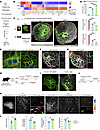 Figure 1
Alveolar stem cell MTs undergo dynamic changes to form thick MT bundles during differentiation. (A) Experimental design for mouse AT2 isolation, culture, and sample collection. IF, immunofluorescence. (B) Heatmap shows expression of tubulin-encoding and MAP-encoding genes in cultured AT2s, PATS, and AT1s. (C) Staining for TUBA1B (green), phalloidin (red), and AGER (gray) on cells cultured on fibronectin showing AT2-PATS-AT1 cell fate and cell morphology transition. Scale bar: 20 μm. (D) Quantification of area and thickness (in the middle and edge) of alveolar epithelial cells on days 1, 5, and 9 of culture. **P < 0.005, ***P < 0.001, 1-way ANOVA. n = 3 biological replicates. (E) Staining for TUBA1B (green) and GM130 (red) at indicated times. DAPI stains nuclei (blue). Scale bar: 20 μm. (F) Staining for tubulin proteins in AT2s cultured on fibronectin for 9 days. Scale bar: 20 μm. Ac-TUB, acetylated tubulin. (G) Staining for TUBA1B (green), KRT8 (gray), and phalloidin (red) in AT1s. Scale bar: 20 μm. (H) Experimental design for ex vivo and in vivo AT1-specific tubulin lineage tracing in Rtkn2-CreER R26R-Kaleidoscope mice. (I) Images showing TUBA1B-EGFP (green) and LEL (Lycopersicon Esculentum Lectin, gray) in cultured AT1s and in vivo lungs. Scale bars: 20 μm. (J) Experimental workflow for AT2 infection with EB1-EGFP lentivirus followed by live imaging on day 7 and day 14. (K) Kymograph and time-lapse images illustrating tubulin dynamics and orientation in cells on day 7 and day 14. White box indicates region of enlarged image. White arrows indicate direction of growing plus ends of MTs. Scale bars: 20 μm. (L) Quantification of EB1-EGFP comet velocity (μm/min), directionality concentration, angle fluctuation (degree), and track straightness in cells cultured for 7 and 14 days. *P < 0.05, unpaired 2-tailed t test. Data in D and L are presented as mean ± SEM. n = 3 biological replicates.
Transcriptome profiling reveals dynamic expression pattern of structural and regulatory components of MTs during AT2-to-AT1 differentiation. Our above live imaging data revealed the appearance of arborizing cytoskeletal structures. To further evaluate these structures, we analyzed the above transcriptome data and found expression of transcripts related to both structural (Tuba1c, Tuba1b, Tuba1a) and regulatory (Map6, Mapre3, Map1a, Map2, Kif1a, Camsap1) components of MT assembly in specific cell types. We found enrichment of multiple structural and regulatory components of MTs in PATS and AT1s indicating that MTs undergo significant reorganization during AT2 differentiation to AT1 via PATS (Figure 1B). To assess whether such changes occur during AT2 differentiation in vivo, we reevaluated previously generated single-cell RNA-seq (scRNA-seq) data from bleomycin-induced lung injury (30). We found enrichment of Tubb2b, Tubb5, Tubb6, Map1b, Map4, and Map7 in PATS, whereas Tuba1a, Tuba8, Tubb2a, Tubb4b, Map2, and Map6 were enriched in AT1s (Supplemental Figure 2A). Together, transcriptome data revealed dynamic expression of MT components during AT2-to-AT1 differentiation both in vivo and ex vivo.
MTs undergo dynamic reorganization and generate thick bundles during AT2-to-AT1 differentiation ex vivo and in vivo. We next performed immunostaining to visualize expression and localization of MTs, actin, and cytokeratins during AT2-to-AT1 differentiation. AT2s had a dense network of individual radial MT fibers distributed throughout the cell body. By contrast, AT1s had organized, thick, bundle-like structures, each composed of multiple individual MT fibers (Figure 1C and Supplemental Figure 2B). Interestingly, MT changes correlated with an increase in cell area and decrease in cell thickness (Figure 1D). Immunostaining for TUBA1B revealed a dynamic change in its localization as AT2s differentiated to AT1s via PATS. On day 5, we observed the emergence of individual thick MT bundles, whereas on day 9, cells had a highly branched network of thick bundles all around the cell body as the cells matured to AT1s (Figure 1C). In most cell types, MTs are anchored to the perinuclear Golgi via MT organizing centers (35, 36). To assess Golgi localization, we performed immunostaining for GM130 (37). The Golgi apparatus was restricted to perinuclear regions in PATS, whereas it was co-localized with thick MT bundles including at branch points in AT1s, suggesting that the Golgi serves as an anchoring point for MTs, as in neuronal axons (38, 39) (Figure 1E). Additionally, staining for PK-mito, LAMP1, and CANX, which marks mitochondria, lysosomes, and ER, respectively, revealed that these organelles co-localized with thick MT bundles (Supplemental Figure 2C). Furthermore, immunostaining for acetylated tubulin (Ac-TUB), a marker of the stabilized form of MTs, revealed that thick MT bundles correlated with mature forms of MTs (40) (Figure 1F). Of note, immunostaining for TUBA1A, TUBA1B, and MAP2 showed thick MT bundles composed of multiple tubulin classes and MAPs (Figure 1F and Supplemental Figure 2D). Among the actin and intermediate filaments, KRT8 localization overlapped with tubulins within the thick MT bundles whereas actin (phalloidin) was highly enriched in the cortex and the basal side of the cells (Figure 1, C and G, and Supplemental Figure 2E).
To assess whether the thick MT bundles observed in 2D cultures are also present in AT1s in vivo, we utilized the Rtkn2-CreER R26R-Kaleidoscope (hereafter referred to as Rtkn2-Kaleidoscope) mouse line, which expresses TUBA1C fused to green fluorescent protein (EGFP) (41). Administration of tamoxifen (in vivo) or Adeno-Cre virus (ex vivo) activates the expression of TUBA1C-EGFP, thereby enabling the localization of tubulins specifically in AT1s (Figure 1H). To assess TUBA1C-EGFP protein localization in cultured cells, we purified AT2s from Rtkn2-Kaleidoscope mice and cultured them as described above (Figure 1H). As expected, we found radial distribution of TUBA1C-EGFP throughout the cell body in AT2s from Rtkn2-Kaleidoscope mice whereas AT1s exhibited EGFP localization in a pattern similar to that of thick MT bundles (Figure 1I and Supplemental Figure 2F). To assess the tubulin localization pattern in vivo, lungs were collected from tamoxifen-administered Rtkn2-Kaleidoscope mice followed by thick tissue sectioning and imaging to visualize large, flat, and thin AT1s in alveolar sacs. Confocal imaging followed by maximum-intensity projection revealed EGFP localization consistent with AT1s having thick MT bundles in vivo (Figure 1I).
MTs are polar structures with a fast growing plus end and a slowly growing minus end that collectively provide the directionality of MT growth (42). We utilized end-binding 1–EGFP (EB1-EGFP), which allows tracking of MT plus ends, to assess MT growth directionality and kinetics in real time. 2D-cultured mouse AT2s were transduced with lentiviral EB1-EGFP followed by live imaging at early (day 7) and late stages (day 14) of differentiation to capture these dynamics in PATS and AT1s, respectively (Figure 1J and Supplemental Videos 2 and 3). Time-lapse imaging and comet tracking revealed that cells at day 7 showed unidirectional movement from center to cortex, whereas cells from day 14 showed bidirectional growth. This finding was confirmed by kymograph-based quantification analysis (Figure 1K and Supplemental Videos 2 and 3). These data suggest that alveolar epithelial cells shift their MT growth from unidirectional to bidirectional as the AT2s differentiate into large and thin AT1s. Moreover, an increase in EB1 comet velocity and angle fluctuation on day 14 indicated enhanced MT dynamics and polymerization and switching directions within bundled tracks (Figure 1L). Additionally, a decrease in directionality concentration, and track straightness at day 14 compared with day 7, suggested the emergence of bidirectional movement along bundled MTs during PATS-to-AT1 transition (Figure 1L). Together, AT2-PATS-AT1 differentiation processes can be recapitulated in our 2D ex vivo culture system, revealing a unique thick MT bundle organization pattern in AT1s.
Dynamic expression and localization of TAU during AT2 differentiation. The above data revealed that MT components and associated genes are differentially expressed during AT2-to-AT1 differentiation. Among these, MAPs are known to directly bind MTs and facilitate their nucleation in neurons and oligodendrocytes (43). To evaluate the expression of MAPs, we plotted relative expression of relevant genes in a pseudotime trajectory encompassing AT2s, PATS, and AT1s using time series scRNA-seq data that captured cellular dynamics at different times following bleomycin-induced lung injury (30). Unexpectedly, we found that Mapt (encoding TAU), a gene that has been extensively studied in Parkinson’s and Alzheimer’s diseases, is dynamically expressed during AT2-to-AT1 differentiation (44, 45). Specifically, Mapt expression gradually increased as AT2s transitioned to PATS, with the highest expression in AT1s (Figure 2A). Furthermore, this expression pattern correlated with that of MT components, including Tuba1b, suggesting that TAU plays a role in assembling MTs. To validate its expression in AT1s in vivo, we performed co-immunostaining for TAU and AGER on thick tissue sections followed by imaging and maximum-intensity projection (Figure 2B). To further evaluate its expression and localization dynamics, we carried out co-immunostaining for TAU and TUBA1B on cells collected at different times during AT2-to-AT1 differentiation. In line with transcriptome data, we found a gradual increase in TAU levels as AT2s differentiate into AT1s via PATS (Figure 2C and Supplemental Figure 3A). Although it is expressed at low levels in AT2s, TAU shows a punctate localization pattern throughout the cell body. Notably, the localization changed to an organized fiber-like pattern as AT2s transitioned to PATS. Super-resolution imaging revealed that multiple TAU puncta are organized into a beads-on-a-string-like pattern in PATS and in mature AT1s (Supplemental Figure 3B). Interestingly, the fiber-like pattern resembled the thick MT bundle pattern even in the absence of clear bundles of TUBA1B, suggesting that TAU fibers precede MT bundle formation. At later times, dense, thick MT bundles are formed in mature AT1s. These data suggest a model in which TAU is organized into a string-like pattern that precedes thick MT bundle formation during AT2-to-AT1 differentiation (Figure 2D).
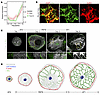 Figure 2
Dynamic expression and localization of TAU precede thick MT bundle formation during AT2 differentiation. (A) Pseudotime analysis visualizing gene expression dynamics of Mapt and Tuba1b during AT2-to-AT1 differentiation. (B) Immunostaining for AGER (red) and TAU (green) in the alveolar region of a thick tissue section showing TAU localization in AT1s. Scale bar: 20 μm. (C) Staining for TUBA1B (gray) and TAU (green) at indicated times of culture. Scale bars: 20 μm. Yellow box indicates region of single-channel images. (D) Schematic showing the expression and organization of TAU, MTs, and F-actin during AT2-to-AT1 differentiation.
Loss or gain of TAU disrupts thick MT bundle formation and AT1 thickness ex vivo. To assess the role of TAU during AT2 differentiation, we performed CRISPR-based Mapt knockout in purified AT2s in culture. First, we screened for efficient gRNAs selected from a previously described mouse Brie genome-wide gRNA library (46). Of the 4 gRNAs screened, 2 gave knockout efficiencies of 97% (gRNA1) and 67% (gRNA4) as assessed by ICE analysis (47) (Supplemental Figure 4, A and B). Then we generated adeno-associated viral 2/6 (AAV6) particles expressing gRNAs and GFP followed by transduction into AT2s purified from H11-Cas9 mice and harvested cells for analysis on day 9 postinfection (48). AAV6 co-expressing nontargeting control (NTC) gRNA and GFP served as a control. Co-immunostaining for TAU and GFP (infected cells) revealed efficient deletion of the gene in Mapt gRNA–infected cells but not in controls (Figure 3, A and B, and Supplemental Figure 4, C and D). As expected, Mapt gRNA–infected GFP+ cells lacked thick MT bundles compared with NTC gRNA–infected cells. Immunostaining for GFP and TUBA1B and Ac-TUB revealed disorganized MTs dispersed throughout the cell body in Mapt gRNA1–infected cells, further validating the above observations (Figure 3, C and D). Quantification revealed a significant decrease in the number of cells with thick MT bundles in Mapt gRNA1 cells compared with NTC gRNA. Furthermore, we found a significant increase in the apical-basal thickness of Mapt gRNA1– versus NTC gRNA–infected cells (Figure 3E). We observed similar phenotypes using Mapt gRNA4 (Supplemental Figure 4E).
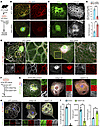 Figure 3
TAU regulates the formation of thick MT bundles. (A) Experimental design for AT2 isolation from H11-Cas9 mice followed by AT2 culture and AAV6-gRNA-GFP infection to knock out Mapt ex vivo. (B) Staining for GFP (green, infected cells) and TAU (red) in NTC and Mapt-KO cells. Scale bars: 20 μm. (C) Staining for GFP (green) and TUBA1B (gray) in control and Mapt-KO cells. Scale bars: 20 μm. (D) Staining for TUBA1B (gray) and Ac-TUB (red) in infected GFP+ (green) control and Mapt-deleted cells. Scale bars: 20 μm (low magnification); 5 μm (high magnification). Yellow box indicates region of single-channel images. (E) Quantification of cells exhibiting thick MT bundles and cell thickness in control and Mapt-deleted cells. **P = 0.0049, ***P = 0.0005, unpaired 2-tailed t test. n = 3 biological replicates. (F) Schematic of ex vivo–cultured AT2s infected with mouse Mapt or human MAPT and analyses at indicated time point. (G) Staining for TAU (red) and TUBA1B (gray) in control and TAU-overexpressed (-OE) cells (green). Scale bars: 20 μm. Yellow box indicates region of single-channel images. DAPI stains nuclei (blue). (H) Staining for TUBA1A (green), TUBA1B (gray), and Ac-TUB (red) in TAU-OE and control cells. Yellow box indicates region of single-channel images. Scale bars: 20 μm. (I) Quantification of cell area, cell thickness, and the percentage of infected cells exhibiting thick MT bundles. *P = 0.05, Mann-Whitney U statistical test. **P < 0.005, unpaired 2-tailed t test. n = 3 biological replicates. Data in E and I are presented as mean ± SEM.
Previous studies using in vitro reconstitution assays revealed that a fine balance in the levels of TAU is essential for its proper assembly, localization, and MT organization (49, 50). To assess whether an increase in TAU levels affects MT bundle formation during AT2-to-AT1 differentiation, we ectopically expressed TAU in AT2s. Full-length Mapt coding sequence from mouse fused with FLAG-tag was used to generate AAV6-mouse Mapt-Flag vectors. Similarly, human full-length MAPT was cloned into a plasmid expressing GFP and was used to generate AAV6-human MAPT-GFP virus. AAV6-GFP served as a control (Figure 3F). Co-immunostaining for GFP/FLAG, TAU, TUBA1B, Ac-TUB, and TUBA1A revealed disorganized MTs in both mouse and human TAU gain-of-function conditions compared with controls (Figure 3, G and H, and Supplemental Figure 5A). Quantification further revealed a significant loss of thick MT bundles in MAPT gain-of-function cells compared with controls. Additionally, Mapt gain-of-function cells showed a significant decrease in cell area and increase in cell thickness, a phenotype similar to that seen in Mapt loss of function (Figure 3, A–I). In certain brain tauopathies, a mutation in TAU at amino acid position 301 with proline-to-lysine substitution is known to have gain-of-function activity and to disrupt MT organization (51–53). Therefore, we ectopically expressed a pathological form of TAU (TAUP301L) co-expressing GFP in mouse AT2s during their differentiation. Immunostaining for TUBA1B, TAU, GFP, TUBA1A, and Ac-TUB revealed disorganization of tubulins and lack of thick MT bundles in GFP+ cells (Supplemental Figure 5B). Further, to assess whether MT bundles are essential for maintaining AT1 cell thickness, we deleted or ectopically expressed Mapt once MT bundles were established in cultured AT1s. To do so, we first generated AT1s followed by delivery of Mapt gRNA or mMapt-OE on day 9, at which point the AT1s established MT bundles. Immunostaining for Ac-TUB and quantification of MT bundles on day 6 after gRNA delivery revealed that Mapt gRNA– and Mapt-OE–transduced cells lacked MT bundles (Supplemental Figure 5, C and D). Strikingly, we found a significant increase in cell thickness in Mapt gRNA and Mapt-OE cells compared with controls (Supplemental Figure 5E). Collectively, these data suggest that both loss and gain of TAU function alter MT bundle formation and AT1 cellular organization.
TAU is required for proper organization of cells during AT2-to-AT1 differentiation in vivo. Next, we sought to study the role of TAU in vivo utilizing a previously described constitutive Mapt deletion (Mapt-KO) mouse model (54) and assessing AT2-to-AT1 differentiation after bleomycin-induced lung injury. To assess the morphology of cells derived from AT2s, we specifically labeled AT2s with GFP using AAV5-GFP virus in control and Mapt-KO mice prior to bleomycin administration (55). This approach also allowed us to identify regions undergoing repair in response to bleomycin-induced injury (Supplemental Figure 6A). Co-immunostaining for GFP and AGER on thick tissue sections revealed large, flat, and thin AGER+ AT1s derived from GFP+ AT2s in control lungs. As expected, the confocal single stack showed that GFP-labeled AT1s in control lungs exhibited a thin cell morphology. In contrast, Mapt-KO lungs showed thick and balloon-shaped GFP+ cells that extruded into the alveolar lumina and lacked AT1 markers (Supplemental Figure 6B). Further assessment revealed a significant decrease in the number of thin cells (0–6 μm) and an increase in thick cells (13–40 μm) in Mapt-KO compared with controls (Supplemental Figure 6C).
To exclude the possibility of non–cell-autonomous effects in the above experiments, we induced CRISPR-based loss of Mapt function specifically in AT2s. For this, we generated AAV5 virus carrying Mapt or NTC gRNAs and a green fluorescent protein (GFP marks infected cells) and administered them intranasally into H11-Cas9 mouse lungs prior to bleomycin-induced injury (Figure 4A). As expected, co-immunostaining for GFP and AGER followed by imaging of thick tissue sections revealed large, thin, and flat cells co-expressing these markers in NTC gRNA lungs. However, Mapt gRNA–transduced cells showed a thick and balloon-shaped morphology and protruded into alveolar lumina (Figure 4B). Quantification further revealed a significant decrease in the number of thin cells (0–6 μm) and an increase in thick cells (13–40 μm) in Mapt gRNA–administered lungs compared with controls (Figure 4C). Collectively, these data suggest that loss of Mapt leads to defects in cell organization in vivo.
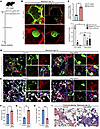 Figure 4
Loss of Mapt leads to abnormal cell organization and increased fibrosis in response to bleomycin injury. (A) Schematic of AT2-specific gRNA delivery to H11-Cas9 mice followed by bleomycin injury and sample collection. (B) Staining for GFP (green, gRNA-delivered AT2s) and AGER (red) in control and Mapt-deleted cells after bleomycin injury. Scale bars: 20 μm. (C) Quantification of cell thickness and the distribution of GFP+ cells with different thickness in control and AT2-specific Mapt-KO lungs after bleomycin injury. *P < 0.05, unpaired 2-tailed t test. (D) Staining for GFP (green), ACTA2 (red), and SFN (gray) in controls and Mapt-deleted AT2s after bleomycin injury. Scale bars: 50 μm. DAPI stains nuclei (blue). (E) Staining for GFP (green), TAGLN (red), and LGALS3 (gray) in controls and Mapt-deleted AT2s after bleomycin injury. Scale bars: 50 μm. (F) Quantification of ACTA2+ area in bleomycin-injured lungs. *P < 0.05, unpaired 2-tailed t test. (G) Quantification of SFN+ cells among GFP+ cells in bleomycin-injured lungs. **P < 0.005, unpaired 2-tailed t test. (H) Quantification of LGALS3+ cells among GFP+ cells in bleomycin-injured lungs. ***P < 0.001, unpaired 2-tailed t test. (I) Trichrome staining on lungs collected from bleomycin-injured controls and Mapt-deleted mice. Scale bars: 100 μm. Data in C and F–H are presented as mean ± SEM. n = 3 biological replicates.
Previous studies revealed that defects in AT2-to-AT1 differentiation exacerbate alveolar fibrosis after bleomycin-induced injury. Therefore, we sought to assess the consequences of loss of TAU on alveolar repair and fibrosis (Figure 4A). Co-immunostaining for GFP with ACTA2 and TAGLN revealed an increase in myofibroblasts in Mapt gRNA–administered lungs compared with NTC lungs (Figure 4, D and E). Moreover, quantification revealed a significant increase in ACTA2-expressing regions in areas that have GFP expression, suggesting that defective repair leads to an increase in fibrosis in these lungs compared with controls (Figure 4F). Additionally, immunostaining and quantification for SFN (early PATS) and LGALS3 (late PATS) on sections collected from bleomycin-injured control and Mapt gRNA–administered lungs revealed a significant increase in SFN+ and decrease in LGALS3+ PATS in Mapt-depleted cells (Figure 4, G and H). These data suggest an impairment in alveolar epithelial differentiation in Mapt-deleted cells. Furthermore, trichome staining revealed an increase in collagen deposition in bleomycin-injured Mapt-deleted lungs compared with controls (Figure 4I). Analysis of bleomycin-injured Mapt-KO mice confirmed these findings (Supplemental Figure 6, D–H). Together, these data demonstrate that TAU regulates MT dynamics during AT2 differentiation that is required to ensure AT1 regeneration after injury.
Loss of TP53 disrupts TAU expression and MT and AT1 organization during AT2-to-AT1 differentiation. In neurons from Alzheimer’s disease and in certain carcinomas, TP53 and TAU directly interact to control cellular processes, such as DNA damage repair and cellular stress pathways (56). Previous studies have also implicated a role for TP53 in AT2-to-AT1 differentiation after injury (17, 29, 30). To assess the role of TP53 in regulation of TAU and MT assembly, we purified AT2s from Sftpc-creER R26-tdT Trp53fl/fl (hereafter referred to as Trp53-KO) mice that had received tamoxifen. AT2s from C57BL/6 mice served as controls (Figure 5A). Using our 2D cultures, we assessed the ability of AT2s to differentiate into AT1s, as well as MT organization and TAU expression. Immunostaining and Western blot analysis revealed that TAU expression was decreased in Trp53-KO cells compared with controls (Figure 5, B and C). Moreover, the localization pattern of TUBA1B and TUBA1A correlated with disorganization of MTs, including the loss of thick MT bundles in Trp53-KO cells (Figure 5B). Additionally, immunostaining revealed a decrease in expression of AGER in mutant cells compared with controls (Figure 5B). Of note, mutant cells exhibited more than 2 nuclei, a finding consistent with previous reports that suggested a role for TP53 in regulating γ-tubulin and blocking cytokinesis (57, 58). Consistent with MT disorganization, mutant cells showed an increase in cell thickness and a slight decrease in cell area compared with controls (Figure 5B). To assess MT dynamics, we transduced a lentivirus carrying EB1-EGFP fusion protein into AT2s lacking TP53 (Figure 5D). Time-lapse imaging and comet tracking analyses and velocity, directionality, and angle fluctuation quantification revealed that cells at day 7 showed premature bidirectional movement of MTs from center to cortex, which was maintained at day 14, suggesting that they undergo misdirected growth in mutant cells (Figure 1, K and L; Figure 5, E and F; and Supplemental Videos 4 and 5).
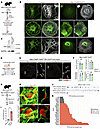 Figure 5
Loss of TP53 disrupts MT organization and AT1 differentiation. (A) Experimental workflow for tamoxifen administration to delete TP53 in AT2s followed by AT2 isolation for ex vivo analysis in Sftpc-CreER R26R-tdTomato Trp53fl/fl or control mice. (B) Images showing TAU and tubulin localization in control and TP53-deleted cells. Scale bars: 20 μm. DAPI stains nuclei (blue). (C) Western blot of TAU and GAPDH (loading control) in control and TP53-deleted cells. (D) Experimental design for EB1-EGFP lentivirus administration in TP53-deleted AT2s followed by live imaging on days 7 and 14. (E) Kymograph and time-lapse images for EB1-EGFP in Trp53-deleted cells on days 7 and 14 of culture. Scale bars: 20 μm. White box indicates region of enlarged image. White arrows indicate direction of growing plus ends of MTs. (F) Quantification of EB1-EGFP comet velocity (μm/min), directionality concentration, angle fluctuation (degree), and track straightness in TP53-deleted cells cultured for 7 and 14 days. Unpaired 2-tailed t test. (G) Experimental workflow for tamoxifen administration to delete TP53 in AT2s followed by bleomycin injury in Sftpc-tdT-Trp53-KO or control mice (Sftpc-tdT). (H) Staining for AGER (green) and tdTomato (red) in bleomycin-injured controls and Trp53-KO mice. Scale bars: 20 μm. (I) Quantification of cell thickness of lineage-labeled cells in controls and Trp53-KO mice following bleomycin injury. *P = 0.017, unpaired 2-tailed t test. (J) Integrative Genomics Viewer (IGV) tracks show enrichment for TP53 binding in genomic loci corresponding to Mapt promoter. (K) Graph depicting enrichment of TP53 binding on MT-associated genes (red) and unrelated negative controls (gray). Data in F and I are presented as mean ± SEM. n = 3 biological replicates.
To assess the consequences of TP53 deficiency on alveolar epithelial organization, we utilized Sftpc-tdT-Trp53-KO mice. Upon tamoxifen administration, there is concomitant expression of tdTomato and loss of Trp53 specifically in AT2s. Sftpc-creER R26-tdT (hereafter referred to as Sftpc-tdT) mice served as a control (Figure 5G). To assess the consequences of TP53 loss on alveolar epithelial cell organization, we administered bleomycin to cause lung injury and collected tissues on day 13 postinjury (Figure 5G). Co-immunostaining for AGER and tdTomato on thick tissue slices followed by confocal 3D reconstruction of alveoli revealed large and thin cells co-expressing tdTomato and AGER in control lungs. In contrast, we observed large, balloon-shaped, tdTomato-expressing cells that lacked AGER in TP53-deficient cells, a phenotype similar to that of TAU-mutant cells (Figure 4B and Figure 5H). Quantification confirmed a significant increase in cell thickness in TP53-deficient cells compared with controls (Figure 5I). To assess whether TP53 directly binds on the Mapt genomic locus, we reanalyzed previously described ChIP-seq data from purified PATS (29). Integrative Genomics Viewer (IGV) tracks revealed enrichment of TP53 on Mapt promoter (Figure 5J). Additionally, we found TP53 binding on multiple tubulin and MT-associated gene loci (Figure 5K and Supplemental Figure 7A). To further test whether the expression of tubulin- and MT-associated genes is altered in TP53-deficient cells, we utilized previously published scRNA-seq data (17). Pseudobulk RNA expression analysis of these data revealed that the expression of Map1b, Map2, Map4, Map6, Map7, Tuba1b, Tuba1c, Tubb4b, Tubb5, and Tubb6 was decreased in Trp53-KO cells (Supplemental Figure 7B). Additionally, to assess whether TP53 similarly controls tubulin- and MAP-encoding genes in human cells, we reanalyzed publicly available scRNA-seq data from lung adenocarcinoma (59). Although these datasets lack TP53 mutation annotation, the majority of tumor cells exhibit decreased TP53 transcript levels (consistent with loss-of-function or nonsense mutations). We found that MAP2, MAP4, MAP7, TUBA1A, TUBB4B, TUBB6, and TUBG2 were downregulated in TP53-low cells (Supplemental Figure 7C). Together, these data point to a mechanism whereby TP53 directly binds and controls tubulin- and MAP-encoding genes during AT2-to-AT1 differentiation.
TAU expression, localization, and requirement during human AT2 differentiation. We then sought to assess TAU expression, localization, and requirement during human AT2 differentiation. First, we purified human AT2s as previously described and cultured them in serum-free, feeder-free (SFFF) conditions for expansion or in alveolar differentiation medium (ADM) for differentiation into AT1s on plates coated with either collagen or fibronectin as described above (Figure 1A; Supplemental Figure 1, A–C; and Figure 6A). As expected, these culture conditions supported either selective expansion of AT2s or their differentiation into large, thin, and flat AT1s ex vivo as assessed by co-immunostaining for SFTPC and HTI-56, respectively (Figure 6B). Furthermore, immunostaining for TUBA1B revealed the presence of thick MT bundles in AT1s. We then assessed the expression and localization dynamics of TAU at early and late stages in culture. Co-immunostaining for TAU, TUBA1B, TUBA1A, and Ac-TUB revealed a gradual increase in TAU expression as the AT2s differentiate to AT1s. Further, TAU localization changed from random puncta to an organized fiber-like pattern that aligned along the thick MT bundles similar to results seen in mice (Figure 6C).
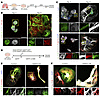 Figure 6
MAPT regulates human AT2 differentiation into AT1s. (A) Schematic of human AT2 purification, culture, and differentiation followed by analyses. (B) Staining for TUBA1B (green), SFTPC (gray), and HTI-56 (red) in AT2s and ex vivo–differentiated AT1s. Scale bars: 20 μm. (C) Staining for TAU (green) and TUBA1B (gray) (upper panel) and Ac-TUB (green), TUBA1A (red), and TUBA1B (gray) (lower panel) in AT2s and AT1s. Scale bars: 20 μm. (D) Workflow for MAPT deletion or overexpression in AT2s followed by differentiation to AT1s and analyses. (E) Staining for Ac-TUB (green), mCherry (red), and TAU (gray) on MAPT-deleted and control cells. Scale bars: 20 μm. DAPI stains nuclei (blue). (F) Staining for GFP (green), Ac-TUB (red), and TAU (gray) on MAPT-OE and control cells. Scale bars: 20 μm. Yellow box in merged image indicates region of single-channel images.
Second, to test the requirement of TAU for proper differentiation of AT2s into AT1s, we screened and selected a gRNA that can efficiently target human MAPT gene (Supplemental Figure 8A). As illustrated in Figure 6D, we generated lentiviral particles expressing Cas9, MAPT gRNA, and a fluorescent reporter, mCherry, and transduced them into human AT2s. NTC gRNA served as a control. Transduced cells were then induced to differentiate into AT1s and collected on day 9 postinfection for analysis. Co-immunostaining for mCherry, TAU, and Ac-TUB revealed loss of TAU and absence of thick MT bundles in MAPT gRNA–transduced cells compared with NTC gRNA (Figure 6E). Further, we found disorganization of morphology from thin, large, and flat in the case of NTC gRNA–transduced cells to thick and elongated in MAPT gRNA–transduced cells. To assess the consequences of TAU gain of function, we transduced AAV6-expressing human MAPT and GFP into AT2s. Of note, ectopic expression of TAU in AT2s was not sufficient to induce AT2-to-AT1 differentiation (Supplemental Figure 8B). However, induction of differentiation by administering ADM resulted in the disorganization of cell morphology specifically in ectopic TAU–expressed cells compared with controls as revealed by co-immunostaining for GFP, TAU, and Ac-TUB (Figure 6F). Additionally, ectopic TAU-expressing cells showed abnormal thick MT bundles. Together, both gain and loss of TAU disrupted MT organization and gave rise to thick cells during human AT2-to-AT1 differentiation, similar to what had been observed with mouse cells.
Genetically regulated MAPT expression within the 17q21.31 haplotype influences pulmonary disease risk. Common genetic variation at the MAPT-containing 17q21.31 locus has been strongly associated with idiopathic pulmonary fibrosis (IPF), chronic obstructive pulmonary disease (COPD), and lung function traits (60–64). More specifically, this locus includes a 900 kb inversion, which contains genetic variation in strong linkage disequilibrium, resulting in the H1 and H2 inversion-tagging haplotypes (65). Consequently, these pulmonary disease associations reflect haplotype-level association, rather than a single SNP. Within the disease-associated haplotype, we found no MAPT-nonsynonymous coding variants. Rather, most haplotype variants localized to the MAPT locus were noncoding, consistent with the idea that if disease risk is conferred by this locus, it is through MAPT expression regulation. To explore this, we examined MAPT expression quantitative trait locus (eQTL) data from nasal airway epithelial brushings generated on a childhood asthma cohort (GALA = 681). MAPT was identified as a significant nasal eGene, with genetic variation tagging the inversion haplotype associated with MAPT expression (Supplemental Figure 8C). Examining MAPT expression by one of the eQTL variants, rs1981997, we found that the minor allele (A) was associated with lower MAPT expression (Supplemental Figure 8D). Notably, the A allele of rs1981997 has been associated with decreased IPF risk (60). In contrast, based on data reported by the Genotype-Tissue Expression (GTEx) Consortium in lung tissue, the A allele for rs1981997 is associated with increased MAPT expression. GTEx also reports rs1981997 as a MAPT eQTL across 18 additional tissues, with the direction of effect sometimes matching that of lung tissue and other times matching the nasal pattern. Together, these results support a model whereby genetically regulated MAPT expression within the 17q21.31 haplotype influences pulmonary disease risk, with the direction of effect depending on the tissue context.


Copyright © 2026 American Society for Clinical Investigation
ISSN: 0021-9738 (print), 1558-8238 (online)