
Advertisement
Research ArticleImmunologyInflammation
Open Access |  10.1172/JCI193289
Diabetes exacerbates destructive inflammation by activating the CD137L-CD137 axis in dendritic and IL-17+ T cells
Xin Huang,1,2,3 Min Liu,3 Michael V. Gonzalez,4 Rahul Debnath,3 Hamideh Afzali,3 Yongwon Choi,5 Su Ah Kim,3 Kang I. Ko,3 and Dana T. Graves3
1Hospital of Stomatology, Guanghua School of Stomatology and
2Guangdong Provincial Key Laboratory of Stomatology, Sun Yat-sen University, Guangzhou, Guangdong, China.
3Department of Periodontics, School of Dental Medicine, University of Pennsylvania, Philadelphia, Pennsylvania, USA.
4Center for Cytokine Storm Treatment & Laboratory and
5Department of Pathology and Laboratory Medicine, Perelman School of Medicine, University of Pennsylvania, Philadelphia, Pennsylvania, USA.
Address correspondence to: Dana T. Graves, 240 S. 40th Street, Department of Periodontics, University of Pennsylvania School of Dental Medicine, Philadelphia, Pennsylvania 19104, USA. Phone: 215.898.9068; Email: dtgraves@upenn.edu.
Authorship note: KIK and DTG are co-senior authors
Find articles by Huang, X. in: PubMed | Google Scholar
1Hospital of Stomatology, Guanghua School of Stomatology and
2Guangdong Provincial Key Laboratory of Stomatology, Sun Yat-sen University, Guangzhou, Guangdong, China.
3Department of Periodontics, School of Dental Medicine, University of Pennsylvania, Philadelphia, Pennsylvania, USA.
4Center for Cytokine Storm Treatment & Laboratory and
5Department of Pathology and Laboratory Medicine, Perelman School of Medicine, University of Pennsylvania, Philadelphia, Pennsylvania, USA.
Address correspondence to: Dana T. Graves, 240 S. 40th Street, Department of Periodontics, University of Pennsylvania School of Dental Medicine, Philadelphia, Pennsylvania 19104, USA. Phone: 215.898.9068; Email: dtgraves@upenn.edu.
Authorship note: KIK and DTG are co-senior authors
Find articles by Liu, M. in: PubMed | Google Scholar
1Hospital of Stomatology, Guanghua School of Stomatology and
2Guangdong Provincial Key Laboratory of Stomatology, Sun Yat-sen University, Guangzhou, Guangdong, China.
3Department of Periodontics, School of Dental Medicine, University of Pennsylvania, Philadelphia, Pennsylvania, USA.
4Center for Cytokine Storm Treatment & Laboratory and
5Department of Pathology and Laboratory Medicine, Perelman School of Medicine, University of Pennsylvania, Philadelphia, Pennsylvania, USA.
Address correspondence to: Dana T. Graves, 240 S. 40th Street, Department of Periodontics, University of Pennsylvania School of Dental Medicine, Philadelphia, Pennsylvania 19104, USA. Phone: 215.898.9068; Email: dtgraves@upenn.edu.
Authorship note: KIK and DTG are co-senior authors
Find articles by
Gonzalez, M.
in:
PubMed
|
Google Scholar
|

1Hospital of Stomatology, Guanghua School of Stomatology and
2Guangdong Provincial Key Laboratory of Stomatology, Sun Yat-sen University, Guangzhou, Guangdong, China.
3Department of Periodontics, School of Dental Medicine, University of Pennsylvania, Philadelphia, Pennsylvania, USA.
4Center for Cytokine Storm Treatment & Laboratory and
5Department of Pathology and Laboratory Medicine, Perelman School of Medicine, University of Pennsylvania, Philadelphia, Pennsylvania, USA.
Address correspondence to: Dana T. Graves, 240 S. 40th Street, Department of Periodontics, University of Pennsylvania School of Dental Medicine, Philadelphia, Pennsylvania 19104, USA. Phone: 215.898.9068; Email: dtgraves@upenn.edu.
Authorship note: KIK and DTG are co-senior authors
Find articles by Debnath, R. in: PubMed | Google Scholar
1Hospital of Stomatology, Guanghua School of Stomatology and
2Guangdong Provincial Key Laboratory of Stomatology, Sun Yat-sen University, Guangzhou, Guangdong, China.
3Department of Periodontics, School of Dental Medicine, University of Pennsylvania, Philadelphia, Pennsylvania, USA.
4Center for Cytokine Storm Treatment & Laboratory and
5Department of Pathology and Laboratory Medicine, Perelman School of Medicine, University of Pennsylvania, Philadelphia, Pennsylvania, USA.
Address correspondence to: Dana T. Graves, 240 S. 40th Street, Department of Periodontics, University of Pennsylvania School of Dental Medicine, Philadelphia, Pennsylvania 19104, USA. Phone: 215.898.9068; Email: dtgraves@upenn.edu.
Authorship note: KIK and DTG are co-senior authors
Find articles by Afzali, H. in: PubMed | Google Scholar
1Hospital of Stomatology, Guanghua School of Stomatology and
2Guangdong Provincial Key Laboratory of Stomatology, Sun Yat-sen University, Guangzhou, Guangdong, China.
3Department of Periodontics, School of Dental Medicine, University of Pennsylvania, Philadelphia, Pennsylvania, USA.
4Center for Cytokine Storm Treatment & Laboratory and
5Department of Pathology and Laboratory Medicine, Perelman School of Medicine, University of Pennsylvania, Philadelphia, Pennsylvania, USA.
Address correspondence to: Dana T. Graves, 240 S. 40th Street, Department of Periodontics, University of Pennsylvania School of Dental Medicine, Philadelphia, Pennsylvania 19104, USA. Phone: 215.898.9068; Email: dtgraves@upenn.edu.
Authorship note: KIK and DTG are co-senior authors
Find articles by Choi, Y. in: PubMed | Google Scholar
1Hospital of Stomatology, Guanghua School of Stomatology and
2Guangdong Provincial Key Laboratory of Stomatology, Sun Yat-sen University, Guangzhou, Guangdong, China.
3Department of Periodontics, School of Dental Medicine, University of Pennsylvania, Philadelphia, Pennsylvania, USA.
4Center for Cytokine Storm Treatment & Laboratory and
5Department of Pathology and Laboratory Medicine, Perelman School of Medicine, University of Pennsylvania, Philadelphia, Pennsylvania, USA.
Address correspondence to: Dana T. Graves, 240 S. 40th Street, Department of Periodontics, University of Pennsylvania School of Dental Medicine, Philadelphia, Pennsylvania 19104, USA. Phone: 215.898.9068; Email: dtgraves@upenn.edu.
Authorship note: KIK and DTG are co-senior authors
Find articles by Kim, S. in: PubMed | Google Scholar
1Hospital of Stomatology, Guanghua School of Stomatology and
2Guangdong Provincial Key Laboratory of Stomatology, Sun Yat-sen University, Guangzhou, Guangdong, China.
3Department of Periodontics, School of Dental Medicine, University of Pennsylvania, Philadelphia, Pennsylvania, USA.
4Center for Cytokine Storm Treatment & Laboratory and
5Department of Pathology and Laboratory Medicine, Perelman School of Medicine, University of Pennsylvania, Philadelphia, Pennsylvania, USA.
Address correspondence to: Dana T. Graves, 240 S. 40th Street, Department of Periodontics, University of Pennsylvania School of Dental Medicine, Philadelphia, Pennsylvania 19104, USA. Phone: 215.898.9068; Email: dtgraves@upenn.edu.
Authorship note: KIK and DTG are co-senior authors
Find articles by Ko, K. in: PubMed | Google Scholar
1Hospital of Stomatology, Guanghua School of Stomatology and
2Guangdong Provincial Key Laboratory of Stomatology, Sun Yat-sen University, Guangzhou, Guangdong, China.
3Department of Periodontics, School of Dental Medicine, University of Pennsylvania, Philadelphia, Pennsylvania, USA.
4Center for Cytokine Storm Treatment & Laboratory and
5Department of Pathology and Laboratory Medicine, Perelman School of Medicine, University of Pennsylvania, Philadelphia, Pennsylvania, USA.
Address correspondence to: Dana T. Graves, 240 S. 40th Street, Department of Periodontics, University of Pennsylvania School of Dental Medicine, Philadelphia, Pennsylvania 19104, USA. Phone: 215.898.9068; Email: dtgraves@upenn.edu.
Authorship note: KIK and DTG are co-senior authors
Find articles by
Graves, D.
in:
PubMed
|
Google Scholar
|
Published December 11, 2025 - More info
J Clin Invest. 2026;136(3):e193289. https://doi.org/10.1172/JCI193289.
© 2025 Huang et al. This work is licensed under the Creative Commons Attribution 4.0 International License. To view a copy of this license, visit http://creativecommons.org/licenses/by/4.0/.
Received: April 7, 2025; Accepted: November 25, 2025

-
Results
Dendritic cells play a key role in diabetes-enhanced periodontitis. Previous studies suggested that DCs play a role in periodontitis (29, 30). We carried out studies in a well-established mouse model in which periodontitis was induced by oral inoculation of the periodontal pathogens Porphyromonas gingivalis and Fusobacterium nucleatum (31, 32); diabetes was induced by multiple low-dose injections of streptozotocin (STZ). To investigate the role of DCs in diabetes-enhanced periodontitis, we examined normoglycemic (NG) WT mice (NG CD11c.Cre–/–.AKT1LL), diabetic WT mice (Diab WT) (Diab CD11c.Cre–/–.AKT1LL) and diabetic mice with lineage-specific deletion of Akt1 in DCs (Diab CD11c.Cre+/–.AKT1LL) (Figure 1A), with the experimental and control groups consisting of littermates. microCT results showed that diabetic mice had a 52% increase (P < 0.05) in the distance from the cementoenamel junction (CEJ) to the alveolar crest and a significant (P < 0.05) 23% reduction in the interdental alveolar bone area when compared with NG WT mice, both of which were restored with Akt1 deletion in DCs (P < 0.05) (Figure 1, B and C). Histomorphometric analysis demonstrated that compared with the NG WT group, Diab WT mice had significantly increased periodontal tissue damage with a 93% increase (P < 0.05) in connective tissue attachment loss as measured by the distance from the CEJ to the base of the epithelial attachment (Figure 1C and Supplemental Figure 1, A–C; supplemental material available online with this article; https://doi.org/10.1172/JCI193289DS1). These parameters were rescued by Akt1 deletion in DCs in the diabetic group (P < 0.05) (Figure 1C and Supplemental Figure 1, A–C), demonstrating the key role of DCs. The infiltration of leukocytes, representing the overall level of inflammation, followed a similar pattern. The CD45+ leukocyte population increased significantly with diabetes and was restored to normal levels in diabetic mice with AKT1 deletion in DCs (Figure 2A). These in vivo results establish that DCs have a key role in the formation of inflammatory cell infiltrate and increased periodontal tissue destruction caused by diabetic conditions.
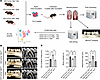 Figure 1
DC-specific AKT1 deletion reverses diabetes-induced periodontal bone loss. (A) Schematic diagram of the experimental design and single cell RNA-Seq (scRNA-Seq) workflow. Fn, Fusobacterium nucleatum; Pg, Porphyromonas gingivalis. (B) Representative microCT images of the 3D reconstruction of the maxillary molar teeth in NG CD11c.Cre–/–.Akt1LL, diabetic CD11c.Cre–/–.Akt1LL, and diabetic CD11c.Cre+/–.Akt1LL groups. Yellow lines mark the CEJ and alveolar bone crest (ABC); red lines represent the distance from the CEJ to ABC. (C) microCT analysis of periodontitis by measuring the distance between the CEJ and alveolar bone crest (left panel). The amount of bone was also quantified as the percentage of bone in the interdental space between the first and second maxillary molar teeth divided by the total area of this space (middle panel). Quantitation of attachment loss by measuring the distance from the CEJ to the base of the epithelial attachment through histomorphometric analysis (right panel). n = 7–9 animals/group. Statistical analysis was performed using a 1-way ANOVA followed by Tukey’s post hoc test. *P < 0.05. Vol, volume.
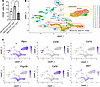 Figure 2
Single-cell profiling of gingival leukocytes. Periodontitis was induced and cells were isolated from gingival tissue as described in Figure 1A, and flow cytometry or FACS sorting to enrich leukocytes was carried out as described in Figure 1A. (A) The percent of CD45+ cells from each group was determined by flow cytometry. Data are expressed as the mean ± SEM of 4 independent experiments of cells obtained from gingiva. (B) UMAP of scRNA-Seq data from mouse gingiva consisting of 34 clusters. Three primary leukocytes subpopulations are highlighted: granulocytes (yellow-outlined area), mononuclear phagocytes (red-outlined area), and T and B lymphocytes (green- and blue-outlined areas, respectively). (C) Feature plots showing the expression of key markers in leukocyte subtypes: Ptprc (leukocytes), Cd3e (T lymphocytes), Cd19 (B lymphocytes), Fcgr2b (mononuclear phagocytes), Csf3r (neutrophils), and the distribution of Akt1 transcript across clusters in UMAP visualizations. Statistical analysis was performed using a 1-way ANOVA followed by Tukey’s post hoc test. *P < 0.05.
scRNA-Seq analysis of the immune dysregulation caused by hyperglycemia. We carried out scRNA-Seq to examine how diabetes alters immune cell behavior in periodontitis and investigated the role of DCs in this process. Cells were obtained from mouse gingiva two weeks after completion of P. gingivalis and F. nucleatum oral inoculation to induce periodontitis (33). FACS cell sorting with Abs specific for CD45 and CD11c was carried out to obtain a leukocyte population at an 8:1:1 ratio of CD45+CD11c– to CD45+CD11chigh to CD45+CD11clow to obtain leukocytes and enrich the dendritic CD11chigh and CD11clow populations. R/Seurat thresholds were set at 200 unique molecular identifier(s) (UMIs) to exclude cells with low UMI counts, at 2,500 UMI to filter out potential doublets, and at 10% mitochondrial gene transcripts to remove likely apoptotic cells. After filtering, the Seurat suite of tools was used to normalize, scale, and cluster 21,450 cells into 34 clusters, as displayed in the uniform manifold approximation and projection (UMAP) (Figure 2B) (34). Mononuclear phagocyte lineage cells were identified in clusters 2, 5, 6, 8, 9, 12, 17, 20, 25, 26, 27, 31, and 33 and were shown to express the canonical marker genes Ptprc (CD45) and Fcgr2b, consistent with monocytes, macrophages, and DCs (Figure 2C). T cells were found in clusters 10, 16, 23, and 24, marked by Ptprc and Cd3e transcripts (Figure 2C). B lymphocytes were located in cluster 15, identified by Ptprc and Cd19 (Figure 2C). Granulocytes were present in clusters 0, 1, 3, 7, 11, and 30, marked by Ptprc and Csf3r transcripts (Figure 2C). Even though FACS sorting was carried out, some relatively small clusters of cells were obtained that did not express Ptprc, including clusters 13 and 19 (fibroblasts); clusters 18, 22, and 28 (epithelial cells); and 14, 21, and 29 (unidentified), which were excluded from further analysis (Figure 2C). The assignments of clusters to cell types and the proportion that each represented in the total cell population are presented in Table 1.
We also investigated whether lineage-specific AKT1 deletion in CD11c+ cells affects the systemic population of DCs, T cells, and B cells. Splenocytes were isolated from experimental mice (CD11c.Cre+/–.AKT1LL) and the control littermates (CD11c.Cre–/–.AKT1LL) and immunostained for DCs, T cells, and B cells by flow cytometry. The data revealed no significant differences in the systemic levels of DC, T cell, and B cell populations between experimental and control littermates (data not shown).
To analyze the cell populations in more detail, we divided the gingiva mucosal cells in Figure 2B into 3 major populations and then rescaled and reclustered them within each population using R/Seurat. The mononuclear phagocytes were reclustered into 24 distinct subpopulations (Figure 3A). Ten subclusters of DCs (6, 7, 9, 10, 13, 14, 15, 18, 19, and 20) were identified; they were marked by the expression of canonical marker genes Itgax and CD209a (Figure 3B). Among these, subclusters 9, 14, and 19 were plasmacytoid DCs. Monocyte/macrophage subclusters, including subclusters 0, 1, 2, 3, 4, 5, 8, 11, 12, 16, 21, and 22, were identified by the expression of marker genes Cd68, Msr1, and Adgre1 (Figure 3B). The percentages of total DCs and total macrophages were similar among the experimental and control groups examined: NG WT, Diab WT, and Diab CD11c.Cre+/–.AKT1L/L with Akt1 deletion in DCs (Table 2).
 Figure 3
Diabetes-alters Ccl4, Ccl3, and Cd137l transcripts in gingival DCs. Periodontitis was induced and cells were isolated from gingival tissue as described in Figure 1A. After FACS sorting to enrich leukocytes, scRNA-Seq was performed. (A) UMAP visualization of mononuclear phagocyte subclusters of cells from NG CD11c.Cre–/–.Akt1LL, diabetic CD11c.Cre–/–.Akt1LL, and diabetic CD11c.Cre+/–.Akt1LL mice after initial clustering described in Figure 2. Blue lines encircle DC subclusters. (B) Feature plots displaying the expression of markers in mononuclear phagocyte subtypes: Cd209a and Itgax (DC); Cd68, Msr1, and Adgre1 (macrophages); and Cd137l transcripts. (C) Violin plots showing Ccl4, Ccl3, and Cd137l transcript levels in individual DC subclusters.
To better understand the impact of diabetes on these cells, we focused on the differentially expressed genes that were upregulated by diabetes and whose upregulation was reversed by lineage specific Akt1 deletion in DCs. The thresholds we used were adjusted to P values <0.1 and log2 fold change (log2FC) increases greater than 0.25, as shown in Table 3. Among these genes, Cd137l (Tnfsf9), Ccl3, and Ccl4 attracted our attention because they met these thresholds and also are known to play a key role in inflammatory responses. The Cd137l+ cells were strongly associated with the DC marker Itgax, as shown in the mononuclear phagocyte feature plots (Figure 3B); however, the cellular linkage of Ccl4+ cells was not as specific. Table 4 shows the FindAllMarkers analysis (in Seurat), which demonstrated that the cells with the highest level of Cd137l expression, as reflected by log2FC expression and percentage of cells expressing Cd137l (pct 1) were DCs. The only other cell cluster that expressed Cd137l was a macrophage cluster (subcluster 2). Violin plots identified upregulation of Cd137l in DC clusters 6, 7, 13, 15, 18, and 19 from the Diab WT group compared with the NG WT group (Figure 3C). Interestingly, DC clusters 6 and 7 had a significant increase in Cd137l, which was reversed by lineage-specific deletion of AKT1 in diabetic mice but not in macrophage cluster 2 (Supplemental Table 3). Ccl4 in subclusters 6, 13, 15, and 19, and Ccl3 in subclusters 6 and 13 were upregulated by diabetes and the upregulation was reduced by lineage-specific deletion of Akt1 in DCs of diabetic mice, as shown in Figure 3C.
Validation experiments were performed using flow cytometry to identify changes in CD45+CD11c+CD137L+ DCs. Diabetes increased CD45+CD11c+CD137L+ DCs by 62% compared with NG mice, and this increase was largely rescued by Akt1 deletion in DCs (P < 0.05) (Figure 4, A and B), with the gating justified by fluorescence minus one (FMO) control (Supplemental Figure 2, C and D). Flow cytometry was also used to examine CD137L expression by fluorescence intensity, which increased by 60% in the Diab WT mice compared with the matched NG WT mice (P < 0.05) (Figure 4B). The increase was largely rescued in diabetic mice with AT1 deletion in DC (P < 0.05) (Figure 4B). Thus, diabetes significantly increased the number of DCs expressing CD137L and the intensity of expression per cell, which were Akt1 dependent.
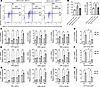 Figure 4
Modulation of Ccl4, Ccl3, and Cd137l levels in DCs. (A) Representative flow cytometry plots of CD11c and CD137L expression in cells isolated from gingival tissue as described in Figure 1A. Cells were pregated for live CD45+ leukocytes. (B) Quantitative analysis of CD137L+CD11c+ cells normalized per total CD11c+ cells (left) and mean fluorescent intensity of CD137L in CD11c+ cells (right). Data are expressed as the mean ± SEM of 3 independent experiments. (C) RNA was extracted from bone marrow–derived WT DCs cultured in NG or HG medium without or with LPS, AGE, or TNF stimulation and examined by RT-qPCR. (D) Quantitation of Cd137l mRNA in DCs isolated from CD11c.Cre–/–.Akt1L/L or CD11c.Cre+/–.Akt1L/L mice incubated in NG or HG medium. (E) Cells from (C) were examined for Ccl4 mRNA in DCs. (F) Cells from(D) were examined for Ccl4 mRNA in DCs. (G) Cells from (C) were examined for Ccl3 mRNA in DCs. (H) Cells from (D) were examined for Ccl3 mRNA in DCs. Statistical analysis was performed using a 1-way ANOVA followed by Tukey’s post hoc test. (C, E, and G) Data are expressed as the mean ± SEM of 3 independent experiments (n = 3). Comparisons between NG and HG groups were conducted using Student’s t test. (D, F, and H) Each value represents the mean of 3 biological replicates (n = 3), analyzed using 1-way ANOVA and Tukey’s post hoc test. *P < 0.05.
To determine if the impact of diabetes on DCs was dependent on a high-glucose (HG) environment, we examined Cd137l expression in bone marrow–derived DCs (BMDCs) incubated in normal or HG medium in vitro (Figure 4, C–H). To simulate inflammatory conditions present in diabetic periodontitis, DCs were also challenged with bacterial LPS, an advanced glycation end product (AGE) carboxymethyllysine-modified BSA, or TNF. Under NG conditions, Cd137l expression stimulated by LPS in DCs was less than that stimulated by LPS in HG (Figure 4C). Similarly, HG increased the Cd137l expression in DCs in response to AGE or TNF, up to a 2.0-fold increase for both (P < 0.05) (Figure 4C), indicating that the effect of diabetes on increased Cd137l levels can be tied directly to HG levels.
To extend results obtained in vivo, we determined if HG-upregulated Cd137l expression was Akt1 dependent, using DCs from NG WT CD11c.Cre–/–.Akt1LL and NG experimental CD11c.Cre+/–.Akt1LL mice. Although the HG condition resulted in significantly increased Cd137l expression in DCs isolated from control WT CD11c.Cre–/–.Akt1LL mice, this effect was dramatically reduced in DCs with Akt1 deletion from CD11c.Cre+/–.Akt1LL experimental mice, comparable to normal levels (P < 0.05) (Figure 4D). We also determined if HG altered chemokine expression. The HG condition enhanced the levels of Ccl4 level 2.0-fold in DCs compared with incubation with 1 μg/mL LPS in NG conditions (P < 0.05) (Figure 4E). We also observed a similar 2- to 3-fold increase in Ccl4 levels in DCs exposed to AGE or TNF in HG compared with NG medium (P < 0.05) (Figure 4E). The impact of HG on Ccl4 was prevented in DCs isolated from experimental CD11c.Cre+/–.Akt1L/L mice (P < 0.05, Figure 4F). Similar results were observed with Ccl3 (P < 0.05) (Figure 4, G and H). Thus, the response of DCs to mediators that stimulate inflammation was significantly increased by exposure of DCs to the HG condition.
Impact of hyperglycemia and DCs on γδ T cells. Subclustering of lymphocytes was performed by R/Seurat based on the initial clustering shown in Figure 2B for a more refined analysis based on Cd3 transcripts. The lymphocytes were classified into 18 distinct subpopulations (Figure 5A). They include 4 subclusters of Cd4 expressing T cells (subclusters 2, 3, 6, and 14), 1 cluster of T cells marked by Cd8a (subcluster 5), and 2 clusters of γδ T cells marked by Trdc (subclusters 1 and 8) (Figure 5B). Within the CD4+ T cell population, a Treg cluster marked by Foxp3 was identified in subcluster 3. Additionally, 4 subclusters of B cells were identified, marked by the expression of the canonical marker gene Cd19 (subclusters 0, 11, 15, and 16) (Figure 5B).
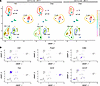 Figure 5
scRNA-Seq profile of gingival lymphocyte subclusters. Periodontitis was induced and cells were isolated from gingival tissue as described in Figure 1A. After FACS sorting to enrich leukocytes, scRNA-Seq was performed. (A) UMAP visualization of lymphocyte subclusters from NG CD11c.Cre–/–.Akt1LL, diabetic CD11c.Cre–/–.Akt1LL, and diabetic CD11c.Cre+/–.Akt1LL mice from initial clustering described in Figure 2. Yellow outline highlights B cell subclusters; green outline highlights CD4+ T cell subclusters; blue circle outlines CD8+ T cell subclusters; red circle outlines γδ T cell subclusters. (B) Feature plots displaying Cd4 (CD4+ T cells), Foxp3 (Tregs), Cd8a (CD8+ T cells), Trdc (γδ T cells), Cd19 (B cells), and Cd137 transcripts.
scRNA-Seq data indicated that γδ T cells increased by 35% in the Diab WT group compared with the NG WT group (Table 2). This increase was rescued in diabetic mice with AKT1 deletion in DCs, indicating that Akt1 in DCs has a pronounced effect on γδ T cells. In contrast, the effect of diabetes on CD4+ T cells was the opposite, being 42% higher in the NG WT mice compared with the diabetic WT mice, which was partially restored in diabetic mice with AKT1 deletion in DCs. (Table 2). CD137, the receptor for CD137L, was expressed by γδ T cells (lymphocyte cluster 1), Tregs (lymphocyte cluster 3), and NK T cells (lymphocyte clusters 4 and 12) (Figure 5B and Table 5). The other clusters had low levels of CD137 expression, as reflected by the percentage of positive cells and the low average log2FC values. Flow cytometry validated that γδ T cells were increased by 47% in the Diab WT group compared with the matched NG WT group, which was reversed in Akt1-deleted DCs from the diabetic group (P < 0.05) (Figure 6, A and B). The change in Tregs assessed by flow cytometry was also consistent with the scRNA-Seq data. Tregs were significantly reduced in the Diab WT group compared with the NG WT group (P < 0.05) and rescued by Akt1 deletion in DCs from the diabetic group (P < 0.05) (Figure 6, D and E, and Table 2). These results point to the impact of hyperglycemia on DCs as a driving force mediating the effect of diabetes on shifts in lymphocyte populations. Interestingly, diabetes also affected expression of CD137, the receptor for CD137L, in lymphocytes. Diabetes increased by approximately 3-fold the percentage of γδ T cells that expressed CD137; the percentage returned to normal levels in the diabetic group when Akt1 was deleted in DCs (Figure 6, A and C). Taken together, scRNA-Seq analysis and flow cytometry data indicate that diabetes increases the expression of CD137L in DCs and the number of γδ T cells expressing CD137, suggesting a mechanism whereby diabetes enhances expression of both components of the CD137L-CD137 axis, both of which are dependent on Akt1 in DCs. This is noteworthy because the CD137L-CD137 axis drives the proliferation of T cells, including γδ T cells. In contrast, the percentage of Tregs significantly decreased in the Diab WT group; this decrease was rescued by Akt1 deletion in DCs in vivo, and the percentage of Tregs expressing Ki67 in vivo (Figure 6, D and E) was also reduced by diabetes and restored by Akt1 ablation in DCs in diabetic mice (P < 0.05) (Figure 6F).
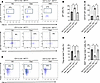 Figure 6
Diabetes increases γδ T cells and CD137+ γδ T cells that are DC dependent. Periodontitis was induced and flow cytometry was carried out on cells isolated from murine gingival tissue as described in Figure 1A. (A) Representative flow cytometry plots for γδTCR+ cells (top row) and γδTCR+CD137+ cells (bottom row). Cells were pregated for live CD45+CD3+ cells. (B and C) Quantitation of the percent γδ T cells per total T cells and the percent CD137+γδ T cells per total T cells. (D) Representative flow cytometry plots of Foxp3+ T cells per total T cells in mouse gingival cells after gating for live T lymphocytes (CD45+CD3+). (E and F) Quantitation of Foxp3+ T cells per total T cells and Ki67+ Tregs per total T cells. (B, C, E, and F) n = 3–4 biological replicates per group. *P < 0.05, 1-way ANOVA with Tukey’s post hoc test.
The results from scRNA-Seq and flow cytometry led us to hypothesize that the proliferation of γδ T cells may be enhanced by diabetes through the interaction between CD137L+ DCs and γδ T cells. To test this, we examined the expression of the proliferation marker Ki67 in γδ T cells in vivo by flow cytometry analysis. The percentage of Ki67+ γδ T cells was approximately 3-fold higher in the Diab WT group compared with the NG WT group (P < 0.05), an effect blocked by Akt1 deletion in DCs in diabetic mice (P < 0.05) (Figure 7, A and B). To link the increased numbers of γδ T cells to enhanced inflammation and periodontal bone loss, we examined IL-17, a proinflammatory cytokine expressed by the γδ T cells in periodontitis (35). IL-17a expression in lymphocytes clusters is shown in Table 6 using the FindAllMarkers function in R/Seraut to identify IL-17a-expressing cells. The only cells with positive average log2FC for IL-17a were γδ T cells and 54% to 86% of the γδ T cells in these clusters expressed IL-17a. In cluster 1, IL-17a was increased in the Diab WT group compared with the NG WT (Table 7). Immunofluorescence with an Ab specific to IL-17A was carried out to confirm that diabetes increased IL-17A expression in NG WT mice that was reversed in diabetic mice with lineage-specific deletion of Akt1 in DCs (Figure 7, C and D). Quantitatively, diabetes increased the IL-17A+ cells 3- to 4-fold, which was completely reversed by Akt1 deletion in DCs of diabetic mice. (P < 0.05) (Figure 7, E and F).
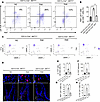 Figure 7
Diabetes increases proliferation and IL7A expression in γδ T cells that are DC dependent. Periodontitis was induced and flow cytometry was carried out on cells isolated from murine gingival tissue as described in Figure 1A. (A) Representative flow cytometry plots of γδ TCR and Ki67 expression in mouse gingival cells isolated from NG CD11c.Cre–/–.Akt1LL, diabetic CD11c.Cre–/–.Akt1LL, and diabetic CD11c.Cre+/–.Akt1LL mice. (B) Quantitation of proliferating γδ T cell (Ki67+γδTCR+) per total T cells. n = 3–4 biological replicates per group. *P < 0.05, 1-way ANOVA with Tukey’s post hoc test. (C) Lymphocyte subclusters shown in Figure 5 were examined by UMAP visualization for IL-17a transcripts and localized to a Trdc+ γδ T cell subpopulation. (D) Representative immunofluorescence images of IL-17A (red) expression in gingival tissues. Inset images show IL-17A+ cells in the connective tissue compartment. (E and F) Quantitation of IL-17A+ cells from (D) normalized per the number of total cells (E) and IL-17A+ cells per connective tissue area (F) for 3 mouse groups. (G and H). Enriched populations of DCs and gδ T cells were co-cultured in vitro in media with NG levels or 25 mM HG and then examined by flow cytometry. (G) Quantitation of Ki67+ γδ T cells normalized per total γδTCR+ cells from CD11c.Cre–/–.Akt1L/L or CD11c.Cre+/–.Akt1L/L mice. (H) Quantitation of IL-17A+ γδ T cells normalized per total γδTCR+ cells. (E and F) n = 6–7 biological replicates per group. (G and H) n = 3 biological replicates per group. *P < 0.05, 1-way ANOVA with Tukey’s post hoc test.
These in vivo results suggest direct paracrine signaling between CD137L+ DCs and CD137+ γδ T cells drives γδ T-cell proliferation and IL-17A expression in a diabetic microenvironment. To test this and its dependence on Akt1 in DCs, we carried out co-culture experiments in vitro using purified splenic γδ T cells and DCs isolated from NG WT CD11c.Cre–/–.Akt1L/L mice or NG experimental CD11c.Cre+/–.Akt1L/L mice (Figure 7, G and H). γδ T cells and DCs were co-cultured at a 4:1 ratio, then exposed to either normal or HG conditions and analyzed by flow cytometry (Figure 7, G and H). In NG medium, γδ T cells exhibited minimal Ki67 expression, which increased more than 20-fold when co-cultured with DCs in HG medium (P < 0.05) (Figure 7G). The increase in Ki67+ γδ T cells was significantly reduced when co-cultured with Akt1-deleted DCs (Figure 7G). In addition, IL-17A expression in co-cultured γδ T cells exhibited a dramatic 20-fold increase in HG compared with NG conditions, and this increase was blocked when γδ T cells that were co-cultured with Akt-1 deleted DCs (P < 0.05) (Figure 7H). These findings indicate that the HG conditions associated with the diabetic microenvironment affect γδ T cell proliferation and IL-17A expression, with DCs playing a key regulatory role in these processes. The pronounced upregulation of IL-17A in diabetic specimens in vivo, coupled with its restoration to baseline levels upon lineage-specific DC-deletion of Akt1 in diabetic mice and the known role of IL-17A in promoting periodontal tissue destruction, point to IL-17A as an important pathogenic end point resulting from the altered crosstalk between DCs and γδ T cells.
The CD137L-CD137 axis plays a key role in diabetes-altered inflammation and periodontal bone loss. To assess whether CD137L is altered by hyperglycemia in humans, we collected samples from NG and individuals with hyperglycemia treated for periodontitis (n = 4/group). Flow cytometry was used to identify CD45+HLA-DR+CD11c+CD137L+ cells in the gingival mucosa with the gating justified by FMO (Supplemental Figure 6). Individuals with hyperglycemia had almost double the percentage of DCs in the gingiva that express CD137L compared with the NG group (P < 0.05) (Figure 8, A and B). The total population of CD45+ leukocytes also increased in the gingival mucosa of individuals with hyperglycemia as a percentage of the total population (P < 0.05).
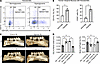 Figure 8
The CD137L-CD137 axis plays a key role in periodontitis severity in hyperglycemic humans and mice. (A and B) Human gingival specimens were obtained from NG (Normogly) individuals and individuals with hyperglycemia (Hypergly), and cells were isolated for flow cytometry. (A) Representative flow cytometry dot plots of CD137L+ and CD11c+ cells from human gingival specimens (n = 4). Cells were pregated for live mononuclear phagocytes (Zombie–CD45+HLA-DR+). (B) Quantitation of CD137L+CD11c+ DCs per total HLA-DR+ mononuclear phagocytes (left) and CD45+ leukocytes per total live cells (Zombie–) in human gingival specimens. (C and D) Diabetic mice were injected with a CD137L-antagonist Ab or control Ab, and NG mice were injected with a CD137-agonist Ab or control Ab. Periodontitis was induced as described in Figure 1. (C) Representative microCT images of 3D reconstruction of the molar teeth. (D) microCT analysis of bone loss was assessed by measuring the distance from the CEJ to the alveolar crest (left) and ratio of the bone area remaining per total area; n = 6–8 biological replicates per group. *P < 0.05, 1-way ANOVA with Tukey’s post hoc test.
To assess the impact of the CD137L-CD137 axis on inflammation-induced bone loss, gain of function in NG and loss of function in hyperglycemic mice were performed. The former was accomplished by using an agonist Ab that binds to CD137 to activate it (36, 37) and the latter with an antagonist Ab to inhibit CD137L (38). microCT analysis revealed that NG mice that received the CD137 agonist had more tissue damage, with a significant 64% increase in the distance between the CEJ to the bone crest and a significant reduction in the remaining bone area (P < 0.05) (Figure 8, C and D), mimicking the detrimental impact of diabetes on bone loss. Conversely, treatment with a CD137L antagonist in diabetic mice completely reversed the diabetes-enhanced loss of bone measured by both parameters (Figure 8, C and D) (P < 0.05). These results indicate the CD137L-CD137 axis plays a key role in mediating periodontal bone loss enhanced by diabetes.
The impact of diabetes and CD137L expression was further examined by flow cytometry after induction of periodontal disease with the gating justified by FMO (Supplemental Figure 7). Treatment of NG mice with a CD137 agonist significantly increased the number of CD45+ leukocytes in this group (Figure 9, A and B). Hyperglycemia caused a similar increase in leukocytes, which was blocked in diabetic mice by application of a CD137L antagonist (P < 0.05) (Figure 9, A and B). Because neutrophils are thought to contribute to periodontal bone loss, we treated NG mice with the CD137 agonist and examined changes in neutrophil infiltration. The agonist treated group had an almost 2-fold increase in neutrophils (Figure 9, C and D). Diabetes also significantly increased neutrophil infiltration. The increase in neutrophils caused by diabetes was reversed with the CD137L antagonist (Figure 9, C and D), demonstrating the key role of the CD137L-CD137 axis in recruitment of these cells. A similar pattern was observed for γδ T cells, with a significant increase induced by a CD137 agonist and by diabetes, with the latter blocked with a CD137L antagonist (P < 0.05) (Figure 9, E and F). These results highlight the role of CD137L in mediating the effect on the leukocyte dysregulation that occurs in hyperglycemic conditions. In addition, treatment with the CD137 agonist in NG mice and the presence of hyperglycemia in diabetic mice dramatically increased IL-17A+ T cell counts, whereas the CD137L antagonist reversed this effect in diabetic mice (P < 0.05) (Figure 9, G and H). This is noteworthy given our previous results that IL-17A+ T cells play a central role in mediating diabetes-enhanced periodontitis (48).
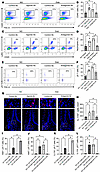 Figure 9
The CD137L-CD137 axis plays a key role in diabetes-altered inflammation. Diabetic mice received a CD137L antagonist or control Ab, and NG mice received a CD137 agonist or control Ab. Periodontitis was induced as in Figure 1. (A) Representative flow cytometry plots of CD45+ leukocytes from NG+Control Ab, NG+Agonist Ab, Diab+Control Ab, and Diab+Antagonist Ab groups. (B) Quantitation of CD45+ cells per total live cells. (C) Representative flow cytometry plots of Ly6G+CD45+ neutrophils. (D) Quantitation of Ly6G+ neutrophils per total CD45+ cells. (E) Representative flow cytometry plots of γδ T cells pregated as CD45+CD3+Zombie–. (F) Quantitation of γδ T cells per total CD3+ T cells. (G) Representative IL-17A immunofluorescence staining of periodontal tissues, with IL-17A (red) and DAPI (blue) nuclear staining. High-power magnification insets (top row) are identified from lower power images by white boxes. (H) Quantitation of IL-17A+ cells per mm2 of connective tissue area by immunofluorescence. (I) For in vitro studies, γδ T cells were cultured alone or co-cultured with DCs under NG or HG conditions. Proliferation of γδ T cells was assessed by Ki67+γδTCR+ cells. (J) Quantitation of proliferating γδ T cells from DC–γδ T cell co-cultures incubated with a CD137 agonist or CD137L antagonist. Cultures without agonist or antagonist Ab were incubated with control Ab. (K) Flow cytometric analysis of IL-17A+γδ T cells without or with DC co-cultures in NG or HG medium. (L) Quantitation of IL-17A+γδ T cells in γδ T cell and DC co-cultures incubated with CD137 agonist or CD137L antagonist. Cultures without agonist or antagonist Ab were incubated with control Ab. For in vivo analyses (B, D, F, and H), n = 3–7 per group; for in vitro assays (I–L), n = 3 per group. Data are presented as mean ± SEM. Statistical significance was determined by 1-way ANOVA with Tukey’s post hoc test. *P < 0.05.
In vitro co-culture experiments were carried out to investigate these results further. HG medium resulted in significantly increased percentage of proliferating (Ki67+) γδ T cells compared with NG medium (P < 0.05) (Figure 9I). The addition of DCs to γδ T cells in co-cultures increased the percentage of Ki67+ γδ T cells by more than 2-fold in HG medium (P < 0.05) (Figure 9I). In NG medium, a CD137 agonist significantly increased the percentage of Ki67+ γδ T cells (P < 0.05) (Figure 9J). Conversely, treatment with a CD137L antagonist completely blocked proliferating γδ T cells in DC - γδ T cell co-cultures in HG medium (P < 0.05) (Figure 9J), underscoring the pivotal role of CD137L in mediating the impact of DCs on γδ T cell proliferation in an HG environment. Similarly, γδ T cells co-cultured with DCs had significantly higher IL-17A+ expression in response to HG medium compared with γδ T cells alone (P < 0.05) (Figure 9K). CD137-agonist treatment significantly enhanced IL-17A+ γδ T cells by several fold in NG conditions compared with the IgG control group, mimicking the effect of HG (P < 0.05) (Figure 9L). In contrast, CD137L-antagonist treatment reversed the effect of HG on IL-17A+ γδ T cells co-cultured with DCs (P < 0.05) (Figure 9L). These results, taken together, indicate the CD137L-CD137 communication axis between DCs and γδ T cells is amplified in an HG environment to create expansion of γδ T cells and IL-17A expression. They provide a mechanistic basis for diabetes-induced dysregulation of γδ T cells driven by the CD137L-CD137 axis.


Copyright © 2026 American Society for Clinical Investigation
ISSN: 0021-9738 (print), 1558-8238 (online)