
Advertisement
Research ArticleAngiogenesisCell biologyVascular biology
Open Access |  10.1172/JCI190552
Inactive β1-integrin acts as a junctional scaffold for angiopoietin/TIE2/FOXO1 signaling
Tuomas Sipilä,1 Srinivas Kumar Ponna,1 Abhinandan Venkatesha Murthy,1 Anne Pink,1 Giray Enkavi,2 Shraman Kumar Bohra,1 Klaudia Lewna,1 Keerthana Ganesh,1 Qina Liu,1 Mirka Korhonen,1 Tommi Kajander,3 Michael Potente,4 Johanna Ivaska,5,6 Ilpo Vattulainen,2 Veli-Matti Leppänen,5,7 and Pipsa Saharinen1,7,8
1Translational Cancer Medicine Program, Research Programs Unit,
2Department of Physics, and
3Institute of Biotechnology, University of Helsinki, Helsinki, Finland.
4Angiogenesis & Metabolism Laboratory, Center of Vascular Biomedicine, Berlin Institute of Health at Charité – Universitätsmedizin Berlin, Berlin, Germany & Max Delbrück Center for Molecular Medicine in the Helmholtz Association, Berlin, Germany.
5Turku Bioscience Centre, University of Turku and Åbo Akademi University, Turku, Finland.
6InFLAMES Research Flagship and Department of Life Technologies, University of Turku, Turku, Finland.
7Wihuri Research Institute, Biomedicum Helsinki, Helsinki, Finland.
8Department of Biochemistry and Developmental Biology, Faculty of Medicine, University of Helsinki, Finland.
Address correspondence to: Pipsa Saharinen, Biomedicum Helsinki, Haartmaninkatu 8, P.O.B. 63, FI-00014 University of Helsinki, Finland. Phone: 358.50.4486361; Email: pipsa.saharinen@helsinki.fi.
Authorship note: TS and SKP contributed equally to this work. AVM and AP contributed equally to this work.
Find articles by Sipilä, T. in: PubMed | Google Scholar
1Translational Cancer Medicine Program, Research Programs Unit,
2Department of Physics, and
3Institute of Biotechnology, University of Helsinki, Helsinki, Finland.
4Angiogenesis & Metabolism Laboratory, Center of Vascular Biomedicine, Berlin Institute of Health at Charité – Universitätsmedizin Berlin, Berlin, Germany & Max Delbrück Center for Molecular Medicine in the Helmholtz Association, Berlin, Germany.
5Turku Bioscience Centre, University of Turku and Åbo Akademi University, Turku, Finland.
6InFLAMES Research Flagship and Department of Life Technologies, University of Turku, Turku, Finland.
7Wihuri Research Institute, Biomedicum Helsinki, Helsinki, Finland.
8Department of Biochemistry and Developmental Biology, Faculty of Medicine, University of Helsinki, Finland.
Address correspondence to: Pipsa Saharinen, Biomedicum Helsinki, Haartmaninkatu 8, P.O.B. 63, FI-00014 University of Helsinki, Finland. Phone: 358.50.4486361; Email: pipsa.saharinen@helsinki.fi.
Authorship note: TS and SKP contributed equally to this work. AVM and AP contributed equally to this work.
Find articles by Ponna, S. in: PubMed | Google Scholar
1Translational Cancer Medicine Program, Research Programs Unit,
2Department of Physics, and
3Institute of Biotechnology, University of Helsinki, Helsinki, Finland.
4Angiogenesis & Metabolism Laboratory, Center of Vascular Biomedicine, Berlin Institute of Health at Charité – Universitätsmedizin Berlin, Berlin, Germany & Max Delbrück Center for Molecular Medicine in the Helmholtz Association, Berlin, Germany.
5Turku Bioscience Centre, University of Turku and Åbo Akademi University, Turku, Finland.
6InFLAMES Research Flagship and Department of Life Technologies, University of Turku, Turku, Finland.
7Wihuri Research Institute, Biomedicum Helsinki, Helsinki, Finland.
8Department of Biochemistry and Developmental Biology, Faculty of Medicine, University of Helsinki, Finland.
Address correspondence to: Pipsa Saharinen, Biomedicum Helsinki, Haartmaninkatu 8, P.O.B. 63, FI-00014 University of Helsinki, Finland. Phone: 358.50.4486361; Email: pipsa.saharinen@helsinki.fi.
Authorship note: TS and SKP contributed equally to this work. AVM and AP contributed equally to this work.
Find articles by Venkatesha Murthy, A. in: PubMed | Google Scholar
1Translational Cancer Medicine Program, Research Programs Unit,
2Department of Physics, and
3Institute of Biotechnology, University of Helsinki, Helsinki, Finland.
4Angiogenesis & Metabolism Laboratory, Center of Vascular Biomedicine, Berlin Institute of Health at Charité – Universitätsmedizin Berlin, Berlin, Germany & Max Delbrück Center for Molecular Medicine in the Helmholtz Association, Berlin, Germany.
5Turku Bioscience Centre, University of Turku and Åbo Akademi University, Turku, Finland.
6InFLAMES Research Flagship and Department of Life Technologies, University of Turku, Turku, Finland.
7Wihuri Research Institute, Biomedicum Helsinki, Helsinki, Finland.
8Department of Biochemistry and Developmental Biology, Faculty of Medicine, University of Helsinki, Finland.
Address correspondence to: Pipsa Saharinen, Biomedicum Helsinki, Haartmaninkatu 8, P.O.B. 63, FI-00014 University of Helsinki, Finland. Phone: 358.50.4486361; Email: pipsa.saharinen@helsinki.fi.
Authorship note: TS and SKP contributed equally to this work. AVM and AP contributed equally to this work.
Find articles by Pink, A. in: PubMed | Google Scholar
1Translational Cancer Medicine Program, Research Programs Unit,
2Department of Physics, and
3Institute of Biotechnology, University of Helsinki, Helsinki, Finland.
4Angiogenesis & Metabolism Laboratory, Center of Vascular Biomedicine, Berlin Institute of Health at Charité – Universitätsmedizin Berlin, Berlin, Germany & Max Delbrück Center for Molecular Medicine in the Helmholtz Association, Berlin, Germany.
5Turku Bioscience Centre, University of Turku and Åbo Akademi University, Turku, Finland.
6InFLAMES Research Flagship and Department of Life Technologies, University of Turku, Turku, Finland.
7Wihuri Research Institute, Biomedicum Helsinki, Helsinki, Finland.
8Department of Biochemistry and Developmental Biology, Faculty of Medicine, University of Helsinki, Finland.
Address correspondence to: Pipsa Saharinen, Biomedicum Helsinki, Haartmaninkatu 8, P.O.B. 63, FI-00014 University of Helsinki, Finland. Phone: 358.50.4486361; Email: pipsa.saharinen@helsinki.fi.
Authorship note: TS and SKP contributed equally to this work. AVM and AP contributed equally to this work.
Find articles by
Enkavi, G.
in:
PubMed
|
Google Scholar
|

1Translational Cancer Medicine Program, Research Programs Unit,
2Department of Physics, and
3Institute of Biotechnology, University of Helsinki, Helsinki, Finland.
4Angiogenesis & Metabolism Laboratory, Center of Vascular Biomedicine, Berlin Institute of Health at Charité – Universitätsmedizin Berlin, Berlin, Germany & Max Delbrück Center for Molecular Medicine in the Helmholtz Association, Berlin, Germany.
5Turku Bioscience Centre, University of Turku and Åbo Akademi University, Turku, Finland.
6InFLAMES Research Flagship and Department of Life Technologies, University of Turku, Turku, Finland.
7Wihuri Research Institute, Biomedicum Helsinki, Helsinki, Finland.
8Department of Biochemistry and Developmental Biology, Faculty of Medicine, University of Helsinki, Finland.
Address correspondence to: Pipsa Saharinen, Biomedicum Helsinki, Haartmaninkatu 8, P.O.B. 63, FI-00014 University of Helsinki, Finland. Phone: 358.50.4486361; Email: pipsa.saharinen@helsinki.fi.
Authorship note: TS and SKP contributed equally to this work. AVM and AP contributed equally to this work.
Find articles by Bohra, S. in: PubMed | Google Scholar
1Translational Cancer Medicine Program, Research Programs Unit,
2Department of Physics, and
3Institute of Biotechnology, University of Helsinki, Helsinki, Finland.
4Angiogenesis & Metabolism Laboratory, Center of Vascular Biomedicine, Berlin Institute of Health at Charité – Universitätsmedizin Berlin, Berlin, Germany & Max Delbrück Center for Molecular Medicine in the Helmholtz Association, Berlin, Germany.
5Turku Bioscience Centre, University of Turku and Åbo Akademi University, Turku, Finland.
6InFLAMES Research Flagship and Department of Life Technologies, University of Turku, Turku, Finland.
7Wihuri Research Institute, Biomedicum Helsinki, Helsinki, Finland.
8Department of Biochemistry and Developmental Biology, Faculty of Medicine, University of Helsinki, Finland.
Address correspondence to: Pipsa Saharinen, Biomedicum Helsinki, Haartmaninkatu 8, P.O.B. 63, FI-00014 University of Helsinki, Finland. Phone: 358.50.4486361; Email: pipsa.saharinen@helsinki.fi.
Authorship note: TS and SKP contributed equally to this work. AVM and AP contributed equally to this work.
Find articles by Lewna, K. in: PubMed | Google Scholar
1Translational Cancer Medicine Program, Research Programs Unit,
2Department of Physics, and
3Institute of Biotechnology, University of Helsinki, Helsinki, Finland.
4Angiogenesis & Metabolism Laboratory, Center of Vascular Biomedicine, Berlin Institute of Health at Charité – Universitätsmedizin Berlin, Berlin, Germany & Max Delbrück Center for Molecular Medicine in the Helmholtz Association, Berlin, Germany.
5Turku Bioscience Centre, University of Turku and Åbo Akademi University, Turku, Finland.
6InFLAMES Research Flagship and Department of Life Technologies, University of Turku, Turku, Finland.
7Wihuri Research Institute, Biomedicum Helsinki, Helsinki, Finland.
8Department of Biochemistry and Developmental Biology, Faculty of Medicine, University of Helsinki, Finland.
Address correspondence to: Pipsa Saharinen, Biomedicum Helsinki, Haartmaninkatu 8, P.O.B. 63, FI-00014 University of Helsinki, Finland. Phone: 358.50.4486361; Email: pipsa.saharinen@helsinki.fi.
Authorship note: TS and SKP contributed equally to this work. AVM and AP contributed equally to this work.
Find articles by Ganesh, K. in: PubMed | Google Scholar
1Translational Cancer Medicine Program, Research Programs Unit,
2Department of Physics, and
3Institute of Biotechnology, University of Helsinki, Helsinki, Finland.
4Angiogenesis & Metabolism Laboratory, Center of Vascular Biomedicine, Berlin Institute of Health at Charité – Universitätsmedizin Berlin, Berlin, Germany & Max Delbrück Center for Molecular Medicine in the Helmholtz Association, Berlin, Germany.
5Turku Bioscience Centre, University of Turku and Åbo Akademi University, Turku, Finland.
6InFLAMES Research Flagship and Department of Life Technologies, University of Turku, Turku, Finland.
7Wihuri Research Institute, Biomedicum Helsinki, Helsinki, Finland.
8Department of Biochemistry and Developmental Biology, Faculty of Medicine, University of Helsinki, Finland.
Address correspondence to: Pipsa Saharinen, Biomedicum Helsinki, Haartmaninkatu 8, P.O.B. 63, FI-00014 University of Helsinki, Finland. Phone: 358.50.4486361; Email: pipsa.saharinen@helsinki.fi.
Authorship note: TS and SKP contributed equally to this work. AVM and AP contributed equally to this work.
Find articles by Liu, Q. in: PubMed | Google Scholar
1Translational Cancer Medicine Program, Research Programs Unit,
2Department of Physics, and
3Institute of Biotechnology, University of Helsinki, Helsinki, Finland.
4Angiogenesis & Metabolism Laboratory, Center of Vascular Biomedicine, Berlin Institute of Health at Charité – Universitätsmedizin Berlin, Berlin, Germany & Max Delbrück Center for Molecular Medicine in the Helmholtz Association, Berlin, Germany.
5Turku Bioscience Centre, University of Turku and Åbo Akademi University, Turku, Finland.
6InFLAMES Research Flagship and Department of Life Technologies, University of Turku, Turku, Finland.
7Wihuri Research Institute, Biomedicum Helsinki, Helsinki, Finland.
8Department of Biochemistry and Developmental Biology, Faculty of Medicine, University of Helsinki, Finland.
Address correspondence to: Pipsa Saharinen, Biomedicum Helsinki, Haartmaninkatu 8, P.O.B. 63, FI-00014 University of Helsinki, Finland. Phone: 358.50.4486361; Email: pipsa.saharinen@helsinki.fi.
Authorship note: TS and SKP contributed equally to this work. AVM and AP contributed equally to this work.
Find articles by Korhonen, M. in: PubMed | Google Scholar
1Translational Cancer Medicine Program, Research Programs Unit,
2Department of Physics, and
3Institute of Biotechnology, University of Helsinki, Helsinki, Finland.
4Angiogenesis & Metabolism Laboratory, Center of Vascular Biomedicine, Berlin Institute of Health at Charité – Universitätsmedizin Berlin, Berlin, Germany & Max Delbrück Center for Molecular Medicine in the Helmholtz Association, Berlin, Germany.
5Turku Bioscience Centre, University of Turku and Åbo Akademi University, Turku, Finland.
6InFLAMES Research Flagship and Department of Life Technologies, University of Turku, Turku, Finland.
7Wihuri Research Institute, Biomedicum Helsinki, Helsinki, Finland.
8Department of Biochemistry and Developmental Biology, Faculty of Medicine, University of Helsinki, Finland.
Address correspondence to: Pipsa Saharinen, Biomedicum Helsinki, Haartmaninkatu 8, P.O.B. 63, FI-00014 University of Helsinki, Finland. Phone: 358.50.4486361; Email: pipsa.saharinen@helsinki.fi.
Authorship note: TS and SKP contributed equally to this work. AVM and AP contributed equally to this work.
Find articles by Kajander, T. in: PubMed | Google Scholar
1Translational Cancer Medicine Program, Research Programs Unit,
2Department of Physics, and
3Institute of Biotechnology, University of Helsinki, Helsinki, Finland.
4Angiogenesis & Metabolism Laboratory, Center of Vascular Biomedicine, Berlin Institute of Health at Charité – Universitätsmedizin Berlin, Berlin, Germany & Max Delbrück Center for Molecular Medicine in the Helmholtz Association, Berlin, Germany.
5Turku Bioscience Centre, University of Turku and Åbo Akademi University, Turku, Finland.
6InFLAMES Research Flagship and Department of Life Technologies, University of Turku, Turku, Finland.
7Wihuri Research Institute, Biomedicum Helsinki, Helsinki, Finland.
8Department of Biochemistry and Developmental Biology, Faculty of Medicine, University of Helsinki, Finland.
Address correspondence to: Pipsa Saharinen, Biomedicum Helsinki, Haartmaninkatu 8, P.O.B. 63, FI-00014 University of Helsinki, Finland. Phone: 358.50.4486361; Email: pipsa.saharinen@helsinki.fi.
Authorship note: TS and SKP contributed equally to this work. AVM and AP contributed equally to this work.
Find articles by Potente, M. in: PubMed | Google Scholar
1Translational Cancer Medicine Program, Research Programs Unit,
2Department of Physics, and
3Institute of Biotechnology, University of Helsinki, Helsinki, Finland.
4Angiogenesis & Metabolism Laboratory, Center of Vascular Biomedicine, Berlin Institute of Health at Charité – Universitätsmedizin Berlin, Berlin, Germany & Max Delbrück Center for Molecular Medicine in the Helmholtz Association, Berlin, Germany.
5Turku Bioscience Centre, University of Turku and Åbo Akademi University, Turku, Finland.
6InFLAMES Research Flagship and Department of Life Technologies, University of Turku, Turku, Finland.
7Wihuri Research Institute, Biomedicum Helsinki, Helsinki, Finland.
8Department of Biochemistry and Developmental Biology, Faculty of Medicine, University of Helsinki, Finland.
Address correspondence to: Pipsa Saharinen, Biomedicum Helsinki, Haartmaninkatu 8, P.O.B. 63, FI-00014 University of Helsinki, Finland. Phone: 358.50.4486361; Email: pipsa.saharinen@helsinki.fi.
Authorship note: TS and SKP contributed equally to this work. AVM and AP contributed equally to this work.
Find articles by Ivaska, J. in: PubMed | Google Scholar
1Translational Cancer Medicine Program, Research Programs Unit,
2Department of Physics, and
3Institute of Biotechnology, University of Helsinki, Helsinki, Finland.
4Angiogenesis & Metabolism Laboratory, Center of Vascular Biomedicine, Berlin Institute of Health at Charité – Universitätsmedizin Berlin, Berlin, Germany & Max Delbrück Center for Molecular Medicine in the Helmholtz Association, Berlin, Germany.
5Turku Bioscience Centre, University of Turku and Åbo Akademi University, Turku, Finland.
6InFLAMES Research Flagship and Department of Life Technologies, University of Turku, Turku, Finland.
7Wihuri Research Institute, Biomedicum Helsinki, Helsinki, Finland.
8Department of Biochemistry and Developmental Biology, Faculty of Medicine, University of Helsinki, Finland.
Address correspondence to: Pipsa Saharinen, Biomedicum Helsinki, Haartmaninkatu 8, P.O.B. 63, FI-00014 University of Helsinki, Finland. Phone: 358.50.4486361; Email: pipsa.saharinen@helsinki.fi.
Authorship note: TS and SKP contributed equally to this work. AVM and AP contributed equally to this work.
Find articles by
Vattulainen, I.
in:
PubMed
|
Google Scholar
|
1Translational Cancer Medicine Program, Research Programs Unit,
2Department of Physics, and
3Institute of Biotechnology, University of Helsinki, Helsinki, Finland.
4Angiogenesis & Metabolism Laboratory, Center of Vascular Biomedicine, Berlin Institute of Health at Charité – Universitätsmedizin Berlin, Berlin, Germany & Max Delbrück Center for Molecular Medicine in the Helmholtz Association, Berlin, Germany.
5Turku Bioscience Centre, University of Turku and Åbo Akademi University, Turku, Finland.
6InFLAMES Research Flagship and Department of Life Technologies, University of Turku, Turku, Finland.
7Wihuri Research Institute, Biomedicum Helsinki, Helsinki, Finland.
8Department of Biochemistry and Developmental Biology, Faculty of Medicine, University of Helsinki, Finland.
Address correspondence to: Pipsa Saharinen, Biomedicum Helsinki, Haartmaninkatu 8, P.O.B. 63, FI-00014 University of Helsinki, Finland. Phone: 358.50.4486361; Email: pipsa.saharinen@helsinki.fi.
Authorship note: TS and SKP contributed equally to this work. AVM and AP contributed equally to this work.
Find articles by
Leppänen, V.
in:
PubMed
|
Google Scholar
|
1Translational Cancer Medicine Program, Research Programs Unit,
2Department of Physics, and
3Institute of Biotechnology, University of Helsinki, Helsinki, Finland.
4Angiogenesis & Metabolism Laboratory, Center of Vascular Biomedicine, Berlin Institute of Health at Charité – Universitätsmedizin Berlin, Berlin, Germany & Max Delbrück Center for Molecular Medicine in the Helmholtz Association, Berlin, Germany.
5Turku Bioscience Centre, University of Turku and Åbo Akademi University, Turku, Finland.
6InFLAMES Research Flagship and Department of Life Technologies, University of Turku, Turku, Finland.
7Wihuri Research Institute, Biomedicum Helsinki, Helsinki, Finland.
8Department of Biochemistry and Developmental Biology, Faculty of Medicine, University of Helsinki, Finland.
Address correspondence to: Pipsa Saharinen, Biomedicum Helsinki, Haartmaninkatu 8, P.O.B. 63, FI-00014 University of Helsinki, Finland. Phone: 358.50.4486361; Email: pipsa.saharinen@helsinki.fi.
Authorship note: TS and SKP contributed equally to this work. AVM and AP contributed equally to this work.
Find articles by
Saharinen, P.
in:
PubMed
|
Google Scholar
|
Published June 15, 2026 - More info
J Clin Invest. 2026;136(12):e190552. https://doi.org/10.1172/JCI190552.
© 2026 Sipilä et al. This work is licensed under the Creative Commons Attribution 4.0 International License. To view a copy of this license, visit http://creativecommons.org/licenses/by/4.0/.
Received: January 2, 2025; Accepted: April 29, 2026


-
Results
ANGPT2 and TIE2 differentially interact with active and inactive β1-integrin at endothelial junctions. To investigate the spatial convergence of ANGPT2/TIE2 and integrin signaling pathways, we first analyzed the subcellular localization of β1-integrin, the predominant integrin subunit expressed in ECs. Whereas active ECM-bound β1-integrins are well characterized for their signaling via adhesion complexes on the basolateral cell surface, the localization of inactive β1-integrins in ECs remains less well understood (33). Using the conformation-specific antibody mAb13, which selectively recognizes the inactive, bent β1-integrin conformation (34), we detected inactive β1-integrin on the surface of both blood microvascular ECs (BECs) and dermal LECs, which were chosen as separate EC models. Interestingly, inactive β1-integrin localized to EC-EC junctions, where it colocalized with the adherens junction protein VE-cadherin (CDH5) (Figure 1, A–C, and Supplemental Figure 1, A and B; supplemental material available online with this article; https://doi.org/10.1172/JCI190552DS1), and with α5 integrin (Supplemental Figure 1, C–E).
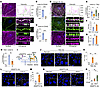 Figure 1
ANGPT2 and TIE2 differentially interact with active and inactive β1-integrin at endothelial junctions. (A) Surface staining of cultured BECs for inactive β1-integrin (mAb13) and VE-cadherin (CDH5). (B and C) Mander’s overlap coefficient (MOC) for mAb13/CDH5 colocalization in junctions (J) versus membrane (M) in BECs (B) and LEC (C) (image shown in Supplemental Figure 1B). (D) Surface staining of rhAng2-stimulated and control (Ctrl) (image shown in Supplemental Figure 1G) BECs for mAb13 and TIE2. (E) MOC for mAb13/TIE2 colocalization in junctions versus membrane in Ctrl and rhAng2-stimulated BECs, relative to Ctrl-treated BEC junctions. (F and G) Quantification of TIE2 (F) and mAb13 (G) in junctions in Ctrl and rhAng2-stimulated BECs. (H) MOC for TIE2/mAb13 colocalization in LECs. Image shown in Supplemental Figure 1F. (I) PLA design using antibodies for inactive β1-integrin (mAb13), active β1-integrin (9EG7), TIE2, and ANGPT2. Isotype-IgG as control. (J–O) PLA in HUVECs using indicated antibodies and quantification normalized to nuclei (J and K: TIE2/mAb13/9EG7; L and M: ANGPT2/mAb13; N and O: ANGPT2/9EG7 ± rhAng2 stimulation). Scale bars: 10 μm (A and D), 50 μm (J, L, and N). Confocal Z-stack projections are shown. n = 3 independent experiments (except in O, n = 4); 150 regions of interest per sample (B, C, and E–H). Statistical tests were a 2-tailed t test (B, C, F–H, and M), 1-way ANOVA with Tukey’s post hoc test (K and O), 2-way ANOVA with multiple correction (E). Data are presented as mean ± SEM. *P < 0.05, **P < 0.01, ***P < 0.001.
Because ANGPTs bind TIE2 receptors across EC-EC junctions in trans (17, 18), we analyzed TIE2 and β1-integrin colocalization in LECs secreting endogenous ANGPT2 and in ECs stimulated with recombinant human Ang2 (rhAng2; R&D) or COMP-Ang1, a previously characterized recombinant ANGPT1 (35). Interestingly, both ANGPT1- and ANGPT2-induced TIE2 colocalized with inactive β1-integrin in EC-EC junctions, suggesting potential receptor crosstalk (Figure 1, D–H, and Supplemental Figure 1, F–K).
Because ANGPT2 is known to activate β1-integrin (21, 22), we further assessed the compartmentalization of ANGPT2 and TIE2 with the active and inactive β1-integrin conformers in ECs, using a proximity ligation assay (PLA) (36), which can detect proteins less than 40 nm from each other. We used antibodies that recognize ANGPT2 and the ectodomains (ECDs) of TIE2 and β1-integrin. In particular, whereas mAb13 detects β1-integrin in its inactive conformation, 9EG7 selectively recognizes the active β1-integrin conformation (Figure 1I). PLA signal was detected specifically with TIE2 and mAb13 antibodies, but not with TIE2 and 9EG7 antibodies (Figure 1, J and K), indicating preferential interaction of TIE2 with inactive rather than active β1-integrin. However, ANGPT2 interaction was detected with both inactive and active β1-integrin using PLA (Figure 1, L–O).
To determine whether ANGPT2 and TIE2 regulate junctional β1-integrin localization, we silenced them using shRNAs. Both shANGPT2 and shTIE2 reduced junctional inactive β1-integrin. shTIE2 further increased active β1-integrin in ECM adhesions while decreasing CDH5 (Supplemental Figure 2), consistent with ANGPT2-mediated β1-integrin activation in the absence of TIE2, as previously reported (21, 22). Taken together, ANGPT-induced TIE2 colocalizes with inactive β1-integrin in EC junctions, whereas ANGPT2, in the absence of TIE2, is additionally found near active β1-integrin.
Junctional TIE2 phosphorylation is reduced by β1-integrin deletion and during endotoxemia. The junctional enrichment and colocalization of β1-integrin with TIE2 in cultured ECs prompted us to examine their distribution in vivo. Therefore, we analyzed whole-mount preparations of mouse inferior vena cava, in which tyrosine-992–phosphorylated TIE2 (pY992-TIE2) has been shown to localize to endothelial junctions, indicating homeostatic junctional TIE2 activation (37). Consistently, pY992-TIE2 was readily detected at EC junctions, and β1-integrin was enriched at junctional regions (Figure 2, B and G, and Supplemental Figure 3, A, B, and E), using the function-blocking β1-integrin antibody HMb1 (38).
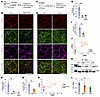 Figure 2
Regulation of phosphorylated TIE2 and β1-integrin in cell junctions in Itgb1iECKO mice and in endotoxemia. (A and B) Vena cava from Itgb1iECKO and control (Ctrl) mice were stained for β1-integrin (HMb1), pY992-TIE2 (pTIE2), and VE-cadherin (CDH5). Larger fields of view are shown in Supplemental Figure 3A. (C and D) Quantification of junctional HMb1 (C) and junctional pTIE2 (D) normalized to CDH5. n = 3 mice per group. (E) Correlation of junctional pTIE2 with HMb1 in Ctrl and Itgb1iECKO mice per image. There was a positive correlation between pTIE2 and HMb1 (Pearson’s r = 0.590 [95% CI 0.303–0.778]; n = 32 images; 2-tailed P = 0.0004). (F and G) Vena cava from control mice and after LPS administration for 16 hours were stained for β1-integrin (HMb1), pTIE2, and CDH5. Larger fields of view are shown in Supplemental Figure 3E. (H and I) Quantification of junctional HMb1 (H) and junctional pTIE2 (I) normalized to CDH5. n = 4 mice per group. (J) Correlation of junctional pTIE2 vs. HMb1. There was a strong positive correlation between pTIE2 and HMb1 (Pearson’s r = 0.877 [95% CI 0.763–0.938]; n = 33; 2-tailed P < 0.0001). (K and L) Western blot for phosphotyrosine and TIE2 after TIE2 immunoprecipitation from lung lysates from control and Itgb1iECKO mice and from control mice after LPS administration for 16 hours (K). Quantification of phosphorylated TIE2/total TIE2, normalized to control (Ctrl) (L). n = 9, 10 (Itgb1iECKO), and 4 (LPS) mice per group. Scale bars: 20 μm (B and G). Confocal Z-stack projections are shown. Statistical tests were as follows: 2-tailed t test (C, D, H, and I); 1-way ANOVA with Tukey’s post hoc test (L); and Pearson’s correlation (E and J). Data are presented as mean ± SD (C, D, H, and I)and ± SEM (L). *P < 0.05, **P < 0.01, ***P < 0.001. Tamoxifen, TAM.
We hypothesized that β1-integrin in junctions might regulate TIE2 and, therefore, deleted endothelial β1-integrin (Itgb1) in adult mice (Itgb1iECKO) (Figure 2A). As expected, β1-integrin was decreased in vena cava and, notably, total TIE2 and pY992-TIE2 were decreased in Itgb1iECKO mice (Figure 2, B–E, and Supplemental Figure 3, A–D). Phosphorylated TIE2 was also slightly reduced in lung lysates from Itgb1iECKO mice when compared with controls, suggesting decreased homeostatic TIE2 activity in Itgb1iECKO mice (Figure 2, K and L).
Given that endothelial β1-integrin deletion impairs TIE2 phosphorylation in vivo, we next examined whether inflammatory suppression of TIE2 signaling is associated with altered junctional β1-integrin. Reduced TIE2 activity during endotoxemia has been linked to compromised junctional stability (39, 40). Accordingly, mice were administered LPS for 16 hours (Figure 2F). Consistent with previous reports, TIE2 phosphorylation was reduced in lung lysates, and additionally, at vena cava junctions (Figure 2, G–L, and Supplemental Figure 3E). Notably, junctional β1-integrin was also reduced and closely correlated with pY992-TIE2 (Figure 2, H and J). Both endotoxemic and Itgb1iECKO mice had widened, serrated CDH5-positive junctions compared with controls (Figure 2, B and G, and Supplemental Figure 3, A and E), indicative of impaired barrier integrity, as previously reported in the retina of newborn Itgb1iECKO mice (41).
In the lymphatic vasculature, β1-integrin expression was low along dermal capillaries and enriched at lymphatic valves, limiting quantitative analysis of junctional localization in vivo (Supplemental Figure 3F). We therefore used LEC cultures to assess β1-integrin regulation during junctional destabilization. Thrombin stimulation disrupted the continuous CDH5 junctional pattern and reduced colocalization of inactive β1-integrin with TIE2 (Supplemental Figure 4, A–C). These findings indicate that β1-integrin is enriched at venous EC junctions in vivo, correlating with phosphorylated TIE2, and that junctional β1-integrin decreases during inflammation-induced endothelial destabilization.
Oligomeric ANGPT2 activates TIE2/FOXO1 signaling facilitated by inactive β1-integrin. To investigate how junctional β1-integrin regulates ligand-induced TIE2 signaling, we focused on ANGPT2, which is endogenously expressed by both LECs and venous ECs (42) and, therefore, provides a suitable model for studying endogenous ANGPT2/TIE2 signaling. ANGPTs form coiled-coil domain–mediated (CCD-mediated) dimers that assemble into higher-order oligomers through the SCD (Figure 3A). Whereas ANGPT1 oligomers potently activate TIE2, ANGPT2 can exist as dimers, contributing to weaker TIE2 activation (43). Therefore, we examined ANGPT2 oligomerization in EC-conditioned medium under reducing and nonreducing conditions (Figure 3, A–D). Both dimeric and oligomeric ANGPT2 were detected in LECs and in HUVECs; however, ANGPT2, and particularly its oligomeric form, was enriched in LECs when compared with HUVECs (Figure 3, C and D). rhAng2 migrated as a mixture of oligomers, dimers, and monomers (Figure 3, B and C), in line with a previous report (43).
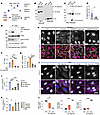 Figure 3
Oligomeric ANGPT2 induces TIE2/FOXO1 signaling in ECs. (A) Schematic representation of analysis of ANGPT2 dimers and oligomers in cell culture medium. (B–D) Representative immunoblots and quantification of oligomeric and dimeric ANGPT2 in 10× concentrated LEC- (B–D) and HUVEC-conditioned medium (C and D) under nonreducing and reducing conditions; rhAng2 was used as a control. n = 7 independent experiments. (E–G) Representative immunoblots (E) and quantification of phosphorylated (PY) and total TIE2 following immunoprecipitation from LECs stimulated with ANGPT2 (A2) oligomer ± TIE2 inhibitor (TIE2i, BAY-826) (n = 3 independent experiments) (F), and phospho-Ser473 AKT in whole-cell lysates from the same conditions (n = 4 independent experiments) (G). (H and I) Staining of HUVECs stimulated with oligomeric or dimeric ANGPT2 purified from CHO cells, or rhAng2, for CDH5 and FOXO1 (H). Quantification of nuclear/cytoplasmic FOXO1 ratio (I). n = 3 independent experiments. Asterisks mark cells with decreased nuclear FOXO1. (J and K) Staining of FOXO1 and VE-cadherin (CDH5) in LECs treated with A2 oligomer in the presence of PI3Ki (LY294002) or control (Ctrl) (J). Quantification of nuclear vs cytoplasmic FOXO1 ratio (K). (L) Bulk mRNA sequencing of LECs stimulated with A2 oligomer for 3 or 6 hours. Inferred transcription factor activity is shown as normalized VIPER enrichment scores (NES) for FOXO1, MYC, and E2F1 across treatments. Scale bars: 10 μm (H), 25 μm (J). Two-tailed unpaired t test (D), 1-way ANOVA with Tukey’s post hoc test (F, G, I, and K). NES values were compared across conditions by 1-way ANOVA with Tukey’s multiple comparison, and with Benjamini-Hochberg FDR correction across transcription factors (L). Data are presented as mean ± SEM. *P < 0.05, **P < 0.01, ***P < 0.001, ****P < 0.0001.
To test whether ANGPT2 abundance influences oligomerization, ANGPT2 expression was increased in HUVECs, using a doxycycline-inducible, constitutively active FOXO1 mutant (44) that potently induces ANGPT2 transcription. Treating transduced cells with doxycycline elevated ANGPT2 mRNA and protein levels, and increased the fraction of oligomeric ANGPT2, suggesting that ANGPT2 oligomerization is partly influenced by overall ANGPT2 abundance (Supplemental Figure 4, D–F).
To investigate the functions of dimeric versus oligomeric ANGPT2, we expressed ANGPT2 in CHO cells, purified the distinct species, and, using size-exclusion chromatography with multi-angle light scattering (SEC-MALS), determined their molecular weights, which corresponded to a 141 kDa dimer and a 383 kDa oligomer (potentially a glycosylated tetramer; Supplemental Figure 4G and Supplemental Tables 1 and 2). Oligomeric ANGPT2 induced TIE2 and downstream AKT phosphorylation in LECs, which were abolished by TIE2-inhibitor treatment (BAY-826) (Figure 3, E–G). Consistently, oligomeric, but not dimeric, ANGPT2 decreased nuclear FOXO1 in HUVECs and in LECs, an effect blocked by PI3K inhibition (LY294002) (Figure 3, H–K). Thus, oligomeric ANGPT2 served as a TIE2 agonist, signaling through PI3K/AKT to decrease nuclear FOXO1.
To define the direct downstream effects of oligomeric ANGPT2, we performed bulk RNA-Seq in LECs 3 and 6 hours after stimulation with ANGPT2 oligomer and compared responses with rhAng2 (Supplemental Figure 5). The number of differentially expressed genes (DEGs) increased at 6 hours and oligomeric ANGPT2 induced more DEGs than did rhAng2 (P < 0.01; log2 fold change > 0.5) (Supplemental Figure 5, A and E). Consistent with FOXO1 inhibition, DEGs induced by oligomeric ANGPT2 overlapped with genes downregulated by constitutively active FOXO1 in HUVECs (42) (P < 0.00001) (Supplemental Figure 5B). Virtual Inference of Protein-Activity by Enriched Regulon (VIPER) analysis indicated reduced FOXO1 activity following ANGPT2 stimulation, whereas inferred activity of MYC, a FOXO1-repressed target (45) as well as the E2F1 transcription factor, were increased (Figure 3L and Supplemental Figure 5, C and F). Gene set enrichment analysis further supported an ANGPT2-induced shift toward cell proliferation (Supplemental Figure 5, D and G). Together, these data indicate that oligomeric ANGPT2, enriched in LECs, can act as a TIE2 agonist to suppress FOXO1 activity and induce a proliferative transcriptional signature in LECs.
To assess the necessity of ECM ligand binding for junctional localization of β1-integrin, we treated LECs with the β1-integrin monoclonal antibody AIIB2, which competes with ligand binding, recognizing nonligand-bound β1-integrins (46). AIIB2 localized to cell-cell junctions when incubated with live LECs at +37°C, indicating ligand-unbound β1-integrin in junctions (Figure 4, A and C). Interestingly, AIIB2 treatment increased junctional TIE2 (Figure 4, B and C) and decreased nuclear FOXO1 in LECs (Figure 4, D–G, and Supplemental Figure 6A), whereas this effect was lost upon shANGPT2 silencing or TIE2 inhibition (BAY-826) (Figure 4, H and I, and Supplemental Figure 6, B and C), suggesting that β1-integrin inhibition enhances junctional ANGPT2/TIE2 signaling and decreases nuclear FOXO1. Although β1-integrin silencing also reduced nuclear FOXO1, it attenuated ANGPT2-induced reduction in nuclear FOXO1 (Supplemental Figure 6, D and E), supporting a role for β1-integrin in ANGPT2/FOXO1 signaling.
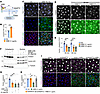 Figure 4
Inactive β1-integrin facilitates ANGPT2/TIE2/FOXO1 signaling in LECs. (A) Schematic representation of ANGPT2/TIE2/FOXO1 pathway and AIIB2 antibody recognizing non–ECM-bound β1-integrin. (B and C) LECs stimulated with control or AIIB2 antibody for 60 minutes were stained for surface TIE2, CDH5, and AIIB2 (using secondary antibodies) (C). Quantification of junctional TIE2 normalized to number of nuclei (B). (D and E) LECs were stimulated with AIIB2 antibody for 30 and 60 minutes and stained for FOXO1 and AIIB2 (see Supplemental Figure 6A for staining at 60 minutes) (D). Quantification of nuclear/cytoplasmic FOXO1 ratio normalized to nuclei (E). (F and G) LECs were stimulated with ANGPT2 (A2) oligomer, rhAng2, or AIIB2 antibody and FOXO1 were analyzed using immunoblotting from nuclear and cytoplasmic fractions, using lamin A/C and α-tubulin markers, respectively. (H and I) shANGPT2- and shScr-treated LECs were stimulated with AIIB2 antibody for 60 minutes and stained for FOXO1, TIE2, and AIIB2. Nuclear/cytoplasmic FOXO1 ratio was quantified normalized to nuclei. n = 3 (B, E, G [n = 5 for control, n = 4 for A2 oligomer], and H) or n = 5 (E) independent experiments. Statistical tests included 2-tailed t test (B) and 1-way ANOVA with Tukey’s post hoc test (E, G, and H). Data are presented as mean ± SEM. Scale bars: 50 μm (C), 25 μm (D and I). Confocal Z-stack projections are shown. *P < 0.05, **P < 0.01, ***P < 0.001, ****P < 0.0001.
ANGPT2 engages α5β1-integrin through its N- and C-terminal domains. These results prompted us to ask whether the effects of inactive β1-integrin on ANGPT/TIE/FOXO1 signaling reflect a direct ligand–integrin interaction, leading us to investigate the interaction of ANGPT2 with α5β1-integrin. Using rhAng2, we detected its binding to the ECD of α5β1-integrin (α5β1-ECD) in surface plasmon resonance (SPR) (Supplemental Figure 7A). To further define this interaction, we generated a panel of recombinant ANGPT2 and α5β1-integrin proteins (Supplemental Table 1 and Supplemental Figure 8). We first generated the N- and C-terminal parts of ANGPT2 as human IgG Fc fusion proteins to induce dimerization, mimicking the native coiled-coil–mediated dimers of the CCD/SCD (ANGPT2-N-Fc) and FLD (ANGPT2-FLD-Fc) (Figure 5, A and B). Notably, both ANGPT2 fragments bound α5β1-ECD in SPR (Figure 5, C and D), indicating that α5β1-integrin engages both the ANGPT2 N- and C-terminal domains.
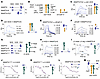 Figure 5
Direct interactions of α5β1-integrin with N- and C-terminal ANGPT2 domains. (A and B) Schematic representation of ANGPT2 (A) and α5β1-ECD (B) recombinant proteins used. (C) Binding of ANGPT2-FLD-Fc to immobilized α5β1-ECD in SPR. Two-state reaction kinetics were fitted to the original data. (D) Binding of α5β1-ECD (1.3 μM) to immobilized ANGPT2-N-Fc in SPR in the presence and absence of Mn2+ and Mg2+. (E) Binding of ANGPT2-FLD-Fc to immobilized α5Calf1-2 in SPR. (F) Binding of α5Calf1 to immobilized ANGPT2-FLD-Fc in SPR. (G) Schematic representation of N-terminal ANGPT2 and β1-ECD constructs. (H) Binding of β1-ECD to immobilized ANGPT2-N-Fc in SPR. (I) Binding of β1-head and -leg piece (β1-leg) to immobilized ANGPT2-N-Fc in SPR. (J and K) Binding of ANGPT219–202–SUMO (J) and ANGPT219–76-SUMO (K) to fluorescently labelled β1-ECD (2 nM) in MST. (L) Binding of ANGPT2-N-Fc to fluorescently labelled β1-PSI (20 nM) in MST. (M) Schematic representation of ANGPT2 binding through FLD and SCD domains to Calf1 and PSI domains of α5 and β1-integrins, respectively. Representative experiments with average KD are shown. n = 3 independent experiments (C–F and H–L). Nd, not determined.
α5-Integrin Calf1 and the β1-integrin headpiece mediate ANGPT2 binding. Because both the FLD and the N-terminal CCD/SCD have been implicated in ANGPT2 signaling (22, 47), we next delineated the α5β1-integrin regions responsible for ANGPT2 binding. The binding of ANGPT2 FLD to α5β1-ECD was independent of fibronectin binding, suggesting interaction outside of the α5β1-integrin headpiece, and FLD also did not bind β1-integrin ECD (β1-ECD) (Supplemental Figure 7, B and C). Therefore, we assessed FLD binding to the membrane-proximal α5-integrin leg, consisting of the Calf1-2 domains. The isolated Calf1-2 domain of α5 integrin (α5Calf1-2) bound ANGPT2-FLD-Fc with a Kd of 50–90 nM (Figure 5E). Because ANGPT2-FLD-Fc forms dimers through the Fc region, we cleaved it proteolytically and found that the monomeric FLD retained binding to α5Calf1-2 (Supplemental Figure 7D). Moreover, we created the isolated α5Calf1 monomer, which bound to ANGPT2 FLD (Figure 5F), whereas α5Calf2 did not (Supplemental Figure 7, E and F), narrowing the ANGPT2 FLD interaction to Calf1 of α5 integrin. The highly homologous ANGPT1 FLD also bound to α5Calf1-2 (Supplemental Figure 9, A and B).
Because we previously found that the ANGPT2, but not ANGPT1, N-terminus (CCD/SCD) activates α5β1-integrin (22), we further characterized ANGPT2-N-Fc binding and found a high-affinity interaction with the β1-integrin ECD (β1-ECD) (Kd 2-5 nM) (Figure 5, G and H) and with the isolated β1-integrin headpiece (β1-head) but not the leg piece (Figure 5I). ANGPT1-N-Fc did not bind β1-ECD under similar conditions (Supplemental Figure 9, C and D).
To narrow down the binding site, we created N-terminal ANGPT2 fragments, encompassing the SCD (ANGPT219–76) and also parts of CCD (ANGPT219–202), and attached a C-terminal monomeric SUMOStar tag to increase their solubility (Supplemental Figures 8J and 9E). ANGPT219–76 and ANGPT219–202 bound to the β1-ECD with affinity of Kd 80 nM and 10 nM, respectively (Figure 5, J and K), suggesting that the ANGPT2 SCD (ANGPT219–76) is sufficient for binding to β1-ECD, but additional amino acids (ANGPT219–202) contribute to high affinity binding. Furthermore, we precisely localized the ANGPT2 interaction to the PSI domain within the β1-ECD (Figure 5L). In conclusion, the ANGPT1 and ANGPT2 FLD bind to α5-integrin Calf1 domain, whereas the SCD of ANGPT2, but not of ANGPT1, binds to the β1-integrin PSI domain (Figure 5M).
Structural and MD analyses delineate the ANGPT2–α5-integrin interaction interface. Having identified the ANGPT2 regions that engage α5β1-integrin, we next sought to define their interaction at atomic resolution. To investigate how ANGPT2 FLD interacts with α5 integrin, we assessed an ANGPT2-derived peptide (corresponding to residues E352–Q366 in human ANGPT2), previously reported to bind α5 integrin (47). When added in a molar excess, the peptide inhibited binding of ANGPT2 FLD to α5Calf1-2 (Supplemental Figure 10A), suggesting it forms part of the binding interface.
Therefore, we crystallized the α5Calf1-2 domain, which had not been reported previously to our knowledge, and its complex with the 9-amino acid ANGPT2 peptide ligand Glu (P1)-Gln(P9), corresponding to E358–Q366 (Figure 6, A and B, and Supplemental Table 3). The structure of the unliganded α5Calf1-2 at 1.92 Å resolution showed that Calf1 (residues 644–787) and Calf2 domains (residues 792–989) both form immunoglobulin-like β sandwich folds separated by a linker (residues 788–791), similar to Calf domains of other α-integrins (48) (Figure 6A and Supplemental Figure 10B).
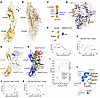 Figure 6
Crystal structure and MD simulations reveal the interface of ANGPT2 FLD–α5Calf1-2 complex. (A) Crystal structure of apo α5Calf1-2. (B) Crystal structure of α5Calf1-2 in complex with the ANGPT2 peptide (blue) [residue E358–Q366, P(1)–P(9)]. (C) Schematic representation of ANGPT2 peptide (blue) bound to α5Calf1. (D) Electron density of the ANGPT2 peptide bound to α5Calf1-2 visible in the co-crystal structure in (B). The peptide is seen interacting with several residues in Calf1; see text for details. (E and F) Binding of WT (E) and mutant α5Calf1 (Arg694Trp, Asn724Val, Gln766Glu) (F, no binding is detected) to fluorescently labelled ANGPT2-FLD-Fc in MST. (G) An optimized docked model of an ANGPT2-FLD dimer in complex with α5Calf1-2. Residue E358–Q366, corresponding to the ANGPT2 peptide used in the crystal structure in (B), is indicated in bright blue. (H and I) Atom-scale MD simulation of ANGPT2-FLD dimer in complex with α5Calf12 (n = 3). Thickness of the line indicates frequency of interaction (H). Heatmap of interaction frequencies of amino acid residues of α5Calf1-2 (x axis) and ANGPT2-FLD dimer (y axis) from MD simulation (I). (J and K) Binding of mutant α5Calf1 (Arg755Glu, Gln762Ala, Asp764Asn (J) and Arg694Trp, Arg755Glu, Gln762Ala, Gln766Glu) (K) to fluorescently labelled ANGPT2-FLD-Fc in MST. No binding is detected in (K), and binding is decreased to a micromolar scale in (J) as compared with wt in (E). (L) Substituted amino acid residues shown in a close-up of the docked model in G. n = 3 independent experiments (E, F, J, and K).
The structure of the α5Calf1-2–ANGPT2 peptide complex was solved by molecular replacement using the unliganded α5Calf1-2 structure (Figure 6, B–D). In the resulting complex structure, the electron density for 6 residues of the ANGPT2 peptide was well defined (Figure 6D). This density was also present in a simulated omit map, generated by excluding the peptide from the model, confirming that the observed density is not model biased (Figure 6D).
The peptide interacts with the β sheet that is formed by β-strands 4, 6, 7, 9, and 10 in the Calf1 domain, fitting in a cavity surrounded by loops between β-strands 6 and 7. The structure revealed that Gln(P5), which corresponds to Gln362 in ANGPT2, a residue previously reported to be crucial in mediating binding to α5 integrin (47), interacts with the OH-group of Gln766 in α5Calf1 (Figure 6D). The NH groups of Gln P5 and of Arg694 in α5Calf1 form a hydrogen bond with a water molecule located at the interface (Figure 6D). Additionally, Gln(P9) forms a hydrogen bond with the NH group of Arg694 in α5Calf1, and the carboxyl groups of Phe(P2) and Val(P3) sandwich the side chain of Asn724 in α5Calf1 (Figure 6D).
To confirm the binding interface, we introduced 3 amino acid substitutions in the binding site of the ANGPT2 peptide in α5Calf1 at positions identified in the crystal structure (Arg694Trp, Asn724Val, and Gln766Glu) (Figure 6, E and F). The substitutions were predicted to interfere with ANGPT2 binding while preserving the overall fold of α5Calf1 when tested by short MD simulations (Supplemental Table 4) and circular dichroism analysis (Supplemental Figure 11A). Wild-type α5Calf1 bound to ANGPT2-FLD with 4 nM affinity in microscale thermophoresis (MST), whereas binding of the mutant was undetectable (Figure 6, E and F). These results validate the α5Calf1 surface identified in our crystal structure as the binding site for ANGPT2-FLD (Figure 6, B and D).
Having identified the binding site in α5Calf1 for ANGPT2, we investigated how the full ANGPT2 FLD and α5Calf1-2 domains interact, using molecular modeling and atom-scale MD simulations. For these, we docked dimeric ANGPT2 FLD structure (13) with our α5Calf1-2 crystal structure, preserving the contacts observed in the ANGPT2 peptide–α5Calf1-2 co-crystal complex (Figure 6G, Supplemental Video 1, and Supplemental Methods). The resulting model revealed an extended interaction interface between α5Calf1 and ANGPT2, involving residues from both proteins (Figure 6G). In addition to the helical region corresponding to the ANGPT2 peptide (residues E358–Q366), a β-hairpin on the ANGPT2 FLD (residues F302–K309) interacts with a β-hairpin on α5Calf1 (residues A722–V729), and a short N-terminal β-strand of ANGPT2 FLD (residues I279–283R) interacts with a β-strand on α5Calf1 (residues T760–F765). The second protomer also forms a shape complementary to α5Calf1-2.
Upon subjecting the dimeric ANGPT2 FLD–α5Calf1-2 complex to atomistic MD simulations (n = 3 repeats of 1 μs each), a slight separation and repositioning of the ANGPT2 monomers (Figure 6, H and I) was observed. However, both protomers (ANGPT2 FLD and ′ANGPT2 FLD) retain their essential interactions with α5Calf1, including the region covering the ANGPT2 peptide (residues E358–Q366). We also noted additional interactions of the second ′ANGPT2 FLD protomer with Calf2, which may facilitate binding (Figure 6, H and I). Because Calf2 alone was not sufficient to mediate binding to ANGPT2 FLD (Supplemental Figure 7, E and F), we focused on Calf1. To experimentally validate the model, we introduced amino acid substitutions at Calf1 residues predicted to mediate ANGPT2 binding, identified using MD simulations (Arg755Glu, Gln762Ala, and Asp764Asn) and both simulations and crystal structure (Arg694Trp, Arg755Glu, Gln762Ala, and Gln766Glu) (Figure 6, J–L). The mutants retained their structure as confirmed by circular dichroism spectroscopy and MD simulation analyses (Supplemental Figure 11A and Supplemental Table 4) but showed a reduction of ANGPT2 FLD binding affinity in MST assays compared with wild-type Calf1 (Figure 6, J and K). Together, these results support the structural model of the α5Calf1–ANGPT2 FLD complex and demonstrate that the interaction interface identified by crystallography, MD simulations, and mutagenesis (Figure 6) is functionally relevant. Moreover, conservation of this interface among several α integrins suggests broader relevance of this interaction mode (Supplemental Figure 11B).
ANGPT2 SCD binds extended β1-integrin. To gain insight into the topological assembly of ANGPT2 and α5β1-integrin domains, we used SAXS to generate 3D models of their complexes. We first examined whether the SCD (as a SUMOStar fusion protein) engages specific regions of the β1-ECD (Figure 7A). Because the SCD structure has not been reported, we computationally modelled it (using modweb, ref. 49; and hdock, ref. 50) and refined it against experimental SAXS data for ANGPT219–76–SUMO using rigid body modelling (SASREF) (51), showing a good fit (χ² = 1.85) (Supplemental Figure 12, A and B). We then used SEC-SAXS to determine the complex between SCD-SUMO and the β1-head. SASREF modelling revealed a configuration consistent with SCD binding to the β1-integrin PSI domain (χ² = 1.86) (Figure 7, B–D). Analysis of the full-length β1-ECD using SAXS, both alone and in complex with ANGPT219–76–SUMO, indicated an elongated shape (DAMMIF reconstruction; ref. 52) consistent with the extended integrin conformation. Rigid-body modeling using SASREF supported this architecture (χ² = 2.30 for β1-ECD and χ² = 3.30 for the complex) (Supplemental Figure 12, C–G). The molecular weights of the SCD–β1-integrin complexes, determined based on Porod volume as 89.5 kDa and 124.4 kDa, closely matched the theoretical values, suggesting a 2:1 complex formation (Supplemental Table 5). Because the hybrid/PSI domain is known to undergo a major conformational shift during integrin activation from bent to extended state (26), our results suggest ANGPT2 may facilitate integrin activation via binding to PSI through SCD.
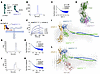 Figure 7
SAXS models of N-terminal and C-terminal ANGPT2 complexes with α5 and β1-integrin. (A) Schematic representation of ANGPT2-SCD and β1-integrin recombinant proteins used for SAXS. (B–D) SEC-SAXS of ANGPT219–76–SUMO in complex with β1-head. The SEC elution profile (B); fit of ab initio using DAMMIF (green) and homology model, rigid body refined using SASREF (black), with SAXS data (blue) (C); and overlay of ab initio and homology models (D). (E) Schematic representation of the N-terminal truncated dimeric ANGPT2147–496, α5Calf1-2 and TIE2 (LBD, red) used for SPR and SAXS. (F) Binding of ANGPT2147–496 to α5Calf1-2 in SPR. (G–I) SEC-SAXS analysis of ANGPT2147–496 in complex with α5Calf1-2. The SEC elution profile (G), fit of ab initio (green) and homology model (black) with SAXS data (blue) (H), ab initio (DAMMIF) and homology models (SREFLEX) (I). (J–L) SEC-SAXS analysis of ANGPT2147–496 in complex with α5Calf1-2 and TIE2 LBD. The SEC elution profile (J), fit of ab initio using DAMMIF (green) and homology model rigid body refined using SREFLEX (black) with SAXS data (blue) (K), and overlay of ab initio and homology models (L). The χ² value is presented as a measure of the model’s goodness of fit and statistical confidence (C, H, and K). For homology model, ANGPT219–76 (Supplemental Figure 6A), ANGPT2147–496 (Supplemental Figure 7A), β1-head (PDB ID: 7NXD), TIE2 LBD (PDB ID: 2GY7), and our crystal structure of α5Calf1-2 were used.
SAXS and multiprotein binding analyses reveal a 2:1 ANGPT2–α5-integrin complex and simultaneous TIE2 engagement. To visualize the complex of ANGPT2 with α5Calf1-2 in SAXS, we used an N-terminally truncated ANGPT2147–496, which includes FLD and part of CCD responsible for dimerization and likely positioning of FLD domains as in full-length ANGPT2 (Figure 7E) (13). A recent report of SAXS structure of ANGPT2147–496 revealed it is an asymmetric dimer that binds to TIE2 in 2:1 stoichiometry (13). We found that ANGPT2147–496 also bound to α5Calf1-2 (Figure 7F). SAXS ab initio models of ANGPT2147–496 (generated using DAMMIF; ref. 52) showed an elongated molecule with globular structure at one end and rod-shaped structures at the other end, consistent with a prior report (13) (Supplemental Figure 13, A and B). A multi-subunit SEC-SAXS complex containing ANGPT2147–496 and α5Calf1-2 was constructed (using SREFLEX; ref. 53), based on molecular contacts identified in our co-crystal and MD simulation studies (χ2 =2.4) (Figure 7, G–I). The determined molecular weights of ANGPT2147–496 dimer and its complex with α5Calf1-2 were consistent with their theoretical molecular weights (Supplemental Table 5), suggesting that the dimeric ANGPT2147–496 binds to α5Calf1-2 using 2:1 stoichiometry (Figure 7I). Similar results were obtained through SAXS analysis in batch mode (Supplemental Figure 13, C and D).
Notably, the previously identified TIE2 binding site in ANGPT2 FLD (16) is accessible in our ANGPT2147–496–α5Calf1-2 SAXS model. Therefore, we tested whether ANGPT2147–496, α5Calf1-2, and TIE2 ligand-binding domain (LBD) (Figure 7E) formed a complex using SEC-SAXS (Figure 7, J–L, Supplemental Figure 8, M and N). The molecular weight of the complex was 165.6 kDa, corresponding to the estimated theoretical molecular weight of the trimeric ANGPT2147–496–α5Calf1-2–TIE2 LBD complex (177.5 kDa). Using the information on the interaction interface identified for ANGPT2 FLD and α5Calf1-2, and of the crystal structure of ANGPT2 FLD and TIE2 LBD (16), we generated all possible models of the 3 proteins (using SREFLEX; ref. 53) with respect to TIE2 LBD–ANGPT2 FLD interaction (Figure 7L and Supplemental Figure 13, E–H). Interestingly, the rigid body modeling presented in Figure 7L agrees with the SAXS experimental data (χ2 = 1.9 for model presented in Figure 7L, compared with χ2 = 6.2 and χ2 = 8.9 for models presented in Supplemental Figure 13, E and G, respectively), favoring the geometry of that model. These results indicate that the ANGPT2147–496 dimer can simultaneously interact with both α5Calf1-2 and TIE2 LBD via its asymmetric FLD domains following 2:1 stoichiometry. Supporting this, α5Calf1-2 immunoprecipitation pulled down TIE2 LBD only in the presence of the dimeric ANGPT2 FLD, whereas α5Calf1-2 and TIE2 LBD did not directly interact (Supplemental Figure 13, I and J).
To test whether α5β1-integrin functions as a coreceptor for ANGPT2/TIE2 through α5Calf1-mediated interaction, we generated an α5Calf1–Fc fusion protein and treated LECs with oligomeric ANGPT2 in its presence (Supplemental Figure 14). α5Calf1-Fc decreased ANGPT2-induced FOXO1 nuclear exclusion, similar to ANGPT2-FLD-Fc, which competes for TIE2 binding, yet it cannot activate the receptor, due to its dimeric configuration. These results support a role for the α5Calf1 in ANGPT2-induced FOXO1 signaling (Supplemental Figure 14).
Proposed model of the ANGPT2, TIE2, and inactive α5β1-integrin complex. Our results showed that ANGPT2, α5 integrin, and TIE2 can simultaneously interact, and that TIE2 in ECs preferentially colocalizes with inactive, but not active, β1-integrin. Therefore, to gain insight into the ANGPT2–α5β1-integrin–TIE2 complex, we created a model consisting of the dimeric ANGPT2147–496 and the ECDs of α5β1-integrin and TIE2 (Figure 8, A and B, and Supplemental Video 2). We used previously published models of the clustered TIE2-ECD homodimers and their complex with ANGPT2147–496 (13, 54, 55), as well as the structure for the inactive, half-bent conformation of the α5β1-ECD, obtained from a previously published, single-particle cryo–electron microscopy structure (Protein Data Bank identifier [PDB ID]: 7NXD) (56). These structures were superimposed on our SAXS complex consisting of α5Calf1-2, ANGPT2147–496, and TIE2 LBD, maintaining the interactions of ANGPT2 FLD with the TIE2 LBD (16) and with the α5Calf1-2 (reported in the present study). The flexible region between TIE2 FN1 and TIE2 LBD was used to rotate and adjust the orientation of the protein domains while the interfaces among the 3 proteins were maintained. Interestingly, the model of the dimeric ANGPT2147–496 in complex with the inactive, half-bent α5β1-integrin and TIE2 ECDs could be created without steric clashes while maintaining the overall geometry and interactions of the existing structures found in this study and previously (13, 16, 54–56) (Figure 8, A and B, and Supplemental Video 2). The model suggests, therefore, that ANGPT2 can simultaneously interact via its asymmetrically oriented FLDs with TIE2 and inactive α5β1-integrin. Taken together, our results support a model where inactive β1-integrin acts as a molecular scaffold in EC junctions for oligomeric ANGPT/TIE/FOXO signaling, whereas ANGPT2 acts as α5β1-integrin agonist independently of TIE2 (Figure 8, C and D).
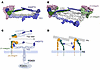 Figure 8
Proposed models of ANGPT2 complexes with α5β1-integrin and TIE2. (A and B) Surface model of dimeric ANGPT2147–496 in complex with TIE2 ECD and inactive conformation of α5β1-integrin ECD in 2 orientations with 1 (A) or 2 (B) integrin heterodimers. ANGPT2147–496 dimer in complex with the TIE2 LBD and Calf1-2 domains of α5 integrin are derived from the SAXS data in this report. The TIE2 LBD–ANGPT2-FLD interaction is consistent with the report of Barton et al. (16). An array of TIE2 ECD dimers (blue and gray) is based on interactions of fibronectin type III domain 2 (Fn2) and Fn3 of TIE2, according to Moore et al. (54) and Leppänen et al. (13, 55) and the inactive conformation of the α5β1-ECD according to Schumacher et al. (56). (C and D) Proposed mode of multimeric ANGPT2 signaling as a TIE2 agonist, in complex with inactive α5β1-integrin, leading to inactivation of FOXO1 (C). ANGPT2 acts as an α5β1-integrin agonist in the absence of TIE2, involving its unique N-terminal SCD interacting with β1-integrin PSI (D). This may involve clustering of integrin heterodimers. Image is not to scale.


Copyright © 2026 American Society for Clinical Investigation
ISSN: 0021-9738 (print), 1558-8238 (online)