
Advertisement
Review
Open Access |  10.1172/JCI202824
Polyendocrine metabolic ovarian syndrome (PMOS)/polycystic ovary syndrome (PCOS): current and future trends
Jessica L. Chan, Irene Masini, and Margareta D. Pisarska
Department of Obstetrics and Gynecology, Cedars-Sinai Medical Center, Los Angeles, California, USA.
Address correspondence to: Margareta D. Pisarska, 8635 W. 3rd Street, Suite 160W, Los Angeles, California 90048, USA. Email: margareta.pisarska@cshs.org.
Find articles by Chan, J. in: PubMed | Google Scholar
Department of Obstetrics and Gynecology, Cedars-Sinai Medical Center, Los Angeles, California, USA.
Address correspondence to: Margareta D. Pisarska, 8635 W. 3rd Street, Suite 160W, Los Angeles, California 90048, USA. Email: margareta.pisarska@cshs.org.
Find articles by Masini, I. in: PubMed | Google Scholar
Department of Obstetrics and Gynecology, Cedars-Sinai Medical Center, Los Angeles, California, USA.
Address correspondence to: Margareta D. Pisarska, 8635 W. 3rd Street, Suite 160W, Los Angeles, California 90048, USA. Email: margareta.pisarska@cshs.org.
Find articles by Pisarska, M. in: PubMed | Google Scholar
Published June 15, 2026 - More info
J Clin Invest. 2026;136(12):e202824. https://doi.org/10.1172/JCI202824.
© 2026 Chan et al. This work is licensed under the Creative Commons Attribution 4.0 International License. To view a copy of this license, visit http://creativecommons.org/licenses/by/4.0/.

-
Diagnosis of PCOS
The 2023 international evidence-based guidelines for the assessment and management of PCOS recommend using the Rotterdam criteria for the diagnosis in adults, with a requirement of two out of the following three characteristics: (a) ovulatory dysfunction (OD), (b) clinical or biochemical hyperandrogenism (HA), and (c) polycystic ovary morphology (PCOM) on ultrasound, with exclusion of other hormonal disorders (Table 1) (3, 4). Given that pathological ovarian cysts are not a requirement for diagnosis, an international consortium recently renamed the condition polyendocrine metabolic ovarian syndrome (PMOS) (5).
OD often presents as irregular menstrual cycles, defined as a cycle of <21 or >35 days, from 3 years after menarche until perimenopause. HA can be clinical or biochemical. Clinical HA often presents as hirsutism, acne, or alopecia. The modified Ferriman-Gallwey score is used as an objective assessment of hirsutism. A score of 4 to 6 can be used to detect hirsutism. However, this can be variable based on ethnicity and self-treatment. A score of ≥8 is used to define hirsutism in Black or White women in the United States and United Kingdom, but a score of ≥2 has been used in Asian women (3, 6). This scoring system is limited because of its subjective nature. Therefore, the term “patient-important hirsutism” has been suggested to describe unwanted sexual hair growth that causes enough distress to seek treatment (6). Biochemical HA is determined through measurement of total and free testosterone. Total testosterone should be measured with highly sensitive tandem mass spectrometry (LC-MS/MS). Free testosterone should be measured by calculation, equilibrium dialysis, or ammonium sulfate precipitation. If not available, free testosterone can be estimated by the calculated free androgen index. If total or free testosterone levels are not elevated, clinicians may consider measuring androstenedione and DHEAS. These measures are less specific for PCOS/PMOS, and age-related cutoffs should be applied. PCOM is ideally evaluated via pelvic transvaginal ultrasonography with transducer bandwidth of ≥8 MHz, is defined as ≥20 antral follicles between 2 and 9 mm in at least one ovary or a volume ≥10 mL, and can assist with PCOS/PMOS diagnosis in individuals who present with only one other Rotterdam criterion (7, 8). Special training and standardized protocols are needed for PCOM reporting. Due to this need for standardized assessment, the most recent international guidelines state that AMH level may be used as an alternative, checked at least 8 years postmenarche because of the strong correlation between antral follicle count and AMH. AMH alone should not be used as a singular diagnostic test for PCOS/PMOS. While “high” levels of AMH have been associated with PCOS/PMOS, no specified values have been determined to define PCOM (3). A study using a fully automated Elecsys AMH assay found that, in women between 23 and 35 years of age, an AMH above 3.2 ng/mL as a surrogate for PCOM had a sensitivity of 88.6% and a specificity of 80.3% (9).
Others have suggested defining PCOS/PMOS by phenotype (10). The different combinations of diagnostic criteria lead to four possible phenotypes: A) HA+OD+PCOM, B) HA+OD, C) HA+PCOM, and D) OD+PCOM. Each phenotype is associated with its own unique metabolic risk, with phenotype A having the highest rates of insulin resistance, metabolic syndrome, and dyslipidemia and phenotype D having the mildest metabolic profile (10).
There are two other diagnostic criteria that are used, to some extent. The National Institutes of Health criteria require HA and OD, and the Androgen Excess PCOS Society criteria require the presence of HA and either OD or PCOM (11, 12).
The varying diagnostic criteria make defining PCOS/PMOS and determining best treatment practice challenging and complicate epidemiologic studies to determine the true prevalence of PCOS/PMOS. However, simple screening tools have high predictive value to identify individuals at risk for androgen excess disorders, including PCOS/PMOS (13). For example, in one study, participants were asked three questions to self-assess the presence/absence of male-like hair and menstrual irregularity. The calculated sensitivity and specificity of this questionnaire to predict PCOS/PMOS were 89% and 78%, respectively (13).

-
Pathophysiology of PCOS/PMOS
The pathophysiology of PCOS/PMOS is complex and multifactorial, making it difficult for a single theory to account for its development (Figure 1). There are genetic, epigenetic, and environmental factors that modulate neuroendocrine, ovarian, and metabolic functions, and it is the interplay among these components that ultimately leads to PCOS/PMOS development (14). Further understanding these mechanisms has uncovered new targets in advancements of its diagnosis and treatment.
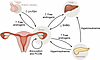 Figure 1
PCOS/PMOS pathophysiology. PCOS/PMOS is a complicated syndrome, involving multiple feedback loops in the anterior pituitary, liver, pancreas, and ovary ultimately contributing to a hyperandrogenic state. In the pituitary, LH is released in higher quantities than FSH, simulating the theca cells of the ovary to increase production of androgens. The androgens in turn stimulate the pituitary to release LH and FSH. The increased androgen also acts on the liver, decreasing SHBG, which increases circulating free androgens. Finally, at the level of the pancreas, androgens lead to hyperinsulinemia, which in turn also decreases SHBG. Insulin also acts on the theca cells to promote androgen release. All of these factors lead to HA, which leads to anovulation and PCOM in the ovary. LH, luteinizing hormone; FSH, follicle-stimulating hormone; SHBG, sex hormone–binding globulin.
Role of genetics and epigenetics. PCOS/PMOS is highly heritable, with 60%–70% of daughters born to mothers with PCOS/PMOS ultimately diagnosed with PCOS/PMOS as well (15). Genome-wide association studies (GWAS) have implicated different genes (16–21) and proteins (22) in the development of PCOS/PMOS (Table 2). Two large-scale GWAS on individuals of Han Chinese ancestry identified 11 genes that were strongly associated with PCOS/PMOS: LHCGR, FSHR, THADA, C9orf3, DENND1A, YAP1, RAB5B/SUOX/ERBB3, HMGA2, OX3, INSR, and SUMO1P1 (16, 17). Three other large-scale GWAS on individuals of European ancestry also found an association between PCOS/PMOS and many of these same genes, in addition to ERRB4, IRF1/RAD50, GATA4/NEIL2, PLGRKT, FSHB, ZBTB16, KRR1, and MAPRE (18–20). The majority of these genes encode proteins involved in insulin signaling, sex hormone function, and regulation of metabolism, processes associated with PCOS/PMOS (23). These gene loci are conserved among the different PCOS/PMOS phenotypes, suggesting a similar overall genetic architecture among patients with varying presentation (23). However, a recent analysis using distinct clinical subtypes of PCOS/PMOS determined by clustering of reproductive, metabolic, and background traits demonstrated unique genetic profiles in each group (24). Notably, variants in the genes listed above accounted for less than 10% of PCOS/PMOS prevalence (25), which may in part be due to the fact that GWAS primarily identify common variants associated with small effect sizes (26). Furthermore, GWAS identify statistical associations and not the mechanisms by which these genes contribute to PCOS/PMOS pathogenesis. The missing heritability also highlights the likely contribution of additional factors to the pathophysiology of PCOS/PMOS.
Epigenetics describes the study of gene expression heritability that occurs without changes to the DNA sequence itself (27). These changes may occur due to exposure to certain chemicals that can mimic endogenous hormones, both in utero and during important development periods. For example, exposure to valproate, the antiepileptic medication, has been associated with development of the PCOS/PMOS phenotype (28, 29). There is also emerging evidence that environmental toxins, including endocrine-disrupting chemicals from everyday items, can interfere with hormone signaling and metabolic pathways via epigenetic mechanisms, promoting features of PCOS/PMOS (30, 31). Differences in presentation of PCOS/PMOS in two states of the United States, Alabama and California, suggest a potential role of the environment on PCOS/PMOS, though further research needs to be done to identify whether epigenetics plays a role (32). DNA methylation, a common epigenetic mechanism that controls gene expression, has been implicated in the development of PCOS/PMOS in several studies (25, 33). A meta-analysis found the DNA of individuals with PCOS/PMOS to be globally hypomethylated in various tissues and peripheral blood but hypermethylated at genes including INSR, which encodes the insulin receptor, and specifically hypomethylated at other genes such as AMH and AMHR, which encode AMH and its receptor (34). Several studies, primarily on animal models, have linked exposure to high levels of androgens in utero to the development of PCOS/PMOS in offspring via epigenetic mechanisms, including changes in DNA methylation (28, 35, 36). Other studies in animal models have shown that reversing hypomethylation using methyl donors can restore normal expression of those genes and restore normal reproduction and metabolic function (37, 38), offering a possible target for future treatment.
Roles of HA and insulin resistance. HA is present in greater than 80% of individuals with PCOS/PMOS (25). The main driver is androgen production within ovarian theca cells, though adrenal androgen production may also play a role (39). Production of androgens within theca cells is mainly stimulated by LH (40). In addition, insulin resistance, which is present in up to 70% of individuals with PCOS/PMOS, contributes to androgen excess in several ways (41). First, hyperinsulinemia decreases SHBG, increasing the levels of circulating androgens (25). Furthermore, insulin has gonadotropic properties on ovarian tissue, driving androgen production (41). Hyperinsulinemia leads to increased sensitization of theca cells to LH, further promoting theca cell production of androgens (42). In a mouse model of PCOS/PMOS, knocking out the insulin receptor gene on theca cells corrected HA (43). Hyperinsulinemia has also been shown to inhibit the maturation of follicles, leading to anovulation and PCOM (25, 41). Insulin resistance also correlates with the degree of anovulation seen in patients with PCOS/PMOS (44).
Moreover, obesity, which is highly prevalent among patients with PCOS/PMOS, is associated with pancreatic β cell dysfunction and impaired insulin signaling (42, 45). It is hypothesized that the clinical heterogeneity of PCOS/PMOS may be explained by the interplay between androgen excess and metabolic triggers including obesity and hyperinsulinemia, with some individuals developing PCOS/PMOS due to an intrinsic androgen abnormality alone, while those with a milder defect may require additional metabolic stressors to manifest the condition (28, 46, 47). Importantly, not all individuals with insulin resistance have PCOS/PMOS, and not all individuals with PCOS/PMOS are insulin resistant, indicating additional factors at play (28).
Roles of inflammation and neuroendocrine signaling. There is evidence that low-grade chronic inflammation plays a role in the long-term metabolic consequences of PCOS/PMOS (48). Individuals with PCOS/PMOS exhibit higher levels of inflammatory markers, such as C-reactive protein; however, chronic inflammation is also common in individuals with obesity or insulin resistance, so it is difficult to determine whether it is a causal driver of PCOS/PMOS (49). Chronic inflammation may arise from the relatively lower levels of progesterone due to anovulation, as progesterone exhibits antiinflammatory properties (49). Additionally, altered fatty acid metabolism in the follicular fluid from individuals with PCOS/PMOS leads to inflammasome activation via the ERK1/2 signaling pathway (50). Alternatively, recent data demonstrate that immune suppression and impaired angiogenic signaling may play a role in PCOS/PMOS, rather than chronic inflammation (51), complicating our understanding of the role of inflammatory cytokines in PCOS/PMOS pathogenesis.
There is also increasing evidence that the etiology of androgen excess in PCOS/PMOS involves abnormal gonadotropin-releasing hormone (GnRH) signaling in the hypothalamus (52). GABA, which is usually an inhibitory neurotransmitter, has been shown to increase activity of GnRH neurons (53). Previous studies demonstrated an increase in GABA innervation of GnRH neurons in individuals with PCOS/PMOS (54), and more recent data demonstrate an increase in GABA signaling to GnRH neurons in mice with prenatal androgen exposure (55), supporting the likely important role of GABA in the development of PCOS/PMOS. Neurons located in the arcuate nucleus of the hypothalamus releasing kisspeptin, neurokinin B, and dynorphin play a pivotal role in the pulse generation of GnRH neurons and have been implicated in the abnormal signaling seen in PCOS/PMOS (56). AMH has also been implicated in GnRH signaling pathways, with multiple studies demonstrating the presence of AMH receptors on GnRH neurons, suggesting this signaling is upregulated in the setting of higher AMH levels in PCOS/PMOS (57, 58). The increased firing of GnRH neurons is thought to then lead to the elevated LH/FSH ratio, contributing to ovarian HA. The resulting HA decreases the likelihood of recruiting a dominant follicle, resulting in anovulation and PCOM. The involvement of these neuroendocrine pathways in the pathophysiology of PCOS/PMOS presents possible future therapeutic targets.

-
Clinical management of PCOS/PMOS
The presentation of PCOS/PMOS is extremely heterogeneous; therefore, treatment must be individualized (Figure 2). Although no single medication treats all aspects of PCOS/PMOS, there are several approved therapies that target specific features of the condition, including androgen excess, insulin resistance, and infertility (28). Combined hormonal contraceptives (CHC), which decrease levels of circulating androgens, are a first-line therapeutic agent for both hirsutism and acne (3). When CHC are contraindicated, other antiandrogen options include spironolactone, flutamide, or finasteride, which work at the level of the androgen receptor or androgen production (3). Spironolactone is an aldosterone receptor antagonist that has antiandrogenic effects through inhibition of dihydrotestosterone (DHT) binding. Flutamide is a pure antiandrogen that acts as a competitive antagonist at the level of the androgen receptor. Finasteride is a competitive inhibitor of 5-α reductase, the enzyme that converts testosterone into DHT, leading to lower concentrations of DHT. These medications are teratogenic and should be taken concurrently with contraception. A variety of treatments including pharmaceutical-grade cosmetics, laser treatments, and other methods targeting hair removal or growth can also help address the dermatologic manifestations of HA in PCOS/PMOS (3, 59, 60). Anovulation and resulting abnormal uterine bleeding can also be managed with CHC (61). Ensuring withdrawal bleeding a minimum of every 3 months is important for endometrial protection from hyperplasia and malignancy in individuals with anovulation (62). Weight loss of 5% body weight has also demonstrated improvements in bleeding patterns and restoration of ovulation, particularly in adolescents with PCOS/PMOS (63, 64). Beyond these approaches, there is limited preclinical research on new therapeutic targets including phosphodiesterase-4 inhibitors and interventions modulating the gut microbiome, both of which are thought to target insulin resistance and chronic inflammation (65).
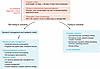 Figure 2
Individualized treatment for PCOS/PMOS. Flow chart describing therapeutic decision-making for individuals with PCOS/PMOS depending on their treatment goals.
Metabolic considerations. A diagnosis of PCOS/PMOS is associated with metabolic consequences and long-term sequelae; therefore, individuals with PCOS/PMOS should have more frequent cardiometabolic risk assessments than their age-matched counterparts (66). As described in the pathophysiology section, PCOS/PMOS is characterized by HA and insulin resistance, which act in concert to promote metabolic dysfunction. HA impairs adipocyte function, encourages visceral fat accumulation, and contributes to insulin resistance, which in turn increases risk of diabetes and heart disease (67). Current guidelines recommend obtaining a lipid profile, a blood pressure measurement, and glucose tolerance testing upon diagnosis of PCOS/PMOS (3). The most accurate method to test glycemic status in the setting of PCOS/PMOS is with a 75 g glucose tolerance test, while measurement of fasting glucose or hemoglobin A1c should be reserved for cases in which the glucose tolerance test is contraindicated (3). After initial screening, blood pressure monitoring should be done at least annually and glycemic testing performed every 1–2 years with the 75 g tolerance test (3). A diagnosis of PCOS/PMOS should be considered an independent risk factor when calculating cardiovascular risk or risk of diabetes (3).
Lifestyle modifications including diet and exercise should be emphasized for all those with PCOS/PMOS and have been shown to improve body fat composition and insulin resistance (68). When weight loss is not achieved with lifestyle changes, there is evidence that bariatric surgery can improve metabolic status of individuals with PCOS/PMOS (47). Metformin should be used for those with insulin resistance, and those diagnosed with diabetes should be managed according to standardized guidelines (66). Metformin is an insulin-sensitizing agent that lowers blood glucose through inhibition of hepatic gluconeogenesis and decreases intestinal glucose absorption. It also increases uptake of glucose in the muscle. Recent data demonstrate ethnic differences in PCOS/PMOS-related metabolic dysfunction, with Black, Hispanic, and Asian women with PCOS/PMOS being at higher risk of insulin resistance (69). On a more global scale, differences in the prevalence of metabolic syndrome and clustering of its components can be seen amid different races and ethnicities, which may reflect contributions of racial and environmental factors (70). These variations highlight the need for comprehensive metabolic screening to identify targets for CVD risk reduction in individuals with PCOS/PMOS.
Reproductive considerations. Subfertility in individuals with PCOS/PMOS is thought to arise primarily from oligo-ovulation or anovulation (71), with individuals with HA having lower pregnancy rates (72); therefore, ovulation induction is a mainstay in management. Clomiphene citrate was previously considered the first-line therapy for ovulation induction for those with PCOS/PMOS (62). Clomiphene citrate induces ovulation by acting as a selective estrogen receptor modulator that blocks estrogen receptors in the hypothalamus, reducing negative feedback and increasing release of FSH. FSH then stimulates ovarian follicular development. However, more recent data demonstrate that, for individuals with PCOS/PMOS, ovulation induction with letrozole is associated with higher birth rates compared with clomiphene citrate (27.5% vs. 19.1%) (73, 74). Letrozole is an aromatase inhibitor that creates a peripheral low-estrogen environment that allows for release of FSH. For those unable to achieve pregnancy with ovulation induction, ovarian stimulation with gonadotropins is recommended (75). For those who require in vitro fertilization, there is a higher risk of developing ovarian hyperstimulation syndrome (76). As mentioned previously, even modest weight loss of 5% has been demonstrated to help restore ovulation and therefore potentially improve fertility (63). Metformin can improve ovulatory function; however, it is inferior to other ovulation induction agents and should not be used as a first-line agent for infertility (77, 78). In addition, glucagon-like peptide-1 (GLP-1) receptor agonist therapies, which mimic endogenous GLP-1, increase insulin secretion, and delay gastric emptying, are thought to improve reproductive function (79). A recent study found that a GLP-1/estrogen (GLP-1/E) multiagonist, activating the GLP-1 and estrogen receptors, was especially effective at improving ovulatory function in a preclinical model, offering a possible future therapeutic avenue (80). Importantly, the data on the safety of GLP-1 receptor agonist use in pregnancy are limited, and current guidelines recommend discontinuation when trying to conceive or upon confirmation of pregnancy (81). A recent large retrospective cohort study found increased maternal weight gain and risk of preterm delivery, gestational diabetes, and hypertensive disorders of pregnancy for individuals who used GLP-1 medications shortly before or in early pregnancy (82).
Recent data suggest novel associations between an improved metabolic state and reproductive outcomes in animal models and clinical studies. Caloric restriction in a PCOS/PMOS mouse model prevented the transgenerational inheritance of PCOS/PMOS traits through oocyte-mediated DNA methylation reprogramming (83). Specific diets, including a low-protein, medium-carbohydrate, and medium-fat diet, improved OD but did not improve metabolic dysfunction in a preclinical study using a PCOS/PMOS mouse model (84). A multicenter randomized controlled trial found bariatric surgery to be more effective than medical or behavioral therapy to induce spontaneous ovulation for individuals with PCOS/PMOS and severe obesity (BMI > 35 kg/m²), improving prospects for spontaneous fertility (85). A study on individuals with PCOS/PMOS taking metformin demonstrated partial restoration of endometrial health, which can influence implantation and pregnancy success (86).
Even after achieving pregnancy, either unassisted or through ovulation induction, risk of pregnancy complications remains elevated in women with PCOS/PMOS. There are increased rates of gestational diabetes, hypertensive disorders of pregnancy, and worsened birth outcomes, including increased odds of preterm birth, fetal growth restriction, and low birth weight (87, 88). In pregnant women with PCOS/PMOS who have HA, prenatal androgen exposure may have transgenerational implications on the offspring. Daughters of women with PCOS/PMOS have a longer anogenital distance and increased sebum production (89, 90). These daughters are also five times more likely to be diagnosed with PCOS/PMOS (36). In mice, females with PCOS-like traits induced by DHT injections go on to produce female F1–F3 offspring with PCOS-like reproductive and metabolic phenotypes. In that study, the authors identified that expression of four candidate genes may be predictive of PCOS/PMOS in future generations: TIAL1, FABP5, RNF141, and INIP (36). PCOS/PMOS in pregnancy also has potential health implications for male offspring. One study using a PCOS/PMOS mouse model demonstrated that male offspring are at an increased risk for obesity and dyslipidemia, and these traits may be transmitted to subsequent generations via small noncoding RNAs (91). Sequencing sperm from F1–F3 male mice born to androgenized PCOS-like mice demonstrated distinct differentially expressed small noncoding RNAs across generations, suggesting a risk of transmission of reproductive and metabolic dysfunction through the male germline (91). In humans, a register-based cohort, clinical case-control study demonstrated that the sons of women with PCOS/PMOS are more often obese and dyslipidemic (91). The mechanisms underlying the transgenerational effects of PCOS/PMOS require further study in preclinical models and human cohorts.


Copyright © 2026 American Society for Clinical Investigation
ISSN: 0021-9738 (print), 1558-8238 (online)