
Advertisement
Clinical Research and Public HealthImmunologyInfectious disease
Open Access |  10.1172/JCI199277
A Trypanosoma cruzi trans-sialidase peptide demonstrates high serological prevalence among infected populations across endemic regions
Hannah M. Kortbawi,1,2 Ryan J. Marczak,3,4 Jayant V. Rajan,1 Nash L. Bulaong,5 John E. Pak,5 Wesley Wu,5 Grace Wang,5 Anthea Mitchell,5 Aditi Saxena,5 Aditi Maheshwari,3,4 Rachel Alfaro Leone,4 Charles J. Fleischmann,4 Emily A. Kelly,4 Evan Teal,4 Rebecca L. Townsend,6 Susan L. Stramer,6 Emi E. Okamoto,7 Jacqueline E. Sherbuk,7 Eva H. Clark,8,9 Robert H. Gilman,10 Rony Pedro Colanzi,11 Efstathios D. Gennatas,3,12 Caryn Bern,3 Joseph L. DeRisi,1,5 and Jeffrey D. Whitman4
1Department of Biochemistry and Biophysics,
2Medical Scientist Training Program,
3Department of Epidemiology and Biostatistics, and
4Department of Laboratory Medicine, UCSF, San Francisco, California, USA.
5Chan Zuckerberg Biohub San Francisco, San Francisco, California, USA.
6Scientific Affairs, American Red Cross, Gaithersburg, Maryland, USA.
7New York University School of Medicine, New York, New York, USA.
8Section of Infectious Diseases, Department of Medicine and
9Division of Tropical Medicine, Department of Pediatrics, Baylor College of Medicine, Houston, Texas, USA.
10Johns Hopkins Bloomberg School of Public Health, Baltimore, Maryland, USA.
11Universidad Catolica Boliviana, Santa Cruz, Bolivia.
12Department of Medicine, UCSF, San Francisco, California, USA.
Address correspondence to: Jeffrey L. Whitman, 2540 23rd St., San Francisco, California, 94110, USA. Phone: 415.476.1000; Email: jeffrey.whitman@ucsf.edu.
Authorship note: HMK and RJM contributed equally to this work. CB, JLD, and JDW have been designated as co–senior authors.
Find articles by Kortbawi, H. in: PubMed | Google Scholar
1Department of Biochemistry and Biophysics,
2Medical Scientist Training Program,
3Department of Epidemiology and Biostatistics, and
4Department of Laboratory Medicine, UCSF, San Francisco, California, USA.
5Chan Zuckerberg Biohub San Francisco, San Francisco, California, USA.
6Scientific Affairs, American Red Cross, Gaithersburg, Maryland, USA.
7New York University School of Medicine, New York, New York, USA.
8Section of Infectious Diseases, Department of Medicine and
9Division of Tropical Medicine, Department of Pediatrics, Baylor College of Medicine, Houston, Texas, USA.
10Johns Hopkins Bloomberg School of Public Health, Baltimore, Maryland, USA.
11Universidad Catolica Boliviana, Santa Cruz, Bolivia.
12Department of Medicine, UCSF, San Francisco, California, USA.
Address correspondence to: Jeffrey L. Whitman, 2540 23rd St., San Francisco, California, 94110, USA. Phone: 415.476.1000; Email: jeffrey.whitman@ucsf.edu.
Authorship note: HMK and RJM contributed equally to this work. CB, JLD, and JDW have been designated as co–senior authors.
Find articles by Marczak, R. in: PubMed | Google Scholar
1Department of Biochemistry and Biophysics,
2Medical Scientist Training Program,
3Department of Epidemiology and Biostatistics, and
4Department of Laboratory Medicine, UCSF, San Francisco, California, USA.
5Chan Zuckerberg Biohub San Francisco, San Francisco, California, USA.
6Scientific Affairs, American Red Cross, Gaithersburg, Maryland, USA.
7New York University School of Medicine, New York, New York, USA.
8Section of Infectious Diseases, Department of Medicine and
9Division of Tropical Medicine, Department of Pediatrics, Baylor College of Medicine, Houston, Texas, USA.
10Johns Hopkins Bloomberg School of Public Health, Baltimore, Maryland, USA.
11Universidad Catolica Boliviana, Santa Cruz, Bolivia.
12Department of Medicine, UCSF, San Francisco, California, USA.
Address correspondence to: Jeffrey L. Whitman, 2540 23rd St., San Francisco, California, 94110, USA. Phone: 415.476.1000; Email: jeffrey.whitman@ucsf.edu.
Authorship note: HMK and RJM contributed equally to this work. CB, JLD, and JDW have been designated as co–senior authors.
Find articles by Rajan, J. in: PubMed | Google Scholar
1Department of Biochemistry and Biophysics,
2Medical Scientist Training Program,
3Department of Epidemiology and Biostatistics, and
4Department of Laboratory Medicine, UCSF, San Francisco, California, USA.
5Chan Zuckerberg Biohub San Francisco, San Francisco, California, USA.
6Scientific Affairs, American Red Cross, Gaithersburg, Maryland, USA.
7New York University School of Medicine, New York, New York, USA.
8Section of Infectious Diseases, Department of Medicine and
9Division of Tropical Medicine, Department of Pediatrics, Baylor College of Medicine, Houston, Texas, USA.
10Johns Hopkins Bloomberg School of Public Health, Baltimore, Maryland, USA.
11Universidad Catolica Boliviana, Santa Cruz, Bolivia.
12Department of Medicine, UCSF, San Francisco, California, USA.
Address correspondence to: Jeffrey L. Whitman, 2540 23rd St., San Francisco, California, 94110, USA. Phone: 415.476.1000; Email: jeffrey.whitman@ucsf.edu.
Authorship note: HMK and RJM contributed equally to this work. CB, JLD, and JDW have been designated as co–senior authors.
Find articles by Bulaong, N. in: PubMed | Google Scholar
1Department of Biochemistry and Biophysics,
2Medical Scientist Training Program,
3Department of Epidemiology and Biostatistics, and
4Department of Laboratory Medicine, UCSF, San Francisco, California, USA.
5Chan Zuckerberg Biohub San Francisco, San Francisco, California, USA.
6Scientific Affairs, American Red Cross, Gaithersburg, Maryland, USA.
7New York University School of Medicine, New York, New York, USA.
8Section of Infectious Diseases, Department of Medicine and
9Division of Tropical Medicine, Department of Pediatrics, Baylor College of Medicine, Houston, Texas, USA.
10Johns Hopkins Bloomberg School of Public Health, Baltimore, Maryland, USA.
11Universidad Catolica Boliviana, Santa Cruz, Bolivia.
12Department of Medicine, UCSF, San Francisco, California, USA.
Address correspondence to: Jeffrey L. Whitman, 2540 23rd St., San Francisco, California, 94110, USA. Phone: 415.476.1000; Email: jeffrey.whitman@ucsf.edu.
Authorship note: HMK and RJM contributed equally to this work. CB, JLD, and JDW have been designated as co–senior authors.
Find articles by Pak, J. in: PubMed | Google Scholar
1Department of Biochemistry and Biophysics,
2Medical Scientist Training Program,
3Department of Epidemiology and Biostatistics, and
4Department of Laboratory Medicine, UCSF, San Francisco, California, USA.
5Chan Zuckerberg Biohub San Francisco, San Francisco, California, USA.
6Scientific Affairs, American Red Cross, Gaithersburg, Maryland, USA.
7New York University School of Medicine, New York, New York, USA.
8Section of Infectious Diseases, Department of Medicine and
9Division of Tropical Medicine, Department of Pediatrics, Baylor College of Medicine, Houston, Texas, USA.
10Johns Hopkins Bloomberg School of Public Health, Baltimore, Maryland, USA.
11Universidad Catolica Boliviana, Santa Cruz, Bolivia.
12Department of Medicine, UCSF, San Francisco, California, USA.
Address correspondence to: Jeffrey L. Whitman, 2540 23rd St., San Francisco, California, 94110, USA. Phone: 415.476.1000; Email: jeffrey.whitman@ucsf.edu.
Authorship note: HMK and RJM contributed equally to this work. CB, JLD, and JDW have been designated as co–senior authors.
Find articles by Wu, W. in: PubMed | Google Scholar
1Department of Biochemistry and Biophysics,
2Medical Scientist Training Program,
3Department of Epidemiology and Biostatistics, and
4Department of Laboratory Medicine, UCSF, San Francisco, California, USA.
5Chan Zuckerberg Biohub San Francisco, San Francisco, California, USA.
6Scientific Affairs, American Red Cross, Gaithersburg, Maryland, USA.
7New York University School of Medicine, New York, New York, USA.
8Section of Infectious Diseases, Department of Medicine and
9Division of Tropical Medicine, Department of Pediatrics, Baylor College of Medicine, Houston, Texas, USA.
10Johns Hopkins Bloomberg School of Public Health, Baltimore, Maryland, USA.
11Universidad Catolica Boliviana, Santa Cruz, Bolivia.
12Department of Medicine, UCSF, San Francisco, California, USA.
Address correspondence to: Jeffrey L. Whitman, 2540 23rd St., San Francisco, California, 94110, USA. Phone: 415.476.1000; Email: jeffrey.whitman@ucsf.edu.
Authorship note: HMK and RJM contributed equally to this work. CB, JLD, and JDW have been designated as co–senior authors.
Find articles by Wang, G. in: PubMed | Google Scholar
1Department of Biochemistry and Biophysics,
2Medical Scientist Training Program,
3Department of Epidemiology and Biostatistics, and
4Department of Laboratory Medicine, UCSF, San Francisco, California, USA.
5Chan Zuckerberg Biohub San Francisco, San Francisco, California, USA.
6Scientific Affairs, American Red Cross, Gaithersburg, Maryland, USA.
7New York University School of Medicine, New York, New York, USA.
8Section of Infectious Diseases, Department of Medicine and
9Division of Tropical Medicine, Department of Pediatrics, Baylor College of Medicine, Houston, Texas, USA.
10Johns Hopkins Bloomberg School of Public Health, Baltimore, Maryland, USA.
11Universidad Catolica Boliviana, Santa Cruz, Bolivia.
12Department of Medicine, UCSF, San Francisco, California, USA.
Address correspondence to: Jeffrey L. Whitman, 2540 23rd St., San Francisco, California, 94110, USA. Phone: 415.476.1000; Email: jeffrey.whitman@ucsf.edu.
Authorship note: HMK and RJM contributed equally to this work. CB, JLD, and JDW have been designated as co–senior authors.
Find articles by Mitchell, A. in: PubMed | Google Scholar
1Department of Biochemistry and Biophysics,
2Medical Scientist Training Program,
3Department of Epidemiology and Biostatistics, and
4Department of Laboratory Medicine, UCSF, San Francisco, California, USA.
5Chan Zuckerberg Biohub San Francisco, San Francisco, California, USA.
6Scientific Affairs, American Red Cross, Gaithersburg, Maryland, USA.
7New York University School of Medicine, New York, New York, USA.
8Section of Infectious Diseases, Department of Medicine and
9Division of Tropical Medicine, Department of Pediatrics, Baylor College of Medicine, Houston, Texas, USA.
10Johns Hopkins Bloomberg School of Public Health, Baltimore, Maryland, USA.
11Universidad Catolica Boliviana, Santa Cruz, Bolivia.
12Department of Medicine, UCSF, San Francisco, California, USA.
Address correspondence to: Jeffrey L. Whitman, 2540 23rd St., San Francisco, California, 94110, USA. Phone: 415.476.1000; Email: jeffrey.whitman@ucsf.edu.
Authorship note: HMK and RJM contributed equally to this work. CB, JLD, and JDW have been designated as co–senior authors.
Find articles by Saxena, A. in: PubMed | Google Scholar
1Department of Biochemistry and Biophysics,
2Medical Scientist Training Program,
3Department of Epidemiology and Biostatistics, and
4Department of Laboratory Medicine, UCSF, San Francisco, California, USA.
5Chan Zuckerberg Biohub San Francisco, San Francisco, California, USA.
6Scientific Affairs, American Red Cross, Gaithersburg, Maryland, USA.
7New York University School of Medicine, New York, New York, USA.
8Section of Infectious Diseases, Department of Medicine and
9Division of Tropical Medicine, Department of Pediatrics, Baylor College of Medicine, Houston, Texas, USA.
10Johns Hopkins Bloomberg School of Public Health, Baltimore, Maryland, USA.
11Universidad Catolica Boliviana, Santa Cruz, Bolivia.
12Department of Medicine, UCSF, San Francisco, California, USA.
Address correspondence to: Jeffrey L. Whitman, 2540 23rd St., San Francisco, California, 94110, USA. Phone: 415.476.1000; Email: jeffrey.whitman@ucsf.edu.
Authorship note: HMK and RJM contributed equally to this work. CB, JLD, and JDW have been designated as co–senior authors.
Find articles by Maheshwari, A. in: PubMed | Google Scholar
1Department of Biochemistry and Biophysics,
2Medical Scientist Training Program,
3Department of Epidemiology and Biostatistics, and
4Department of Laboratory Medicine, UCSF, San Francisco, California, USA.
5Chan Zuckerberg Biohub San Francisco, San Francisco, California, USA.
6Scientific Affairs, American Red Cross, Gaithersburg, Maryland, USA.
7New York University School of Medicine, New York, New York, USA.
8Section of Infectious Diseases, Department of Medicine and
9Division of Tropical Medicine, Department of Pediatrics, Baylor College of Medicine, Houston, Texas, USA.
10Johns Hopkins Bloomberg School of Public Health, Baltimore, Maryland, USA.
11Universidad Catolica Boliviana, Santa Cruz, Bolivia.
12Department of Medicine, UCSF, San Francisco, California, USA.
Address correspondence to: Jeffrey L. Whitman, 2540 23rd St., San Francisco, California, 94110, USA. Phone: 415.476.1000; Email: jeffrey.whitman@ucsf.edu.
Authorship note: HMK and RJM contributed equally to this work. CB, JLD, and JDW have been designated as co–senior authors.
Find articles by Leone, R. in: PubMed | Google Scholar
1Department of Biochemistry and Biophysics,
2Medical Scientist Training Program,
3Department of Epidemiology and Biostatistics, and
4Department of Laboratory Medicine, UCSF, San Francisco, California, USA.
5Chan Zuckerberg Biohub San Francisco, San Francisco, California, USA.
6Scientific Affairs, American Red Cross, Gaithersburg, Maryland, USA.
7New York University School of Medicine, New York, New York, USA.
8Section of Infectious Diseases, Department of Medicine and
9Division of Tropical Medicine, Department of Pediatrics, Baylor College of Medicine, Houston, Texas, USA.
10Johns Hopkins Bloomberg School of Public Health, Baltimore, Maryland, USA.
11Universidad Catolica Boliviana, Santa Cruz, Bolivia.
12Department of Medicine, UCSF, San Francisco, California, USA.
Address correspondence to: Jeffrey L. Whitman, 2540 23rd St., San Francisco, California, 94110, USA. Phone: 415.476.1000; Email: jeffrey.whitman@ucsf.edu.
Authorship note: HMK and RJM contributed equally to this work. CB, JLD, and JDW have been designated as co–senior authors.
Find articles by Fleischmann, C. in: PubMed | Google Scholar
1Department of Biochemistry and Biophysics,
2Medical Scientist Training Program,
3Department of Epidemiology and Biostatistics, and
4Department of Laboratory Medicine, UCSF, San Francisco, California, USA.
5Chan Zuckerberg Biohub San Francisco, San Francisco, California, USA.
6Scientific Affairs, American Red Cross, Gaithersburg, Maryland, USA.
7New York University School of Medicine, New York, New York, USA.
8Section of Infectious Diseases, Department of Medicine and
9Division of Tropical Medicine, Department of Pediatrics, Baylor College of Medicine, Houston, Texas, USA.
10Johns Hopkins Bloomberg School of Public Health, Baltimore, Maryland, USA.
11Universidad Catolica Boliviana, Santa Cruz, Bolivia.
12Department of Medicine, UCSF, San Francisco, California, USA.
Address correspondence to: Jeffrey L. Whitman, 2540 23rd St., San Francisco, California, 94110, USA. Phone: 415.476.1000; Email: jeffrey.whitman@ucsf.edu.
Authorship note: HMK and RJM contributed equally to this work. CB, JLD, and JDW have been designated as co–senior authors.
Find articles by Kelly, E. in: PubMed | Google Scholar
1Department of Biochemistry and Biophysics,
2Medical Scientist Training Program,
3Department of Epidemiology and Biostatistics, and
4Department of Laboratory Medicine, UCSF, San Francisco, California, USA.
5Chan Zuckerberg Biohub San Francisco, San Francisco, California, USA.
6Scientific Affairs, American Red Cross, Gaithersburg, Maryland, USA.
7New York University School of Medicine, New York, New York, USA.
8Section of Infectious Diseases, Department of Medicine and
9Division of Tropical Medicine, Department of Pediatrics, Baylor College of Medicine, Houston, Texas, USA.
10Johns Hopkins Bloomberg School of Public Health, Baltimore, Maryland, USA.
11Universidad Catolica Boliviana, Santa Cruz, Bolivia.
12Department of Medicine, UCSF, San Francisco, California, USA.
Address correspondence to: Jeffrey L. Whitman, 2540 23rd St., San Francisco, California, 94110, USA. Phone: 415.476.1000; Email: jeffrey.whitman@ucsf.edu.
Authorship note: HMK and RJM contributed equally to this work. CB, JLD, and JDW have been designated as co–senior authors.
Find articles by Teal, E. in: PubMed | Google Scholar
1Department of Biochemistry and Biophysics,
2Medical Scientist Training Program,
3Department of Epidemiology and Biostatistics, and
4Department of Laboratory Medicine, UCSF, San Francisco, California, USA.
5Chan Zuckerberg Biohub San Francisco, San Francisco, California, USA.
6Scientific Affairs, American Red Cross, Gaithersburg, Maryland, USA.
7New York University School of Medicine, New York, New York, USA.
8Section of Infectious Diseases, Department of Medicine and
9Division of Tropical Medicine, Department of Pediatrics, Baylor College of Medicine, Houston, Texas, USA.
10Johns Hopkins Bloomberg School of Public Health, Baltimore, Maryland, USA.
11Universidad Catolica Boliviana, Santa Cruz, Bolivia.
12Department of Medicine, UCSF, San Francisco, California, USA.
Address correspondence to: Jeffrey L. Whitman, 2540 23rd St., San Francisco, California, 94110, USA. Phone: 415.476.1000; Email: jeffrey.whitman@ucsf.edu.
Authorship note: HMK and RJM contributed equally to this work. CB, JLD, and JDW have been designated as co–senior authors.
Find articles by Townsend, R. in: PubMed | Google Scholar
1Department of Biochemistry and Biophysics,
2Medical Scientist Training Program,
3Department of Epidemiology and Biostatistics, and
4Department of Laboratory Medicine, UCSF, San Francisco, California, USA.
5Chan Zuckerberg Biohub San Francisco, San Francisco, California, USA.
6Scientific Affairs, American Red Cross, Gaithersburg, Maryland, USA.
7New York University School of Medicine, New York, New York, USA.
8Section of Infectious Diseases, Department of Medicine and
9Division of Tropical Medicine, Department of Pediatrics, Baylor College of Medicine, Houston, Texas, USA.
10Johns Hopkins Bloomberg School of Public Health, Baltimore, Maryland, USA.
11Universidad Catolica Boliviana, Santa Cruz, Bolivia.
12Department of Medicine, UCSF, San Francisco, California, USA.
Address correspondence to: Jeffrey L. Whitman, 2540 23rd St., San Francisco, California, 94110, USA. Phone: 415.476.1000; Email: jeffrey.whitman@ucsf.edu.
Authorship note: HMK and RJM contributed equally to this work. CB, JLD, and JDW have been designated as co–senior authors.
Find articles by Stramer, S. in: PubMed | Google Scholar
1Department of Biochemistry and Biophysics,
2Medical Scientist Training Program,
3Department of Epidemiology and Biostatistics, and
4Department of Laboratory Medicine, UCSF, San Francisco, California, USA.
5Chan Zuckerberg Biohub San Francisco, San Francisco, California, USA.
6Scientific Affairs, American Red Cross, Gaithersburg, Maryland, USA.
7New York University School of Medicine, New York, New York, USA.
8Section of Infectious Diseases, Department of Medicine and
9Division of Tropical Medicine, Department of Pediatrics, Baylor College of Medicine, Houston, Texas, USA.
10Johns Hopkins Bloomberg School of Public Health, Baltimore, Maryland, USA.
11Universidad Catolica Boliviana, Santa Cruz, Bolivia.
12Department of Medicine, UCSF, San Francisco, California, USA.
Address correspondence to: Jeffrey L. Whitman, 2540 23rd St., San Francisco, California, 94110, USA. Phone: 415.476.1000; Email: jeffrey.whitman@ucsf.edu.
Authorship note: HMK and RJM contributed equally to this work. CB, JLD, and JDW have been designated as co–senior authors.
Find articles by Okamoto, E. in: PubMed | Google Scholar
1Department of Biochemistry and Biophysics,
2Medical Scientist Training Program,
3Department of Epidemiology and Biostatistics, and
4Department of Laboratory Medicine, UCSF, San Francisco, California, USA.
5Chan Zuckerberg Biohub San Francisco, San Francisco, California, USA.
6Scientific Affairs, American Red Cross, Gaithersburg, Maryland, USA.
7New York University School of Medicine, New York, New York, USA.
8Section of Infectious Diseases, Department of Medicine and
9Division of Tropical Medicine, Department of Pediatrics, Baylor College of Medicine, Houston, Texas, USA.
10Johns Hopkins Bloomberg School of Public Health, Baltimore, Maryland, USA.
11Universidad Catolica Boliviana, Santa Cruz, Bolivia.
12Department of Medicine, UCSF, San Francisco, California, USA.
Address correspondence to: Jeffrey L. Whitman, 2540 23rd St., San Francisco, California, 94110, USA. Phone: 415.476.1000; Email: jeffrey.whitman@ucsf.edu.
Authorship note: HMK and RJM contributed equally to this work. CB, JLD, and JDW have been designated as co–senior authors.
Find articles by Sherbuk, J. in: PubMed | Google Scholar
1Department of Biochemistry and Biophysics,
2Medical Scientist Training Program,
3Department of Epidemiology and Biostatistics, and
4Department of Laboratory Medicine, UCSF, San Francisco, California, USA.
5Chan Zuckerberg Biohub San Francisco, San Francisco, California, USA.
6Scientific Affairs, American Red Cross, Gaithersburg, Maryland, USA.
7New York University School of Medicine, New York, New York, USA.
8Section of Infectious Diseases, Department of Medicine and
9Division of Tropical Medicine, Department of Pediatrics, Baylor College of Medicine, Houston, Texas, USA.
10Johns Hopkins Bloomberg School of Public Health, Baltimore, Maryland, USA.
11Universidad Catolica Boliviana, Santa Cruz, Bolivia.
12Department of Medicine, UCSF, San Francisco, California, USA.
Address correspondence to: Jeffrey L. Whitman, 2540 23rd St., San Francisco, California, 94110, USA. Phone: 415.476.1000; Email: jeffrey.whitman@ucsf.edu.
Authorship note: HMK and RJM contributed equally to this work. CB, JLD, and JDW have been designated as co–senior authors.
Find articles by
Clark, E.
in:
PubMed
|
Google Scholar
|

1Department of Biochemistry and Biophysics,
2Medical Scientist Training Program,
3Department of Epidemiology and Biostatistics, and
4Department of Laboratory Medicine, UCSF, San Francisco, California, USA.
5Chan Zuckerberg Biohub San Francisco, San Francisco, California, USA.
6Scientific Affairs, American Red Cross, Gaithersburg, Maryland, USA.
7New York University School of Medicine, New York, New York, USA.
8Section of Infectious Diseases, Department of Medicine and
9Division of Tropical Medicine, Department of Pediatrics, Baylor College of Medicine, Houston, Texas, USA.
10Johns Hopkins Bloomberg School of Public Health, Baltimore, Maryland, USA.
11Universidad Catolica Boliviana, Santa Cruz, Bolivia.
12Department of Medicine, UCSF, San Francisco, California, USA.
Address correspondence to: Jeffrey L. Whitman, 2540 23rd St., San Francisco, California, 94110, USA. Phone: 415.476.1000; Email: jeffrey.whitman@ucsf.edu.
Authorship note: HMK and RJM contributed equally to this work. CB, JLD, and JDW have been designated as co–senior authors.
Find articles by
Gilman, R.
in:
PubMed
|
Google Scholar
|
1Department of Biochemistry and Biophysics,
2Medical Scientist Training Program,
3Department of Epidemiology and Biostatistics, and
4Department of Laboratory Medicine, UCSF, San Francisco, California, USA.
5Chan Zuckerberg Biohub San Francisco, San Francisco, California, USA.
6Scientific Affairs, American Red Cross, Gaithersburg, Maryland, USA.
7New York University School of Medicine, New York, New York, USA.
8Section of Infectious Diseases, Department of Medicine and
9Division of Tropical Medicine, Department of Pediatrics, Baylor College of Medicine, Houston, Texas, USA.
10Johns Hopkins Bloomberg School of Public Health, Baltimore, Maryland, USA.
11Universidad Catolica Boliviana, Santa Cruz, Bolivia.
12Department of Medicine, UCSF, San Francisco, California, USA.
Address correspondence to: Jeffrey L. Whitman, 2540 23rd St., San Francisco, California, 94110, USA. Phone: 415.476.1000; Email: jeffrey.whitman@ucsf.edu.
Authorship note: HMK and RJM contributed equally to this work. CB, JLD, and JDW have been designated as co–senior authors.
Find articles by Colanzi, R. in: PubMed | Google Scholar
1Department of Biochemistry and Biophysics,
2Medical Scientist Training Program,
3Department of Epidemiology and Biostatistics, and
4Department of Laboratory Medicine, UCSF, San Francisco, California, USA.
5Chan Zuckerberg Biohub San Francisco, San Francisco, California, USA.
6Scientific Affairs, American Red Cross, Gaithersburg, Maryland, USA.
7New York University School of Medicine, New York, New York, USA.
8Section of Infectious Diseases, Department of Medicine and
9Division of Tropical Medicine, Department of Pediatrics, Baylor College of Medicine, Houston, Texas, USA.
10Johns Hopkins Bloomberg School of Public Health, Baltimore, Maryland, USA.
11Universidad Catolica Boliviana, Santa Cruz, Bolivia.
12Department of Medicine, UCSF, San Francisco, California, USA.
Address correspondence to: Jeffrey L. Whitman, 2540 23rd St., San Francisco, California, 94110, USA. Phone: 415.476.1000; Email: jeffrey.whitman@ucsf.edu.
Authorship note: HMK and RJM contributed equally to this work. CB, JLD, and JDW have been designated as co–senior authors.
Find articles by Gennatas, E. in: PubMed | Google Scholar
1Department of Biochemistry and Biophysics,
2Medical Scientist Training Program,
3Department of Epidemiology and Biostatistics, and
4Department of Laboratory Medicine, UCSF, San Francisco, California, USA.
5Chan Zuckerberg Biohub San Francisco, San Francisco, California, USA.
6Scientific Affairs, American Red Cross, Gaithersburg, Maryland, USA.
7New York University School of Medicine, New York, New York, USA.
8Section of Infectious Diseases, Department of Medicine and
9Division of Tropical Medicine, Department of Pediatrics, Baylor College of Medicine, Houston, Texas, USA.
10Johns Hopkins Bloomberg School of Public Health, Baltimore, Maryland, USA.
11Universidad Catolica Boliviana, Santa Cruz, Bolivia.
12Department of Medicine, UCSF, San Francisco, California, USA.
Address correspondence to: Jeffrey L. Whitman, 2540 23rd St., San Francisco, California, 94110, USA. Phone: 415.476.1000; Email: jeffrey.whitman@ucsf.edu.
Authorship note: HMK and RJM contributed equally to this work. CB, JLD, and JDW have been designated as co–senior authors.
Find articles by Bern, C. in: PubMed | Google Scholar
1Department of Biochemistry and Biophysics,
2Medical Scientist Training Program,
3Department of Epidemiology and Biostatistics, and
4Department of Laboratory Medicine, UCSF, San Francisco, California, USA.
5Chan Zuckerberg Biohub San Francisco, San Francisco, California, USA.
6Scientific Affairs, American Red Cross, Gaithersburg, Maryland, USA.
7New York University School of Medicine, New York, New York, USA.
8Section of Infectious Diseases, Department of Medicine and
9Division of Tropical Medicine, Department of Pediatrics, Baylor College of Medicine, Houston, Texas, USA.
10Johns Hopkins Bloomberg School of Public Health, Baltimore, Maryland, USA.
11Universidad Catolica Boliviana, Santa Cruz, Bolivia.
12Department of Medicine, UCSF, San Francisco, California, USA.
Address correspondence to: Jeffrey L. Whitman, 2540 23rd St., San Francisco, California, 94110, USA. Phone: 415.476.1000; Email: jeffrey.whitman@ucsf.edu.
Authorship note: HMK and RJM contributed equally to this work. CB, JLD, and JDW have been designated as co–senior authors.
Find articles by
DeRisi, J.
in:
PubMed
|
Google Scholar
|
1Department of Biochemistry and Biophysics,
2Medical Scientist Training Program,
3Department of Epidemiology and Biostatistics, and
4Department of Laboratory Medicine, UCSF, San Francisco, California, USA.
5Chan Zuckerberg Biohub San Francisco, San Francisco, California, USA.
6Scientific Affairs, American Red Cross, Gaithersburg, Maryland, USA.
7New York University School of Medicine, New York, New York, USA.
8Section of Infectious Diseases, Department of Medicine and
9Division of Tropical Medicine, Department of Pediatrics, Baylor College of Medicine, Houston, Texas, USA.
10Johns Hopkins Bloomberg School of Public Health, Baltimore, Maryland, USA.
11Universidad Catolica Boliviana, Santa Cruz, Bolivia.
12Department of Medicine, UCSF, San Francisco, California, USA.
Address correspondence to: Jeffrey L. Whitman, 2540 23rd St., San Francisco, California, 94110, USA. Phone: 415.476.1000; Email: jeffrey.whitman@ucsf.edu.
Authorship note: HMK and RJM contributed equally to this work. CB, JLD, and JDW have been designated as co–senior authors.
Find articles by Whitman, J. in: PubMed | Google Scholar
Published February 5, 2026 - More info
J Clin Invest. 2026;136(6):e199277. https://doi.org/10.1172/JCI199277.
© 2026 Kortbawi et al. This work is licensed under the Creative Commons Attribution 4.0 International License. To view a copy of this license, visit http://creativecommons.org/licenses/by/4.0/.
Received: August 20, 2025; Accepted: January 16, 2026

-
Results
Development of T. cruzi proteome library. We constructed a T7 phage display library to display the entire T. cruzi CL Brener proteome in 49 aa peptides with a 19-mer overlap in consecutive sequences (Methods, Figure 1). The library includes 228,127 T. cruzi peptides that represent 19,607 proteins. Over 99.6% of the ordered peptides were represented in the final cloned library, with 90% of peptides represented within a 9-fold difference of read counts (Supplemental Figure 1; supplemental material available online with this article; https://doi.org/10.1172/JCI199277DS1).
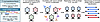 Figure 1
PhIP-seq library design and assay steps. Phage library displays the proteome of T. cruzi in 47 aa peptides with a 19 aa step size on the capsid of T7 phage. The library includes all coding regions of the proteome and splice variants. We performed the PhIP-seq assay by incubating the phage library with human plasma, followed by immunoprecipitation of antibodies in the sample and enrichment of antibody-bound phage through lysis in E. coli. We performed 2 rounds of enrichment and then sequenced the enriched phage to obtain the identity of the immunoprecipitated peptides.
PhIP-seq identifies antibodies against T. cruzi peptides. We performed PhIP-seq on peripheral blood samples from 3 distinct specimen sets including US blood donors with routine Chagas disease serology screening (BD; n = 90; n = 64 seropositive, n = 26 seronegative), a Chagas disease cardiac biomarker study (CBM; n = 143; n = 121 seropositive, n = 22 seronegative), and independent healthy controls (New York Blood Center [NYBC]; n = 95). See Methods for a full description of these specimens. The PhIP-seq library contained human glial fibrillary acidic protein (GFAP) sequences, so a polyclonal anti-GFAP antibody was used as a positive control for immunoprecipitation. Positive control samples were highly enriched for GFAP peptides (Supplemental Figure 2). We excluded 10 samples from the analysis because of low sequencing read counts: 7 seropositive CBM samples, 2 seronegative CBM study samples, and 1 NYBC control. In total, 185 cases and 143 controls were included for further data analysis.
We used a conservative analysis approach to identify antibody reactivity to individual T. cruzi peptides that were enriched (z-score ≥ 5) in at least 5% of seropositive patients (Supplemental Figure 3). Z-scores were calculated based on the distribution of sequencing reads per 100,000 (RPK) value for a given peptide in seronegative patients, which included endemic-region seronegative controls as well as independent seronegative controls from the United States. With this approach, 5,638 individual peptides representing 4,001 proteins were enriched in the seropositive CBM samples, and 8,710 peptides representing 5,629 proteins were enriched in the seropositive BD samples. Between both cohorts, 12,978 antigenic peptides corresponding to 7,373 unique proteins were identified, with an overlap of 1,370 peptides across 961 proteins in both Chagas disease study sets (Supplemental Figure 4). A total of 67 and 85 peptides were reactive in at least 70% of samples among the BD samples and CBM samples, respectively. Across both cohorts, 43 of these 70% seroreactivity peptides were shared.
Enriched T. cruzi antigens in seropositive samples. The antigenic peptides identified across both specimen sets represented 38% of the 19,607-member proteome of T. cruzi. Most of these peptides demonstrated no enrichment in seronegative samples (Figure 2, A and B). The median number of enriched Chagas disease–specific peptides in each seropositive sample was higher in the BD specimens compared with the CBM specimens (Figure 2C), but the mean number of enriched peptides per sample did not significantly differ within cohorts by patient region of origin (BD specimens) or by heart disease stage (CBM specimens) [Kruskal-Wallis, BD H(2) = 1.77, P = 0.41; CBM H(3) = 2.49, P = 0.48].
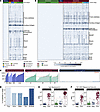 Figure 2
PhIP-seq captures known antigens across the T. cruzi life cycle stages. (A and B) Z-score enrichment over seronegative controls in (A) BD specimens (n = 64 seropositive, n = 26 seronegative) and (B) CBM specimens (n = 114, seropositive; n = 18, seronegative; n = 95, healthy controls) for seroreactive peptides (rows) with >15% seropositivity within each cohort sorted by protein name (peptides) and patient region of origin (samples) (n = 10, Central America; n = 13, Mexico; n = 12, South America; n = 1, United States; n = 28, unknown) (A) or cardiac disease stage (n = 14, stage A seronegative; n = 6, stage B seronegative; n = 38, stage A seropositive; n = 46, stage B seropositive; n = 7, stage C seropositive; n = 23, stage D seropositive) (B). Protein groups with well-characterized antigens: surface antigen, surface antigen 2 [CA-2]; NSP-like, nucleoporin NSP1-like C-terminal domain-containing protein; MASP, mucin-associated surface protein; mucin, TcMUCII; MAP, microtubule-associated protein; CCP, calpain-like cysteine peptidase; 60S, 40S, ribosomal subunit proteins. (C) Breadth of antibody reactivity, shown as seroreactive peptides in each person. Samples are grouped by geographic region or heart disease stage. (D) Peptides identified as seroreactive that are part of proteins expressed in stages of the T. cruzi life cycle (Tryp, trypomastigote; Ama, amastigote; Meta, metacyclic trypomastigote; Epi, epimastigote; Multiple, trypomastigote, amastigote, and/or metacyclic trypomastigote stages). Stage expression analysis shows seroreactive peptides in every host-interfacing life cycle stage. (E and F) Selected known seroreactive antigens are captured by T. cruzi PhIP-seq. NYBC is US controls. Antibody reactivity to 2 known antigens, (E) Ag2, a nucleoporin protein, and (F) TcE, a 60S ribosomal subunit protein (RPK). Dotted red line signifies the RPK that corresponds to a z-score cutoff of 5 in the seronegative population of each cohort.
The proteins from which the enriched peptides derive are predominantly expressed in the host phase life cycle stages of T. cruzi (metacyclic trypomastigotes, trypomastigotes, and amastigotes) (29) (Figure 2D). There were relatively fewer seroreactive peptides that corresponded to proteins expressed in the epimastigote form, which occurs only in the gut of the triatomine vector but is used as the source of parasite lysate antigens in commercial assays. Examples of host phase–specific proteins that had high antibody reactivity included trans-sialidases and mucin-associated surface proteins.
Identification of high-prevalence T. cruzi antigens across Latin America. To identify high-prevalence antigens shared across endemic regions representing different T. cruzi DTUs, we first analyzed BD specimens, which included individuals born in Mexico, Central America, and South America. We performed 2 complementary approaches to identify individual antigens with sufficient seroprevalence to have utility for clinical diagnostic assays. First, we used the z-scored, peptide-level data to identify peptides enriched in at least 90% of seropositive BD samples. Second, we used mass univariate analysis to create a ranked list of top antigenic peptides by largest predictor coefficient values. The mass univariate analysis approach models peptide RPK scores based on diagnostic status in our BD specimens. All peptides identified by the z-score approach were also identified as significantly enriched by the mass univariate analysis (Supplemental Figure 5). These analyses were then performed on the CBM specimens to evaluate for any differences in high-prevalence antigens by cardiac disease status. None were identified.
These analyses yielded 23 peptides (Supplemental Table 1), including 20 peptides that all contain the repetitive PFGQAAAGDKPS antigenic sequence, present in a current diagnostic antigen known as Ag2 (30, 31) (Figure 2E). An additional highly reactive peptide, which contained the antigenic sequence KAAAPKKAAAPQ, has high sequence homology to another known diagnostic antigen, TcE (32) (Figure 2F). The final 2 high-prevalence peptides belonged to the trans-sialidase family (Figure 3A) and shared the sequence APGETK[V/I]PSELNATIPSDHDILLEFR[D/E]LAAMALIG. To our knowledge, this peptide has not previously been used in a serological diagnostic.
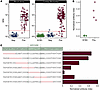 Figure 3
A trans-sialidase peptide sequence is a highly reactive serological antigen. (A) Anti–trans-sialidase peptide antibody reactivity is plotted as RPK from BD and CBM specimen sets. The dotted red line signifies the RPK that corresponds to a z-score cutoff of 5 in the seronegative population of each cohort. (B) Trans-sialidase reactivity orthogonal validation using a split-luciferase binding assay (SLBA). Reactivity was tested against 4 seropositive BD specimens and 5 seronegative US healthy control specimens. (C) Alanine-scanning mutagenesis in 10 aa windows (highlighted in red) across the entire trans-sialidase antigenic fragment demonstrates the seroreactive epitope in Chagas disease. Values are normalized antibody indices and represent the averages of 5 seropositive BD specimens.
Epitope mapping and validation of the high-prevalence trans-sialidase antigen. To orthogonally validate antibody reactivity to the high-prevalence trans-sialidase peptide, we performed a split-luciferase binding assay (SLBA). Briefly, we generated the trans-sialidase peptide with a C-terminal HiBiT tag and immunoprecipitated it with plasma from 4 seropositive BD patient samples with the highest PhIP-seq RPK values and 5 independent healthy US controls. Incubation of the immunoprecipitated peptides with LgBiT produces luminescence as a quantitative measurement of antibody binding. Four Chagas disease–seropositive samples with high PhIP-seq enrichment were reactive to the trans-sialidase peptide, while seronegative control samples were not (Figure 3B).
A sequential alanine-scan was performed to further map the reactive epitope of the trans-sialidase peptide. Using samples from 5 seropositive BD individuals, we determined that the critical region for immunoreactivity was a 10 aa sequence that spans positions 648 to 658 of the full-length trans-sialidase protein (DILLEFRELA) (Figure 3C). To be permissive of the epitope, we chose a final antigenic sequence of IPSDHDILLEFRELA, corresponding to the 2 alanine blocks with the lowest reactivity, henceforth referred to as TS23. Basic local alignment search tool (BLAST) analysis of TS23 in National Center of Biotechnology Information (NCBI) database identified 37 proteins from all T. cruzi entries with more than 93% (15 aa) sequence identity, all of which were from trans-sialidase or putative trans-sialidase genes.
Evaluation of trans-sialidase antigen TS23 antibody reactivity. To evaluate the potential of TS23 as a diagnostic serology antigen, we compared its PhIP-seq performance with that of current diagnostic antigens. To address the fact that current diagnostic antigen sequences vary at certain amino acids from available sequencing data (33) and the specific antigen sequences used in commercial diagnostics are not publicly available for all assays, we agnostically derived the amino acid sequence motifs of 8 diagnostic antigens used in US Food and Drug Administration–cleared (FDA-cleared) serology tests (24) using Multiple EM for Motif Elicitation (MEME) (see Methods) (Supplemental Figure 6) (34–36). These motifs were then queried against the entire T. cruzi PhIP-seq proteome using FIMO to identify all peptides with a significantly similar sequence to each antigen (37). The maximum z-score for each BD sample across all PhIP-seq peptides with a sequence match to a given antigen motif was plotted (Figure 4). The maximum z-score across all peptides with a sequence match to TS23 was also shown to compare this antigen’s reactivity with those in used in current diagnostics. Any sample with a z-score of at least 5 for a peptide that contained an antigen motif was considered enriched for antibody reactivity prevalence calculations (Supplemental Table 2). TS23 had high prevalence, demonstrated in 100% (64/64) of the seropositive BD samples and 95% (108/114) of CBM seropositive samples. By comparison, only Ag2 and TcE had similar antibody reactivity and prevalence across seropositive specimens. In contrast, other antigens in commercial diagnostics, Ag1, Ag13, and Ag36, had similar prevalence but lower reactivity, and KMP-11 was rarely enriched.
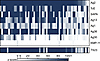 Figure 4
PhIP-seq antibody reactivity of current diagnostic antigens and TS23 in Chagas disease–seropositive specimens. Heatmap of z-score enrichment over seronegative controls in the seropositive BD specimens (n = 64) of recombinant antigens in current FDA-cleared serology tests. Recombinant antigens in current tests include Ag1, Ag2, Ag13, Ag30, Ag36 (33, 34), shed acute phase antigen (SAPA) (35), KMP-11 (36), TcD, and TcE (30, 37). Note that TcD contains the same antigenic epitope as Ag13. Each antigen motif was derived using MEME and then scored against the entire T. cruzi PhIP-seq proteome. The maximum z-score across all peptides with significant sequence matches to a given antigen motif was plotted for each sample and each antigen.
To further validate and directly characterize the antibody reactivity of TS23, we performed a quantitative IgG biolayer interferometry (BLI) immunoassay on 335 BD specimens with previous Chagas disease serology testing (n = 250, seropositive; n = 85, seronegative) (Methods, Figure 5A). Seropositive samples were chosen to include all specimens with region-of-origin data (Mexico, n = 92; Central America, n = 86; South America, n = 72) (Figure 5B). A Kruskal-Wallis test showed that the difference in reactivity was significantly different between regions [H(3) = 154.76, P < 0.0001]. The results of post hoc pairwise comparisons between regions demonstrated seroreactivity (BLI nanometer [nm] shift) was lower in individuals from Mexico compared with Central America (Mann-Whitney U [MWU]; P < 0.0001) and South America (MWU; P = 0.00021). Specimens from individuals from Central America and South America did not show differences in reactivity (MWU; P = 1.000); however, the median BLI nm shift was higher for individuals from Central America (1.86) compared with South America (1.53). Seronegative specimens did not demonstrate any overt nonspecific reactivity to the TS23 antigen.
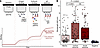 Figure 5
Biolayer interferometry validates trans-sialidase antigen TS23 seroreactivity in a large cohort. (A) Schematic of biolayer interferometry (BLI) approach. BLI uses a fiber-optic probe to measure the wavelength of light reflected from the surface of a biosensor, which changes because of light interference when an analyte binds. First, an anti-His tag probe is incubated with His-tagged antigen. Then, the probe is incubated in diluted serum or plasma, and antibodies bind the immobilized antigen on the probe. To quantify IgG-specific reactivity, anti-IgG antibodies are added and bind the immobilized patient antibodies. (B) Seropositive BD specimens (n = 250) demonstrate a range of reactivity to the trans-sialidase antigen by quantitative BLI immunoassay, while seronegative BD specimens (n = 86) do not (Wilcoxon’s rank-sum test). Reactivity, as denoted by wavelength shift, was higher in Central American (n = 86) and South American (n = 72) specimens than in Mexican specimens (n = 92). Dashed line corresponds to the 25th percentile across all seropositive specimens. Associations between BLI reactivity were tested using Kruskal-Wallis tests; significant results were followed with a post hoc MWU test with a correction for multiple comparisons using the Bonferroni method.
To evaluate if specimens with low reactivity to TS23 are weakly reactive overall, we compared TS23 reactivity with previous results from an FDA-cleared Chagas disease serology ELISA (Chagatest Recombinante v.3.0, Wiener Labs [Wv3]). This assay contains a multiepitope recombinant antigen composed of Ag1, Ag2, Ag13, Ag30, Ag36, and SAPA (30, 31). Analysis of the 25th percentile of TS23 BLI reactivity yielded 63 specimens originally positive by blood donor testing. The reactivity (signal-to-cutoff ratio) of the Wv3 ELISA was in the 25th percentile of previous testing (12) for 70% (44/63) of the low-reactivity TS23 BLI specimens. This comparison with previous Wv3 ELISA test results suggests that most low-reactivity TS23 specimens are weakly reactive specimens overall. Breakdown of these specimens by region of origin included 60% (38/63) from Mexico, 24% (15/63) from Central America, and 16% (10/63) from South America.
Performance of a multiepitope antigen including TS23. To assess whether TS23 increases test performance, we developed a multiepitope antigen based on the MEME analysis of classical T. cruzi antigens used in current diagnostics (Supplemental Figure 6), with and without TS23, referred to as TcMulti+TS23 and TcMulti, respectively. TcMulti contains 1 copy of each peptide antigen, except for 2 repeats of the short sequences of TcE and Ag13, to allow for direct stoichiometric comparisons of reactivity. The performance of TcMulti and TcMulti+TS23 were compared head-to-head by BLI immunoassay using the same set of specimens for TS23 alone to evaluate whether the inclusion of the TS23 antigen in the multiantigen construct leads to reactivity increases that exceed the natural variability observed among positive samples. Among the positive specimens, the difference in BLI immunoassay reactivity (nm shift) between TcMulti+TS23 and TcMulti had a positive skew of 1.4 (D’Agostino-Pearson test for normality, P < 0.0001, K2 84.29) (Figure 6A). The median difference of reactivity between TcMulti+TS23 and TcMulti for seropositive samples was 0.07 (IQR, –0.16, 0.49). We used 1.5× IQR above and below the quartiles as the cutoff to identify outliers, of which 15 (6%) seropositive samples were greater than Q3 + 1.5× IQR, while only 1 sample (0.04%) was below Q1 – 1.5× IQR; a Kruskal-Wallis test showed that the difference in reactivity between multiepitopes (TcMulti+TS23 – TcMulti) did not differ significantly between regions [H(2) = 4.67, P = 0.097] (Figure 6B). The percentage increases in signal gained by TcMulti+TS23 compared with TcMulti for the positive outliers ranged from 115% to 648.7%.
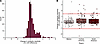 Figure 6
Distribution of difference in antibody reactivity between a multiepitope T. cruzi antigen with and without TS23 using BLI. (A) Histogram of reactivity difference of TcMulti+TS23 – TcMulti demonstrates a positive skew of 1.4 gained from the addition of the TS23 antigen (D’Agostino-Pearson test for normality, P < 0.0001, K2 84.29). (B) The change in TcMulti reactivity with the addition of TS23 shows the reactivity gains from TcMulti+TS23 are predominantly in patients with infections originating from Central America, though the change is not significantly different between regions [Kruskal-Wallis, H(2) = 4.67, P = 0.097]. Dashed red lines represent 1.5× IQR ± quartile cutoff.
When comparing antibody reactivity between multiepitope constructs and TS23 alone among endemic regions, different patterns of distributions emerged (Supplemental Tables 3 and 4). TS23 demonstrates the highest relative reactivity in specimens originating from Central America, while the multiepitope constructs (with and without TS23) demonstrated the highest reactivity in South American specimens (Figure 7), which corresponds to previous observations in commercial assays containing similar antigens (12, 13, 15).
 Figure 7
BLI using TS23 and multiepitope antigens demonstrates differential seroreactivity by region of infection. Box plot of seroreactivity (nm shift), measured by BLI, to T. cruzi antigens using seropositive (n = 250) and seronegative (n = 85) BD specimens. TS23 demonstrates the highest reactivity in infections from Central America (n = 86), while the multiepitope constructs of classical antigens (TcMulti) with and without TS23 demonstrate the highest reactivity in infections from South American infections (n = 72). Infections from Mexico (n = 92) have lower reactivity to all antigens.
To evaluate the diagnostic test performance of TS23, TcMulti+TS23 versus TcMulti, we performed receiver operating characteristic curve analysis of BLI reactivity with a stratified 70/30 train/test split (Supplemental Figure 7). Both multiepitope antigens demonstrated excellent discrimination, with training set 5-fold cross-validated average AUCs of 0.983 (TcMulti+TS23) and 0.982 (TcMulti), and test set AUCs of 0.986 and 0.984, respectively. TS23 had a training set average of 0.949 and a test set AUC of 0.869.
A fixed-cutoff approach to determine qualitative test performance (sensitivity and specificity to original blood donor testing result) was calculated using 2 standard deviations above the average reactivity of seronegative specimens to TcMulti+TS23 and TcMulti as the threshold for positive seroreactivity, yielding a nm shift cutoff 0.27. Despite the quantitative analysis above showing antibody reactivity increases from TcMulti+TS23, the qualitative test performance was equivalent between multiepitope constructs with and without TS23, demonstrating approximately 85% sensitivity and 98% specificity (Supplemental Table 5). However, it should be noted that this assay has not been optimized for diagnostic testing.


Copyright © 2026 American Society for Clinical Investigation
ISSN: 0021-9738 (print), 1558-8238 (online)