
Advertisement
Research ArticleImmunologyOncology
Open Access |  10.1172/JCI199056
Symbiotic exclusivity between CLOCK and TFPI2 drives stemness and immunosuppression in glioblastoma models
Fei Zhou,1 Lizhi Pang,1 Yang Liu,1 Fatima Khan,1 and Peiwen Chen1,2,3
1Department of Cancer Sciences, Cleveland Clinic, Cleveland, Ohio, USA.
2Cleveland Clinic Lerner College of Medicine of Case Western Reserve University, Cleveland, Ohio, USA.
3Case Comprehensive Cancer Center, Cleveland, Ohio, USA.
Address correspondence to: Peiwen Chen, Department of Cancer Sciences, Cleveland Clinic, 9500 Euclid Avenue, Mail Code NB40, Cleveland, Ohio 44195, USA. Phone: 216.444.8619; Email: CHENP6@ccf.org.
Find articles by Zhou, F. in: PubMed | Google Scholar
1Department of Cancer Sciences, Cleveland Clinic, Cleveland, Ohio, USA.
2Cleveland Clinic Lerner College of Medicine of Case Western Reserve University, Cleveland, Ohio, USA.
3Case Comprehensive Cancer Center, Cleveland, Ohio, USA.
Address correspondence to: Peiwen Chen, Department of Cancer Sciences, Cleveland Clinic, 9500 Euclid Avenue, Mail Code NB40, Cleveland, Ohio 44195, USA. Phone: 216.444.8619; Email: CHENP6@ccf.org.
Find articles by Pang, L. in: PubMed | Google Scholar
1Department of Cancer Sciences, Cleveland Clinic, Cleveland, Ohio, USA.
2Cleveland Clinic Lerner College of Medicine of Case Western Reserve University, Cleveland, Ohio, USA.
3Case Comprehensive Cancer Center, Cleveland, Ohio, USA.
Address correspondence to: Peiwen Chen, Department of Cancer Sciences, Cleveland Clinic, 9500 Euclid Avenue, Mail Code NB40, Cleveland, Ohio 44195, USA. Phone: 216.444.8619; Email: CHENP6@ccf.org.
Find articles by Liu, Y. in: PubMed | Google Scholar
1Department of Cancer Sciences, Cleveland Clinic, Cleveland, Ohio, USA.
2Cleveland Clinic Lerner College of Medicine of Case Western Reserve University, Cleveland, Ohio, USA.
3Case Comprehensive Cancer Center, Cleveland, Ohio, USA.
Address correspondence to: Peiwen Chen, Department of Cancer Sciences, Cleveland Clinic, 9500 Euclid Avenue, Mail Code NB40, Cleveland, Ohio 44195, USA. Phone: 216.444.8619; Email: CHENP6@ccf.org.
Find articles by Khan, F. in: PubMed | Google Scholar
1Department of Cancer Sciences, Cleveland Clinic, Cleveland, Ohio, USA.
2Cleveland Clinic Lerner College of Medicine of Case Western Reserve University, Cleveland, Ohio, USA.
3Case Comprehensive Cancer Center, Cleveland, Ohio, USA.
Address correspondence to: Peiwen Chen, Department of Cancer Sciences, Cleveland Clinic, 9500 Euclid Avenue, Mail Code NB40, Cleveland, Ohio 44195, USA. Phone: 216.444.8619; Email: CHENP6@ccf.org.
Find articles by Chen, P. in: PubMed | Google Scholar
Published March 17, 2026 - More info
J Clin Invest. 2026;136(10):e199056. https://doi.org/10.1172/JCI199056.
© 2026 Zhou et al. This work is licensed under the Creative Commons Attribution 4.0 International License. To view a copy of this license, visit http://creativecommons.org/licenses/by/4.0/.
Received: August 11, 2025; Accepted: March 3, 2026

Related article:
Abstract
Glioma stem cells (GSCs) are a small subset of self-renewing, plastic, and multipotent neoplastic cells in glioblastoma (GBM) that sit at the apex of a cellular differentiation hierarchy. Elucidating pathways that enhance GSC properties and determine their cell-specific interactions within the immunosuppressive GBM microenvironment are critical for developing effective therapeutic approaches. The CLOCK-BMAL1 complex, which is well known for its activity as a circadian rhythm–regulating transcription factor, plays a critical role in maintaining GSC stemness, and the gene encoding CLOCK was found to be amplified in about 5% of GBM cases. Here, Zhou et al. have uncovered a “symbiotic exclusivity” relationship between CLOCK-BMAL1 and TFPI2, which is also amplified in a small proportion of GBM cases. This relationship forms a HIF-1α/NF-κB P65–mediated positive feedback loop that boosts the proliferative and tumor-enhancing capacities of GSC and immunosuppressive microglia. This self-amplifying regulatory circuit represents an opportunity for intervention to inhibit GBM growth.
Authors
Petros Basakis, Ling-kai Shih, Jiabo Li, Daniel J. Brat

-
Results
The CLOCK-BMAL1 complex regulates TFPI2 expression in GSCs. Our previous studies demonstrated that the CLOCK-BMAL1 complex plays a crucial role in regulating the self renewal of GSCs and their interaction with the TME (20). To better understand these processes, we analyzed the microarray profiling data from GSC272 harboring shRNA control (shC) and shRNA CLOCK (shCLOCK) (20), RNA-seq data from GSCs (T387 and T3565) expressing shC and shBMAL1 (26), and intersected CLOCK- and BMAL1-regulated genes with human secretome database (27). These analyses lead to the identification of 4 genes (TFPI2, PLA2R1, LRRC17, and COL8A1) that were downregulated by depletion of the CLOCK-BMAL1 complex in GSCs (Figure 1, A and B). The CLOCK-BMAL1 complex functions as a key transcription factor regulating circadian rhythm and other cellular processes (21, 28). To investigate whether the CLOCK-BMAL1 complex can transcriptionally regulate these 4 genes in GSCs, we analyzed the BMAL1 ChIP-Seq data from human neural stem cells (NSCs) and GSCs (26). We found that BMAL1 binding to the TFPI2 and COL8A1 promoters was enhanced and reduced, respectively, in GSCs compared with NSCs, while binding to the PLA2R1 and LRRC17 promoters remained unchanged between GSCs and NSCs (Figure 1, C–E). RT-qPCR demonstrated that inhibition of the CLOCK-BMAL1 complex using shRNA-mediated depletion of CLOCK or BMAL1, or using the treatment with SR9009, an agonist of nuclear receptors REV-ERBs that can suppress BMAL1 (29, 30), significantly reduced the expression of TFPI2 in GBM patient-derived GSC272 and GSC20 (Figure 1, F–H) or mouse GBM tumor-derived GSCs (Supplemental Figure 1, A–D; supplemental material available online with this article; https://doi.org/10.1172/JCI199056DS1), such as 005 GSC, a line isolated from Trp53+/− mouse brains with lentiviral transduction of activated AKT and H-Ras (31, 32), and QPP7 GSC, a line isolated from mouse brains harboring null alleles of Qki, Pten, and Trp53 (33). Conversely, overexpression of CLOCK in GBM patient-derived GSC17 and GSC23 upregulated TFPI2 expression (Figure 1, I and J). Similarly, Western blotting confirmed that shRNA-mediated depletion of CLOCK and BMAL1 and SR9009 treatment dramatically reduced the protein level of TFPI2 in human GSC272 and GSC20 (Figure 1, K–M) and mouse GSCs (Supplemental Figure 1, E–I), such as 005 GSC, QPP7 GSC, and CT2A, a GBM cell line harboring GSC-like phenotype (16, 21). Overexpression of CLOCK in GSC17 and GSC23, however, exhibited an opposite effect (Figure 1, N and O). Our previous studies have shown that olfactomedin-like 3 (OLFML3) is downstream of CLOCK in GSCs (20, 21). To investigate whether TFPI2 is regulated by the OLFML3 pathway, we depleted OLFML3 in GSC272 cells and found that this modification did not affect the expression of TFPI2 (Supplemental Figure 1J). Together, these findings indicate that TFPI2 is transcriptionally regulated by the CLOCK-BMAL1 complex in GSCs.
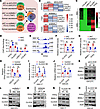 Figure 1
The CLOCK-BMAL1 complex regulates TFPI2 expression in GSCs. (A) Strategy for identification of 4 key genes encoding secreted proteins that are downregulated (fold change > 2) by CLOCK depletion in GSC272 with inducible CLOCK shRNA (ishCLOCK) versus inducible shRNA control (ishC), and by BMAL1 depletion in T387 and T3565 with BMAL1 shRNA (shBMAL1) versus shRNA control (shC). (B) Heat map shows the expression of TFPI2, COL8A1, LRRC17, and PLA2R1 in GSC272, T387, and T3565 harboring ishC versus ishCLOCK and shC versus shBMAL1. Red and blue indicate higher and lower expression, respectively. (C and D) ChIP-seq data analysis shows the heatmap (C) and quantification (D) of BMAL1-enriched profiles at TFPI2, COL8A1, LRRC17, and PLA2R1 promotors in GSCs (T387 and T3565) and NSCs (ENSA and hNP1). n = 4. (E) ChIP-seq data analysis shows BMAL1-enriched profiles at the TFPI2 promotor in NSC #1 and #2 (ENSA and hNP1) and GSC #1 and #2 (T387 and T3565). (F and G) RT-qPCR for CLOCK and TFPI2 in control, CLOCK-depleted (F, n = 4), and BMAL1-depleted (G, n = 3) GSC272. (H) RT-qPCR for TFPI2 in GSC20 and GSC272 treated with or without SR9009 (5 μmol/L). n = 3 independent samples. (I and J) RT-qPCR for CLOCK and TFPI2 in GSC17 (I) or GSC23 (J) harboring CLOCK overexpression (OE). n = 3. (K and L) Immunoblots for CLOCK, BMAL1, and TFPI2 in GSC272 harboring shC and shCLOCK (K), or shC and shBMAL1 (L). (M) Immunoblots for CLOCK and TFPI2 in GSC20 and GSC272 treated with or without SR9009 (1 and 5 μmol/L). (N and O) Immunoblots for CLOCK, BMAL1, and TFPI2 in GSC17 (N) or GSC23 (O) harboring CLOCK OE. Data from multiple replicates are presented as mean ± SD. *P < 0.05, **P < 0.01, ***P < 0.001, Student’s t test (D and F–J).
CLOCK-induced GSC self renewal is regulated by TFPI2. Our previous studies revealed that CLOCK is essential for GSC stemness maintenance (20, 26). Here, we further investigated whether TFPI2 is required for CLOCK-induced GSC self renewal. Western blotting and RT-qPCR showed that CLOCK or BMAL1 depletion–induced downregulation of stemness-associated factors CD133 and SOX2 at both protein and mRNA levels was rescued by TFPI2 overexpression in human GSC272 (Figure 2, A–D), mouse QPP7 GSC, and 005 GSC (Supplemental Figure 2, A–F). Limiting dilution and tumorsphere formation assays demonstrated that TFPI2 overexpression negated the impairment of GSC self renewal induced by depletion of the CLOCK-BMAL1 complex in GSC272 (Figure 2, E–I), QPP7 GSC (Supplemental Figure 2, G–K), and 005 GSC (Supplemental Figure 2, L–O). Moreover, carboxyfluorescein diacetate succinimidyl ester (CFSE) assays demonstrated that the proliferation deficits in CLOCK- or BMAL1-depleted GSC272 (Figure 2, J–M), QPP7 GSC (Supplemental Figure 2, P–S), and 005 GSC (Supplemental Figure 2, T and U) were abolished by TFPI2 overexpression.
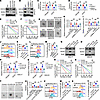 Figure 2
CLOCK-induced GSC self renewal is regulated by TFPI2. (A–D) Immunoblots (A and B) and RT-qPCR (C and D, n = 3) for CD133 (PROM1) and SOX2 in GSC272 harboring shRNA control (shC), CLOCK shRNA (shCLOCK, A), or shBMAL1 (B) in the presence or absence of TFPI2 overexpression (OE). n = 3. (E and F) In vitro limiting dilution assays in GSC272 harboring shC, shCLOCK (E), or shBMAL1 (F) in the presence or absence of TFPI2 OE. (G–I) Representative images (G) and quantification of relative tumorsphere number (H) and size (I) of GSC272 expressing shC, shCLOCK, or shBMAL1 in the presence or absence of TFPI2 OE. Scale bar: 200 μm. n = 8. (J–M) Representative images and quantification of proliferation in GSC272 harboring shC, shCLOCK (J and K), and shBMAL1 (L and M) with or without TFPI2 OE. n = 3. (N–Q) Immunoblots (N and O) and RT-qPCR (P and Q, n = 3) for CD133 (PROM1) and SOX2 in GSC17 and GSC23 harboring Control or CLOCK OE with or without shTFPI2. (R and S) In vitro limiting dilution assays in GSC17 (R) and GSC23 (S) expressing Control or CLOCK OE with or without shTFPI2. (T and U) Representative images (T) and quantification of relative tumorsphere number (U) of GSC17 or GSC23 harboring CLOCK OE in the presence or absence of shTFPI2. Scale bar: 200 μm. n = 8. (V–Y) Representative images and quantification of proliferation in GSC17 (V and W) and GSC23 (X and Y) harboring CLOCK OE in the presence or absence of shTFPI2. n = 3. Data from multiple replicates are presented as mean ± SD. *P < 0.05, **P < 0.01, ***P < 0.001, 1-way ANOVA test (C, D, H, I, K, M, P, Q, U, W, and Y), 2-way ANOVA test (E, F, R, and S).
To further confirm this connection, we overexpressed CLOCK in GSC23 and GSC17 that harbor low CLOCK expression (20) and then utilized shRNA-mediated knockdown system to deplete TFPI2. Consistent with our previous studies showing that CLOCK overexpression upregulated the protein and mRNA levels of CD133 and SOX2, which were negated by TFPI2 knockdown (Figure 2, N–Q). Moreover, TFPI2 knockdown negated CLOCK overexpression–induced upregulation of self renewal (Figure 2, R–U, and Supplemental Figure 2, V and W) and proliferation (Figure 2, V–Y). Together, these findings highlight that TFPI2 functions as a key factor in determining the CLOCK-BMAL1 complex-induced GSC self renewal.
Mutual exclusive nature of CLOCK and TFPI2 and its function in regulating GSC self renewal. Bioinformatic analysis demonstrated that CLOCK amplification is mutually exclusive with TFPI2 amplification in TCGA GBM datasets (Figure 3A), suggesting that CLOCK and TFPI2 might interact with each other by sharing similar functions (34, 35). Analysis of single-cell RNA sequencing (scRNA-seq) data from GBM patient tumors (36) demonstrated that CLOCK and TFPI2 were highly expressed in GSCs compared with tumors cells (Supplemental Figure 3, A–D). Correlation analysis in another scRNA-seq dataset from GBM patient tumors (37) confirmed that the expression of CLOCK was positively correlated with TFPI2 in GSCs (Figure 3, B and C). These results indicate a shared role for CLOCK and TFPI2 in GSCs and point to the possibility of a positive feedback loop between them. To confirm it through experimentation, we dually inhibited CLOCK (using SR9009 or shCLOCK) and TFPI2 (using shTFPI2) in GSC272. Consistent with our previous studies (16, 20) showing that SR9009 treatment, shCLOCK, or shTFPI2 reduced the self renewal (Figure 3, D–G, and Supplemental Figure 3, E–J) and proliferation (Supplemental Figure 3, K and L) and upregulated apoptosis (Supplemental Figure 3, M and N) of GSC272. However, dual inhibition of CLOCK and TFPI2 (SR9009/shCLOCK+shTFPI2) did not exhibit additional effects on GSC self renewal (Figure 3, D–G, and Supplemental Figure 3, E–J), proliferation (Supplemental Figure 3, K and L), and apoptosis (Supplemental Figure 3, M and N). Similar effects were observed in GSC272 tumor-bearing mice showing that the combined treatment with SR9009 and shTFPI2 did not affect survival, proliferation, apoptosis, and GSC stemness compared with the single treatment (Figure 3, H–L, and Supplemental Figure 3, O–R). Together, these findings suggest that CLOCK and TFPI2 promote stemness, likely by forming a positive feedback loop based on their mutual exclusivity in GBM.
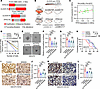 Figure 3
Mutual exclusivity between CLOCK and TFPI2 contributes to GSC self renewal and GBM progression. (A) Amplification pattern TFPI2 and CLOCK in TCGA GBM patient tumors from indicated datasets. (B) High-resolution uniform manifold approximation and projection (UMAP) showing expression of CLOCK and TFPI2 in GSCs (the population of cells are highlighted in circle) of GBM patient tumors based on scRNA-Seq data (GSE182109). (C) Relationship between CLOCK and TFPI2 expression in GSCs from GBM patient tumors based on scRNA-Seq data (GSE182109). R and P values are shown. Pearson’s correlation test. (D) In vitro limiting dilution assays in GSC272 harboring shRNA control (shC) and TFPI2 shRNA (shTFPI2) treated with or without SR9009 (5 μM). (E–G) Representative images (E) and quantification of relative tumorsphere number (F) and size (G) of GSC272 harboring shC and shTFPI2 and treated with or without SR9009 (5 μM). Scale bar: 200 μm. n = 8. (H) Survival curves of nude mice implanted with 2 × 10⁵ shC and shTFPI2 GSC272. Mice were treated with SR9009 (100 mg/kg, i.p., daily) for 10 days beginning at day 7 after orthotopic injection (n = 8 mice per group). (I–L) Representative images and quantification of IHC staining for SOX2 (I and J) and CD133 (K and L) in shC and shTFPI2 GSC272 tumors from mice treated with or without SR9009. Scale bar: 100 μm. n = 7. Data from multiple replicates are presented as mean ± SD. *P < 0.05, **P < 0.01, ***P < 0.001, 1-way ANOVA test (F, G, J, and L), 2-way ANOVA test (D), log-rank test (H).
TFPI2 upregulates the CLOCK-BMAL1 complex to promote GSC self renewal and tumor growth. To further confirm the positive feedback loop between CLOCK and TFPI2 in GSCs, we investigated whether TFPI2 can reciprocally regulate the CLOCK-BMAL1 complex in GSCs. By overexpressing TFPI2 in patient-derived GSC23 and GSC17 with relatively low TFPI2 expression (16), we found that such modification upregulated the expression of CLOCK and BMAL1 at both mRNA and protein levels (Figure 4, A–D). Conversely, shRNA-mediated depletion of TFPI2 reduced the mRNA and protein levels of CLOCK and BMAL1 in human GSC272 (Figure 4, E and F), and mouse GSCs, such as QPP7 GSC (Supplemental Figure 4, A and B), CT2A, and 005 GSC (Supplemental Figure 4, C–E), all of which harbor high TFPI2 expression (16). Next, we aimed to investigate whether TFPI2-regulated CLOCK-BMAL1 complex contributes to GSC stemness maintenance. Pharmacologic inhibition of the CLOCK-BMAL1 complex with SR9009 negated the expression of stemness-related factors SOX2 and CD133 (Figure 4, G and H, and Supplemental Figure 4F), self renewal (Figure 4, I–P), proliferation (Supplemental Figure 4, G–J), and apoptotic (Supplemental Figure 4, K–N) effects of increasing cellular TFPI2 in GSC17 and GSC23. In CLOCK-low GSC23 tumor-bearing mice, SR9009 treatment did not extend the survival, while TFPI2 overexpression shortened the survival, an effect that was abolished by the treatment with SR9009 (Figure 4Q). On the histological level, TFPI2 overexpression–induced upregulation of GSC stemness markers SOX2 and CD133 were negated by the treatment with SR9009 (Figure 4, R–U). Immunofluorescence for Ki67 and cleaved caspase 3 confirmed that SR9009 blocked the increase in proliferation and the reduction in apoptosis induced by TFPI2 overexpression (Supplemental Figure 4, O–R). Together, these findings suggest that the CLOCK-BMAL1 complex is required for TFPI2 overexpression–induced GSC self renewal and GBM progression.
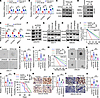 Figure 4
TFPI2 upregulates the CLOCK-BMAL1 complex to promote GSC self renewal and GBM progression. (A–D) RT-qPCR (A and B, n = 3) and immunoblots (C and D) for TFPI2, CLOCK, and BMAL1 in GSC17 and GSC23 harboring control or TFPI2 overexpression (OE). (E) RT-qPCR (E, n = 3) and immunoblots (F) for TFPI2, CLOCK, and BMAL1 in GSC272 harboring shRNA control (shC) or TFPI2 shRNA (shTFPI2). (G and H) Immunoblots for CD133 and SOX2 in GSC17 (G) and GSC23 (H) harboring control or TFPI2 OE and treated with or without SR9009 (5 μM). (I) In vitro limiting dilution assays in GSC17 harboring control or TFPI2 OE and treated with or without SR9009 (5 μM). (J–L) Representative images (J) and quantification of relative tumorsphere number (K) and size (L) of GSC17 harboring control or TFPI2 OE treated with or without SR9009 (5 μM). Scale bar: 200 μm. n = 8. (M) In vitro limiting dilution assays in GSC23 harboring control or TFPI2 OE and treated with or without SR9009 (5 μM). (N–P) Representative images (N) and quantification of relative tumorsphere number (O) and size (P) of GSC23 harboring control or TFPI2 OE treated with or without SR9009 (5 μM). Scale bar: 200 μm. n = 8. (Q) Survival curves of nude mice implanted with 2 × 10⁵ Control and TFPI2 OE GSC23 and treated with SR9009 (100 mg/kg, i.p., daily) for 10 days beginning at day 7 (n = 8 mice per group). (R–U) Representative images and quantification of IHC staining for SOX2 (R and S) and CD133 (T and U) in Control and TFPI2 OE GSC23 tumors from mice treated with or without SR9009. Scale bar: 100 μm. n = 7. Data from multiple replicates are presented as mean ± SD. *P < 0.05, **P < 0.01, ***P < 0.001, 1-way ANOVA test (A, B, E, K, L, O, P, S, and U), 2-way ANOVA test (I and M), log-rank test (Q).
TFPI2 regulates the CLOCK-BMAL1 complex through HIF-1α–NF-κB signaling pathway in GSCs. To determine how TFPI2 regulates the CLOCK-BMAL1 complex in GSCs, we performed gene set enrichment analysis (GSEA) on hallmark pathways in GSC272 with shC versus shTFPI2. The results showed that NF-κB and Hypoxia pathways were the top 2 enriched in control cells compared with TFPI2-depleted cells (Figure 5A). Western blotting results demonstrated that TFPI2 overexpression upregulated the expression of HIF-1α, NF-κB P65, and Phospho-NF-κB P65 (P-P65) in GSC17 and GSC23 (Figure 5, B and C), and the opposite effect was observed upon depletion of TFPI2 in GSC272 (Figure 5D), QPP7 GSC (Supplemental Figure 5A), and CT2A (Supplemental Figure 5B). To reveal the relationship between HIF-1α and P65, TFPI2-overexpressing GSC17 and GSC23 were treated with or without HIF-1α inhibitor acriflavine (ACF) or NF-κB P65 inhibitor SC75741. Western blotting demonstrated that TFPI2-induced P65 and P-P65 were blocked by HIF-1α inhibition (Figure 5, E and F). However, NF-κB inhibition had no effect on TFPI2-induced HIF-1α upregulation (Supplemental Figure 5, C and D). Given that NF-κB P65 is an important transcription factor that functions in multiple biological activities (38), we aimed to investigate the role of P65 in transcriptional regulation of the CLOCK-BMAL1 complex in GSCs. Analysis of the JASPAR database demonstrated that putative P65-binding elements were aligned with the promoters of CLOCK and BMAL1 (Supplemental Figure 5, E–G). ChIP-PCR on GSC272 confirmed that P65 was bound to CLOCK and BMAL1 promoters (Figure 5, G and H). RT-qPCR results in GSC17 and GSC23 showed that TFPI2 overexpression–induced upregulation of CLOCK and BMAL1 were abolished by pharmacologic inhibition of HIF-1α (Figure 5, I and J) or NF-κB (Figure 5, K and L). Similarly, the upregulated protein levels of CLOCK and BMAL1 in TFPI2-overexpressing GSC17 and GSC23 were negated by the treatment with ACF (Figure 5, M and N) or SC75741 (Figure 5, O and P). In TCGA GBM patient tumors, CLOCK was correlated positively with HIF-1A and NFKB1 (Supplemental Figure 5, H and I). Together, these findings indicate that TFPI2 regulates the CLOCK-BMAL1 complex in GSCs through the HIF-1α–NF-κB signaling axis.
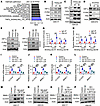 Figure 5
TFPI2 regulates CLOCK-BMAL1 complex through HIF-1α–NF-κB signaling in GSCs. (A) GSEA analysis shows the top 10 enriched hallmark pathways in shRNA control (shC) GSC272 compared with TFPI2 shRNA (shTFPI2) GSC272. Blue bars indicate the top 2 enriched signatures (FDR < 0.25). (B and C) Immunoblots for HIF-1α, P-P65, and P65 in cell lysates of GSC17 (B) and GSC23 (C) harboring control and TFPI2 overexpression (OE). (D) Immunoblots for HIF-1α, P-P6,5 and P65 in cell lysates of shC and shTFPI2 GSC272. (E and F) Immunoblots for HIF-1α, P-P65, and P65 in cell lysates of GSC17 (E) and GSC23 (F) harboring control and TFPI2 OE treated with or without HIF-1α inhibitor ACF (2 μM). (G and H) Quantification of p65 ChIP-PCR in the CLOCK promoter (G) and BMAL1 promoter (H) of GSC272. IgG was used as Control. n = 3. (I and J) RT-qPCR for CLOCK and BMAL1 in GSC17 (I) and GSC23 (J) harboring TFPI2 OE treated with or without ACF. n = 3. (K and L) RT-qPCR for CLOCK and BMAL1 in GSC17 (K) and GSC23 (L) harboring control or TFPI2 OE treated with or without P65 inhibitor SC75741. n = 3. (M and N) Immunoblots for CLOCK and BMAL1 in cell lysates of control and TFPI2 OE GSC17 (M) or GSC23 (N) treated with or without ACF. (O and P) Immunoblots for CLOCK and BMAL1 in cell lysates of control and TFPI2 OE GSC17 (O) or GSC23 (P) treated with or without SC75741. Data from multiple replicates are presented as mean ± SD. *P < 0.05, **P < 0.01, ***P < 0.001, Student’s t test (G and H), 1-way ANOVA test (I–L).
HIF-1α–NF-κB signaling axis mediates TFPI2-induced GSC self renewal. Given that TFPI2 is essential for GSC stemness maintenance (16) and can regulate the HIF-1α–NF-κB–CLOCK–BMAL1 signaling axis in GSCs, we investigated whether this signaling pathway can mediate TFPI2 overexpression-induced GSC self renewal. Pharmacologic inhibition of HIF-1α with its inhibitor ACF or NF-κB with its inhibitor SC75741 negated the upregulation of CD133 and SOX2 at both mRNA and protein levels induced by TFPI2 overexpression in GSC17 and GSC23 (Figure 6, A–D, and Supplemental Figure 6, A and B). Moreover, the treatment with ACF or SC75741 abolished the self renewal (Figure 6, E–L), proliferation (Figure 6, M–P), and apoptotic (Supplemental Figure 6, C–F) effects of overexpressing TFPI2 in GSC17 and GSC23. Together, these results suggest that the HIF-1α–NF-κB signaling axis plays a key role in regulating TFPI2-induced upregulation of GSC self renewal and proliferation, and downregulation of apoptosis.
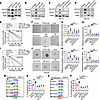 Figure 6
TFPI2-induced GSC self renewal is regulated by the HIF-1α–NF-κB signaling axis. (A and B) Immunoblots for CD133 and SOX2 in cell lysates of GSC17 (A) and GSC23 (B) harboring control or TFPI2 overexpression (OE) and treated with or without HIF-1α inhibitor ACF (2 μM). (C and D) Immunoblots for CD133 and SOX2 in cell lysates of control and TFPI2-OE GSC17 (C) and GSC23 (D) treated with or without P65 inhibitor SC75741 (5 μM). (E) In vitro limiting dilution assays in control and TFPI2-OE GSC17 treated with or without ACF (2 μM) or SC75741 (5 μM). (F–H) Representative images (F) and quantification of relative tumorsphere number (G) and size (H) of control and TFPI2-OE GSC17 treated with or without ACF or SC75741. Scale bar: 200 μm. n = 8. (I) In vitro limiting dilution assays in control and TFPI2-OE GSC23 treated with or without ACF (2 μM) or SC75741 (5 μM). (J–L) Representative images (J) and quantification of relative tumorsphere number (K) and size (L) of control and TFPI2-OE GSC23 treated with or without ACF or SC75741. Scale bar: 200 μm. n = 8. (M–P) Representative and quantification of proliferation in GSC17 (M and N) and GSC23 (O and P) harboring control or TFPI2 OE treated with or without ACF (2 μM) or SC75741 (5 μM). n = 3. Data from multiple replicates are presented as mean ± SD. **P < 0.01, ***P < 0.001, 1-way ANOVA test (G, H, K, L, N, and P), 2-way ANOVA test (E and I).
Targeting downstream pathways of the TFPI2-CLOCK interplay reduces GSC stemness, activates antitumor immunity, and synergizes with anti-PD1 therapy. Given the critical role of the CLOCK-TFPI2 interplay in maintaining GSC stemness maintenance and promoting GBM progression, targeting either CLOCK or TFPI2 presents a promising therapeutic strategy for GBM. However, it is unfortunate that no inhibitors are currently available to target either CLOCK or TFPI2. Recently, we and others have demonstrated that activation of glycolysis enzymes, such as LDHA, is required for CLOCK-induced GSC self renewal (20, 26), and inhibition of LDHA with a FDA-approved drug for treating brain disorder Dravet syndrome (39, 40), Stiripentol, can inhibit GBM progression (41). Moreover, we have revealed that TFPI2 can activate the JNK-STAT3 signaling pathway to promote GSC self renewal and GBM progression (16). Therefore, we designed a therapeutic strategy with combined inhibition of LDHA (using LDHA inhibitor Stiripentol) and the JNK-STAT3 signaling axis (using JNK inhibitor JNK-IN-8 or STAT3 inhibitor WP1066) to target the CLOCK-TFPI2 interplay (Figure 7A). We found that the single treatment with Stiripentol, JNK-IN-8, or WP1066 extended the survival in GSC272 PDX model, while the combination therapy with Stiripentol and JNK-IN-8, or Stiripentol and WP1066 resulted in further survival extension, with 25%–37.5% of tumor-bearing mice cleared their tumors after the therapy (Figure 7B). On the histological level, the combination therapies significantly reduced GSC stemness markers SOX2 and CD133 compared with the single treatment (Figure 7, C–F). Our previous studies have shown that CLOCK in GSCs plays a crucial role in promoting the infiltration of immunosuppressive microglia and influencing T cell activation in the GBM TME (16, 21). To confirm the potential synergistic effect of dual inhibition of LDHA and the JNK-STAT3 signaling axis in regulating antitumor immunity, we developed an immunocompetent mouse model by intracranial injection of 005 GSCs. The results demonstrated that the combination therapy with Stiripentol and JNK-IN-8, or Stiripentol and WP1066 significantly reduced CD45lowCD11b+TMEM119+CD206+ immunosuppressive microglia (Figure 7, G and H) and upregulated CD45+CD3+CD8+IFNγ+– or CD45+CD3+CD8+CD69+–activated CD8+ T cells (Figure 7, I and J, and Supplemental Figure 7, A and B) when compared with the single treatment. However, CD45+CD3+CD4+IFNγ+– or CD45+CD3+CD4+CD69+–activated CD4+ T cells were not affected (Supplemental Figure 7, C–F). Survival studies showed that the combination therapy led to complete tumor clearance in 25% of tumor-bearing mice, with the rate increasing to 50%–62.5% when further combined with anti-PD1 therapy (Figure 7K). The triple therapies (Stiripentol + JNK-IN-8 + anti-PD1 and Stiripentol + WP1066 + anti-PD1) activated T cell memory, as all cured mice remained tumor free when rechallenged with 005 GSCs (Supplemental Figure 7G). Together, these findings suggest that the combination therapy targeting the downstream signals of CLOCK and TFPI2 is a promising therapeutic strategy for GBM.
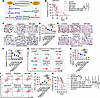 Figure 7
Inhibition of the downstream pathways of the TFPI2-CLOCK signaling loop reduces GSC stemness and immunosuppressive microglia, activates antitumor immunity, and synergizes with anti-PD1 therapy. (A) Schematic diagram depicting the positive feedback loop between TFPI2 and the CLOCK-BMAL1 complex in GSCs and the strategy of dual targeting their downstream signaling pathways to block GSC self renewal. (B) Survival curves of nude mice implanted with 2 × 10⁵ GSC272 and treated with LDHA inhibitor Stiripentol (150 mg/kg, i.p., every other day), JNK inhibitor JNK-IN-8 (30 mg/kg, i.p., daily), STAT3 inhibitor WP1066 (30 mg/kg, i.p., daily), or Stiripentol in combination with JNK-IN-8 or WP1066 for 2 weeks beginning at day 7. n = 8 mice per group. (C–F) Representative images and quantification of IHC staining for SOX2 (C and D) and CD133 (E and F) in GSC272 tumors from mice with indicated treatments. Scale bar: 100 μm. n = 4. (G and H) Representative images (G) and quantification (H) of flow cytometry for the percentage of CD45lowCD11b+TMEM119+CD206+ microglia (out of CD45lowCD11b+TMEM119+ microglia) in tumors from 005 GSC-bearing mice with indicated treatments. n = 3. (I and J) Representative images (I) and quantification (J) of flow cytometry for the percentage of CD45+CD3+CD8+IFNγ+ T cells (out of CD45+CD3+CD8+ T cells) in tumors from 005 GSC-bearing mice with indicated treatments. n = 3. (K) Survival curves of C57BL/6J mice implanted with 2 × 10⁵ 005 GSCs and treated with Stiripentol, JNK-IN-8, or WP1066, and Stiripentol in combination with JNK-IN-8 or WP1066 for 2 weeks beginning at day 7, and with anti-PD1 (10 mg/kg, i.p.) treatment on days 11, 14, and 17. n = 8 mice per group. Data from multiple replicates are presented as mean ± SD. *P < 0.05, **P < 0.01, ***P < 0.001, 1-way ANOVA test (D, F, H, and J), log-rank test (B and K).


Copyright © 2026 American Society for Clinical Investigation
ISSN: 0021-9738 (print), 1558-8238 (online)