
Advertisement
Research ArticleAutoimmunityInfectious disease
Open Access |  10.1172/JCI192619
Combined FXIII-C3 autoantibodies elicit bleeding and complement dysfunction in autoimmune FXIII deficiency
Shanshan Luo,1 Jun Deng,1 Yue Liu,2 Lv Xiong,1 Wanting Wang,1 Chaofan Wang,1 Yaohua Cai,1 Yajie Ding,1 Bahgat Fayed,3 Zhipeng Cheng,1 Lu Zhang,1 Min Zhang,1 Jun Fang,1 Gensheng Zhang,4 Rui Zhu,5 Haiqiang Jiang,6 Yunlun Li,6 Kun Huang,7 Xiang Cheng,8,9 Liang V. Tang,1 Chunyan Sun,1 Heng Mei,1 Peter F. Zipfel,10,11 Huafang Wang,1 Yadan Wang,1 Desheng Hu,5,9 and Yu Hu1,12
1Institute of Hematology, Union Hospital, Tongji Medical College, Huazhong University of Science and Technology, Wuhan, China.
2National Clinical Research Center for Chinese Medicine Cardiology, Xiyuan Hospital, Chinese Academy of Chinese Medical Sciences, Beijing, China.
3Department of Chemistry of Natural and Microbial Products, Pharmaceutical and Drug Industries Research Institute, National Research Centre, Giza, Egypt.
4Department of Critical Care Medicine, Second Affiliated Hospital, Zhejiang University School of Medicine, Hangzhou, Zhejiang, China.
5Department of Integrated Traditional Chinese and Western Medicine, Union Hospital, Tongji Medical College, Huazhong University of Science and Technology, Wuhan, China.
6Innovation Research Institute of Traditional Chinese Medicine, Shandong University of Traditional Chinese Medicine, Jinan, China.
7School of Pharmacy,
8Department of Cardiology, Union Hospital, and
9Hubei Key Laboratory of Biological Targeted Therapy, Union Hospital, Tongji Medical College, Huazhong University of Science and Technology, Wuhan, China.
10Department of Infection Biology, Leibniz Institute for Natural Product Research and Infection Biology, Hans Knöll Institute, Jena, Germany.
11Friedrich Schiller University, Faculty of Biological Sciences, Jena, Germany.
12Key Lab of Molecular Biological Targeted Therapies of the Ministry of Education, Union Hospital, Tongji Medical College, Huazhong University of Science and Technology, Wuhan, China.
Address correspondence to: Yu Hu, Institute of Hematology, Union Hospital, Tongji Medical College, Huazhong University of Science and Technology, 1277 Jiefang Avnue, Wuhan 430022, China. Phone: 008613986183871; Email: dr_huyu@126.com. Or to: Desheng Hu, Department of Integrated Traditional Chinese and Western Medicine, Union Hospital, Tongji Medical College, Huazhong University of Science and Technology, 1277 Jiefang Avnue, Wuhan 430022, China. Phone: 008619023885858; Email: desheng.hu@hust.edu.cn.
Authorship note: SL, JD, and Y Liu contributed equally to this work.
Find articles by Luo, S. in: PubMed | Google Scholar
1Institute of Hematology, Union Hospital, Tongji Medical College, Huazhong University of Science and Technology, Wuhan, China.
2National Clinical Research Center for Chinese Medicine Cardiology, Xiyuan Hospital, Chinese Academy of Chinese Medical Sciences, Beijing, China.
3Department of Chemistry of Natural and Microbial Products, Pharmaceutical and Drug Industries Research Institute, National Research Centre, Giza, Egypt.
4Department of Critical Care Medicine, Second Affiliated Hospital, Zhejiang University School of Medicine, Hangzhou, Zhejiang, China.
5Department of Integrated Traditional Chinese and Western Medicine, Union Hospital, Tongji Medical College, Huazhong University of Science and Technology, Wuhan, China.
6Innovation Research Institute of Traditional Chinese Medicine, Shandong University of Traditional Chinese Medicine, Jinan, China.
7School of Pharmacy,
8Department of Cardiology, Union Hospital, and
9Hubei Key Laboratory of Biological Targeted Therapy, Union Hospital, Tongji Medical College, Huazhong University of Science and Technology, Wuhan, China.
10Department of Infection Biology, Leibniz Institute for Natural Product Research and Infection Biology, Hans Knöll Institute, Jena, Germany.
11Friedrich Schiller University, Faculty of Biological Sciences, Jena, Germany.
12Key Lab of Molecular Biological Targeted Therapies of the Ministry of Education, Union Hospital, Tongji Medical College, Huazhong University of Science and Technology, Wuhan, China.
Address correspondence to: Yu Hu, Institute of Hematology, Union Hospital, Tongji Medical College, Huazhong University of Science and Technology, 1277 Jiefang Avnue, Wuhan 430022, China. Phone: 008613986183871; Email: dr_huyu@126.com. Or to: Desheng Hu, Department of Integrated Traditional Chinese and Western Medicine, Union Hospital, Tongji Medical College, Huazhong University of Science and Technology, 1277 Jiefang Avnue, Wuhan 430022, China. Phone: 008619023885858; Email: desheng.hu@hust.edu.cn.
Authorship note: SL, JD, and Y Liu contributed equally to this work.
Find articles by Deng, J. in: PubMed | Google Scholar
1Institute of Hematology, Union Hospital, Tongji Medical College, Huazhong University of Science and Technology, Wuhan, China.
2National Clinical Research Center for Chinese Medicine Cardiology, Xiyuan Hospital, Chinese Academy of Chinese Medical Sciences, Beijing, China.
3Department of Chemistry of Natural and Microbial Products, Pharmaceutical and Drug Industries Research Institute, National Research Centre, Giza, Egypt.
4Department of Critical Care Medicine, Second Affiliated Hospital, Zhejiang University School of Medicine, Hangzhou, Zhejiang, China.
5Department of Integrated Traditional Chinese and Western Medicine, Union Hospital, Tongji Medical College, Huazhong University of Science and Technology, Wuhan, China.
6Innovation Research Institute of Traditional Chinese Medicine, Shandong University of Traditional Chinese Medicine, Jinan, China.
7School of Pharmacy,
8Department of Cardiology, Union Hospital, and
9Hubei Key Laboratory of Biological Targeted Therapy, Union Hospital, Tongji Medical College, Huazhong University of Science and Technology, Wuhan, China.
10Department of Infection Biology, Leibniz Institute for Natural Product Research and Infection Biology, Hans Knöll Institute, Jena, Germany.
11Friedrich Schiller University, Faculty of Biological Sciences, Jena, Germany.
12Key Lab of Molecular Biological Targeted Therapies of the Ministry of Education, Union Hospital, Tongji Medical College, Huazhong University of Science and Technology, Wuhan, China.
Address correspondence to: Yu Hu, Institute of Hematology, Union Hospital, Tongji Medical College, Huazhong University of Science and Technology, 1277 Jiefang Avnue, Wuhan 430022, China. Phone: 008613986183871; Email: dr_huyu@126.com. Or to: Desheng Hu, Department of Integrated Traditional Chinese and Western Medicine, Union Hospital, Tongji Medical College, Huazhong University of Science and Technology, 1277 Jiefang Avnue, Wuhan 430022, China. Phone: 008619023885858; Email: desheng.hu@hust.edu.cn.
Authorship note: SL, JD, and Y Liu contributed equally to this work.
Find articles by Liu, Y. in: PubMed | Google Scholar
1Institute of Hematology, Union Hospital, Tongji Medical College, Huazhong University of Science and Technology, Wuhan, China.
2National Clinical Research Center for Chinese Medicine Cardiology, Xiyuan Hospital, Chinese Academy of Chinese Medical Sciences, Beijing, China.
3Department of Chemistry of Natural and Microbial Products, Pharmaceutical and Drug Industries Research Institute, National Research Centre, Giza, Egypt.
4Department of Critical Care Medicine, Second Affiliated Hospital, Zhejiang University School of Medicine, Hangzhou, Zhejiang, China.
5Department of Integrated Traditional Chinese and Western Medicine, Union Hospital, Tongji Medical College, Huazhong University of Science and Technology, Wuhan, China.
6Innovation Research Institute of Traditional Chinese Medicine, Shandong University of Traditional Chinese Medicine, Jinan, China.
7School of Pharmacy,
8Department of Cardiology, Union Hospital, and
9Hubei Key Laboratory of Biological Targeted Therapy, Union Hospital, Tongji Medical College, Huazhong University of Science and Technology, Wuhan, China.
10Department of Infection Biology, Leibniz Institute for Natural Product Research and Infection Biology, Hans Knöll Institute, Jena, Germany.
11Friedrich Schiller University, Faculty of Biological Sciences, Jena, Germany.
12Key Lab of Molecular Biological Targeted Therapies of the Ministry of Education, Union Hospital, Tongji Medical College, Huazhong University of Science and Technology, Wuhan, China.
Address correspondence to: Yu Hu, Institute of Hematology, Union Hospital, Tongji Medical College, Huazhong University of Science and Technology, 1277 Jiefang Avnue, Wuhan 430022, China. Phone: 008613986183871; Email: dr_huyu@126.com. Or to: Desheng Hu, Department of Integrated Traditional Chinese and Western Medicine, Union Hospital, Tongji Medical College, Huazhong University of Science and Technology, 1277 Jiefang Avnue, Wuhan 430022, China. Phone: 008619023885858; Email: desheng.hu@hust.edu.cn.
Authorship note: SL, JD, and Y Liu contributed equally to this work.
Find articles by Xiong, L. in: PubMed | Google Scholar
1Institute of Hematology, Union Hospital, Tongji Medical College, Huazhong University of Science and Technology, Wuhan, China.
2National Clinical Research Center for Chinese Medicine Cardiology, Xiyuan Hospital, Chinese Academy of Chinese Medical Sciences, Beijing, China.
3Department of Chemistry of Natural and Microbial Products, Pharmaceutical and Drug Industries Research Institute, National Research Centre, Giza, Egypt.
4Department of Critical Care Medicine, Second Affiliated Hospital, Zhejiang University School of Medicine, Hangzhou, Zhejiang, China.
5Department of Integrated Traditional Chinese and Western Medicine, Union Hospital, Tongji Medical College, Huazhong University of Science and Technology, Wuhan, China.
6Innovation Research Institute of Traditional Chinese Medicine, Shandong University of Traditional Chinese Medicine, Jinan, China.
7School of Pharmacy,
8Department of Cardiology, Union Hospital, and
9Hubei Key Laboratory of Biological Targeted Therapy, Union Hospital, Tongji Medical College, Huazhong University of Science and Technology, Wuhan, China.
10Department of Infection Biology, Leibniz Institute for Natural Product Research and Infection Biology, Hans Knöll Institute, Jena, Germany.
11Friedrich Schiller University, Faculty of Biological Sciences, Jena, Germany.
12Key Lab of Molecular Biological Targeted Therapies of the Ministry of Education, Union Hospital, Tongji Medical College, Huazhong University of Science and Technology, Wuhan, China.
Address correspondence to: Yu Hu, Institute of Hematology, Union Hospital, Tongji Medical College, Huazhong University of Science and Technology, 1277 Jiefang Avnue, Wuhan 430022, China. Phone: 008613986183871; Email: dr_huyu@126.com. Or to: Desheng Hu, Department of Integrated Traditional Chinese and Western Medicine, Union Hospital, Tongji Medical College, Huazhong University of Science and Technology, 1277 Jiefang Avnue, Wuhan 430022, China. Phone: 008619023885858; Email: desheng.hu@hust.edu.cn.
Authorship note: SL, JD, and Y Liu contributed equally to this work.
Find articles by Wang, W. in: PubMed | Google Scholar
1Institute of Hematology, Union Hospital, Tongji Medical College, Huazhong University of Science and Technology, Wuhan, China.
2National Clinical Research Center for Chinese Medicine Cardiology, Xiyuan Hospital, Chinese Academy of Chinese Medical Sciences, Beijing, China.
3Department of Chemistry of Natural and Microbial Products, Pharmaceutical and Drug Industries Research Institute, National Research Centre, Giza, Egypt.
4Department of Critical Care Medicine, Second Affiliated Hospital, Zhejiang University School of Medicine, Hangzhou, Zhejiang, China.
5Department of Integrated Traditional Chinese and Western Medicine, Union Hospital, Tongji Medical College, Huazhong University of Science and Technology, Wuhan, China.
6Innovation Research Institute of Traditional Chinese Medicine, Shandong University of Traditional Chinese Medicine, Jinan, China.
7School of Pharmacy,
8Department of Cardiology, Union Hospital, and
9Hubei Key Laboratory of Biological Targeted Therapy, Union Hospital, Tongji Medical College, Huazhong University of Science and Technology, Wuhan, China.
10Department of Infection Biology, Leibniz Institute for Natural Product Research and Infection Biology, Hans Knöll Institute, Jena, Germany.
11Friedrich Schiller University, Faculty of Biological Sciences, Jena, Germany.
12Key Lab of Molecular Biological Targeted Therapies of the Ministry of Education, Union Hospital, Tongji Medical College, Huazhong University of Science and Technology, Wuhan, China.
Address correspondence to: Yu Hu, Institute of Hematology, Union Hospital, Tongji Medical College, Huazhong University of Science and Technology, 1277 Jiefang Avnue, Wuhan 430022, China. Phone: 008613986183871; Email: dr_huyu@126.com. Or to: Desheng Hu, Department of Integrated Traditional Chinese and Western Medicine, Union Hospital, Tongji Medical College, Huazhong University of Science and Technology, 1277 Jiefang Avnue, Wuhan 430022, China. Phone: 008619023885858; Email: desheng.hu@hust.edu.cn.
Authorship note: SL, JD, and Y Liu contributed equally to this work.
Find articles by Wang, C. in: PubMed | Google Scholar
1Institute of Hematology, Union Hospital, Tongji Medical College, Huazhong University of Science and Technology, Wuhan, China.
2National Clinical Research Center for Chinese Medicine Cardiology, Xiyuan Hospital, Chinese Academy of Chinese Medical Sciences, Beijing, China.
3Department of Chemistry of Natural and Microbial Products, Pharmaceutical and Drug Industries Research Institute, National Research Centre, Giza, Egypt.
4Department of Critical Care Medicine, Second Affiliated Hospital, Zhejiang University School of Medicine, Hangzhou, Zhejiang, China.
5Department of Integrated Traditional Chinese and Western Medicine, Union Hospital, Tongji Medical College, Huazhong University of Science and Technology, Wuhan, China.
6Innovation Research Institute of Traditional Chinese Medicine, Shandong University of Traditional Chinese Medicine, Jinan, China.
7School of Pharmacy,
8Department of Cardiology, Union Hospital, and
9Hubei Key Laboratory of Biological Targeted Therapy, Union Hospital, Tongji Medical College, Huazhong University of Science and Technology, Wuhan, China.
10Department of Infection Biology, Leibniz Institute for Natural Product Research and Infection Biology, Hans Knöll Institute, Jena, Germany.
11Friedrich Schiller University, Faculty of Biological Sciences, Jena, Germany.
12Key Lab of Molecular Biological Targeted Therapies of the Ministry of Education, Union Hospital, Tongji Medical College, Huazhong University of Science and Technology, Wuhan, China.
Address correspondence to: Yu Hu, Institute of Hematology, Union Hospital, Tongji Medical College, Huazhong University of Science and Technology, 1277 Jiefang Avnue, Wuhan 430022, China. Phone: 008613986183871; Email: dr_huyu@126.com. Or to: Desheng Hu, Department of Integrated Traditional Chinese and Western Medicine, Union Hospital, Tongji Medical College, Huazhong University of Science and Technology, 1277 Jiefang Avnue, Wuhan 430022, China. Phone: 008619023885858; Email: desheng.hu@hust.edu.cn.
Authorship note: SL, JD, and Y Liu contributed equally to this work.
Find articles by Cai, Y. in: PubMed | Google Scholar
1Institute of Hematology, Union Hospital, Tongji Medical College, Huazhong University of Science and Technology, Wuhan, China.
2National Clinical Research Center for Chinese Medicine Cardiology, Xiyuan Hospital, Chinese Academy of Chinese Medical Sciences, Beijing, China.
3Department of Chemistry of Natural and Microbial Products, Pharmaceutical and Drug Industries Research Institute, National Research Centre, Giza, Egypt.
4Department of Critical Care Medicine, Second Affiliated Hospital, Zhejiang University School of Medicine, Hangzhou, Zhejiang, China.
5Department of Integrated Traditional Chinese and Western Medicine, Union Hospital, Tongji Medical College, Huazhong University of Science and Technology, Wuhan, China.
6Innovation Research Institute of Traditional Chinese Medicine, Shandong University of Traditional Chinese Medicine, Jinan, China.
7School of Pharmacy,
8Department of Cardiology, Union Hospital, and
9Hubei Key Laboratory of Biological Targeted Therapy, Union Hospital, Tongji Medical College, Huazhong University of Science and Technology, Wuhan, China.
10Department of Infection Biology, Leibniz Institute for Natural Product Research and Infection Biology, Hans Knöll Institute, Jena, Germany.
11Friedrich Schiller University, Faculty of Biological Sciences, Jena, Germany.
12Key Lab of Molecular Biological Targeted Therapies of the Ministry of Education, Union Hospital, Tongji Medical College, Huazhong University of Science and Technology, Wuhan, China.
Address correspondence to: Yu Hu, Institute of Hematology, Union Hospital, Tongji Medical College, Huazhong University of Science and Technology, 1277 Jiefang Avnue, Wuhan 430022, China. Phone: 008613986183871; Email: dr_huyu@126.com. Or to: Desheng Hu, Department of Integrated Traditional Chinese and Western Medicine, Union Hospital, Tongji Medical College, Huazhong University of Science and Technology, 1277 Jiefang Avnue, Wuhan 430022, China. Phone: 008619023885858; Email: desheng.hu@hust.edu.cn.
Authorship note: SL, JD, and Y Liu contributed equally to this work.
Find articles by Ding, Y. in: PubMed | Google Scholar
1Institute of Hematology, Union Hospital, Tongji Medical College, Huazhong University of Science and Technology, Wuhan, China.
2National Clinical Research Center for Chinese Medicine Cardiology, Xiyuan Hospital, Chinese Academy of Chinese Medical Sciences, Beijing, China.
3Department of Chemistry of Natural and Microbial Products, Pharmaceutical and Drug Industries Research Institute, National Research Centre, Giza, Egypt.
4Department of Critical Care Medicine, Second Affiliated Hospital, Zhejiang University School of Medicine, Hangzhou, Zhejiang, China.
5Department of Integrated Traditional Chinese and Western Medicine, Union Hospital, Tongji Medical College, Huazhong University of Science and Technology, Wuhan, China.
6Innovation Research Institute of Traditional Chinese Medicine, Shandong University of Traditional Chinese Medicine, Jinan, China.
7School of Pharmacy,
8Department of Cardiology, Union Hospital, and
9Hubei Key Laboratory of Biological Targeted Therapy, Union Hospital, Tongji Medical College, Huazhong University of Science and Technology, Wuhan, China.
10Department of Infection Biology, Leibniz Institute for Natural Product Research and Infection Biology, Hans Knöll Institute, Jena, Germany.
11Friedrich Schiller University, Faculty of Biological Sciences, Jena, Germany.
12Key Lab of Molecular Biological Targeted Therapies of the Ministry of Education, Union Hospital, Tongji Medical College, Huazhong University of Science and Technology, Wuhan, China.
Address correspondence to: Yu Hu, Institute of Hematology, Union Hospital, Tongji Medical College, Huazhong University of Science and Technology, 1277 Jiefang Avnue, Wuhan 430022, China. Phone: 008613986183871; Email: dr_huyu@126.com. Or to: Desheng Hu, Department of Integrated Traditional Chinese and Western Medicine, Union Hospital, Tongji Medical College, Huazhong University of Science and Technology, 1277 Jiefang Avnue, Wuhan 430022, China. Phone: 008619023885858; Email: desheng.hu@hust.edu.cn.
Authorship note: SL, JD, and Y Liu contributed equally to this work.
Find articles by Fayed, B. in: PubMed | Google Scholar
1Institute of Hematology, Union Hospital, Tongji Medical College, Huazhong University of Science and Technology, Wuhan, China.
2National Clinical Research Center for Chinese Medicine Cardiology, Xiyuan Hospital, Chinese Academy of Chinese Medical Sciences, Beijing, China.
3Department of Chemistry of Natural and Microbial Products, Pharmaceutical and Drug Industries Research Institute, National Research Centre, Giza, Egypt.
4Department of Critical Care Medicine, Second Affiliated Hospital, Zhejiang University School of Medicine, Hangzhou, Zhejiang, China.
5Department of Integrated Traditional Chinese and Western Medicine, Union Hospital, Tongji Medical College, Huazhong University of Science and Technology, Wuhan, China.
6Innovation Research Institute of Traditional Chinese Medicine, Shandong University of Traditional Chinese Medicine, Jinan, China.
7School of Pharmacy,
8Department of Cardiology, Union Hospital, and
9Hubei Key Laboratory of Biological Targeted Therapy, Union Hospital, Tongji Medical College, Huazhong University of Science and Technology, Wuhan, China.
10Department of Infection Biology, Leibniz Institute for Natural Product Research and Infection Biology, Hans Knöll Institute, Jena, Germany.
11Friedrich Schiller University, Faculty of Biological Sciences, Jena, Germany.
12Key Lab of Molecular Biological Targeted Therapies of the Ministry of Education, Union Hospital, Tongji Medical College, Huazhong University of Science and Technology, Wuhan, China.
Address correspondence to: Yu Hu, Institute of Hematology, Union Hospital, Tongji Medical College, Huazhong University of Science and Technology, 1277 Jiefang Avnue, Wuhan 430022, China. Phone: 008613986183871; Email: dr_huyu@126.com. Or to: Desheng Hu, Department of Integrated Traditional Chinese and Western Medicine, Union Hospital, Tongji Medical College, Huazhong University of Science and Technology, 1277 Jiefang Avnue, Wuhan 430022, China. Phone: 008619023885858; Email: desheng.hu@hust.edu.cn.
Authorship note: SL, JD, and Y Liu contributed equally to this work.
Find articles by Cheng, Z. in: PubMed | Google Scholar
1Institute of Hematology, Union Hospital, Tongji Medical College, Huazhong University of Science and Technology, Wuhan, China.
2National Clinical Research Center for Chinese Medicine Cardiology, Xiyuan Hospital, Chinese Academy of Chinese Medical Sciences, Beijing, China.
3Department of Chemistry of Natural and Microbial Products, Pharmaceutical and Drug Industries Research Institute, National Research Centre, Giza, Egypt.
4Department of Critical Care Medicine, Second Affiliated Hospital, Zhejiang University School of Medicine, Hangzhou, Zhejiang, China.
5Department of Integrated Traditional Chinese and Western Medicine, Union Hospital, Tongji Medical College, Huazhong University of Science and Technology, Wuhan, China.
6Innovation Research Institute of Traditional Chinese Medicine, Shandong University of Traditional Chinese Medicine, Jinan, China.
7School of Pharmacy,
8Department of Cardiology, Union Hospital, and
9Hubei Key Laboratory of Biological Targeted Therapy, Union Hospital, Tongji Medical College, Huazhong University of Science and Technology, Wuhan, China.
10Department of Infection Biology, Leibniz Institute for Natural Product Research and Infection Biology, Hans Knöll Institute, Jena, Germany.
11Friedrich Schiller University, Faculty of Biological Sciences, Jena, Germany.
12Key Lab of Molecular Biological Targeted Therapies of the Ministry of Education, Union Hospital, Tongji Medical College, Huazhong University of Science and Technology, Wuhan, China.
Address correspondence to: Yu Hu, Institute of Hematology, Union Hospital, Tongji Medical College, Huazhong University of Science and Technology, 1277 Jiefang Avnue, Wuhan 430022, China. Phone: 008613986183871; Email: dr_huyu@126.com. Or to: Desheng Hu, Department of Integrated Traditional Chinese and Western Medicine, Union Hospital, Tongji Medical College, Huazhong University of Science and Technology, 1277 Jiefang Avnue, Wuhan 430022, China. Phone: 008619023885858; Email: desheng.hu@hust.edu.cn.
Authorship note: SL, JD, and Y Liu contributed equally to this work.
Find articles by Zhang, L. in: PubMed | Google Scholar
1Institute of Hematology, Union Hospital, Tongji Medical College, Huazhong University of Science and Technology, Wuhan, China.
2National Clinical Research Center for Chinese Medicine Cardiology, Xiyuan Hospital, Chinese Academy of Chinese Medical Sciences, Beijing, China.
3Department of Chemistry of Natural and Microbial Products, Pharmaceutical and Drug Industries Research Institute, National Research Centre, Giza, Egypt.
4Department of Critical Care Medicine, Second Affiliated Hospital, Zhejiang University School of Medicine, Hangzhou, Zhejiang, China.
5Department of Integrated Traditional Chinese and Western Medicine, Union Hospital, Tongji Medical College, Huazhong University of Science and Technology, Wuhan, China.
6Innovation Research Institute of Traditional Chinese Medicine, Shandong University of Traditional Chinese Medicine, Jinan, China.
7School of Pharmacy,
8Department of Cardiology, Union Hospital, and
9Hubei Key Laboratory of Biological Targeted Therapy, Union Hospital, Tongji Medical College, Huazhong University of Science and Technology, Wuhan, China.
10Department of Infection Biology, Leibniz Institute for Natural Product Research and Infection Biology, Hans Knöll Institute, Jena, Germany.
11Friedrich Schiller University, Faculty of Biological Sciences, Jena, Germany.
12Key Lab of Molecular Biological Targeted Therapies of the Ministry of Education, Union Hospital, Tongji Medical College, Huazhong University of Science and Technology, Wuhan, China.
Address correspondence to: Yu Hu, Institute of Hematology, Union Hospital, Tongji Medical College, Huazhong University of Science and Technology, 1277 Jiefang Avnue, Wuhan 430022, China. Phone: 008613986183871; Email: dr_huyu@126.com. Or to: Desheng Hu, Department of Integrated Traditional Chinese and Western Medicine, Union Hospital, Tongji Medical College, Huazhong University of Science and Technology, 1277 Jiefang Avnue, Wuhan 430022, China. Phone: 008619023885858; Email: desheng.hu@hust.edu.cn.
Authorship note: SL, JD, and Y Liu contributed equally to this work.
Find articles by Zhang, M. in: PubMed | Google Scholar
1Institute of Hematology, Union Hospital, Tongji Medical College, Huazhong University of Science and Technology, Wuhan, China.
2National Clinical Research Center for Chinese Medicine Cardiology, Xiyuan Hospital, Chinese Academy of Chinese Medical Sciences, Beijing, China.
3Department of Chemistry of Natural and Microbial Products, Pharmaceutical and Drug Industries Research Institute, National Research Centre, Giza, Egypt.
4Department of Critical Care Medicine, Second Affiliated Hospital, Zhejiang University School of Medicine, Hangzhou, Zhejiang, China.
5Department of Integrated Traditional Chinese and Western Medicine, Union Hospital, Tongji Medical College, Huazhong University of Science and Technology, Wuhan, China.
6Innovation Research Institute of Traditional Chinese Medicine, Shandong University of Traditional Chinese Medicine, Jinan, China.
7School of Pharmacy,
8Department of Cardiology, Union Hospital, and
9Hubei Key Laboratory of Biological Targeted Therapy, Union Hospital, Tongji Medical College, Huazhong University of Science and Technology, Wuhan, China.
10Department of Infection Biology, Leibniz Institute for Natural Product Research and Infection Biology, Hans Knöll Institute, Jena, Germany.
11Friedrich Schiller University, Faculty of Biological Sciences, Jena, Germany.
12Key Lab of Molecular Biological Targeted Therapies of the Ministry of Education, Union Hospital, Tongji Medical College, Huazhong University of Science and Technology, Wuhan, China.
Address correspondence to: Yu Hu, Institute of Hematology, Union Hospital, Tongji Medical College, Huazhong University of Science and Technology, 1277 Jiefang Avnue, Wuhan 430022, China. Phone: 008613986183871; Email: dr_huyu@126.com. Or to: Desheng Hu, Department of Integrated Traditional Chinese and Western Medicine, Union Hospital, Tongji Medical College, Huazhong University of Science and Technology, 1277 Jiefang Avnue, Wuhan 430022, China. Phone: 008619023885858; Email: desheng.hu@hust.edu.cn.
Authorship note: SL, JD, and Y Liu contributed equally to this work.
Find articles by Fang, J. in: PubMed | Google Scholar
1Institute of Hematology, Union Hospital, Tongji Medical College, Huazhong University of Science and Technology, Wuhan, China.
2National Clinical Research Center for Chinese Medicine Cardiology, Xiyuan Hospital, Chinese Academy of Chinese Medical Sciences, Beijing, China.
3Department of Chemistry of Natural and Microbial Products, Pharmaceutical and Drug Industries Research Institute, National Research Centre, Giza, Egypt.
4Department of Critical Care Medicine, Second Affiliated Hospital, Zhejiang University School of Medicine, Hangzhou, Zhejiang, China.
5Department of Integrated Traditional Chinese and Western Medicine, Union Hospital, Tongji Medical College, Huazhong University of Science and Technology, Wuhan, China.
6Innovation Research Institute of Traditional Chinese Medicine, Shandong University of Traditional Chinese Medicine, Jinan, China.
7School of Pharmacy,
8Department of Cardiology, Union Hospital, and
9Hubei Key Laboratory of Biological Targeted Therapy, Union Hospital, Tongji Medical College, Huazhong University of Science and Technology, Wuhan, China.
10Department of Infection Biology, Leibniz Institute for Natural Product Research and Infection Biology, Hans Knöll Institute, Jena, Germany.
11Friedrich Schiller University, Faculty of Biological Sciences, Jena, Germany.
12Key Lab of Molecular Biological Targeted Therapies of the Ministry of Education, Union Hospital, Tongji Medical College, Huazhong University of Science and Technology, Wuhan, China.
Address correspondence to: Yu Hu, Institute of Hematology, Union Hospital, Tongji Medical College, Huazhong University of Science and Technology, 1277 Jiefang Avnue, Wuhan 430022, China. Phone: 008613986183871; Email: dr_huyu@126.com. Or to: Desheng Hu, Department of Integrated Traditional Chinese and Western Medicine, Union Hospital, Tongji Medical College, Huazhong University of Science and Technology, 1277 Jiefang Avnue, Wuhan 430022, China. Phone: 008619023885858; Email: desheng.hu@hust.edu.cn.
Authorship note: SL, JD, and Y Liu contributed equally to this work.
Find articles by Zhang, G. in: PubMed | Google Scholar
1Institute of Hematology, Union Hospital, Tongji Medical College, Huazhong University of Science and Technology, Wuhan, China.
2National Clinical Research Center for Chinese Medicine Cardiology, Xiyuan Hospital, Chinese Academy of Chinese Medical Sciences, Beijing, China.
3Department of Chemistry of Natural and Microbial Products, Pharmaceutical and Drug Industries Research Institute, National Research Centre, Giza, Egypt.
4Department of Critical Care Medicine, Second Affiliated Hospital, Zhejiang University School of Medicine, Hangzhou, Zhejiang, China.
5Department of Integrated Traditional Chinese and Western Medicine, Union Hospital, Tongji Medical College, Huazhong University of Science and Technology, Wuhan, China.
6Innovation Research Institute of Traditional Chinese Medicine, Shandong University of Traditional Chinese Medicine, Jinan, China.
7School of Pharmacy,
8Department of Cardiology, Union Hospital, and
9Hubei Key Laboratory of Biological Targeted Therapy, Union Hospital, Tongji Medical College, Huazhong University of Science and Technology, Wuhan, China.
10Department of Infection Biology, Leibniz Institute for Natural Product Research and Infection Biology, Hans Knöll Institute, Jena, Germany.
11Friedrich Schiller University, Faculty of Biological Sciences, Jena, Germany.
12Key Lab of Molecular Biological Targeted Therapies of the Ministry of Education, Union Hospital, Tongji Medical College, Huazhong University of Science and Technology, Wuhan, China.
Address correspondence to: Yu Hu, Institute of Hematology, Union Hospital, Tongji Medical College, Huazhong University of Science and Technology, 1277 Jiefang Avnue, Wuhan 430022, China. Phone: 008613986183871; Email: dr_huyu@126.com. Or to: Desheng Hu, Department of Integrated Traditional Chinese and Western Medicine, Union Hospital, Tongji Medical College, Huazhong University of Science and Technology, 1277 Jiefang Avnue, Wuhan 430022, China. Phone: 008619023885858; Email: desheng.hu@hust.edu.cn.
Authorship note: SL, JD, and Y Liu contributed equally to this work.
Find articles by Zhu, R. in: PubMed | Google Scholar
1Institute of Hematology, Union Hospital, Tongji Medical College, Huazhong University of Science and Technology, Wuhan, China.
2National Clinical Research Center for Chinese Medicine Cardiology, Xiyuan Hospital, Chinese Academy of Chinese Medical Sciences, Beijing, China.
3Department of Chemistry of Natural and Microbial Products, Pharmaceutical and Drug Industries Research Institute, National Research Centre, Giza, Egypt.
4Department of Critical Care Medicine, Second Affiliated Hospital, Zhejiang University School of Medicine, Hangzhou, Zhejiang, China.
5Department of Integrated Traditional Chinese and Western Medicine, Union Hospital, Tongji Medical College, Huazhong University of Science and Technology, Wuhan, China.
6Innovation Research Institute of Traditional Chinese Medicine, Shandong University of Traditional Chinese Medicine, Jinan, China.
7School of Pharmacy,
8Department of Cardiology, Union Hospital, and
9Hubei Key Laboratory of Biological Targeted Therapy, Union Hospital, Tongji Medical College, Huazhong University of Science and Technology, Wuhan, China.
10Department of Infection Biology, Leibniz Institute for Natural Product Research and Infection Biology, Hans Knöll Institute, Jena, Germany.
11Friedrich Schiller University, Faculty of Biological Sciences, Jena, Germany.
12Key Lab of Molecular Biological Targeted Therapies of the Ministry of Education, Union Hospital, Tongji Medical College, Huazhong University of Science and Technology, Wuhan, China.
Address correspondence to: Yu Hu, Institute of Hematology, Union Hospital, Tongji Medical College, Huazhong University of Science and Technology, 1277 Jiefang Avnue, Wuhan 430022, China. Phone: 008613986183871; Email: dr_huyu@126.com. Or to: Desheng Hu, Department of Integrated Traditional Chinese and Western Medicine, Union Hospital, Tongji Medical College, Huazhong University of Science and Technology, 1277 Jiefang Avnue, Wuhan 430022, China. Phone: 008619023885858; Email: desheng.hu@hust.edu.cn.
Authorship note: SL, JD, and Y Liu contributed equally to this work.
Find articles by Jiang, H. in: PubMed | Google Scholar
1Institute of Hematology, Union Hospital, Tongji Medical College, Huazhong University of Science and Technology, Wuhan, China.
2National Clinical Research Center for Chinese Medicine Cardiology, Xiyuan Hospital, Chinese Academy of Chinese Medical Sciences, Beijing, China.
3Department of Chemistry of Natural and Microbial Products, Pharmaceutical and Drug Industries Research Institute, National Research Centre, Giza, Egypt.
4Department of Critical Care Medicine, Second Affiliated Hospital, Zhejiang University School of Medicine, Hangzhou, Zhejiang, China.
5Department of Integrated Traditional Chinese and Western Medicine, Union Hospital, Tongji Medical College, Huazhong University of Science and Technology, Wuhan, China.
6Innovation Research Institute of Traditional Chinese Medicine, Shandong University of Traditional Chinese Medicine, Jinan, China.
7School of Pharmacy,
8Department of Cardiology, Union Hospital, and
9Hubei Key Laboratory of Biological Targeted Therapy, Union Hospital, Tongji Medical College, Huazhong University of Science and Technology, Wuhan, China.
10Department of Infection Biology, Leibniz Institute for Natural Product Research and Infection Biology, Hans Knöll Institute, Jena, Germany.
11Friedrich Schiller University, Faculty of Biological Sciences, Jena, Germany.
12Key Lab of Molecular Biological Targeted Therapies of the Ministry of Education, Union Hospital, Tongji Medical College, Huazhong University of Science and Technology, Wuhan, China.
Address correspondence to: Yu Hu, Institute of Hematology, Union Hospital, Tongji Medical College, Huazhong University of Science and Technology, 1277 Jiefang Avnue, Wuhan 430022, China. Phone: 008613986183871; Email: dr_huyu@126.com. Or to: Desheng Hu, Department of Integrated Traditional Chinese and Western Medicine, Union Hospital, Tongji Medical College, Huazhong University of Science and Technology, 1277 Jiefang Avnue, Wuhan 430022, China. Phone: 008619023885858; Email: desheng.hu@hust.edu.cn.
Authorship note: SL, JD, and Y Liu contributed equally to this work.
Find articles by Li, Y. in: PubMed | Google Scholar
1Institute of Hematology, Union Hospital, Tongji Medical College, Huazhong University of Science and Technology, Wuhan, China.
2National Clinical Research Center for Chinese Medicine Cardiology, Xiyuan Hospital, Chinese Academy of Chinese Medical Sciences, Beijing, China.
3Department of Chemistry of Natural and Microbial Products, Pharmaceutical and Drug Industries Research Institute, National Research Centre, Giza, Egypt.
4Department of Critical Care Medicine, Second Affiliated Hospital, Zhejiang University School of Medicine, Hangzhou, Zhejiang, China.
5Department of Integrated Traditional Chinese and Western Medicine, Union Hospital, Tongji Medical College, Huazhong University of Science and Technology, Wuhan, China.
6Innovation Research Institute of Traditional Chinese Medicine, Shandong University of Traditional Chinese Medicine, Jinan, China.
7School of Pharmacy,
8Department of Cardiology, Union Hospital, and
9Hubei Key Laboratory of Biological Targeted Therapy, Union Hospital, Tongji Medical College, Huazhong University of Science and Technology, Wuhan, China.
10Department of Infection Biology, Leibniz Institute for Natural Product Research and Infection Biology, Hans Knöll Institute, Jena, Germany.
11Friedrich Schiller University, Faculty of Biological Sciences, Jena, Germany.
12Key Lab of Molecular Biological Targeted Therapies of the Ministry of Education, Union Hospital, Tongji Medical College, Huazhong University of Science and Technology, Wuhan, China.
Address correspondence to: Yu Hu, Institute of Hematology, Union Hospital, Tongji Medical College, Huazhong University of Science and Technology, 1277 Jiefang Avnue, Wuhan 430022, China. Phone: 008613986183871; Email: dr_huyu@126.com. Or to: Desheng Hu, Department of Integrated Traditional Chinese and Western Medicine, Union Hospital, Tongji Medical College, Huazhong University of Science and Technology, 1277 Jiefang Avnue, Wuhan 430022, China. Phone: 008619023885858; Email: desheng.hu@hust.edu.cn.
Authorship note: SL, JD, and Y Liu contributed equally to this work.
Find articles by Huang, K. in: PubMed | Google Scholar
1Institute of Hematology, Union Hospital, Tongji Medical College, Huazhong University of Science and Technology, Wuhan, China.
2National Clinical Research Center for Chinese Medicine Cardiology, Xiyuan Hospital, Chinese Academy of Chinese Medical Sciences, Beijing, China.
3Department of Chemistry of Natural and Microbial Products, Pharmaceutical and Drug Industries Research Institute, National Research Centre, Giza, Egypt.
4Department of Critical Care Medicine, Second Affiliated Hospital, Zhejiang University School of Medicine, Hangzhou, Zhejiang, China.
5Department of Integrated Traditional Chinese and Western Medicine, Union Hospital, Tongji Medical College, Huazhong University of Science and Technology, Wuhan, China.
6Innovation Research Institute of Traditional Chinese Medicine, Shandong University of Traditional Chinese Medicine, Jinan, China.
7School of Pharmacy,
8Department of Cardiology, Union Hospital, and
9Hubei Key Laboratory of Biological Targeted Therapy, Union Hospital, Tongji Medical College, Huazhong University of Science and Technology, Wuhan, China.
10Department of Infection Biology, Leibniz Institute for Natural Product Research and Infection Biology, Hans Knöll Institute, Jena, Germany.
11Friedrich Schiller University, Faculty of Biological Sciences, Jena, Germany.
12Key Lab of Molecular Biological Targeted Therapies of the Ministry of Education, Union Hospital, Tongji Medical College, Huazhong University of Science and Technology, Wuhan, China.
Address correspondence to: Yu Hu, Institute of Hematology, Union Hospital, Tongji Medical College, Huazhong University of Science and Technology, 1277 Jiefang Avnue, Wuhan 430022, China. Phone: 008613986183871; Email: dr_huyu@126.com. Or to: Desheng Hu, Department of Integrated Traditional Chinese and Western Medicine, Union Hospital, Tongji Medical College, Huazhong University of Science and Technology, 1277 Jiefang Avnue, Wuhan 430022, China. Phone: 008619023885858; Email: desheng.hu@hust.edu.cn.
Authorship note: SL, JD, and Y Liu contributed equally to this work.
Find articles by Cheng, X. in: PubMed | Google Scholar
1Institute of Hematology, Union Hospital, Tongji Medical College, Huazhong University of Science and Technology, Wuhan, China.
2National Clinical Research Center for Chinese Medicine Cardiology, Xiyuan Hospital, Chinese Academy of Chinese Medical Sciences, Beijing, China.
3Department of Chemistry of Natural and Microbial Products, Pharmaceutical and Drug Industries Research Institute, National Research Centre, Giza, Egypt.
4Department of Critical Care Medicine, Second Affiliated Hospital, Zhejiang University School of Medicine, Hangzhou, Zhejiang, China.
5Department of Integrated Traditional Chinese and Western Medicine, Union Hospital, Tongji Medical College, Huazhong University of Science and Technology, Wuhan, China.
6Innovation Research Institute of Traditional Chinese Medicine, Shandong University of Traditional Chinese Medicine, Jinan, China.
7School of Pharmacy,
8Department of Cardiology, Union Hospital, and
9Hubei Key Laboratory of Biological Targeted Therapy, Union Hospital, Tongji Medical College, Huazhong University of Science and Technology, Wuhan, China.
10Department of Infection Biology, Leibniz Institute for Natural Product Research and Infection Biology, Hans Knöll Institute, Jena, Germany.
11Friedrich Schiller University, Faculty of Biological Sciences, Jena, Germany.
12Key Lab of Molecular Biological Targeted Therapies of the Ministry of Education, Union Hospital, Tongji Medical College, Huazhong University of Science and Technology, Wuhan, China.
Address correspondence to: Yu Hu, Institute of Hematology, Union Hospital, Tongji Medical College, Huazhong University of Science and Technology, 1277 Jiefang Avnue, Wuhan 430022, China. Phone: 008613986183871; Email: dr_huyu@126.com. Or to: Desheng Hu, Department of Integrated Traditional Chinese and Western Medicine, Union Hospital, Tongji Medical College, Huazhong University of Science and Technology, 1277 Jiefang Avnue, Wuhan 430022, China. Phone: 008619023885858; Email: desheng.hu@hust.edu.cn.
Authorship note: SL, JD, and Y Liu contributed equally to this work.
Find articles by Tang, L. in: PubMed | Google Scholar
1Institute of Hematology, Union Hospital, Tongji Medical College, Huazhong University of Science and Technology, Wuhan, China.
2National Clinical Research Center for Chinese Medicine Cardiology, Xiyuan Hospital, Chinese Academy of Chinese Medical Sciences, Beijing, China.
3Department of Chemistry of Natural and Microbial Products, Pharmaceutical and Drug Industries Research Institute, National Research Centre, Giza, Egypt.
4Department of Critical Care Medicine, Second Affiliated Hospital, Zhejiang University School of Medicine, Hangzhou, Zhejiang, China.
5Department of Integrated Traditional Chinese and Western Medicine, Union Hospital, Tongji Medical College, Huazhong University of Science and Technology, Wuhan, China.
6Innovation Research Institute of Traditional Chinese Medicine, Shandong University of Traditional Chinese Medicine, Jinan, China.
7School of Pharmacy,
8Department of Cardiology, Union Hospital, and
9Hubei Key Laboratory of Biological Targeted Therapy, Union Hospital, Tongji Medical College, Huazhong University of Science and Technology, Wuhan, China.
10Department of Infection Biology, Leibniz Institute for Natural Product Research and Infection Biology, Hans Knöll Institute, Jena, Germany.
11Friedrich Schiller University, Faculty of Biological Sciences, Jena, Germany.
12Key Lab of Molecular Biological Targeted Therapies of the Ministry of Education, Union Hospital, Tongji Medical College, Huazhong University of Science and Technology, Wuhan, China.
Address correspondence to: Yu Hu, Institute of Hematology, Union Hospital, Tongji Medical College, Huazhong University of Science and Technology, 1277 Jiefang Avnue, Wuhan 430022, China. Phone: 008613986183871; Email: dr_huyu@126.com. Or to: Desheng Hu, Department of Integrated Traditional Chinese and Western Medicine, Union Hospital, Tongji Medical College, Huazhong University of Science and Technology, 1277 Jiefang Avnue, Wuhan 430022, China. Phone: 008619023885858; Email: desheng.hu@hust.edu.cn.
Authorship note: SL, JD, and Y Liu contributed equally to this work.
Find articles by Sun, C. in: PubMed | Google Scholar
1Institute of Hematology, Union Hospital, Tongji Medical College, Huazhong University of Science and Technology, Wuhan, China.
2National Clinical Research Center for Chinese Medicine Cardiology, Xiyuan Hospital, Chinese Academy of Chinese Medical Sciences, Beijing, China.
3Department of Chemistry of Natural and Microbial Products, Pharmaceutical and Drug Industries Research Institute, National Research Centre, Giza, Egypt.
4Department of Critical Care Medicine, Second Affiliated Hospital, Zhejiang University School of Medicine, Hangzhou, Zhejiang, China.
5Department of Integrated Traditional Chinese and Western Medicine, Union Hospital, Tongji Medical College, Huazhong University of Science and Technology, Wuhan, China.
6Innovation Research Institute of Traditional Chinese Medicine, Shandong University of Traditional Chinese Medicine, Jinan, China.
7School of Pharmacy,
8Department of Cardiology, Union Hospital, and
9Hubei Key Laboratory of Biological Targeted Therapy, Union Hospital, Tongji Medical College, Huazhong University of Science and Technology, Wuhan, China.
10Department of Infection Biology, Leibniz Institute for Natural Product Research and Infection Biology, Hans Knöll Institute, Jena, Germany.
11Friedrich Schiller University, Faculty of Biological Sciences, Jena, Germany.
12Key Lab of Molecular Biological Targeted Therapies of the Ministry of Education, Union Hospital, Tongji Medical College, Huazhong University of Science and Technology, Wuhan, China.
Address correspondence to: Yu Hu, Institute of Hematology, Union Hospital, Tongji Medical College, Huazhong University of Science and Technology, 1277 Jiefang Avnue, Wuhan 430022, China. Phone: 008613986183871; Email: dr_huyu@126.com. Or to: Desheng Hu, Department of Integrated Traditional Chinese and Western Medicine, Union Hospital, Tongji Medical College, Huazhong University of Science and Technology, 1277 Jiefang Avnue, Wuhan 430022, China. Phone: 008619023885858; Email: desheng.hu@hust.edu.cn.
Authorship note: SL, JD, and Y Liu contributed equally to this work.
Find articles by Mei, H. in: PubMed | Google Scholar
1Institute of Hematology, Union Hospital, Tongji Medical College, Huazhong University of Science and Technology, Wuhan, China.
2National Clinical Research Center for Chinese Medicine Cardiology, Xiyuan Hospital, Chinese Academy of Chinese Medical Sciences, Beijing, China.
3Department of Chemistry of Natural and Microbial Products, Pharmaceutical and Drug Industries Research Institute, National Research Centre, Giza, Egypt.
4Department of Critical Care Medicine, Second Affiliated Hospital, Zhejiang University School of Medicine, Hangzhou, Zhejiang, China.
5Department of Integrated Traditional Chinese and Western Medicine, Union Hospital, Tongji Medical College, Huazhong University of Science and Technology, Wuhan, China.
6Innovation Research Institute of Traditional Chinese Medicine, Shandong University of Traditional Chinese Medicine, Jinan, China.
7School of Pharmacy,
8Department of Cardiology, Union Hospital, and
9Hubei Key Laboratory of Biological Targeted Therapy, Union Hospital, Tongji Medical College, Huazhong University of Science and Technology, Wuhan, China.
10Department of Infection Biology, Leibniz Institute for Natural Product Research and Infection Biology, Hans Knöll Institute, Jena, Germany.
11Friedrich Schiller University, Faculty of Biological Sciences, Jena, Germany.
12Key Lab of Molecular Biological Targeted Therapies of the Ministry of Education, Union Hospital, Tongji Medical College, Huazhong University of Science and Technology, Wuhan, China.
Address correspondence to: Yu Hu, Institute of Hematology, Union Hospital, Tongji Medical College, Huazhong University of Science and Technology, 1277 Jiefang Avnue, Wuhan 430022, China. Phone: 008613986183871; Email: dr_huyu@126.com. Or to: Desheng Hu, Department of Integrated Traditional Chinese and Western Medicine, Union Hospital, Tongji Medical College, Huazhong University of Science and Technology, 1277 Jiefang Avnue, Wuhan 430022, China. Phone: 008619023885858; Email: desheng.hu@hust.edu.cn.
Authorship note: SL, JD, and Y Liu contributed equally to this work.
Find articles by
Zipfel, P.
in:
PubMed
|
Google Scholar
|

1Institute of Hematology, Union Hospital, Tongji Medical College, Huazhong University of Science and Technology, Wuhan, China.
2National Clinical Research Center for Chinese Medicine Cardiology, Xiyuan Hospital, Chinese Academy of Chinese Medical Sciences, Beijing, China.
3Department of Chemistry of Natural and Microbial Products, Pharmaceutical and Drug Industries Research Institute, National Research Centre, Giza, Egypt.
4Department of Critical Care Medicine, Second Affiliated Hospital, Zhejiang University School of Medicine, Hangzhou, Zhejiang, China.
5Department of Integrated Traditional Chinese and Western Medicine, Union Hospital, Tongji Medical College, Huazhong University of Science and Technology, Wuhan, China.
6Innovation Research Institute of Traditional Chinese Medicine, Shandong University of Traditional Chinese Medicine, Jinan, China.
7School of Pharmacy,
8Department of Cardiology, Union Hospital, and
9Hubei Key Laboratory of Biological Targeted Therapy, Union Hospital, Tongji Medical College, Huazhong University of Science and Technology, Wuhan, China.
10Department of Infection Biology, Leibniz Institute for Natural Product Research and Infection Biology, Hans Knöll Institute, Jena, Germany.
11Friedrich Schiller University, Faculty of Biological Sciences, Jena, Germany.
12Key Lab of Molecular Biological Targeted Therapies of the Ministry of Education, Union Hospital, Tongji Medical College, Huazhong University of Science and Technology, Wuhan, China.
Address correspondence to: Yu Hu, Institute of Hematology, Union Hospital, Tongji Medical College, Huazhong University of Science and Technology, 1277 Jiefang Avnue, Wuhan 430022, China. Phone: 008613986183871; Email: dr_huyu@126.com. Or to: Desheng Hu, Department of Integrated Traditional Chinese and Western Medicine, Union Hospital, Tongji Medical College, Huazhong University of Science and Technology, 1277 Jiefang Avnue, Wuhan 430022, China. Phone: 008619023885858; Email: desheng.hu@hust.edu.cn.
Authorship note: SL, JD, and Y Liu contributed equally to this work.
Find articles by Wang, H. in: PubMed | Google Scholar
1Institute of Hematology, Union Hospital, Tongji Medical College, Huazhong University of Science and Technology, Wuhan, China.
2National Clinical Research Center for Chinese Medicine Cardiology, Xiyuan Hospital, Chinese Academy of Chinese Medical Sciences, Beijing, China.
3Department of Chemistry of Natural and Microbial Products, Pharmaceutical and Drug Industries Research Institute, National Research Centre, Giza, Egypt.
4Department of Critical Care Medicine, Second Affiliated Hospital, Zhejiang University School of Medicine, Hangzhou, Zhejiang, China.
5Department of Integrated Traditional Chinese and Western Medicine, Union Hospital, Tongji Medical College, Huazhong University of Science and Technology, Wuhan, China.
6Innovation Research Institute of Traditional Chinese Medicine, Shandong University of Traditional Chinese Medicine, Jinan, China.
7School of Pharmacy,
8Department of Cardiology, Union Hospital, and
9Hubei Key Laboratory of Biological Targeted Therapy, Union Hospital, Tongji Medical College, Huazhong University of Science and Technology, Wuhan, China.
10Department of Infection Biology, Leibniz Institute for Natural Product Research and Infection Biology, Hans Knöll Institute, Jena, Germany.
11Friedrich Schiller University, Faculty of Biological Sciences, Jena, Germany.
12Key Lab of Molecular Biological Targeted Therapies of the Ministry of Education, Union Hospital, Tongji Medical College, Huazhong University of Science and Technology, Wuhan, China.
Address correspondence to: Yu Hu, Institute of Hematology, Union Hospital, Tongji Medical College, Huazhong University of Science and Technology, 1277 Jiefang Avnue, Wuhan 430022, China. Phone: 008613986183871; Email: dr_huyu@126.com. Or to: Desheng Hu, Department of Integrated Traditional Chinese and Western Medicine, Union Hospital, Tongji Medical College, Huazhong University of Science and Technology, 1277 Jiefang Avnue, Wuhan 430022, China. Phone: 008619023885858; Email: desheng.hu@hust.edu.cn.
Authorship note: SL, JD, and Y Liu contributed equally to this work.
Find articles by Wang, Y. in: PubMed | Google Scholar
1Institute of Hematology, Union Hospital, Tongji Medical College, Huazhong University of Science and Technology, Wuhan, China.
2National Clinical Research Center for Chinese Medicine Cardiology, Xiyuan Hospital, Chinese Academy of Chinese Medical Sciences, Beijing, China.
3Department of Chemistry of Natural and Microbial Products, Pharmaceutical and Drug Industries Research Institute, National Research Centre, Giza, Egypt.
4Department of Critical Care Medicine, Second Affiliated Hospital, Zhejiang University School of Medicine, Hangzhou, Zhejiang, China.
5Department of Integrated Traditional Chinese and Western Medicine, Union Hospital, Tongji Medical College, Huazhong University of Science and Technology, Wuhan, China.
6Innovation Research Institute of Traditional Chinese Medicine, Shandong University of Traditional Chinese Medicine, Jinan, China.
7School of Pharmacy,
8Department of Cardiology, Union Hospital, and
9Hubei Key Laboratory of Biological Targeted Therapy, Union Hospital, Tongji Medical College, Huazhong University of Science and Technology, Wuhan, China.
10Department of Infection Biology, Leibniz Institute for Natural Product Research and Infection Biology, Hans Knöll Institute, Jena, Germany.
11Friedrich Schiller University, Faculty of Biological Sciences, Jena, Germany.
12Key Lab of Molecular Biological Targeted Therapies of the Ministry of Education, Union Hospital, Tongji Medical College, Huazhong University of Science and Technology, Wuhan, China.
Address correspondence to: Yu Hu, Institute of Hematology, Union Hospital, Tongji Medical College, Huazhong University of Science and Technology, 1277 Jiefang Avnue, Wuhan 430022, China. Phone: 008613986183871; Email: dr_huyu@126.com. Or to: Desheng Hu, Department of Integrated Traditional Chinese and Western Medicine, Union Hospital, Tongji Medical College, Huazhong University of Science and Technology, 1277 Jiefang Avnue, Wuhan 430022, China. Phone: 008619023885858; Email: desheng.hu@hust.edu.cn.
Authorship note: SL, JD, and Y Liu contributed equally to this work.
Find articles by Hu, D. in: PubMed | Google Scholar
1Institute of Hematology, Union Hospital, Tongji Medical College, Huazhong University of Science and Technology, Wuhan, China.
2National Clinical Research Center for Chinese Medicine Cardiology, Xiyuan Hospital, Chinese Academy of Chinese Medical Sciences, Beijing, China.
3Department of Chemistry of Natural and Microbial Products, Pharmaceutical and Drug Industries Research Institute, National Research Centre, Giza, Egypt.
4Department of Critical Care Medicine, Second Affiliated Hospital, Zhejiang University School of Medicine, Hangzhou, Zhejiang, China.
5Department of Integrated Traditional Chinese and Western Medicine, Union Hospital, Tongji Medical College, Huazhong University of Science and Technology, Wuhan, China.
6Innovation Research Institute of Traditional Chinese Medicine, Shandong University of Traditional Chinese Medicine, Jinan, China.
7School of Pharmacy,
8Department of Cardiology, Union Hospital, and
9Hubei Key Laboratory of Biological Targeted Therapy, Union Hospital, Tongji Medical College, Huazhong University of Science and Technology, Wuhan, China.
10Department of Infection Biology, Leibniz Institute for Natural Product Research and Infection Biology, Hans Knöll Institute, Jena, Germany.
11Friedrich Schiller University, Faculty of Biological Sciences, Jena, Germany.
12Key Lab of Molecular Biological Targeted Therapies of the Ministry of Education, Union Hospital, Tongji Medical College, Huazhong University of Science and Technology, Wuhan, China.
Address correspondence to: Yu Hu, Institute of Hematology, Union Hospital, Tongji Medical College, Huazhong University of Science and Technology, 1277 Jiefang Avnue, Wuhan 430022, China. Phone: 008613986183871; Email: dr_huyu@126.com. Or to: Desheng Hu, Department of Integrated Traditional Chinese and Western Medicine, Union Hospital, Tongji Medical College, Huazhong University of Science and Technology, 1277 Jiefang Avnue, Wuhan 430022, China. Phone: 008619023885858; Email: desheng.hu@hust.edu.cn.
Authorship note: SL, JD, and Y Liu contributed equally to this work.
Find articles by Hu, Y. in: PubMed | Google Scholar
Published December 9, 2025 - More info
J Clin Invest. 2026;136(3):e192619. https://doi.org/10.1172/JCI192619.
© 2025 Luo et al. This work is licensed under the Creative Commons Attribution 4.0 International License. To view a copy of this license, visit http://creativecommons.org/licenses/by/4.0/.
Received: February 26, 2025; Accepted: December 1, 2025


-
Results
Patients with autoimmune FXIII deficiency had decreased complement activation. Although autoimmune FXIII deficiency is a rare hemorrhagic disease, it is associated with severe bleeding and a high mortality rate (14). In the past 5 years, we identified patients with 3 different types of FXIII deficiencies (see the flow chart depicted in Supplemental Figure 1A; supplemental material available online with this article; https://doi.org/10.1172/JCI192619DS1). Five patients with reduced FXIII-A antigen levels (0.5%, 4.8%, 26.9%, 49.1%, and 27.6%, respectively) and detectable autoantibodies in plasma were classified as patients with immune deficiency (patients 1–5 [P1–P5]). Four patients with decreased FXIII-A antigen levels (48.3%, 68.2%, 30.5%, and 18.1%, respectively), but without detectable autoantibodies, were classified as being nonimmune-deficient (P6–P9). Two additional patients with genetically confirmed FXIII deficiency were classified as having congenital deficiency (P10 and P11) (Table 1 and Figure 1, A and B). All these patients had coagulation disorders but normal prothrombin time, activated partial thromboplastin time, thrombin time, and FXIII-B antigen levels (Table 1 and Supplemental Table 1). Bleeding scores of all patients listed in Table 1 were evaluated based on the WHO bleeding grading system according to the patients’ first medical record. Meanwhile, 5 healthy donors were included as control participants. Autoantibodies developed in P1–P5 were specific to FXIII-A but not FXIII-B (Figure 1B and Supplemental Figure 1B).
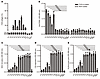 Figure 1
Patients with autoimmune FXIII deficiency had decreased complement activation. (A) FXIII antigen level. (B) Autoantibodies against FXIII-A detected in patients with different types of FXIII deficiency. (C and D) Complement activation of AP in all patients as well as healthy control individuals as indicated by MAC formation (C) and C3b/iC3b deposition (D). (E) Hemolytic assay. In this assay, different patients’ serum and NHS were incubated with rabbit erythrocytes, then erythrocyte lysis was recorded to quantify complement activation. Data are shown as mean ± SD. One-way ANOVA was used for statistical analysis. ***P < 0.001.
Among the 5 patients with autoimmune deficiency, P1, P3, and P5 had an infection when diagnosed. Further screening of pathogen sources revealed that P1 likely had a Streptococcus infection, P3 had Escherichia coli infection, and P5 had EBV infection. P2 had an unknown infection and high fever a few days before the sample was collected and sent for testing. However, P4 did not display any infection symptoms at the time of diagnosis (Table 1). Overall, patients with FXIII deficiency with a pathogenic infection are likely more susceptible to developing autoantibodies. However, due to the limited number of patients, in vivo mouse models were used for further studies.
Many hemolytic and thrombotic diseases, including paroxysmal nocturnal hemoglobinuria, autoimmune hemolytic anemia, atypical hemolytic uremic syndrome (aHUS), and DIC, are associated with complement dysfunction (15, 16). Evidently, the complement and coagulation systems are evolutionary related enzymatic cascades in the blood circulation, which are cross-activated and further influence host immune functions after tissue injury (17, 18). Therefore, we investigated whether FXIII deficiency is associated with complement dysfunction and further influences host immune responses against pathogenic infections. The data showed that P1–P5 had decreased complement activation, whereas P6–P11 had normal complement activation (Figure 1, C–E, and Supplemental Figure 1, C and D). Further analysis revealed that regarding alternative pathway (AP) activation, P1, with the highest autoantibody level, had 89% less membrane attack complex (MAC) formation and 93% less C3b/iC3b deposition than healthy control individuals. Similarly, P2–P5 with lower autoantibody levels displayed 85%, 73%, 49%, and 70% less MAC formation and 90%, 77%, 53%, and 69% less C3b/iC3b deposition, respectively, compared with the healthy donors. However, 4 patients with nonimmune deficiency and 2 patients with congenital deficiency with no detectable autoantibodies had normal complement activation (Figure 1, C and D). Similar patterns of MAC formation and C3b/iC3b deposition were observed for both the lectin pathway (LP) and classical pathway (CP) activation in all patients, although the differences of LP and CP activation from the healthy donors were less pronounced (Supplemental Figure 1, C and D). The complement activation pattern in all patients was confirmed with a hemolytic assay (Figure 1E).
Collectively, these findings indicate patients with autoimmune FXIII deficiency, but not those with undetectable autoantibodies, exhibit decreased complement activation. Because this decreased complement activation is likely consistent with complement depletion or inhibition, the levels of the central complement component C3 and complement inhibitors, including factor H (FH), C1 inhibitor (C1INH), C4b binding protein (C4BP), and vitronectin, in the plasma of patients and healthy donors were analyzed by Western blot (WB) using transferrin as an internal reference. FH, C1INH, C4BP, and vitronectin were detected with variable levels in the plasma of all patients, but without substantial differences from those in the plasma of healthy donors (Supplemental Figure 1, E and F), indicating that decreased complement activation in P1–P5 was not attributed to high levels of complement inhibitors. However, complement C3 levels were substantially lower in P1–P5 than in P6–P11 and the healthy donors. Low complement C3 levels could be caused by overactivation of the complement system in vivo or autoantibody-mediated neutralization or rapid clearance of C3 from blood circulation. To determine this, C3a and C5a levels, markers of the complement activation state, in the plasma of patients were quantified using WB and ELISA. The results revealed trace amounts of C3a and C5a in most patients and healthy donors, with even lower C3a and C5a levels in P1, P3, P4, P5, and P11 than in normal human serum (NHS) (Supplemental Figure 1, E and F). These results suggest that lower C3 levels in P1–P5 were not attributed to complement overactivation-mediated depletion or consumption. However, the reason for decreased complement activation and lower C3 levels in patients with autoimmune FXIII deficiency requires further investigation.
A combined FXIII-C3 autoantibody was identified in patients with autoimmune FXIII deficiency, which, by neutralizing C3, inhibited complement activation. Based on these data, patients with autoimmune FXIII deficiency, but not those with undetectable autoantibodies, had reduced complement activation, and the decreased level was likely positively correlated with the anti–FXIII autoantibody levels. We hypothesized that anti–FXIII autoantibodies were the main determinants interfering with complement activation in patients. To validate this, the NHS was initially pretreated with the anti–FXIII autoantibody “fished” by immobilized FXIII from the plasma of different patients and subsequently added to an LPS-coated ELISA plate to quantify complement activation by analyzing C3b deposition and MAC formation (isotype IgG and commercial anti-FXIII antibody [Proteintech, catalog 66325-1-Ig] were used as controls). Serum preincubated with anti–FXIII autoantibody fished from P1 had approximately 82% less C3b deposition and 81% less MAC formation than the serum pretreated with commercial anti-FXIII. Similarly, serum pretreated with anti–FXIII autoantibody fished from P2, P3, P4, and P5 had 81%, 65%, 53%, and 64% less C3b formation, as well as 82%, 69%, 55%, and 64% less MAC deposition, respectively (Figure 2A). However, serum pretreated with nonspecific IgG fished from P6–P11 had similar levels of C3b deposition and MAC formation as serum pretreated with commercial anti-FXIII and isotype IgG. When further compared with the untreated NHS, no statistical difference was observed in the serum pretreated with commercial anti-FXIII and isotype IgG (Figure 2A). These data indicate that anti–FXIII autoantibodies developed in patients with autoimmune FXIII deficiency inhibited complement activation.
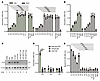 Figure 2
A combined FXIII-C3 autoantibody was identified in patients with autoimmune FXIII deficiency, which, by neutralizing C3, inhibited complement activation. (A) Effects of anti–FXIII autoantibody on complement activation. Autoantibody was first fished from different patients’ plasma using precoated FXIII-A, then incubated with NHS. These pretreated NHS samples was further added to LPS-coated plates for complement activation analysis. (B) Dose-dependent effects of purified anti–FXIII autoantibody on complement activation. (C) Anti–FXIII autoantibody–mediated blockage of C3 cleavage by preformed C3 convertase. BSA was used as loading control. A representative blot (of 4) is shown. (D) Binding of purified anti–FXIII autoantibody to complement C3, C4, or C5. (E) Existence of combined FXIII-C3 autoantibodies in patients with autoimmune FXIII deficiency. Isotype human IgG (Iso-IgG) and commercial anti-FXIII were used as controls. Data are shown as mean ± SD. One-way ANOVA was used for statistical analysis. ***P < 0.001. Non, C3 sample was not pre-treated; PBS, C3 sample was pre-incubated with PBS. anti-FXIII, commercial anti-FXIII antibody (Proteintech, catalog 66325-1-Ig).
To further verify the anti–FXIII autoantibody–mediated inhibitory effect on complement activation, the anti–FXIII autoantibody was first purified from the plasma of P1 using an affinity column. The quality of these purified autoantibodies was analyzed using Coomassie staining and “Far Western” blot. Both purified anti–FXIII autoantibodies and isotype IgG had greater than 90% purity (Supplemental Figure 2A), and purified anti–FXIII autoantibodies, but not isotype IgG, specifically bound to FXIII antigen (Supplemental Figure 2A). To exclude any possible complement inhibitors or C3 present in the purified anti–FXIII autoantibody, WB was performed using specific antibodies against complement FH, C1INH, C3, C4BP, and vitronectin. None of the complement inhibitors or proteins were present in the purified autoantibodies (Supplemental Figure 2B).
Next, NHS was preincubated with different amounts of purified autoantibodies using isotype IgG and commercial anti–FXIII as controls, and complement activation was analyzed. Our data demonstrated that the purified autoantibody dose-dependently inhibited complement activation, as evidenced by levels of C3b deposition and MAC formation that decreased along a gradient. When used at 1 μg, the purified anti–FXIII autoantibody inhibited C3b deposition by 87% and MAC formation by 85% (Figure 2B), compared with the commercial anti–FXIII control. We note that the commercial anti-FXIII and anti-C3 do not cross-react with C3 or FXIII (Supplemental Figure 2C). Collectively, these data further prove that anti–FXIII autoantibody dose-dependently inhibited complement activation, particularly at the C3 level of the complement cascade.
To further illustrate the mechanism by which this autoantibody disrupts complement activation at the C3 level, we first attempted to build a C3 convertase on a zymosan surface, using purified complement components, then we quantified it by flow cytometry using an anti–human Bb antibody. The results suggested the successful construction of C3 convertase on the zymosan surface (Supplemental Figure 2D). We then analyzed whether the anti–FXIII autoantibody affects C3 convertase formation by binding to complement components, such as factors B, D, and P. To investigate this, the purified anti–FXIII autoantibody was preincubated with these complement factors and then mixed with C3b opsonized particles. After further incubation and extensive washing, the level of C3 convertase formation on zymosan particles was again determined by flow cytometry. The results revealed that the anti–FXIII autoantibody did not affect C3 convertase formation (Supplemental Figure 2E).
Afterward, we investigated whether anti–FXIII autoantibody prevents C3 cleavage by a preformed C3 convertase. To achieve this, the C3 convertase was again constructed on a zymosan surface. Meanwhile, C3 was preincubated with the different amounts of purified autoantibody, PBS, isotype human IgG, or commercial anti–FXIII, then added to the preassembled C3 convertase. After incubation, C3a generation was determined by WB. The results revealed that purified anti–FXIII autoantibody did dependently inhibited C3 cleavage by preformed C3 convertase, as evidenced by a dose-dependent decrease in C3a levels (Figure 2C, upper panel, lines 6–8), compared with nontreated C3, C3 pretreatment with PBS, isotype human IgG, or commercial anti-FXIII (Figure 2C, upper panel, lines 2–5). Because the incubation buffer contained BSA, the loading control was indicated by the BSA level in each sample (Figure 2C, lower panel). Collectively, these data indicated that by forming a complex with C3, anti–FXIII autoantibodies blocked C3 cleavage and C3a release, thereby efficiently inhibiting complement activation.
These observed effects of anti–FXIII autoantibodies on C3 cleavage suggest anti–FXIII autoantibodies also complex C3 in addition to binding to FXIII. To prove this, purified anti–FXIII autoantibodies, isotype IgG, and commercial anti-FXIII were coated on the wells, and C3, C4, or C5 were added for further incubation. Therefore, the binding intensity was quantified using specific antibodies. The results demonstrated that the purified anti–FXIII autoantibody, but not isotype IgG or commercial anti-FXIII, specifically bound to C3, but not to C4 or C5 (Figure 2D). These findings highlight that combined FXIII-C3 autoantibodies may exist in patients with autoimmune FXIII deficiency.
To further prove the presence of the combined FXIII-C3 autoantibody in patients with autoimmune FXIII deficiency, which binds both FXIII and C3, FXIII was first coated on the ELISA plate, and patients’ plasma and normal human plasma (NHP) were added and incubated to capture anti–FXIII autoantibodies from the plasma. Purified C3 was then added to the wells for further incubation. Finally, bound C3 was detected using a specific goat anti–human C3 antibody. The results showed that autoantibodies fished by precoated FXIII-A from P1–P5 specifically bound C3. However, no signal was detected for P6–P11, who had no autoantibodies, and healthy donors. Upon further comparison, P1, P2, P3, and P5, who had higher autoantibody levels, binding intensity was much stronger to C3 than P4 (Figure 2E).
Taken together, a combined FXIII-C3 autoantibody exists in patients with autoimmune FXIII deficiency, and it binds both FXIII and C3. By forming a complex with C3, this autoantibody blocks C3 cleavage and mediates rapid clearance of C3 from the blood circulation, thereby interfering with complement activation at the C3 level. Because complement activation serves as a central immune surveillance against invading pathogens, autoantibody-mediated complement inhibitory effects likely increase host susceptibility to pathogenic infection.
Autoimmune mice with FXIII-C3-deficiency had severe pathogenic Candida albicans infections by modulating complement and T cell activation. To determine whether the combined FXIII-C3 autoantibody increased host susceptibility to pathogenic infection by modulating complement activation and complement-mediated adaptive immune responses, a proper model of autoimmune FXIII–C3 deficiency needs to be generated. Application of a 7-phage-display peptide library together with ELISA and Far Western blot found that only in the presence of thrombin and Ca2+ did FXIII bind to C3 via the N-terminal epitopes FTAPYPR and LTPFVHL (highlighted in red in Supplemental Figure 3D). Based on this information, fusion protein C3-FXIII was constructed by linking C-terminus of C3-α chain with N-terminus of FXIII-A with a flexible linker (GGGGS)3 inserted in the middle and then was expressed and purified (Figure 3A).
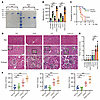 Figure 3
Autoimmune FXIII-C3–deficient mice had severe pathogenic infections with C. albicans. (A) Coomassie staining of fusion protein C3-FXIII. The left side of the gel contain different amounts of C3-FXIII fusion protein (0.25, 0.5, and 1 μg), the right side contains different amount of the control protein BSA (0.5, 1, and 2 μg). (B) Tail bleeding time of different groups of mice. (C) Survival rate of different groups of mice. A dose of 1 × 10⁵ C. albicans per mouse was applied (n = 10 per group). The infection period was 15 days. (D) H&E staining for kidney pathology upon fungal infection. Representative images out of 6 are shown. (E) Renal injury score evaluated by images of H&E staining. (F) Fungal burdens of different organs. For these in vivo experiments, C57BL/6J mice were first immunized by PBS, FXIII, C3, or C3-FXIII, generating different autoimmune-deficient mice, simply named WT, FXIII, C3, and FXIII-C3. These mice were further challenged with C. albicans, generating 8 groups of mice, which were classified as WT/Ca and WT/PBS, FXIII/Ca and FXIII/PBS, C3/Ca and C3/PBS, FXIII-C3/Ca and FXIII-C3/PBS. For (B) and (D–F), 5 × 10⁴ C. albicans per mouse was applied (n = 6 per group). Infection time is 7 days. Data are shown as mean ± SD; 1-way ANOVA was used for statistical analysis. The survival rate of mice was analyzed by a Kaplan-Meier log-rank test. Scale bar: 100 μm. **P < 0.01, ***P < 0.001.
Purified C3–FXIII fusion protein was then intramuscularly injected into mice to generate autoimmune models of FXIII-C3 deficiency; FXIII, C3, and PBS were applied as controls (Supplemental Figure 4A). These 4 groups of mice were named as WT, FXIII, C3, and FXIII-C3. At days –8, –6, and –2, a decrease in FXIII antigen levels was detected in the FXIII and FXIII-C3 groups, and a decrease in C3 levels was detected in the C3 and FXIII-C3 groups (Supplemental Figure 4B), whereas an increase in combined autoantibodies with bispecificity against FXIII and C3 was detected only in the FXIII-C3 group of mice. However, monospecific autoantibodies against FXIII or C3 were detected in the FXIII or C3 group of mice, respectively (Supplemental Figure 4C), indicating that autoimmune responses were triggered, and that mouse models mimicking the conditions of patients with autoimmune FXIII deficiency were successfully generated.
Second, the 4 groups of mice were further challenged with Candida albicans or PBS intravenously. Therefore, 8 groups of mice were generated and classified as WT/Ca, WT/PBS, FXIII/Ca, FXIII/PBS, C3/Ca, C3/PBS, FXIII-C3/Ca, and FXIII-C3/PBS. Tail bleeding time, survival rate, tissue damage, and fungal burden were then analyzed. The results demonstrated that bleeding time was prolonged in FXIII and FXIII-C3 groups of mice, but not the C3 group of mice, both before and after infection compared with WT controls (Figure 3B), and this was associated with autoantibody-mediated neutralization of FXIII. Monitoring of the survival rate demonstrated that 20% of the mice in the FXIII-C3/Ca group died on day 3, 40% died on day 4, and all mice had died by day 10 after infection. The C3/Ca group of mice behaved similarly to FXIII-C3/Ca mice, with 40% of mice dying on day 5 and all mice dying by day 10. In contrast, 30% of WT/Ca and 40% of FXIII/Ca mice died on day 10, whereas 70% of WT/Ca and 60% of FXIII/Ca mice survived until day 15 after infection (Figure 3C). Additionally, when infected, FXIII-C3/Ca and C3/Ca groups had much heavier spleen weights than did WT/Ca and FXIII/Ca groups of mice, whereas the body weight and weights of organs remained equal among individual mice (Supplemental Figure 4, D–F).
H&E staining showed that severe hyperplasia of the glomerular wall epithelium was commonly observed in the kidneys of the FXIII-C3/Ca group of mice, leading to the formation of crescents marked in Figure 3D with a green arrow in the general overview and green dashed box in the magnified images, whereas moderate hyperplasia of the glomerular wall epithelium was detected in the kidneys of C3/Ca mice. In contrast, mild hyperplasia of the glomerular wall epithelium was observed in the kidneys of WT/Ca and FXIII/Ca mice (Figure 3D). Renal injury scores were evaluated based on the large field of slide view; these are shown in Figure 3E. Moreover, a substantially higher fungal load was identified in the FXIII-C3/Ca and C3/Ca groups than in the WT/Ca group, whereas a similar fungal load was detected in the FXIII/Ca and WT/Ca groups of mice (Figure 3F and Supplemental Figure 4G), indicating that severe C. albicans infection was initiated in autoimmune FXIII-C3 and C3-deficient mice, mainly associated with C3 inactivation or deficiency.
To further analyze whether the uncontrolled severe C. albicans infection was associated with complement C3 inactivation and defects in downstream immune responses, C3a release, cytokine release, C3b deposition, T cell infiltration, and T cell activation were monitored on day 7 after infection, following the indicated experimental schedule (Supplemental Figure 5A). The results revealed that almost no or just a trace of C3a was detected in the FXIII-C3/Ca and C3/Ca groups of mice, which was much less than that detected in the WT/Ca and FXIII-Ca groups (Figure 4, A and B). Meanwhile, lower levels of IFN-γ, TNF-α, and IL-17A were also detected in the serum of FXIII-C3/Ca and C3/Ca groups of mice compared with those in WT/Ca and FXIII/Ca mice (Figure 4C). Subsequently, immunofluorescence staining demonstrated that the FXIII-C3/Ca and C3/Ca groups of mice had reduced C3b/iC3b deposition and less CD4+/CD8+ T cell infiltration in the kidney compared with WT/Ca and FXIII-Ca groups of mice (Figure 5A). Further flow cytometry analysis of T cell activation in the spleen revealed that the FXIII-C3/Ca and C3/Ca groups of mice had fewer CD44high CD62low portions among CD4+ and CD8+ T cells than did WT/Ca and FXIII/Ca groups of mice (Figure 5, B and C, Supplemental Figure 5B). Meanwhile, lower levels of IFN-γ and IL-17–secreting CD4+ and CD8+ T cells were also identified in the FXIII-C3/Ca and C3/Ca groups of mice compared with those in the WT/Ca and FXIII-Ca groups (Figure 5, D and E, and Supplemental Figure 5C). These data indicate that less complement and T cell activation were initiated in autoimmune FXIII–C3 and C3-deficient mice.
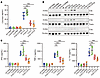 Figure 4
Autoimmune FXIII-C3–deficient mice had defective complement activation and pro-inflammatory cytokine release. (A and B) C3a release in mice plasma detected by ELISA and WB. Transferrin was used as a loading control. A representative blot (out of 4) is shown. (C) Inflammatory cytokine release in mice plasma at day 7 after infection detected by ELISA kit. In the in vivo infection model, WT, FXIII, C3, and FXIII-C3 groups of mice were intravenously injected with C. albicans (5 × 10⁴/mouse) or PBS for 7 days, 8 groups of mice were classified as WT/Ca and WT/PBS, FXIII/Ca and FXIII/PBS, C3/Ca and C3/PBS, or FXIII-C3/Ca and FXIII-C3/PBS (n = 6 per group). Data are shown as mean ± SD; 1-way ANOVA was used for statistical analysis. ***P < 0.001.
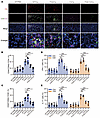 Figure 5
Autoimmune FXIII-C3–deficient mice had defective complement and T cell activation. (A) C3b/iC3b deposition and T cell infiltration in kidney were analyzed by immunofluorescent staining. Representative images (out of 6) are shown. (B and C) CD4 and CD8 T cell activation upon fungal infection. T cell activation was quantified by the CD44highCD62Llow portion of CD4+ and CD8+ T cells via flow cytometry. (D and E) Portion of IFN-γ+ or IL-17+ CD4 and CD8 T cells analyzed by flow cytometry. In the in vivo infection model, WT, FXIII, C3, and FXIII-C3 groups of mice were intravenously injected with C. albicans (5 × 10⁴/mouse) or PBS for 7 days; 8 groups of mice were classified as WT/Ca and WT/PBS, FXIII/Ca and FXIII/PBS, C3/Ca and C3/PBS, or FXIII-C3/Ca and FXIII-C3/PBS (n = 6 per group). Data are shown as mean ± SD, 1-way ANOVA was used for statistical analysis. Scale bar: 40 μm, original magnification, x400. **P < 0.01, ***P < 0.001.
Pathogenic C. albicans infections further induced autoantibody generation. In a recent study on COVID-19, Lichter et al. (13) reported that 74% of patients in an ICU with COVID-19 had decreased and defective FXIII activity, and that FXIII levels gradually decreased during hospitalization with frequent severe bleeding. Moreover, our clinical data demonstrated that patients with autoimmune FXIII deficiency who had pathogenic infections had much higher levels of combined FXIII-C3 autoantibodies, along with much lower levels and activity of FXIII (Table 1). Collectively, these data suggested that pathogenic infections likely further induce autoantibody production in autoimmune FXIII-deficient conditions. To determine this, the different groups of mice we generated were again applied. Upon intravenous infection with C. albicans, blood samples were collected from different mouse groups on days 1, 5, and 7 after infection. Monospecific autoantibodies against FXIII or C3 and combined autoantibodies with bispecificity against FXIII and C3 were then analyzed using sandwich ELISA. On day 1, the combined autoantibody was detected only in the FXIII-C3 group of mice both before and after infection, whereas monospecific autoantibodies against FXIII were detected in the FXIII mice and monospecific autoantibodies against C3 were detected in the C3 mice. However, no autoantibodies were detected in WT mice (Figure 6, A and B, and Supplemental Figure 6A). On days 5 and 7, as the infection progressed, the FXIII-C3/Ca group of mice developed substantially higher levels of combined FXIII-C3 autoantibodies compared with the FXIII-C3/PBS group, and substantially higher levels of monospecific anti–C3 autoantibodies also were detected in the C3/Ca group than in the C3/PBS group (Supplemental Figure 6A). In contrast, the number of monospecific anti–FXIII autoantibodies was slightly increased in FXIII/Ca compared with the FXIII/PBS group of mice, although the difference was statistically nonsignificant, whereas the numbers of autoantibodies in the noninfected groups were almost equal to those on day 1. Overall, autoantibody generation was triggered upon uncontrolled C. albicans infection, such as combined autoantibodies against FXIII and C3 and monospecific autoantibodies against C3.
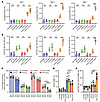 Figure 6
Pathogenic C. albicans infections further induced autoantibody generation in mice. Combined FXIII-C3 autoantibody (A), and anti–FXIII autoantibody (B) in 8 groups of mice on days 1, 5, and 7 after infection were detected by ELISA. (C) FXIII-A antigen level in 8 groups of mice on days 1, 5, and 7 after infection. The FXIII-A antigen level of WT/PBS group on day 1 was set as 100%, the other samples were calculated accordingly. (D) Total B cell activation. Cells were isolated from the spleen and analyzed by flow cytometry. B cell activation is shown by the percentage of CD19+CD69+ B cells. (E) Autoreactive B cell activation. Again, cells were isolated from the spleen and analyzed by flow cytometry. Anti–FXIII IgG+ autoreactive B cells activation is presented by the percentage of anti–FXIII IgG+ B subgroup among CD19+CD69+ B cells. In this in vivo experimental settings, WT, FXIII, C3, and FXIII-C3 groups of mice were intravenously injected with C. albicans (5 × 10⁴/mouse) or PBS, and 8 groups of mice were classified as WT/Ca and WT/PBS, FXIII/Ca and FXIII/PBS, C3/Ca and C3/PBS, or FXIII-C3/Ca and FXIII-C3/PBS (n = 6 per group). Data are shown as mean ± SD. An unpaired 2-tailed Student’s t test was used for statistical analysis for A and B. One-way ANOVA was used for statistical analysis for C–E. *P < 0.05, **P < 0.01, ***P < 0.001.
Quantification of FXIII-A levels demonstrated that either C3-FXIII fusion protein or FXIII immunization resulted in approximately 70% removal of FXIII (Supplemental Figure 4B). Further analysis revealed that on day 1 after infection, FXIII levels in all 4 groups of mice with Candida infection were slightly reduced compared with those in the noninfected groups (Figure 6C), which is likely associated with the acute consumption of FXIII upon C. albicans infection. Interestingly, only in the FXIII-C3/Ca group did FXIII levels decline further on day 5 after infection, and greater than 95% of FXIII was consumed on day 7 after infection. A slight decrease in FXIII level was also observed in FXIII/Ca group of mice as the infection progressed, although the difference was statistically nonsignificant. Overall, these data indicated that FXIII levels progressively decline upon C. albicans infection in autoimmune FXIII-C3 deficiency.
Analysis of B cell activation revealed that the frequency of CD19+CD69+ B cells representing B cell activation was increased in all 4 fungus-infected groups, with a slightly higher level in the WT/Ca and FXIII/Ca groups than in the FXIII/Ca and FXIII-C3/Ca groups (Figure 6D and Supplemental Figure 6B). However, further quantification of anti–FXIII IgG+ subgroup B cell frequency among activated B cells revealed a substantially higher percentage of anti–FXIII IgG+ autoreactive B cells specifically in the FXIII-C3/Ca group, compared with those in the WT/Ca, FXIII/Ca, and C3/Ca groups (Figure 6E and Supplemental Figure 6C), meaning that although B cells were activated in all 4 Candida-infected groups, more anti–FXIII IgG+ autoreactive B cells were activated only in the FXIII-C3/Ca group of mice. These results indicated that C. albicans infection further amplifies autoimmune signals in mice with autoimmune FXIII-C3 deficiency, resulting in the progressive release of combined FXIII-C3 autoantibodies.
Pathogenic C. albicans infection–promoted autoantibody production was mediated by platelet-released CD40L. Wang et al. reported that platelet-related CD40L release plays a vital role in B cell activation (10). To determine the molecular basis of fungal infection–amplified combined FXIII-C3 autoantibody production, platelet activation was first monitored in the 8 groups of mice using flow cytometry. The results indicated FXIII-C3/Ca and C3/Ca groups of mice had, respectively, approximately 41.27% and 31.29% activated platelets on day 7 after infection, whereas WT/Ca and FXIII/Ca groups had 13.79% and 17.13% activated platelets, respectively (Figure 7, A and B). These higher platelet-activation rates observed in FXIII-C3/Ca and C3/Ca groups of mice are likely attributed to uncontrolled C. albicans infection.
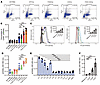 Figure 7
Pathogenic C. albicans infection triggered platelet activation and CD40L release. (A and B) Quantification of platelets’ activation in 8 different groups of mice via CD62p surface expression analyzed by flow cytometry. A representative dot plot (A) and statistical chart of activated platelets (B) are shown. (C) Platelet activation upon in vitro co-culture of platelets with C. albicans. CD62p expression (left) and GPIIbIIIa expression (right) on platelet surfaces were analyzed by flow cytometry upon in vitro co-culture of platelets (1 × 10⁷/sample) with different doses of C. albicans (1 × 10⁵, 1 × 10⁶ and 1 × 10⁷/sample) in the presence of Gly-Pro-Arg-Pro (Pefa 6003) to prevent platelet aggregation. (D) Soluble CD40L levels in plasma of 8 groups of mice on day 7 after infection. (E) Soluble CD40L levels in plasma of patients with FXIII deficiency and in healthy control donors. (F) CD40L release in the platelet-C. albicans co-culture supernatant. Data are shown as mean ± SD; 1-way ANOVA was used for statistical analysis. **P < 0.01, ***P < 0.001. FSC-A, forward scatter area; PLA, proximity ligation assay; APC-A, allophycocyanin area.
To further confirm C. albicans–mediated platelet activation, in vitro co-culture experiments were performed. Briefly, different doses of C. albicans were incubated with platelets isolated from the blood of healthy donors, and the platelet surface CD62p and GPIIbIIIa levels were quantified. The results revealed that CD62p and GPIIbIIIa expression on the platelet surface was upregulated. The higher the amount of C. albicans added, the higher the expression levels of CD62p and GPIIbIIIa were (Figure 7C), indicating platelet activation was induced upon C. albicans stimulation in a dose-dependent manner.
Subsequently, platelet-related CD40L release upon platelet activation was quantified using ELISA in the mice we generated, as well as samples from patients with FXIII deficiency and Candida–platelet co-cultures. The results demonstrated that all 4 fungus-infected groups (WT/Ca, FXIII/Ca, C3/Ca, and FXIII-C3/Ca) had higher plasma CD40L levels compared with the uninfected groups (WT/PBS, FXIII/PBS, C3/PBS, and FXIII-C3/PBS). Furthermore, substantially higher CD40L levels were detected in FXIII-C3/Ca and C3/Ca groups than in WT/Ca and FXIII/Ca groups (Figure 7D). Meanwhile, P1 had the highest plasma CD40L levels, followed by P2, P3, P5, and P4. However, P6–P11 had comparable CD40L levels to the healthy donors (Figure 7E). Further quantification of platelet-related CD40L release in the Candida–platelet co-culture supernatant revealed that C. albicans dose dependently induced platelets to release CD40L (Figure 7F). These findings indicated platelet activation and platelet-related CD40L release were induced upon C. albicans infection.
Afterward, to analyze whether platelet-released CD40L could bind to B cells, the supernatant from the platelet–Candida co-culture was incubated with peripheral memory B cells isolated from P1. Subsequently, the bound CD40L was quantified using flow cytometry. The results revealed that released CD40L dose-dependently bound to B cells, meaning that as the CD40L levels increased in the supernatant, the binding became stronger (Figure 8A). CD40L is a known ligand of the CD40 molecule (19). Consequently, the co-localization of CD40L and CD40 on the B cell surface was examined using confocal microscopy, and we found that CD40L bound and co-localized with CD40 on the B cell surface. The more CD40L present in the supernatant, the stronger the signal was, whereas CD40 was equally distributed on the B cell surface (Figure 8B).
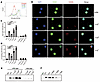 Figure 8
Pathogenic C. albicans infection–promoted autoantibody production was mediated by platelet-released CD40L. (A) Binding of CD40L to B cells analyzed by flow cytometry. (B) Co-localization CD40L and CD40 on the surface of B cells. Memory B cells isolated from P1 (1 × 10⁶/sample) were incubated with the platelet–C. albicans culture supernatant. Co-localization of CD40L and CD40 was examined by confocal microscopy. Representative images (out of 3) are shown. Scale bar: 10 μm. (C) Combined autoantibody release detected by ELISA. (D) Specificity of released autoantibody against C3 analyzed by ELISA. (E) Specificity of released autoantibody against FXIII analyzed by Far Western blot. (F) Neutralization of CD40L blocked autoantibody release by memory B cells. (C–F) CD40L-containing supernatant was added to the isolated memory B cells in the presence or absence of anti-CD40L. Purified CD40L was used as a positive control. Data are shown as mean ± SD; 1-way ANOVA was used for statistical analysis. ***P < 0.001. NC, negative control; PC, positive control; HB, memory B cells isolated from healthy donors; PB, memory B cells isolated from patient 1.
Furthermore, we investigated whether the co-localization of CD40L with CD40 induces autoantibody production. Briefly, the co-culture supernatant containing different concentrations of CD40L was added and incubated with memory B cells previously isolated from P1 or the healthy donors. Five days after incubation, the released IgG was detected using ELISA. The results revealed that platelet-related CD40L promoted the production of autoantibodies from memory B cells. Conversely, even with the highest dose of C. albicans co-culture supernatant, almost no autoantibodies were detected in B cells isolated from the healthy control (Figure 8C). Subsequently, the specificity of these generated auto-IgG against C3 and FXIII was further confirmed by sandwich ELISA and Far Western blot (Figure 8, D and E).
To further validate the role of CD40L in mediating memory B cell activation, different dilutions of anti–CD40L antibody were applied to the aforementioned co-culture experiment. After co-incubation, the released autoantibodies were again detected using Far Western blot. The results suggested that the anti–CD40L antibody used at a 1:5,000 dilution slightly inhibited the release of autoantibodies. Addition of more anti–CD40L antibodies (1:2,000) caused almost 50% inhibition, and anti-CD40L used at a 1:500 dose almost completely inhibited the autoantibody release by memory B cells (Figure 8F). These data indicated platelet-released CD40L, triggered by fungal stimulation, bound to and stimulated memory B cells to produce autoantibodies, most likely through ligation of the surface-expressed CD40.
Collectively, combined FXIII-C3 autoantibodies are present in patients with autoimmune FXIII deficiency. By neutralizing FXIII, these combined autoantibodies cause bleeding disorders. By forming a complex with C3, these autoantibodies block C3 cleavage by C3 convertase and further mediate fast clearance of C3 from blood clearance, thereby inhibiting complement activation and complement-mediated T cell activation, which increases host susceptibility to C. albicans infection. Uncontrolled Candida infections further trigger platelet activation and platelet-related CD40L release. By binding to CD40 on the memory B cell surface, released CD40L further induces combined FXIII-C3 autoantibody production, resulting in progressive deletion or clearance of FXIII and C3. Ultimately, a self-amplification loop for autoantibody generation is generated (Figure 9).
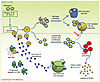 Figure 9
A model of action about the self-enhanced amplification loop of combined FXIII-C3 autoantibody generation for autoimmune FXIII deficiency. A combined FXIII-C3 autoantibody was identified in patients with autoimmune FXIII deficiency. The combined autoantibody, by forming a complex with C3, blocks C3 cleavage by C3 convertase, thereby inhibiting complement activation and complement mediated T cell activation, which increases host susceptibility to pathogenic C. albicans infections. Uncontrolled exogenous infections, by triggering platelets’ activation and platelet-related CD40L release, further promote autoantibody generation, resulting in progressive consumption of FXIII and C3. This process likely forms a self-enhanced amplification loop for autoantibody generation and progressive consumption of FXIII and C3 antigens.


Copyright © 2026 American Society for Clinical Investigation
ISSN: 0021-9738 (print), 1558-8238 (online)