
Advertisement
Research ArticleMetabolismVascular biology
Open Access |  10.1172/JCI190513
The N-terminus of apolipoprotein B mediates the interaction of atherogenic lipoproteins with endothelial cells
Ainara G. Cabodevilla,1 Camila Calistru,1 Waqas Younis,1 Dimitris Nasias,1 Tse W.W. Ho,2 Narasimha Anaganti,3 Swati Valmiki,3 Sujith Rajan,3 Jana Gjini,1 Rufina Kore,1 Carmen Hannemann,4 Nicholas O. Davidson,5 Tomas Vaisar,6 Jenny E. Kanter,6 Karin E. Bornfeldt,6,7 Edward A. Fisher,4 Warren L. Lee,2 Tobias Madl,8 M. Mahmood Hussain,3 and Ira J. Goldberg1
1Holman Division of Endocrinology, Diabetes, and Metabolism, Department of Medicine, New York University Grossman School of Medicine, New York, New York, USA.
2Keenan Centre for Biomedical Research, St. Michael’s Hospital, and Department of Laboratory Medicine and Pathobiology, University of Toronto, Toronto, Canada.
3Department of Foundations of Medicine, Diabetes and Obesity Research Center, New York University Grossman Long Island School of Medicine, Mineola, New York, USA.
4Division of Cardiology and Cardiovascular Research Center, Department of Medicine, New York University Grossman School of Medicine, New York, New York, USA.
5Division of Gastroenterology, Washington University School of Medicine, St. Louis, Missouri, USA.
6Department of Medicine, Division of Metabolism, Endocrinology, and Nutrition and
7Department of Laboratory Medicine and Pathology, University of Washington, Seattle, Washington, USA.
8Integrative Structural Biology Research Unit, Division of Medicinal Chemistry, Otto Loewi Research Center, Medical University of Graz, and BioTechMed-Graz, Graz, Austria.
Address correspondence to: Ira J. Goldberg, New York University Grossman School of Medicine, New Science Building 617, 435 East 30th Street, New York, New York 10016, USA. Phone: 212.481.1350; Email: ira.goldberg@nyumc.org.
Find articles by Cabodevilla, A. in: PubMed | Google Scholar
1Holman Division of Endocrinology, Diabetes, and Metabolism, Department of Medicine, New York University Grossman School of Medicine, New York, New York, USA.
2Keenan Centre for Biomedical Research, St. Michael’s Hospital, and Department of Laboratory Medicine and Pathobiology, University of Toronto, Toronto, Canada.
3Department of Foundations of Medicine, Diabetes and Obesity Research Center, New York University Grossman Long Island School of Medicine, Mineola, New York, USA.
4Division of Cardiology and Cardiovascular Research Center, Department of Medicine, New York University Grossman School of Medicine, New York, New York, USA.
5Division of Gastroenterology, Washington University School of Medicine, St. Louis, Missouri, USA.
6Department of Medicine, Division of Metabolism, Endocrinology, and Nutrition and
7Department of Laboratory Medicine and Pathology, University of Washington, Seattle, Washington, USA.
8Integrative Structural Biology Research Unit, Division of Medicinal Chemistry, Otto Loewi Research Center, Medical University of Graz, and BioTechMed-Graz, Graz, Austria.
Address correspondence to: Ira J. Goldberg, New York University Grossman School of Medicine, New Science Building 617, 435 East 30th Street, New York, New York 10016, USA. Phone: 212.481.1350; Email: ira.goldberg@nyumc.org.
Find articles by Calistru, C. in: PubMed | Google Scholar
1Holman Division of Endocrinology, Diabetes, and Metabolism, Department of Medicine, New York University Grossman School of Medicine, New York, New York, USA.
2Keenan Centre for Biomedical Research, St. Michael’s Hospital, and Department of Laboratory Medicine and Pathobiology, University of Toronto, Toronto, Canada.
3Department of Foundations of Medicine, Diabetes and Obesity Research Center, New York University Grossman Long Island School of Medicine, Mineola, New York, USA.
4Division of Cardiology and Cardiovascular Research Center, Department of Medicine, New York University Grossman School of Medicine, New York, New York, USA.
5Division of Gastroenterology, Washington University School of Medicine, St. Louis, Missouri, USA.
6Department of Medicine, Division of Metabolism, Endocrinology, and Nutrition and
7Department of Laboratory Medicine and Pathology, University of Washington, Seattle, Washington, USA.
8Integrative Structural Biology Research Unit, Division of Medicinal Chemistry, Otto Loewi Research Center, Medical University of Graz, and BioTechMed-Graz, Graz, Austria.
Address correspondence to: Ira J. Goldberg, New York University Grossman School of Medicine, New Science Building 617, 435 East 30th Street, New York, New York 10016, USA. Phone: 212.481.1350; Email: ira.goldberg@nyumc.org.
Find articles by Younis, W. in: PubMed | Google Scholar
1Holman Division of Endocrinology, Diabetes, and Metabolism, Department of Medicine, New York University Grossman School of Medicine, New York, New York, USA.
2Keenan Centre for Biomedical Research, St. Michael’s Hospital, and Department of Laboratory Medicine and Pathobiology, University of Toronto, Toronto, Canada.
3Department of Foundations of Medicine, Diabetes and Obesity Research Center, New York University Grossman Long Island School of Medicine, Mineola, New York, USA.
4Division of Cardiology and Cardiovascular Research Center, Department of Medicine, New York University Grossman School of Medicine, New York, New York, USA.
5Division of Gastroenterology, Washington University School of Medicine, St. Louis, Missouri, USA.
6Department of Medicine, Division of Metabolism, Endocrinology, and Nutrition and
7Department of Laboratory Medicine and Pathology, University of Washington, Seattle, Washington, USA.
8Integrative Structural Biology Research Unit, Division of Medicinal Chemistry, Otto Loewi Research Center, Medical University of Graz, and BioTechMed-Graz, Graz, Austria.
Address correspondence to: Ira J. Goldberg, New York University Grossman School of Medicine, New Science Building 617, 435 East 30th Street, New York, New York 10016, USA. Phone: 212.481.1350; Email: ira.goldberg@nyumc.org.
Find articles by
Nasias, D.
in:
PubMed
|
Google Scholar
|

1Holman Division of Endocrinology, Diabetes, and Metabolism, Department of Medicine, New York University Grossman School of Medicine, New York, New York, USA.
2Keenan Centre for Biomedical Research, St. Michael’s Hospital, and Department of Laboratory Medicine and Pathobiology, University of Toronto, Toronto, Canada.
3Department of Foundations of Medicine, Diabetes and Obesity Research Center, New York University Grossman Long Island School of Medicine, Mineola, New York, USA.
4Division of Cardiology and Cardiovascular Research Center, Department of Medicine, New York University Grossman School of Medicine, New York, New York, USA.
5Division of Gastroenterology, Washington University School of Medicine, St. Louis, Missouri, USA.
6Department of Medicine, Division of Metabolism, Endocrinology, and Nutrition and
7Department of Laboratory Medicine and Pathology, University of Washington, Seattle, Washington, USA.
8Integrative Structural Biology Research Unit, Division of Medicinal Chemistry, Otto Loewi Research Center, Medical University of Graz, and BioTechMed-Graz, Graz, Austria.
Address correspondence to: Ira J. Goldberg, New York University Grossman School of Medicine, New Science Building 617, 435 East 30th Street, New York, New York 10016, USA. Phone: 212.481.1350; Email: ira.goldberg@nyumc.org.
Find articles by Ho, T. in: PubMed | Google Scholar
1Holman Division of Endocrinology, Diabetes, and Metabolism, Department of Medicine, New York University Grossman School of Medicine, New York, New York, USA.
2Keenan Centre for Biomedical Research, St. Michael’s Hospital, and Department of Laboratory Medicine and Pathobiology, University of Toronto, Toronto, Canada.
3Department of Foundations of Medicine, Diabetes and Obesity Research Center, New York University Grossman Long Island School of Medicine, Mineola, New York, USA.
4Division of Cardiology and Cardiovascular Research Center, Department of Medicine, New York University Grossman School of Medicine, New York, New York, USA.
5Division of Gastroenterology, Washington University School of Medicine, St. Louis, Missouri, USA.
6Department of Medicine, Division of Metabolism, Endocrinology, and Nutrition and
7Department of Laboratory Medicine and Pathology, University of Washington, Seattle, Washington, USA.
8Integrative Structural Biology Research Unit, Division of Medicinal Chemistry, Otto Loewi Research Center, Medical University of Graz, and BioTechMed-Graz, Graz, Austria.
Address correspondence to: Ira J. Goldberg, New York University Grossman School of Medicine, New Science Building 617, 435 East 30th Street, New York, New York 10016, USA. Phone: 212.481.1350; Email: ira.goldberg@nyumc.org.
Find articles by Anaganti, N. in: PubMed | Google Scholar
1Holman Division of Endocrinology, Diabetes, and Metabolism, Department of Medicine, New York University Grossman School of Medicine, New York, New York, USA.
2Keenan Centre for Biomedical Research, St. Michael’s Hospital, and Department of Laboratory Medicine and Pathobiology, University of Toronto, Toronto, Canada.
3Department of Foundations of Medicine, Diabetes and Obesity Research Center, New York University Grossman Long Island School of Medicine, Mineola, New York, USA.
4Division of Cardiology and Cardiovascular Research Center, Department of Medicine, New York University Grossman School of Medicine, New York, New York, USA.
5Division of Gastroenterology, Washington University School of Medicine, St. Louis, Missouri, USA.
6Department of Medicine, Division of Metabolism, Endocrinology, and Nutrition and
7Department of Laboratory Medicine and Pathology, University of Washington, Seattle, Washington, USA.
8Integrative Structural Biology Research Unit, Division of Medicinal Chemistry, Otto Loewi Research Center, Medical University of Graz, and BioTechMed-Graz, Graz, Austria.
Address correspondence to: Ira J. Goldberg, New York University Grossman School of Medicine, New Science Building 617, 435 East 30th Street, New York, New York 10016, USA. Phone: 212.481.1350; Email: ira.goldberg@nyumc.org.
Find articles by Valmiki, S. in: PubMed | Google Scholar
1Holman Division of Endocrinology, Diabetes, and Metabolism, Department of Medicine, New York University Grossman School of Medicine, New York, New York, USA.
2Keenan Centre for Biomedical Research, St. Michael’s Hospital, and Department of Laboratory Medicine and Pathobiology, University of Toronto, Toronto, Canada.
3Department of Foundations of Medicine, Diabetes and Obesity Research Center, New York University Grossman Long Island School of Medicine, Mineola, New York, USA.
4Division of Cardiology and Cardiovascular Research Center, Department of Medicine, New York University Grossman School of Medicine, New York, New York, USA.
5Division of Gastroenterology, Washington University School of Medicine, St. Louis, Missouri, USA.
6Department of Medicine, Division of Metabolism, Endocrinology, and Nutrition and
7Department of Laboratory Medicine and Pathology, University of Washington, Seattle, Washington, USA.
8Integrative Structural Biology Research Unit, Division of Medicinal Chemistry, Otto Loewi Research Center, Medical University of Graz, and BioTechMed-Graz, Graz, Austria.
Address correspondence to: Ira J. Goldberg, New York University Grossman School of Medicine, New Science Building 617, 435 East 30th Street, New York, New York 10016, USA. Phone: 212.481.1350; Email: ira.goldberg@nyumc.org.
Find articles by Rajan, S. in: PubMed | Google Scholar
1Holman Division of Endocrinology, Diabetes, and Metabolism, Department of Medicine, New York University Grossman School of Medicine, New York, New York, USA.
2Keenan Centre for Biomedical Research, St. Michael’s Hospital, and Department of Laboratory Medicine and Pathobiology, University of Toronto, Toronto, Canada.
3Department of Foundations of Medicine, Diabetes and Obesity Research Center, New York University Grossman Long Island School of Medicine, Mineola, New York, USA.
4Division of Cardiology and Cardiovascular Research Center, Department of Medicine, New York University Grossman School of Medicine, New York, New York, USA.
5Division of Gastroenterology, Washington University School of Medicine, St. Louis, Missouri, USA.
6Department of Medicine, Division of Metabolism, Endocrinology, and Nutrition and
7Department of Laboratory Medicine and Pathology, University of Washington, Seattle, Washington, USA.
8Integrative Structural Biology Research Unit, Division of Medicinal Chemistry, Otto Loewi Research Center, Medical University of Graz, and BioTechMed-Graz, Graz, Austria.
Address correspondence to: Ira J. Goldberg, New York University Grossman School of Medicine, New Science Building 617, 435 East 30th Street, New York, New York 10016, USA. Phone: 212.481.1350; Email: ira.goldberg@nyumc.org.
Find articles by Gjini, J. in: PubMed | Google Scholar
1Holman Division of Endocrinology, Diabetes, and Metabolism, Department of Medicine, New York University Grossman School of Medicine, New York, New York, USA.
2Keenan Centre for Biomedical Research, St. Michael’s Hospital, and Department of Laboratory Medicine and Pathobiology, University of Toronto, Toronto, Canada.
3Department of Foundations of Medicine, Diabetes and Obesity Research Center, New York University Grossman Long Island School of Medicine, Mineola, New York, USA.
4Division of Cardiology and Cardiovascular Research Center, Department of Medicine, New York University Grossman School of Medicine, New York, New York, USA.
5Division of Gastroenterology, Washington University School of Medicine, St. Louis, Missouri, USA.
6Department of Medicine, Division of Metabolism, Endocrinology, and Nutrition and
7Department of Laboratory Medicine and Pathology, University of Washington, Seattle, Washington, USA.
8Integrative Structural Biology Research Unit, Division of Medicinal Chemistry, Otto Loewi Research Center, Medical University of Graz, and BioTechMed-Graz, Graz, Austria.
Address correspondence to: Ira J. Goldberg, New York University Grossman School of Medicine, New Science Building 617, 435 East 30th Street, New York, New York 10016, USA. Phone: 212.481.1350; Email: ira.goldberg@nyumc.org.
Find articles by Kore, R. in: PubMed | Google Scholar
1Holman Division of Endocrinology, Diabetes, and Metabolism, Department of Medicine, New York University Grossman School of Medicine, New York, New York, USA.
2Keenan Centre for Biomedical Research, St. Michael’s Hospital, and Department of Laboratory Medicine and Pathobiology, University of Toronto, Toronto, Canada.
3Department of Foundations of Medicine, Diabetes and Obesity Research Center, New York University Grossman Long Island School of Medicine, Mineola, New York, USA.
4Division of Cardiology and Cardiovascular Research Center, Department of Medicine, New York University Grossman School of Medicine, New York, New York, USA.
5Division of Gastroenterology, Washington University School of Medicine, St. Louis, Missouri, USA.
6Department of Medicine, Division of Metabolism, Endocrinology, and Nutrition and
7Department of Laboratory Medicine and Pathology, University of Washington, Seattle, Washington, USA.
8Integrative Structural Biology Research Unit, Division of Medicinal Chemistry, Otto Loewi Research Center, Medical University of Graz, and BioTechMed-Graz, Graz, Austria.
Address correspondence to: Ira J. Goldberg, New York University Grossman School of Medicine, New Science Building 617, 435 East 30th Street, New York, New York 10016, USA. Phone: 212.481.1350; Email: ira.goldberg@nyumc.org.
Find articles by Hannemann, C. in: PubMed | Google Scholar
1Holman Division of Endocrinology, Diabetes, and Metabolism, Department of Medicine, New York University Grossman School of Medicine, New York, New York, USA.
2Keenan Centre for Biomedical Research, St. Michael’s Hospital, and Department of Laboratory Medicine and Pathobiology, University of Toronto, Toronto, Canada.
3Department of Foundations of Medicine, Diabetes and Obesity Research Center, New York University Grossman Long Island School of Medicine, Mineola, New York, USA.
4Division of Cardiology and Cardiovascular Research Center, Department of Medicine, New York University Grossman School of Medicine, New York, New York, USA.
5Division of Gastroenterology, Washington University School of Medicine, St. Louis, Missouri, USA.
6Department of Medicine, Division of Metabolism, Endocrinology, and Nutrition and
7Department of Laboratory Medicine and Pathology, University of Washington, Seattle, Washington, USA.
8Integrative Structural Biology Research Unit, Division of Medicinal Chemistry, Otto Loewi Research Center, Medical University of Graz, and BioTechMed-Graz, Graz, Austria.
Address correspondence to: Ira J. Goldberg, New York University Grossman School of Medicine, New Science Building 617, 435 East 30th Street, New York, New York 10016, USA. Phone: 212.481.1350; Email: ira.goldberg@nyumc.org.
Find articles by
Davidson, N.
in:
PubMed
|
Google Scholar
|
1Holman Division of Endocrinology, Diabetes, and Metabolism, Department of Medicine, New York University Grossman School of Medicine, New York, New York, USA.
2Keenan Centre for Biomedical Research, St. Michael’s Hospital, and Department of Laboratory Medicine and Pathobiology, University of Toronto, Toronto, Canada.
3Department of Foundations of Medicine, Diabetes and Obesity Research Center, New York University Grossman Long Island School of Medicine, Mineola, New York, USA.
4Division of Cardiology and Cardiovascular Research Center, Department of Medicine, New York University Grossman School of Medicine, New York, New York, USA.
5Division of Gastroenterology, Washington University School of Medicine, St. Louis, Missouri, USA.
6Department of Medicine, Division of Metabolism, Endocrinology, and Nutrition and
7Department of Laboratory Medicine and Pathology, University of Washington, Seattle, Washington, USA.
8Integrative Structural Biology Research Unit, Division of Medicinal Chemistry, Otto Loewi Research Center, Medical University of Graz, and BioTechMed-Graz, Graz, Austria.
Address correspondence to: Ira J. Goldberg, New York University Grossman School of Medicine, New Science Building 617, 435 East 30th Street, New York, New York 10016, USA. Phone: 212.481.1350; Email: ira.goldberg@nyumc.org.
Find articles by Vaisar, T. in: PubMed | Google Scholar
1Holman Division of Endocrinology, Diabetes, and Metabolism, Department of Medicine, New York University Grossman School of Medicine, New York, New York, USA.
2Keenan Centre for Biomedical Research, St. Michael’s Hospital, and Department of Laboratory Medicine and Pathobiology, University of Toronto, Toronto, Canada.
3Department of Foundations of Medicine, Diabetes and Obesity Research Center, New York University Grossman Long Island School of Medicine, Mineola, New York, USA.
4Division of Cardiology and Cardiovascular Research Center, Department of Medicine, New York University Grossman School of Medicine, New York, New York, USA.
5Division of Gastroenterology, Washington University School of Medicine, St. Louis, Missouri, USA.
6Department of Medicine, Division of Metabolism, Endocrinology, and Nutrition and
7Department of Laboratory Medicine and Pathology, University of Washington, Seattle, Washington, USA.
8Integrative Structural Biology Research Unit, Division of Medicinal Chemistry, Otto Loewi Research Center, Medical University of Graz, and BioTechMed-Graz, Graz, Austria.
Address correspondence to: Ira J. Goldberg, New York University Grossman School of Medicine, New Science Building 617, 435 East 30th Street, New York, New York 10016, USA. Phone: 212.481.1350; Email: ira.goldberg@nyumc.org.
Find articles by
Kanter, J.
in:
PubMed
|
Google Scholar
|
1Holman Division of Endocrinology, Diabetes, and Metabolism, Department of Medicine, New York University Grossman School of Medicine, New York, New York, USA.
2Keenan Centre for Biomedical Research, St. Michael’s Hospital, and Department of Laboratory Medicine and Pathobiology, University of Toronto, Toronto, Canada.
3Department of Foundations of Medicine, Diabetes and Obesity Research Center, New York University Grossman Long Island School of Medicine, Mineola, New York, USA.
4Division of Cardiology and Cardiovascular Research Center, Department of Medicine, New York University Grossman School of Medicine, New York, New York, USA.
5Division of Gastroenterology, Washington University School of Medicine, St. Louis, Missouri, USA.
6Department of Medicine, Division of Metabolism, Endocrinology, and Nutrition and
7Department of Laboratory Medicine and Pathology, University of Washington, Seattle, Washington, USA.
8Integrative Structural Biology Research Unit, Division of Medicinal Chemistry, Otto Loewi Research Center, Medical University of Graz, and BioTechMed-Graz, Graz, Austria.
Address correspondence to: Ira J. Goldberg, New York University Grossman School of Medicine, New Science Building 617, 435 East 30th Street, New York, New York 10016, USA. Phone: 212.481.1350; Email: ira.goldberg@nyumc.org.
Find articles by
Bornfeldt, K.
in:
PubMed
|
Google Scholar
|
1Holman Division of Endocrinology, Diabetes, and Metabolism, Department of Medicine, New York University Grossman School of Medicine, New York, New York, USA.
2Keenan Centre for Biomedical Research, St. Michael’s Hospital, and Department of Laboratory Medicine and Pathobiology, University of Toronto, Toronto, Canada.
3Department of Foundations of Medicine, Diabetes and Obesity Research Center, New York University Grossman Long Island School of Medicine, Mineola, New York, USA.
4Division of Cardiology and Cardiovascular Research Center, Department of Medicine, New York University Grossman School of Medicine, New York, New York, USA.
5Division of Gastroenterology, Washington University School of Medicine, St. Louis, Missouri, USA.
6Department of Medicine, Division of Metabolism, Endocrinology, and Nutrition and
7Department of Laboratory Medicine and Pathology, University of Washington, Seattle, Washington, USA.
8Integrative Structural Biology Research Unit, Division of Medicinal Chemistry, Otto Loewi Research Center, Medical University of Graz, and BioTechMed-Graz, Graz, Austria.
Address correspondence to: Ira J. Goldberg, New York University Grossman School of Medicine, New Science Building 617, 435 East 30th Street, New York, New York 10016, USA. Phone: 212.481.1350; Email: ira.goldberg@nyumc.org.
Find articles by
Fisher, E.
in:
PubMed
|
Google Scholar
|
1Holman Division of Endocrinology, Diabetes, and Metabolism, Department of Medicine, New York University Grossman School of Medicine, New York, New York, USA.
2Keenan Centre for Biomedical Research, St. Michael’s Hospital, and Department of Laboratory Medicine and Pathobiology, University of Toronto, Toronto, Canada.
3Department of Foundations of Medicine, Diabetes and Obesity Research Center, New York University Grossman Long Island School of Medicine, Mineola, New York, USA.
4Division of Cardiology and Cardiovascular Research Center, Department of Medicine, New York University Grossman School of Medicine, New York, New York, USA.
5Division of Gastroenterology, Washington University School of Medicine, St. Louis, Missouri, USA.
6Department of Medicine, Division of Metabolism, Endocrinology, and Nutrition and
7Department of Laboratory Medicine and Pathology, University of Washington, Seattle, Washington, USA.
8Integrative Structural Biology Research Unit, Division of Medicinal Chemistry, Otto Loewi Research Center, Medical University of Graz, and BioTechMed-Graz, Graz, Austria.
Address correspondence to: Ira J. Goldberg, New York University Grossman School of Medicine, New Science Building 617, 435 East 30th Street, New York, New York 10016, USA. Phone: 212.481.1350; Email: ira.goldberg@nyumc.org.
Find articles by Lee, W. in: PubMed | Google Scholar
1Holman Division of Endocrinology, Diabetes, and Metabolism, Department of Medicine, New York University Grossman School of Medicine, New York, New York, USA.
2Keenan Centre for Biomedical Research, St. Michael’s Hospital, and Department of Laboratory Medicine and Pathobiology, University of Toronto, Toronto, Canada.
3Department of Foundations of Medicine, Diabetes and Obesity Research Center, New York University Grossman Long Island School of Medicine, Mineola, New York, USA.
4Division of Cardiology and Cardiovascular Research Center, Department of Medicine, New York University Grossman School of Medicine, New York, New York, USA.
5Division of Gastroenterology, Washington University School of Medicine, St. Louis, Missouri, USA.
6Department of Medicine, Division of Metabolism, Endocrinology, and Nutrition and
7Department of Laboratory Medicine and Pathology, University of Washington, Seattle, Washington, USA.
8Integrative Structural Biology Research Unit, Division of Medicinal Chemistry, Otto Loewi Research Center, Medical University of Graz, and BioTechMed-Graz, Graz, Austria.
Address correspondence to: Ira J. Goldberg, New York University Grossman School of Medicine, New Science Building 617, 435 East 30th Street, New York, New York 10016, USA. Phone: 212.481.1350; Email: ira.goldberg@nyumc.org.
Find articles by Madl, T. in: PubMed | Google Scholar
1Holman Division of Endocrinology, Diabetes, and Metabolism, Department of Medicine, New York University Grossman School of Medicine, New York, New York, USA.
2Keenan Centre for Biomedical Research, St. Michael’s Hospital, and Department of Laboratory Medicine and Pathobiology, University of Toronto, Toronto, Canada.
3Department of Foundations of Medicine, Diabetes and Obesity Research Center, New York University Grossman Long Island School of Medicine, Mineola, New York, USA.
4Division of Cardiology and Cardiovascular Research Center, Department of Medicine, New York University Grossman School of Medicine, New York, New York, USA.
5Division of Gastroenterology, Washington University School of Medicine, St. Louis, Missouri, USA.
6Department of Medicine, Division of Metabolism, Endocrinology, and Nutrition and
7Department of Laboratory Medicine and Pathology, University of Washington, Seattle, Washington, USA.
8Integrative Structural Biology Research Unit, Division of Medicinal Chemistry, Otto Loewi Research Center, Medical University of Graz, and BioTechMed-Graz, Graz, Austria.
Address correspondence to: Ira J. Goldberg, New York University Grossman School of Medicine, New Science Building 617, 435 East 30th Street, New York, New York 10016, USA. Phone: 212.481.1350; Email: ira.goldberg@nyumc.org.
Find articles by Hussain, M. in: PubMed | Google Scholar
1Holman Division of Endocrinology, Diabetes, and Metabolism, Department of Medicine, New York University Grossman School of Medicine, New York, New York, USA.
2Keenan Centre for Biomedical Research, St. Michael’s Hospital, and Department of Laboratory Medicine and Pathobiology, University of Toronto, Toronto, Canada.
3Department of Foundations of Medicine, Diabetes and Obesity Research Center, New York University Grossman Long Island School of Medicine, Mineola, New York, USA.
4Division of Cardiology and Cardiovascular Research Center, Department of Medicine, New York University Grossman School of Medicine, New York, New York, USA.
5Division of Gastroenterology, Washington University School of Medicine, St. Louis, Missouri, USA.
6Department of Medicine, Division of Metabolism, Endocrinology, and Nutrition and
7Department of Laboratory Medicine and Pathology, University of Washington, Seattle, Washington, USA.
8Integrative Structural Biology Research Unit, Division of Medicinal Chemistry, Otto Loewi Research Center, Medical University of Graz, and BioTechMed-Graz, Graz, Austria.
Address correspondence to: Ira J. Goldberg, New York University Grossman School of Medicine, New Science Building 617, 435 East 30th Street, New York, New York 10016, USA. Phone: 212.481.1350; Email: ira.goldberg@nyumc.org.
Find articles by
Goldberg, I.
in:
PubMed
|
Google Scholar
|
Published April 23, 2026 - More info
J Clin Invest. 2026;136(12):e190513. https://doi.org/10.1172/JCI190513.
© 2026 Cabodevilla et al. This work is licensed under the Creative Commons Attribution 4.0 International License. To view a copy of this license, visit http://creativecommons.org/licenses/by/4.0/.
Received: December 19, 2024; Accepted: April 15, 2026

-
Results
N-terminal APOB fragments inhibit APOB lipoprotein uptake by ECs. We previously showed that SR-BI–mediated chylomicron uptake was inhibited by a fragment of APOB containing the 18% N-terminal sequence of the molecule (APOB18), suggesting that this region is required for APOB binding to EC receptor SR-BI (8). For this reason, we assessed whether APOB18 would also inhibit LDL uptake. Although ECs express low levels of LDLR, 24 hours before treatment, ECs cultured in glass coverslips were switched to media enriched in human LDL (25 μg/mL) to ensure complete LDLR depletion (15). ECs were then washed thoroughly with PBS and treated with serum-free media containing 2.5 μg/mL DiI-labeled LDL in the absence or presence of APOB18 for 30 minutes. Cells were then washed with PBS and fixed with 10% formalin, and nuclei were stained with DAPI. DiI-LDL uptake was assessed by confocal microscopy, and quantification of the area occupied by DiI was performed using ImageJ/Fiji. As shown in Figure 1A, competition with APOB18 led to a significant (39.72% ± 9.94%) reduction of DiI-LDL uptake compared with control.
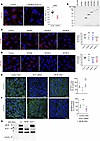 Figure 1
EC uptake of APOB100/APOB48 chylomicrons and LDL. Human aortic ECs were deprived of serum overnight, then incubated with DiI-labeled chylomicrons (4 mg/dL) or LDL (2.5 mg/dL) in serum-free medium for 30 minutes. (A) APOB18 significantly inhibits EC uptake of DiI-LDL. ****P < 0.0001, unpaired 2-tailed Student’s t test. (B) Western blot of C-terminal truncated APOB fragments used in competition studies. (C) APOB15, but not APOB9 or APOB12, inhibits uptake of APOB48-containing chylomicrons. (D) APOB12 and APOB15, but not APOB9, inhibits uptake of APOB100-containing LDL. Scale bars: 20 µm (A, C, and D). ***P < 0.0001, ****P < 0.00001, 1-way ANOVA followed by Dunnett’s post hoc multiple-comparison test against control in C and D. (E) Knockdown of ALK1, but not SR-BI, significantly reduces association of APOB12 to the surface of ECs. Scale bars: 50 μm. (F) Knockdown of SR-BI, but not ALK1, significantly reduces association of APOB18 to the surface of ECs. Scale bars: 50 μm. *P < 0.01, 1-way ANOVA followed by Dunnett’s post hoc multiple-comparison test against control. (G) Representative Western blot of receptor knockdown efficiency following treatment with ALK1 siRNA or SR-BI ASO. All images shown in this figure are representative of at least 4 independent experiments performed with 3 biological replicates. At least 4,000 cells per condition were analyzed.
To further pinpoint the region in APOB responsible for EC receptor binding, we used smaller fragments of APOB to compete DiI-labeled chylomicron and LDL uptake (Figure 1B). As shown in Figure 1C, APOB15, but not APOB12 or APOB8, blocked chylomicron uptake by ECs. This suggested that a region between APOB12 and APOB15 interacts with SR-BI and that APOB12 lacks the motif required to block this receptor. In contrast, APOB12 blocked the uptake of DiI-LDL, which was also inhibited by competition with APOB15 but not APOB8 (Figure 1D). This implied that the N-terminal region between APOB8 and APOB12 contains the ALK1 binding site and that this site differs from that required for chylomicron uptake.
To directly assess binding of APOB fragments to EC receptors, we performed membrane association studies in ECs treated with SR-BI antisense oligonucleotide (ASO) or ALK1 siRNA. As shown in Figure 1E, knockdown of ALK1 but not SR-BI significantly reduced association of FLAG-tagged APOB12 to the surface of ECs. In contrast, binding of APOB18 to EC membranes was significantly reduced by knockdown of SR-BI but not that of ALK1 (Figure 1F).
Knockdown of the receptors is shown in Figure 1G. As previously reported (21), SR-BI ASO also led to a reduction in ALK1 expression, but SR-BI expression was not reduced by treatment with ALK1 siRNA.
APOB length affects its interaction with EC receptors. If chylomicrons and LDL contain identical N-terminal regions, why does APOB12 and ALK1 knockdown (8) not affect chylomicron uptake? We hypothesized that this is due to differences in either the size of the lipoproteins — chylomicrons, with sizes ranging from 75 to 450 nm (22), are much larger than LDL — or the length of the APOB. The N-terminal region of APOB forms a loop that brings C-terminal epitopes in proximity to the N terminus, and Flood et al. reported that removal of the C-terminal portion of APOB exposes N-terminal proteoglycan binding sites (23). More recent structural analyses of APOB are consistent with a model suggesting molecular interactions between the N- and C-terminal APOB regions (13, 14).
To assess whether the C-terminal region is required for the uptake of APOB lipoproteins via ALK1, we isolated lipoproteins from mice only expressing APOB48 (2) and from APOBEC1-deficient mice that only produce APOB100 (24). Although APOB100-carrying chylomicrons are not a physiological lipoprotein species in mammals, these particles provided a useful experimental model to assess the contribution of the APOB C-terminal domain to EC uptake. As expected from our previous studies (8), uptake of APOB48 chylomicrons was inhibited by SR-BI ASO. However, neither ALK1 siRNA nor APOB12 reduced EC uptake of APOB48 chylomicrons (Figure 2A). In contrast, uptake of APOB100 chylomicrons by ECs was inhibited by APOB12 as well as by SR-BI and ALK1 knockdown (Figure 2B). These studies indicate that APOB100 chylomicrons interact with both receptors, whereas the region required for ALK1 binding appears to be obscured in APOB48-containing lipoproteins.
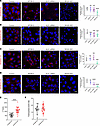 Figure 2
ALK1-mediated lipoprotein uptake requires APOB100. (A) Uptake of chylomicrons obtained from APOB48-only mice is inhibited by SR-BI knockdown (KD) with ASO, but not by APOB12 or ALK1 KD with siRNA. (B) Uptake of APOB100 chylomicrons obtained from Apobec1–/– mice is inhibited by competition with APOB12, as well as KD of both SR-BI and ALK1. (C) As with chylomicrons, uptake of APOB48-LDL is inhibited by SR-BI KD but not ALK1 KD or APOB12. (D) Uptake of APOB100 LDL is inhibited by competition with APOB12, as well as KD of both SR-BI and ALK1. Scale bars: 10 μm (A–D). **P < 0.001, ***P < 0.0001, ****P < 0.00001, 1-way ANOVA followed by Dunnett’s post hoc multiple-comparison test against control. (E) Vesicles bearing APOB100 chylomicrons are transported to the base of the cell at a significantly higher rate than vesicles bearing APOB48 chylomicrons. (F) The transcytosis event rate of APOB100 and APOB48 chylomicrons is not significantly different. ****P < 0.00001, unpaired 2-tailed Student’s t test. Results are shown as scatterplots (mean ± SD).
Next, we determined the receptors required for uptake of APOB48 and APOB100 LDL. Similar to APOB48 chylomicrons, APOB48 LDL uptake by ECs was blocked by SR-BI ASO but not ALK1 siRNA or APOB12 (Figure 2C). As expected, uptake of APOB100 LDL was inhibited by APOB12 and knockdown of both receptors (Figure 2D). These data suggest that distinct motifs in the N-terminal region of APOB interact with the 2 receptors and that the disposition of APOB100 and APOB48 on lipoproteins determines receptor binding independent of lipoprotein size.
APOB100 mediates lipoprotein transcytosis. We previously showed that endothelial SR-BI–mediated APOB48 chylomicron uptake results in intracellular chylomicron hydrolysis in the lysosomal compartment (8). In contrast, APOB100-containing LDL undergoes endothelial transcytosis, which is mediated by both SR-BI and ALK1 (7, 15). To assess whether the presence of the entire APOB100 would result in chylomicron transcytosis, we performed total internal reflection fluorescence (TIRF) microscopy to visualize chylomicrons at the basolateral membrane and enumerate transcytosis events (25). Within minutes of allowing binding to the apical endothelial surface, we observed significantly more APOB100 chylomicrons at the base of the cell compared with APOB48 chylomicrons, consistent with increased internalization and traffic toward the bottom of the cell (Figure 2E). However, exocytosis rates of DiI from both particles were similar (Figure 2F).
APOB molecular modeling of SR-BI and ALK1 ligand sites. We previously reported that treatment with heparin, which competes for and releases lipoproteins from glycosaminoglycan binding, did not inhibit EC uptake of chylomicrons (8). This suggested that uptake was not mediated by glycosaminoglycan binding and was consistent with the possibility that interactions between APOB and EC receptors involved hydrophobic contacts, although other modes of interaction could not be excluded. To identify hydrophobic patches that could be involved in the interactions between APOB18 and different receptors, we performed molecular modeling using AlphaFold 2 and the sequences of APOB18 and SR-BI as input. Our analyses yielded structural models with a converging surface area of APOB18 contacted by SR-BI (Figure 3A). Similar calculations using ALK1 as ligand yielded nonconverged interaction sites partially overlapping with the SR-BI binding site (Figure 3B). A summary of the AlphaFold predictions for the binding of APOB18 with SR-B1 and ALK-1 are summarized in Supplemental Figure 1, A and B, respectively (supplemental material available online with this article; https://doi.org/10.1172/JCI190513DS1). Inspection of the binding interface revealed that the site is enriched in hydrophobic residues and that several hydrophobic residues were exposed to the surface (Figure 3C). To identify critical residues in APOB18 for the inhibition of lipoprotein uptake by ECs, we performed site-directed mutagenesis to replace different surface-exposed hydrophobic residues located in APOB18 loops contacting SR-BI and ALK1 in the AlphaFold 2 models with glycine. To assess the effects of the loss of surface-exposed hydrophobic residues, we performed competition and surface association studies with the resulting mutant APOB18 fragments (Figure 3, D–H). As before, WT APOB18 significantly inhibited the uptake of DiI-chylomicrons by ECs. Mutagenesis of residues F682 and L687 to glycine had no effect on the inhibitory capacity of APOB18. In contrast, the inhibitory effect of APOB18 was substantially reduced after mutagenesis of L645 and completely precluded by mutagenesis of W721 (Figure 3D, representative confocal microscopy images are shown in Figure 3G). Similar effects were observed in competition with DiI-labeled LDL (Supplemental Figure 2A, quantification of 4 independent experiments is shown in Supplemental Figure 2B). Consistently, there was no significant difference in surface binding of L682G or L687G compared with WT APOB18, whereas association with ECs was significantly reduced in L645G and completely blunted in W721G (Figure 3E, representative images of 4 independent experiments are shown in Figure 3H). The inhibitory efficiency of mutant APOB18 fragments strongly correlated with their ability to associate with the EC surface (Figure 3F). Although glycine substitutions could potentially cause generalized misfolding, the differing effects observed across multiple mutations within the same region make this an unlikely explanation. Overall, these studies indicate that W721 and L645 are critical residues involved in binding to EC receptors and support our model of APOB–SR-BI interaction.
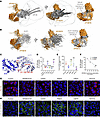 Figure 3
Molecular modeling and mutational studies of APOB18 complexes. (A and B) AlphaFold 2 predictions of the APOB18–SR-BI (A) and APOB18-ALK1 (B) complex structures. For all AlphaFold 2 predictions, an overlay of 5 independent calculations is shown. The binding interfaces of SR-BI and ALK1 on the surface of APOB18 are visualized by coloring all residues within APOB18, which are within 5 Å distance of SR-BI and ALK1. Note that the ALK1 binding interface appears more extensive due to the nonconvergence of the structural models. (C) Display of surface-exposed hydrophobic residues selected for mutational studies. (D) ECs were deprived of serum overnight, then incubated with DiI-labeled chylomicrons (4 mg/dL) in serum-free medium and in the presence of control, WT, or mutant APOB18, as indicated. DiI-chylomicron uptake was strongly and similarly inhibited by WT, L682, and L687 APOB18 (≈80% inhibition). (E) In contrast, L645G APOB18 was less potent in inhibiting CM uptake, and W721G mutation completely blunted CM uptake inhibition. (F) The inhibitory efficiency of mutant APOB18 fragments significantly correlates with their ability to associate with the EC surface. (G and H) Representative images of 4 independent competition (G) and membrane association studies (H), each performed with 3 biological replicates. Scale bars, 10 μm (G), 20 μm (H). *P < 0.01, **P < 0.001, ****P < 0.00001, 1-way ANOVA followed by Dunnett’s post hoc multiple-comparison test against control.
Overexpression of APOB18 inhibits aortic EC chylomicron uptake and lipid droplet formation in aortas. During the postprandial period, aortic ECs develop lipid droplets (26). This is due to chylomicron uptake via SR-BI, and accumulation of aortic EC lipid droplets is exacerbated in lipoprotein lipase-deficient (LpL-deficient) mice (8) that have greater fasting and postprandial hypertriglyceridemia (27). To test whether APOB fragments inhibit chylomicron uptake by ECs in vivo, we transduced LpL-knockout mice with adeno-associated virus 8 (AAV8) for the expression of human APOB18 under the control of a liver-targeting thyroxin binding globulin promoter (Figure 4A). Plasma of APOB18-AAV–transduced mice had high levels of human APOB18. However, this did not alter circulating levels of APOB48 and APOB100 (Figure 4B). Three weeks after transduction, mice were gavaged with olive oil (10 mL/kg) and euthanized 3 hours later to assess postprandial lipid droplet accumulation in aortic ECs. Confocal microscopy imaging of en face aortas stained with neutral lipid dye BODIPY revealed that APOB18-AAV–treated mice had significantly reduced numbers of lipid droplets in the aortic endothelium (Figure 4C), suggesting that chylomicron uptake was reduced. To directly assess the impact of APOB18-AAV on aortic EC chylomicron uptake, we intravenously injected control and APOB18-AAV–expressing WT mice with DiI-labeled human chylomicrons. Aortic EC accumulation of DiI-chylomicrons was markedly reduced in mice treated with APOB18-AAV (Figure 4D). Thus, APOB18-AAV blocks EC uptake of chylomicrons in vivo.
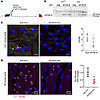 Figure 4
Treatment with APOB18-AAV inhibits aortic EC chylomicron uptake in vivo. (A) Lplfl/fl and iLpl–/– mice were injected intravenously with 2.00 × 10¹¹ vg control (null) or APOB18 liver-targeted AAV8. (B) APOB18 was detected by immunoblot in the plasma of APOB18-AAV–treated mice 2 weeks after injection. (C) iLpl–/– mice treated with APOB18-AAV exhibit significantly fewer postprandial lipid droplets (green) in their aortic endothelium 180 minutes after a gavage with 200 μL olive oil. Scale bars: 10 μm. (D) Null and APOB18-AAV–treated Lplfl/fl mice were given DiI-labeled chylomicrons (red) by intravenous injection and euthanized 15 minutes later. Scale bars: 10 μm. Mice treated with APOB18-AAV exhibited significantly fewer chylomicrons in their aortic endothelium. *P < 0.01, **P < 0.001, unpaired 2-tailed Student’s t test.
Expression of APOB18 in LDLR-knockout mice reduces atherosclerosis. Because APOB18 blocked both chylomicron and LDL uptake by ECs, we next tested whether treatment with APOB18-AAV would reduce atherosclerosis in Ldlr–/– mice. The experimental plan is shown in Figure 5A. Eight-week-old mice were retro-orbitally injected with control (null) or APOB18-AAV and fed a western diet for 12 weeks; after which, plasma, aortic roots, and brachiocephalic arteries were collected for analysis. APOB18-AAV did not affect circulating levels of cholesterol (Figure 5B) and TG (Figure 5C). In addition to APOB, SR-BI binds HDL through high-affinity interactions with APOA1 at the HDL surface (28). We (8) and others (29–31) have shown that HDL strongly inhibits SR-BI–mediated uptake of APOB-containing lipoproteins, indicating that binding to HDL occurs with higher affinity. Consistently, treatment with APOB18-AAV did not alter circulating HDL-cholesterol or HDL-TG levels (Supplemental Figure 3A) nor did the virus have a significant impact on body weight (Figure 5D) or WBC count (Figure 5E) following 12 weeks on a western diet.
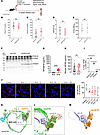 Figure 5
APOB18 blocks EC chylomicron uptake at low relative concentrations. (A) Ldlr–/– mice were injected intravenously with 2.00 × 10¹¹ vg control (null) or APOB18-AAV and fed a western diet for 12 weeks. (B–E) Treatment with APOB18-AAV did not lead to significant changes in plasma cholesterol (B), TGs (C), BW (D), or WBC count (E). TC, total cholesterol. (F) Circulating levels of APOB18 appeared to be markedly lower than those of APOB48 or APOB100. (G) APOB18 was measured by ELISA using mouse monoclonal APOB antibody 1D1, which recognizes N-terminal amino acids 474–539 in human APOB. (H) Mouse APOB48 and APOB100 were measured using a commercial mouse APOB ELISA kit (Abcam, ab230932). The plasma concentration of APOB18 in mice treated with APOB18-AAV was approximately 40-fold lower than that of endogenous mouse APOB48 or APOB100. ****P < 0.00001, unpaired 2-tailed Student’s t test. (I) Plasma levels of APOB18, APOB48, and APOB100 were quantified by LC-MS/MS, and the relative abundance of each isoform was calculated as a percentage of total APOB. APOB18 comprised 1.8% ± 0.79% of total plasma APOB. (J) Competition with APOB18 inhibited chylomicron uptake at relative concentrations of 1:1, 1:10, 1:20, and 1:100. Scale bars: 20 µm. *P < 0.01, **P < 0.001, 1-way ANOVA followed by Dunnett’s post hoc multiple-comparison test against control. (K–M) Molecular modeling of the interaction of APOB100 in lipoproteins or APOB18 with SR-BI. When APOB is on lipoproteins, some of the APOB epitopes predicted to mediate binding to the receptor may be partially embedded in the lipid core (K and L). In APOB18, which is not lipidated, those epitopes are exposed, increasing its affinity for SR-BI (M).
Figure 5F is a representative Western blot showing plasma levels of APOB100, APOB48, and APOB18 in mice treated with control or APOB18-AAV using a polyclonal antibody that recognizes epitopes in the N-terminus of both human and mouse APOB. Western blots of plasma from all mice treated with APOB18-AAV for these studies are shown in Supplemental Figure 3A. In all mice, circulating levels of APOB18 appeared to be markedly lower than those of APOB48 or APOB100. The use of a polyclonal antibody, characterized by heterogeneous epitope recognition, precluded reliable densitometric quantification. Therefore, we used mouse monoclonal APOB antibody 1D1, which recognizes N-terminal amino acids 474–539 in human APOB, as capture antibody for the detection of APOB18 by ELISA. Mouse APOB48 and APOB100 were measured using a commercial mouse APOB ELISA kit (Abcam, ab230932). The plasma concentration of APOB18 in mice treated with APOB18-AAV was 6.83 ± 2.23 μg/mL (Figure 5G), approximately 40-fold lower than that of endogenous mouse APOB48 (239.7 ± 189.5 μg/mL) or APOB100 (316.1 ± 205.3 μg/mL; Figure 5H). In addition, plasma levels of APOB18, APOB48, and APOB100 were independently quantified by liquid chromatography–tandem mass spectrometry (LC-MS/MS), and the relative abundance of each isoform was calculated as a percentage of total APOB (Figure 5I). According to this LC-MS/MS–based relative quantification, APOB18 represented 1.8% ± 0.79% of total plasma APOB in APOB18-AAV–treated mice, consistent with our concentration measurements.
To assess whether such low levels of APOB18 would be sufficient to inhibit EC chylomicron and LDL uptake, we performed titration studies using decreasing concentrations of APOB18. EC chylomicron uptake was inhibited by APOB18 in relative concentrations as low as 1:100 (Figure 5J), and we observed the same in competitions with LDL (Supplemental Figure 3B). To analyze this, we performed additional molecular modeling of the interaction of APOB100 in lipoproteins or APOB18 with SR-BI (Figure 5, K–M). When APOB is on lipoproteins, some of the APOB epitopes predicted to mediate binding to the receptor may be partially embedded in the lipid core (Figure 5, K and L). In APOB18, which is not lipidated, those epitopes are exposed, increasing its affinity for SR-BI (Figure 5M). Therefore, the relatively lower concentration of APOB18 in mouse plasma should not preclude inhibition of APOB-containing lipoproteins.
Consistently, atherosclerosis was reduced in the aortic root of APOB18-AAV–transduced mice fed a western diet for 12 weeks (Figure 6A). There was a reduction in the area occupied by lipids and macrophages (Figure 6, B and C) but no obvious changes in the lesion morphology as the percentage of reduction of these lesional components was similar. No changes were observed in the percentage of area occupied by collagen (Figure 6D). Brachiocephalic arteries of APOB18-AAV–transduced mice showed a similar reduction in lesion size (Figure 6E). We recently showed that chylomicron uptake by ECs in vitro induces the expression of a host of inflammatory genes, including VCAM1 and ICAM1 (32), which are also increased in the aortas of hyperchylomicronemia mice deficient in both LpL and LDLR (33). Immunohistochemical labeling showed that VCAM1 and ICAM1 were both significantly reduced in the aortic roots of APOB18-AAV–transduced mice (Figure 6F and Supplemental Figure 4). Therefore, APOB18, which competes for EC lipoprotein receptors, reduces atherogenesis.
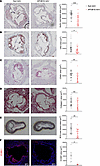 Figure 6
Treatment with APOB18-AAV reduces atherosclerosis. Ldlr–/– mice were injected intravenously with 2.00 × 10¹¹ vg control (null) or APOB18-AAV and fed a western diet for 12 weeks. Mice were then euthanized, and their aortic roots and BCA were harvested for assessment of atherosclerosis. (A) Mice treated with APOB18-AAV exhibited smaller lesions in their aortic roots. (B–D) Mice treated with APOB18-AAV exhibited a reduction in the area occupied by lipids (stained with Oil Red O [ORO]; B), macrophages (stained with CD68; C), and collagen (D). (E) Mice treated with APOB18-AAV exhibited significantly smaller lesions in their BCA. Lesion area in A–E was quantified from serial aortic root sections imaged at ×4 magnification. (F) Expression of VCAM-1 in the aortic roots was assessed in a subset of mice (5 per group) and was found to be significantly reduced in APOB18-AAV–treated mice. Scale bars: 200 μm. *P < 0.01, **P < 0.001, ***P < 0.0001, unpaired 2-tailed Student’s t test.


Copyright © 2026 American Society for Clinical Investigation
ISSN: 0021-9738 (print), 1558-8238 (online)