
Research ArticleCell biologyVascular biology
Open Access |  10.1172/jci.insight.198256
Loss of angiopoietin-2 leads to region-specific brain malformations and blood-brain barrier leakage
Weihan Li,1 Elisa Vázquez-Liébanas,1 Chanaëlle Fébrissy,1 Florent Sauvé,1 Jianhao Wang,1 Doğan E. Sayıner,1 Pia Buslaps,1 Amanda Norrén,1 Michael Vanlandewijck,2,3 Liqun He,1 Marie Jeansson,3 Lars Muhl,3,4 and Maarja Andaloussi Mäe1
1Department of Immunology, Genetics, and Pathology, Rudbeck Laboratory, Uppsala University, Uppsala, Sweden.
2Single Cell Core Facility of Flemingsberg Campus (SICOF), Karolinska Institute, Huddinge, Sweden.
3Department of Medicine, Huddinge, Karolinska Institute, Huddinge, Sweden.
4Department of Clinical Medicine, University of Bergen, Bergen, Norway.
Address correspondence to: Maarja Andaloussi Mäe, Department of Immunology, Genetics, and Pathology, Rudbeck Laboratory, Uppsala University, 751 85 Uppsala, Sweden. Phone: 46.736.324.911; Email: maarja.andaloussi_mae@igp.uu.se.
Authorship note: WL and EVL contributed equally to this work.
Find articles by Li, W. in: PubMed | Google Scholar
1Department of Immunology, Genetics, and Pathology, Rudbeck Laboratory, Uppsala University, Uppsala, Sweden.
2Single Cell Core Facility of Flemingsberg Campus (SICOF), Karolinska Institute, Huddinge, Sweden.
3Department of Medicine, Huddinge, Karolinska Institute, Huddinge, Sweden.
4Department of Clinical Medicine, University of Bergen, Bergen, Norway.
Address correspondence to: Maarja Andaloussi Mäe, Department of Immunology, Genetics, and Pathology, Rudbeck Laboratory, Uppsala University, 751 85 Uppsala, Sweden. Phone: 46.736.324.911; Email: maarja.andaloussi_mae@igp.uu.se.
Authorship note: WL and EVL contributed equally to this work.
Find articles by Vázquez-Liébanas, E. in: PubMed | Google Scholar
1Department of Immunology, Genetics, and Pathology, Rudbeck Laboratory, Uppsala University, Uppsala, Sweden.
2Single Cell Core Facility of Flemingsberg Campus (SICOF), Karolinska Institute, Huddinge, Sweden.
3Department of Medicine, Huddinge, Karolinska Institute, Huddinge, Sweden.
4Department of Clinical Medicine, University of Bergen, Bergen, Norway.
Address correspondence to: Maarja Andaloussi Mäe, Department of Immunology, Genetics, and Pathology, Rudbeck Laboratory, Uppsala University, 751 85 Uppsala, Sweden. Phone: 46.736.324.911; Email: maarja.andaloussi_mae@igp.uu.se.
Authorship note: WL and EVL contributed equally to this work.
Find articles by Fébrissy, C. in: PubMed | Google Scholar
1Department of Immunology, Genetics, and Pathology, Rudbeck Laboratory, Uppsala University, Uppsala, Sweden.
2Single Cell Core Facility of Flemingsberg Campus (SICOF), Karolinska Institute, Huddinge, Sweden.
3Department of Medicine, Huddinge, Karolinska Institute, Huddinge, Sweden.
4Department of Clinical Medicine, University of Bergen, Bergen, Norway.
Address correspondence to: Maarja Andaloussi Mäe, Department of Immunology, Genetics, and Pathology, Rudbeck Laboratory, Uppsala University, 751 85 Uppsala, Sweden. Phone: 46.736.324.911; Email: maarja.andaloussi_mae@igp.uu.se.
Authorship note: WL and EVL contributed equally to this work.
Find articles by Sauvé, F. in: PubMed | Google Scholar
1Department of Immunology, Genetics, and Pathology, Rudbeck Laboratory, Uppsala University, Uppsala, Sweden.
2Single Cell Core Facility of Flemingsberg Campus (SICOF), Karolinska Institute, Huddinge, Sweden.
3Department of Medicine, Huddinge, Karolinska Institute, Huddinge, Sweden.
4Department of Clinical Medicine, University of Bergen, Bergen, Norway.
Address correspondence to: Maarja Andaloussi Mäe, Department of Immunology, Genetics, and Pathology, Rudbeck Laboratory, Uppsala University, 751 85 Uppsala, Sweden. Phone: 46.736.324.911; Email: maarja.andaloussi_mae@igp.uu.se.
Authorship note: WL and EVL contributed equally to this work.
Find articles by Wang, J. in: PubMed | Google Scholar
1Department of Immunology, Genetics, and Pathology, Rudbeck Laboratory, Uppsala University, Uppsala, Sweden.
2Single Cell Core Facility of Flemingsberg Campus (SICOF), Karolinska Institute, Huddinge, Sweden.
3Department of Medicine, Huddinge, Karolinska Institute, Huddinge, Sweden.
4Department of Clinical Medicine, University of Bergen, Bergen, Norway.
Address correspondence to: Maarja Andaloussi Mäe, Department of Immunology, Genetics, and Pathology, Rudbeck Laboratory, Uppsala University, 751 85 Uppsala, Sweden. Phone: 46.736.324.911; Email: maarja.andaloussi_mae@igp.uu.se.
Authorship note: WL and EVL contributed equally to this work.
Find articles by Sayıner, D. in: PubMed | Google Scholar
1Department of Immunology, Genetics, and Pathology, Rudbeck Laboratory, Uppsala University, Uppsala, Sweden.
2Single Cell Core Facility of Flemingsberg Campus (SICOF), Karolinska Institute, Huddinge, Sweden.
3Department of Medicine, Huddinge, Karolinska Institute, Huddinge, Sweden.
4Department of Clinical Medicine, University of Bergen, Bergen, Norway.
Address correspondence to: Maarja Andaloussi Mäe, Department of Immunology, Genetics, and Pathology, Rudbeck Laboratory, Uppsala University, 751 85 Uppsala, Sweden. Phone: 46.736.324.911; Email: maarja.andaloussi_mae@igp.uu.se.
Authorship note: WL and EVL contributed equally to this work.
Find articles by Buslaps, P. in: PubMed | Google Scholar
1Department of Immunology, Genetics, and Pathology, Rudbeck Laboratory, Uppsala University, Uppsala, Sweden.
2Single Cell Core Facility of Flemingsberg Campus (SICOF), Karolinska Institute, Huddinge, Sweden.
3Department of Medicine, Huddinge, Karolinska Institute, Huddinge, Sweden.
4Department of Clinical Medicine, University of Bergen, Bergen, Norway.
Address correspondence to: Maarja Andaloussi Mäe, Department of Immunology, Genetics, and Pathology, Rudbeck Laboratory, Uppsala University, 751 85 Uppsala, Sweden. Phone: 46.736.324.911; Email: maarja.andaloussi_mae@igp.uu.se.
Authorship note: WL and EVL contributed equally to this work.
Find articles by Norrén, A. in: PubMed | Google Scholar
1Department of Immunology, Genetics, and Pathology, Rudbeck Laboratory, Uppsala University, Uppsala, Sweden.
2Single Cell Core Facility of Flemingsberg Campus (SICOF), Karolinska Institute, Huddinge, Sweden.
3Department of Medicine, Huddinge, Karolinska Institute, Huddinge, Sweden.
4Department of Clinical Medicine, University of Bergen, Bergen, Norway.
Address correspondence to: Maarja Andaloussi Mäe, Department of Immunology, Genetics, and Pathology, Rudbeck Laboratory, Uppsala University, 751 85 Uppsala, Sweden. Phone: 46.736.324.911; Email: maarja.andaloussi_mae@igp.uu.se.
Authorship note: WL and EVL contributed equally to this work.
Find articles by
Vanlandewijck, M.
in:
PubMed
|
Google Scholar
|

1Department of Immunology, Genetics, and Pathology, Rudbeck Laboratory, Uppsala University, Uppsala, Sweden.
2Single Cell Core Facility of Flemingsberg Campus (SICOF), Karolinska Institute, Huddinge, Sweden.
3Department of Medicine, Huddinge, Karolinska Institute, Huddinge, Sweden.
4Department of Clinical Medicine, University of Bergen, Bergen, Norway.
Address correspondence to: Maarja Andaloussi Mäe, Department of Immunology, Genetics, and Pathology, Rudbeck Laboratory, Uppsala University, 751 85 Uppsala, Sweden. Phone: 46.736.324.911; Email: maarja.andaloussi_mae@igp.uu.se.
Authorship note: WL and EVL contributed equally to this work.
Find articles by
He, L.
in:
PubMed
|
Google Scholar
|
1Department of Immunology, Genetics, and Pathology, Rudbeck Laboratory, Uppsala University, Uppsala, Sweden.
2Single Cell Core Facility of Flemingsberg Campus (SICOF), Karolinska Institute, Huddinge, Sweden.
3Department of Medicine, Huddinge, Karolinska Institute, Huddinge, Sweden.
4Department of Clinical Medicine, University of Bergen, Bergen, Norway.
Address correspondence to: Maarja Andaloussi Mäe, Department of Immunology, Genetics, and Pathology, Rudbeck Laboratory, Uppsala University, 751 85 Uppsala, Sweden. Phone: 46.736.324.911; Email: maarja.andaloussi_mae@igp.uu.se.
Authorship note: WL and EVL contributed equally to this work.
Find articles by
Jeansson, M.
in:
PubMed
|
Google Scholar
|
1Department of Immunology, Genetics, and Pathology, Rudbeck Laboratory, Uppsala University, Uppsala, Sweden.
2Single Cell Core Facility of Flemingsberg Campus (SICOF), Karolinska Institute, Huddinge, Sweden.
3Department of Medicine, Huddinge, Karolinska Institute, Huddinge, Sweden.
4Department of Clinical Medicine, University of Bergen, Bergen, Norway.
Address correspondence to: Maarja Andaloussi Mäe, Department of Immunology, Genetics, and Pathology, Rudbeck Laboratory, Uppsala University, 751 85 Uppsala, Sweden. Phone: 46.736.324.911; Email: maarja.andaloussi_mae@igp.uu.se.
Authorship note: WL and EVL contributed equally to this work.
Find articles by Muhl, L. in: PubMed | Google Scholar
1Department of Immunology, Genetics, and Pathology, Rudbeck Laboratory, Uppsala University, Uppsala, Sweden.
2Single Cell Core Facility of Flemingsberg Campus (SICOF), Karolinska Institute, Huddinge, Sweden.
3Department of Medicine, Huddinge, Karolinska Institute, Huddinge, Sweden.
4Department of Clinical Medicine, University of Bergen, Bergen, Norway.
Address correspondence to: Maarja Andaloussi Mäe, Department of Immunology, Genetics, and Pathology, Rudbeck Laboratory, Uppsala University, 751 85 Uppsala, Sweden. Phone: 46.736.324.911; Email: maarja.andaloussi_mae@igp.uu.se.
Authorship note: WL and EVL contributed equally to this work.
Find articles by Mäe, M. in: PubMed | Google Scholar
Published February 19, 2026 - More info
JCI Insight. 2026;11(7):e198256. https://doi.org/10.1172/jci.insight.198256.
© 2026 Li et al. This work is licensed under the Creative Commons Attribution 4.0 International License. To view a copy of this license, visit http://creativecommons.org/licenses/by/4.0/.
Received: July 21, 2025; Accepted: February 13, 2026


-
Results
Angpt2-KO mice develop vascular malformations in the CP and SS4–6. Angpt2-KO mice are adult viable but display a few residual consequences of developmental lymphatic and retinal vascular defects (5). We recently discovered that Angpt2-KO mice also exhibit abnormal brain vascular morphology and increased leakage of the 1 kDa cadaverine in the brain (11), which prompted us to systematically analyze the brain vasculature in adult Angpt2-KO mice.
To get a detailed view of vascular anatomy across different brain regions, we performed immunofluorescent (IF) staining of the pan–endothelial cell (pan-EC) marker PECAM1 on brain sections covering the entire cerebrum in 2- to 3-month-old Angpt2-KO mice and littermate controls. This analysis revealed morphological vascular abnormalities consistently in two brain regions of the Angpt2-KO mice, CP and SS4–6 (Figure 1A and Supplemental Figure 1A; supplemental material available online with this article; https://doi.org/10.1172/jci.insight.198256DS1), and less consistently also in other brain regions, including the caudal part of the MO cortex, thalamus, and nucleus accumbens (Supplemental Figure 1B). Therefore, we concentrated our further analysis of the vascular malformation to lateral and medial sections with visible CP and SS4–6. The core of these abnormalities in Angpt2-KO brains displayed irregular intertwined ball-like vascular structures that were surrounded by a dilated vascular network, which gradually transitioned into macroscopically normal-looking vessels (Figure 1A). We repeatedly found a normal vascular morphology in SS1, the visual cortex (VIS), and the rostral part of the MO cortex throughout the studied Angpt2-KO brains. Furthermore, the gradual transition from abnormal to normal vasculature morphology made it challenging to define a clear boundary of the abnormal regions, and therefore, all quantifications made outside of the malformations are referred to as regions with “non-malformed vasculature.” To achieve a detailed understanding of the 3D architecture of the malformed vasculature, we cleared PECAM1-stained 250-μm-thick brain sections and imaged with confocal microscopy. This analysis showed that the vessels within the malformations were extensively tangled and abnormally dilated, occasionally bulging into microaneurysm-like structures (Figure 1B and Supplemental Videos 1 and 2).
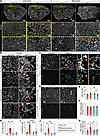 Figure 1
Vascular malformations and vascular sprouting in adult Angpt2-KO brains. (A) Representative tile scans of PECAM1 (gray) IF on sagittal sections of Angpt2 WT (n = 24) and KO (n = 25). High-magnification images of SS4–6 and CP are shown. Ball-like abnormal vasculature (red arrowheads); dilated vessels surrounding ball-like structures (cyan asterisk). (B) IF of PECAM1 (gray) in CP of cleared 250-μm-thick brain sections (n = 2). Bulged and intertwined vessels (red arrowheads). Scale bars: 25 μm. (C) Representative images of ERG (cyan), PECAM1 (gray), and MKI67 (red) IF in CP (n = 4). Tip cells (yellow arrowheads) and proliferative ECs (purple arrowheads) CP are shown at higher magnification below. Scale bars: 50 μm. (D) Representative images of ERG (cyan), PECAM1 (gray), and MKI67 (red) IF in SS1–3 (n = 4). Scale bars: 50 μm. (E–J) Quantifications of malformed (orange bars) and non-malformed vasculature (light blue bars). (E) Quantification of EC number per field (n = 5). (F) Quantification of mean avascular area per field (n = 4). (G) Quantification of mean distance between vessels (n = 4). (H) Quantification of the number of tip cells per field (n = 5). (I) Quantification of the total number of MKI67+ cells per field (n = 4). (J) Quantification of the number of MKI67+ ECs per field (n = 4). (H) Data were not normally distributed, and a Kruskal-Wallis test was used to test significance. **P < 0.01. (E–G, I, and J) Data were normally distributed, and a 1-way ANOVA with Tukey’s multiple-comparison test was performed to evaluate significance. *P < 0.05, **P < 0.01, ***P < 0.001, ****P < 0.0001. Scale bars: 100 μm (A); 50 μm (C).
To further investigate the cellular organization and proliferative characteristics of malformed and non-malformed vasculature in Angpt2-KO brains, we compared IF stainings for PECAM1, the general cell cycle marker MKI67, and the EC-specific transcription factor and nuclear marker ERG, in corresponding regions in Angpt2-KO and WT controls (Figure 1, C–J). This showed that in the malformed regions of Angpt2-KO, the mean number of ECs per microscopic field and avascular areas remained similar (Figure 1, E and F); however, the mean distance between the vessels was significantly increased when compared with the corresponding regions in WT (Figure 1G). In non-malformed regions, the mean EC number per vascular area was reduced in KO (Figure 1E); however, the mean avascular area and mean distance between vessels were comparable between Angpt2 WT and KO (Figure 1, F and G).
The malformed vessels displayed signs of active angiogenic sprouting. They carried abundant endothelial tip cells, as evident by the morphology of blunt-ended sprouts with numerous protruding filopodia (Figure 1C). The presence of angiogenic sprouts and tip cells was largely limited to the regions with malformed vasculature in Angpt2-KO brains; only rare tip cells could be found in the regions outside malformations in Angpt2-KO brains, and none could be identified in Angpt2-WT brains (Figure 1, C and H). Higher numbers of proliferating (MKI67+) cells were observed in the Angpt2-KO regions with malformed vasculature compared with regions with non-malformed vasculature and comparable areas in WT controls (Figure 1, C and I). However, most (≈80%) of the proliferating cells in malformed regions were non-endothelial (Figure 1, C, I, and J). EC proliferation was very low in regions with non-malformed vasculature and in WT controls (Figure 1, C and J).
Angpt2-KO mice display distinct regional modes of BBB permeability. When addressing the nature of the leakage discovered in Angpt2-KO mice (11), we considered that our previous work revealed different consequences for the molecular type and size selectivity of tracer leakage across the BBB depending on whether its tight junctions had been disrupted (12), or whether endothelial transcytosis had been activated due to pericyte deficiency (11, 18).
To further investigate how Angpt2 deficiency impacts the BBB, we sequentially injected 2 fluorescent tracers of different sizes intravenously in each mouse. First, 70 kDa tetramethylrhodamine-dextran (TMR-dextran) was injected; this tracer is known to leak across the BBB in pericyte-deficient mice with increased BBB transcytosis (11, 18) but not in mice with deficient endothelial tight junctions at the BBB (12). Sixteen hours later (2 hours before tissue collection), 1 kDa Alexa Fluor 488 cadaverine (A488-cadaverine) was injected (Figure 2, A and B). We found 70 kDa TMR-dextran extravasation only around the malformed vasculature (in SS4–6 and CP) of Angpt2 KO (Figure 2, A and C). The non-malformed vasculature in Angpt2 KO, and all corresponding regions in Angpt2-WT brains, lacked signs of TMR-dextran extravasation (Figure 2, A and C). In contrast, extravasation of A488-cadaverine was detected both in regions with malformed vessels and in certain regions with non-malformed vasculature (AI, ORB, and MO layers 1–3) (Figure 2, A and D). We also detected inconsistent A488-cadaverine leakage in the piriform area in some mice (Figure 2A). Other regions with non-malformed vessels in Angpt2 KO (SS1–3 and VIS) lacked signs of A488-cadaverine extravasation (Figure 2, A and D). A488-cadaverine extravasation, like TMR-dextran extravasation, was not detected in any regions in WT mice. As we have previously noted (18), fluorescently labeled 1 kDa cadaverine is rapidly taken up by parenchymal cells (Figure 2A). We found that the majority of the A488-cadaverine–positive cells were neurons, as judged by costaining for the pan-neuronal marker NEUN (positive) and the pan-oligodendrocyte progenitor marker OLIG2 (negative) (12, 18). A minor proportion of the A488-cadaverine–positive cells were negative for both NEUN and OLIG2, suggesting that other cells also may take up A488-cadaverine (Supplemental Figure 2, A–C). Differences in the A488-cadaverine–positive neurons’ NEUN intensity and regional distribution were noted (Supplemental Figure 2, A and B), though the underlying reasons for this remain unclear. Notably, the cellular uptake of A488-cadaverine was stronger in the leaky non-malformed than in the malformed regions in Angpt2 KO (Figure 2, A and D), perhaps suggesting that the parenchymal cells are functionally impaired (with regard to tracer uptake) in the malformed regions. IF staining with a TER119 antibody revealed focal hemorrhages around some of the malformed vessels in the Angpt2 KO. In contrast, no hemorrhages were observed in regions with non-malformed vasculature in the Angpt2 KO or in WT controls (Figure 2E).
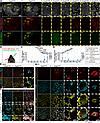 Figure 2
BBB permeability and endothelial junctions in Angpt2-KO brains. (A) Tile scans of PECAM1 (gray) IF with 70 kDa TMR-dextran (red) and 1 kDa A488-cadaverine (green) on sagittal sections (n = 4). High-magnification images of different modes of leakage in malformed (SS4–6, CP) and non-malformed vasculature (AI) are shown. Yellow arrow points to piriform area (PIR) with occasional A488-cadaverine leakage. (B) Illustration of intravenous retro-orbital approach used for tracer injection. (C and D) Quantification of 70 kDa TMR-dextran (C) and 1 kDa A488-cadaverine (D) leakage in different cortical regions (AI, ORB, MO, SS1–3, SS4–6, and VIS) and CP (n = 4). Data were normally distributed, and a 2-way ANOVA with Tukey’s multiple-comparison test was performed to evaluate significance. *P < 0.05, **P < 0.01, ***P < 0.001, ****P < 0.0001. (E) Representative images of PECAM1 (yellow) and TER119 (cyan) IF and 70 kDa TMR-dextran (red) in SS4–6 from Angpt2 WT (n = 5) and KO (n = 6). High-magnification images of red blood cell extravasation in malformed vasculature are shown. (F) Representative images of PECAM1 (red), CLDN5 (cyan), and CDH5 (yellow) IF in CP from Angpt2 WT (n = 5) and KO (n = 6). High-magnification images of a regular vascular stretch in Angpt2 WT and a dilated and tangled vascular stretch in Angpt2 KO are shown. Scale bars: 25 μm. (G) Representative images of PECAM1 (yellow) and CLDN5 (cyan) IF and 70 kDa TMR-dextran (red) in CP (n = 4). High-magnification images of parenchymal dextran leakage in malformed vasculature are shown. Scale bars: 100 μm (A); 50 μm (E); 25 μm (F); 50 and 10 μm (G).
Because our previous work indicated potential changes in the expression of CLDN5 in Angpt2-KO brains (11), we characterized endothelial junctional morphology across malformed and non-malformed regions in Angpt2-KO mice using IF staining of the tight junction proteins CLDN5 and zonula occludens 1 (ZO1) and the adherens junction proteins cadherin 5 (CDH5) and PECAM1 (12). Overall, the junctional patterns in the regions with malformed vasculature were irregular and clearly distinguishable from the patterns in surrounding regions with dilated and non-malformed vasculature in Angpt2-KO mice and corresponding areas in WT controls (Figure 2, F and G, and Supplemental Figure 2D). However, we concluded that these features likely reflect the tangled and dilated characteristics of the vessels in regions with malformed vasculature, as the distribution of CLDN5/ZO1 and CDH5 was continuous along endothelial junctions throughout the regions with malformed vasculature (Figure 2F and Supplemental Figure 2D). Notably, we did not find CDH5+ junctions that were negative for CLDN5, as previously reported (11), which likely reflects the improved IF staining protocols used in the present study. However, we need to be careful with our interpretations of these observations, as the junctional arrangements in the malformed blood vessels (with extensive TMR-dextran leakage) are complicated to assess owing to the tangled vascular morphology at these sites (Figure 2F).
Angpt2-KO mice display region-specific changes in mural cells and fibroblasts. Given the proposed role of Angpt/Tie signaling in endothelial–mural cell interactions (2), we examined perivascular cells in regions exhibiting different types of vascular leakage. We performed IF staining for a panel of mural cell markers and compared their distribution in leaky versus non-leaky regions in Angpt2-KO mice, as well as in the corresponding regions of WT controls.
These analyses revealed clearly abnormal mural cell shapes in the regions with malformed vasculature (Figure 3, A and B, and Supplemental Figure 3A). These mural cells displayed abnormally thick processes differing from the pericyte morphology in WT mice (Figure 3A). Some of these abnormal mural cells had taken up extravasated 70 kDa TMR-dextran, yet not all of the dextran+ perivascular cells were positive for the mural cell marker aminopeptidase N (ANPEP) (Figure 3, B and C). Some non-malformed KO regions also displayed abnormal pericyte process thickening, although this abnormality was modest in comparison with those observed in the malformed regions (Figure 3, D and E). The occurrence of mural cell abnormalities did not correlate with A488-cadaverine leakage, which was observed in regions both with and without detectable mural cell abnormalities (Figure 3, D and E, and Supplemental Figure 3, D–F).
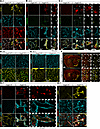 Figure 3
Phenotypes of brain perivascular cells in Angpt2-KO brains. (A) Representative images of ACE2 (cyan), ACTA2 (yellow), and PECAM1 (red) IF in CP from Angpt2 WT (n = 5) and KO (n = 6). Scale bars: 25 μm. (B and C) Representative images of ANPEP (cyan) and PECAM1 (yellow) IF with 70 kDa TMR-dextran (red) and 1 kDa A488-cadaverine (green) in SS4–6 (B) and CP (C) (n = 4). High-magnification images of 1 Z-plane of the tangled vasculature with parenchymal dextran leakage are shown. ANPEP+ cells with dextran uptake (white arrowheads); ANPEP– cells with dextran uptake (arrows). Parenchymal 70 kDa TMR-dextran leakage (yellow arrowheads). (D and E) Representative images of ANPEP (cyan) and PECAM1 (yellow) IF and 1 kDa A488-cadaverine (green) in ORB (D) and SS1–3 (E) (n = 4). Scale bars: 50 μm. (F) Representative tile scans of LAMA1 (yellow) and PECAM1 (red) IF on sagittal medial sections of Angpt2 WT (n = 5) and KO (n = 6). High-magnification images of malformed vasculature covered by LAMA1+ sleeves in KO (arrows) and big vessels covered by LAMA1+ sleeves in WT (arrowheads) are shown. Scale bars: 1 mm. (G) Representative images of LAMA1 (cyan) and PECAM1 (yellow) IF and 70 kDa TMR-dextran (red) in CP (n = 3). Parenchymal TMR-dextran leakage outside LAMA1 sleeve (arrowheads). High-magnification images of 1 Z-plane of malformed vasculature covered by LAMA1+ sleeves are shown. Scale bars: 25 μm. (H) IF of LAMA1 (yellow), PDGFRA (cyan), and PECAM1 (red) in CP from Angpt2 WT (n = 5) and KO (n = 6). Scale bars: 25 μm (B and C); 100 μm (F); 25 μm (G).
In the normal mouse brain, expression of the smooth muscle cell marker α-smooth muscle actin (ACTA2) is largely restricted to the mural cells of arteries, arterioles, and large veins, whereas the mural cells of capillaries and venules (i.e., pericytes) are ACTA2– (19). Therefore, we found it intriguing that the mural cells around the malformed vasculature were ACTA2 positive (Figure 3A and Supplemental Figure 3, A and B). This staining pattern was, however, different from that in ACTA2+ arterial/arteriolar smooth muscle cells found around arterioles at other locations in both Angpt2-WT and -KO brains. The mural cells around malformed vessels also showed downregulated expression of angiotensin-converting enzyme 2 (ACE2), a marker normally expressed in brain pericytes in the mouse. Yet the ACE2 expression levels were normal in the dilated vessels that surround the malformed vasculature (Supplemental Figure 3A). Two additional mural cell markers, platelet-derived growth factor receptor-β (PDGFRB) and desmin (DES), showed increased expression in the regions with malformed vasculature (Supplemental Figure 3, B and C). In summary, mural cell phenotypes were altered in the malformed regions of Angpt2-KO brains, whereas those outside the malformed areas showed only modest changes and did not correlate with the presence/absence of 1 kDa A488-cadaverine leakage.
The increased avascular areas in the regions with malformed vasculature of the Angpt2-KO brain, along with the elevated expression of ANPEP and PDGFRB — expressed primarily by mural cells but also, to a lesser extent, in perivascular fibroblasts (19) — prompted us to analyze the expression of fibroblast markers. IF for laminin-α1 (LAMA1), a basement membrane component deposited by brain perivascular and pial fibroblasts (19), showed that the majority of the vessels in the regions with malformed vasculature were covered by LAMA1+ basement membrane sleeves (Figure 3, F–H), whereas capillaries in the regions with dilated vasculature surrounding the malformations were devoid of LAMA1 sleeves, similar to the situation in WT brains, where LAMA1 was absent from capillaries (Figure 3F). While 70 kDa TMR-dextran deposits were often retained within the LAMA1+ basement membrane, it was not uncommon to find the tracer also outside the LAMA1 deposits (Figure 3G). PDGFRA is an established marker for both perivascular fibroblasts and oligodendrocyte progenitor cells (19). IF staining using a PDGFRA antibody demonstrated that fibroblasts expressing this marker were localized around the dilated and tangled vessels within the regions of malformed vasculature besides their expected localization around bigger vessels (Figure 3H). Also, PDGFRA+ oligodendrocyte progenitor cells in malformed regions displayed altered morphology in comparison with control brains (Figure 3H); however, these cells were not further characterized.
Region-specific reactive phenotype of microglia and astrocytes in Angpt2-KO brains. The abnormalities in ECs, mural cells, and perivascular fibroblasts in Angpt2-KO brains encouraged us to also study the glial cells. Region-specific massive upregulation of glial acidic fibrillary protein (GFAP), a marker of reactive astrocytes, was observed in KO brains (Figure 4A and Supplemental Figure 4A). GFAP expression was prominent specifically in regions with vascular malformations and adjacent regions with dilated vasculature (Figure 4, A–C, and Supplemental Figure 4, A and B). To get a better overview of the GFAP reactive phenotype in the Angpt2-KO brains and to find out whether it matched with the different types of tracer leakage, we quantified the GFAP area per field in AI, ORB, MO layers 1–3, SS1–3, SS4–6, and VIS and CP regions. Only the KO brain regions with malformed vasculature and 70 kDa TMR-dextran leakage (SS4–6 and CP) (Figure 2C) displayed elevated GFAP expression, whereas non-malformed regions, regardless of A488-cadaverine leakage, had normal (mostly low) GFAP expression (Figure 4E). Another astrocyte marker, the water channel aquaporin-4 (AQP4), is normally concentrated at the astrocyte end-foot membrane facing the vasculature. However, in Angpt2 KO, AQP4 was partially mislocalized to other subcellular regions of the astrocytes around the malformed vasculature with 70 kDa TMR-dextran leakage (Figure 4, B and D, and Supplemental Figure 4, D and E), whereas the normal end-foot–restricted localization was observed in non-malformed regions in the KO comparably to WT (Supplemental Figure 4, D and E). Thus, both GFAP and AQP4 stainings suggested that astrocyte reactivity correlates with vascular malformations and 70 kDa TMR-dextran leakage.
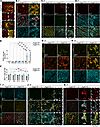 Figure 4
Glial phenotypes in Angpt2-KO brains. (A) GFAP (yellow) and PECAM1 (red) IF tile scans of Angpt2-WT (n = 5) and -KO (n = 6) brains. High-magnification: malformed vasculature in CP with reactive GFAP+ astrocytes. Scale bars: 1 mm. (B) GFAP (yellow), AQP4 (cyan), and PECAM1 (red) IF in CP from WT (n = 3) and KO (n = 4). Scale bars: 25 μm. (C) GFAP (cyan), PECAM1 (yellow), TMR-dextran (red), and A488-cadaverine (green) IF in CP (n = 4). High-magnification single Z-plane: malformed vasculature and TMR-dextran deposits in between GFAP+ astrocytes and ECs. Scale bars: 50 μm. (D) AQP4 (cyan), PECAM1 (yellow), and TMR-dextran (red) IF in CP (n = 4). Scale: 50 μm. (E) GFAP+ area quantification in cortical regions and CP (n = 4). (F) AIF1+ cell count per field in cortical regions and CP of WT and KO (AI and ORB, n = 4; SS and CP, n = 5). Data normally distributed; 2-way ANOVA with Tukey’s test. *P < 0.05, **P < 0.01, ***P < 0.001, ****P < 0.0001. (G and H) CLEC7A (yellow) (G), F4/80 (yellow) (H), AIF1 (cyan), and PECAM1 (red) IF in CP from WT (n = 3) and KO (n = 4). Scale bars: 25 μm. (I) LYVE1 (yellow), F4/80 (cyan), and PECAM1 (red) IF in CP from WT (n = 3) and KO (n = 4). Scale bars: 50 μm. (J) AIF1, F4/80 (cyan), PECAM1 (yellow), TMR-dextran (red), and A488-cadaverine (green) IF in CP (n = 4) showing TMR-dextran deposits colocalizing with F4/80+ and AIF1+ cells (arrowheads). Scale bars: 25 μm. (K) F4/80 (cyan), PECAM1 (yellow), TMR-dextran (red), and A488-cadaverine (green) IF in CP (n = 4). High-magnification single Z-plane: tangled vasculature with TMR-dextran deposits colocalizing with F4/80+ cells (arrowheads) or without (arrows). Scale bars: 25 μm.
We next assessed microglial abundance and morphology by staining for allograft inflammatory factor 1 (AIF1). Analysis of AI, ORB, SS1–3, SS4–6, and CP regions revealed increased numbers of AIF1+ cells in ORB and CP regions (Figure 2, C and D, and Figure 4F), while the differences in AIF1+ cell numbers in other regions were not statistically significant when Angpt2 WT was compared with KO. In regions with malformed vasculature in Angpt2 KO, AIF1+ cells were unevenly distributed and displayed a reactive phenotype including thickening, shortening, and asymmetric distribution of cellular processes in comparison with Angpt2 WT (Figure 4, G, H, and J, and Supplemental Figure 4F). In KO regions with macroscopically normal vasculature and increased A488-cadaverine leakage, the AIF1+ cell morphology was comparable to that in WT controls (Supplemental Figure 4G). Staining for the macrophage markers C-type lectin domain family 7 member A (CLEC7A) and F4/80 in combination with AIF1 showed that these were present in cells tightly surrounding the malformed vasculature in Angpt2-KO brains (Figure 4, G and H, and Supplemental Figure 4F). As expected, CLEC7A and F4/80 were also expressed by perivascular macrophages (20, 21). This was observed both in Angpt2-WT brains and in non-malformed regions with dilated vasculature in KO brains (Figure 4, G–K, and Supplemental Figure 4, G–I). Upregulation of these proteins in reactive microglia has been reported previously (22, 23). However, because of the proximity of these cells to the vasculature, we cannot definitively distinguish perivascular macrophages from reactive microglia surrounding the malformed vessels. Costainings of F4/80 and the resident perivascular macrophage marker lymphatic vessel endothelial hyaluronan receptor-1 (LYVE1) (21) confirmed the presence of LYVE1+ perivascular macrophages in malformed regions enriched with bigger vessels (Figure 4I). However, many F4/80+ cells around the malformed vessels were LYVE1–. Numerous F4/80- and AIF1+ perivascular cells surrounding the vascular malformations were positive for the 70 kDa TMR-dextran tracer, suggesting they had internalized it (Figure 4, J and K). This suggests that both pericytes and microglia/macrophages can phagocytose extravasated 70 kDa TMR-dextran — unlike the extravasated 1 kDa A488-cadaverine, which was instead taken up by neurons and possibly also some non-neuronal parenchymal cell, yet to be identified.
ScRNA-seq reveals a distinctive angiogenic gene expression profile in Angpt2-KO ECs. We hypothesized that the regional EC abnormalities (malformations and dilations) observed in Angpt2 KO might be accompanied by changes in gene/protein expression. To address this in an unbiased fashion, we performed scRNA-seq analysis. We isolated vascular cells from cerebra of 3-month-old Angpt2-WT and -KO mice using a vascular fragment immune-panning protocol (24) and performed scRNA-seq analysis using the 10x Genomics platform. In total, 18,002 single-cell transcriptomes passing quality thresholds were obtained, most of which originated from ECs, but small clusters of other cell types were also identified as expected (microglia, mural cells, and different types of immune cells) (Supplemental Figure 5, A–L, and Supplemental Table 2). EC single-cell transcriptomes were distinguished from those of other cells using canonical EC markers (e.g., Pecam1, Cdh5, Kdr, Tek, and others) and subclustered, resulting in 7 endothelial subclusters comprising, in total, 14,120 EC single-cell transcriptomes (Figure 5A and Supplemental Table 3). Notably, EC cluster 4, which displayed a distinct gene expression pattern including many unique genes, consisted of 96% Angpt2-KO cells (Figure 5, A–C). Cells from 2 independent experiments distributed similarly across most clusters, indicating minimal batch effects (Figure 5C). The cells were predominantly organized in an arteriovenous zonation pattern, as judged by the distribution of markers for arterial, capillary, and venous brain ECs, as previously described (19) (Figure 5D). The Angpt2 KO–dominated cluster 4 displayed capillary identity. A searchable database with gene expression patterns for all genes across clusters in Angpt2-WT and -KO ECs is available, providing gene-by-gene bar plot visualization (https://andaloussimaelab.org/publications/ang2/database.html).
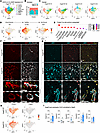 Figure 5
ScRNA-seq analysis in Angpt2-WT and -KO mice. (A) UMAP of EC dataset, clustered into 7 clusters (0 to 6) at a resolution of 0.4. (B) Proportion of ECs in each cluster (0 to 6). (C) UMAPs of the cell clusters from each sample. (D) UMAPs showing the expression of arteriovenous markers. (E) Top 10 GO biological process terms overrepresented in cluster 4. Count = number of genes per term. (F) Representative images of NRP1 (red), ERG (cyan), and PECAM1 (gray) IF in CP (n = 3). High-magnification images of 1 Z-plane magnification of tangled vasculature with EC and perivascular NRP1 expression (yellow arrowheads [i] and NRP1+ dilated vasculature [ii]). Scale bars: 25 μm (F); 50 μm (G). (G) Representative images of NRP1 (cyan), PDGFRB (red), and COLIV (yellow) IF in CP (n = 3). High-magnification images of 1 Z-plane magnification of the dilated vasculature. NRP1+/PDGFRB+ cells (red arrowheads); NRP1+ cells outside the collagen sleeve (white arrowheads). Scale bars: 50 μm. (H) UMAPs of Angpt2 expression. (I) Relative mRNA expression of Angpt2 exons in adult brain microvascular fragments from WT (light blue) and KO (dark blue) mice (n = 3). Shown values are 2–ΔCt of Gapdh. Data were normally distributed, and a Welch’s t test was performed to evaluate significance. *P < 0.05, **P < 0.01.
To provide initial insight into the type of genes and gene functions associated with Angpt2 KO–dominated cluster 4, we performed differentially expressed gene (DEG) analysis between cluster 4 and the other endothelial clusters (0–3, 5, and 6) (Supplemental Table 4). Gene Ontology (GO) analysis (using the biological process sub-ontology) of upregulated DEGs in cluster 4 revealed enrichment of terms associated mainly with angiogenesis and ECM organization (Figure 5E and Supplemental Table 5). One of the upregulated DEGs specifying the GO term “angiogenesis” was Nrp1 encoding neuropilin-1 (NRP1), which was upregulated also at the protein level. NRP1 IF was low in WT capillaries (in comparison with arterioles and venules) but elevated in Angpt2-KO regions with malformed vasculature (Figure 5, F and G). The NRP1 IF was also higher in perivascular cells surrounding the malformations and located outside the collagen type IV (COLIV) basement membrane sleeve (Figure 5G), which could be attributed to expression in abnormal mural cells (Figure 3), fibroblasts (Figure 3), or microglia/perivascular macrophages (Figure 4) that envelop the malformed vessels in Angpt2-KO mice.
Angpt2 was among the significantly upregulated genes in cluster 4, which may appear paradoxical since the gene is inactivated (Figure 5H and Supplemental Table 4). However, the Angpt2-KO mice used in this study carry a selective deletion of exon 4, which encodes a critical part of the ANGPT2 protein (25), whereas 10x Genomics sequencing chemistry is designed to capture the 3′ end of the mRNA through poly(A) priming, and would therefore be expected to detect Angpt2 mRNA molecules lacking exon 4. To test this assumption, we conducted qPCR analysis for all eight Angpt2 exons in isolated brain microvascular fragments from Angpt2-WT and -KO mice (Figure 5I). These analyses confirmed deletion of exon 4 in Angpt2-KO brain but also revealed a modest upregulation of the mutant Angpt2 transcript, which is not surprising considering the angiogenic phenotype in Angpt2-KO mice (Figure 5I).
Endothelial angiogenic heterogeneity in Angpt2-KO malformed vessels. To explore heterogeneity within Angpt2-KO cluster 4, we reclustered the dataset at a higher resolution (0.6), resulting in 12 clusters (Supplemental Figure 6A). This identified a subcluster 4i within cluster 4 (Figure 6A and Supplemental Table 6). DEG analysis between 4i and 4ii (Figure 6B and Supplemental Table 7) revealed that cluster 4i exhibited a tip cell profile (including upregulated expression of, e.g., Esm1, Apln, Mcam, Lamb1) (11), presumably corresponding to the abundant tip cells observed in the malformed vascular regions (Figure 1, C and H). Indeed, IF stainings with ESM1 antibody labeled abundant tip cells, both with and without filopodia, in the malformed vessels (Figure 6C and Supplemental Figure 6B). In addition to previously reported tip cell transcriptomic profiles (11, 26, 27), we identified several additional tip cell markers, including Col4a1 and Col4a2 and Vwf (Figure 6B). IF stainings using COLIV and VWF antibodies confirmed these transcriptional changes at the protein level (Figure 6, D and E). Biological process GO analysis of DEGs in both subclusters confirmed that 4i represents sprouting tip cells, and that the entire cluster 4 maintains an overall angiogenic transcriptional signature (Supplemental Figure 6C and Supplemental Table 8). Assessment of a range of cell cycle markers (28) confirmed our MKI67 IF analysis (Figure 1, I and J), showing that all tip cells and most of the ECs in Angpt2-KO mice were non-proliferative (Supplemental Figure 6D).
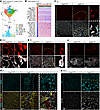 Figure 6
Characterization of angiogenic transcriptional changes in Angpt2-WT and -KO brains. (A) UMAP of EC dataset, clustered into 8 clusters after further cell separation of cluster 4 (4i and 4ii) using resolution = 0.6 (see Supplemental Figure 6A). (B) Top 30 genes from DEG comparison between cluster 4i and 4ii (see Supplemental Table 6). (C) Representative images of ESM1 (red), ERG (cyan), and PECAM1 (gray) IF in SS (n = 3). High-magnification images of filopodia+ and -negative tip cells expressing ESM1. Scale bars: 50 μm (C and G); 25 µm (E). (D) Representative images of COLIV (red) and PECAM1 (gray) IF in SS4–6 (n = 3). High-magnification images of malformed vasculature with tip cells. Scale bars: 50 μm. (E) Representative images of VWF (red) and PECAM1 (gray) IF in SS4–6 (n = 3). High-magnification images of VWF expression in tangled malformed vasculature with filopodia. Scale bars: 50 μm. (F) Representative images of VEGFA (red) and PECAM1 (gray) IF in medial sagittal sections (n = 5). Scale bars: 1 mm. (G) Representative images of VEGFA (cyan), PECAM1 (yellow), and SOX9 (red) IF in CP (n = 5). High-magnification images of a region with malformed vasculature; SOX9/VEGFA+ astrocytes (arrowheads). Scale bars: 50 μm. (H) Representative images of KDR (cyan) and PECAM1 (gray) IF in SS4–6 of Angpt2-WT and -KO brains (n = 3). Scale bars: 50 μm. Dashed lines in C, E, G, and H mark rough boundaries between malformed and non-malformed vasculature.
Increased angiogenesis in the malformed vasculature prompted us to analyze whether this was accompanied by vascular endothelial growth factor A (VEGFA) expression. Indeed, IF stainings revealed that strong VEGFA signal colocalized with the regions of vascular malformations in the Angpt2-KO brains (Figure 6, F and G, and Supplemental Figure 6E). It was upregulated in the CP and SS4–6 regions, where the biggest malformed regions are found. Additionally, the distinct VEGFA expression pattern also revealed small malformations throughout the brain. A subpopulation of SOX9+ astrocytes and some NEUN+ neurons colocalized with VEGFA expression (Figure 6G and Supplemental Figure 6E). Furthermore, VEGFA immunoreactivity delineated the ECs within the malformed vasculature of Angpt2-KO brains. Because scRNA-seq did not show any upregulation of Vegfa in ECs, the detected protein was most likely derived from astrocytes and neurons (Figure 6G and Supplemental Figure 6E). Not surprisingly, the main receptor for VEGFA, KDR (VEGFR2), was also upregulated in the malformed vasculature (Figure 6H), as was the coreceptor NRP1 (Figure 5, F and G).
Tie signaling pathway changes in response to vascular malformations. ANGPT2 has been shown to signal either through the TEK/TIE2 receptor (5, 9, 10, 29) or via integrins (8, 30), in a context-dependent manner. To investigate how Angpt2 deletion affects the two ANGPT signaling pathways, we first analyzed the expression patterns of genes involved in the ANGPT/TEK signaling pathway (https://www.gsea-msigdb.org/gsea/msigdb/cards/PID_ANGIOPOIETIN_RECEPTOR_PATHWAY). Notably, Tek transcript levels were reduced in the Angpt2 KO–dominated tip cell cluster 4i (Figure 7, A–C), in agreement with previous observations in postnatal retinal angiogenesis (8), while Tie1 expression appeared unchanged (Figure 7A). IF staining confirmed these transcriptomic findings, with TEK antibody staining validating the observed TEK reduction in the tip cells in the regions with malformed vasculature (Figure 7, D and E). Interestingly, TIE1 immunostaining appeared higher in the malformed vessels. However, analysis at higher magnification showed non-vascular TIE1 staining in cells surrounding the malformations, which might represent ACTA2hiACE2lo abnormal mural cells since these cells reside within the COLIV sleeve (Figure 7H). Forkhead box O1 (FOXO1), a transcription factor known to drive Angpt2 expression (31, 32), was slightly lower in cluster 4i (Figure 7A; see also the online database), and immunostainings revealed strong nuclear staining in the regions with malformed vasculature (Figure 7E). Translocation of FOXO1 to the nucleus is indicative of decreased TEK phosphorylation (31), which is also in agreement with the upregulated Angpt2 mRNA expression in Angpt2-KO brains (Figure 5, H and I). In retinal angiogenesis, Angpt2 signaling has been reported to occur via integrins (8). We therefore examined the expression of all identified integrins (Itg) across all clusters. While Itga4 and Itgb1 displayed differential expression in the Angpt2 KO–dominated EC cluster 4 compared with WT cells, Itgb3 and Itgav showed specific upregulation in the tip cell–specific subcluster 4i (Figure 7, F and G). IF stainings with ITGB1 antibody confirmed the transcriptional findings (Figure 7H).
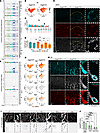 Figure 7
Characterization of Angpt/Tek and integrin changes in Angpt2-WT and -KO brains. (A) Violin plot of Tek/Angpt2-related gene expression in different EC clusters. (B) UMAPs of Tek expression. (C) Bar plots illustrating Tek expression. Cluster 4i with low Tek expression (arrow). (D) Percentage TEK/PECAM1 area in non-malformed and malformed regions (n = 4). Data were normally distributed, and a 1-way ANOVA with Tukey’s multiple-comparison test was performed to evaluate significance. *P < 0.05, **P < 0.01, ***P < 0.001. (E) Representative images of TEK (red), FOXO1 (cyan), and PECAM1 (gray) IF in SS4–6 (n = 3). High-magnification images of regions with malformed vasculature, low TEK expression, and nuclear FOXO1 expression. Dashed line marks rough boundary between malformed and non-malformed vasculature. Scale bars: 50 μm (E); 25 μm (H and I). (F) Integrin-encoding genes in different EC clusters. (G) UMAPs illustrating Itgb1, Itga4, Itgb3, and Itgav expression. (H) Representative images of active-ITGB1 (cyan), TIE1 (gray), and COLIV (red) IF in SS (n = 3). High-magnification images of malformed vessel with high active-ITGB1 expression in perivascular and endothelial cells. One Z-plane overlay of active ITGB1 with TIE1 and COLIV. Scale bars: 50 μm. (I) Spatiotemporal ANGPT2 expression in C57BL/6J at P1–60. ERG (red), PECAM1 (gray), ANGPT2 (black). High-magnification images of the ANGPT2+ vasculature (n = 3). Scale bars: 25 μm. (J) Quantification of ANGPT2+ ECs in P15 (gray) and P20 (green) C57BL/6J in basal ganglia, cortex, and hippocampus (n = 3). Data were normally distributed, and a 2-way ANOVA with Šidák’s multiple-comparison test was performed to evaluate significance. *P < 0.05, **P < 0.01, ****P < 0.0001.
We have previously shown that expression of ANGPT2 in the adult brain vasculature is virtually nonexistent (11–13); therefore we investigated its spatiotemporal expression in the WT postnatal brains. These analyses revealed a transient expression window, with ANGPT2 peaking at P15–20 and becoming largely undetectable by P60 (Figure 7, I and J, and Supplemental Figure 7, A and B). It was low in hippocampus and cortex and highest in basal ganglia. These findings indicate that the angiogenic phenotype and related vascular abnormalities are probably established during postnatal brain development.
Transcriptional changes in different BBB leakage models. Previously, we demonstrated that the pericyte-deficient Pdgfbret/ret mouse model, which exhibits BBB permeability to tracers of 1–200 kDa (11, 18, 33), also shows increased vascular sprouting without concurrent endothelial proliferation (11). ScRNA-seq analysis of ECs from Pdgfbret/ret mouse brains revealed that ECs lacking pericyte contact retain a general BBB-specific gene expression profile but acquire a venous-shifted molecular pattern and exhibit extensive changes in growth factor and regulatory protein expression (11). To obtain initial insight into potential similarities between Angpt2-KO malformed ECs and Pdgfbret/ret transformed ECs, we extracted the marker genes from Pdgfbret/ret transformed ECs (11) and studied their expression in Angpt2-KO cluster 4 malformed cells. While both mouse mutants shared a similar, albeit not identical, tip cell profile (Supplemental Figure 8A and Supplemental Table 9), including the upregulated expression of several growth factors and growth factor–regulatory proteins (e.g., Fgfbp1, Ccn2, Bmp6), Angpt2-KO ECs maintained a capillary signature without the venous shift observed in Pdgfbret/ret vessels. We next examined the expression of 64 BBB markers regulated by Wnt signaling (34, 35) in Angpt2-KO cluster 4 and found that all except four remained expressed at normal levels; two were upregulated (Vwa1, Nrp1) and two were downregulated (Slc38a5, Slc16a1) (Supplemental Figure 8B). Also, this result was similar between Pdgfbret/ret transformed ECs and Angpt2-KO cluster 4 malformed cells, suggesting that vascular malformation and angiogenic sprouting can occur on top of a largely intact BBB gene expression profile.


