
Research ArticleGeneticsOncology
Open Access |  10.1172/jci.insight.194142
Broadening activity of checkpoint blockade agents by intratumoral nucleoside cleavage
Regina Rab,1 Jeong S. Hong,1 Brendan L.C. Kinney,2 Nicole C. Schmitt,2 William B. Parker,3 Adrianna Westbrook,4 Kelsey B. Bennion,5 Mandy L. Ford,5 Douglas H. Weitzel,6 Paula L. Miliani de Marval,7 Eric J. Sorscher,1 and Annette Ehrhardt1
1Division of Pulmonary, Asthma, Cystic Fibrosis, and Sleep, Department of Pediatrics, Emory University School of Medicine and Children’s Healthcare of Atlanta, Atlanta, Georgia, USA.
2Department of Otolaryngology – Head and Neck Surgery, and Winship Cancer Institute, Emory University School of Medicine, Atlanta, Georgia, USA.
3PNP Therapeutics Inc., Birmingham, Alabama, USA.
4Pediatric Biostatistics Core, Department of Pediatrics, Emory University, Atlanta, Georgia, USA.
5Department of Surgery, Emory University School of Medicine, Atlanta, Georgia, USA.
6Charles River Laboratories and
7SpringWorks Therapeutics, Research Triangle Park, North Carolina, USA.
Address correspondence to: Eric J. Sorscher, Emory University School of Medicine, 1760 Haygood Drive, Suite 280, Atlanta, Georgia, 30322, USA. Phone: 404.727.3293; Email: esorscher@emory.edu. Or to: Annette Ehrhardt, Emory University School of Medicine, 1760 Haygood Drive, Suite E-272, Atlanta, Georgia, 30322, USA. Phone: 404.727.5112; Email: annette.ehrhardt@icloud.com.
Find articles by Rab, R. in: PubMed | Google Scholar
1Division of Pulmonary, Asthma, Cystic Fibrosis, and Sleep, Department of Pediatrics, Emory University School of Medicine and Children’s Healthcare of Atlanta, Atlanta, Georgia, USA.
2Department of Otolaryngology – Head and Neck Surgery, and Winship Cancer Institute, Emory University School of Medicine, Atlanta, Georgia, USA.
3PNP Therapeutics Inc., Birmingham, Alabama, USA.
4Pediatric Biostatistics Core, Department of Pediatrics, Emory University, Atlanta, Georgia, USA.
5Department of Surgery, Emory University School of Medicine, Atlanta, Georgia, USA.
6Charles River Laboratories and
7SpringWorks Therapeutics, Research Triangle Park, North Carolina, USA.
Address correspondence to: Eric J. Sorscher, Emory University School of Medicine, 1760 Haygood Drive, Suite 280, Atlanta, Georgia, 30322, USA. Phone: 404.727.3293; Email: esorscher@emory.edu. Or to: Annette Ehrhardt, Emory University School of Medicine, 1760 Haygood Drive, Suite E-272, Atlanta, Georgia, 30322, USA. Phone: 404.727.5112; Email: annette.ehrhardt@icloud.com.
Find articles by
Hong, J.
in:
PubMed
|
Google Scholar
|

1Division of Pulmonary, Asthma, Cystic Fibrosis, and Sleep, Department of Pediatrics, Emory University School of Medicine and Children’s Healthcare of Atlanta, Atlanta, Georgia, USA.
2Department of Otolaryngology – Head and Neck Surgery, and Winship Cancer Institute, Emory University School of Medicine, Atlanta, Georgia, USA.
3PNP Therapeutics Inc., Birmingham, Alabama, USA.
4Pediatric Biostatistics Core, Department of Pediatrics, Emory University, Atlanta, Georgia, USA.
5Department of Surgery, Emory University School of Medicine, Atlanta, Georgia, USA.
6Charles River Laboratories and
7SpringWorks Therapeutics, Research Triangle Park, North Carolina, USA.
Address correspondence to: Eric J. Sorscher, Emory University School of Medicine, 1760 Haygood Drive, Suite 280, Atlanta, Georgia, 30322, USA. Phone: 404.727.3293; Email: esorscher@emory.edu. Or to: Annette Ehrhardt, Emory University School of Medicine, 1760 Haygood Drive, Suite E-272, Atlanta, Georgia, 30322, USA. Phone: 404.727.5112; Email: annette.ehrhardt@icloud.com.
Find articles by Kinney, B. in: PubMed | Google Scholar
1Division of Pulmonary, Asthma, Cystic Fibrosis, and Sleep, Department of Pediatrics, Emory University School of Medicine and Children’s Healthcare of Atlanta, Atlanta, Georgia, USA.
2Department of Otolaryngology – Head and Neck Surgery, and Winship Cancer Institute, Emory University School of Medicine, Atlanta, Georgia, USA.
3PNP Therapeutics Inc., Birmingham, Alabama, USA.
4Pediatric Biostatistics Core, Department of Pediatrics, Emory University, Atlanta, Georgia, USA.
5Department of Surgery, Emory University School of Medicine, Atlanta, Georgia, USA.
6Charles River Laboratories and
7SpringWorks Therapeutics, Research Triangle Park, North Carolina, USA.
Address correspondence to: Eric J. Sorscher, Emory University School of Medicine, 1760 Haygood Drive, Suite 280, Atlanta, Georgia, 30322, USA. Phone: 404.727.3293; Email: esorscher@emory.edu. Or to: Annette Ehrhardt, Emory University School of Medicine, 1760 Haygood Drive, Suite E-272, Atlanta, Georgia, 30322, USA. Phone: 404.727.5112; Email: annette.ehrhardt@icloud.com.
Find articles by Schmitt, N. in: PubMed | Google Scholar
1Division of Pulmonary, Asthma, Cystic Fibrosis, and Sleep, Department of Pediatrics, Emory University School of Medicine and Children’s Healthcare of Atlanta, Atlanta, Georgia, USA.
2Department of Otolaryngology – Head and Neck Surgery, and Winship Cancer Institute, Emory University School of Medicine, Atlanta, Georgia, USA.
3PNP Therapeutics Inc., Birmingham, Alabama, USA.
4Pediatric Biostatistics Core, Department of Pediatrics, Emory University, Atlanta, Georgia, USA.
5Department of Surgery, Emory University School of Medicine, Atlanta, Georgia, USA.
6Charles River Laboratories and
7SpringWorks Therapeutics, Research Triangle Park, North Carolina, USA.
Address correspondence to: Eric J. Sorscher, Emory University School of Medicine, 1760 Haygood Drive, Suite 280, Atlanta, Georgia, 30322, USA. Phone: 404.727.3293; Email: esorscher@emory.edu. Or to: Annette Ehrhardt, Emory University School of Medicine, 1760 Haygood Drive, Suite E-272, Atlanta, Georgia, 30322, USA. Phone: 404.727.5112; Email: annette.ehrhardt@icloud.com.
Find articles by Parker, W. in: PubMed | Google Scholar
1Division of Pulmonary, Asthma, Cystic Fibrosis, and Sleep, Department of Pediatrics, Emory University School of Medicine and Children’s Healthcare of Atlanta, Atlanta, Georgia, USA.
2Department of Otolaryngology – Head and Neck Surgery, and Winship Cancer Institute, Emory University School of Medicine, Atlanta, Georgia, USA.
3PNP Therapeutics Inc., Birmingham, Alabama, USA.
4Pediatric Biostatistics Core, Department of Pediatrics, Emory University, Atlanta, Georgia, USA.
5Department of Surgery, Emory University School of Medicine, Atlanta, Georgia, USA.
6Charles River Laboratories and
7SpringWorks Therapeutics, Research Triangle Park, North Carolina, USA.
Address correspondence to: Eric J. Sorscher, Emory University School of Medicine, 1760 Haygood Drive, Suite 280, Atlanta, Georgia, 30322, USA. Phone: 404.727.3293; Email: esorscher@emory.edu. Or to: Annette Ehrhardt, Emory University School of Medicine, 1760 Haygood Drive, Suite E-272, Atlanta, Georgia, 30322, USA. Phone: 404.727.5112; Email: annette.ehrhardt@icloud.com.
Find articles by Westbrook, A. in: PubMed | Google Scholar
1Division of Pulmonary, Asthma, Cystic Fibrosis, and Sleep, Department of Pediatrics, Emory University School of Medicine and Children’s Healthcare of Atlanta, Atlanta, Georgia, USA.
2Department of Otolaryngology – Head and Neck Surgery, and Winship Cancer Institute, Emory University School of Medicine, Atlanta, Georgia, USA.
3PNP Therapeutics Inc., Birmingham, Alabama, USA.
4Pediatric Biostatistics Core, Department of Pediatrics, Emory University, Atlanta, Georgia, USA.
5Department of Surgery, Emory University School of Medicine, Atlanta, Georgia, USA.
6Charles River Laboratories and
7SpringWorks Therapeutics, Research Triangle Park, North Carolina, USA.
Address correspondence to: Eric J. Sorscher, Emory University School of Medicine, 1760 Haygood Drive, Suite 280, Atlanta, Georgia, 30322, USA. Phone: 404.727.3293; Email: esorscher@emory.edu. Or to: Annette Ehrhardt, Emory University School of Medicine, 1760 Haygood Drive, Suite E-272, Atlanta, Georgia, 30322, USA. Phone: 404.727.5112; Email: annette.ehrhardt@icloud.com.
Find articles by Bennion, K. in: PubMed | Google Scholar
1Division of Pulmonary, Asthma, Cystic Fibrosis, and Sleep, Department of Pediatrics, Emory University School of Medicine and Children’s Healthcare of Atlanta, Atlanta, Georgia, USA.
2Department of Otolaryngology – Head and Neck Surgery, and Winship Cancer Institute, Emory University School of Medicine, Atlanta, Georgia, USA.
3PNP Therapeutics Inc., Birmingham, Alabama, USA.
4Pediatric Biostatistics Core, Department of Pediatrics, Emory University, Atlanta, Georgia, USA.
5Department of Surgery, Emory University School of Medicine, Atlanta, Georgia, USA.
6Charles River Laboratories and
7SpringWorks Therapeutics, Research Triangle Park, North Carolina, USA.
Address correspondence to: Eric J. Sorscher, Emory University School of Medicine, 1760 Haygood Drive, Suite 280, Atlanta, Georgia, 30322, USA. Phone: 404.727.3293; Email: esorscher@emory.edu. Or to: Annette Ehrhardt, Emory University School of Medicine, 1760 Haygood Drive, Suite E-272, Atlanta, Georgia, 30322, USA. Phone: 404.727.5112; Email: annette.ehrhardt@icloud.com.
Find articles by
Ford, M.
in:
PubMed
|
Google Scholar
|
1Division of Pulmonary, Asthma, Cystic Fibrosis, and Sleep, Department of Pediatrics, Emory University School of Medicine and Children’s Healthcare of Atlanta, Atlanta, Georgia, USA.
2Department of Otolaryngology – Head and Neck Surgery, and Winship Cancer Institute, Emory University School of Medicine, Atlanta, Georgia, USA.
3PNP Therapeutics Inc., Birmingham, Alabama, USA.
4Pediatric Biostatistics Core, Department of Pediatrics, Emory University, Atlanta, Georgia, USA.
5Department of Surgery, Emory University School of Medicine, Atlanta, Georgia, USA.
6Charles River Laboratories and
7SpringWorks Therapeutics, Research Triangle Park, North Carolina, USA.
Address correspondence to: Eric J. Sorscher, Emory University School of Medicine, 1760 Haygood Drive, Suite 280, Atlanta, Georgia, 30322, USA. Phone: 404.727.3293; Email: esorscher@emory.edu. Or to: Annette Ehrhardt, Emory University School of Medicine, 1760 Haygood Drive, Suite E-272, Atlanta, Georgia, 30322, USA. Phone: 404.727.5112; Email: annette.ehrhardt@icloud.com.
Find articles by Weitzel, D. in: PubMed | Google Scholar
1Division of Pulmonary, Asthma, Cystic Fibrosis, and Sleep, Department of Pediatrics, Emory University School of Medicine and Children’s Healthcare of Atlanta, Atlanta, Georgia, USA.
2Department of Otolaryngology – Head and Neck Surgery, and Winship Cancer Institute, Emory University School of Medicine, Atlanta, Georgia, USA.
3PNP Therapeutics Inc., Birmingham, Alabama, USA.
4Pediatric Biostatistics Core, Department of Pediatrics, Emory University, Atlanta, Georgia, USA.
5Department of Surgery, Emory University School of Medicine, Atlanta, Georgia, USA.
6Charles River Laboratories and
7SpringWorks Therapeutics, Research Triangle Park, North Carolina, USA.
Address correspondence to: Eric J. Sorscher, Emory University School of Medicine, 1760 Haygood Drive, Suite 280, Atlanta, Georgia, 30322, USA. Phone: 404.727.3293; Email: esorscher@emory.edu. Or to: Annette Ehrhardt, Emory University School of Medicine, 1760 Haygood Drive, Suite E-272, Atlanta, Georgia, 30322, USA. Phone: 404.727.5112; Email: annette.ehrhardt@icloud.com.
Find articles by Miliani de Marval, P. in: PubMed | Google Scholar
1Division of Pulmonary, Asthma, Cystic Fibrosis, and Sleep, Department of Pediatrics, Emory University School of Medicine and Children’s Healthcare of Atlanta, Atlanta, Georgia, USA.
2Department of Otolaryngology – Head and Neck Surgery, and Winship Cancer Institute, Emory University School of Medicine, Atlanta, Georgia, USA.
3PNP Therapeutics Inc., Birmingham, Alabama, USA.
4Pediatric Biostatistics Core, Department of Pediatrics, Emory University, Atlanta, Georgia, USA.
5Department of Surgery, Emory University School of Medicine, Atlanta, Georgia, USA.
6Charles River Laboratories and
7SpringWorks Therapeutics, Research Triangle Park, North Carolina, USA.
Address correspondence to: Eric J. Sorscher, Emory University School of Medicine, 1760 Haygood Drive, Suite 280, Atlanta, Georgia, 30322, USA. Phone: 404.727.3293; Email: esorscher@emory.edu. Or to: Annette Ehrhardt, Emory University School of Medicine, 1760 Haygood Drive, Suite E-272, Atlanta, Georgia, 30322, USA. Phone: 404.727.5112; Email: annette.ehrhardt@icloud.com.
Find articles by Sorscher, E. in: PubMed | Google Scholar
1Division of Pulmonary, Asthma, Cystic Fibrosis, and Sleep, Department of Pediatrics, Emory University School of Medicine and Children’s Healthcare of Atlanta, Atlanta, Georgia, USA.
2Department of Otolaryngology – Head and Neck Surgery, and Winship Cancer Institute, Emory University School of Medicine, Atlanta, Georgia, USA.
3PNP Therapeutics Inc., Birmingham, Alabama, USA.
4Pediatric Biostatistics Core, Department of Pediatrics, Emory University, Atlanta, Georgia, USA.
5Department of Surgery, Emory University School of Medicine, Atlanta, Georgia, USA.
6Charles River Laboratories and
7SpringWorks Therapeutics, Research Triangle Park, North Carolina, USA.
Address correspondence to: Eric J. Sorscher, Emory University School of Medicine, 1760 Haygood Drive, Suite 280, Atlanta, Georgia, 30322, USA. Phone: 404.727.3293; Email: esorscher@emory.edu. Or to: Annette Ehrhardt, Emory University School of Medicine, 1760 Haygood Drive, Suite E-272, Atlanta, Georgia, 30322, USA. Phone: 404.727.5112; Email: annette.ehrhardt@icloud.com.
Find articles by Ehrhardt, A. in: PubMed | Google Scholar
Published May 22, 2026 - More info
JCI Insight. 2026;11(10):e194142. https://doi.org/10.1172/jci.insight.194142.
© 2026 Rab et al. This work is licensed under the Creative Commons Attribution 4.0 International License. To view a copy of this license, visit http://creativecommons.org/licenses/by/4.0/.
Received: April 15, 2025; Accepted: March 19, 2026

-
Introduction
Improving antitumor effectiveness of immune checkpoint inhibitors (ICIs) represents a rapidly advancing priority in cancer research (1–6). For many malignancies, ICIs show marginal clinical benefit, and additional approaches that bolster tumor clearance by this approach are needed. Based on the well-established finding that neoantigen formation and diversity can predict ICI anticancer activity, transduction of mRNAs encoding tumor-specific antigens has been applied to melanoma, pancreatic, and other neoplasms (7–12). As the tumor microenvironment (TME) contributes markedly to T cell paralysis and tumor protective effects of checkpoint blockade, a number of additional strategies to augment ICIs are also under development (2–4, 13–15). However, knowledge remains far from complete regarding immunologic pathways most suitable for promoting ICI activity in vivo.
Intratumoral expression of the prokaryotic purine nucleoside phosphorylase (PNP) can efficiently ablate tumor tissue (Figure 1) (16–20). In this modality, 2-fluoroadenine (F-Ade) is liberated from 2-fluoro-arabinofuranosyl adenine (F-araA) specifically by bacterial (but not mammalian) PNP, which is then converted via adenine phosphoribosyltransferase to cytotoxic metabolites that disrupt DNA, RNA, and protein synthesis (17). F-Ade has remarkably high antitumor potency — orders of magnitude beyond what can be achieved with first-generation prodrug activation strategies, such as herpes simplex virus thymidine kinase or bacterial cytosine deaminase. No tumor cell types have yet been identified that are resistant to cell killing by this approach, including human head/neck, lymphoma, lung, colon, hepatic, prostate, bladder, pancreatic, and ovarian cancer as well as mouse or rat glioma and murine breast (refs. 21–38 and our unpublished observations). In vivo or in vitro, cell killing and/or obliteration of entire tumor cell populations are typically observed when a small fraction of cells (e.g., <3%–10%) express E. coli PNP (17). Moreover, because mRNA and protein synthesis are essential to malignant tissues regardless of proliferative state (i.e., whether quiescent or actively dividing), the PNP strategy provides a means to target all compartments of a tumor mass, including the TME. Conventional chemotherapy, radiation, or other anticancer modalities primarily target proliferating tumor cells and are therefore much less active against the noncycling compartments within a neoplasm (2, 17, 20). The unprecedented level of bystander cell killing achieved using PNP includes early evidence of clinical safety and efficacy against locoregional head and neck and melanoma neoplasms in humans using replication-deficient adenovirus to deliver transgene (39–41). Preclinical and clinical studies have established that the PNP/F-araA strategy is safe, as any F-Ade released into systemic circulation from a treated tumor is markedly diluted by the host blood volume and rapidly metabolized by xanthine oxidase, a ubiquitous enzyme in mammals (17).
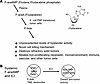 Figure 1
Assessment of tumor ablation with E. coli PNP and immune checkpoint inhibitors. (A) Prodrug activation by E. coli PNP. Fludarabine is cleaved to liberate F-Ade, a compound that disrupts DNA, RNA, and protein synthesis. (B) Distant tumor ablation. E. coli PNP was tested for effects on immune recognition and ICI clearance of distant EMT6 (triple-negative breast cancer) tumors not expressing the transgene. TME, tumor microenvironment; ICI, immune checkpoint inhibitor.
Cancer gene therapy using prodrug activation has been severely limited by a requirement for direct inoculation into tumor tissue. Because F-Ade partitions freely between and among malignant cells and the TME, complete regressions have been routinely demonstrated in murine models of locoregional masses even when <10% of cellular targets express the transgene (17, 24). However, achieving transduction efficiency of even a few percentage points represents a substantial challenge in sizable masses such as those encountered in the clinic. Like other intratumoral transgenes, PNP expression typically occurs along needle tracks following intratumoral (IT) administration of either viral or nonviral delivery vehicles (24) (see also below). This restricted transduction may be insufficient for ablating large, local, or regional tumors encountered in clinical practice or for tumors with metastases.
In the present report, we examined relationships between PNP therapy and ICI-mediated cytoreduction. We show that focal destruction by PNP within 1 needle-accessible tumor can strongly promote systemic ICI activity. This includes activity against distant, non-PNP-expressing lesions (models of tumor metastases) that are strongly inhibited by the approach. While the activity of ICIs is diminished by many features of the TME — including fibroblasts, endothelium, myeloid cells, and pericytes (1–4) — PNP/fludarabine phosphate (PNP/ F-araAMP) effectively destroys these cells even if quiescent. One hypothesis underlying the current studies, therefore, is that an unprecedented ability of PNP to kill nonproliferating cells within a tumor mass can disrupt the TME, abrogate effects that confer ICI resistance, and stimulate cancer regressions. Accordingly, we evaluated gene transfer-based therapy of a triple-negative breast cancer (TNBC) highly resistant to standard treatments, including ICIs. First, we showed profound tumor cell killing using this approach in vitro and that TNBC destroyed by PNP exhibited features of immunogenic cell death (ICD), a molecular phenotype that has been associated with augmented ICI reactivity (42). Next, we established complete regressions and cures of TNBC following stable PNP transduction and treatment with F-araAMP. This allowed us to document both safety and TME elimination at maximal doses of the PNP-based therapy. When we applied subcurative PNP treatment (by reducing the level of F-araAMP), strong enhancement of either of 2 ICIs (anti-cytotoxic T-lymphocyte–associated protein 4 [anti-CTLA4] or anti-programmed cell death-ligand 1 [anti-PDL1]) was observed. Importantly, we also show that non-PNP tumors (models of metastases) are repressed by ICIs when locoregional lesions elsewhere in the host are inhibited by PNP. Finally, to examine mechanism of action, we characterized a focused group of immune cell infiltrates from both PNP-treated and untreated malignant masses. We observed changes in tumor-associated immune cells likely to mediate ICI activity in the setting of PNP/F-araA cancer destruction. To our knowledge, these experiments are the first to elucidate TNBC regression using the robust PNP tumor sensitization gene and provide important information regarding mechanisms that confer ICI activity in vivo against TNBC.
-
Results
To test antiproliferative effects of E. coli PNP/F-araA, murine TNBC (EMT6) cells expressing E. coli PNP were generated. EMT6 was selected for these studies as a cancer model resistant to conventional treatments such as radiation, ICIs, anti–TGF-β, and other modalities (43–45). Expression of E. coli PNP was verified by HPLC to detect enzymatic function (Figure 2A) using a prototypic E. coli PNP nucleoside substrate (6-methyl purine 2’-deoxyriboside [MeP-dR]) commonly employed for in vitro analysis (17). Because MeP-dR is not metabolized by mammalian PNP, cell killing in vitro was observed specifically in the presence of functional E. coli PNP together with nucleoside (Figure 2B). Similar results were obtained with F-araA, a close analog of MeP-dR and the bioavailable form of the clinically approved compound (F-araAMP) (Figure 2C). EMT6 cells transduced with wild-type E. coli PNP showed enzyme activity in a range known to mediate strong antitumor effects in vivo (17, 24).
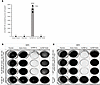 Figure 2
Characterization of EMT6 triple-negative breast cancer–expressing E. coli PNP. (A) Nucleoside cleavage activity of cell lysates (nmol prodrug converted to purine base per mg cell extract per hour; see Methods). n = 6 biologic replicates per condition. Data are shown as the mean ± SEM. ****P < 0.0006, 1-way ANOVA with Bonferroni’s correction for multiple comparisons. (B and C) In vitro cell killing of murine triple-negative breast cancer (TNBC) cells following cleavage of nucleoside by E. coli PNP. Cells were grown to 70%–80% confluency and treated with (B) 100 μM MeP-dR (F-AraA homologue used for in vitro analyses) or (C) 7 μM F-araA. Representative experiments are shown, with n = 9 biological replicates per condition from 3 independent experiments. Cells were stained with 0.1% crystal violet. Complete ablation of tumor cells in culture was observed specifically in the presence of functional E. coli PNP. Parental, TNBC without transduction; Vector Alone, TNBC transduced with empty lentiviral vector (no PNP expression); EcPNP wt, stable transduction with wild-type PNP; EcPNP R25A, TNBC transduced with E. coli PNP encoding an active site mutant with diminished activity. The HPLC assay did not report very low-level prodrug conversion responsible for barely detectable cytotoxicity shown on far right of B.
ICD is a well-described process by which clearance of a malignant mass can be promoted. Specific damage-associated molecular profiles (DAMPs) are used to track ICD responsiveness. Characteristics of the DAMP phenotype include cell surface–localized calreticulin and heat shock protein HSP70 (HSPA1A), together with cellular production and release of HMGB1 — contributing to inflammation and immune activation (42). EMT6 cells expressing E. coli PNP were treated with MeP-dR and analyzed for DAMPs by flow cytometry (Figure 3A), under conditions that exhibit robust cell killing (Figure 2B). Surface expression of calreticulin was strongly elevated compared with that of untreated tumor cells (P < 0.0001; Figure 3A). Abundance of HSP70 was also augmented following recombinant PNP expression (P < 0.0001). After 24 hours, increased HMGB1 (P < 0.0001), likely corresponding to repackaging of intracellular vesicles prior to release (46, 47), was observed. Similar results were noted for F-araA as an E. coli PNP substrate (Figure 3B). The DAMP phenotype was not effectively induced when an inactive R25A E. coli PNP was examined (Supplemental Figure 1; supplemental material available online with this article; https://doi.org/10.1172/jci.insight.194142DS1). Features of wild-type PNP protein biogenesis or function therefore appear necessary to establish a more complete DAMP. In either case, the findings show that E. coli PNP–based treatment triggers a signaling cascade that has previously been associated with immune sensitization and tumor reduction by ICIs.
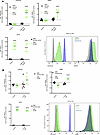 Figure 3
Nucleoside prodrug treatment of E. coli PNP–expressing EMT6 cells elicits signaling pathways associated with immunogenic cell death. (A and B) Cells were treated as in Figure 2 with E. coli PNP substrate (MeP-dR; A) or fludarabine (F-araA; B) for 24 hours, then fixed, stained for immunogenic cell death (ICD) markers, and analyzed by flow cytometry. *P < 0.05; ****P < 0.0001, versus parental control, 2-way ANOVA (post hoc Tukey’s comparison). Data shown as the mean ± SEM; n = 6–9 biologic replicates combined from 2–3 independent experiments performed in triplicate. Flow cytometry histograms are shown for each experiment following PNP/nucleoside treatment or treatment with mitoxantrone (1 μg/ml × 24 hours), a known ICD inducer, as positive control. Cells expressing E. coli PNP exhibit basal elevations of HSP70 at the plasma membrane. When EMT6 cells expressed the R25A (inactive) PNP enzyme, ICD response was minimal (Supplemental Figure 1). Ec PNP, wild-type E. coli PNP; MFI, mean fluorescence intensity; CALR, calreticulin.
Antitumor activity of E. coli PNP was next evaluated in syngeneic (BALB/c) mice harboring TNBC (Figure 4). Tumors with stable E. coli PNP expression were grown to a size of 150–200 mm3. In vivo treatment with F-araAMP (167 mg/kg/d i.p., 3 times per day for 3 days), a clinically approved compound that is rapidly converted by mammalian plasma to F-araA, led to complete regressions and cures of PNP-expressing masses in all animals (Figure 4A). EMT6 parental (non-PNP-expressing) tumors exhibited a modest anticancer effect after treatment with saturating concentrations of anti-CTLA4 antibody (Figure 4C). Anti-PDL1 antibody alone also had little effect on parental tumors (Figure 4E). To test enhancement of ICIs using PNP, we investigated subcurative doses of F-araAMP (90 mg/kg/d, 3 times per day for 3 days). Pronounced augmentation was observed following treatment with checkpoint blockade agents in combination with PNP/F-araAMP (Figure 4, B and D), as indicated by complete regression of tumors in treated animals. Note that growth of parental EMT tumors was not altered by fludarabine without PNP-mediated nucleoside cleavage (Figure 4, C and E, and Supplemental Figure 2). Importantly, ICI blockade of non-PNP-expressing parental tumors was enhanced when a PNP-expressing mass treated with F-araAMP regressed contralaterally in the same host (Figure 4, C and E). This effect on distant (non-PNP-expressing) tumors (Figure 4, C and E) was attributable to a single cycle (days 1–3) of PNP/F-araAMP.
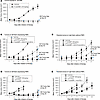 Figure 4
Combining immune checkpoint inhibition with PNP/F-araAMP augments ICI activity against triple-negative breast cancer. (A) F-araAMP was administered i.p. at a dose of 167 mg/kg on days 1–3 after tumors reached a size of 100–200 mm3. (B–E) Mice were implanted with bilateral tumors expressing PNP (in the left flank, B and D) or no PNP (right flank, C and E). F-araAMP was administered (by intent) at subcurative dosing (90 mg/kg i.p. on days 1, 2, and 3). (B and C) Anti–CTLA-4 was given i.p. on days 1, 4, and 7 (5 mg/kg on day 1 and 2.5 mg/kg on days 4 and 7). Anti-PDL1 (D and E) was dosed i.p. biweekly for 2 weeks (days 1, 4, 8, and 11). E. coli PNP activity in the EMT6-transduced line was 6,000–7,000 units, with zero activity in parental tumors not expressing PNP. Statistical analysis of tumor volume was performed on day 21 for B and C and days 15 and 18 for D and E. The ICI cohort was found to have significantly larger tumor volumes compared with combined (ICI + F-araAMP) treatment for experiments in B and C (P < 0.05) and D (P < 0.025). In E, because animals were removed/euthanized owing to rapid tumor growth, an alternative analysis for tumors that doubled in size by day 11 was performed, showing that ICI + F-araAMP differed from ICI alone (P < 0.05, 2-tailed t test with Bonferroni’s correction) (n = 5–6 animals per condition). Animals tolerated interventions with minimal weight loss. Data are shown as the mean ± SEM.
As additional controls, non-PNP-expressing (parental) TNBC tumors were established bilaterally and treated using the same regimen shown in Figure 4, B and C. No effect on tumor growth was noted under these conditions without PNP, although ICI sensitivity was marginally improved by F-araAMP (Supplemental Figure 3; which differs modestly from ICI activity when PNP is present, compared with Figure 4, B and C, P = 0.017). Our results therefore demonstrate strong augmentation of ICIs in tumors otherwise resistant to immune modulation. Moreover, non-PNP-expressing neoplasms were strongly sensitized to ICIs by the PNP-based gene transfer intervention described here.
PNP/F-araAMP treatment results in a less immunosuppressive TME. To begin assessment of changes in immune cell proportions within the TNBC microenvironment, tumor-infiltrating cells were investigated by flow cytometry using markers for T cell subsets (CD4, CD8, Tregs), NK cells, monocytic and polymorphonuclear myeloid-derived suppressor cells, and M1-like or M2-like macrophages. Tumors were treated similarly to those shown in Figure 4 using subcurative doses of F-araAMP and analyzed at day 5 after drug therapy (i.e., prior to complete regression/TME dissolution and following 2 doses of anti-PDL1 antibody). Percentages of CD45+ cells were increased specifically in PNP tumors given F-araAMP, indicating leukocyte infiltration associated with cytoreduction (Figure 5A). Comparable increase was not observed in fludarabine-treated parental tumors (Figure 5A). Total NK cells were enriched in PNP tumors following either F-araAMP or anti-PDL1 plus F-araAMP treatment compared with controls (P < 0.02) (data not shown). A strong increase in frequency of granzyme B+ NK cells in all tumors treated with PNP/F-araAMP (including distant [non-PNP-expressing] masses) was also observed (Figure 5B).
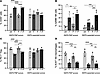 Figure 5
PNP/F-araAMP treatment is correlated with a less immunosuppressive tumor microenvironment. Tumors were established as in Figure 4. Parental EMT6 cells, or EMT6-cells expressing PNP, were injected into the right and left flanks of each mouse, respectively, at 5 × 10⁶ cells per flank. Injections with fludarabine phosphate (F), anti-PDL1 (P), a combination of F-araAMP and anti-PDL1 (F+P), or vehicle control (ctrl) began on day seven after implantation. Tissues were harvested for analysis of immune cells on day 5 after start of treatment. *P < 0.05; **P < 0.01; ***P < 0.0005; ****P < 0.0001. The total or percentage of CD4 and CD8 cells did not differ between any of the treatment groups except for a modest increase of the percentage of CD4-positive cells in the fludarabine versus anti-PDL1 treatment cohorts (P = 0.03) and an increased percentage of Ki67+ (MKI67+) CD8 cells (Supplemental Figure 5) in tumors treated with PNP/fludarabine (indicating measurable CD8 T cell activation). One-way ANOVA was used with Tukey’s multiple comparison tests for all analyses. Percentages of cells in the immune subset are shown: (A) percentage of all tumor cells; (B) percentage of NK cells; (C) percentage of Tregs; (D) percentage of M2 macrophages. Data are shown as the mean ± SD.
In addition to change in NK cell activation status, alterations in immunosuppressive subsets within treated tumors were noted. The frequency of PD1+ Tregs was found to be decreased specifically in TNBC expressing E. coli PNP after treatment with either F-araAMP or F-araAMP plus anti-PDL1 (Figure 5C). Diminished PD1+ Tregs were not observed in contralateral (non-PNP-expressing) tumors in the same animals. In addition, diminished frequency of MKI67+ tumor-infiltrating M2-like macrophages was noted in cancers treated with either F-araAMP or F-araAMP plus anti-PDL1 (including distant [non-PNP-expressing] masses; Figure 5D). These data indicate that combination treatment using ICIs with PNP/F-araAMP may promote a less immunosuppressive TME (see also below).


