
Vascular biology

Abstract
The blood and lymphatic vascular systems are regulated by angiopoietin (ANGPT) growth factors, which signal via endothelial TIE receptor tyrosine kinases and integrins. However, mechanistic understanding of how these receptors crosstalk is limited. Here, we show how β1-integrin inactivation regulates endothelial ANGPT/TIE2 signaling. By integrating biophysical analyses, X-ray crystallography, size-exclusion chromatography–small-angle X-ray scattering and atomistic molecular dynamics simulations, we show that ANGPT2 binds through its asymmetrically positioned C-terminal fibrinogen-like domains to both TIE2 and α5β1-integrin, forming a trimeric complex compatible with the inactive α5β1-integrin conformation. Inactive β1-integrin colocalizes with ANGPT-induced TIE2 in cell-cell junctions and stabilizing β1-integrin in its inactive state enhances junctional TIE2 accumulation and promotes nuclear exclusion of the TIE2 transcriptional effector FOXO1 in cultured endothelial cells. Endothelial-specific β1-integrin deletion in adult mice reduces venous TIE2 phosphorylation, whereas endotoxemia diminishes junctional β1-integrin along with decreased phosphorylated TIE2. In contrast, without TIE2, ANGPT2 uniquely engages active β1-integrin, via its N-terminal superclustering domain. Altogether, our results provide structural and mechanistic evidence of ANGPT signaling via α5β1-integrin and support a model in which inactive α5β1-integrin acts as a junctional scaffold for ANGPT/TIE2/FOXO1 signaling, explaining how integrin conformational switching spatially organizes growth factor signaling in the endothelium.
Authors
Tuomas Sipilä, Srinivas Kumar Ponna, Abhinandan Venkatesha Murthy, Anne Pink, Giray Enkavi, Shraman Kumar Bohra, Klaudia Lewna, Keerthana Ganesh, Qina Liu, Mirka Korhonen, Tommi Kajander, Michael Potente, Johanna Ivaska, Ilpo Vattulainen, Veli-Matti Leppänen, Pipsa Saharinen
Abstract
Enhanced TGFβ signaling caused by mutations in Fibrillin-1 (FBN1) in patients with Marfan syndrome (MFS) leads to myxomatous degeneration of the mitral valve (MDMV). MDMV can result in mitral valve prolapse, severe regurgitation, and sudden cardiac death. However, it remains unknown whether lymphatic vessel (LV) dysfunction contributes to MDMV development in MFS. Here, we show that lymphangiogenesis in murine mitral valves (MVs) begins postnatally. However, this process is inhibited in a mouse MFS model, Fbn1 mutant (Fbn1C1039G/+) mice, accompanied by disrupted lymphatic cell-cell junctions, impaired lymphatic drainage, and an abnormally widespread distribution of MHCII+ infiltrating macrophages. Treatment of Fbn1 mutant mice with VEGF-C156S, a selective VEGFR3 agonist, stimulates the ERK and Akt pathways, increases LV density in MVs, and ameliorates MDMV. Fbn1 mutant MVs display disorganized valvular endothelial cells (VECs) and decreased expression of the anti-inflammatory modulator Zfp36 (zinc finger protein 36) in VECs and immune cells. Treatment with FTY720 (Fingolimod), a ZFP36 activator and S1P antagonist, rescues MDMV phenotypes in Fbn1 mutant mice by reducing immune cell infiltration and restoring lymphatic cell junctions and drainage. These findings suggest that the Fbn1 mutation causes LV hypoplasia and defective lymphatic drainage in MVs, driven in part by pro-inflammatory VECs, leading to MFS-related MDMV.
Authors
Can Tan, Ziyou Ren, Shreya Kurup, Xianpeng Liu, Zhi-Dong Ge, Shodai Suzuki, Pritika Jakka, Cheryl Tang, M. Luisa Iruela-Arispe, Tsutomu Kume
Abstract
Apolipoprotein B (APOB) containing lipoproteins contribute to atherosclerosis by entering the arterial wall through the endothelial cell (EC) surface receptors scavenger receptor-BI (SR-BI) and activin receptor-like kinase 1 (ALK1). We used N-terminal fragments of APOB, molecular modeling, and site-directed mutagenesis to identify and block the binding of chylomicrons and LDL to these receptors in cells and mice. We discovered that different APOB regions interact with SR-BI and ALK1 expressed on ECs APOB48 lipoproteins were only internalized by SR-BI. A fragment of APOB, comprising 18% of the N-terminal sequence, APOB18, reduced the uptake and transport of both chylomicrons and LDL by ECs, whereas a shorter fragment, APOB12, only blocked ALK1 mediated uptake of APOB100 containing lipoproteins. Importantly, overexpressing APOB18 decreased atherosclerosis in hypercholesterolemic mice. These findings identify the N-terminal region of APOB as the cause of atherosclerosis and illustrate an approach to treating or preventing vascular disease.
Authors
Ainara G. Cabodevilla, Camila Calistru, Waqas Younis, Dimitris Nasias, Tse W.W. Ho, Narasimha Anaganti, Swati Valmiki, Sujith Rajan, Jana Gjini, Rufina Kore, Carmen Hannemann, Nicholas O. Davidson, Tomas Vaisar, Jenny E. Kanter, Karin E. Bornfeldt, Edward A. Fisher, Warren L. Lee, Tobias Madl, M. Mahmood Hussain, Ira J. Goldberg
Abstract
The lymphatic system plays a central role in lipid absorption by transporting triglyceride-rich particles called chylomicrons (CMs) from the small intestine to the systemic circulation. However, the molecular mechanism by which CMs get into the intestinal lymphatics is unknown. Here we demonstrated that GPR182, an atypical chemokine receptor in lymphatic endothelial cells, mediates dietary fat absorption. GPR182 knockout mice exhibit a selective increase in circulating high-density lipoproteins and are resistant to dietary-induced obesity. GPR182 ablation in mice leads to poor lipid absorption and thereby a delay in growth during development. GPR182 broadly interacts with and transports lipoproteins. Transmission electron microscopy analysis reveals that mechanistically, loss of GPR182 prevents CMs from entering the lacteal lumen of the small intestine. Consistent with this, GPR182 blockade with monoclonal antibodies protects mice from diet- induced obesity and treats existing obesity. Together, our study identifies GPR182 as a lipoprotein receptor that mediates dietary fat absorption and supports GPR182 blockade as a feasible approach to treat obesity and related disorders.
Authors
Zhiwei Sun, Robert J. Torphy, Emily N. Miller, Anza Darehshouri, Isaac Vigil, Taichi Terai, Eck Eleanor, Yi Sun, Yujie Guo, Dustin P. Fykstra, Elliott J. Yee, Junyi Hu, Ross M. Kedl, Erika L. Lasda, Jay R. Hesselberth, Julie A. Siegenthaler, Paul S. MacLean, Kimberley D. Bruce, Gwendalyn J. Randolph, Richard D. Schulick, Yuwen Zhu
Abstract
BACKGROUND. Genetically engineered porcine livers are being developed as a bridge therapy for acute liver failure, providing detoxification and restoration of hepatic protein synthesis. Severe xenograft-associated severe thrombocytopenia remains a major limitation, and human mechanistic data are scarce. METHODS. Platelet kinetics were characterized in three human decedents undergoing extracorporeal cross-circulation with transgenic porcine livers. Platelet counts, transfusion requirements, and clearance patterns were assessed to distinguish consumption from marrow suppression or hypersplenism. Antibody- and complement-directed inhibitors were administered to test immune-mediated mechanisms. Mechanistic studies focused on porcine von Willebrand factor (pVWF)–dependent platelet activation, including ex vivo blockade with the anti-VWF nanobody caplacizumab, a vWF-directed antibody fragment that prevents vWF–platelet binding. A fourth decedent received caplacizumab during porcine liver perfusion. RESULTS. In all three initial cases, 80%–90% of circulating and transfused platelets were rapidly cleared, a pattern inconsistent with marrow suppression or hypersplenism. Antibody and complement inhibition failed to ameliorate thrombocytopenia. Recipient plasma induced robust pVWF-mediated platelet activation analogous to human Type IIb von Willebrand disease, which was completely abrogated ex vivo by caplacizumab. In a fourth decedent treated with caplacizumab, aberrant platelet activation was prevented, though full hematologic recovery was limited by pre-existing disseminated intravascular coagulation (DIC). CONCLUSIONS. Early thrombocytopenia during porcine liver xenotransplantation appears to be primarily driven by pVWF-mediated platelet activation rather than by classical immune or splenic mechanisms. Targeted VWF blockade with agents such as caplacizumab may mitigate platelet loss and improve the safety profile of extracorporeal porcine liver support in acute liver failure.
Authors
Liang Zhao, Sokratis A. Apostolidis, Aae Suzuki, Amrita Sarkar, Qian Guo, Felix Li, Alex Sagar, John I. Fallon, Mohamed A. Elzawahry, Syed Hussain Abbas, Leanne Lanieri, Kristen Getchell, Susan C. Low, Kim M. Olthoff, Emma E. Furth, Brendan J. Keating, Peter Friend, Mortimer Poncz, Abraham Shaked, Charles S. Abrams
Abstract
Aortic aneurysms are age-linked aortic dilations that progress silently and carry high rupture mortality. Immune cells are recognized drivers of aneurysm pathogenesis. Clonal hematopoiesis is an age-related expansion of somatically mutated hematopoietic stem cells that reshapes immune function and contributes to diverse age-associated diseases. However, its contribution to aneurysm pathogenesis remains unclear. In this study, targeted ultradeep sequencing of patient specimens revealed a high prevalence of clonal hematopoiesis-associated mutations that correlated with faster aneurysm expansion. Thus, we modeled clonal hematopoiesis by competitively transplanting Tet2-deficient bone marrow into ApoE-knockout mice and induced aneurysms with angiotensin II. Tet2-clonal hematopoiesis mice developed significantly greater aortic dilation than controls. Interestingly, Tet2-deficient macrophages adopted an ACP5-positive, osteoclast-like state and produced more MMP9. Both genetic and pharmacological inhibition of osteoclast-like differentiation suppressed the Tet2-mediated aneurysmal growth in vivo. Thus, Tet2-driven clonal hematopoiesis accelerates aortic aneurysm progression through MMP9-producing osteoclast-like macrophages and therefore represents a tractable therapeutic axis.
Authors
Jun Yonekawa, Yoshimitsu Yura, Junmiao Luo, Katsuhiro Kato, Shuta Ikeda, Yohei Kawai, Tomoki Hattori, Ryotaro Okamoto, Mari Kizuki, Emiri Miura-Yura, Keita Horitani, Kyung-Duk Min, Takuo Emoto, Hiroshi Banno, Mikito Takefuji, Kenneth Walsh, Toyoaki Murohara
Abstract
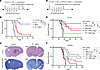
Radiation therapy (RT) is the standard of care for glioblastoma but is not curative. Triggering the cGAS/stimulator of interferon genes (STING) pathway with potent agonists, such as 8803, exerts activity across high-grade glioma preclinical models. To determine if the combination of 8803 with RT warrants consideration in the up-front treatment setting and to clarify the underlying mechanisms of therapeutic activity, C57BL/6J mice harboring intracerebral CT-2A or QPP8v gliomas were treated with RT, intratumoral 8803, or both. The treatment with the combination resulted in 80% long-term survival in the CT-2A model but not in the radiation-resistant QPP8v model. This therapeutic effect was maintained in Sting–/– CT-2A cells, highlighting the direct role of the immune system in mediating the survival benefit. Single-cell RNA-Seq identified increased nitric oxide synthase 2 (Nos2) in inflammatory tumor-associated macrophages; however, the therapeutic effect was maintained in Nos2–/– mice. Additionally, 8803 reprogrammed the blood-brain barrier (BBB) by altering the Pecam and Cd147 pathways in endothelial cells; intracranial injection of 8803 induced bihemispheric BBB opening for up to 24 hours. Sting activation was visualized longitudinally using 3’-deoxy-3’-[18F]-fluorothymidine ([18F]-FLT) PET, which peaked 72–96 hours after 8803 administration. In summary, 8803 combined with RT triggers distinctive antiglioma immune reactivity, facilitates BBB opening, and warrants consideration for up-front clinical trials in glioblastoma, where treatment effects can be monitored using [18F]-FLT PET imaging.
Authors
Shashwat Tripathi, Hinda Najem, Lisa Hurley, Ruochen Du, Crismita Dmello, Heba Ali, Kathleen McCortney, Karl J. Habashy, Peng Zhang, Craig M. Horbinski, Lara Leoni, Ryan J. Avery, Rimas V. Lukas, Timothy L. Sita, David R. Raleigh, Sean Sachdev, Roger Stupp, Maciej S. Lesniak, David M. Ashley, Daniele Procissi, Michael A. Curran, Irina Balyasnikova, Amy B. Heimberger

Abstract
SEL1L is a well-known protein in the ER-associated degradation (ERAD) pathway. While it is known to be expressed in platelets, SEL1L has never been shown to play an active role. Here, we present evidence that SEL1L regulates platelet function. We first identified SEL1L through the study of Atypical Equine Thrombasthenia (AET), an autosomal recessive platelet disorder found in thoroughbred horses. A missense variant in SEL1L (c.1810A>G p.Ile604Val) was found in AET-affected horses, which we show is associated with decreased protein expression. SEL1L is intracellular in equine platelets and localizes to the surface upon activation with thrombin. Platelets from homozygous horses exhibited substantially decreased spreading on immobilized collagen. Human megakaryocytes were found to have 2 SEL1L protein isoforms that increase in expression during megakaryopoiesis, although only 1 isoform was delivered to mature platelets. Studies using inducible mouse and constitutive zebrafish KOs demonstrated that SEL1L is necessary for efficient platelet or thrombocyte (fish equivalent) adhesion to sites of endothelial injury. These data reveal a previously undescribed and conserved role for the ERAD pathway in the etiology of AET and platelet function, and GWAS data suggest that it may play a role in human platelet disorders as well.
Authors
Anna R. Dahlgren, Francesca Careddu, Jeffrey W. Norris, Christian A. Di Buduo, Livia Stanger, Reheman Adili, Erin M. Kropp, Qing Li, Michael Holinstat, Ida Biunno, Alessandra Balduini, Fern Tablin, Jordan A. Shavit, Carrie J. Finno

Abstract
Although mammals generally demonstrate limited regenerative capacity compared with amphibians, the digit tip retains remarkable regenerative potential, providing a useful model to study successful mammalian regeneration. This process involves coordinated immune cell activity, vascular remodeling, and tissue reconstruction, yet the molecular checkpoints controlling regenerative versus fibrotic outcomes remain poorly understood. In mammals, regeneration of the digit tip (P3) proceeds through myeloid cell migration, early osteoclast-mediated osteolysis of the distal bone, and subsequent blastema-mediated regeneration. Here we test the hypothesis that lymphatic vessels regulate regenerative capacity by modulating local immune cell dynamics and osteoclast function. Using a lymphatic system–specific reporter line, we discovered that lymphatic vessels grow toward the nail region from the ventral side of the digit during quiescence and after amputation. These lymphatics closely surround, but do not invade, the native or regenerated bone. Unexpectedly, genetic, pharmacological, and surgical inhibition of lymphangiogenesis accelerated early osteolysis through enhanced transition of myeloid cells to osteoclasts, resulting in faster and more robust regeneration. These findings reveal a mechanism linking lymphatic vessel, immune regulation, and bone remodeling, suggesting that targeted manipulation of lymphatics dynamics may enhance regenerative outcomes after musculoskeletal injury.
Authors
Neda Vishlaghi, Trisha K. Ghotra, Monisha Mittal, Ji Hae L. Choi, Sneha Korlakunta, Mingquan Yan, Janna L. Crossley, Danielle Griswold-Wheeler, Elnaz Ghotbi, Conan Juan, Shiri Gur-Cohen, Babak Mehrara, David A. Brown, Michael T. Dellinger, Lindsay A. Dawson, Benjamin Levi
Abstract
Human genetic studies have repeatedly associated ADAMTS7 with atherosclerotic cardiovascular disease. Subsequent investigations in mice demonstrated that ADAMTS7 is proatherogenic and induced in response to vascular injury. However, the cell-specific mechanisms governing ADAMTS7 proatherogenicity remain unclear. To determine which vascular cell types express ADAMTS7, we interrogated single-cell RNA sequencing of human carotid atherosclerosis and found ADAMTS7 expression in smooth muscle cells (SMCs), endothelial cells (ECs), and fibroblasts. We subsequently created SMC- and EC-specific Adamts7 conditional knockout and transgenic mice. Conditional knockout of Adamts7 in either cell type does not reduce atherosclerosis, whereas transgenic induction in either cell type increases atherosclerosis. In SMC transgenic mice, this increase coincides with an expansion of lipid-laden SMC foam cells and a decrease in fibrous cap formation. RNA-sequencing in Adamts7 overexpressing SMCs revealed an upregulation of lipid genes typically assigned to macrophages. Mechanistically, ADAMTS7 increases SMC oxLDL uptake through CD36, whose expression is upregulated by PU.1. ATAC-seq and motif analysis revealed increased chromatin accessibility at AP-1 enriched regions, consistent with AP-1 dependent remodeling of PU.1-regulated lipid-handling loci. In summary, ADAMTS7 promotes atherosclerosis by driving SMC foam cell formation through an AP-1/PU.1/CD36 regulatory axis.
Authors
Allen Chung, Lauren E. Fries, Hyun-Kyung Chang, Huize Pan, Alexander C. Bashore, Karissa Shuck, Caio V. Matias, Juliana Gomez Pardo, Jordan S. Kesner, Hanying Yan, Mingyao Li, Robert C. Bauer


Copyright © 2026 American Society for Clinical Investigation
ISSN: 0021-9738 (print), 1558-8238 (online)