
Reproductive biology
Abstract
Maternal opioid use disorder (OUD) poses substantial risks to maternal and fetal health. These adverse outcomes are believed to be mediated, in part, by changes in placenta structure and function; however, few studies have addressed this question. Here, we utilized flow cytometry, histology, spatial and single-cell transcriptomics to uncover the impact of OUD on placental tissues. Given that half of subjects with chronic OUD contract hepatitis C (HCV), we further stratified our findings by maternal HCV status. Our results indicate that OUD leads to higher incidence of vascular malperfusion accompanied by increased levels of inflammatory markers and dysregulated secretion of placental development factors. Spatial transcriptomics revealed that OUD disrupts the communication between trophoblasts and immune cells important for placental vascular development. Additionally, CellChat analysis revealed aberrant vascular remodeling, neuropeptide, and chemotactic signaling across trophoblast, endothelial, and myeloid cells. Processes associated with tissue homeostasis and repair were also upregulated across trophoblast and leukocytes. In addition, placental leukocytes were rewired towards regulatory/tissue surveillant phenotypes. Finally, frequencies and responses to ex-vivo stimulation of decidual macrophages and cytolytic NKcells, critical for tissue remodeling and fetal tolerance, were decreased. Altogether, these results highlight substantial disruptions to placental health by maternal OUD.
Authors
Heather E. True, Brianna M. Doratt, Sheridan B. Wagner, Delphine C. Malherbe, Nathan R. Shelman, Mahdi Eskandarian Boroujeni, Cynthia Cockerham, John M. O'Brien, Ilhem Messaoudi
Abstract
Proper development of the umbilical cord and placental vasculature is essential for embryonic development. While the allantois is known give rise to endothelial cells (ECs) within the placenta, whether the allantois gives rise to ECs in the umbilical cord is debated. Furthermore, a lack of genetic tools to study placental vascular development independent of the embryo proper has hindered robust investigation into the primary cause of vascular defects from early studies utilizing global knockouts. In this study, we delineate the contribution of the allantois to the umbilical vessels and utilize a mouse genetic tool previously developed by our lab to revisit the role of Notch signaling during placental development. We show that the allantois has mosaic contribution to the umbilical endothelium with higher contributions closer to the placenta. Allantoic deletion of Dll4 disrupts umbilical cord and placental vascular formation with secondary defects in the heart. Lastly, we identify Unc5b downstream of Notch signaling that restricts EC migration while promoting chemokine signaling for smooth muscle cell (SMC) recruitment to arteries. These findings identify a genetic tool for investigating placental vascular development and give new insights into the ontogeny and mechanisms of placental vascular and umbilical cord development.
Authors
Derek C. Sung, Hana A. Ahanger, Sweta Narayan, Jesse A. Pace, Mei Chen, Jisheng Yang, Siqi Gao, T.C.S. Keller IV, Jenna Bockman, Xiaowen Chen, Erica Nguyen, Alan T. Tang, Patricia Mericko-Ishizuka, Ivan Maillard, Mark L. Kahn
Abstract
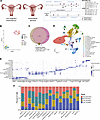
The human endometrium undergoes dynamic changes across the menstrual cycle to establish a receptive state for embryo implantation. Using bulk and single-cell RNA-Seq, we characterized gene expression dynamics in the cycling endometrium and the decidua from early pregnancy. We demonstrated that during the mid-secretory phase — the period encompassing the window of implantation — secretory glandular epithelial cells undergo notable transcriptional changes and alterations in cell-cell communication. Through comprehensive analyses, we identified the glandular epithelium receptivity module (GERM) signature, comprising 556 genes associated with endometrial receptivity. This GERM signature was consistently perturbed across datasets of endometrial samples from women with impaired fertility, validating its relevance as a marker of receptivity. In addition to epithelial changes, we observed shifts in stromal cell populations, notably involving decidual and senescent subsets, which also play key roles in modulating implantation. Together, these findings provide a high-resolution transcriptomic atlas of the receptive and early pregnant endometrium and shed light on key molecular pathways underlying successful implantation.
Authors
Gregory W. Burns, Emmanuel N. Paul, Manisha Persaud, Qingshi Zhao, Rong Li, Kristin Blackledge, Jessica Garcia de Paredes, Pratibha Shukla, Ripla Arora, Anat Chemerinski, Nataki C. Douglas
Abstract
Hofbauer cells (HBC) are fetal-derived macrophages located in the placenta that contribute to antimicrobial defense, angiogenesis, tissue remodeling, and metabolic processes within the chorionic villi. Although their roles in placental biology are increasingly recognized, the mechanisms that regulate HBC identity and function are not yet fully defined. This study aimed to define the core transcriptomic and epigenomic features of HBCs in term placentas and to examine their capacity for transcriptional responsiveness and phenotypic variation. Using chromatin accessibility profiling and bulk RNA sequencing, we found that HBCs exhibit a unique gene expression and chromatin accessibility profile compared to other fetal and adult macrophages. We identified a coordinated transcriptional network involving nuclear receptors NR4A1–3, the glucocorticoid receptor (GR), and RFX family members (RFX1, RFX2, RFX5) that appears to shape HBC identity, particularly through pathways linked to lipid metabolism and angiogenesis. Although exploratory in nature, in vitro stimulation studies showed that HBCs exhibited increased transcriptional activity in response to combined IL-4 and RSG treatment, including induction of the lipid transporter CD36. Mass cytometry analysis revealed surface markers indicative of both immature and mature macrophage states. Together, these results indicated that HBCs represent a distinct and diverse macrophage population with specialized and adaptable regulatory program in the human placenta.
Authors
Benjámin R. Baráth, Dóra Bojcsuk, Krisztian Bene, Noemí Caballero-Sánchez, Tímea Cseh, João CR. de Freitas, Petros Tzerpos, Marta Toth, Zhonghua Tang, Seth Guller, Zoárd Tibor Krasznai, Patrícia Neuperger, Gabor J. Szebeni, Gergely Nagy, Tamás Deli, Laszlo Nagy
Abstract
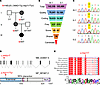
Premature ovarian insufficiency (POI) is a complex reproductive disorder with a strong genetic component. The known POI causative genes currently account for only a small fraction of cases. In this study, we conducted whole-exome sequencing and identified a rare heterozygous missense variant in DNA helicase B (HELB) (c.349G>T, p.Asp117Tyr) in a Chinese family with POI and early menopause. To investigate the pathogenicity of this variant, a knockin mouse model carrying a heterozygous missense Helb variant (Helb+/D112Y) homologous to the human HELB c.349G>T was constructed. The Helb-mutated female mice exhibited reduced litter sizes and prolonged interlitter intervals compared with wild-type mice after reaching 10 months of age, leading to a shortened reproductive lifespan. Consistently, aged Helb+/D112Y females showed decreased ovarian weight and accelerated follicle depletion. Transcriptomic analysis of the ovaries from Helb-mutated mice revealed dysregulated expression of genes associated with impaired ovarian function and ovarian aging. Collectively, these findings in both humans and mice suggest that HELB is involved in maintaining ovarian function and regulating reproductive aging, highlighting the importance of HELB in female reproductive health.
Authors
Yuncheng Pan, Yuexin Yu, Jitong Mo, Shuting Ren, Zixue Zhou, Xi Yang, Yiqing Liu, Feng Zhang, Yanqin You, Xiaojin Zhang, Yanhua Wu
Abstract
Reproductive disorders can result from a defective action of the neuropeptide gonadotropin-releasing hormone (GnRH), the master regulator of reproduction. We have previously shown that SELENOT, a newly-described thioredoxin-like selenoprotein highly expressed in endocrine and neuroendocrine cells, plays a role in hormone secretion and neuroprotection. However, whether SELENOT is involved in neuro-endocrine regulations in vivo is totally unknown. We found that SELENOT deficiency in the brain impaired sexual behavior, leading to a decline in fertility in both male and female mice. Biochemical and histological analyses of the gonadotrope axis of these mice revealed a higher expression of GnRH, which is associated with circulating luteinizing hormone (LH) excess, and elevated steroid hormones in males and a polycystic ovary syndrome (PCOS)-like phenotype in females. In addition, SELENOT deficiency impaired LH pulse secretion in both male and female mice. These alterations are reverted after administration of a GnRH antagonist. Together, our data demonstrate for the first time the role of a selenoprotein in the central control of sexual behavior and reproduction, and identify a new redox effector of GnRH neuron activity impacting both male and female reproductive function.
Authors
Ben Yamine Mallouki, Loubna Boukhzar, Ludovic Dumont, Azénor Abgrall, Marjorie Gras, Agathe Prieur, David Alexandre, David Godefroy, Yves Tillet, Luca Grumolato, Nathalie Rives, Fatiha Chigr, Youssef Anouar

Abstract
The widespread uptake of COVID-19 vaccines by women provided a unique opportunity to study the effects of pregnancy and lactation on immune responses to vaccination. Leveraging a cohort with well-defined SARS-CoV-2 exposure history, we found that the magnitude of humoral and cellular immune responses to vaccine-delivered SARS-CoV-2 spike was not affected by pregnancy or lactation status. However, vaccination during pregnancy elicited more stem-like SARS-CoV-2–specific CD4+ T cells. Moreover, breakthrough infection promoted spike-specific IgG in pregnant individuals in contrast with IgA in those lactating, suggesting that the pregnancy-to-lactation transition favors mucosal antibody responses. Breakthrough infection also reduced peripheral cytolytic SARS-CoV-2–specific CD8+ T cell frequencies during lactation but not pregnancy, which may reflect trafficking of the cells to mammary glands. Our study also uncovered an impact of pregnancy and lactation on global T cell phenotypes. In particular, lactating individuals preferentially exhibited a state of diminished T cell activation. Furthermore, breakthrough infection during pregnancy, but not lactation, diminished frequencies of activated CD8+ T cells, tissue-homing CD8+ T cells, and γδ T cells. Our findings support the notion that immunity during pregnancy and lactation adapts to benefit the fetus or breastfed infant, with implications for eliciting effective long-term immunity for these uniquely vulnerable groups.
Authors
Kailin Yin, Lin Li, Xiaoyu Luo, Jason Neidleman, Arianna G. Cassidy, Yarden Golan, Nida Ozarslan, Christine Y. Lin, Unurzul Jigmeddagva, Mikias Ilala, Megan A. Chidboy, Mary Prahl, Stephanie L. Gaw, Nadia R. Roan

Abstract
Pregnancy is an immunological paradox where despite a competent maternal immune system, regulatory mechanisms at the fetoplacental interface and maternal secondary lymphoid tissues (SLTs) circumvent rejection of semi-allogeneic concepti. Small extracellular vesicles (sEVs) are a vehicle for intercellular communication; nevertheless, the role of fetoplacental sEVs in transport of antigens to maternal SLTs has not been conclusively demonstrated. Using mice in which the conceptus generates fluoroprobe-tagged sEVs shed by the plasma membrane or released from the endocytic compartment, we show that fetoplacental sEVs are delivered to immune cells in the maternal spleen. Injection of sEVs from placentas of females impregnated with Act-mOVA B6 males elicited suboptimal activation of OVA-specific CD8+ OT-I T cells in virgin females as occurs during pregnancy. Furthermore, when OVA+ concepti were deficient in Rab27a, a protein required for sEV secretion, OT-I cell proliferation in the maternal spleen was decreased. Proteomics analysis revealed that mouse trophoblast sEVs were enriched in antiinflammatory and immunosuppressive mediators. Translational relevance was tested in humanized mice injected using sEVs from cultures of human trophoblasts. Our findings show that sEVs deliver fetoplacental antigens to the mother’s SLTs that are recognized by maternal T cells. Alterations of such a mechanism may lead to pregnancy disorders.
Authors
Juliana S. Powell, Adriana T. Larregina, William J. Shufesky, Mara L.G. Sullivan, Donna Beer Stolz, Stephen J. Gould, Geoffrey Camirand, Sergio D. Catz, Simon C. Watkins, Yoel Sadovsky, Adrian E. Morelli
Abstract
Many chemotherapeutic agents impair cancer growth by inducing DNA damage. The impact of these agents on mutagenesis in normal cells, including sperm, is largely unknown. Here, we applied high-fidelity duplex sequencing to 94 samples from 36 individuals exposed to diverse chemotherapies and 32 controls. We found that many of the sperm samples from men exposed to chemotherapy, the mutation burden was elevated as compared to controls and the expected burden based on trio studies, with one subject having >10-fold increase over expected for age. Saliva from this same individual also had a markedly higher mutation burden. We then validated this finding using other tissues, also finding an increased mutation burden in the blood and liver of many subjects exposed to chemotherapy as compared to unexposed controls. Similarly, mice treated with three cycles of cisplatin had an increased mutation burden in sperm but also in the liver, and hematopoietic progenitor cells. These results suggest an association between cancer therapies and mutation burden, with implications for counseling cancer patients considering banking sperm prior to therapy and for cancer survivors considering the tradeoffs of using banked sperm as compared to conceiving naturally.
Authors
Shany Picciotto, Camilo Arenas-Gallo, Amos Toren, Ruty Mehrian-Shai, Bryan Daly, Stephen Rhodes, Megan Prunty, Ruolin Liu, Anyull Bohorquez, Marta Grońska-Pęski, Shana Melanaphy, Pamela Callum, Emilie Lassen, Anne-Bine Skytte, Rebecca C. Obeng, Christopher Barbieri, Molly Gallogly, Brenda Cooper, Katherine Daunov, Lydia Beard, Koen Van-Besien, Joshua Halpern, Quintin Pan, Gilad D. Evrony, Viktor A. Adalsteinsson, Jonathan E. Shoag
Abstract
In vitro fertilization (IVF) is a non-coital method of conception used to treat human infertility. Although IVF is viewed as largely safe, it is associated with adverse outcomes in the fetus, placenta, and adult offspring. Because studies focusing on the effect of IVF on the male reproductive system are limited, we used a mouse model to assess the morphological and molecular effects of IVF on male offspring. We evaluated three developmental stages: 18.5-day fetuses and 12- and 39-week-old adults. Regardless of age, we observed changes in testicular-to-body weight ratios, serum testosterone levels, testicular morphology, gene expression, and DNA methylation. Also, sperm showed changes in morphology and DNA methylation. To assess multigenerational phenotypes, we mated IVF and naturally conceived males with wild-type females. Offspring from IVF males exhibited decreased fetal-to-placental weight ratios and changes in placenta gene expression and morphology regardless of sex. At 12-weeks-of-age, offspring showed higher body weights and differences in glucose, triglycerides, insulin, total cholesterol, HDL and LDL/VLDL levels. Both sexes showed changes in gene expression in liver, testes and ovaries, and decreased global DNA methylation. Collectively, our findings demonstrate that male IVF offspring exhibit abnormal testicular and sperm morphology and molecular alterations with a multigenerational impact.
Authors
Eric A. Rhon-Calderon, Cassidy N. Hemphill, Alexandra J. Savage, Laren Riesche, Richard M. Schultz, Marisa S. Bartolomei
No posts were found with this tag.


