
Pulmonology

Abstract
High endothelial venules (HEVs) are important structures in lymph nodes (LNs) that mediate lymphocyte homing, and their dedifferentiation is a necessary step before LN metastasis. Whether vascular endothelial growth factor–related (VEGF-related) signaling, which plays an important role in LN metastasis, is involved in the dedifferentiation of HEVs remains unclear. Here, we confirmed increased expression of VEGFA, VEGFC, and VEGFD; HEV dedifferentiation; and impaired lymphocyte homing function in tumor-draining LNs (TDLNs). Furthermore, we demonstrated that tumor-secreted VEGFA induced lymphangiogenesis in TDLNs to promote premetastatic niche (PMN) formation; VEGFC promoted HEV proliferation but did not affect its lymphocyte homing function. Notably, we showed that VEGFD induced the dedifferentiation of HEVs by binding to VEGFR2 on the endothelial surface of HEVs and further impaired the lymphocyte homing function of TDLNs. Overall, we revealed that tumor-secreted VEGFD interacted with VEGFR2, induced HEV dedifferentiation, and reduced lymphocyte homing, providing potential insights for the prevention and treatment of LN metastasis.
Authors
Weichang Yang, Juan Wu, Shanshan Cai, Hongquan Xing, Jiajia Xiang, Xinyi Zhang, Xiaoyan Su, Xiaoqun Ye
Abstract
Hematopoietic stem cell transplantation (HCT) is a potentially life-saving therapy but can lead to lung injury due to chemoradiation toxicity, infection, and immune dysregulation. We previously showed that bronchoalveolar lavage (BAL) transcriptomes representing pulmonary inflammation and cellular injury can phenotype post-HCT lung injury and predict mortality. To test whether peripheral blood might be a suitable surrogate for BAL, we compared 210 paired BAL and blood transcriptomes obtained from 166 pediatric HCT patients at 27 hospitals. BAL and blood RNA abundance showed minimal correlation at the level of individual genes, gene set enrichment scores, imputed cell fractions, and T- and B-cell receptor clonotypes. Instead, we identified significant site-specific transcriptional programs. In BAL, pathways related to immunity, hypoxia, and epithelial mesenchymal transition were tightly co-expressed and linked to mortality. In contrast, in blood, expression of endothelial injury, DNA repair, and cellular metabolism pathways was associated with mortality. Integration of paired BAL and blood transcriptomes dichotomized patients into two groups with significantly different rates of hypoxia and clinical outcomes within 1 week of BAL. These findings reveal a compartmentalized injury response, where BAL and blood transcriptomes provide distinct but complementary insights into local and systemic mechanisms of post-HCT lung injury.
Authors
Emma M. Pearce, Erica Evans, Madeline Y. Mayday, Gustavo Reyes, Miriam R. Simon, Jacob Blum, Hanna Kim, Jessica Mu, Peter J. Shaw, Courtney M. Rowan, Jeffery J. Auletta, Paul L. Martin, Caitlin Hurley, Erin M. Kreml, Muna Qayed, Hisham Abdel-Azim, Amy K. Keating, Geoffrey D.E. Cuvelier, Janet R. Hume, James S. Killinger, Kamar Godder, Rabi Hanna, Christine N. Duncan, Troy C. Quigg, Paul Castillo, Nahal R. Lalefar, Julie C. Fitzgerald, Kris M. Mahadeo, Prakash Satwani, Theodore B. Moore, Benjamin Hanisch, Aly Abdel-Mageed, Dereck B. Davis, Michelle P. Hudspeth, Greg A. Yanik, Michael A. Pulsipher, Christopher C. Dvorak, Joseph L. DeRisi, Matt S. Zinter
Abstract
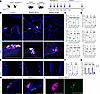
Asthma is characterized by exacerbated response to triggers such as allergen. While pulmonary neuroendocrine cells (PNECs), a rare population of airway epithelial cells, are essential for amplifying allergen-induced asthma response, how PNECs are regulated to achieve this role remains poorly understood. Here we show that in the adult mouse airway, inactivation of achaete-scute-like protein 1 gene in PNECs led to loss of these cells. Intriguingly, exposure of these mutants to house dust mites (HDM), a common allergen, led to reappearance of PNECs. Similarly, exposure of wild-type mice to HDM led to PNEC hyperplasia, a result of proliferation of existing PNECs and transdifferentiation from club cells. Single-cell RNA-Seq experiments revealed PNEC heterogeneity, including the emergence of an allergen-induced PNEC subtype. Notch signaling was downregulated in HDM-treated airway, and treatment with Notch agonist prevented PNEC hyperplasia. These findings together suggest that HDM-induced PNEC hyperplasia may contribute to exacerbated asthma response.
Authors
Estelle Kim, Brian K. Wells, Hannah Indralingam, Yujuan Su, Jamie Verheyden, Xin Sun
Abstract
Idiopathic pulmonary fibrosis (IPF) is a severe diffuse progressive fibrosing interstitial disease leading to respiratory failure and death in the absence of organ transplantation. Substantial evidence has confirmed the pivotal role of fibroblasts in the progression of IPF, yet effective therapeutic options are scarce. Single-cell transcriptomics profiling revealed that among the diverse fibroblast subsets, FAP1+ alveolar fibroblasts (AFs) are pivotal for the progression of IPF. On the basis of these findings, we developed FAP1-targeting chimeric antigen receptor cytotoxic effector regulatory T (CAR-cTregs) cells, which leverage the targeted killing advantage of the currently trending CAR-based immunotherapy for tumors and incorporate the immunosuppressive functions of Tregs to mitigate the inflammation caused by both the disease itself and CAR-T-cell infusion. Accordingly, CAR-cTregs were constructed to effectively eliminate FAP1+ fibroblasts in vitro. This cytotoxic effect can be abrogated by inhibitors of the granzyme-perforin pathway. In the bleomycin-induced PF model, CAR-cTregs were found to reverse fibrosis characterized by diminished recruitment of fibrocytes and improved remodeling of epithelial cells. Together, our results demonstrate that CAR-cTregs can serve as a promising therapeutic option for IPF and provide a novel strategy for treating multiple chronic inflammatory diseases by inducing both cytotoxicity and immunosuppression.
Authors
Yun-Han Jiang, Meng Zhou, Meng-Di Cheng, Sai Chen, Ying-Qiang Guo
Abstract
MICB is a ligand for NKG2D. We have shown NK cells are central to lung transplant acute lung injury (ALI) via NKG2D activation, and increased MICB in bronchoalveolar lavage predicts ALI severity. Separately, we found a MICB polymorphism (MICBG406A) is associated with decreased ALI risk. We hypothesized this polymorphism would protect against severe SARS-CoV-2 respiratory disease. We analyzed 1,036 patients hospitalized with SARS-CoV-2 infection from the IMPACC cohort. Associations between MICBG406A and outcomes were determined by linear regression or Cox Proportional Hazards models. We also measured immune profiles of peripheral blood, upper and lower airway. We identified 560 major allele homozygous patients, and 426 and 50 with one or two copies of the variant allele. MICBG406A conferred reduced odds of severe COVID-19 (OR = 0.73, CI = 0.58–0.93, P = 0.04). MICBG406A homozygous participants demonstrated 34% reduced cumulative odds for mechanical ventilation or death (CI = 0.51–0.85, P = 0.005) and 43% reduced risk for mortality (CI = 0.35–0.77, P = 0.001). Patients with MICBG406A variant alleles had reduced soluble inflammatory mediators and differential regulation of multiple immune pathways. These findings demonstrate a novel association between increasing MICBG406A variant allele copies and reduced COVID-19 severity, independent of SARS-CoV-2 viral burden and humoral immunity, suggesting the NKG2D-ligand pathway as an intervention target.
Authors
Harry Pickering, Narges Alipanah-Lechner, Ernie Chen, Dylan Duchen, Holden T. Maecker, Seunghee Kim-Schulze, Ruth R. Montgomery, Chris Cotsapas, Hanno Steen, Florian Krammer, Charles R. Langelier, Ofer Levy, Lindsey R. Baden, Esther Melamed, Lauren I.R. Ehrlich, Grace A. McComsey, Rafick P. Sekaly, Charles B. Cairns, Elias K. Haddad, Albert C. Shaw, David A. Hafler, David B. Corry, Farrah Kheradmand, Mark A. Atkinson, Scott C. Brakenridge, Nelson I. Agudelo Higuita, Jordan P. Metcalf, Catherine L. Hough, William B. Messer, Bali Pulendran, Kari C. Nadeau, Mark M. Davis, Ana Fernandez-Sesma, Viviana Simon, Monica Kraft, Christian Bime, David J. Erle, Joanna Schaenman, Al Ozonoff, Bjoern Peters, Steven H. Kleinstein, Alison D. Augustine, Joann Diray-Arce, Patrice M. Becker, Nadine Rouphael, Matthew C. Altman, Steven E. Bosinger, Walter L. Eckalbar, IMPACC Network, Carolyn S. Calfee, Oscar A. Aguilar, Elaine F. Reed, John R. Greenland, Daniel R. Calabrese
Abstract
Pulmonary fibrosis (PF) is a life-threatening disease that requires effective and well-tolerated therapeutic modalities. Previously, the distinct pathogenic roles of cannabinoid receptor 1 (CB1R) and inducible nitric oxide synthase (iNOS) in the lungs and their joint therapeutic targeting were highlighted in PF. However, the cell-specific role of CB1R in PF has not been explored. Here, we demonstrate that CB1R in alveolar macrophages (AMs) mediates the release of anandamide into the alveoli, which promotes PF by inducing profibrotic macrophages that are accessible to locally delivered antifibrotic therapy. A multitargeted therapy may improve therapeutic efficacy in PF. Pulmonary delivery of 0.5 mg/kg/day MRI-1867 (zevaquenabant), a peripherally acting hybrid CB1R/iNOS inhibitor, is as effective as systemic delivery of 10 mg/kg/day, and also matches the efficacy of nintedanib in mitigating bleomycin-induced PF. A systems pharmacology approach reveals that zevaquenabant and nintedanib treatments reverse pathologic changes in both distinct and shared PF-related pathways, which are conserved in human and mouse. Moreover, zevaquenabant treatment also attenuated fibrosis and profibrotic mediators in human precision-cut lung slices. These findings establish CB1R-expressing AMs as a therapeutic target and support local delivery of dual CB1R/iNOS inhibitor zevaquenabant by inhalation as an effective, well-tolerated, and safer strategy for PF.
Authors
Abhishek Basu, Muhammad Arif, Kaelin M. Wolf, Madeline Behee, Natalie L. Johnson, Lenny Pommerolle, Ricardo H. Pineda, John Sembrat, Charles N. Zawatsky, Szabolcs Dvorácskó, Nathan J. Coffey, Joshua K. Park, Seray B. Karagoz, Grzegorz Godlewski, Tony Jourdan, Judith Harvey-White, Melanie Königshoff, Malliga R. Iyer, Resat Cinar
Abstract
Alveolar epithelial type II (AT2) cell dysfunction is implicated in the pathogenesis of familial and sporadic idiopathic pulmonary fibrosis (IPF). We previously demonstrated that expression of an AT2 cell exclusive disease-associated protein isoform (SP-CI73T) in murine and patient-specific induced pluripotent stem cell (iPSC)-derived AT2 cells leads to a block in late macroautophagy and promotes time-dependent mitochondrial impairments; however, how a metabolically dysfunctional AT2 cell results in fibrosis remains elusive. Here, using murine and human iPSC-derived AT2 cell models expressing SP-CI73T, we characterize the molecular mechanisms governing alterations in AT2 cell metabolism that lead to increased glycolysis, decreased mitochondrial biogenesis, disrupted fatty acid oxidation, accumulation of impaired mitochondria, and diminished AT2 cell progenitor capacity manifesting as reduced AT2 self-renewal and accumulation of transitional epithelial cells. We identify deficient AMP-kinase signaling as a critical component of AT2 cell dysfunction and demonstrate that targeting this druggable signaling hub can rescue the aberrant AT2 cell metabolic phenotype and mitigate lung fibrosis in vivo.
Authors
Luis R. Rodríguez, Konstantinos-Dionysios Alysandratos, Jeremy Katzen, Aditi Murthy, Willy Roque Barboza, Yaniv Tomer, Sarah Bui, Rebeca Acín-Pérez, Anton Petcherski, Kasey Minakin, Paige Carson, Swati Iyer, Katrina Chavez, Charlotte H. Cooper, Apoorva Babu, Aaron I. Weiner, Andrew E. Vaughan, Zoltan Arany, Orian S. Shirihai, Darrell N. Kotton, Michael F. Beers
Abstract
The pathobiology of pulmonary hypertension (PH) is complex and multiple cell types contribute to disease pathogenesis. We sought to characterize the molecular crosstalk between endothelial and mesenchymal cells that promote PH in the tumor necrosis factor alpha transgenic (TNF-Tg) model of PH. Pulmonary endothelial and mesenchymal cells were isolated from WT and TNF-Tg mice underwent single-cell RNA sequencing. Data were analyzed using clustering, differential gene expression and pathway analysis, ligand-receptor interaction, transcription factor binding, and RNA velocity assessments. Significantly altered ligand-receptor interactions were confirmed with immunofluorescent staining. TNF-Tg mice had increases in smooth muscle cells and Col14+ fibroblasts, and reductions in general capillary (gCAP) endothelial cells, Col13+ fibroblasts, pericytes, and myofibroblasts. Pathway analysis demonstrated NF-kB, JAK/STAT, and interferon mediated inflammation, endothelial apoptosis, loss of vasodilatory pathways, increased TGF-beta signaling, and smooth muscle cell proliferation. Ligand-receptor analysis demonstrated a loss of BMPR2 signaling in TNF lungs and establishment of a maladaptive BMP signaling cascade which functional studies revealed stems from endothelial NFkB activation and subsequent endothelial SMAD2/3 signaling. This system highlights a complex set of changes in cellular composition, cell communication, and cell fate driven by TNF signaling which lead to aberrant BMP signaling which is critical for development of PH.
Authors
ML Garcia-Hernandez, Javier Rangel-Moreno, Qingfu Xu, Ye Jin Jeong, Soumyaroop Bhattacharya, Ravi Misra, Stacey Duemmel, Ke Yuan, Benjamin D. Korman
Abstract
IL-33 is a key driver of type-2 inflammation and implicated in pathology of COPD and asthma. However, the mechanism for IL-33 secretion and regulation in the context of chronic airway disease is poorly understood. We previously reported an airway disease-associated isoform IL-33Δ34 that escapes nuclear sequestration and is tonically secreted from epithelial cells. Here, we describe how this IL-33Δ34 isoform interacts with HSP70 within cells and is targeted to secretory organelles through coordinated binding to phosphatidylserine (PS), and delivered to compartments for unconventional protein secretion (CUPS). Once secreted, extracellular HSP70 (eHSP70) in complex with IL-33Δ34 stabilizes cytokine by inhibiting oxidation and degradation, which results in enhanced IL-33Δ34-receptor binding and activity. We further find evidence that IL-33 along with mediators of the proteostasis network HSP70, HSP90 and the Chaperonin Containing TCP1 (CCT) complex are dysregulated in human chronic airway disease. This phenomenon is reflected in the differential extracellular vesicle (EV) proteome in bronchial wash from COPD and asthma samples, which could mark disease activity and potentiate IL-33 function. This study confirms proteostasis intermediates, chiefly HSP70, as a chaperone for non-canonical IL-33 secretion and activity that may be amenable for therapeutic targeting in the chronic airway diseases COPD and asthma.
Authors
Omar A. Osorio, Heather E. Raphael, Colin E. Kluender, Ghandi F. Hassan, Lucy S. Cohen, Deborah F. Steinberg, Ella Katz-Kiriakos, Morgan D. Payne, Ethan M. Luo, Jamie L. Hicks, Derek E. Byers, Jennifer Alexander-Brett
Abstract
The gain-of-function MUC5B promoter variant is the dominant risk factor for the development of idiopathic pulmonary fibrosis (IPF). However, its impact on protein expression in both non-fibrotic control and IPF lung specimens have not been well characterized. Utilizing laser capture microdissection coupled to mass spectrometry (LCM-MS), we investigated the proteomic profiles of airway and alveolar epithelium in non-fibrotic controls (n = 12) and IPF specimens (n = 12), stratified by the MUC5B promoter variant. Through qualitative and quantitative analyses, as well as pathway analysis and immunohistological validation, we have identified a distinct MUC5B-associated protein profile. Notably, the non-fibrotic control alveoli exhibited substantial MUC5B-associated protein changes, with an increase of IL-3 signaling. Additionally, we found that epithelial cells overlying IPF fibroblastic foci cluster closely to alveolar epithelia and express proteins associated with cellular stress pathways. In conclusion, our findings suggest that the MUC5B promoter variant leads to protein changes in alveolar and airway epithelium that appears to be associated with initiation and progression of lung fibrosis.
Authors
Jeremy A. Herrera, Mark Maslanka, Rachel Z. Blumhagen, Rachel Blomberg, Nyan Ye Lwin, Janna Brancato, Carlyne D. Cool, Jonathan P. Huber, Jonathan S. Kurche, Chelsea M. Magin, Kirk C. Hansen, Ivana V. Yang, David A. Schwartz
No posts were found with this tag.


